


Login
Get Instant Pricing On 23,000+ Aircraft

>
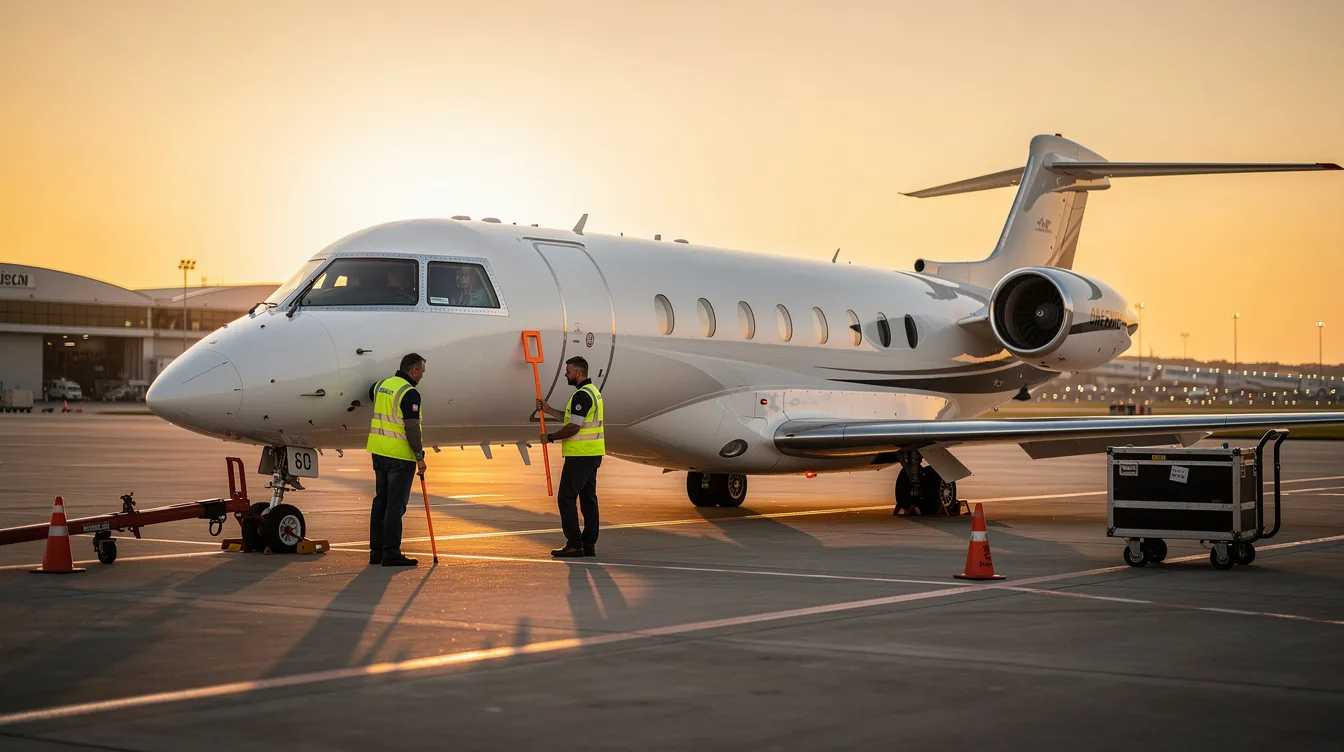
The Learjet 45 is one of the most recognized light business jets in private aviation. The Learjet 45 is a mid-size business jet designed for corporate and charter use. Built by Bombardier as a clean-sheet design, it has served corporate and charter fleets since the late 1990s.
Whether you're considering chartering, purchasing, or simply learning about the Learjet 45, this guide provides essential information for business travelers, charter clients, and aviation enthusiasts. Understanding the Learjet 45's capabilities and features is crucial for making informed decisions in private aviation.
The Learjet 45 and its upgraded sibling, the Learjet 45XR, are Bombardier Learjet light business jets introduced in the late 1990s and early 2000s. Both aircraft are widely available for charter through digital platforms like Jettly, offering a practical balance of speed, range, and cabin comfort without the burden of ownership.
Core performance numbers tell the story: a max cruise speed of 464 knots, a maximum range of approximately 1,971 nautical miles, and seating for up to eight passengers in a double club configuration. The aircraft climbs at 2,800 feet per minute and reaches a service ceiling of 51,000 feet, placing it among the highest-flying jets in its class.
The Learjet 45XR, introduced in June 2004, adds upgraded engines flat-rated for hotter temperatures, a higher max takeoff weight, and improved climb performance. This makes the XR variant especially attractive for operations from shorter runways and in warmer climates.
Chartering a Learjet 45 through Jettly avoids the significant financial commitment of ownership. A Learjet 45 costs between $900,000 and $1.5 million on the pre-owned market, and annual operating costs for a Learjet 45 are $2,018,803 when flown regularly. For most travelers, on-demand charter is the smarter path.
This article covers development history, cabin layout, performance specs, operating economics, safety record, and how to book a Learjet 45 for common routes such as London–Palma or New York–Miami.
The Learjet 45 is a mid-size business jet developed in the 1990s by Bombardier Aerospace, positioned between smaller Learjet models and mid-size jets. It features a low-wing design and T-tail configuration, requires a crew of two pilots, and is certified under FAR Part 25 transport category rules, a stricter standard than many competing light jets of its era.
The Bombardier Learjet 45 completed its first flight on October 7, 1995, received FAA certification in September 1997, and entered service in 1998 as a clean-sheet design. The model 45 was built from the ground up rather than adapted from previous models.
The Learjet 45XR is an enhanced version with upgraded Honeywell TFE731-20BR engines, higher maximum takeoff weight, and better climb and runway performance at high elevation or in hot conditions.
Key metrics for both versions include:
Standard seating for eight passengers in a double-club layout
Normal range around 1,889–1,971 nm
Typical cruise speeds of 450–465 knots (about 530 mph)
Service ceiling of 51,000 feet
These aircraft are frequently used for business shuttles, corporate hops, and premium leisure trips across North America and Europe, forming a core part of light-jet charter fleets accessible through Jettly.
Bombardier developed the model 45 in the early 1990s to replace the aging Learjet 35/36 family and compete in the super-light category with more cabin space and cutting-edge avionics. The airplane was announced in September 1992, and the Learjet 45 is Bombardier's first all-new design since the late 1990s-the first Learjet built as a clean sheet since the original model debuted in the 1960s.
Key milestones in the timeline:
1992: Program announced
October 7, 1995: First flight of the prototype
September 1997: FAA certification granted
January 1998: Initial deliveries begin
June 2004: Learjet 45XR introduced with upgraded engines and higher MTOW
2007: Production of the original model Learjet 45 ceased
The first Learjet designed under stricter transport category rules, the 45 featured a flat-floor cabin, wings machined from single aluminum blocks for aerodynamic smoothness, and a wider wingspan than its predecessors. Over 300 Learjet 45s were delivered by late 2006, with 45XR production continuing until around 2012-giving today's charter market a sizable pre-owned fleet.
Early-in-service technical issues included cracked windshields, pressurization problems, and fried power distribution panels. Subsequent service bulletins and design upgrades significantly improved reliability, and operators and owners today regard many 45s as dependable workhorses.
Bombardier Aviation, formerly Bombardier Aerospace, is a Canadian manufacturer headquartered in Montreal with a long history in business, commercial, and specialized aircraft. Key acquisitions shaped the brand: Learjet in 1990, Canadair in 1986, Short Brothers in 1989, and De Havilland Aircraft of Canada in 1992. The Learjet line became Bombardier's iconic light-jet family.
After divesting commercial programs, Bombardier refocused on business aviation, positioning the Learjet, Challenger, and Global families as its core offerings. The Learjet reputation centers on fast, efficient, pilot-focused jets with strong performance-to-cost ratios.
While Bombardier ended new Learjet production in the early 2020s, the existing Learjet 45 and Learjet 45XR fleet remains widely supported and actively operated worldwide, particularly in North America and Europe.
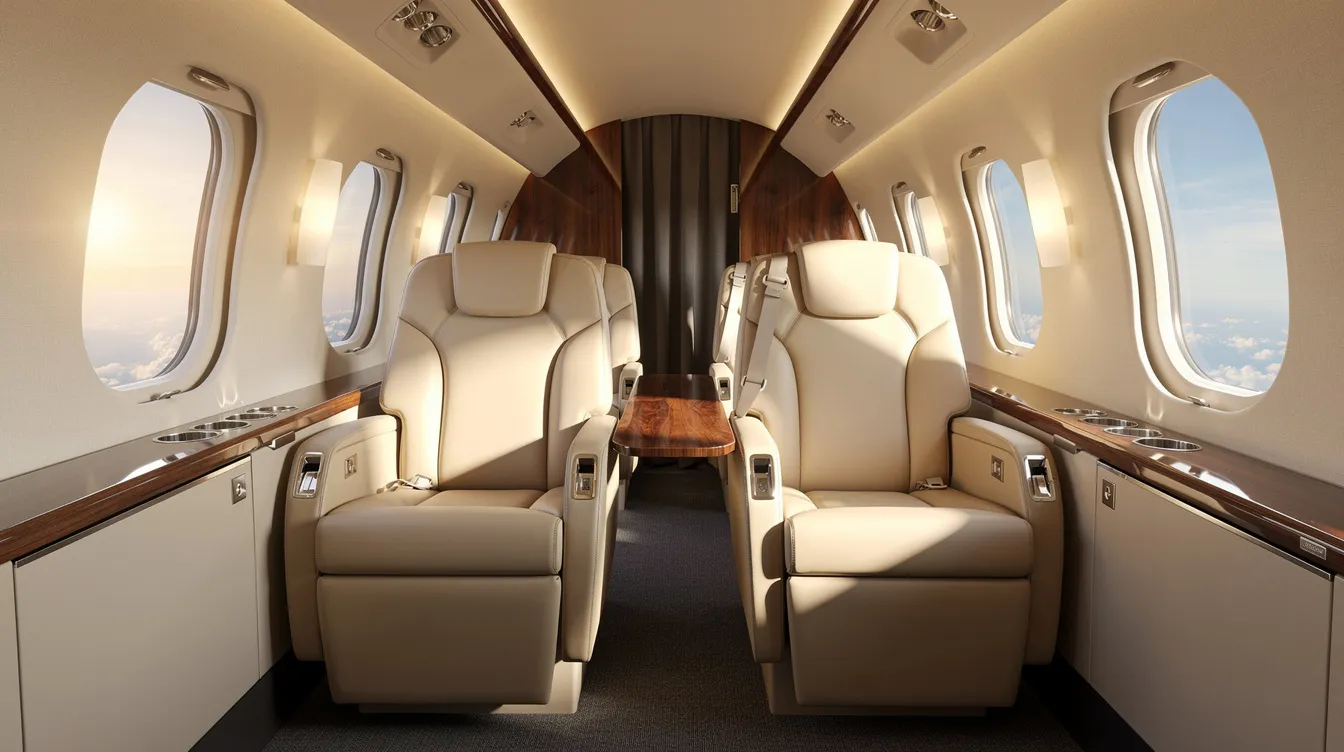
The Learjet 45 has a spacious cabin compared to older Learjet models. Dimensions run approximately 19 ft 9 in in length, about 5 ft 1 in in width, offering reasonable shoulder room, and a cabin height of 4.9 feet. The cabin features a flat floor and non-circular cross-section, though it does not provide full stand-up headroom for most adults. The flat floor and non-circular cross-section contribute to the cabin's spacious feel and passenger comfort.
Standard seating arranges eight passengers in a double-club layout-two sets of facing comfortable seats with fold-out tables suitable for laptops, light meals, and in-flight meetings. The wider seats and more comfortable seats in refurbished aircraft offer notably better ergonomics than the narrower cabins of previous models.
Amenities include:
A compact forward galley or refreshment center
A fully enclosed lavatory that can serve as an extra seat (belted for a ninth passenger in some configurations)
A small closet for hanging garments
Dedicated baggage capacity adequate for skis, golf clubs, and business luggage
The Learjet 45 has eight windows lining each side of the cabin, providing natural light throughout. Many aircraft on the charter market have been upgraded with better lighting (LED), newer leathers, veneers, and connectivity options including Wi-Fi and power outlets. Specific features depend on the individual operator and serial number.
The Honeywell Primus 1000 cockpit is equipped with multiple digital displays as the standard avionics suite, including two primary flight displays and two multifunction displays. This comprehensive avionics system, enhancing pilot awareness, was considered cutting-edge avionics at the time of introduction.
Key capabilities include:
Dual flight management systems (FMS)
Traffic collision avoidance system (TCAS II)
Weather radar
Autopilot and flight director for RNAV and RVSM airspace
The Learjet 45 is equipped with two Honeywell TFE731-20AR turbofan engines, each delivering approximately 3,500 pounds of thrust. These rear-mounted engines include thrust reversers for shorter ground rolls. The Learjet 45 has an internal auxiliary power unit-typically the Honeywell RE100-for ground operations, allowing independent cabin cooling and power without external ground support. This keeps the plane ready for quick-turn charter operations.
The XR upgrade delivers an improved engine variant (TFE731-20BR) that maintains higher thrust on hot days, supports a higher max takeoff weight, and enhances climb rates. For pilots and operators, this translates to shorter time to cruise altitude and better performance from challenging runways.
The Learjet 45 and 45XR deliver light-jet economics with near mid-size performance, particularly in speed and cruise altitude. The Learjet 45 is designed for high performance and operational efficiency, and it can operate effectively in various weather conditions thanks to its robust systems and high ceiling.
Key performance figures:
|
Specification |
Learjet 45 / 45XR |
|---|---|
|
Max Cruise Speed |
464 knots (~530 mph) |
|
Maximum Range |
~1,971 nautical miles |
|
Service Ceiling |
51,000 feet |
|
Climb Rate |
2,800 feet per minute |
|
Max Takeoff Weight |
20,500 lbs |
|
Takeoff Distance |
~4,400 feet at sea level |
|
Landing Distance |
~2,440 feet typical |
|
Seating Capacity |
Up to 8 passengers |
These numbers mean the Learjet 45 can handle missions like London–Palma de Mallorca in under two hours, New York–Miami non-stop, Toronto–Fort Lauderdale, or Los Angeles–Denver with ease. For routes approaching 1,800–2,000 nm, payload must be managed and fuel reserves considered, especially when planning international private jet flights that involve ocean crossings or complex customs procedures.
The Learjet 45XR's improved climb and hot-and-high performance make it especially well-suited for airports at higher elevation. Where the original model might face payload penalties on a warm day at Denver or Mexico City, the XR maintains thrust and shortens the takeoff roll.
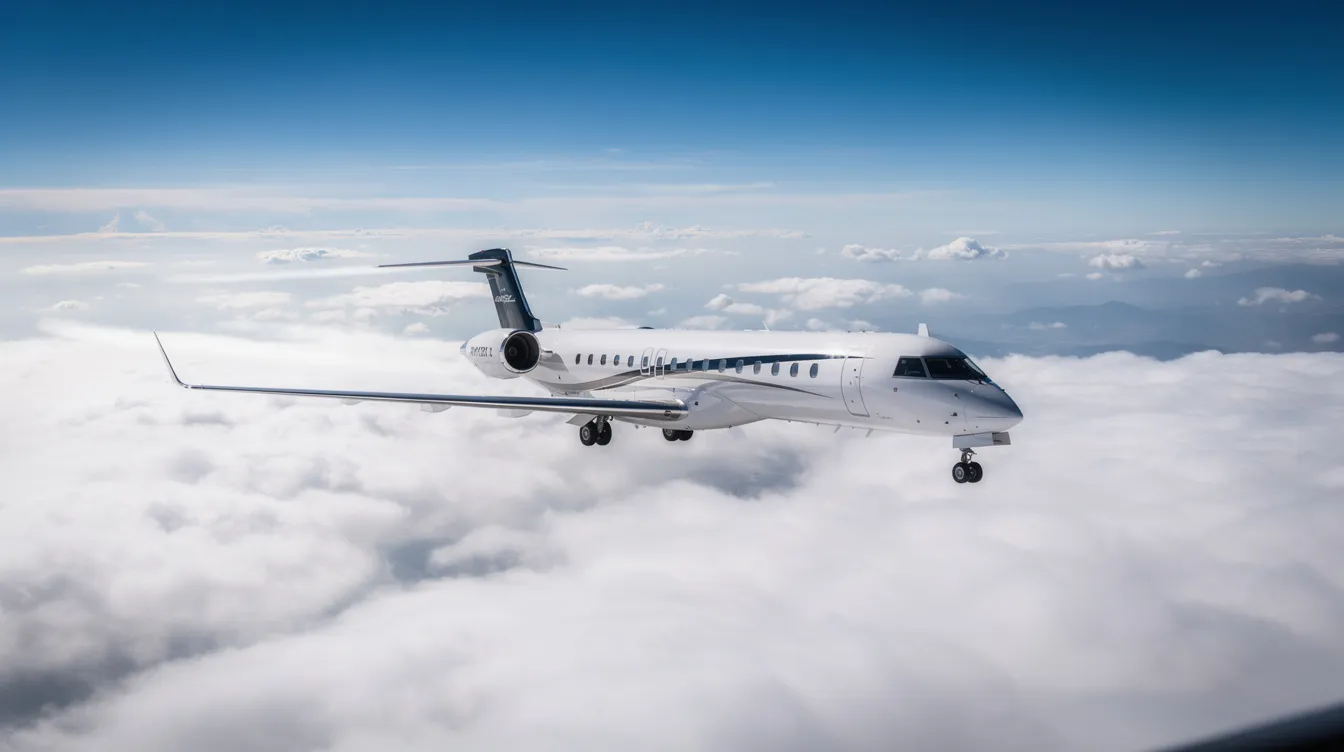
The Learjet 45 is known for its attractive pre-owned acquisition cost. A Learjet 45 costs between $900,000 and $1.5 million depending on year, total time, and avionics condition. As of Q2 2024, the list price is $10,300,000 for comparison. But the purchase price is only the beginning.
Annual operating cost for a Learjet 45 is $2,018,803 when flying 300–400 hours per year. Owning a Learjet 45 incurs $798,700 in cash costs annually, covering crew salaries, hangar, insurance, and management. Hourly operating cost for a Learjet 45 is approximately $1,904, driven largely by fuel burn of roughly 200–210 gallons per hour and scheduled maintenance on engines and airframe.
For a deeper breakdown, see Jettly's guide to plane operating costs.
Because ownership only becomes cost-effective at high annual utilization-typically 400+ flight hours per year-many travelers flying 25–150 hours annually prefer on-demand charter. Digital platforms like Jettly let travelers access a wide selection of private charter aircraft, including Learjet 45s, without long-term contracts, jet cards, or fractional ownership, paying only for flight time and applicable fees per trip.
Charter pricing varies by route length, repositioning needs, airport fees, and peak travel days. But compared to buying, financing, and maintaining a Learjet 45 in private ownership, chartering is far simpler for most travelers.
Jettly is a digital private jet charter marketplace connecting travelers to a global network of more than 20,000 aircraft, including Bombardier Learjet 45 and Learjet 45XR jets. The platform focuses on transparent pricing and flexible access rather than traditional jet cards or fractional ownership.
Here's how it works: users search routes and dates, receive instant pricing where available, compare aircraft options, and complete booking digitally. It's designed for both frequent business travelers and occasional leisure flyers.
Common use cases for chartering a Learjet 45 through Jettly include:
Same-day business meetings in multiple cities
Family getaways to sun destinations
Sports or golf weekends requiring generous baggage space
Urgent last-minute trips where commercial options fall short
The platform can also help coordinate in-flight catering for private jets, access to smaller airports closer to final destinations, and ground transportation arrangements where available.
Learn more about Jettly's charter options at https://www.jettly.com, and see how they compare with established fractional players in resources that cover NetJets as a leader in private aviation.
The Learjet 45 family benefits from transport category certification standards and a strong operational history in corporate and charter fleets worldwide. Being certified under FAR Part 25 means the aircraft meets stricter redundancy and safety requirements than many competing light jets.
Early-in-service reliability challenges in the late 1990s and early 2000s included pressurization problems, cracked windshields, and fried power distribution panels. These were addressed through mandatory service bulletins and design improvements. In August 2003, a defective horizontal stabilizer fastener led the FAA to ground the entire Learjet 45 fleet for approximately one month while a fix was developed-a serious event, but one that was resolved and has not recurred.
Long-term fleet data from 2005 onward show a strong safety record with no fatal dive or fatal hull-loss accidents in typical business operations when aircraft are maintained and flown according to regulations. Ongoing airworthiness directives-such as repetitive inspections for corrosion in the center wing area-keep the fleet in complete compliance.
For charter customers booking through Jettly, flights are operated by licensed air carriers subject to national aviation authority oversight (FAA Part 135 in the United States or EASA equivalents in Europe), with strict maintenance and crew-qualification requirements. Travelers can ask about operator safety ratings, audit programs, and maintenance standards when selecting a Learjet 45 operator.
Below are answers to common questions from prospective charter clients and aviation enthusiasts about the Learjet 45 and Learjet 45XR.
The Learjet 45 includes a full-width aft lavatory and ample baggage capacity. In practice, the baggage compartment accommodates roughly eight small roller bags plus a few golf bags or ski sets. However, weight limits are tied to range and passenger count.
On full-range missions, operators may restrict luggage weight to preserve fuel and payload margins. Shorter flights allow more generous allowances. Travelers should confirm exact luggage needs with their Jettly charter specialist at the quote stage to avoid surprises on departure day.
Both aircraft share the same basic cabin layout and passenger experience, so interior comfort feels very similar. The Learjet 45XR has upgraded engines and a higher maximum takeoff weight, giving it better climb and hot-and-high performance, shorter time to cruise, and sometimes slightly better payload-range flexibility.
From a client perspective, the XR variant may offer more flexibility from shorter or higher-elevation airports on warm days. Both versions are fast, efficient light jets well-suited to two-to-four hour flights.
With takeoff distances around 4,400 feet and landing distances near 2,400 feet under typical conditions, the Learjet 45 can access many regional and executive airports that are not practical for larger airliners. Very short or unpaved runways are generally unsuitable, and field length, elevation, and temperature all influence performance calculations.
Jettly's platform and support team can recommend optimal departure and arrival airports based on runway length, proximity to destination, and total trip efficiency, supported by an airport locator tool for private jet travel.
The Learjet 45 competes with jets like the Cessna Citation XLS and Phenom 300. The Citation Excel/XLS offers a taller, stand-up cabin and larger baggage hold, while the Learjet 45 focuses on higher cruise speeds and a greater ceiling. For passengers who prioritize cabin height and baggage volume, the Excel/XLS may appeal. Travelers focused on speed, higher cruising altitudes, and strong climb performance often select the Learjet 45. Compare options side by side on Jettly, where performance, cabin dimensions, and pricing can be reviewed for different aircraft types.
Visit Jettly's charter cost estimator to enter trip details-origin, destination, dates, and passenger count-and view instant or rapid quotes for available aircraft, including Learjet 45 and Learjet 45XR options. Users can create an account for more detailed pricing, membership options, and tailored support.
Ready to experience private travel on your terms? Explore flight options or request a quote at https://www.jettly.com.
The Learjet 45 remains a standout option in the light to mid-size private jet category, combining speed, efficiency, and a comfortable cabin for up to eight passengers. Its clean-sheet design and robust performance, especially in the upgraded 45XR variant, make it well-suited for a range of missions from short regional hops to longer business or leisure trips. While ownership costs are high, chartering a Learjet 45 through platforms like Jettly offers travelers flexible, transparent access to this iconic aircraft without the burdens of ownership.
With its strong safety record, advanced avionics, and operational versatility, the Learjet 45 continues to be a preferred choice for private jet travelers seeking a balance of performance and comfort. To explore available flights or get a personalized quote, visit https://www.jettly.com and discover how the Learjet 45 can elevate your next journey.
Share this post:
Jay Franco Serevilla
Oct 7, 2026
|
5
min read
Discover tips and trends in the industry.
5
min read
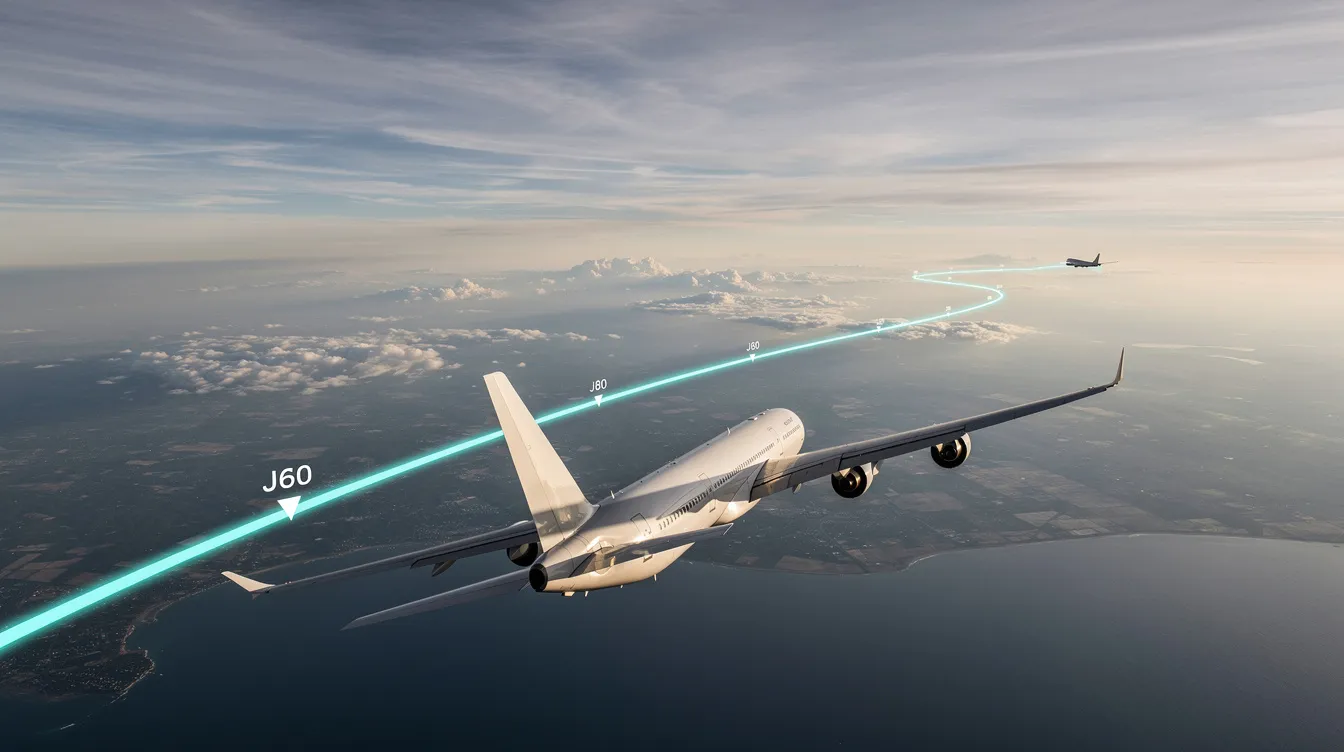
Jet Route: How Private Jet Routes Work, What They Cost, and How to Book with Jettly
Jet routes are high-altitude corridors that private jets follow, impacting flight times and costs. Understanding these routes helps travelers optimize their private jet experience. Jettly simplifies the booking process, allowing users to compare options and secure flights efficiently.
Read More
5
min read
Gulfstream G550 Jet: Performance, Cabin, and Charter Guide
The Gulfstream G550 is a premier ultra-long-range private jet, ideal for intercontinental travel with a range of approximately 6,750 nautical miles. Known for its spacious cabin and luxurious amenities, it accommodates 14 to 19 passengers comfortably. Jettly offers seamless charter options, connecting travelers to a global fleet of G550s for efficient and flexible travel.
Read MoreStay updated with our latest insights and tips to elevate your journey with us.
MEMBERSHIPS AND ASSOCIATIONS



Disclaimer: Jettly operates as a charter broker, offering access to a global digital jet charter marketplace. Jettly is not a direct air carrier and does not own or operate aircraft. All advertised flights are conducted by third-party air carriers that are fully licensed and hold the appropriate Part 135 or Part 121 certifications issued by the Federal Aviation Administration (FAA) or equivalent regulatory authorities under U.S. or foreign law. Jettly complies fully with the U.S. Department of Transportation's Part 295 and Part 298 Charter Broker regulations. Jettly does not carry additional liability insurance. Passengers are covered by aircraft operator insurance. TICO: 50023770


