


Login
Get Instant Pricing On 23,000+ Aircraft

>
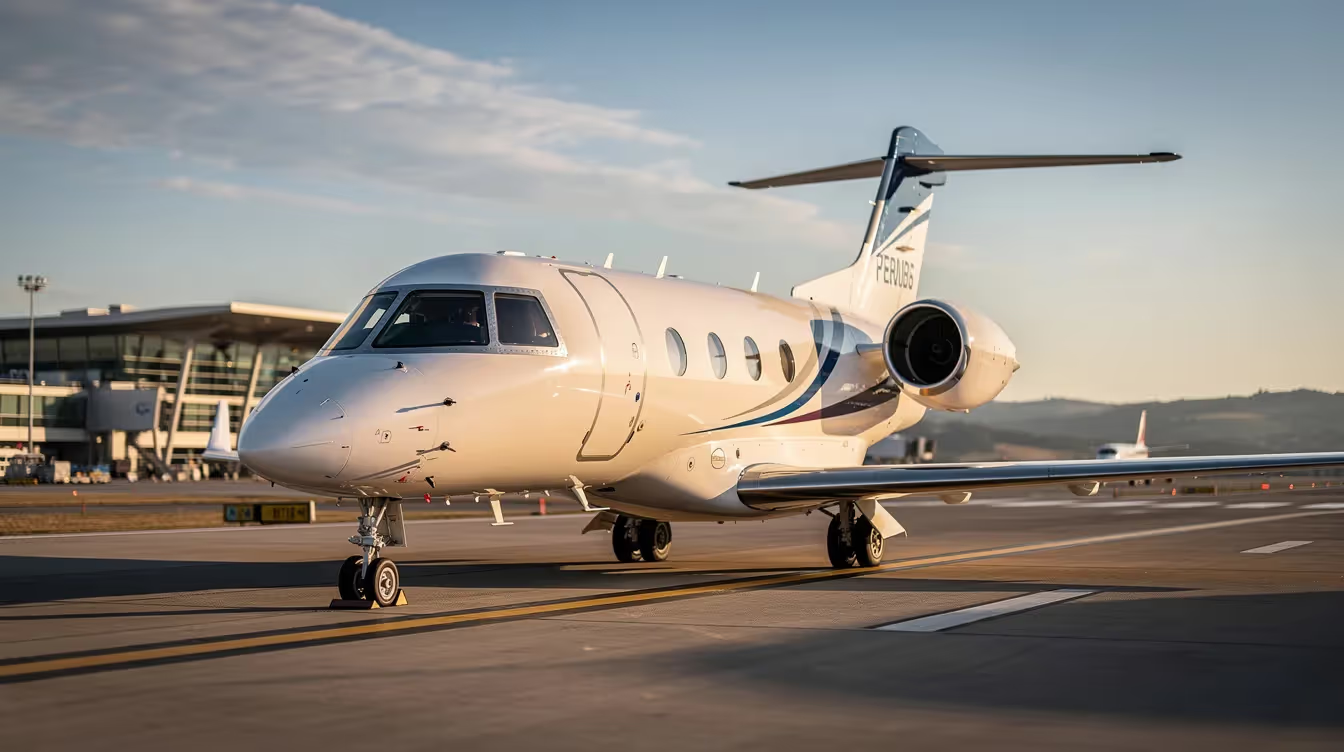
The Learjet 35, first released in 1973, is recognized as one of the fastest business jets in its class and stands out as one of Bombardier's most successful light jets. With many still in service after 50 years, it remains a benchmark for successful light jets in the private jet charter market. For travelers exploring private jet charter options, the Learjet 35 continues to deliver solid value, speed, and operational flexibility on routes across North America and beyond, appealing to both discerning flyers and corporate jet investors.
The Learjet 35 is a twin-engine light business jet first delivered in 1973.
It is typically configured for six to eight passengers.
Production ran through the early 1990s.
The Learjet 35 and its 35A variant became popular for private jet charter, medevac, and military missions worldwide.
The United States Air Force operated the Learjet 35 as the C-21A.
Cruise speed is around 430–450 knots.
Range is approximately 2,056–2,857 statute miles, depending on configuration.
The Learjet 35 can travel nonstop on many routes.
It has a service ceiling of 45,000 feet, allowing it to soar above most weather disturbances.
Efficient Honeywell TFE731-series engines provide low fuel burn compared to earlier turbojets.
The Learjet 35 can operate on short runways, generally requiring between 4,200 and 4,972 feet for takeoff and as little as 2,550 feet for landing.
The Learjet 35 is often described as a 'pilot’s airplane' due to its demanding handling characteristics.
Many Learjet 35/35A aircraft remain active on the charter market today.
Platforms like Jettly can source Learjet 35s globally for cost-conscious private travelers.
Later sections cover history, variants, cabin layout, performance, operating costs, use cases, and how to charter a Learjet 35 through Jettly.
The Learjet 35 is a twin-engine light business jet developed by Gates Learjet, with production later supported by Bombardier Learjet after the 1990 acquisition. This aircraft first flew on August 22, 1973, received FAA type certification shortly after, and entered service around 1974.
Production continued into the early 1990s, with the final aircraft rolling off the line at serial number 677. Approximately 738 Learjet 35/35A/36 family aircraft were delivered, making it the best-selling Learjet model as of 2020. As of 2020, more Learjet 35s have been sold than any other Learjet aircraft, with many still in service after 50 years. In a 2018 survey conducted by Corporate Jet Investor, 14.9% of Americans recognized the Learjet brand, surpassing the 12.5% recognition rate for Boeing.
The aircraft serves multiple roles:
Private charter and corporate shuttles
Air ambulance and medevac operations
Government and military transport, including use by the U.S. Air Force under the designation C-21A for officer transport and medical evacuation
With typical seating for six to eight passengers, distinctive tip tanks at the wingtips, and a reputation as one of the fastest business jets in its class, the Learjet 35 established the Learjet brand as synonymous with speed and performance in light jet aviation.
The Learjet 35 evolved from the earlier Learjet 25, now powered by two Garrett TFE731 turbofan engines. The Garrett TFE731-2 turbofan engines provide a thrust of 3,500 pounds each. This new engine configuration, powered by two advanced turbofans, delivered increased power and reduced noise compared to previous turbojet engines. The transition to the new engine marked a significant leap in operational efficiency, performance, and range capability.
Wing configuration: Low-swept wing with 253.3 sq ft wing area, NACA 64A-109 modified airfoil, and wingtip fuel tanks for extended range
Powerplant: Twin TFE731-2-2B turbofans (on the 35A), each delivering 3,500 pounds of thrust
Fuel efficiency: Up to 40% reduction in fuel burn compared to turbojet predecessors
Tail design: T-tail configuration optimizing climb rates and handling
Noise compliance: Met FAR Part 36 standards, significantly quieter than earlier Learjet generations
The Learjet 35 features a low wing and T-tail configuration, which enhances its aerodynamic performance.
The aircraft features a service ceiling of 45,000 feet, allowing pilots to cruise above most weather and commercial aircraft traffic. Pressurization maintains comfortable cabins at high altitude, enhancing passenger comfort on longer flights.
The Learjet 35 family includes the baseline 35, the improved 35A, and the closely related longer-range Learjet 36/36A variants. Each served distinct market needs through two decades of production.
The original Learjet 35 featured TFE731-2-2A engines and entered service in 1973–1974. Production numbers were limited before the upgraded model took over.
Introduced in 1976 as an upgraded version of the original Model 35, the Learjet 35A featured improved TFE731-2-2B engines, increased fuel capacity with expanded tip tanks, and a longer range of approximately 2,789 miles. Over 600 units were built before production ended in 1994, making it the dominant variant in the Learjet 35 family.
These extended-range versions featured a larger fuselage fuel tank, sacrificing some cabin space for additional fuel capacity. The Learjet 36 proved ideal for transcontinental missions and record-setting flights.
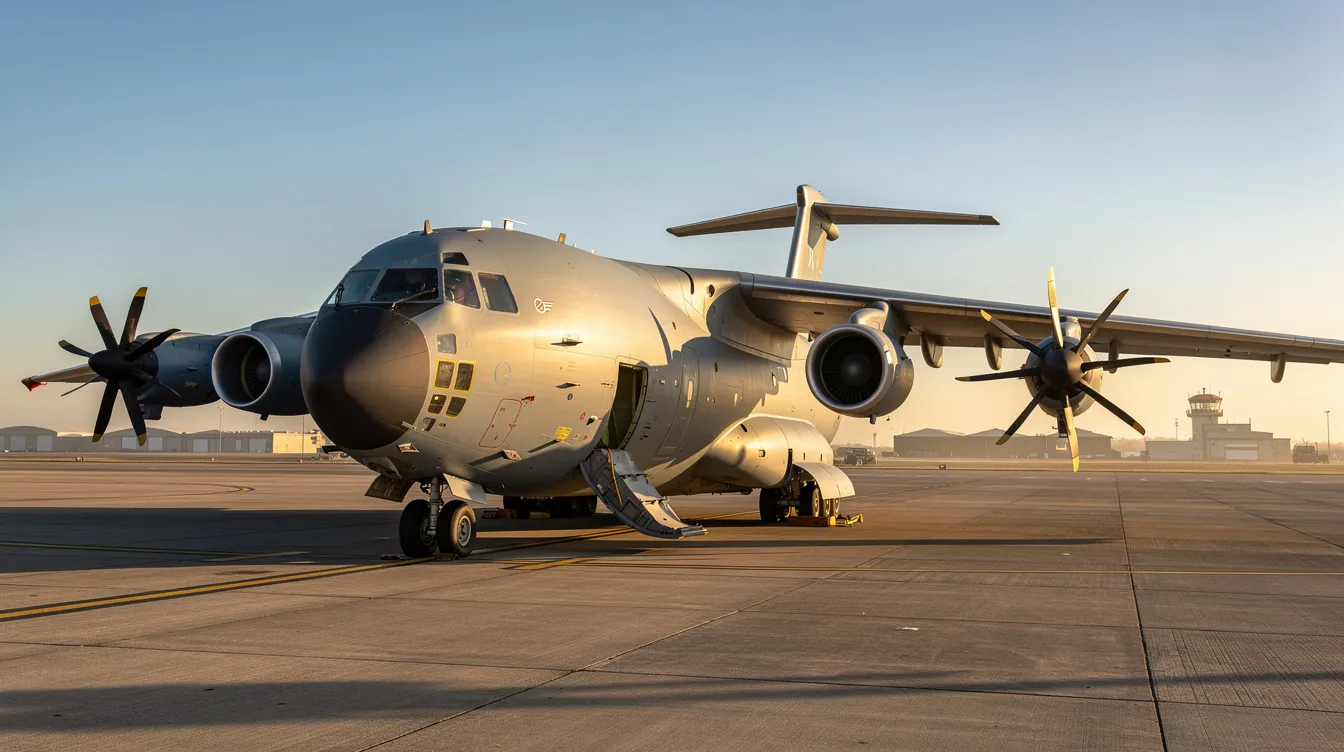
The Learjet 35 saw widespread military adoption and notable operational roles:
During the Cold War, the Finnish Air Force used the Learjet 35/36 for monitoring Soviet aircraft over the Baltic Sea and Arctic regions.
Argentina's Escuadrón Fénix made extensive use of Learjet 35s during the 1982 Falklands War, primarily for diversion and reconnaissance missions.
The U.S. Air Force operated over 200 Learjet 35s under the designation C-21A for officer transport and medical evacuation between 1984 and 1985.
Various other countries, including Italy, Japan, Canada, Finland, and Saudi Arabia, have operated Learjet 35 variants for transport, reconnaissance, and training.
Notable achievements include around-the-world record flights in the mid-1970s. The aircraft’s presence in films and association with celebrities helped cement the Learjet brand in popular culture.
As of January 2018, the U.S. National Transportation Safety Board database lists 25 fatal accidents involving the Learjet 35 and 35A, reflecting the aircraft’s long operational history and demanding handling characteristics.
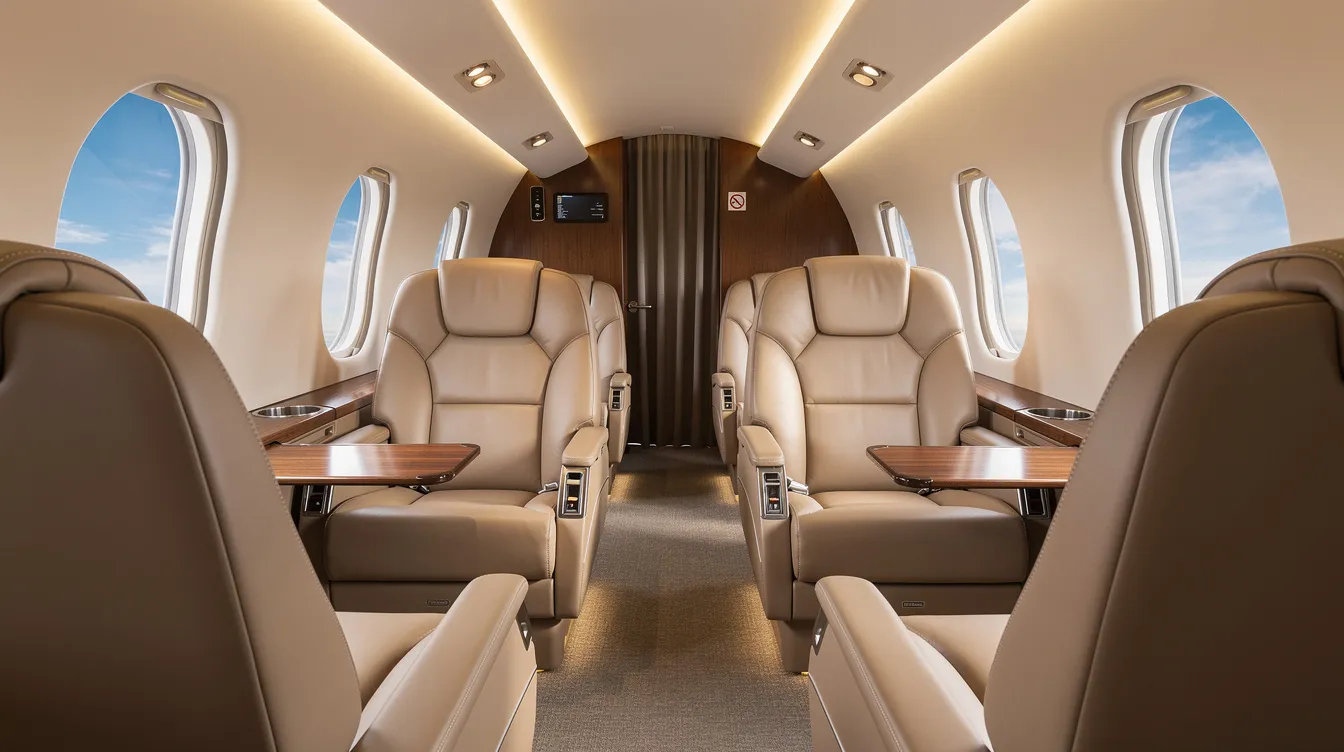
The Learjet 35 cabin is compact but efficient, designed primarily for six to eight passengers on short- to medium-haul missions lasting one to three hours.
|
Feature |
Specification |
|---|---|
|
Cabin length |
12 ft 9 in (3.89 m) |
|
Cabin width |
4 ft 9 in (1.45 m) |
|
Cabin height |
4 ft 3 in (1.30 m) |
|
Baggage space |
30–40 cu ft |
|
Passenger capacity |
6–8 (max 10) |
Most configurations feature club-style seating for four passengers with additional forward or aft seats. Comfortable cabins include swivel and reclining leather seats, multiple oval windows for natural light, and a basic refreshment center. The cabin height under 6 feet means passengers lean slightly when moving about. This aircraft suits shorter trips rather than transcontinental journeys.
Charter operators have updated many Learjet 35s with:
Refreshed interior materials
Collins avionics system upgrades
Electronic flight information system displays
Flight management system integration
Wi-Fi and streaming capabilities
Jettly can present multiple Learjet 35 options with photos and interior layouts, helping travelers choose configurations matching their comfort and baggage needs, and compare them with other private charter aircraft across its global fleet, reflecting its role among leading private and charter airlines.
The Learjet 35 earned its reputation as one of the fastest light jets of its era, capable of linking major city pairs nonstop while operating from short runways at regional airports.
|
Specification |
Value |
|---|---|
|
Performance maximum speed |
471 kn (542 mph) at 25,000 ft |
|
Cruise speed |
418–451 kn |
|
Range (typical load) |
Approximately 2,056–2,857 nm |
|
Service ceiling |
45,000 ft |
|
Max takeoff weight |
18,000–18,300 lb |
|
Stall speed (landing config) |
96 kn |
|
Initial climb rate |
4,340 fpm (sea level) |
|
One engine climb |
1,280 fpm |
Takeoff run: Generally between 4,200 and 4,972 ft to clear a 50 ft obstacle
Landing run: As little as 2,550 ft from 50 ft
These figures enable access to many secondary airports with runways in the 4,000–5,000-foot range. The aircraft demonstrates good handling characteristics across its flight envelope.
Actual performance varies based on weight, runway elevation, temperature, and specific variant. Operators evaluate these factors during flight planning.

The Learjet 35 represents a cost-efficient option in the light jet category, often more affordable on an hourly basis than newer models with similar seating. Travelers evaluating this aircraft can review a comprehensive guide to private jet charter costs and explore tips for booking the cheapest private jet flights. A wide range of services is available for the Learjet 35, including chartering, flexible leasing options, and technical upgrades, making it a versatile choice for both private and business aviation needs.
Acquisition Costs: As of 2018, the price of a Learjet 35 from the 1980s starts at around $500,000, while a Learjet 35 in good condition costs approximately $8 million.
Operating Expenses: The total annual budget required to operate a Learjet 35 for 200 hours per year is estimated to be $900,981, which translates to a cost per mile of $10.85. If operated for over 400 hours annually, the budget required increases to $1,492,574, resulting in a cost per mile of $8.99.
Pre-owned late-model 35A examples typically trade under USD 1.5 million. Older airframes from the 1980s often appear in the $800,000–$1.2 million range, and prospective buyers or frequent charterers can use a private jet charter cost estimator to benchmark these ownership figures against on-demand charter rates or buying a seat on a private jet, depending on:
Maintenance status and engine hours
Avionics upgrades
Airframe condition and inspection history
Key cost factors include:
Fuel burn: Approximately 197–200+ gph at cruise
Engine overhauls: $300,000–$500,000 every 3,600 hours
Insurance: $50,000–$100,000 annually
Crew costs: $300–$500 per flight hour
Charter rates for light jets like the Learjet 35 typically fall in the $3,000–$5,000 per hour range, competitive with other legacy light jets in the private jet charter market.
Business trips: LA–Vegas in under 2 hours, New York–Miami nonstop
Family leisure: Resort destination hops with up to eight passengers
Medical evacuation: Organ transport requiring rapid flexibility
Government response: Missions demanding speed and short runway access
Jettly’s marketplace can compare Learjet 35 pricing against newer light jets, display empty leg opportunities, enable crowdsourced and shared private flights, and help customers balance cost, speed, and comfort while leveraging various ways to get a seat on a private jet.
Jettly operates as a digital private jet charter platform, giving customers on-demand access to aircraft, including the Learjet 35, from a global network of operators and an airport locator tool for finding suitable departure and arrival airports, positioning it among the best private jet charter companies for luxury travel.
Enter departure and arrival airports
Select dates and passenger count
Receive instant pricing estimates across suitable aircraft
Compare Learjet 35 options with photos and specifications
Complete digital contracting and payment
Transparent pricing: No hidden fees or commissions
No long-term commitment: On-demand access without jet cards or fractional ownership, although frequent flyers may still consider world-class corporate jet card programs for predictable hourly rates
Aircraft comparison: Side-by-side evaluation of available jets
Empty legs: Access to repositioning flights at 30–75% savings
Jettly works exclusively with licensed, regulated operators whose aircraft and crews meet civil aviation authority standards. Travelers who fly frequently can also benefit from Jettly private jet memberships as a flexible alternative to NetJets fractional ownership. Many Learjet 35s on the platform feature upgraded avionics and well-documented maintenance histories.
Ready to explore Learjet 35 availability? Request a quote at Jettly.
The Learjet 35, while an older design, remains relatively fuel-efficient within its vintage light jet class. The TFE731 turbofan engines deliver better efficiency than the turbojets they replaced, supporting both regional missions and international private jet flights when properly planned.
Environmental factors include:
Right-sizing: Using a light jet for small groups avoids fuel waste from larger aircraft
High-altitude cruise: Flying at 45,000 feet minimizes certain emissions impacts
Efficient routing: Direct flights reduce fuel consumption versus hub connections
Many charter customers explore carbon offset programs to balance travel impact. Jettly’s digital model supports efficiency by helping travelers choose appropriately sized aircraft and direct routings, reducing unnecessary repositioning.
This section addresses common questions about the Learjet 35 not fully covered above.
Yes, many Learjet 35 and 35A aircraft remain in active service worldwide with charter, medevac, and corporate operators. Robust airframes, available parts, and avionics upgrades have kept these jets flying for over 50 years. Availability varies by region, and platforms like Jettly can show real-time options when customers search specific routes.
The Learjet 35’s cabin and exterior noise levels are generally higher than those of the latest-generation light jets, reflecting its 1970s design. However, many operators have improved cabin insulation over time. Most passengers find the environment comfortable for flights of a few hours, especially with headsets for calls or entertainment.
A typical Learjet 35 offers roughly 30–40 cubic feet of total baggage space, accommodating carry-ons and medium checked bags for six to eight travelers within weight limits. Exact capacity varies by interior layout, so confirm luggage needs with the charter provider or through Jettly before booking.
The Learjet 35 operates from relatively short runways, generally requiring between 4,200 to 4,972 feet for takeoff and as little as 2,550 feet for landing. This enables access to many regional and secondary airports closer to final destinations. Specific suitability depends on runway length, elevation, temperature, and aircraft weight, which operators evaluate during trip planning.
Most Learjet 35s offer comfortable leather seating, a small refreshment center with drinks and light snacks, and basic storage for personal items. Wi-Fi and streaming availability depend on individual aircraft upgrades. Travelers needing specific amenities, like in-flight connectivity or special catering, can specify preferences when requesting a quote through Jettly.
The Learjet 35 remains a practical choice for travelers who value speed, range, and cost efficiency. Despite production ending over three decades ago, well-maintained Learjet 35 and 35A aircraft continue serving charter, medevac, and government missions worldwide.
For trips with up to eight passengers requiring quick connections between regional airports, this proven aircraft delivers solid value, similar in cabin capacity to mid-size options like the Learjet 60 available for private jet rental or fractional solutions from industry leaders such as NetJets. The Learjet 35 combines the speed and range that made the Learjet brand famous with operating economics that appeal to cost-conscious travelers, whether they are flying popular transcontinental routes or accessing major hubs such as New Delhi with dedicated private charter services or private jet charter in Kolkata, West Bengal.
Ready to experience private travel on your terms? Explore flight options or request a quote at Jettly.
Share this post:
Jay Franco Serevilla
Apr 16, 2026
|
5
min read
Discover tips and trends in the industry.
5
min read
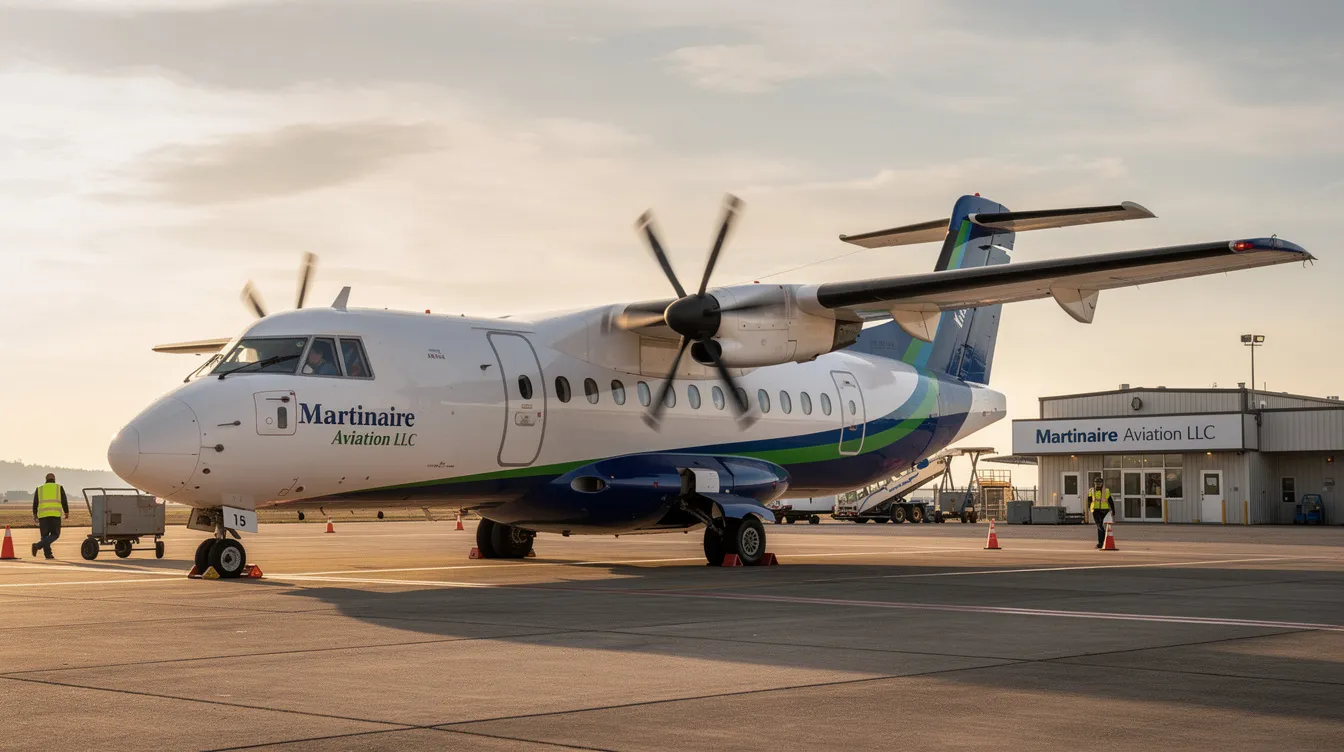
Martinaire Aviation LLC: Cargo Operations, Careers, and How It Compares to Private Charter
Martinaire Aviation LLC, founded in 1978, is a leading cargo feeder carrier in the U.S., specializing in overnight freight operations. With a fleet of turboprop aircraft, it connects regional airports to major sorting hubs, primarily serving integrators like UPS. This article explores Martinaire's operations, career opportunities, and how it contrasts with private charter services like Jettly.
Read More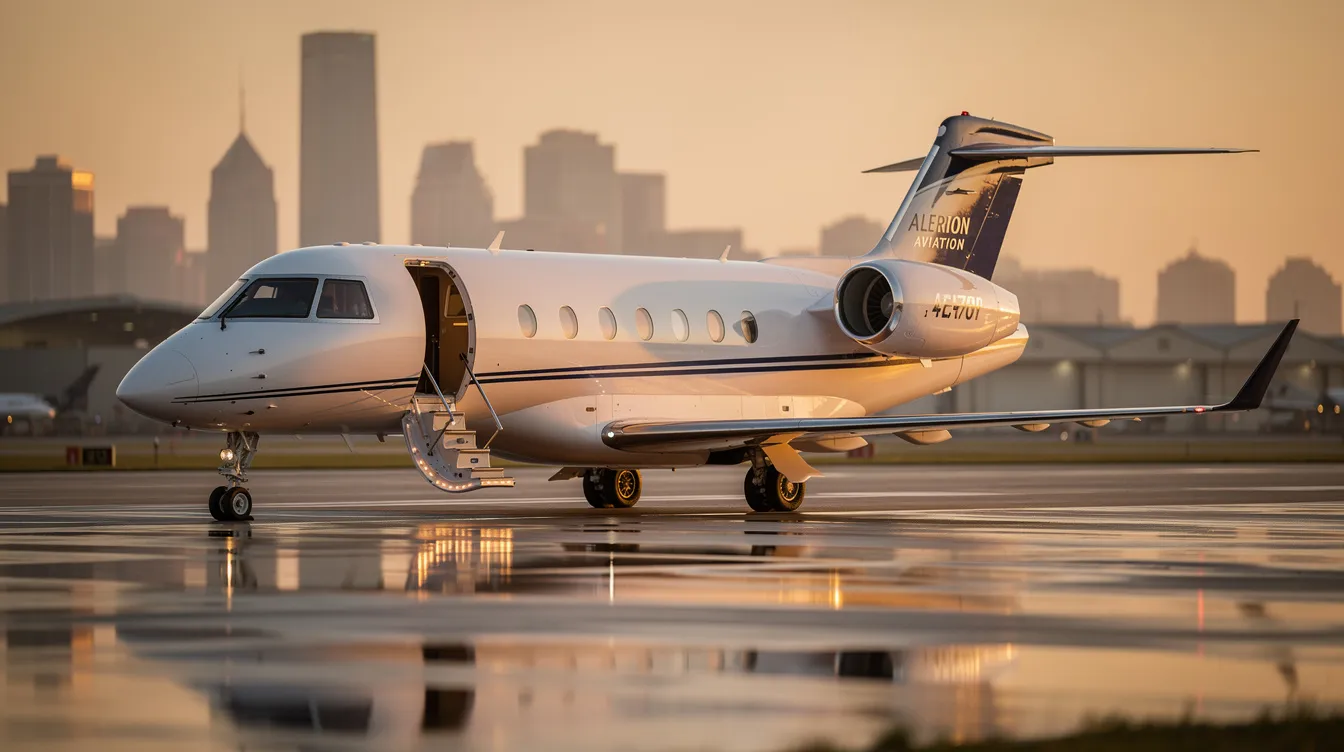
5
min read
Alerion Aviation: Charter, Aircraft Management, and How Jettly Helps You Compare Options
Alerion Aviation is a premier boutique private aviation company specializing in aircraft management, on-demand charter, and in-house maintenance. With a strong safety record and a large fleet operating from key U.S. locations, Alerion offers personalized service for travelers and aircraft owners. Jettly enhances the experience by providing a digital marketplace for comparing charter options, ensuring travelers find the best fit for their needs.
Read MoreStay updated with our latest insights and tips to elevate your journey with us.
MEMBERSHIPS AND ASSOCIATIONS



Disclaimer: Jettly operates as a charter broker, offering access to a global digital jet charter marketplace. Jettly is not a direct air carrier and does not own or operate aircraft. All advertised flights are conducted by third-party air carriers that are fully licensed and hold the appropriate Part 135 or Part 121 certifications issued by the Federal Aviation Administration (FAA) or equivalent regulatory authorities under U.S. or foreign law. Jettly complies fully with the U.S. Department of Transportation's Part 295 and Part 298 Charter Broker regulations. Jettly does not carry additional liability insurance. Passengers are covered by aircraft operator insurance. TICO: 50023770


