



Login
Get Instant Pricing On 23,000+ Aircraft

>
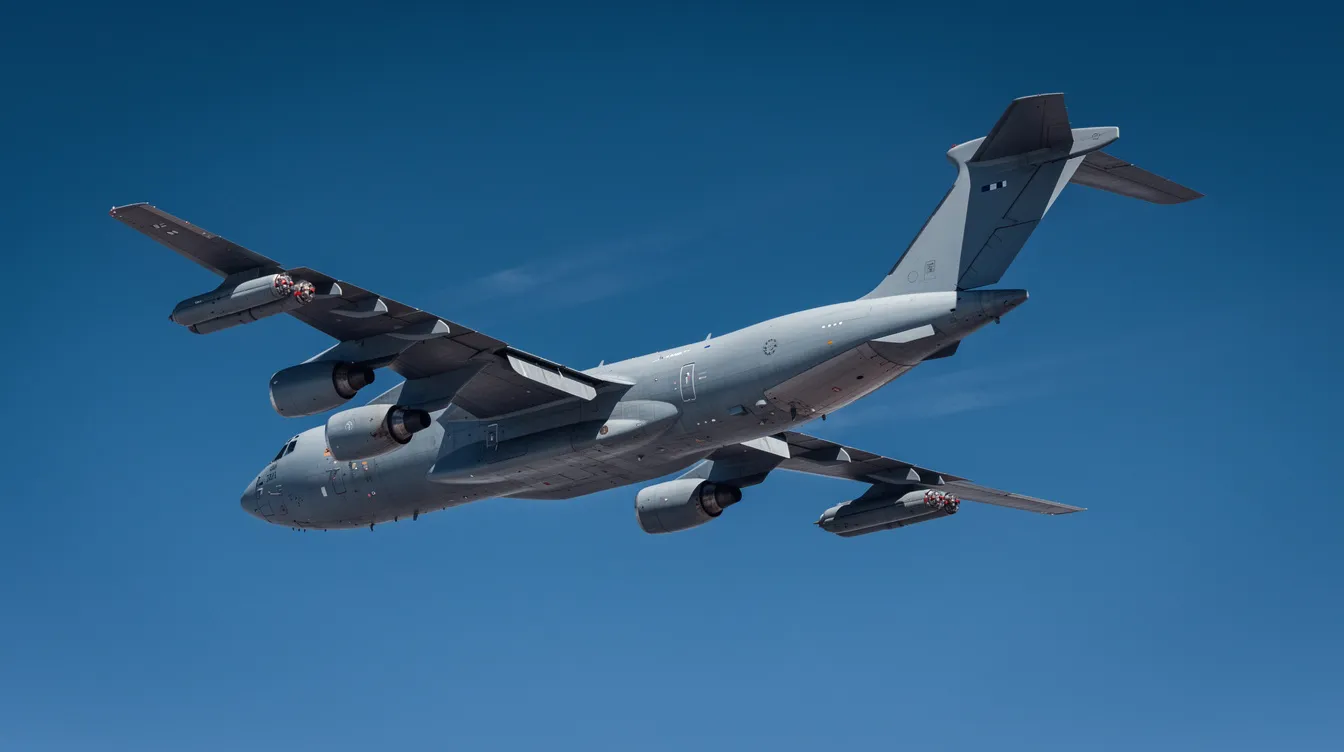
The Boeing KC-135 Stratotanker is one of the longest-serving aircraft in the United States military. KC-135 accidents refer to crashes and serious incidents involving the KC-135 Stratotanker, which has suffered more than 50 fatal losses since entering service, including the March 2026 crash in western Iraq that killed six crew members. Understanding KC-135 accidents is important for improving aviation safety and informing both military and civilian flight operations. Designed for aerial refueling, it has been a backbone of the US military’s tanker fleet since the late 1950s.
For aviation enthusiasts, military historians, and private aviation professionals, those accidents draw attention because the KC-135 operates in some of the most demanding conditions in aviation—flying in close proximity to other aircraft, carrying tens of thousands of pounds of fuel, and logging hours in combat zones from the Middle East to Central Asia. This article examines the history of KC-135 accidents, notable crash cases, common causes and risk factors, the safety improvements that followed, and the lessons they offer for military flight operations and private aviation safety alike.
The KC-135 Stratotanker was manufactured by Boeing in the 1950s and 1960s, with a total production run of 732 aircraft delivered between 1957 and 1965. It has been a key refueling aircraft since the 1950s, enabling combat aircraft to stay on mission longer without needing to land for refueling by topping off their fuel in mid-flight. The KC-135 has logged millions of flight hours over more than six decades, and roughly 375 Stratotankers remain in the active inventory today - many flown by the Air National Guard and Reserve.
Despite a generally strong safety record relative to the fleet's age and operational tempo, the KC-135 Stratotanker family has experienced over 50 fatal crashes since entering service. Mishap rates have trended downward over the decades thanks to better maintenance practices, modernized systems, and improved crew training. Still, the combination of aging airframes, parts obsolescence, and the stress of high-tempo operations continues to present risk.
The most recent widely reported incident occurred on March 12, 2026, when a KC-135 Stratotanker crashed in western Iraq during a combat mission. Six crew members were killed. The aircraft went down over friendly airspace while supporting ongoing U.S. operations in the Middle East. A second KC-135 involved in the incident landed safely. U.S. Central Command confirmed that the loss was not caused by hostile fire or friendly fire, and the investigation remains ongoing.
This article is informational. It focuses on concrete dates, locations, and confirmed or probable causes drawn from official reporting and credible sources. It does not speculate beyond what investigators or Pentagon officials have stated publicly. While Jettly operates exclusively in the private jet charter market, the safety lessons that emerge from military tanker operations - crew resource management, maintenance discipline, coordination across teams - are relevant to flight operations and safety culture across all of aviation.
Several significant KC-135 accidents illustrate the kinds of failures, institutional responses, and reforms that have shaped the aircraft's operational history. The following cases are presented chronologically, each offering a view into the specific circumstances that led to the loss.
In January 1965, a KC-135 crashed near Wichita, Kansas, killing 30 people. The Wichita crash highlighted vulnerabilities in rudder control systems for large aircraft. At the time, the KC-135 fleet was still relatively new, but the accident exposed mechanical weaknesses that required immediate attention. The crash led to stricter inspection requirements for flight control linkages and reinforced the need for strict operational envelopes for KC-135 pilots - something that became standard practice following several earlier accidents. In-flight fuel tank explosions have also been linked to electrical arcing in fuel systems, a concern that investigators examined across the broader tanker fleet after incidents like this one.
One of the most consequential KC-135 incidents was not a solo crash but a mid-air collision. The Palomares mid-air collision in 1966 involved a KC-135 and a B-52 bomber during a routine aerial refueling operation over southeastern Spain. Both aircraft were destroyed. The B-52 had been carrying nuclear weapons, and the incident scattered radioactive material over the Spanish countryside. The Palomares incident raised awareness about nuclear safety related to military aircraft operations and triggered environmental and diplomatic implications that can arise from military aircraft accidents involving hazardous cargo. Spain and the United States undertook a massive cleanup, and the event led to policy changes around flying nuclear-armed aircraft over populated areas.
The 1987 Fairchild crash emphasized the dangers of wake turbulence for large aircraft. During operations near Fairchild Air Force Base in Washington state, wake turbulence from other aircraft contributed to a loss of control. The accident reinforced the importance of separation standards during tanker operations, especially when multiple large planes share close airspace. It also prompted revisions to refueling track design and altitude assignments.
On May 3, 2013, a KC-135 departed from the Manas Transit Center in Kyrgyzstan during a high-tempo period supporting U.S. operations in Afghanistan. The 2013 Kyrgyzstan crash was caused by a flight-control system malfunction. Shortly after takeoff, the aircraft experienced a Dutch roll - a combined yaw and lateral oscillation - that the crew attempted to counter with rudder input. The situation escalated, overstressing the tail structure until it failed. The plane broke apart in flight, and three crew members were lost.
The investigation faulted both the mechanical failure and insufficient crew training. Procedural guidance at the time did not clearly assign corrective actions for this type of oscillation. The accident drove revisions in training curricula, particularly around simulator exercises designed to replicate combined failures - flight control augmentation loss, engine issues, and high-weight takeoff scenarios.
The most recent and widely reported KC-135 crash occurred on March 12, 2026. The aircraft was conducting a combat refueling mission in support of Operation Epic Fury when the incident occurred in friendly airspace over western Iraq. Six crew members were killed aboard the downed aircraft. A second KC-135 involved in the mission landed safely.
Central Command's early statements ruled out hostile fire and friendly fire as causes. The Pentagon confirmed the crash was not due to hostile fire. Early reporting described an apparent collision between the two aircraft, though the precise mechanism - whether structural contact, wake turbulence, or a flight control issue - remains under investigation. The KC-135 was involved in US operations against Iran as part of broader Middle East strike support, and the crash underscored that the risks of close-proximity tanker operations persist even with modern safety practices.
The crash involved two KC-135 aircraft during a combat mission, and it highlighted the residual danger when two aircraft operate simultaneously on refueling or rendezvous tracks. Notable accidents of the KC-135 include failures from mechanical issues and mid-air collisions, and this incident appears to fall into the latter category.
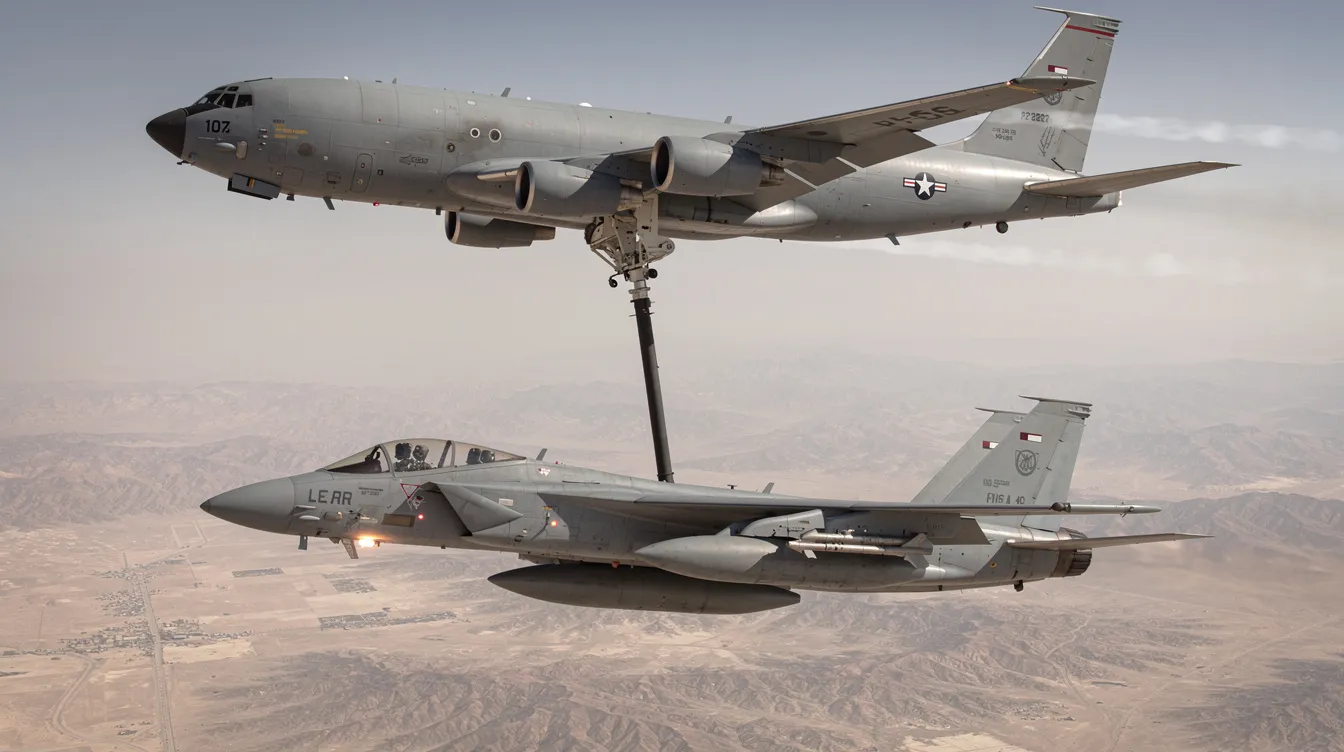
The KC-135's operational profile is among the most demanding in military aviation. Typical sorties last many hours, often in remote or austere regions and sometimes near active combat zones in Iraq, Kuwait, or elsewhere in the Middle East. Refueling missions require precise formation flying, area rendezvous, and exacting boom or drogue maneuvers that place multiple aircraft in close proximity - where misjudged separation or timing can lead to a collision.
Standard crew members on a KC-135 include:
Pilot: Masters formation flying, emergency breakaway procedures, and heavy-weight takeoff profiles.
Copilot: Assists with navigation, communication, and supports the pilot in all flight operations.
Boom operator: Guides receiver aircraft into position, managing the physical connection at speeds above 300 knots.
Additional support or maintenance aircrew may be present on some missions, each requiring specialized training.
All crew must coordinate tightly during night operations, adverse weather, and high-workload scenarios.
Fatigue is a persistent risk factor. Extended sorties, rapid turnarounds, and rotating deployments - common during high-tempo operations like those in support of missions over Israel, Iran, and the broader theater - compound the problem. The KC-135 rarely experiences mishaps according to a 2008 Air Force profile, but when incidents do occur, the consequences tend to be severe given the aircraft's size and fuel load.
Typical accident risk factors specific to KC-135 operations include:
Mid-air collision risk during refueling tracks
Structural or systems issues linked to aging airframes
Human factors such as communication breakdowns, misjudged separation, or procedural deviations
The aircraft's long operational history led to recurring inspections and technical updates for safety, but parts obsolescence - some components are no longer manufactured and must be rebuilt - adds another layer of complexity. A 2024 RAND study on Air Force mishap trends confirmed that while rates have dropped significantly since the Cold War, aging fleets remain a persistent concern.
During Operation Epic Fury in March 2026, KC-135s and other tankers were supporting strike packages that required rapid turnarounds, overlapping refueling tracks, and coordination with multiple fighter and bomber types. These conditions - compounded by night operations and contested or shared airspace - illustrate why even experienced service members face elevated risk on tanker missions. The March 2026 crash, which occurred on a Thursday, reinforced the view among USAF officials that residual risk remains when multiple large aircraft operate in close proximity.
Modern avionics upgrades, traffic collision avoidance systems, and standardized refueling procedures have reduced the frequency of KC 135 accidents over the decades. But the 2026 crash in Iraq shows that these safeguards are not foolproof.
While Jettly does not operate military tankers, private jet charter operators on the platform also manage fatigue, crew resource management, and aircraft maintenance with the same rigor, carefully planning for ongoing private jet maintenance costs. The broader topic of flight safety - whether in a combat zone or on a business trip from Florida to Ohio, Indiana to Alabama, or Kentucky to Washington - connects military and civilian aviation through shared principles.
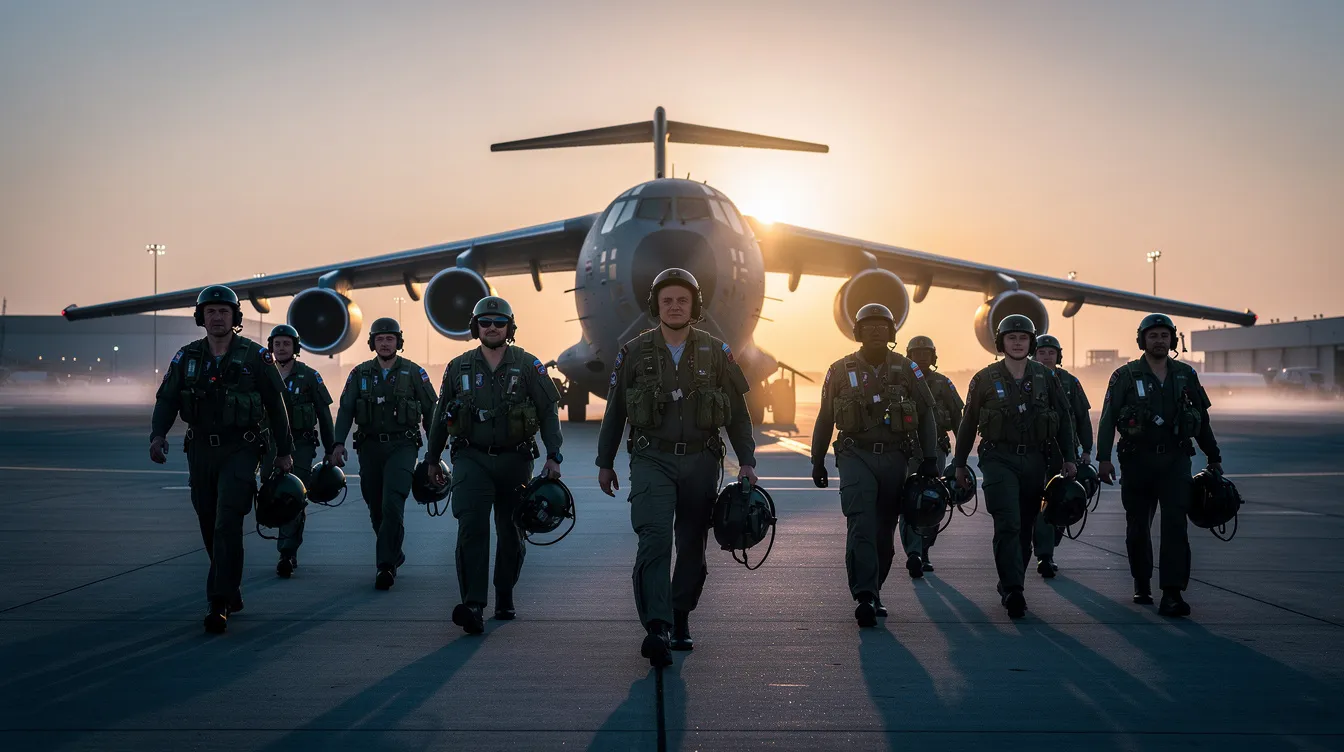
Each major KC-135 accident has prompted technical and procedural reforms within the U.S. Air Force. After the 1965 Wichita crash, inspection regimes for flight control linkages were tightened. After the 1987 Fairchild incident, refueling altitude and separation standards were revised. After the 2013 Kyrgyzstan crash, simulator training was overhauled to include emergency breakaways and combined failure scenarios. Safety lessons from KC-135 incidents have shaped maintenance procedures and crew training across the USAF tanker community.
Specific improvements over the decades include:
|
Area |
Reform |
|---|---|
|
Refueling procedures |
Revised altitudes, separation standards, and breakaway protocols |
|
Crew training |
Enhanced simulator exercises for Dutch roll, engine failure, and collision avoidance |
|
Fatigue management |
Stricter crew duty limits and mandated rest periods, especially during deployments |
|
Maintenance |
Continuous depot-level structural inspections and avionics upgrades |
|
Fleet transition |
Gradual introduction of the KC-46 Pegasus to replace aging KC-135s |
The KC-135 underwent major modernization with CFM56 engine upgrades for performance and safety, replacing the original J57 turbojets with more fuel-efficient, quieter, and more reliable turbofan engines. This re-engining program extended the useful life of the fleet and reduced the risk of engine-related failures.
The gradual transition from the legacy KC-135 Stratotanker to newer platforms like the KC-46 is underway, but mixed-fleet operations add temporary complexity. Different cockpit layouts, systems behaviors, flight characteristics, and emergency procedures mean that pilots and ground crews must be proficient across platforms. Even as the KC-135 fleet ages - with some airframes now over 60 years old - continuous structural inspections, avionics upgrades, and strict maintenance intervals are designed to maintain airworthiness until the aircraft's projected retirement around 2040.
A recent GAO report on aerial refueling tankers noted that the Air Force needs more focused metrics and a risk-based mitigation plan for managing the aging fleet, including better tracking of legacy component availability and maintenance backlogs.
Lessons from KC-135 accidents influence not only military doctrine but also civil and private aviation thinking about risk, redundancy, and training. The parallels are closer than many people assume.
Private jet operators face the same foundational challenges as military tanker crews:
Maintaining aging or high-cycle airframes
Managing crew fatigue
Coordinating complex operations
Ensuring that checklists and procedures are followed without deviation
The thing that connects a combat mission over the Middle East with a charter flight from Tel Aviv to London - or from any other point on the globe - is the universal importance of safety culture.
Key parallels between tanker and private jet safety include:
Rigorous operator certification and regulatory oversight
Use of modern avionics and collision-avoidance systems on business jets
Emphasis on crew resource management and standardized checklists
Transparent maintenance records and adherence to inspection intervals
Jettly integrates safety considerations into its digital private jet charter marketplace. The platform partners only with certified Part 135 charter companies and other certified operators that adhere to national and international safety standards. Customers can view operator safety ratings and consider aircraft age and maintenance history when booking. Jettly also leverages data and technology for better route planning and airport selection - using tools like its airport locator tool for shorter ground times, less congested hubs, and optimized scheduling.
It's worth noting that KC-135 tankers do not carry ejection seats or parachutes for crew. The aircraft was never designed with those features, which is one reason why crash survivability is low. Private jets, while also lacking ejection seats, benefit from redundant safety systems, modern avionics, and the fact that they typically operate in far less hazardous environments. For a closer look at how private aviation compares on safety, share this post or read more in Jettly's article on private plane safety statistics and Jettly's guide to the safest private jets in the world.
Despite the tragic history of KC-135 accidents - including the loss of six crew members in western Iraq earlier this year - aviation as a whole has become dramatically safer. The institutional responses to each incident - technical, procedural, and training-based - have reduced both the frequency and severity of major accidents across military and civilian fleets. Modern private charter platforms like Jettly give travelers access to well-maintained aircraft and professionally managed operations, backed by decades of accumulated safety knowledge. For those interested in understanding why so many plane crashes make headlines despite falling accident rates, the KC-135's story offers a clear example of how close attention to every incident drives long-term improvement.
The KC-135 Stratotanker's legacy is defined not only by the missions it has flown but by what the aviation community - military and civilian - has learned from its failures. Every investigation, every comment from officials, every photo of wreckage has contributed to a safer sky for everyone who flies.
Ready to experience private travel on your terms? Explore private charter aircraft, estimate your trip with Jettly's private jet charter cost estimator, or review Jettly's guide on affordable private jet charter pricing before you request a quote at jettly.com. If you’re flexible, you can even crowdsource private jet flights and share empty seats through the platform.
Frequent flyers may prefer Jettly's range of private jet memberships or premium jet card programs, and professionals can earn by joining Jettly’s high-ticket affiliate program. To compare options in the wider market, Jettly’s blog covers NetJets in depth and reviews the best private jet charter companies.
If you’re curious about industry scale, you can learn how many private jets there are in the US and explore a global list of charter airlines, as well as why Jettly is positioned as a flexible NetJets alternative. Broader market overviews include the global fleet of private jets, specialized services like Jettly Eats in-flight catering, and featured operators such as Dexter Air Taxi and Zenflight.
The KC-135 Stratotanker is a military aerial refueling aircraft manufactured by Boeing in the 1950s and 1960s. It extends the range and endurance of combat aircraft by refueling them mid-flight.
Since entering service, the KC-135 family has experienced over 50 fatal crashes. Despite this, improvements in safety and maintenance have reduced accident rates over time.
The March 12, 2026 crash involved two KC-135 aircraft during a combat mission over friendly airspace in western Iraq. The exact cause is under investigation, but it was confirmed not to be due to hostile or friendly fire.
Accidents have driven reforms in crew training, maintenance procedures, refueling protocols, and fatigue management. Modernization efforts like engine upgrades and simulator training have improved operational safety.
The safety culture and lessons from military tanker operations influence private aviation standards, emphasizing crew resource management, maintenance rigor, and adherence to procedures.
No, the KC-135 was not equipped with ejection seats or parachutes, which affects survivability in crashes.
As a backbone of the US military’s air refueling fleet, the KC-135 enables longer combat missions by refueling fighter jets and bombers mid-air, supporting operations worldwide.
The history of KC-135 accidents highlights the challenges and risks of operating a vital but aging military tanker fleet. Over 50 fatal crashes, including the recent March 2026 incident in western Iraq, underscore the complexity of aerial refueling missions and the importance of continual safety improvements. Lessons learned from these accidents have driven significant reforms in training, maintenance, and operational procedures, enhancing safety not only for military tankers but also across the broader aviation community.
For private aviation, the KC-135’s legacy serves as a reminder of the critical role that rigorous safety culture, crew resource management, and technical upkeep play in flight operations. Platforms like Jettly integrate these principles to provide travelers with secure, efficient, and transparent private jet experiences. As the KC-135 fleet transitions to newer aircraft, its story remains a valuable case study in balancing operational demands with safety priorities. Learn more about Jettly’s private jet safety practices, explore our private jet charter cost estimator, review the best private jet charter companies, or discover how many private jets there are in the US.
Ready to experience private travel on your terms? Explore flight options or request a quote at https://www.jettly.com.
Share this post:
Jeff Ryan Serevilla
Oct 20, 2026
|
5
min read
Discover tips and trends in the industry.
5
min read
Range of 737: How Far the Boeing 737 Flies, and When a Private Charter Makes More Sense
The Boeing 737 family offers a range from 1,500 to 3,850 nautical miles, making it versatile for various flight missions. While chartering a 737 can be cost-effective for large groups, private jet options through Jettly provide greater flexibility and access to more airports, often reducing total travel time. Understanding the range and capabilities of the 737 helps travelers make informed decisions about their flight options.
Read More
5
min read
How Many Planes Crashed This Year? (2026 Update)
In 2026, aviation safety continues to improve, with over 600 aviation accidents reported in the U.S. by September, primarily involving small general aviation aircraft. Fatal accidents remain rare in commercial aviation, with only a handful of incidents globally. Understanding the context of these numbers is crucial for travelers concerned about flying safety.
Read MoreStay updated with our latest insights and tips to elevate your journey with us.
MEMBERSHIPS AND ASSOCIATIONS



Disclaimer: Jettly operates as a charter broker, offering access to a global digital jet charter marketplace. Jettly is not a direct air carrier and does not own or operate aircraft. All advertised flights are conducted by third-party air carriers that are fully licensed and hold the appropriate Part 135 or Part 121 certifications issued by the Federal Aviation Administration (FAA) or equivalent regulatory authorities under U.S. or foreign law. Jettly complies fully with the U.S. Department of Transportation's Part 295 and Part 298 Charter Broker regulations. Jettly does not carry additional liability insurance. Passengers are covered by aircraft operator insurance. TICO: 50023770


