



Login
Get Instant Pricing On 23,000+ Aircraft

>
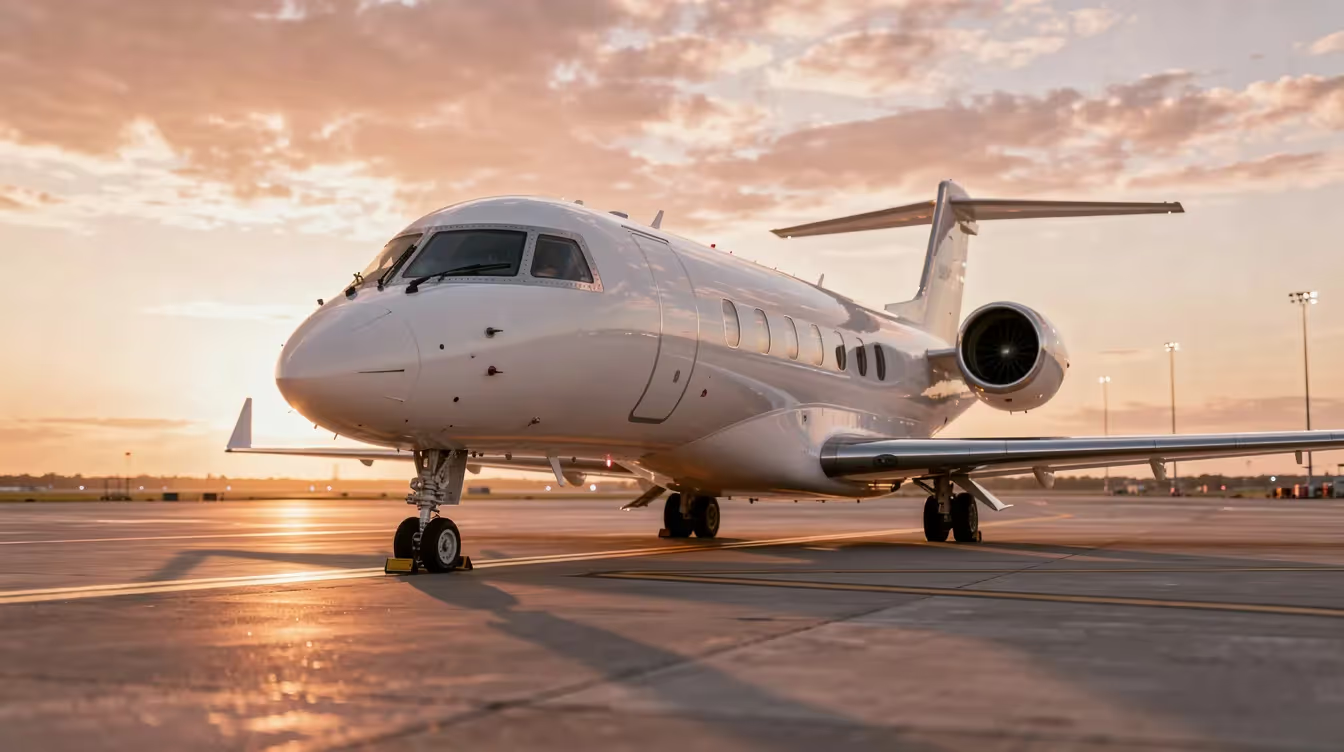
The price of a jet aircraft isn’t a single number. It’s a combination of purchase price, ongoing costs, and charter price per flight hour. In 2026, new private jets range from $2 million for a very light jet to over $400 million for customized VIP airliners. Charter rates span $1,500 to $28,000 per hour, depending on the aircraft flown.
This article comes from the perspective of Jettly, a digital private jet charter platform connecting travelers with 20,000+ aircraft globally for on-demand booking and instant pricing. Whether someone is evaluating private jet ownership, exploring fractional jet ownership, or simply looking to book a one-time private flight, understanding the full picture of costs matters.
Readers will learn three things: what different categories of business jets cost to buy, what they cost to charter per hour, and how Jettly helps optimize those costs across real-world routes. The sections ahead break down ownership vs. charter vs. membership models with concrete examples and price ranges.
Jet aircraft price in 2026 spans from under $1,500 per charter flight hour for turboprop aircraft to over $25,000 per hour for VIP airliners, with most business travelers falling somewhere in between on light jets and midsize jets.
Charter operators generally require a minimum booking of two flight hours, so the starting price to hire a private jet is approximately $4,000 to $7,000, even for shorter trips.
Additional charges such as aircraft positioning fees, fuel surcharges, landing fees, crew costs, and taxes can increase total private jet charter costs by 20–40% beyond the base rate.
In the U.S., the average cost to charter a private jet for a typical 2-hour domestic flight on a midsize jet ranges from $5,000 to $10,000, including all fees.
Private jet ownership, which includes purchase price and annual operating expenses, generally becomes financially viable only for flyers with 200–300+ flight hours per year; for less frequent flyers, on-demand charter through platforms like Jettly is usually more economical.
Jet cards involve an upfront deposit starting around $50,000 or higher, offering fixed hourly rates and guaranteed aircraft availability, making them ideal for frequent travelers.
Most light jet charters on popular routes like New York–Miami or London–Nice fall in the $10,000–$20,000 round-trip range, depending on season, aircraft category, and airport choice.
Jettly’s digital marketplace provides instant estimates, transparent breakdowns of fees airports charge, and access to 20,000+ private aircraft worldwide—often eliminating the need for jet cards or fractional ownership programs.
Travelers can reduce private jet costs significantly through empty leg flights, right-sizing aircraft to passenger count, flexible timing, and using smaller regional airports rather than major hubs.
Charter rates in 2026 vary widely by aircraft category. Here’s what travelers can expect to pay per hour across the spectrum:
|
Aircraft Category |
Example Models |
Charter Rate (per hour) |
Passenger Capacity |
Typical Range (nm) |
|---|---|---|---|---|
|
Turboprops |
Pilatus PC-12, King Air 250 |
$1,500–$3,000 |
6–9 |
1,000–1,800 |
|
Very Light Jets (VLJ) |
Cirrus Vision Jet, Eclipse 500 |
$2,000–$3,500 |
3–5 |
800–1,200 |
|
Light Jets |
Cessna Citation CJ3+, Phenom 300E |
$3,000–$5,000 |
4–7 |
1,200–2,000 |
|
Midsize Jets |
Hawker 900XP, Citation XLS+ |
$4,500–$6,500 |
7–9 |
2,000–3,000 |
|
Super Midsize Jets |
Praetor 600, Challenger 3500 |
$6,000–$8,000 |
8–10 |
3,000–3,800 |
|
Heavy Jets |
Challenger 650, Gulfstream G450 |
$9,000–$13,000 |
10–16 |
3,800–5,000 |
|
Ultra Long Range Jets |
G650ER, Global 7500 |
$12,000–$16,000 |
12–19 |
6,000–7,700 |
|
VIP Airliners |
BBJ, ACJ320neo |
$20,000–$28,000+ |
20–50+ |
5,000–7,000 |
New York–Miami (light jet, 2.5–3 hours): $9,000–$15,000 each way
Los Angeles–New York (super midsize jet, 5–6 hours): $30,000–$45,000
London–Dubai (long-range jet, 7 hours): $70,000–$120,000
Most operators set minimum billable flight times of 1.0–2.0 hours per leg, with two hours being a common minimum. This means even short-haul flights like Los Angeles–Las Vegas (barely 30 minutes of air time) may cost around $8,000–$12,000 on a light jet.
Final charter costs include more than the base hourly rate. Taxes, landing fees, handling charges, crew costs, and potential positioning add 20–40% to the pure hourly figure. Jettly’s private jet charter cost estimator displays these components in an itemized quote view, so customers see exactly how each part of the price is calculated before confirming.
Aircraft purchase prices range from under $2 million for entry-level jets to over $400 million for large executive airliners. Supply chain disruptions from 2023–2026, combined with sustained demand, have kept values 10–20% above 2022 baselines for popular models.
Depreciation hits hardest in the first 5–8 years, often 7% to 20% in the first year for new models, then slows to 5–7% annually as aircraft age. Major refurbishments—avionics upgrades, interior refits—can add $500,000–$2 million to resale value. Records of maintenance, engine hours, and whether the plane has undergone refurbishment significantly affect resale value. Specialized interiors, luxurious amenities, and upgraded avionics also increase the purchase price.
New jets carry a premium for the latest technology and warranties, while used jets can be 20% to 50% cheaper upfront but may require higher maintenance costs.
|
Category |
Example Models |
New Purchase Price |
Pre-Owned Price (10–15 yrs) |
Charter Rate (per hour) |
Passenger Capacity |
Typical Range (nm) |
|---|---|---|---|---|---|---|
|
Turboprops |
Pilatus PC-12 NGX, King Air 250 |
$5–$7 million |
$2–$4 million |
$1,500–$3,000 |
6–9 |
1,000–1,800 |
|
Very Light Jets (VLJ) |
Cirrus Vision Jet, Eclipse 500 |
$2–$2.7 million |
$800k–$2.5 million |
$2,000–$3,500 |
3–5 |
800–1,200 |
|
Light Jets |
Citation CJ3+, Phenom 300E |
$8–$12 million |
$3–$7 million |
$3,000–$5,000 |
4–7 |
1,200–2,000 |
|
Midsize Jets |
Hawker 800XP, Challenger 3500 |
$21–$28 million |
$2–$5 million |
$4,500–$8,000 |
7–10 |
2,000–3,800 |
|
Heavy Jets |
Challenger 650, Gulfstream G450 |
$30–$45 million |
$12–$25 million |
$9,000–$13,000 |
10–16 |
3,800–5,000 |
|
Ultra Long Range Jets |
G650ER, Global 7500 |
$65–$80 million |
$40–$60 million |
$12,000–$16,000 |
12–19 |
6,000–7,700 |
|
VIP Airliners |
BBJ, ACJ320neo |
$90–$120 million (green) / $200–$300 million+ (customized) |
$50–$100 million+ |
$20,000–$28,000+ |
20–50+ |
5,000–7,000 |
Turboprop aircraft like the Pilatus PC-12 NGX and Beechcraft King Air 250 offer a versatile entry into private aviation. New prices run $5–$7 million, with pre-owned examples (10–15 years old) at $2–$4 million. These aircraft excel on short regional flights under 2 hours.
Very light jets (VLJs) are the most affordable entry point into private aviation, designed for efficiency and short-haul flights, with models like the Cirrus Vision Jet, HondaJet, and Cessna Citation Mustang leading the category. The Cirrus Vision Jet SF50 lists around $2–$2.7 million new, while pre-owned Eclipse 500 twin-engine VLJs trade at $800,000–$950,000. The Embraer Phenom 100 falls in the $1.5–$2.5 million pre-owned range. The Cessna Citation Mustang stands out as a popular, affordable light jet ideal for business travel and personal use, known for its cost-effectiveness, range, ease of maintenance, and suitability for access to smaller airports.
Single-pilot capable
Operate from shorter runways and smaller airports
Lower operational costs at $1,000–$2,000 per flight hour
Ideal for ranges under 800–1,200 nautical miles
Many Jettly customers charter these types for cost-efficient regional trips where flying private saves hours compared to commercial airlines without requiring larger aircraft, making them similar to some of the cheapest private aircraft options for budget-conscious buyers.
Cessna Citation CJ3+: $8–$10 million new, $3–$5 million pre-owned
Cessna Citation M2 Gen2: $5–$6 million new, $3–$4.5 million pre-owned
HondaJet Elite II: $6–$12 million new
Embraer Phenom 300E: $10–$12 million new, $5–$7 million pre-owned
Light jets accommodate 4–7 passengers comfortably on 2–3 hour legs. They offer stand-up cabins in some configurations and enough space for productive work or relaxation.
Hawker 800XP (older midsize): $2–$4 million pre-owned
Bombardier Challenger 3500: $26–$28 million new
Gulfstream G280: $25–$27 million new
Embraer Praetor 600: $21–$23 million new
Midsize jets typically accommodate 8 to 10 passengers and cover distances of 2,500 to 3,000 nautical miles, offering enhanced cabin space and range. These larger aircraft serve 6–10 passengers on cross-country missions like New York–Los Angeles or Toronto–Vancouver, with operating costs of $4,500–$8,000 per hour. On Jettly, these types handle the majority of client meetings, business travel, and small-group family trips.
Bombardier Challenger 605/650: $30–$45 million new, $12–$20 million pre-owned (10–15 years)
Gulfstream G450: $15–$25 million pre-owned
Dassault Falcon 900LX: $20–$30 million pre-owned
Heavy jets, such as the Gulfstream G550 and Bombardier Global 6000, are designed for long-range travel, offering spacious cabins and the ability to fly non-stop on intercontinental routes, with operating costs significantly higher than those of smaller jets.
Gulfstream G650ER/G700: $65–$80 million
Bombardier Global 7500: $73–$78 million
Dassault Falcon 8X: $58–$65 million
Ultra-long-range jets, like the Global 7500 and Gulfstream G700, are capable of flying over 6,000 nautical miles, making them suitable for non-stop international flights, but they come with the highest purchase and operating costs in the private jet category.
VIP airliners occupy the top tier. A Boeing Business Jet (BBJ 737-based) starts at $90–$120 million green (unfitted). Fully customized interiors push the total jet aircraft price to $200–$300 million or more. Some celebrity and corporate fleets include jets valued at hundreds of millions combined, drawing from a wide spectrum of private charter aircraft configurations and capabilities.
While Jettly customers rarely buy a private jet outright at these levels, many charter them through the platform for global roadshows, team movements, or high-profile events requiring 25–50+ passengers.
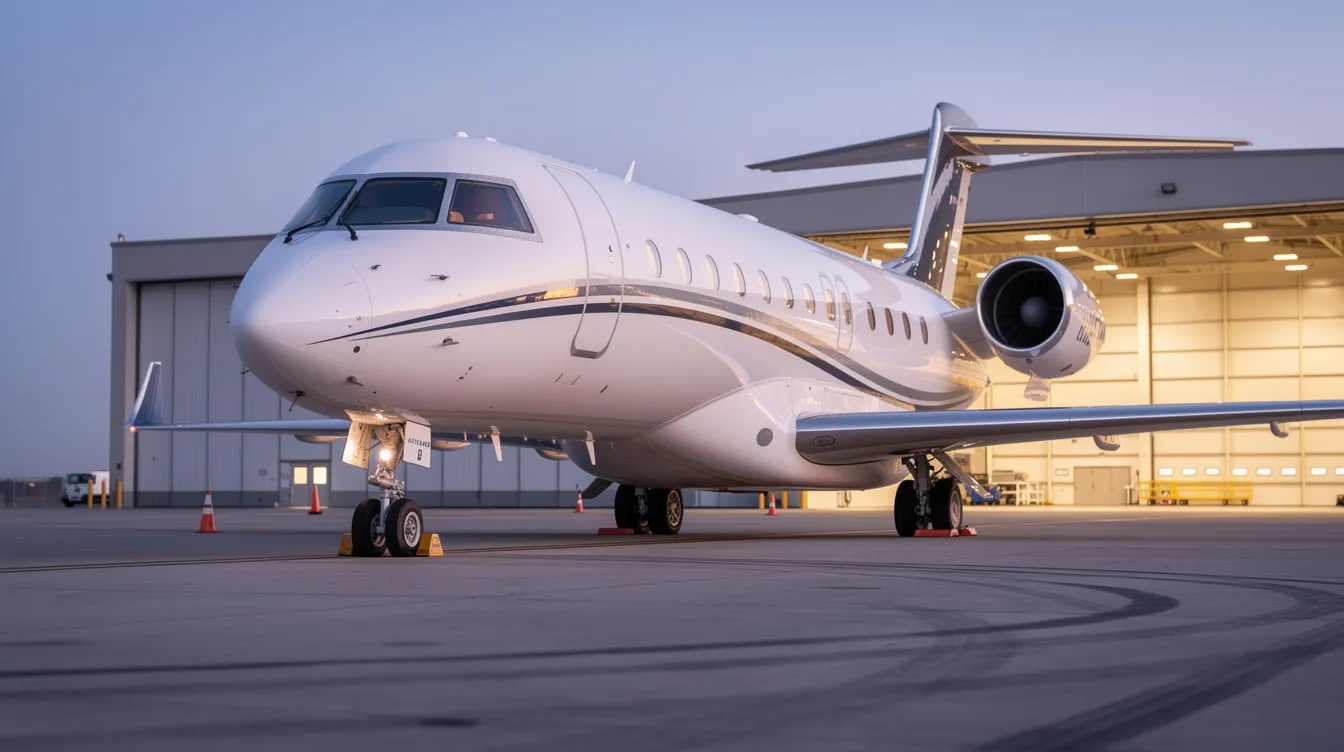
Private jet owners face substantial fixed costs beyond the initial purchase price. Annual operating expenses often reach 10–20% of the aircraft’s market value for active use.
Fuel costs: The largest variable expense, scaling with flight hour totals. Fuel consumption varies from 100–200 gallons per hour for light jets to 300–500+ gallons per hour for larger jets. Fuel typically represents 25–35% of total operating costs.
Maintenance and inspections: Scheduled checks plus unscheduled repairs. Routine maintenance and engine overhaul programs cost roughly $300,000 to $1 million+ annually.
Crew salaries: Pilots and sometimes cabin attendants. Crew salaries typically cost $200,000 to $400,000+ per year for a two-pilot crew.
Insurance: Typically $100,000 to over $500,000 annually, or 1.2–1.8% of hull value.
Hangar fees: Storage and weather protection, ranging from $20,000 to $30,000 per month.
Navigation and handling: Per-flight charges at airports.
A light jet flying 300 hours yearly might cost $700,000–$1.2 million to operate. A heavy jet or ultra-long-range aircraft at similar utilization can exceed $3–$5 million annually.
Annual fixed costs for owning a midsize jet typically range from $800,000 to $1.2 million, while variable costs can add $2,200 to $2,800 per flight hour depending on fuel prices and maintenance reserves.
For large-cabin jets, annual fixed costs can range from $1.4 million to $1.8 million, with variable costs reaching $3,500 to $4,500 per flight hour.
The total cost of ownership for a private jet includes both fixed costs, which accrue regardless of usage, and variable costs, which scale with flight hours, such as fuel and maintenance.
These ongoing costs explain why many high-net-worth travelers and companies prefer on-demand charter via Jettly—especially when flying fewer than 250 hours per year. Charter users pay a blended rate covering these expenses without managing them directly, while prospective owners often consult a complete private jet operating cost breakdown and calculator guide before committing to purchase.
A 6–8 seat light jet, like the Cessna Citation CJ3+, flying 300 hours annually, might budget:
Fuel: $250,000–$350,000 (100–150 gallons per hour at $6–$8/gallon)
Maintenance and inspections: $150,000–$250,000
Insurance: $40,000–$70,000
Crew member salaries and training (1–2 pilots): $180,000–$250,000
Hangar and parking: $30,000–$60,000 (North America/Europe)
Maintenance reserves for future engine overhauls and avionics upgrades: $200–$400 per flight hour
These figures shift based on region, Jet-A fuel surcharges, and whether the aircraft operates under private or commercial rules (FAA Part 135 or EASA AOC). The Federal Aviation Administration and equivalent regulators impose compliance requirements that add administrative overhead.
Charter customers effectively pay a blended hourly rate that incorporates all these elements, handled by operators rather than the traveler.
Fuel burn: 300–500 gallons per hour. At 2026 Jet-A prices, fuel alone costs $3,000–$5,000 per flight hour.
Crew costs: Multiple pilots plus cabin crew, pushing annual crew costs to $500,000–$1 million for full-time staffing.
Hangar fees: High-capacity hangars at major hubs—Teterboro, Van Nuys, Luton—cost $150,000–$400,000 annually for large-cabin aircraft in high-demand markets.
These operational costs drive many organizations toward chartering large-cabin jets through Jettly for specific campaigns or tours rather than maintaining permanent fleets.
Jet aircraft price must be viewed through the lens of how someone accesses the aircraft: owning 100%, owning a share, leasing, chartering as needed, or participating in a fractional ownership program.
A fractional ownership program is a cost-effective alternative to full aircraft ownership, allowing multiple owners to share the costs and usage of a private jet through a structured scheme involving multiple partners and shared hours of flight time.
Each model has distinct trade-offs in cost, flexibility, commitment length, and suitability by annual flight hours. Jettly focuses on on-demand charter and membership-based charter rather than selling aircraft or fractional shares, but customers often compare all options before choosing.
Private ownership means buying the aircraft with cash or financing, covering all operating and capital costs, and typically hiring an aircraft management company for crew, maintenance, and compliance.
Full private jet ownership starts making financial sense above 300–400 flight hours annually, particularly for corporations with predictable, high-volume travel on consistent routes.
Maximum control over schedule, configuration, and branding
No availability constraints
Capital tied up in a depreciating asset
Exposure to residual value risk
Significant fixed costs regardless of flight volume
2026 financing rates increase the effective cost over time
Fractional ownership programs let travelers buy a share (1/16, 1/8, 1/4) of a specific aircraft type with guaranteed hours per year—often 50–200 hours.
1/16 share of a mid-size jet: several hundred thousand dollars upfront
$3,000–$5,000 per occupied hour through providers like NetJets or Flexjet
This model suits flyers who want guaranteed availability and predictable hourly rates but are comfortable with multi-year contracts and less flexibility in aircraft choice, which are key themes explored in depth in our guide to fractional jet ownership pros, cons, and costs.
Jettly isn’t a fractional jet ownership provider but often serves travelers seeking similar flexibility without long-term commitments through membership and on-demand charter.
Private jet leasing comes in two forms:
Wet lease: Aircraft plus crew and maintenance
Dry lease: Aircraft only, lessee provides crew
Leases require significant deposits, multi-year terms, and fixed monthly payments. This spreads capital costs but places operational risk on the lessee.
Leasing reduces the initial jet aircraft price burden but suits organizations flying frequently who want semi-permanent capacity. Many Jettly users find leases unnecessary because on-demand charter covers their patterns more efficiently, especially after comparing options in a broader analysis of how much a private jet really costs across ownership models.
On-demand charter means paying per trip with no ownership stake or long-term obligations. This model works best for travelers flying a few hours up to approximately 150–200 hours annually.
Jettly’s private jet memberships platform allows users to:
Request routes (Toronto–Vancouver, New York–Miami, London–Geneva)
Receive instant or rapid pricing from a global fleet
Compare multiple aircraft and price points side-by-side
Transparent itemized quotes
Digital contracts
Integrated catering and ground transport options
Membership tiers that reduce per-trip costs without traditional jet card mark-ups (which often require $50,000–$250,000 deposits)
A CEO booking a same-day New York–Chicago round trip on a light jet might pay $18,000–$25,000 total, versus the $700,000+ annual cost of owning a comparable aircraft.
A family planning a European multi-leg holiday can compare aircraft options instantly, selecting the cabin space and cabin volume that fits their passenger count and luggage needs.

While hourly rates provide a quick benchmark, actual charter costs combine aircraft category, route distance, positioning, time on ground, peak periods, and ancillary services.
Jettly and its operator partners build quotes by:
Selecting the right aircraft for the mission
Estimating billable flight time (including minimums)
Adding fuel costs
Including landing fees, handling, and crew expenses
Applying regulatory fees and taxes
Factoring in any membership discounts
This mirrors the key components outlined in our overview of what you need to know about one-flight charter costs.
Understanding these components explains why two similar-looking trips can have different total prices, and why applying tips for booking the cheapest private jet flights can meaningfully lower your final bill.
Billable time typically runs from brake-release at departure to landing at destination, rounded to tenths of an hour. Standard daily or per-leg minimums range 1.0–2.0 billable hours, with two hours a common minimum.
Positioning (ferry) flights occur when the aircraft must fly empty to reach the passenger’s origin or return to base. These legs are billed at the same hourly rate as occupied segments.
Example: A jet based in Dallas must position to Austin for a charter to Aspen. The customer may pay for:
Dallas–Austin ferry
Austin–Aspen flight
Possibly Aspen–Dallas return
Jettly’s marketplace can reduce positioning costs by sourcing aircraft already near the departure airport or matching complementary trips, aided by tools that help locate convenient private aviation airports worldwide.
Common charges include:
U.S. Federal Excise Tax: 7.5% on domestic charter
Per-segment fees: Mandated charges per flight
European VAT: Varies by country
Landing and handling fees: Higher at major hubs (JFK, LAX, Heathrow) versus regional airports (White Plains, Farnborough, Fort Lauderdale Executive)
Crew-related expenses on overnight or multi-day trips include hotels, meals, per diems, and potential hangar fees. These pass through at cost or specified per-night rates.
Jettly quotes flag these expected items clearly, helping avoid invoice surprises, and align with broader strategies for affordable private jet charter that focus on transparency and smart trip planning.
Demand spikes around:
Holidays (Thanksgiving, Christmas, New Year, European August)
Major events (Davos, Super Bowl, Art Basel, Cannes)
School breaks
During peaks, hourly rates rise 20–50% with possible minimum trip durations or surcharges. South Florida, the U.S. Northeast, and Mediterranean leisure hubs see particular constraints.
Example: A New York–Aspen private jet flight in mid-February (ski season peak) might cost 30–40% more than the same route in early March.
Booking early via Jettly, staying flexible on departure time, and considering alternate airports mitigates these increases.
|
Category |
Charter Rate (per hour) |
Passenger Capacity |
Typical Range (nm) |
Best Use Cases |
|---|---|---|---|---|
|
Turboprops |
$1,500–$3,000 |
6–9 |
1,000–1,800 |
Short regional hops |
|
Very Light Jets (VLJ) |
$2,000–$3,500 |
3–5 |
800–1,200 |
Short-haul, 2–4 passengers |
|
Light Jets |
$3,000–$5,000 |
4–7 |
1,200–2,000 |
Domestic, short international |
|
Midsize/Super Midsize Jets |
$4,500–$8,000 |
7–10 |
2,000–3,800 |
Cross-country, business travel |
|
Heavy Jets |
$9,000–$13,000 |
10–16 |
3,800–5,000 |
Long-range, larger groups |
|
Ultra Long Range Jets |
$12,000–$16,000 |
12–19 |
6,000–7,700 |
Non-stop international |
|
VIP Airliners |
$20,000–$28,000+ |
20–50+ |
5,000–7,000 |
Corporate, sports teams, delegations |
Turboprop aircraft (Pilatus PC-12, King Air 250) offer the most cost-effective solution for 1–2 hour flights: Dallas–Houston, Milan–Nice, Sydney–Melbourne. Charter rates run roughly $1,500–$3,000 per hour.
Very light jets (Phenom 100, Eclipse 500, Cirrus Vision Jet) work well for 2–4 passengers with light baggage at $2,000–$3,500 per hour. Routes like Los Angeles–San Francisco or London–Geneva fit this category perfectly.
Jettly frequently recommends the cheapest private jets for clients prioritizing cost per trip while avoiding commercial airlines, often leveraging discounted empty leg flights when routes and schedules align.
Light jets (Citation CJ3+, Learjet 75 Liberty, Phenom 300E) dominate as the most popular choice for 4–7 passengers on domestic or short international flights up to 3 hours. Rates fall in the $3,000–$5,000 per hour range.
Midsize jets (Hawker 900XP, Citation XLS+, Gulfstream G150) and super midsize jets (Praetor 600, Challenger 3500) serve 5–10 passengers on longer legs: New York–Dallas, London–Marrakesh, Toronto–Vancouver. Expect $4,500–$8,000 per hour.
Jettly users select these for same-day out-and-back meetings or multi-city itineraries where stand-up cabins and workspace justify the higher hourly cost versus smaller jets.
Heavy and ultra-long-range jets (Gulfstream G600/G650ER, Bombardier Global 6500/7500, Dassault Falcon 8X) suit 8–16 passengers and non-stop routes: Los Angeles–Tokyo, New York–London. Charter rates commonly hit $9,000–$16,000 per hour.
VIP airliners (BBJ, ACJ) fit 20–50+ passengers for corporate movements, sports teams, or delegations at $20,000–$28,000+ per hour all-in.
Jettly sources these aircraft on demand worldwide, letting clients access extreme capability for specific high-impact trips without owning larger aircraft permanently, contributing to its role in the broader ecosystem of private charter airlines and operators.
While private aviation is inherently premium, smart planning can trim 20–50% from typical trip pricing on many routes.
Principal levers include:
Choosing the right aircraft size
Flexible departure times
Using secondary airports to access smaller airports with lower fees
Consolidating passengers
Considering empty leg flights and one-way deals
Empty leg flights are repositioning flights flown without passengers. Operators sell these seats at steep discounts—often 25–75% off standard charter rates—when travelers can match their plans to preset routes and times. However, travelers should be aware that empty legs are subject to scheduling uncertainty, with departure times and routes potentially changing or being canceled with little notice.
Jettly’s platform and support team help customers explore these options for each itinerary, presenting multiple aircraft and routing choices side-by-side, similar to the step-by-step process outlined in our guide on how to buy a seat on a private jet.
Moving from a super midsize to a light jet on short legs can cut the hourly cost nearly in half if the passenger group fits comfortably.
Example: New York–Miami with 6 passengers works fine on a midsize jet, saving $10,000–$15,000 per round trip versus a heavy jet.
Alternate airports matter too. Using Teterboro (TEB) versus JFK in New York, or Fort Lauderdale Executive versus Miami International, reduces landing fees and often avoids lengthy taxi times. These smaller regional airports provide the same convenient access to final destinations.
Empty leg flights offer significant discounts but come with scheduling risks. Flexible travelers who can adapt plans benefit most from these cost savings.
Jettly fits into private aviation as a digital marketplace offering on-demand charter and optional memberships with transparent pricing.
Users can search flights, get instant estimates, and compare multiple aircraft and price points in a single interface—no need to contact separate charter broker services or operators individually, which simplifies comparing the best private jet charter companies and options.
Key advantages from a cost perspective:
No multi-year commitments
No large upfront deposits like traditional jet cards ($50,000–$250,000), even when using tools such as Jettly’s jet card flight cost estimator to compare value
Competitive quotes from a large pool of vetted operators
Integrated extras (catering, ground transport, special requests) in a single itinerary
Travelers see the complete trip cost before confirming. Whether flying private for the first time or comparing against a charter company quote, Jettly provides the transparency that makes flying privately accessible, while optional jet card programs cater to those seeking fixed hourly rates and added perks.
Explore Jettly’s platform at https://www.jettly.com for live pricing and aircraft options.
Dividing a charter’s total cost among 4–8 travelers can bring per-person pricing close to—or below—last-minute business-class fares on busy routes. A $12,000 New York–Miami light jet flight split among six passengers works out to roughly $2,000 each, often comparable to peak-season business class. Jettly allows a single booker to manage the flight while organizing cost-sharing privately within their group, or to leverage platforms that crowdsource private jet flights and share empty seats to further reduce per-person costs.
Booking 1–4 weeks ahead generally yields better availability and pricing outside major holidays. For peak periods like Christmas–New Year or Davos, planning 6–8 weeks in advance helps secure preferred aircraft types and airports. Jettly handles urgent same-day charters when needed, but flexibility on schedule and aircraft type controls costs best, especially for travelers evaluating Jettly as a NetJets alternative for flying private at a lower cost.
Jettly works only with certified operators complying with relevant regulations—FAA Part 135 in the U.S., EASA AOC in Europe—using professional crews and maintenance programs. Top-tier safety ratings and newer aircraft may carry slightly higher hourly rates but deliver the reliability many travelers prioritize. Jettly provides safety information about operators and aircraft types on request.
Some operators and third-party services offer carbon offset programs priced per flight hour or per ton of CO₂, typically adding a few percent to total charter costs. Using efficient aircraft—modern turboprops or newer jets with better fuel burn—also reduces environmental impact. Jettly connects interested clients with offset options or environmentally conscious aircraft choices when planning itineraries, including region-specific solutions such as private jet charter services in Kolkata, West Bengal.
Travelers can use Jettly on-demand without a membership and receive competitive quotes from a large network of operators. Optional memberships benefit more frequent flyers through lower service fees, faster confirmations, and preferential pricing. New users often start with on-demand bookings, then evaluate memberships once annual flying patterns become clear.
Jet aircraft prices vary dramatically by access model, aircraft category, and mission profile. Most individuals and companies flying under 250 hours annually are better served by flexible charter than private jet travel through ownership.
Key ranges to remember: sub-$3,000/hr for turboprops, $3,000–$8,000/hr for most light jets and midsize jets, and $10,000+ per hour for heavy and ultra-long-range aircraft—plus 20–40% in taxes and fees airports charge.
Jettly simplifies this complexity with transparent, digital-first charter booking and global aircraft coverage. Travelers focus on where they need to be rather than managing a fleet. From short regional flights to long-range missions, the platform matches the right aircraft to each trip.
Experience private travel tailored to your needs. Discover available flights or get a personalized quote at https://www.jettly.com.
Share this post:
Jay Franco Serevilla
Apr 18, 2026
|
5
min read
Discover tips and trends in the industry.

5
min read
Delta Boarding Zones: How Delta Air Lines Boarding Works (and What It Means for Private Flyers)
Delta Air Lines utilizes a structured boarding system with eight numbered zones plus pre-boarding, determining the order in which passengers board based on cabin class, fare type, and loyalty status. Understanding this system is crucial for travelers considering commercial flights versus private jet charters, as it impacts overhead bin space and wait times. For those seeking a more streamlined experience, private jet options like Jettly eliminate the complexities of boarding zones altogether.
Read More
5
min read
Delta Basic Economy: What Changed, What It Includes, and When to Avoid It
Delta Air Lines has rebranded its Basic Economy fare to Delta Main Basic as of October 1, 2025, maintaining its core restrictions while altering the booking experience. This fare class is the most restrictive in Delta's lineup, making it suitable primarily for solo travelers on short flights who prioritize low prices over flexibility. For most travelers, considering higher fare options like Delta Main Classic or private jet charters may provide better value.
Read MoreStay updated with our latest insights and tips to elevate your journey with us.
MEMBERSHIPS AND ASSOCIATIONS



Disclaimer: Jettly operates as a charter broker, offering access to a global digital jet charter marketplace. Jettly is not a direct air carrier and does not own or operate aircraft. All advertised flights are conducted by third-party air carriers that are fully licensed and hold the appropriate Part 135 or Part 121 certifications issued by the Federal Aviation Administration (FAA) or equivalent regulatory authorities under U.S. or foreign law. Jettly complies fully with the U.S. Department of Transportation's Part 295 and Part 298 Charter Broker regulations. Jettly does not carry additional liability insurance. Passengers are covered by aircraft operator insurance. TICO: 50023770


