


Login
Get Instant Pricing On 23,000+ Aircraft

>

Fractional jet ownership is worth it for the right buyer - and the wrong financial decision for many others. Here is a specific framework to decide which category you’re in, based on your hours, budget, and travel patterns.
Fractional jet ownership means buying a fractional jet ownership share, often 1/16 to 1/2 of an aircraft type, with allocated flight hours, monthly management fees, and hourly operating costs. This model allows you to experience flying private—enjoying the convenience, exclusivity, and tailored service of private aviation—while sharing costs and responsibilities with other owners. Usage patterns determine value because fixed operational costs and asset ownership only make sense when spread across enough flight hours; aircraft consistency matters when you want the same aircraft class and cabin experience, while flexibility matters when your trips change often.
This is the fast answer before the detailed math. Fractional ownership enables multiple individuals or entities to share both the costs and benefits of owning a private jet by purchasing shares typically ranging from 1/16 to 1/2 of the aircraft, granting them a proportional amount of flight time. Cost savings are a key consideration, as fractional jet ownership can significantly reduce expenses compared to full ownership or even chartering, especially when factoring in empty leg fees and overall operational costs.
Fractional jet ownership aligns with a narrow, high-usage buyer profile. It is not a default upgrade from charter services.
You consistently fly 100+ flight hours per year.
You have at least $400,000–$750,000 in capital for an entry-level light- or midsize-jet share.
You fly frequent repeat routes (e.g., New York–Palm Beach 30–40 times/year or Los Angeles–Dallas twice/month).
You need consistent aircraft type, cabin layout, Wi-Fi, catering standards, and crew familiarity.
You prefer guaranteed access and guaranteed aircraft access with advance notice.
You are comfortable with a 3–5 year contract, depreciating asset value, and resale risk.
You may benefit from tax treatment for qualified business aircraft.
You want to take advantage of 100% bonus depreciation and increased Section 179 expensing limits for business use.
Most private jet travelers fall into this category. Fractional jet ownership works poorly when you fly fewer hours annually or your routing is unpredictable, in which case shared or crowdsourced private jet flights can sometimes be a more flexible fit.
You fly under 50–75 flight hours per year.
You do not want to commit $400,000+ to a depreciating aviation asset.
Your travel is irregular (seasonal Europe trips, last-minute ski weeks, mixed group sizes, or changing departure cities).
You are price sensitive and prefer transparent on-demand charter pricing.
You prefer pay-as-you-fly models such as jet card programs or refundable balances.
You want maximum aircraft choice from a broad marketplace.
You need complete control, unlimited flight hours, or an entire aircraft (full ownership may be more relevant).
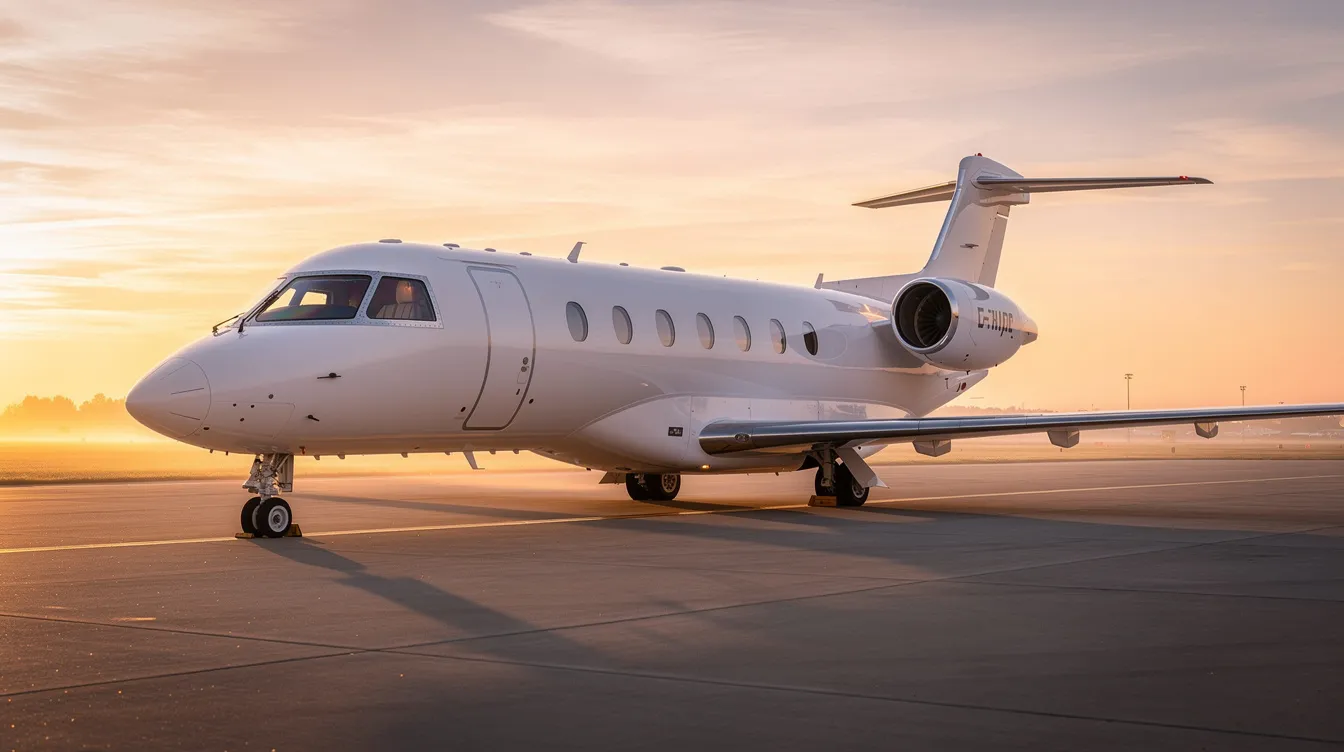
Hours per year are the primary screening metric. Tax profile, aircraft types, and route pattern refine the answer, but how many flight hours you fly each year comes first. For those who meet the required flight hours, flying privately offers significant advantages over commercial travel, including greater privacy, time savings, and a more comfortable, efficient experience.
A 1/16 fractional share typically grants approximately 50 flight hours per year, while larger shares, such as a 1/8 share,e can provide 100 flight hours or more. A 1/4 share commonly supports about 200 hours. Similar math applies in smaller-aircraft arrangements, such as fractional ownership of a Cessna 172. Fractional ownership programs allocate a specific number of flight hours annually to each owner based on their share, enabling reliable and predictable travel planning.
Fractional jet ownership typically requires a commitment of at least 50 flight hours per year to be financially viable for most owners, a rule of thumb echoed in many fractional jet ownership guides. At 50 hours, you are roughly flying 12–15 one-way trips, such as Chicago–Miami, London–Geneva, or Dallas–Aspen.
Under 50 hours per year, the upfront cost, management fees, pilot salaries, insurance, maintenance and upkeep costs, and other operational costs create a high effective hourly rate. On-demand charter has no significant upfront or monthly expense, so low-usage flyers avoid idle capital and unused hours.
For 50–100 flight hours per year, a well-structured jet card usually wins. Jet cards can provide fixed hourly rates, aircraft access, and fewer exit complications without residual value risk.
This is the best option for 50–100 flight hours a year if your trips vary by aircraft size or geography. Fractional becomes inefficient below this range because fractional jet shares still require a significant upfront investment, monthly management fees, and long-term contract exposure.
Above 100 hours per year, fractional ownership begins to become competitive. At 100–200+ hours, fixed costs are spread over heavy use, and fractional owners benefit from consistent service, a predictable cabin, and higher priority than many card users during peak periods, but you should still understand the full fractional jet ownership cost breakdown before committing.
The “sweet spot” for fractional ownership is typically between 50 and 150 flight hours annually, making it more cost-effective than full ownership for low to moderate users. Fractional ownership is generally recommended for individuals or businesses flying 50 to 200 hours annually, as it becomes more cost-effective compared to full ownership or chartering at this usage level. Beyond 250–300 hours on similar routes, owning your own aircraft, a fully owned aircraft, or mixing private aircraft ownership with charter may model better.
Here is concrete 2026 math for a midsize private jet. These are directional estimates, not quotes. Assumptions: U.S. domestic missions, midsize aircraft, 5-year economic holding period, no complex tax treatment, and charter cost of $7,000 per occupied hour, including standard fees.
Assume a 1/8 midsize fractional ownership share with a $900,000 initial purchase price, 40% residual value after five years, an annualized capital cost of $108,000, a monthly management fee of $18,000 or $216,000 annually, and a $3,500 base occupied hourly rate. For planning, add fuel surcharges and program variables to estimate $4,500 per occupied hour.
At 50 hours/year, the charter cost is $350,000. The fractional all-in cost is $108,000 + $216,000 + $225,000 = $549,000, or $10,980/hour.
At 100 hours/year, the charter cost is $700,000. The fractional all-in cost is $108,000 + $216,000 + $450,000 = $774,000, or $7,740/hour.
At 150 hours/year, the charter cost is $1,050,000. The fractional all-in cost is $108,000 + $216,000 + $675,000 = $999,000, or $6,660/hour.
Breakeven in this scenario occurs around 120–140 hours per year; below that, charter is cheaper, above that, fractional becomes competitive. The effective hourly cost of fractional ownership can approach or undercut high-quality charter services as the number of flight hours increases, especially when fixed management fees are spread over more hours. Light jets, super midsize jets, and large-cabin aircraft shift the exact fractional vs charter cost breakeven point, but the pattern remains the same, reinforcing the classic fractional private jet ownership pros and cons.
This is not about whether you can fly privately. It is about whether fractional jet ownership through a shared ownership model fits your capital, usage, and operating profile.
Fractional ownership generally demands a substantial upfront investment, typically ranging from several hundred thousand to multiple millions of dollars, depending on the aircraft model and the size of the share purchased. Fractional jet ownership companies and programs typically require an upfront investment ranging from $500,000 to several million dollars, depending on the aircraft type and share size.
Typical ranges are:
1/16 light jet: $500,000–$700,000
1/16–1/8 midsize: $800,000–$1.5M
Super midsize or large cabin: several million dollars
Monthly management fees in fractional ownership typically range from $14,000 to $50,000, covering crew, hangarage, and insurance. Monthly management fees for fractional ownership can range from $7,000 to $45,000, depending on the aircraft category, covering pilot salaries, insurance, and maintenance costs. Operational costs for fractional ownership can exceed $100,000 annually, encompassing hourly operating expenses and management fees, representing a substantial financial commitment.
Fractional programs typically expect at least 50 hours per year, but 100+ hours is the cleaner decision point. Fractional ownership programs typically operate on five-year contracts with minimum long-term commitments, allowing owners to access a managed fleet without the full responsibilities of sole ownership. Most fractional ownership agreements last between 3 and 7 years, with steep penalties for early exit and potential impacts on resale value.
The shared nature of fractional ownership can limit the spontaneity of travel plans, as owners typically need to provide advance notice to secure their desired flight times. Fractional jet ownership programs typically guarantee aircraft availability with advance notice, often ranging from 4 to 10 hours for non-peak travel and 48 hours during peak periods. In fractional ownership, owners are guaranteed aircraft availability with advance notice, typically ranging from 4 to 10 hours for non-peak travel, which provides reliability for critical business travel.
Major providers run KYC, background, and sometimes credit checks before confirming a share. Corporate buyers may need board approval, internal travel policy review, and risk sign-off. Anti-money-laundering and export-control rules can affect approval for certain jurisdictions or politically exposed persons.
For CFOs and heads of travel, fractional ownership offers governance benefits that commercial airlines and commercial air travel cannot provide.
Fractional jets provide predictable aircraft management, standardized crews, security protocols, and consistent cabin environments. That matters for executive continuity, confidential calls, and route reliability. Fractional ownership programs often provide guaranteed access to an equivalent aircraft if the specific aircraft is unavailable, ensuring reliability for owners.
Policy questions should include who may use the aircraft, whether personal legs are allowed, how flights are charged internally, and how imputed income is tracked.
Fractional ownership involves both asset ownership and recurring operating expenses. The fractional share is a capital item; management fees and occupied hourly charges are operating expenses. These dynamics mirror the broader private jet cost structure: predictable monthly costs help budgeting compared with market-rate charter volatility, but the share remains a depreciating asset.
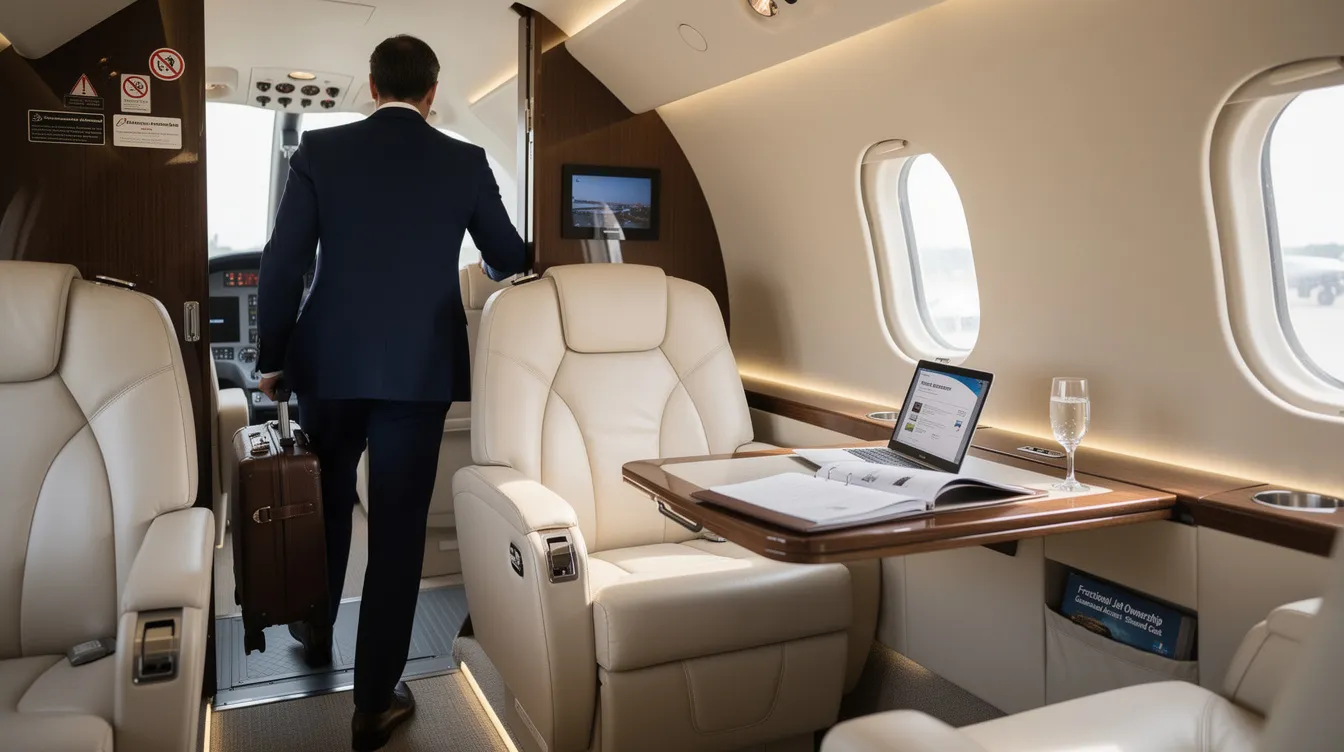
Aircraft choice affects comfort, baggage, range, cost, and service reliability. Fractional jet ownership often provides access to multiple aircraft types within a managed fleet, allowing owners to select the best plane for each trip and even arrange for simultaneous travel needs, greatly enhancing flexibility. The best midsize jet for fractional ownership is not always the cheapest hourly option; it is the aircraft that fits your real missions, and many buyers also compare similar private charter aircraft before locking into a share.
|
Aircraft type |
Cabin height |
Baggage capacity |
Max range |
Wi-Fi availability |
Pet policy |
|---|---|---|---|---|---|
|
light jets |
~5′1″ |
~45–60 cu ft |
~2,000 NM |
Often modern Wi-Fi |
Small pets in cabin; carrier or harness |
|
midsize jets |
~6′0″ |
~127 cu ft |
~2,700 NM |
Usually full cabin Wi-Fi |
Better baggage space for pet gear |
|
super midsize jets |
~6′1″ |
~200–250 cu ft |
~3,400 NM |
High-speed broadband common |
More room for medium pets |
|
turboprops |
~4′10″ |
Generous cargo access |
~1,700 NM |
Available, often at a lower speed |
Often practical for pets and gear |
A NetJets overview and fleet list and cabin specs comparison typically includes 800+ aircraft globally across light, midsize, super-midsize, and large-cabin private jets. Common types include Citation XLS+, Citation Latitude, Challenger 3500, and Global aircraft. Its scale advantage improves aircraft availability, substitutions, and recovery during maintenance events. NetJets offers fractional shares and jet card programs, but this guide focuses on fractional ownership evaluation.
A Flexjet fleet comparison should focus on premium cabins, LXi interior designs, and Red Label dedicated crew positioning. Popular fractional aircraft include Praetor 600, Challenger 3500, Gulfstream G450, and Gulfstream G650. Flexjet’s modern fleet appeals to buyers who value cabin finish and bespoke interiors more than maximum fleet breadth and often appears among the best fractional jet ownership companies for design-focused buyers.
PlaneSense PC-12 vs PC-24 is a practical runway-flexibility decision. The PC-12 is a single-engine turboprop with about 4′10″ cabin height, a large cargo door, excellent short-runway performance, a cruise near 285 knots, and a range near 1,700 nm. The PC-24 is a twin-engine light jet with about 5′1″–5′2″ cabin height, cruise speed near 440 knots, and range around 2,000 nm.
Choose PC-12 for small fields, heavy baggage, and cost-efficient regional missions. Choose PC-24 for speed, jet-level comfort, and longer regional or limited transcontinental flying.
Pets on fractional jets are usually allowed by major providers such as NetJets, Flexjet, and PlaneSense, but rules vary by aircraft type and interior. Expect advance notice, carrier or harness requirements, possible cleaning fees, allergy protocols, and veterinary paperwork for international routes. Larger cabins and turboprops often handle big dogs and equipment better than small light jets.
Buyers can contact providers directly or use a fractional jet consultant, fractional jet brokers near me searches, or independent aviation advisors, or work through a broader private jet rental and charter platform that also evaluates fractional and jet card options. In a typical arrangement, multiple fractional owners share the same aircraft, requiring coordinated scheduling to ensure everyone’s travel needs are met. This shared structure means you’ll need to communicate and remain flexible with other owners when planning trips, as aircraft availability depends on collective usage. Compare proposals using the same assumptions: share size, guaranteed hours, management fees, occupied hourly rates, peak rules, and exit terms. Despite the shared nature, fractional ownership still offers many of the conveniences and control associated with having your own jet, providing a tailored and private travel experience.
To contact NetJets sales, start with a website inquiry or sales phone call. The typical process includes a discovery call covering annual hours, routes, passenger count, cabin needs, and budget. A written proposal then outlines share size, aircraft type, upfront cost, monthly management fee, occupied hourly rate, and contract term. Similar flows exist at Flexjet, PlaneSense, Airshare, and other fractional ownership options.
A fractional jet consultant helps model fractional vs charter vs jet card options. Good consultants normalize proposals, calculate effective hourly cost, identify fuel surcharges, peak penalties, interchange charges, and shared aircraft availability limitations, often using tools similar to a jet card flight cost estimator. Some charge flat fees; others receive referral commissions. Clarify incentives before relying on advice.
When you request a proposal for fractional jet ownership terms, ask for the same key elements you’d review in any detailed fractional jet ownership cost analysis:
Upfront share price, guaranteed hours, and term length
Occupied hourly charge, fuel surcharges, de-icing, and international handling fees
Peak-day rules, longer notice periods, and extra surcharges
Exit terms, buyback formulas, remarketing fees, and early termination penalties
Written aircraft access guarantees, substitution standards, and recovery commitments
Fractional ownership offers convenience compared with commercial air travel by making private jet travel more predictable, but multiple owners and other fractional owners share the same managed system. Fractional private jet ownership enables multiple individuals or entities to share the purchase and ongoing costs of a private jet, making private aviation more accessible to a broader audience.
A key drawback is the shared aircraft availability, which can cause scheduling conflicts, especially during peak travel times. Nevertheless, fractional ownership provides greater flexibility and convenience compared to commercial air travel, allowing owners to tailor their flight schedules and reach a wider array of destinations. Fractional ownership allows purchasing a share of an aircraft type, significantly lowering the initial capital commitment compared to full ownership.
A Jettly jet card program provides private jet travel access with no share purchase required, no management fees, no long-term private jet ownership structure, and flexible access to 20,000+ aircraft worldwide through a lower-commitment model than fractional jet ownership.
If fractional ownership doesn’t fit your hours, capital commitment, or flexibility needs, a Jettly jet card provides comparable private aviation access starting from approximately $X with no ownership structure or long-term commitment, and you can benchmark it against other best jet card programs in the market.
These answers are direct and numeric for final decision clarity.
Fractional jet ownership is worth it only if you fly roughly 100+ hours per year on repeatable routes and can commit $400,000 or more in upfront capital. It works best when you value guaranteed availability, consistent aircraft type, predictable cabin quality, and managed operations more than trip-by-trip price shopping. At 60 hours per year, fractional can cost close to $10,000 per effective hour in many models, while charter may be materially cheaper. Around 125–150 hours, fractional can become competitive because fixed costs are spread across more flying, but some flyers still prefer a NetJets alternative like Jettly that avoids ownership while offering similar access.
Fractional starts to make sense around 75–100 hours per year and becomes compelling closer to 125–150 hours annually, assuming mostly similar missions. The reason is simple: fixed monthly management fees and capital costs must be spread across enough flight hours to reduce the effective hourly rate. Under 50 hours, a charter is usually the cleaner financial answer. Between 50 and 100 hours, jet card programs often provide a better balance of guaranteed access and lower commitment, provided you understand the underlying jet card costs and pricing structure. Above 100 hours, fractional programs become more realistic.
The best midsize jet for fractional ownership is usually a Citation Latitude, Challenger 3500, or Praetor 600, depending on range and cabin priorities. A Citation Latitude offers about 6′0″ cabin height, 127 cu ft of baggage space, and roughly 2,700 nm of range, making it strong for U.S. regional and some coast-to-coast missions. Challenger 3500 and Praetor 600 options add more range and cabin capability. Prioritize cabin height, baggage, Wi-Fi, and mission fit over small hourly-rate differences.
Yes, you can usually take pets on a fractional jet, but policies and fees vary by provider and aircraft type. Most programs require advance notice, may impose size or weight rules, and often require a carrier, harness, or protective cabin setup. Large dogs may be easier on a PC-12, PC-24, midsize, or super midsize cabin than on smaller light jets. International routes require veterinary records, import documents, and sometimes additional cleaning or allergy protocols before the next flight, similar to other methods of getting a seat on a private jet.
You contact NetJets sales by submitting a request on their website or calling their dedicated sales phone numbers, and you may want to review independent guides on NetJets card costs and pricing before that conversation.
Fractional jet ownership is a strategic choice best suited for high-frequency flyers with predictable travel patterns and sufficient capital to invest. The core threshold of 100+ flight hours per year and an upfront commitment of $400,000 or more define the segment that benefits most from fractional programs. For those flying less than 50–75 hours annually or seeking maximum flexibility without capital lockup, alternatives like jet cards or on-demand charter services provide more efficient and cost-effective solutions.
Understanding your travel habits, budget constraints, and priorities around aircraft consistency versus flexibility is essential to making the right decision. Use the numeric thresholds and cost breakeven points outlined here to evaluate your fit objectively. When properly matched, fractional ownership delivers guaranteed aircraft access, consistent cabin experience, and potential tax advantages that justify the investment. Otherwise, consider flexible private aviation options that better align with your usage and financial goals.
Share this post:
Jeff Ryan Serevilla
May 17, 2026
|
5
min read
Discover tips and trends in the industry.

5
min read
How to Get Lower Ticket Prices on Private Jet Flights with Jettly
Discover how to lower ticket prices on private jet flights with Jettly's expert strategies. By understanding pricing dynamics and utilizing tools like empty leg flights and flexible bookings, travelers can secure significant savings. This guide empowers both frequent and first-time flyers to make informed decisions for a cost-effective private jet experience.
Read More
5
min read
When Air Tickets Are Cheaper: Best Time to Buy Flights and How Jettly Helps
Knowing when air tickets are cheaper can significantly reduce travel costs. This guide outlines optimal booking windows for domestic and international flights while highlighting how Jettly's private jet charter services provide a reliable alternative to fluctuating airline prices.
Read MoreStay updated with our latest insights and tips to elevate your journey with us.
MEMBERSHIPS AND ASSOCIATIONS



Disclaimer: Jettly operates as a charter broker, offering access to a global digital jet charter marketplace. Jettly is not a direct air carrier and does not own or operate aircraft. All advertised flights are conducted by third-party air carriers that are fully licensed and hold the appropriate Part 135 or Part 121 certifications issued by the Federal Aviation Administration (FAA) or equivalent regulatory authorities under U.S. or foreign law. Jettly complies fully with the U.S. Department of Transportation's Part 295 and Part 298 Charter Broker regulations. Jettly does not carry additional liability insurance. Passengers are covered by aircraft operator insurance. TICO: 50023770


