



Login
Get Instant Pricing On 23,000+ Aircraft

>
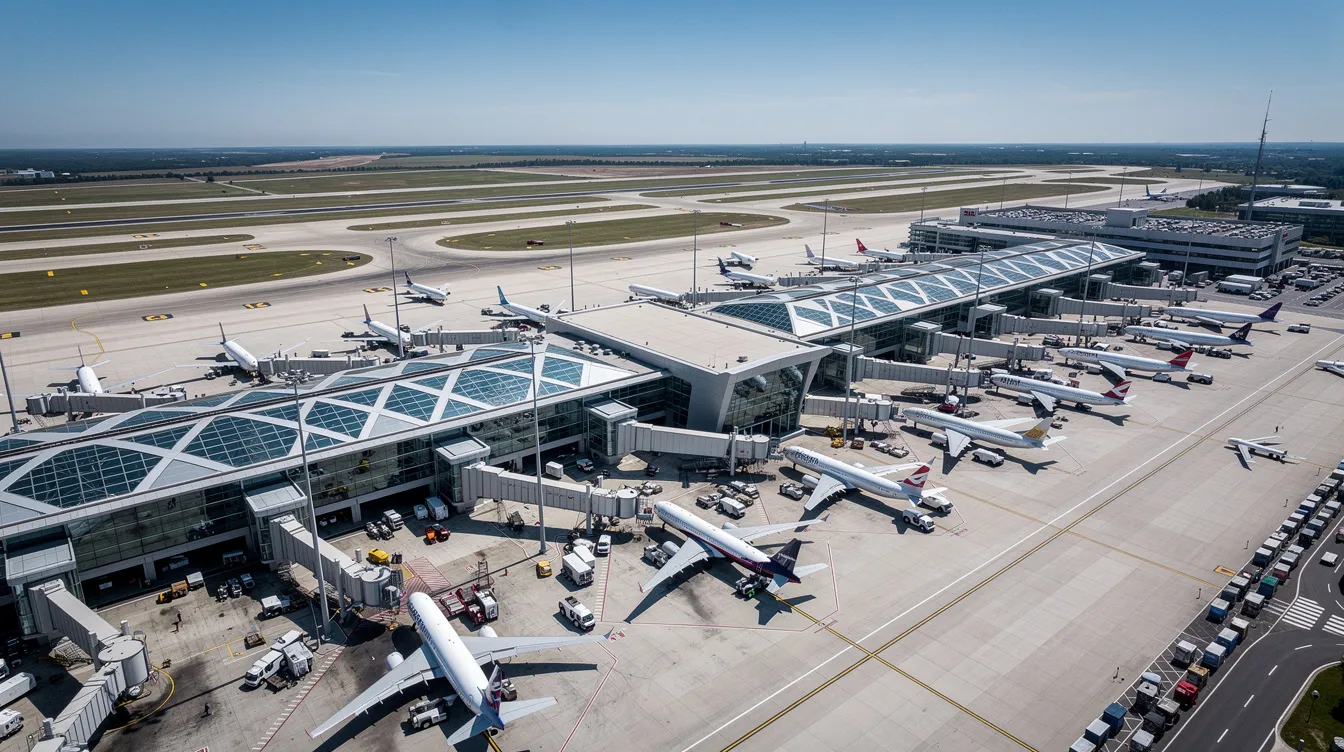
Alaska Airlines has built one of the most focused hub networks in the United States, anchoring its operations along the West Coast and extending into Alaska, Hawaii, and beyond. Understanding each hub for Alaska Airlines helps travelers plan smarter trips, whether they stick with commercial flights or mix in private jet charter for segments that scheduled service doesn't cover well.
This guide breaks down every major hub and focus city in the Alaska Air Group network, explains the strategic moves reshaping the airline in 2026, and shows how platforms like Jettly can fill gaps left by commercial schedules.
Alaska Airlines' primary hubs today are Seattle (SEA), Portland (PDX), Anchorage (ANC), San Francisco (SFO), and Los Angeles (LAX), with San Diego (SAN) emerging as the fastest-growing hub by departures in 2026.
Alaska Air Group is expanding its West Coast and Hawaii presence through the 2023–2024 acquisition of Hawaiian Airlines, 13 new nonstop routes launching in 2026, and its first-ever transatlantic service to Europe.
Partnerships with American Airlines and other airlines via the Oneworld alliance give Alaska passengers access to 900+ destinations in 170 territories worldwide.
Jettly serves as a digital private jet charter alternative for travelers who want to bypass hub-and-spoke constraints with direct flights from secondary airports near Alaska Airlines hubs.
Combining Alaska Airlines' commercial network with Jettly's on-demand private flights can offer a flexible, time-efficient solution for business and leisure travel around key hubs.
An airline hub is a central airport where many routes connect, allowing passengers to transfer between flights and reach destinations that don't have direct service from their home city. For Alaska Airlines, the hub system is a strategic tool that concentrates daily departures at a handful of airports along the U.S. West Coast, creating dense connectivity for both local and connecting passengers.
Alaska Airlines, part of Alaska Air Group, operates a multi-hub network centered on the Pacific coast. The hub-and-spoke model enables Alaska Airlines to connect regional traffic effectively, linking Alaska, Hawaii, and major U.S. destinations through its core airports. The airline utilizes multiple key hubs like Portland and Anchorage to improve regional connectivity beyond what its primary hub in Seattle can handle alone.
The main hubs are Seattle–Tacoma (SEA), Portland (PDX), Anchorage (ANC), San Francisco (SFO), and Los Angeles (LAX). San Diego (SAN) functions as a rapidly growing focus city that increasingly resembles a hub in practice. Together, these six hubs and focus cities support high-frequency daily flights, broad nonstop service options, and smooth connections to partner airlines through the Oneworld alliance.
Alaska Airlines maintains a competitive strategy by using its hubs for market expansion and operational efficiency. For travelers who need more flexibility, private jet platforms like Jettly offer point-to-point flights without relying on published hub schedules.
SFO and LAX are key California hubs for Alaska Airlines, especially after growth in transcontinental, Hawaii, and Mexico routes over the last several years.
San Francisco connects Alaska Airlines passengers to Silicon Valley, international long-haul partners, and coastal cities like Seattle, Portland, San Diego, Anchorage, and Honolulu. SFO offers roughly 26 to 28 nonstop destinations under Alaska's service, with a focus on business traffic and tech-industry demand. Coordination with American Airlines at SFO opens broader domestic and international reach across the Oneworld network.
Los Angeles serves as a major gateway for Southern California, with daily flights to key West Coast cities, Hawaii, and select Mexico leisure destinations. LAX handles around 29 to 32 nonstop markets for Alaska, supporting both business and high-volume leisure traffic. Both airports benefit from partnerships with partner airlines for connecting passengers headed to other cities or other countries.
For travelers looking to avoid LAX and SFO congestion, Jettly can arrange private flights between smaller regional airports around Los Angeles and San Francisco - including Burbank, Van Nuys, Oakland, San Jose, and Santa Monica - while still connecting to Alaska's hubs when needed for longer commercial segments.
In December 2023, Alaska Air Group announced its plan to acquire Hawaiian Airlines in a transaction valued at approximately $1.9 billion. The deal closed in September 2024 after regulatory review, creating a combined carrier with reach across the Pacific that neither airline could achieve alone.

The combined company now serves more than 140 destinations throughout North America, Central America, Asia, and across the Pacific. Each airline keeps its own brand and identity, but the route network and back-office functions are being integrated to help control operating costs. Travelers curious about the broader private aviation landscape can consult a comprehensive list of charter airlines and private operators to compare on-demand options alongside traditional carriers. As of October 2025, Alaska and Hawaiian began operating under one FAA certificate.
Alaska Airlines is leveraging Hawaiian's widebody Airbus aircraft and Honolulu hub to add or strengthen long-haul routes across the Pacific, connecting to the broader Oneworld alliance. Honolulu (HNL) now functions as Alaska Air Group's second-largest hub by traffic, offering roughly 26 international and U.S. routes plus inter-island service.
Frequent-flyer programs are being unified under the Alaska Mileage Plan umbrella - now branded as Atmos Rewards - giving travelers a single loyalty currency across hubs in Seattle, Anchorage, San Diego, Honolulu, and more. The combined company expects roughly $235 million in run-rate synergies from the merger.
For travelers, long-haul flights can be handled via Alaska and Hawaiian, while Jettly covers shorter private jet segments at the start or end of the trip. A corporate traveler might fly private to SEA, then take a commercial flight over the Pacific to Honolulu or Tokyo.
Nonstop service means a flight goes directly from origin to destination without any intermediate stops. One-stop or multi-stop itineraries route through hubs like SEA, PDX, ANC, SFO, LAX, and SAN, adding travel time but extending the airline's reach to more cities.
Alaska Airlines prioritizes adding new nonstop routes on high-demand city pairs to cut travel time and improve customer satisfaction. Alaska Airlines will add 13 new nonstop routes in 2026, bringing its total to 142 destinations - the most the airline has ever served. Recent additions include:
San Diego to Dallas Fort Worth, Raleigh-Durham, and Tulsa
Portland to Baltimore, Philadelphia, and St. Louis
Seattle to Rome (first transatlantic route, launched May 2026)
The trade-off is straightforward: nonstop flights add convenience but are limited to routes with enough demand to fill the aircraft. Hub connections allow a broader overall network and serve thinner markets that couldn't support daily nonstop service. Seasonal service on some routes reflects this dynamic - summer frequencies to Alaska and Hawaii jump, then taper in winter.
Jettly's private jet model removes this trade-off for small groups by allowing custom nonstop routes between almost any two viable airports, independent of airline scheduling or route network constraints, especially when travelers apply cost-saving strategies for booking the cheapest private jet flights.
Alaska Airlines partners with the Oneworld alliance for international connections, giving passengers access to 900+ destinations in 170 territories through carriers like American Airlines, British Airways, Cathay Pacific, Japan Airlines, and Qantas.
The close partnership with American Airlines is particularly impactful. American's hubs at Dallas Fort Worth, Charlotte, Chicago, Miami, and New York Kennedy complement Alaska's West Coast hubs like Seattle and San Diego, creating more through-ticketed itineraries for domestic and international travel. A passenger flying from San Diego to London, for example, can connect through Dallas Fort Worth on a single ticket with baggage checked through.
Passengers earn and redeem miles across the full Oneworld partnership while starting or ending journeys at Alaska hubs on the West Coast. Practical benefits include lounge access at partner airports, priority boarding, and smooth connections that minimize layover time.
Travelers can also strategically mix commercial flights on Alaska and American with private jet legs arranged through Jettly to fine-tune schedules or reach underserved destinations, including crowdsourced and shared-seat private jet flights that can lower per-passenger costs. This works well for complex itineraries where a single carrier can't cover every segment.
Alaska's West Coast hubs - SEA, PDX, SFO, LAX, and SAN - form a spine of connectivity for both mainland and Hawaii travel. Increased flights from San Francisco, Los Angeles, and San Diego to Hawaii, along with Hawaiian's inter-island network, mean travelers have more options than ever for reaching the islands.
Alaska Airlines connects Alaska, Hawaii, and major U.S. destinations through its hub system. Typical use cases include:
Business routes: Seattle to San Francisco, Portland to Los Angeles
Leisure trips: California to Hawaii, Alaska to Mexico
Visiting friends and relatives: Pacific Northwest corridor travel
Alaska Airlines serves Starbucks coffee on all flights, and in-flight Wi-Fi is available on all Alaska Airlines jets - small details that make the experience more comfortable on routes that can stretch from one to six hours, while no change fees add flexibility for travelers whose plans may shift.
The hub structure allows frequent daily flights, making it easier to catch same-day connections or manage short-notice trips. For travelers who prefer direct, time-specific flights that avoid tight connections or overnight stays at hub airports, private jet travel via Jettly and opportunistic use of discounted empty leg flights offer clear alternatives.
|
Factor |
Alaska Airlines Hubs |
Jettly Private Charter |
|---|---|---|
|
Best for |
Solo travelers, flexible schedules, strong West Coast/Hawaii routes |
Tight timelines, multi-stop trips, groups, underserved destinations |
|
Cost structure |
Published fares, loyalty rewards |
Hourly charter rates, shared among passengers |
|
Airport options |
Major commercial airports only |
5,000+ airports including private strips |
|
Schedule control |
Fixed timetables |
Fly when you want |
|
Loyalty benefits |
Atmos Rewards miles, elite status, lounge access |
Time savings, privacy, schedule control |
At major hubs, Alaska Airlines uses banked schedules - waves of arrivals and departures timed to maximize same-day connections. At SEA, this means clusters of morning arrivals from Alaska and regional cities feeding into midday departures to the East Coast, Hawaii, and Mexico.
Practical examples:
Early morning departures from SEA to California allow day trips for business travelers, with return flights in the evening
Late afternoon banks at PDX collect passengers from smaller Oregon and Washington cities for overnight connections to Midwest and East Coast destinations
Alaska Airlines provides cargo services, check-in services, and passenger assistance at its hubs, ensuring that both people and freight move efficiently through the system.
Simple tips for travelers using Alaska hubs:
Allow at least 60–90 minutes for connections at SEA; 45–60 minutes at PDX
Consider off-peak flights for fewer crowds and lower fares
Use Alaska's mobile app for real-time gate updates
Private charter with Jettly allows travelers to design their schedule around their commitments rather than adapting to fixed commercial patterns. Mixing scheduled Alaska flights with private segments can streamline complex itineraries - for example, a multi-city West Coast business roadshow or remote site inspections across Alaska - while still taking advantage of affordable private jet charter pricing strategies.
Jettly is a global digital private jet charter platform with instant pricing, access to over 23,000 aircraft, and on-demand booking. It functions as a complement - not a replacement - to carriers like Alaska Airlines. The typical use pattern: fly commercially into an Alaska Airlines hub such as Seattle, San Diego, or Anchorage, then use Jettly to charter a private flight to a nearby regional airport or remote location. Common scenarios include:
Executives visiting multiple West Coast offices in one day; families flying directly to smaller resort airports; urgent travel that cannot wait for the next scheduled daily flight; reaching airstrips in Alaska that lack any commercial service. Jettly offers optional private jet memberships alongside pure on-demand booking, with transparent pricing and control over aircraft category - light jet, midsize, heavy jet, turboprop, or helicopter. The cost estimator tool provides instant quotes before commitment.
Atmos Rewards is Alaska Airlines' loyalty program, ranked the #1 airline loyalty program for 2025–26. Members earn one point for every mile flown, and points can be redeemed for flights, hotels, and more. Accumulated miles in Atmos Rewards do not expire, which removes the pressure to fly just to keep points alive. Atmos Rewards has elite tiers: Silver, Gold, Platinum, and Titanium. Each tier unlocks progressively better benefits, including complimentary upgrades, bonus miles, and lounge access.
On the in-flight experience side, First Class offers complimentary food and beverages, while Premium Class features 35 inches of seat pitch for extra legroom. Main Cabin passengers receive a complimentary non-alcoholic beverage. Alaska Airlines introduced a buy-on-board meal program in 2006, and it remains a staple on longer flights today.
Private jet platforms like Jettly emphasize value through time savings, transparent pricing, and choice rather than traditional miles. Charters booked through Jettly do not typically earn airline frequent-flyer miles, but travelers may still earn credit card rewards or other third-party points on the spend, depending on their payment method. Some travelers look at jet card pricing and use a dedicated jet card flight cost estimator to model different scenarios, while others first learn what a jet card is and how it works as an alternative value structure.
Here's a practical approach to planning a trip that combines Alaska Airlines commercial flights with private jet segments: Identify your origin and destination - Map out every stop, including any remote or secondary locations. Check Alaska's nonstop or one-stop options - Use SEA, PDX, SAN, SFO, LAX, or ANC as your commercial anchor.
Review Jettly for private solutions - Close routing gaps, eliminate overnight layovers, or save time on short hops that would require driving. Build buffer time - Allow 90+ minutes between a commercial arrival and a private departure for baggage, transfers, and any customs processing. A popular combined-use example: fly Alaska from New York to Seattle nonstop, then charter a private flight through Jettly to a smaller Pacific Northwest airport - perhaps a lodge strip near the San Juan Islands or a corporate facility in eastern Washington.
Alaska Airlines' expanding network across the West Coast, combined with Jettly's on-demand flexibility and insights into the best private jet charter companies, gives travelers a toolkit for nearly any itinerary.
Alaska Airlines' primary hubs are Seattle–Tacoma (SEA), Portland (PDX), Anchorage (ANC), San Francisco (SFO), and Los Angeles (LAX), with San Diego (SAN) emerging as a key focus city. These hubs anchor Alaska Air Group's network across the West Coast, Alaska, Hawaii, and selected transcontinental routes. Exact designations - hub versus focus city - can evolve as Alaska adds or adjusts routes each schedule season.
Alaska often refers to San Diego as a rapidly growing focus city rather than a full hub, but its schedule increasingly resembles one with broad nonstop service to nearly 50 destinations. The airline plans to fly nonstop to the top 15 markets from San Diego by mid-2026, and SAN already functions as Alaska's largest California operation by nonstop destination count. Travelers can treat SAN like a mini-hub for many practical purposes, especially for Southern California and Hawaii travel.
Honolulu (HNL) becomes more strategically important within Alaska Air Group after the Hawaiian Airlines acquisition finalized in September 2024. Hawaiian Airlines maintains its own brand, but mileage and network integration with Alaska opens more Pacific and long-haul options for passengers. Existing Alaska hubs like Seattle and Anchorage remain central, while Honolulu strengthens the group's reach toward Asia and Oceania through larger aircraft like the Airbus A330 and Boeing 787 Dreamliner.
Private jet charters booked through Jettly do not typically earn airline frequent-flyer miles like those in the Atmos Rewards program, because charters operate outside commercial airline ticketing systems. Travelers may still earn credit card rewards or other third-party points on the spend, depending on their payment method. The value of private charter is best measured through time savings, flexibility, and productivity rather than mileage accrual alone, especially when comparing NetJets alternatives like Jettly or app-based providers such as XO charter flights and similar platforms.
Travelers typically book their commercial Alaska Airlines flights and private Jettly charters separately, planning connection times carefully at shared airports like SEA, SAN, or ANC. Allocate extra buffer time between commercial arrival and private departure for baggage handling, potential customs processing (if international), and terminal transfers. Visit jettly.com to explore aircraft options and instant pricing for private segments that complement your Alaska Airlines itinerary.
Alaska Airlines' hub network is strategically designed to maximize connectivity and convenience across the West Coast, Alaska, Hawaii, and expanding international markets. With Seattle-Tacoma as the primary hub and growing focus cities like San Diego, travelers benefit from a robust schedule of nonstop flights and seamless connections.
For travelers seeking greater flexibility, time savings, and access to underserved airports, private jet charter platforms like Jettly provide a valuable complement to Alaska Airlines’ commercial hubs. Combining scheduled flights with on-demand private jet travel allows business and leisure travelers to customize their itineraries, reduce travel time, and enjoy a more personalized experience.
Whether flying commercially through Alaska Airlines’ hubs or chartering private flights via Jettly, travelers have more options than ever to tailor their journeys to fit their needs. Ready to experience private travel on your terms? Explore flight options or request a quote at Jettly.
Share this post:
Jay Franco Serevilla
Nov 2, 2026
|
5
min read
Discover tips and trends in the industry.
5
min read
Hub for Alaska Airlines: Key Airports, Routes, and Private Jet Alternatives
Alaska Airlines operates a focused hub network primarily along the West Coast, enhancing connectivity to Alaska, Hawaii, and beyond. This guide details key airports, routes, and how private jet alternatives like Jettly can complement commercial flights for a seamless travel experience.
Read More
5
min read
Flying With Pets on Private Jets in 2026 (Policies, Paperwork, Baggage Limits, and Costs)
Flying with pets on private jets in 2026 offers a stress-free alternative to commercial travel, allowing pets to stay in the cabin with their owners. However, approval from the operating air carrier and adherence to destination rules are crucial for a smooth journey. This guide outlines essential policies, paperwork, baggage limits, and costs associated with pet travel on private jets.
Read MoreStay updated with our latest insights and tips to elevate your journey with us.
MEMBERSHIPS AND ASSOCIATIONS



Disclaimer: Jettly operates as a charter broker, offering access to a global digital jet charter marketplace. Jettly is not a direct air carrier and does not own or operate aircraft. All advertised flights are conducted by third-party air carriers that are fully licensed and hold the appropriate Part 135 or Part 121 certifications issued by the Federal Aviation Administration (FAA) or equivalent regulatory authorities under U.S. or foreign law. Jettly complies fully with the U.S. Department of Transportation's Part 295 and Part 298 Charter Broker regulations. Jettly does not carry additional liability insurance. Passengers are covered by aircraft operator insurance. TICO: 50023770


