


Login
Get Instant Pricing On 23,000+ Aircraft

>

Flying private used to be a mystery wrapped in exclusivity. Today, it is more accessible, more transparent, and more practical than most people realize. This guide covers everything you need to know about private jet travel in 2026, from booking your first charter flight to choosing the right aircraft, understanding pricing, and making smarter decisions whether you fly for business or leisure.
Here is the reality of private aviation in 2026: you can go from "I want to fly private" to a confirmed booking in under five minutes. Modern digital platforms now offer real-time pricing, live aircraft availability, and tap-to-book simplicity that rivals ordering a rideshare. Booking a private jet is generally faster and more streamlined than commercial air travel, and you do not need a personal concierge to make it happen.
How the process works:
Open a charter app or platform, select your departure airport (Teterboro, Van Nuys, Miami-Opa Locka, or any of thousands of options), enter your date and destination, and see instant pricing. Some platforms like Jettly connect travelers to over 20,000 aircraft worldwide, giving you a massive selection in seconds. Private jet charters can be arranged with as little as 24 hours' notice, though same-day bookings are increasingly common.
You will need a few basics ready: travel date, preferred time window, route, number of passengers, whether you are bringing pets or oversized luggage, and any aircraft type preference. That is it. No visa-length forms, no frequent flyer numbers.
Compare this to booking a first-class commercial ticket from New York to Miami or Los Angeles to Las Vegas. The airline process involves navigating seat maps, choosing fare classes, arriving 90 minutes early, clearing TSA, and hoping your connection holds. A private charter on the same route means arriving 15 minutes before departure, walking straight to the aircraft, and landing at a smaller airport minutes from your destination. Providers like Airshare can have you in the air within three hours of booking.
Concrete example: You decide Friday morning that you need to be in Miami by evening. You pull up a charter app at 9 a.m., search Teterboro (TEB) to Opa-Locka (OPF), and see a light jet available at 2 p.m. for roughly $15,000 to $20,000 one-way. You confirm, provide passenger names, and receive your FBO address. By 1:45 p.m., you are pulling into the private terminal. By 5 p.m., you are in South Florida. Private jet charters allow for last-minute travel arrangements that simply are not possible on commercial airlines.
The sections below are your deep dive. If you want to understand aircraft types, private charter flights, pricing structures, empty legs, and how to plan a seamless travel experience, keep reading.
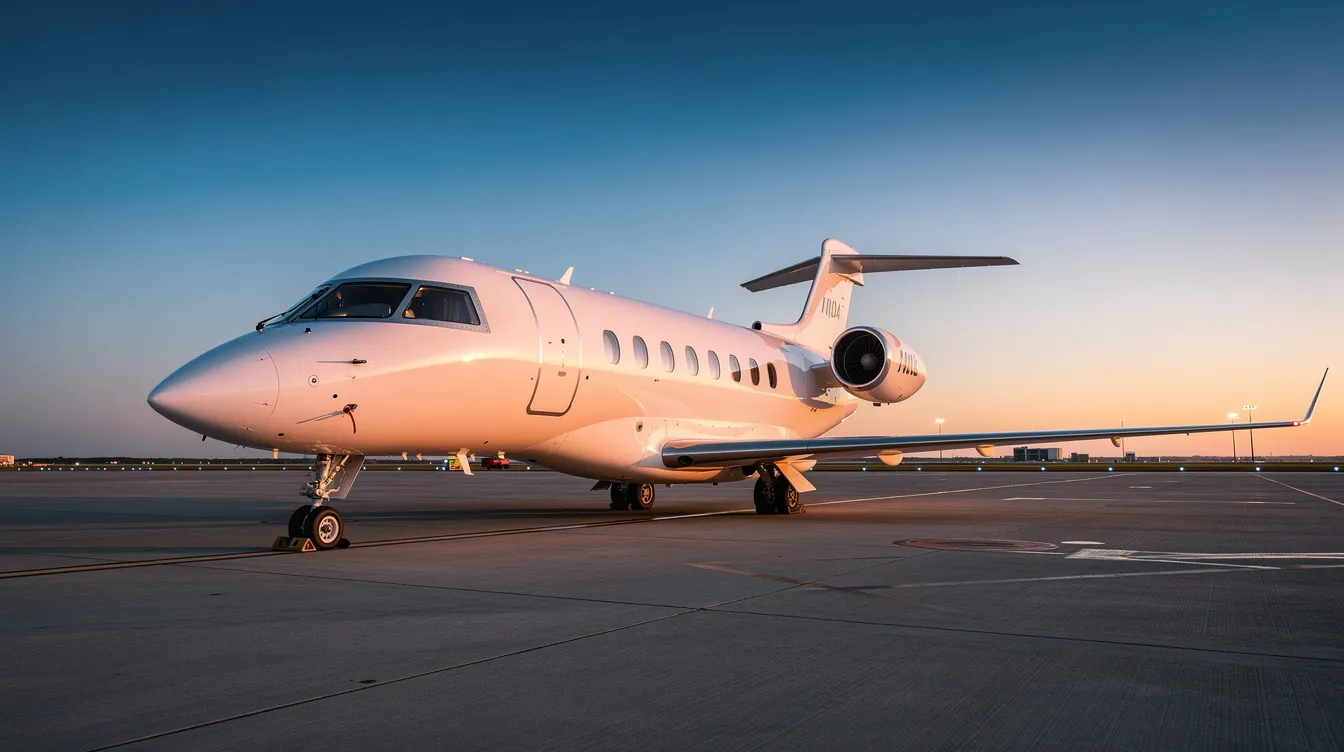
When people say they fly private, they are describing a spectrum of private aviation options. At its core, flying private means you or your group controls the entire aircraft, the schedule, and the route, rather than buying a seat on someone else's timetable.
A private charter is the most common entry point: you rent an entire aircraft for a specific trip. Think of it as hiring a car service rather than taking a bus. You choose the departure city, the destination, the time, and the plane. Examples range from a quick Boston to Nantucket hop to a Dallas to Aspen ski trip. Private charter flights can also mean jet card programs, fractional ownership, or full aircraft ownership, each with different commitment levels covered below.
Personal aviation is not just for celebrities. Families use it to simplify vacations with young children. Executives use it to hit three cities in a day. Private jet travel offers personalized service and flexibility that adapts to your life instead of forcing you to adapt to an airline's schedule. This applies equally to business and leisure travel.
Compare flying private with first class on a commercial airline. On a LAX to JFK flight, first class still means arriving at a massive terminal, navigating security, waiting at a gate, boarding with 200 other passengers, and collecting bags on arrival. Flying private means driving to a smaller airport, walking to the plane, and departing when you are ready. Private flights can cut travel time in half compared to commercial flights when you factor in the full door-to-door journey.
Private aviation uses thousands of smaller airports that airlines ignore. Private charter flights can access over 3,000 airports in the U.S. alone, and private jets can access over 3,000 airports worldwide. Instead of JFK, you depart from Teterboro. Instead of Denver International, you land at Centennial. Private jets use smaller regional airports closer to actual destinations, and private jets can use many smaller airports closer to travelers' destinations, cutting ground transportation time dramatically.
Later sections cover aircraft management, jet card structures, empty legs, flexible scheduling, and how to find competitive pricing for your specific routes.
People do not fly private because it is cheap. They fly private because the math changes when you factor in time, productivity, privacy, and control. Private aviation prioritizes time optimization and privacy over cost efficiency, and the value proposition sharpens depending on your circumstances.
Time efficiency: Consider New York City to Washington, D.C. Commercial means a cab to LaGuardia or Newark (45 minutes), arriving 90 minutes early, a 60-minute flight, deplaning, baggage, and a ride into the city. That is 4+ hours. Flying private from Teterboro to Manassas or College Park cuts it to about 2 hours door-to-door. Private jets can significantly reduce travel time compared to commercial flights. Private aviation offers unmatched time savings and ultimate convenience over commercial flights.
Privacy and confidentiality: Board meetings happen in flight. Executives discuss acquisitions without a stranger in the next seat. Celebrities avoid terminal crowds. Medical patients travel discreetly. Private charters allow travelers to choose their departure times and routes, creating a controlled environment.
Flexible scheduling: Your flight waits for you, not the other way around. Need to stay an extra hour at a conference? Leave after a late NFL game or concert? Private flights give you more flexibility to adjust departure times, even same-day. There are no missed connections, no rebooking fees, no overnight airport hotels.
Access to remote destinations: Fly directly into Telluride, Jackson Hole, or a small Bahamian island. Private jets can fly point-to-point, reducing travel time by avoiding layovers and connecting through hubs. If your destination is a small Midwestern town near a manufacturing plant, private aviation gets you there without a two-leg commercial itinerary.
Large groups and family travel: Flying 8 to 14 people on a single charter can be more efficient than booking a dozen commercial tickets with connections, hotels near hubs, and coordinating everyone's schedule. The per-person cost drops considerably with larger parties.
Safety and control: Reputable operators maintain a strong safety record, and you can vet every operator before booking. You choose who you fly with, and you can verify safety ratings, crew qualifications, and maintenance history before committing.
The phrase "fly private" covers several distinct structures, each with different costs, commitments, and levels of convenience. Choosing the right model depends on how often you fly, your budget, and how much flexibility you need.
On-demand charter flights: You book a single trip with no long term commitments. This is the ideal choice for occasional travelers or ad-hoc business trips. Over 20,000 unique aircraft are available for charter worldwide, so availability is rarely an issue except during peak events.
Jet card programs: You pre-purchase a block of flight hours (typically 25 to 50 hours) at a locked-in rate. A jet card gives you guaranteed access, consistent pricing, and priority scheduling without owning an aircraft. It suits travelers flying 25 to 75 hours per year who want predictability.
Fractional ownership: You buy a share (1/16 or 1/8) of a specific aircraft type. You get guaranteed availability for a set number of hours annually, share fixed costs with other owners, and pay monthly management fees. Best for those flying 50 to 200+ hours per year.
Full aircraft ownership with aircraft management: You own the jet outright and hire a management company to handle crew hiring, training, maintenance, scheduling, and regulatory compliance. Some owners charter out their aircraft when not using it to offset costs. This model suits frequent flyers logging 200+ hours annually.
Seat-sharing and semi-private shuttles: Newer models let you buy a seat on a scheduled or shared charter route, like LA to San Francisco or New York to South Florida. These bridge the gap between commercial and fully private, providing access to private terminals and streamlined boarding at lower per-seat costs.
Which model fits you? Under 25 hours per year, on-demand charter plus empty legs is usually most economical. Between 25 and 75 hours, a jet card makes sense. Beyond 100 hours, explore fractional or full ownership.
There is no universal price list for private jet charter. But pricing becomes predictable once you understand the core drivers. Private jet pricing is usually based on an hourly aircraft rental rate plus operational fees, and the total depends on aircraft class, route length, and timing.
Hourly rates by aircraft class (2026): Private jet charter pricing starts at approximately $4,000 per hour for turboprops. Light jets cost around $6,000 per hour on average. Midsize jets run $5,500 to $7,500 per hour. Large cabin jets can cost $10,000 to $12,000 per hour. Ultra-long-range aircraft like the Gulfstream G-V average $12,000 per hour to charter. Overall, private jet charter costs typically range from $1,800 to $14,000+ per flight hour depending on the category.
Route length and positioning: A one-day Chicago to Nashville round trip on a midsize jet might be 3 hours of flight time, but repositioning the aircraft to Chicago and back could add 1 to 2 empty hours. Add landing fees, crew costs, and handling, and the all-in cost reaches $30,000 to $40,000. As a reference, chartering a private jet from Dallas to Las Vegas costs $13,000 to $34,000 depending on aircraft type.
Seasonal and event-driven pricing: Rates spike 20 to 50% around holidays, Super Bowl, Art Basel Miami, Sundance, and Christmas through New Year. Book early during peak weeks or consider off-peak alternatives.
Typical extras: De-icing in winter, Wi-Fi fees on older aircraft, catering upgrades, pet handling fees, and international customs or overflight permits. These can add 10 to 30% to a base quote.
Cost calculators: Online charter flight cost calculators give you a ballpark, but final quotes depend on actual aircraft availability, positioning, and operator-specific pricing.
Competitive pricing through comparison: Always request quotes from 2 to 3 operators or brokers for the same route and date. Transparent pricing means you can compare line items and find significant savings without sacrificing safety. This is where connecting travelers to multiple charter options pays off.
Empty legs are the single best way to fly private on a budget. They are already-scheduled repositioning flights that would otherwise fly without passengers, and they offer a window into affordable private aviation that many travelers overlook.
What are empty legs? When an operator drops clients in Dallas and needs to reposition the jet to Houston for the next booking, that Dallas to Houston flight is an empty leg. The plane is flying regardless. Operators list these at steep discounts to recover some cost.
Savings potential: Booking one-way flights and being flexible on airports and times can unlock discounts of 30 to 75% off standard charter pricing. Providers like Vaunt offer last-minute, one-way flights at reduced costs specifically through empty leg inventory.
The trade-offs: Empty legs come with constraints. The schedule and route are fixed. If the primary client cancels, your flight may be cancelled too. Baggage and pet options may be limited on some repositioning flights.
Strategies that work: Set alerts on preferred routes such as the New York to Florida corridor in winter or Los Angeles to Las Vegas on weekends. Monitor apps daily. Be ready to book and depart with short notice. Midweek departures are consistently cheaper than Friday or Sunday legs.
Real-world comparison: An empty leg from Las Vegas to Los Angeles on a light jet in June 2026 averaged roughly $7,000 to $9,000, compared to a standard charter on the same route at $15,000 to $18,000. That is a potential 50% discount for being flexible.
Maximize savings: Focus on flexible scheduling, midweek departures, and routes with high repositioning volume. The diverse fleet of aircraft available as empty legs means you can often find a midsize cabin at light jet prices during supply surges.
Choosing the right aircraft type balances your budget, comfort expectations, runway requirements, and distance. The fleet available for private charter spans everything from single-engine turboprops to converted VIP airliners, and each category serves a distinct purpose.
Turboprops: Aircraft like the Pilatus PC-12 (with a range of 1,700 miles) or King Air 350 seat 6 to 9 passengers and excel on trips of 300 to 800 miles. They handle short runways near mountain resorts or rural airstrips, cost the least per hour, and are the most fuel efficient aircraft in the private fleet.
Light jets: Models like the Citation CJ3 or Phenom 300 are the workhorses of domestic private flights. Light jets typically accommodate 6 to 8 passengers and handle routes like Los Angeles to Seattle or Chicago to New York comfortably. Hourly rates average around $6,000.
Midsize and super-midsize jets: Aircraft like the Citation XLS, Challenger 350, or Gulfstream G280 offer stand-up cabins, more luggage space, and ranges suitable for U.S. coast-to-coast or even some transatlantic missions. Midsized jets can cruise at speeds of 525 mph, making them efficient for longer domestic routes.
Large cabin and ultra-long-range jets: The Gulfstream G500, G650, and Bombardier Global series carry 10 to 16 passengers on nonstop flights like New York to London or Los Angeles to Tokyo. Large jets can fly up to 8,000 miles, and they feature full sleeping quarters, enclosed workspaces, and premium cabin configurations. Private jets can fly at altitudes up to 15.5 km, well above commercial traffic and weather.
VIP airliners: For groups larger than 16, aircraft configured like Airbus A320s or Boeing 767s serve sports teams, corporate roadshows, and large destination events. These aircraft can carry 50 to 200+ passengers in customized layouts.
Rules of thumb for choosing: Match passenger count and luggage (golf bags, skis, heavy equipment) to cabin size. Match flight length to range. Do not pay for a heavy jet when a light jet covers your route. Baggage policies for private jets are generally more flexible compared to commercial airlines, but oversized gear may require a larger cabin class.
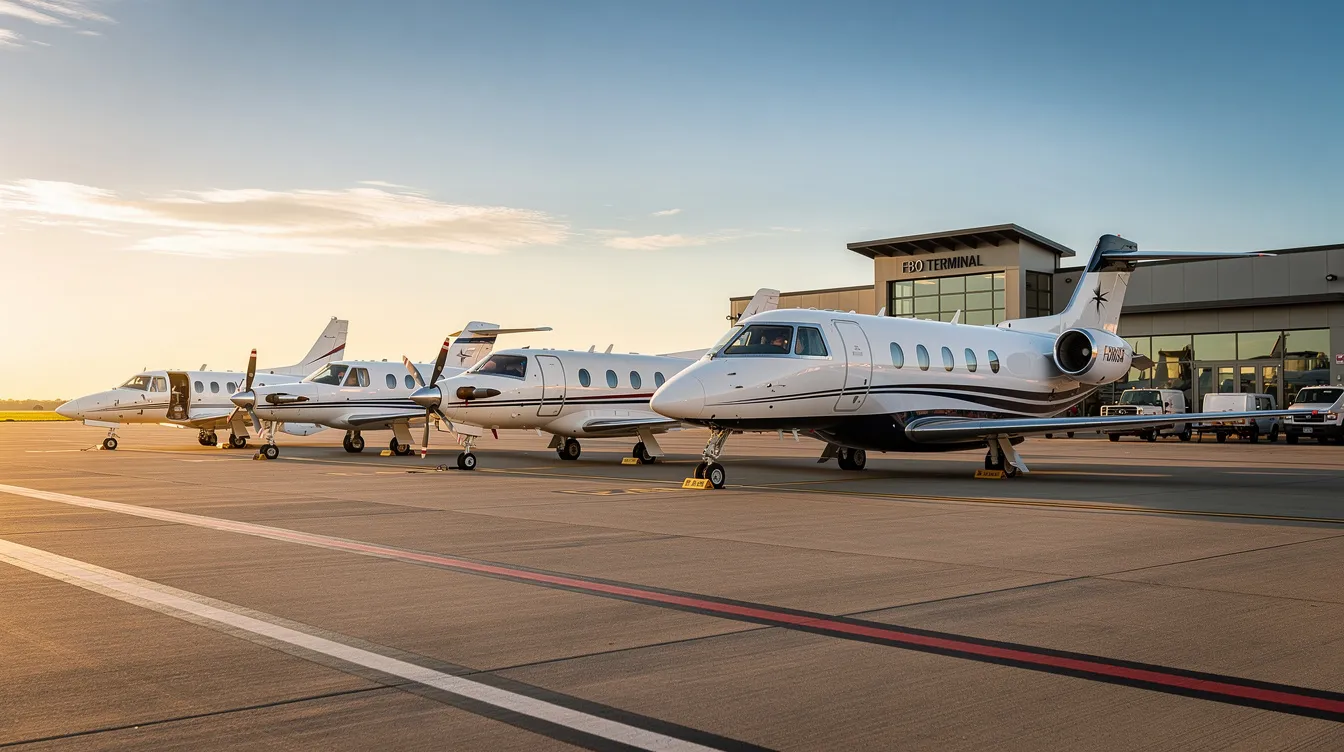
Your first private charter does not need to be complicated. Private jet booking typically involves a request for a quote and review of aircraft options. Here is a step-by-step process to go from idea to confirmed booking.
Define your trip: Lock in dates, flexible time windows, origin and destination airports, number of travelers, pets, and any special needs like medical equipment or extra confidentiality. The more detail you provide upfront, the more accurate your quote.
Request quotes: Reach out to 2 to 3 reputable private aviation providers. Specify which aircraft types you are open to and your budget range. Jettly offers access to over 23,000 aircraft worldwide, making it a useful starting point for exploring charter options across multiple operators.
Compare beyond price: Look at aircraft age, operator safety ratings, luggage capacity, Wi-Fi availability, and cancellation terms. The cheapest quote is not always the best value if it comes with an older aircraft or restrictive terms.
Reserve and confirm: Lock in your preferred option with a contract and deposit. Confirm all passenger names exactly as they appear on government IDs or passports. Review the cancellation policy carefully.
24 hours before departure: Verify the FBO address, finalize catering, confirm ground transportation at both ends, and check for any schedule changes. Most operators send a final itinerary with crew names, tail number, and contact information.
Private jet charters can be booked with as little as 24 hours' notice, but planning a few days ahead gives you more aircraft choices and often better pricing.
The private flight experience is different from commercial air travel in almost every way. From arrival to departure, the contrast is deliberate and dramatic.
Arriving at the FBO: You pull up to a private terminal, often called a Fixed Base Operator. Hand your keys to valet, walk inside, show your ID, and head straight to the aircraft. The entire process from car to cabin takes 10 to 15 minutes. Private jets allow for departure typically 15 to 20 minutes before takeoff. Private flights avoid long TSA security lines and baggage claim waits entirely.
Security and boarding: Security is present but streamlined. No queues, no shoe removal, no liquid restrictions. You walk across the ramp to your aircraft, often with a crew member greeting you at the stairs.
Cabin experience: Private aviation offers a tailored experience with flexible seating arrangements and personalized service. You can move freely, spread out work materials, recline fully, or simply enjoy the quiet. Cabins on midsize and larger jets are noticeably quieter than commercial aircraft.
In-flight amenities: Wi-Fi, power outlets, a selection of snacks and beverages, enclosed lavatories, and on larger jets, lie-flat seats or full beds. Passengers enjoy customized catering tailored to individual dietary preferences on private jets, from simple sandwich platters to multi-course meals.
Pets and kids: Pets can travel beside their owners in the cabin on private jets, often uncrated and on a blanket or seat. Children can move around without worrying about disturbing other passengers. The entire cabin is yours.
Landing and departure: When you land, if running late, private jets usually wait for passengers on the ground too. On arrival, you step off the aircraft directly to a waiting car. Most travelers leave the airport within five minutes of the aircraft parking.
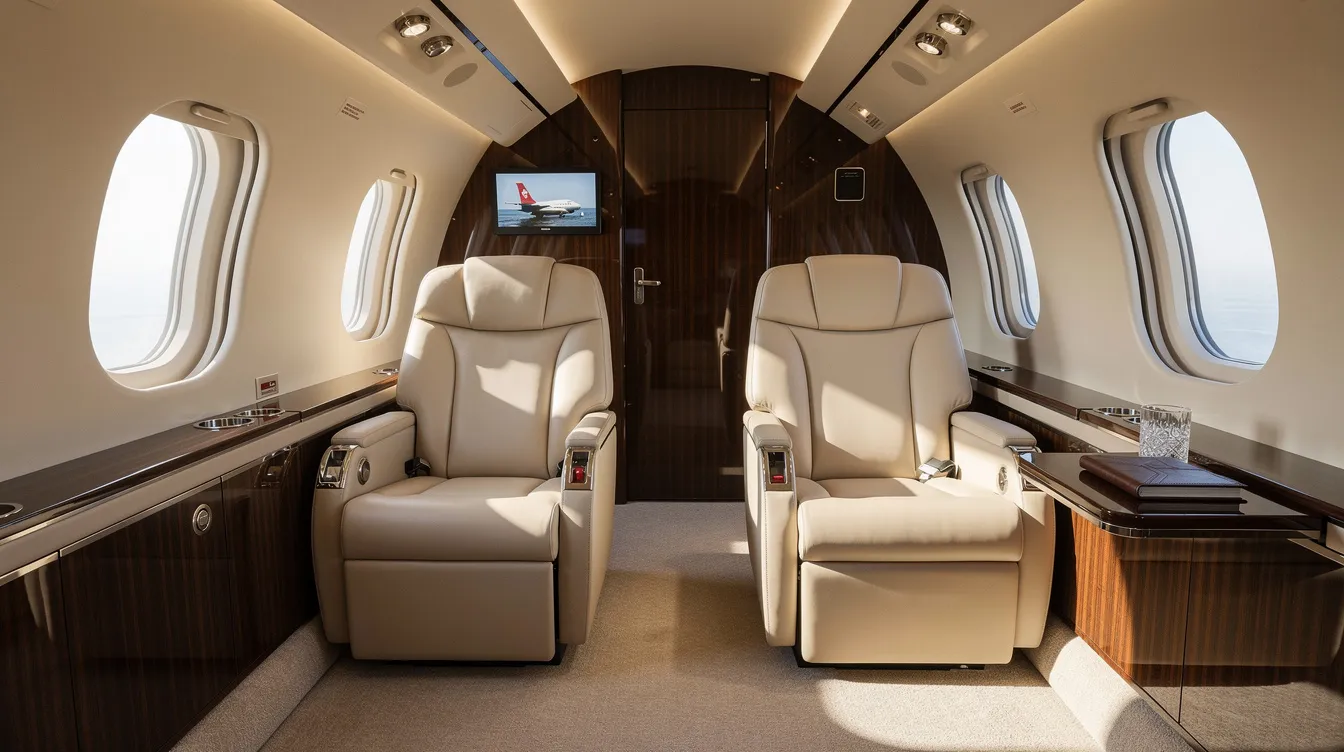
Companies use private charter for one reason above all: it makes their people more productive. When the cost of executive time exceeds the cost of the flight, the math is straightforward.
Time-sensitive trips: A same-day Houston to Dallas to Oklahoma City tour is impossible on scheduled flights but routine on a private jet. Multi-city days that would take two or three days commercially collapse into a single working day.
Confidential meetings: Privacy in private aviation allows for confidential meetings and relaxed travel. M&A discussions, IPO preparations, and product launch strategies can happen in flight without concern about who is listening.
Corporate events: Chartering for sales kickoffs, incentive trips, or plant visits works well with midsize jets or VIP airliners depending on group size. The entire team arrives together, on time, and ready to work.
Cost versus value: When 6 to 10 executives fly private for a critical negotiation, the charter cost might be $25,000 to $40,000 round trip. Compare that to 10 first-class tickets ($2,000 to $4,000 each), plus two nights of hotels, meals, lost productivity from connections, and schedule inflexibility. The gap narrows fast.
Integration with jet cards and aircraft management: Frequent business travelers often combine on-demand charter with jet card hours or managed aircraft to guarantee availability during peak periods. Aviation experts at management companies handle scheduling, crew, and maintenance so executives focus on business.
Sector-specific uses: Finance teams fly private for roadshows. Oil and gas companies shuttle crews to remote sites. Film productions move talent between locations. Professional sports teams charter for away games. Medical teams deploy for urgent surgeries or organ transport.
Private flights are not just about business. Personal aviation transforms how families and friend groups experience leisure travel, turning stressful commercial journeys into the first chapter of the adventure itself.
Family vacations: Flying from New York to Turks and Caicos or from Dallas to Aspen with children and grandparents means no connections, no lost luggage, and no meltdowns in crowded terminals. The journey becomes part of the vacation.
Weddings and celebrations: Flying bridal parties to Napa Valley, Santa Barbara, or the Florida Keys via small regional airports eliminates logistics headaches. Everyone arrives together, relaxed, and on schedule.
Golf, skiing, and adventure trips: Direct flights to airports near Pebble Beach, Bandon Dunes, Vail, or Jackson Hole with bulky sports equipment. No oversized baggage fees, no damage from airline handling.
Remote or second homes: Regular trips to islands, ranches, or mountain properties become practical even when airlines offer no nonstop service. Providing access to remote airstrips makes private aviation the only viable option for some destinations.
Traveling with elderly relatives or special needs: The privacy, flexibility, and comfort advantages over long commercial journeys with layovers are substantial. No rushing between gates, no wheelchair waits, no anxiety about tight connections.
Total customization: You control departure time, catering, seating arrangement, and ground transportation at both ends. Every aspect of the travel experience is tailored to your family or group.

When your travel needs involve 18 to 200+ travelers, standard private jets give way to larger charter options that blend private convenience with airliner capacity.
Use cases: Corporate retreats, sports teams, music tours, university groups, and destination weddings where everyone travels together. Groups larger than 14 typically require heavy jets or airliner-class aircraft.
Airliner and VIP airliner options: Chartering aircraft like Embraer 170s, Airbus A320s, or Boeing 767s configured for passengers provides airline-scale capacity with private-level service and scheduling flexibility.
Cost efficiency: Per-seat costs can become competitive with commercial when chartering an entire aircraft for 50 to 100 people on specific routes. For a 60-person corporate retreat from New York to Nassau, the per-person charter cost can approach business class pricing.
Customization: Branding opportunities on headrest covers, tailored catering, grouped seating layouts, and synchronized ground transfers on arrival. The experience extends your event from gate to gate.
Operational planning: Large group charters require earlier booking timelines, airport slot coordination, and special handling at private or mixed-use terminals. Start planning 4 to 8 weeks ahead for domestic and 8 to 12 weeks for international.
Work with experienced private charter planners for complex itineraries. The operational details of large groups-customs, catering volume, ground logistics-benefit from professionals who manage these trips regularly.
Many aircraft owners do not want to manage the day-to-day complexity of crew scheduling, maintenance tracking, and regulatory compliance. That is where professional aircraft management companies come in.
What aircraft management covers: Scheduling, crew hiring and training, maintenance coordination, regulatory compliance, insurance management, and hangar logistics. The management company operates the aircraft on behalf of the owner under its own Part 135 certificate.
Revenue generation: When the owner is not using the aircraft, the management company can add it to the charter fleet and serve charter flights for paying clients. This generates revenue to offset fixed ownership costs like hangar fees, insurance, and crew salaries.
Owner benefits: Offsetting operating costs, predictable hourly revenue models, and managed fuel and maintenance cost structures. Some owners recover 30 to 60% of annual operating expenses through charter revenue.
Trade-offs: More charter activity means more flight hours and wear on the aircraft. Owners must balance revenue potential against availability for personal use and the accelerated maintenance cycle.
Key contract details: Review minimum guaranteed hours, revenue splits, positioning policies, crew allocation priority, and who controls safety oversight. The best contracts clearly define when the owner has priority and how maintenance costs are allocated.
Aircraft management lets owners enjoy flying private without handling the operational burden, making full ownership viable for those who would otherwise find the logistics overwhelming.
Safety is not an add-on in reputable private aviation. It is the foundation. Every decision, from operator selection to aircraft maintenance, flows from a safety-first framework.
Regulatory oversight: In the U.S., commercial charter operators must hold FAA Part 135 certification, which governs pilot training, maintenance standards, operational safety, and insurance requirements. As of 2026, there are 1,837 Part 135 certificate holders in the U.S. operating 11,582 authorized aircraft.
Third-party safety ratings: Independent audit programs evaluate operators beyond FAA minimums. Ask your operator or broker whether they hold current third-party safety ratings and what audit standards they meet.
Crew experience: Look for operators whose pilots exceed minimum hour requirements, complete recurrent simulator training, and operate under strict duty limits. Crew rest rules under Part 135 limit duty days and mandate rest periods.
Maintenance standards: Aircraft undergo scheduled inspections based on flight hours and calendar time. Components have defined lifetimes, and engines are tracked by cycles. Newer aircraft benefit from better safety systems and more fuel efficient aircraft technology.
Insurance: Serious operators carry robust liability insurance, often in the tens of millions. Ask for proof of insurance coverage and verify it covers passenger liability for charter operations.
Safety checklist for first-time flyers:
Is the operator Part 135 certified?
What third-party safety audits have they passed?
How many hours do their pilots average?
When was the aircraft's last major inspection?
What is the operator's insurance coverage level?
Does the operator have a Safety Management System (SMS)?
Consider travel insurance for trip cancellation or interruption coverage, especially when booking empty legs or during volatile weather seasons.
One of the clearest advantages of private aviation is customization. From pets to dietary needs to mobility accommodations, the experience adapts to you.
Pets: Pets can travel beside their owners in the cabin on private jets. Small dogs often sit on laps; larger dogs rest on blankets on the floor or seats. Bring vaccination documentation and mention your pet at booking. Some operators charge a cleaning fee, which should be disclosed upfront.
Catering: Passengers enjoy customized catering tailored to individual dietary preferences on private jets. Options range from simple snack trays to full multi-course meals, including vegan, kosher, halal, and allergy-sensitive menus. Arrange catering at least 24 to 48 hours before departure for complex requests.
Medical and mobility needs: Charters can be configured for stretchers, wheelchairs, or specialized medical equipment. Medical escorts can join certain flights. This makes private aviation a practical option for patients who cannot endure commercial travel.
Cabin configuration: Seating can sometimes be reconfigured for additional workspace, child seats, or extra legroom. Discuss your needs when requesting a quote.
Ground services: Coordinate accessible vehicles, tarmac-level transfers, and minimized walking distances between car and aircraft. FBO staff are accustomed to handling special arrangements.
Communicate all special requirements early. The private aviation team can tailor every detail when they have adequate lead time.
Private aviation carries a higher per-passenger carbon footprint than most commercial flights. That is an honest reality, and travelers who value sustainability should understand both the impact and the growing set of options to reduce it.
Sustainable Aviation Fuel (SAF): SAF is a drop-in replacement for conventional jet fuel that can reduce lifecycle carbon emissions by up to 80%. It is increasingly available at major FBOs across North America and Europe, though it carries a price premium.
Carbon offset programs: Many charter operators offer offset programs through certified projects such as reforestation or renewable energy. Travelers can opt to compensate for their flight's emissions at booking.
Efficient choices: Selecting newer, fuel efficient aircraft with modern engines reduces emissions per mile. Direct routings and flying with full passenger loads (rather than half-empty cabins) improve efficiency further.
Industry innovation: Electric and hybrid aircraft are in testing for shorter routes of 100 to 500 miles. These could reshape regional private flights within the next decade.
Practical tips for eco-conscious clients: Combine trips when possible. Choose turboprops for short legs instead of jets. Avoid unnecessary repositioning flights by aligning your schedule with the aircraft's next mission. Explore operators who participate in SAF purchasing programs.
Ask your provider about sustainability policies, SAF availability, and any green energy initiatives. The world of private aviation is gradually shifting, and your choices as a client accelerate that shift.
Flying private is not a one-time decision. Whether you charter once a year or every month, staying informed about pricing trends, new charter options, and evolving safety standards will save you money and improve every journey.
Subscribe to private aviation newsletters and market reports for updates on charter flights, empty legs, and pricing trends. The empty leg market alone shifts monthly in ways that create real opportunities.
Follow reputable aviation blogs for deeper insights into aircraft types, jet card comparisons, aircraft management strategies, and flexible scheduling techniques. Knowledge compounds and your confidence as a buyer grows with each trip.
Build a relationship with a trusted private charter advisor or account manager who understands your routes, preferences, and budget. A good advisor functions as an aviation expert in your corner, helping you discover options you would not find on your own.
Track your annual flight hours. If you are chartering more than 25 hours a year, run the numbers on a jet card. Above 75 hours, explore fractional ownership. Your ideal model may change as your travel needs evolve.
Periodically review the safety standards, insurance coverage, and environmental practices of your chosen operator. Operators change, certifications lapse, and the vast network of available charter providers means you always have alternatives.
Private aviation will continue to become more accessible as technology improves, sustainability options expand, and digital platforms make it easier to book flights, compare pricing, and verify safety. The travelers who benefit most are the ones who treat flying private not as a luxury splurge but as a strategic tool, one worth understanding deeply and using wisely.
Share this post:
Jay Franco Serevilla
Sep 21, 2026
|
5
min read
Discover tips and trends in the industry.

5
min read
Bell 407 Jet Ranger: Charter Guide, Specs, and Modern Variants
The Bell 407 Jet Ranger is a versatile single-engine helicopter known for its comfort, performance, and modern features. Ideal for private travelers and executives, it offers a spacious cabin for up to six passengers and excels in various missions, from city transfers to sightseeing tours. This guide provides insights into its specifications, variants, and real-world applications, helping you determine if the Bell 407 is the right choice for your next charter flight.
Read More
5
min read
Boarding Private Jet: Step‑by‑Step Guide to Your First Private Flight with Jettly
Boarding a private jet for the first time can be a seamless experience with Jettly. This step-by-step guide outlines the simplified boarding process, from arriving at the FBO to taking off, highlighting the efficiency and personalized service that private aviation offers compared to commercial flights.
Read MoreStay updated with our latest insights and tips to elevate your journey with us.
MEMBERSHIPS AND ASSOCIATIONS



Disclaimer: Jettly operates as a charter broker, offering access to a global digital jet charter marketplace. Jettly is not a direct air carrier and does not own or operate aircraft. All advertised flights are conducted by third-party air carriers that are fully licensed and hold the appropriate Part 135 or Part 121 certifications issued by the Federal Aviation Administration (FAA) or equivalent regulatory authorities under U.S. or foreign law. Jettly complies fully with the U.S. Department of Transportation's Part 295 and Part 298 Charter Broker regulations. Jettly does not carry additional liability insurance. Passengers are covered by aircraft operator insurance. TICO: 50023770


