



Login
Get Instant Pricing On 23,000+ Aircraft

>

A 25-hour NetJets card for a light jet like the Phenom 300 carries a headline price of about $215,000. Once you add fuel surcharges, federal excise tax, and peak day fees, the real cost lands closer to $247,000 to $262,000. Heavier aircraft push that number past $400,000. This guide breaks down every line item, compares NetJets jet card programs to fractional ownership and on-demand charter, and helps you decide whether prepaying for 25 flight hours is the right move. This guide is for travelers considering private jet solutions and comparing NetJets jet card costs to other options. Understanding the full cost breakdown helps buyers avoid surprises and choose the best private aviation solution for their needs.
The NetJets 25-hour jet card for a Phenom 300 starts at $215,000 (about $8,600 per hour including 7.5% federal excise tax on the brochure rate). After fuel surcharges and peak day surcharges, all-in costs run roughly $247,000 to $262,000 for those same 25 hours. Jet card prices vary based on aircraft type and hours purchased; a 25-hour jet card for a heavy jet costs about $400,000 before extras.
NetJets jet card programs (Card275, Card320, and 25-hour leases) are non-equity products. They offer prepaid access to flight hours without asset ownership. NetJets fractional ownership is a separate structure requiring buyers to purchase a share of an aircraft, starting at $850,000.
Jettly offers a flexible, no-commitment alternative. As a digital private jet charter marketplace with access to over 20,000 unique aircraft, Jettly can be more cost-effective than a 25-hour NetJets card for travelers flying under 25 to 50 hours per year.
Readers can compare private aviation programs with on-demand charter options and instant pricing at jettly.com.
A 25-hour NetJets jet card pre-purchases flight time at a fixed hourly rate, typically locked for 12 to 24 months. NetJets offers jet cards starting at 25-hour blocks of flight time, making them the entry-level private jet card commitment in the NetJets lineup.
For a NetJets card on the Phenom 300 (a popular light jet option at NetJets), the headline NetJets jet card cost is about $215,000 for 25 hours. That works out to roughly $8,600 per hour, which includes the 7.5% federal excise tax calculated on the brochure rate. Hourly rates for NetJets range from $8,500 to $18,500 depending on jet size.
The gap between headline and actual spend matters. When factoring in fuel surcharges, peak day surcharges, and other variable fees, the effective all-in cost runs 15 to 22% higher. That brings a realistic range to roughly $247,000 to $262,000 for 25 hours on a light jet, which aligns with broader analyses of NetJets jet card costs and pricing.
For heavier aircraft types NetJets offers (super-midsize jets like the Challenger 350, or large cabin jets like the Gulfstream G450), a 25-hour card cost climbs to the $330,000 to $500,000+ range. Specific pricing and availability change periodically. In July 2026, NetJets paused new jet card sales to some customers, so new customers should confirm current offers directly with NetJets.
NetJets replaced its older One Card program with two new card tiers, Card275 and Card320, plus lease structures like the Share355L. Each tier reflects different program offers, with different access days, blackout rules, and hourly rate trade-offs.
Card275 provides around 275 access days per year. There are fewer blackout dates than the older program. For the Phenom 300, the occupied hourly rate sits near $8,600 per hour (including federal excise tax). It is sold in 25- or 50-hour blocks, with a 48-hour standard callout window.
Card320 raises access to 320 days per year but introduces 45 blackout dates and 45 peak days. The Phenom 300 hourly rate jumps to about $11,200 per hour. Longer notice periods (up to 120 hours on peak days) apply, and peak day surcharges can add to costs. Jet card programs generally provide guaranteed access with limited blackout periods, though blackout dates limit aircraft availability on certain days.
The 25-hour Lease (Share355L) functions like a card program under lease-style terms. It carries about 10 blackout days, roughly 80 peak days, and shorter non-peak callout (often 24 hours). Once all fees are calculated, total cost can match or exceed the traditional 25-hour jet card.
NetJets offers guaranteed availability with as little as 4 hours' notice on standard days. Cardholders can access over 800 aircraft globally. But the "same" 25-hour block can produce very different bills depending on which card program you hold.
Factors influencing jet card pricing include aircraft size and model. The difference between a light jet and a large jet card can be $200,000 or more for the same 25 hours, and broader jet card cost breakdowns across providers show similar spreads.
Light jets like the Embraer Phenom 300 are generally suited for short-to-mid regional trips for 2 to 6 passengers. A 25-hour jet card for a light jet costs $150,000 to $200,000 across the broader market. At NetJets, the Phenom 300 card starts at $215,000.
Midsize and super-midsize jets, such as the Citation Latitude or Challenger 350, handle U.S. transcontinental missions and seat 7 to 9 passengers comfortably. A 25-hour jet card in this midsize jet category runs $250,000 to $400,000+ before surcharges.
Heavy jets and long-range aircraft push the price higher still. A 25-hour jet card for a heavy jet costs about $400,000. The net hourly rate can climb into the high teens ($17,000 to $20,000+) once fuel and fees are included. NetJets provides access to light through ultra-long-range jets, so the aircraft class options are broad.
|
Aircraft Category |
25-Hour Headline Cost |
Hourly Rate (incl. FET) |
Best For |
|---|---|---|---|
|
Light jet (Phenom 300) |
~$215,000 |
~$8,600/hr |
Trips under 3 hrs, 2-6 passengers |
|
Midsize jet (Citation Latitude) |
~$320,000+ |
~$11,000-$16,000/hr |
Transcontinental, small groups |
|
Heavy jet (G450 class) |
~$400,000-$500,000+ |
~$17,000-$20,000+/hr |
International travel, 8-14 passengers |
The headline card cost is not purely all-inclusive, but it bundles core flight expenses that would otherwise require line-item billing.
Typical inclusions baked into the occupied hourly rates:
Aircraft and crew
Standard in-flight catering
Basic FBO handling fees at most airports
Standard positioning within the NetJets service area
Taxi time within North America
Private jet charter services cover various additional costs like catering and transportation, and the NetJets card provides access to multiple aircraft types without the buyer needing to arrange crews or maintenance.
NetJets does not charge repositioning fees within its service area, which covers most of the continental U.S. The card program also eliminates daily minimums on certain aircraft (Phenom 300, Citation Latitude) as of late 2024 through 2026, making short legs more economical than some competing jet card programs.
Jet card programs are structured to avoid many of the fixed costs of aircraft ownership (hangar, maintenance planning, crew salaries). Those economics are already folded into the hourly rate.
Fuel surcharges, federal excise tax (if not already included in published rates), and special services (premium catering, ground transportation, international handling) are still billed separately.
To estimate true NetJets cost, buyers need to add several variable fees to the base hourly rate.
Federal excise tax (FET): The FET is 7.5% on applicable domestic flight charges. Some NetJets marketing materials quote hourly rates with FET included; others do not. On an $8,000 base rate, FET adds $600 per hour.
Fuel surcharges: Fluctuating global jet fuel prices can trigger variable fuel surcharges. Fuel surcharges can add 4 to 12% to flight costs, averaging 6 to 8% in recent years. On an $8,600 hourly rate, that translates to roughly $340 to $1,030 per hour of additional cost. Over 25 hours, fuel alone can add $8,500 to $25,000.
Peak day surcharges: High demand periods like Thanksgiving, Christmas, Super Bowl weekend, and similar events carry per-hour premiums. Peak day surcharges range from $300 to $800 per hour. On the Card320, peak days also require longer booking notice (up to 120 hours), reducing travel plan flexibility.
Repositioning fees: Within the NetJets fleet's core service area, repositioning fees are typically not itemized. But repositioning fees may apply if the aircraft is outside the home base. For remote destinations (think a ski airport in Aspen or a Caribbean island), repositioning charges can run 50 to 75% of the hourly rate, adding thousands to a single trip.
|
Fee Type |
Typical Range |
|---|---|
|
Federal Excise Tax |
7.5% of base hourly rate |
|
Fuel Surcharges |
4% – 12% of hourly rate |
|
Peak Day Surcharges |
$300 – $800 per hour |
|
Repositioning Fees |
50% – 75% of hourly rate (if applicable) |
NetJets offers both non-equity jet card programs and equity-based fractional ownership. They use the same NetJets fleet of over 800 aircraft but carry very different financial structures, and a detailed fractional jet ownership cost breakdown highlights how those long-term expenses compare to prepaid card hours.
Traditional fractional ownership means buying a 1/16 or 1/8 NetJets share of a specific aircraft. NetJets offers fractional ownership starting at $850,000 in acquisition cost. A 1/16 share (roughly 50 flight hours per year) carries a monthly management fee of approximately $12,000 to $28,000 and an occupied hourly rate around $8,500 or more for a light jet. First-year spend for fractional owners often exceeds $1 million. NetJets requires a 5-year commitment for fractional ownership, so it’s important to understand fractional jet ownership pros, cons, and FAQs before committing.
The 25-hour jet card flips this model. There is no asset to purchase and no long-term commitment. The higher per-hour rate folds ownership-type fixed costs into a simpler billing structure. For travelers flying under 50 to 75 hours per year, or those with uncertain travel plans, a private jet card avoids the capital lockup of a NetJets share.
Depreciation is the other consideration. Fractional owners hold a depreciating aircraft asset that may return only 50 to 70% of its original value after five years. A 25-hour jet card buyer simply pays as they go, with no resale risk and no acquisition cost at the end.
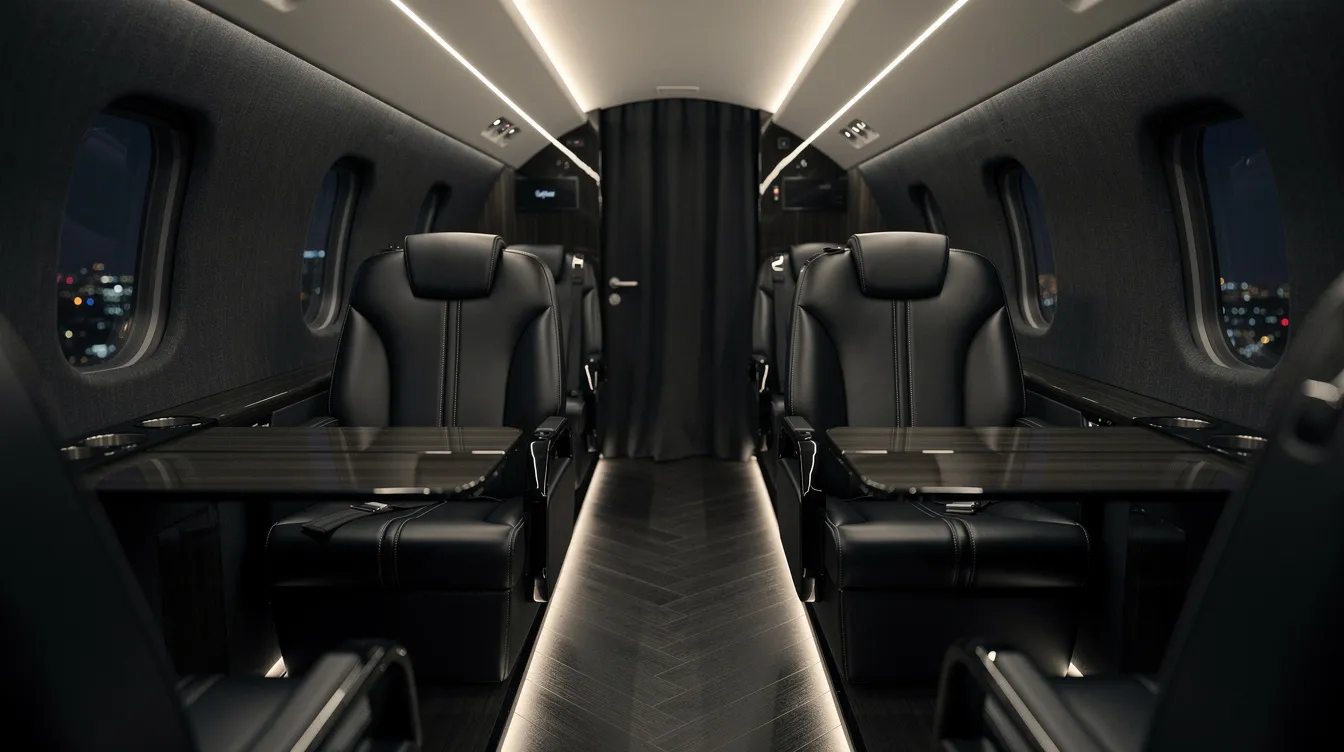
NetJets competes with other private jet companies like Flexjet, Wheels Up, VistaJet, and Magellan Jets. Each offers its own jet card programs and membership models, and a comparison of the best jet card programs on the market today can help clarify how NetJets stacks up.
Some providers publish lower headline hourly rates but add higher repositioning fees, minimum daily charges, or more restrictive blackout rules. Private jet card comparisons require looking at guaranteed availability, blackout dates, callout times, and how repositioning fees are handled across providers, which is exactly what world‑class corporate jet card programs and comparisons are designed to outline.
NetJets has over 800 owned aircraft in its fleet. Wheels Up relies on a smaller fleet of 110 to 135 owned aircraft. Wheels Up membership starts at an $8,500 annual fee with no long-term commitment, while NetJets' entry point is the 25-hour jet card at $215,000+.
Magellan Jets operates an asset-light, on-demand-focused model with transparent all-inclusive rates, while NetJets relies on its large fleet, Berkshire Hathaway backing, and more structured card products. The commitment NetJets requires is higher, but many clients accept premium pricing for perceived reliability, brand stability, and network scale under varying market conditions, as explored in depth in an overview of NetJets as the industry leader in private aviation.
Choosing between a 25-hour jet card, NetJets fractional ownership, and on-demand charter depends on how many hours you fly, where you go, and how much flexibility you need.
A 25-hour NetJets jet card fits travelers flying roughly 15 to 50 hours per year who want a consistent operator, guaranteed access, and a predictable hourly rate. NetJets offers flexible flight hours without long-term commitments beyond the card term.
Fractional ownership becomes more efficient for those flying 75 to 200+ hours per year with predictable, recurring trips and a willingness to accept depreciation risk over a 5-year horizon.
On-demand private jet charter, such as Jettly's marketplace, fits occasional travel or variable routes. There are no long-term contracts, no large card program deposits, and the ability to choose a different aircraft type on each trip, and guides to how Jettly offers affordable private jet charter show how this can materially lower total spend versus a 25-hour card.
Consider a business traveler flying New York to Miami six times per year (roughly 18 flight hours). A 25-hour NetJets card would cost $215,000+ for hours that might not all be used before expiration. On-demand charter for specific flying on those same routes, quoted through a platform like Jettly, could run $4,500 to $7,000 per flight hour, producing annual costs well below the card price while maximizing flexibility across different aircraft size options.
Jettly operates a digital marketplace for private jet charters, providing access to over 20,000 unique aircraft available for on-demand booking. No jet card programs or fractional ownership commitments are required. The jet charter market focuses on providing flexibility and cost transparency, and Jettly's platform reflects that with broad private charter aircraft coverage across turboprops, light, midsize, and long‑range jets.
Users can compare costs for different aircraft class categories (turboprops, light jets, midsize jets, heavy jets) on specific routes with instant pricing, using tools like Jettly’s jet card flight cost estimator. There is no need to lock into a single 25 hour jet card and hourly rate.
Jettly's model avoids large upfront payments and fixed costs: no six-figure deposits, no multi-year contracts, and no need to pre-purchase hours to access competitive rates. On popular city pairs like Los Angeles to Las Vegas, New York to Chicago, or Toronto to Vancouver, Jettly customers can often replicate or beat the effective hourly rate of a NetJets card, especially when flying fewer than 25 to 50 hours per year.
Travelers can also access empty leg flights for further savings, with better availability across a wider operator network.
Ready to fly private on your terms? Explore live charter pricing, compare aircraft types, and get instant quotes at jettly.com, or if you have an audience of travelers, consider monetizing that traffic through Jettly’s ultra high ticket affiliate program.
Yes. Unused hours on a NetJets 25-hour jet card typically expire after 12 to 24 months, depending on the specific contract. Card275, Card320, and lease structures each have their own term lengths, and extensions are not guaranteed. Once hours expire, they are forfeited; no rollover applies. With Jettly's on-demand approach, there is no expiration because customers pay per trip instead of pre-purchasing hours.
NetJets card programs can be applied to international routes, including Europe, the Caribbean, and cross-border trips like U.S. to Canada or Mexico. However, overflight fees, landing rights, foreign handling charges, and different tax structures can push the effective hourly rate higher than domestic flights. Jettly can quote international charter missions instantly across multiple operators, letting customers compare international pricing against the cost of using card hours.
For frequent, high-value business flyers who prioritize guaranteed access and avoid blackout dates, a 25-hour jet card can feel cost-competitive versus ad hoc charter. For occasional travelers, on-demand charter often remains cheaper overall because there is no risk of paying for unused hours. The answer depends on annual flight hours, flexibility on dates (especially during high demand periods), and aircraft type. A guide to the best private jet charter companies and options can help benchmark these trade‑offs, and readers can also estimate charter flight pricing through Jettly's marketplace to compare against their projected 25-hour NetJets card cost.
NetJets is known for relatively transparent pricing, but buyers should still account for fuel surcharges, federal excise tax (if not already rolled into published rates), peak day surcharges, de-icing, and premium catering or special handling fees. These hidden costs can add 15 to 22% on top of the headline hourly rate. On Jettly, each charter quote itemizes costs so customers see exactly what is included before committing. Request a full fee schedule from NetJets before signing, and ask pointed questions about repositioning fees and international surcharges.
Jettly focuses primarily on on-demand private jet charter and digital marketplace access rather than traditional prepaid 25-hour jet card programs. Some Jettly memberships offer added benefits like preferential pricing, concierge support, or capped fees while avoiding the long-term obligations of fractional ownership or large card deposits. For those specifically comparing a NetJets alternative that lets you fly private for less, Jettly’s model is designed to offer that blend of flexibility and cost efficiency. Travelers interested in membership-style access without the perfect solution of a NetJets-level commitment can explore Jettly's options directly at jettly.com.
A 25-hour NetJets jet card typically costs around $215,000 for a light jet at the headline level and $247,000 to $262,000 all-in. Heavy jets push beyond $400,000. The true hourly rate is shaped by federal excise tax, fuel surcharges, peak day surcharges, and repositioning fees, all of which are core concepts in understanding what a jet card is, how it works, and its costs.
For travelers who value brand reputation, guaranteed availability, and a structured card program, a NetJets card can justify its premium. But most buyers flying under 50 hours per year should weigh that against the flexibility and cost transparency of on-demand charter through Jettly's platform, where there are no unused hours to forfeit and no six-figure deposits to tie up—and should also consider whether fractional private jet ownership’s pros and cons change the equation at their specific flight hour level.
Model your annual hours and route preferences. Compare NetJets jet card programs, fractional ownership, and on-demand charter before signing any multi-year or six-figure commitment, and review the best fractional jet ownership companies and costs if you’re considering a share instead of a card. Explore aircraft options and run route-specific quotes at jettly.com.
Share this post:
Jay Franco Serevilla
Sep 5, 2026
|
5
min read
Discover tips and trends in the industry.
5
min read
US Aviation Accidents: History, Safety Lessons, and the Role of Modern Private Air Travel
The history of US aviation accidents highlights significant progress in safety and reliability. Major incidents have led to crucial regulatory changes and technological advancements, benefiting both commercial airlines and private jet charters. Today, platforms like Jettly ensure travelers have access to vetted operators and transparent safety information, enhancing the overall flying experience.
Read More
5
min read
Last-Minute Private Jet Charter: How to Book Fast, Save with Empty Legs, and Fly in 2026
Last-minute private jet charters provide a fast and flexible travel solution for urgent trips, allowing bookings within hours. Jettly's digital marketplace connects travelers to over 20,000 aircraft, offering instant pricing and options for empty leg flights that can significantly reduce costs. This guide outlines how to book quickly, factors affecting pricing in 2026, and tips for choosing the right aircraft.
Read MoreStay updated with our latest insights and tips to elevate your journey with us.
MEMBERSHIPS AND ASSOCIATIONS



Disclaimer: Jettly operates as a charter broker, offering access to a global digital jet charter marketplace. Jettly is not a direct air carrier and does not own or operate aircraft. All advertised flights are conducted by third-party air carriers that are fully licensed and hold the appropriate Part 135 or Part 121 certifications issued by the Federal Aviation Administration (FAA) or equivalent regulatory authorities under U.S. or foreign law. Jettly complies fully with the U.S. Department of Transportation's Part 295 and Part 298 Charter Broker regulations. Jettly does not carry additional liability insurance. Passengers are covered by aircraft operator insurance. TICO: 50023770


