



Login
Get Instant Pricing On 23,000+ Aircraft

>

Every headline about a plane crash raises the same question: how safe is flying, really? In 2025, global aviation carried nearly 38.7 million commercial flights, and the vast majority landed without incident. But crashes did happen, and the numbers tell a story worth understanding. This article breaks down how many plane crashes occurred in 2025, what caused them, and what the data means for anyone who flies—commercially or privately.
In 2025, there were 51 total commercial airline accidents worldwide, down from 54 in 2024. Of those, 8 were classified as fatal accidents, resulting in 394 on-board fatalities—up from 244 the prior year. Aviation fatalities hit a seven-year high, driven largely by a small number of high-impact events.
The overall accident rate improved to 1.32 per million flights in 2025, better than 2024's 1.42 but slightly above the five-year average of 1.27. Scheduled commercial air travel remained among the safest forms of mass transportation.
General aviation aircraft were involved in 78% of crashes globally, continuing a long-standing pattern. Large commercial airliners accounted for only a small fraction of total aviation accidents.
The Aviation Safety Network recorded 201 total occurrences and 652 total fatalities across various aviation types in 2025, including general aviation, cargo, and non-scheduled operations.
Jettly works with certified third-party operators and focuses on safety, transparent charter options, and data-driven route planning. As a charter broker, Jettly connects travelers with professionally operated aircraft; it does not operate flights.
Based on the best consolidated data available, there were 51 total commercial accidents in 2025, with 8 fatal accidents and 394 fatalities among passengers and crew on commercial aircraft. When the scope expands to include civil aviation—general aviation, cargo, charter, and non-scheduled operations—the Aviation Safety Network recorded 201 total occurrences and 652 total fatalities.
Different sources track different types of operations. IATA focuses on commercial turbine-powered aircraft, including jets and turboprops. ASN uses its own inclusion criteria for airliner occurrences, while national bodies such as the National Transportation Safety Board handle domestic incidents, including general aviation. This article covers civil aviation broadly and excludes military operations.
Some late-year events may remain under investigation. Preliminary reports can be revised or reclassified, so final 2025 figures may shift in subsequent IATA or ICAO releases.
Compared with 2024, 2025 saw fewer total commercial accidents (51 versus 54), but fatalities rose sharply, from 244 to 394. The accident rate per million flights improved, while a small number of catastrophic crashes drove the fatality count upward.
|
2025 measure |
Reported figure |
What it represents |
|---|---|---|
|
Commercial airline accidents |
51 |
IATA's global total, down from 54 in 2024 |
|
Fatal commercial accidents |
8 |
Fatal events within the commercial accident data |
|
Commercial on-board fatalities |
394 |
Up from 244 in 2024 |
|
Commercial accident rate |
1.32 per million flights |
Improved from 1.42 in 2024 |
|
ASN occurrences across aviation types |
201 |
Broader occurrence count across its included categories |
|
ASN fatalities across aviation types |
652 |
Fatalities across the categories included in ASN's data |
These figures use different definitions and scopes. They should not be added together or treated as equivalent totals.
The sections below break down the figures by operation type, region, and notable events such as Air India Flight 171, then explain what the statistics mean for private jet charter travelers.
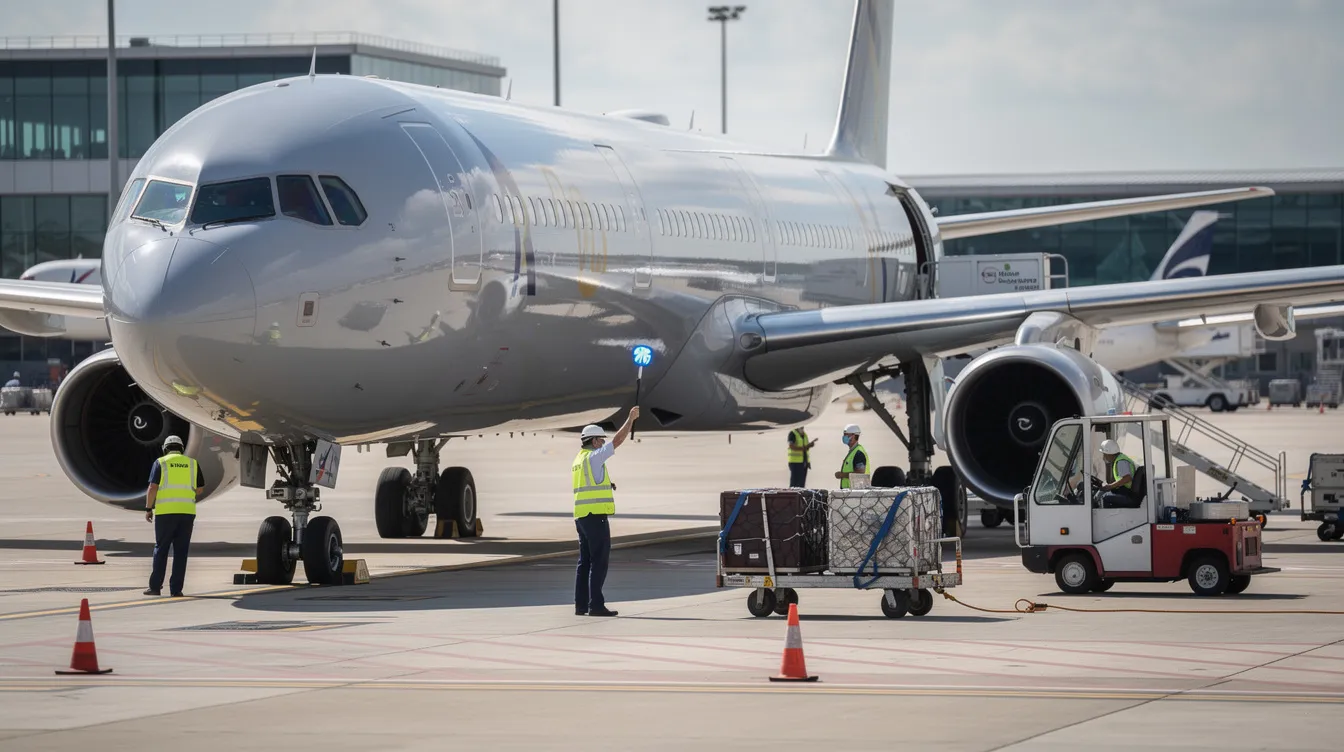
Not every aviation event qualifies as a crash. ICAO and the National Transportation Safety Board define an accident as an occurrence involving substantial aircraft damage, serious injury, or death. An incident is less severe—for example, a warning light that prompts an uneventful diversion.
A hull loss means an aircraft is destroyed or damaged beyond economic repair. Airbus data recorded six hull losses globally in 2025, three of them fatal. A hard landing without structural damage may generate headlines, but it does not necessarily count as a hull loss.
Aviation accidents are tracked across scheduled commercial air transport, general aviation, cargo operations, and business or private flights. Each category is tallied separately, which helps explain why databases report different totals.
A runway excursion, where an aircraft leaves the runway during landing, is categorized differently from an in-flight breakup. Both may be accidents, but they differ substantially in severity, investigation scope, and safety implications, whether they occur on short domestic hops or long-range international private jet flights.
This article focuses on civil, non-military accidents in 2025. Military crashes—including incidents involving a military or army helicopter—are generally reported through defense channels and do not appear in global civil aviation summaries.
Most aviation accidents in 2025 involved general aviation aircraft rather than large commercial airliners. This continues a long-standing pattern: smaller, privately operated aircraft account for many crashes, while scheduled airlines maintain very low accident rates.
In the United States, there were approximately 1,200 general aviation accident records in 2025, including 167 fatal events and 359 deaths, a reminder that anyone exploring affordable aircraft rental and aeroplane rent options should weigh cost alongside safety and regulatory oversight. Globally, general aviation aircraft were involved in 78% of crashes.
For commercial airlines, the overall accident rate was 1.32 per million flights in 2025. The jet accident rate improved from 1.23 to 1.03 per million flights, while turboprops had a higher rate of roughly 4.08 per million sectors.
Factors associated with general aviation accidents include limited pilot experience, older aircraft with fewer safety systems, weather misjudgment, and less regimented operations than those of scheduled airlines, all of which should be considered when evaluating one private jet flight’s cost and value trade-offs. Smaller general aviation flights may also operate with a single pilot, increasing workload.
Jettly is a charter broker connecting travelers with certified business jet and air taxi operators. These on-demand commercial operations are regulated under frameworks such as FAR Part 135; they are distinct from casual recreational flying. Travelers in key markets, such as those seeking private jet charter in Atlanta, Georgia, or private jet charter in Kolkata, West Bengal, can access these services through the platform. Flights booked through the platform are operated by properly certified third-party carriers.
Rather than listing every minor event, these are some of the patterns and major incidents that shaped the year.
Q1 (January–March): On January 29, PSA Airlines Flight 5342, a CRJ-700, collided with a U.S. Army UH-60L helicopter over the Potomac River near Washington, D.C. All 67 people aboard the two aircraft died: 64 on the airliner and three helicopter crew members. Air traffic control communication and the helicopter's position relative to the approach path became key investigation issues.
Q2 (April–June): On June 12, Air India Flight 171 crashed, killing 241 people on board and 19 on the ground. This event significantly increased the year's fatality count. Investigations into major accidents are complex, and conclusions should not be drawn before official findings are issued.
Q3 (July–September): Northern Hemisphere summer brought peak air traffic. Storms and heat-related runway conditions contributed to runway excursion concerns. No single catastrophic crash dominated the quarter, though accident reports and classifications can change as investigations progress.
Q4 (October–December): Late-year data is often preliminary, with investigations still open. Cargo events and fatal general aviation crashes also contribute to annual totals, even when they do not involve scheduled passenger flights.
Historical data indicates that nearly half of aviation crashes occur during landing or takeoff. Ground handling, takeoff, and landing phases also accounted for most aviation occurrences in 2025.
Takeoff and initial climb involve high workload, significant engine demands, and limited altitude for recovery. Flight crews must manage obstacle clearance while monitoring aircraft performance and communicating with air traffic control.
Approach and landing are also demanding phases. Unstable approaches and runway excursions appeared in 2025 investigations. About 16% of accidents were linked to airport infrastructure issues, including runway surface conditions and lighting deficiencies.
By contrast, cruise-phase accidents were rare. There were zero loss-of-control in-flight (LOC-I) accidents for commercial jets in 2025, a notable result amid continued improvements in automation, pilot training, and air traffic control surveillance.
Business jet and airline crews train for these critical phases. Operators in Jettly's network are responsible for meeting applicable crew training and operational requirements, including recurrent training where required by regulation and their procedures.

Accident rates in 2025 varied by region. IATA reported a global commercial accident rate of 1.32 per million flights, with regional rates differing according to the number and type of operations. Rates should be compared carefully because flight volumes and reporting practices vary.
Accident investigation completion rates also differ by region. IATA analysis found that, from 2019 to 2023, 63% of reports were completed in line with states' obligations. The rate was 19% in Africa, compared with 81% in the Commonwealth of Independent States, 78% in North America, and 75% in Europe. Incomplete or delayed reports limit opportunities to learn from accidents.
Conflict zones in 2025 forced airlines and charter operators to assess routes and, where needed, reroute flights. Airspace restrictions and NOTAMs can affect routes over regions experiencing military activity. Detours may add flight time, but route decisions prioritize safety and current risk information, often leveraging tools like an airport locator and route planning platform to identify suitable alternates.
States have an important role in restricting or closing airspace when risks cannot be mitigated, issuing clear advisories, and coordinating civil and military traffic. Operators also conduct their own risk assessments using available notices and guidance.
Operators arranging flights through Jettly monitor relevant NOTAMs and airspace advisories as part of operational planning. Routing decisions are made by the operating carrier, which is responsible for the flight.
Modern aviation relies on Global Navigation Satellite Systems (GNSS), including GPS, for navigation and some approach procedures. Interference can disrupt or mislead navigation information, so crews and operators must be prepared to use alternative procedures and systems.
IATA reported that GNSS jamming incidents in 2025 rose by 67% compared with 2023, while reported GPS spoofing incidents increased by 193%. These figures describe reported interference events, not a corresponding increase in crashes.
GNSS interference was not identified as the sole cause of the commercial accidents counted in 2025. When navigation data is unreliable, established mitigations can include inertial navigation backups, radar vectors from air traffic control, procedures for GPS-denied environments, and interference detection.
Certified operators in Jettly's marketplace are responsible for following applicable regulatory guidance, training crews, and using appropriate alternative navigation procedures when needed.
The year 2023 was widely reported as a record year for commercial aviation safety. It set a high benchmark, but annual statistics can vary depending on the number of flights, the types of accidents included, and whether the comparison uses total accidents, fatal accidents, or fatalities.
In 2025, the jet accident rate improved to 1.03 per million flights from 1.23 in 2024. At the same time, aviation fatalities reached a seven-year high. These figures are not contradictory: a relatively small number of high-impact accidents can increase fatalities even as the overall accident rate improves.
Cargo operations should also be distinguished from passenger flights. Cargo accidents contribute to commercial aviation statistics, but may not involve passengers. Accident totals therefore do not directly indicate the risk on an individual passenger journey.
In the United States, four hull losses occurred among scheduled carriers in 2025. This was a notable change after several years without a hull loss among those carriers.
Air travel has approximately 0.01 deaths per 100 million miles traveled, according to the cited transportation comparison, and private aviation travelers weighing risk against budget can factor in variables like how much it costs to fuel a private jet when planning trips. Individual annual accidents can be alarming, but risk is best understood using consistent rates and clearly defined data sets—not headlines alone.

General aviation includes recreational flying, flight training, air taxis, and corporate aircraft that are not scheduled airlines. It is a broad category and accounts for a substantial share of aviation crashes, and anyone considering ownership instead of charter must also understand ongoing private jet operating costs. The often-cited figure is that general aviation aircraft were involved in 78% of crashes, which is relevant context for travelers comparing charter to longer-term options like private jet lease costs and structures. Travelers considering professionally operated business jets can review Jettly’s private charter aircraft options as a distinct segment within civil aviation and compare them with the cheapest private aircraft options across categories if they are also evaluating ownership or alternative access models.
Commonly identified general aviation risk factors include weather misjudgment, visual flight into instrument conditions, loss of control, fuel management, and mechanical issues. Operating conditions and oversight differ across this broad category, so the label alone does not describe the risk of every flight.
There is a meaningful difference between an ad hoc flight in a small single-engine airplane and a professionally operated business jet, especially when that jet is operated under regulated Part 135 charter company standards. Commercial charter operators must meet the regulatory requirements that apply to their operations, including requirements for crew qualifications and aircraft maintenance, and many frequent flyers use structured jet card programs to access these operators; understanding private jet card costs and pricing structures can help travelers evaluate whether this model fits their flying pattern.
Jettly is a charter broker, not an air carrier. It connects customers with third-party operators that hold the required operating authority and are responsible for aircraft, crew, maintenance, and flight operations. Travelers can ask about the proposed operator's certifications and relevant safety audits before booking, and broader overviews of the charter airlines and private aviation market or a NetJets alternative such as Jettly’s on-demand model can provide additional context when comparing options.
Several major events drew global attention and shaped public discussion about aviation safety in 2025. Investigations are ongoing or subject to official findings, so early reports should not be treated as final conclusions about cause.
Air India Flight 171, June 12: The crash killed 241 people on board and 19 people on the ground. It was among the year's deadliest commercial aviation events and had a major impact on the total fatality count.
Potomac River collision, January 29: PSA Airlines Flight 5342, a regional jet carrying 64 people, collided with a U.S. Army helicopter near Reagan National Airport. All 67 people aboard both aircraft died. Investigators examined air traffic control procedures and the helicopter's position relative to the airliner’s approach path.
Other runway and ground events: Nonfatal runway excursions and ground incidents can also qualify as accidents under applicable definitions. Their inclusion in a database does not mean their severity is comparable to a fatal crash.
Investigations examine evidence such as flight recorders, radar data, maintenance records, and procedures. Findings and safety recommendations can inform changes to training, aircraft design, and operating practices across aviation.
When a serious accident occurs, agencies such as the National Transportation Safety Board, the UK's Air Accidents Investigation Branch, and other national investigation bodies may conduct multi-stage investigations. Their work can involve flight recorder data, cockpit voice recordings, radar tracks, maintenance logs, and witness interviews.
Investigations can take months or years. Between 2019 and 2023, only 63% of accident reports were completed in line with states' obligations, according to IATA. Regional differences were substantial: the completion rate was 81% in the CIS and 19% in Africa. This can delay access to lessons that might help prevent similar accidents.
IATA has established a repository of safety recommendations from final investigation reports to make findings more accessible and support industry-wide learning.
Different databases have different definitions, reporting requirements, and coverage. Accidents involving smaller private flights may not be represented identically across sources. For context, compare like with like: operation type, geography, time period, and whether the figure counts accidents, fatal accidents, occurrences, or fatalities.
The 2025 figures show why a single total cannot explain aviation safety. Commercial accidents decreased from 54 to 51, and the accident rate improved to 1.32 per million flights, while fatalities rose to 394. High-impact events, the number of flights, and the scope of each database all shape the results.
Private jet charter is not the same as casual recreational flying. Charter flights are conducted by commercial operators under the rules that apply to their operations, and travelers can use Jettly’s guidance on affordable private jet charter and additional tips for booking the cheapest private jet flights to understand how pricing and safety oversight work together. Jettly connects customers with third-party carriers; the operating carrier is responsible for the flight and its safety.
A digital charter broker can help travelers compare available aircraft and operators, review relevant credentials, and plan direct routes, acting much like a dedicated private jet operator marketplace such as Dexter Air Taxi on Jettly. Jettly offers access to a broad marketplace and an instant private jet charter cost estimator alongside a specialized jet card flight cost estimator, while its private jet membership options can help eligible travelers plan access and pricing. Details depend on the route, aircraft, operator, and booking terms.
For more information about Jettly’s charter options, visit https://www.jettly.com. Ready to balance time savings, comfort, and safety? You can also explore Jettly’s platform for crowdsourced and shared private jet flights that help reduce per-seat costs, comparing these with more traditional shared charter flights versus full private charters to decide which structure fits your needs.
Yes. The cited comparison puts air travel at approximately 0.01 deaths per 100 million miles traveled, substantially below the U.S. driving figure of roughly 1.35 deaths per 100 million miles. Comparisons depend on the data source and measurement method, but commercial air travel remains a very low-risk way to cover long distances.
IATA reported 51 commercial accidents across its scope of operations and a jet accident rate of 1.03 per million flights in 2025. Fatal-accident and aircraft-type counts depend on the source's definitions, so totals should not be treated as interchangeable. The overall rate remained low despite several high-profile fatal events.
Jettly is a charter broker and does not operate aircraft. Flights are operated by third-party carriers with the operating authority required for the flight. Travelers can ask about the operator's certifications, crew qualifications, maintenance standards, and applicable safety audits. No platform can guarantee that a flight is risk-free.
Air India Flight 171 was one of the year's major fatal accidents. Aviation databases also record events involving aircraft from many manufacturers, but an individual accident does not establish a systemic problem with an entire brand or fleet. Official investigation findings are the right source for conclusions about cause.
Travelers can review available regulatory records, ask a charter broker about the proposed carrier's operating authority and safety standards, and check whether relevant independent audits—such as ARGUS or Wyvern programs—apply. Guides to the best private jet charter companies can also help frame what to look for. Ask who will operate the flight and what credentials can be verified. For airlines, IOSA registration can also be a useful reference.
Ready to experience private travel on your terms? If cost is a key question, you can first review what goes into how much a private jet costs overall and a detailed guide to how much it costs to rent a private jet, then explore flight options or request a quote at https://www.jettly.com.
The answer depends on what counts as a crash. IATA recorded 51 commercial aircraft accidents worldwide in 2025, including 8 fatal accidents and 394 on-board fatalities. The Aviation Safety Network recorded 201 occurrences and 652 fatalities across a broader range of aviation types. These figures are not directly comparable, but together they show why the scope and source matter.
Commercial aviation’s accident rate improved from 1.42 to 1.32 per million flights, even as fatalities rose to a seven-year high after several high-impact events. For travelers, the figures provide context—not a prediction about any individual flight. Safety depends on factors such as the operator, aircraft, crew, route, and operating conditions. Travelers can learn more about how to evaluate private charter operators before booking.
Private charter is distinct from recreational general aviation. Jettly is a charter broker that connects travelers with properly certified third-party carriers; those carriers operate the flights and are responsible for their aircraft, crew, and flight operations. Travelers can compare charter options and request transparent pricing through Jettly’s instant quote and charter cost estimator.
Ready to plan a trip? Explore Jettly’s charter options or request a quote at https://www.jettly.com.
Share this post:
Jay Franco Serevilla
Nov 6, 2026
|
5
min read
Discover tips and trends in the industry.
5
min read
How Many Plane Crashes in 2025? Global Air Safety, Statistics, and Context
In 2025, there were 51 commercial airline accidents worldwide, with 8 classified as fatal, resulting in 394 fatalities. Despite a rise in fatalities, the overall accident rate improved, highlighting the complexities of aviation safety. This article provides insights into the statistics and implications for travelers.
Read More
5
min read
Jet Airliners: From Early Jet Aircraft to Present-Day Commercial Airliners
Jet airliners have revolutionized global travel since the 1950s, transforming long journeys into hours-long flights. This article explores the evolution from early models like the de Havilland Comet to modern aircraft such as the Boeing 787, highlighting their impact on commercial aviation and the rise of private jet travel options.
Read MoreStay updated with our latest insights and tips to elevate your journey with us.
MEMBERSHIPS AND ASSOCIATIONS



© 2026 Jettly Inc. All rights reserved.
Disclaimer: Jettly operates as a charter broker, offering access to a global digital jet charter marketplace. Jettly is not a direct air carrier and does not own or operate aircraft. All advertised flights are conducted by third-party air carriers that are fully licensed and hold the appropriate Part 135 or Part 121 certifications issued by the Federal Aviation Administration (FAA) or equivalent regulatory authorities under U.S. or foreign law. Jettly complies fully with the U.S. Department of Transportation's Part 295 and Part 298 Charter Broker regulations. Jettly does not carry additional liability insurance. Passengers are covered by aircraft operator insurance. TICO: 50023770


