


Login
Get Instant Pricing On 23,000+ Aircraft

>
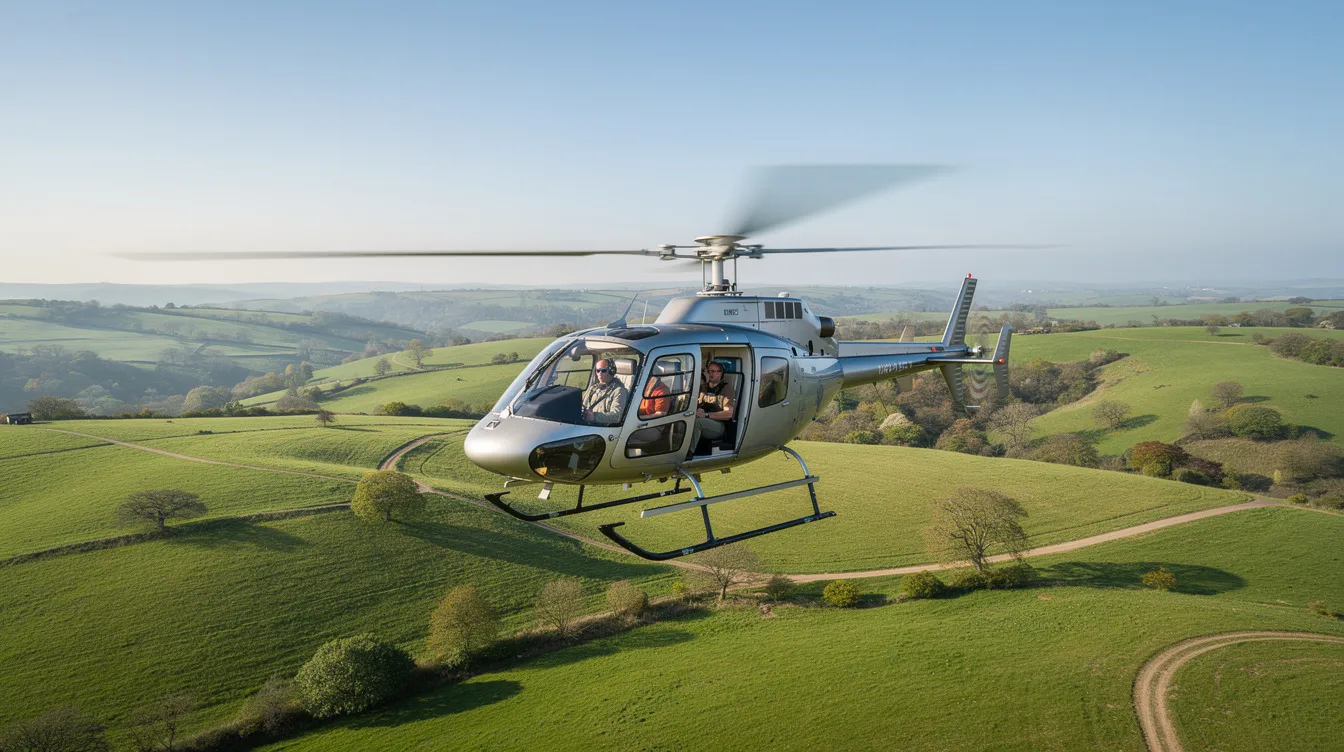
Wondering how many passengers can fit in a helicopter before your next charter, tour, or transfer? In most civilian helicopters, the answer is 2 to 8 passengers plus a pilot, while larger models can carry 15 or more depending on the aircraft and conditions.
For executives, families, high-net-worth travelers, and anyone booking a private helicopter for business travel, sightseeing, airport transfers, or special events, that number matters when matching the aircraft to your group, route, and comfort expectations. Below, we break down how passenger capacity changes by helicopter size and model, what reduces usable seats in real-world flying such as weight, baggage, weather, and safety limits, and how to choose the right helicopter for a legal, efficient, and comfortable flight.
Helicopter passenger capacity varies by size and model. Most civilian helicopters carry between 2 and 8 passengers, while larger aircraft can seat 15 or more. But the maximum number of people who can actually board on any given flight is often lower than the published seat count.
Typical helicopter tours carry 3–8 passengers, with 4–6 being the most common group size worldwide, and overall helicopter rental costs vary based on aircraft type, location, and flight duration.
Maximum passenger capacity depends on weight limitations and fuel load, not just how many seats are installed.
Small helicopters accommodate 1–4 passengers; medium models typically carry 5–12 passengers; heavy-lift helicopters transport 15 to over 50 passengers.
Factors like altitude, temperature, weight distribution, weather, and baggage all reduce usable seats on a given day.
Safety regulations dictate maximum passenger counts, and operators often weigh passengers for safety compliance.
Seating configurations affect passenger comfort and views.
Jettly's platform helps travelers choose the right helicopter and passenger capacity for tours, business travel, and special events. Explore options at Jettly.
How many passengers a helicopter can carry ranges from 1 to over 50, depending on the model. Most charter helicopters seat 2–8 passengers. The largest civilian types accommodate 15 or more passengers plus crew.
In regulatory documents, capacity always includes the pilot. Charter listings typically describe it as "X passengers + 1 pilot." Helicopters typically seat 2 to 8 passengers in standard civilian configurations.
A few concrete examples: the Robinson R44 seats 1 pilot plus 3 passengers. The Airbus H120 accommodates up to 4 passengers. The Bell 407 can carry up to 6 passengers plus a pilot. The Leonardo AW139 carries 10–12 passengers in a VIP layout and up to 15 in a transport layout.
On Jettly, users typically book helicopters for groups of 3–8 people for sightseeing, airport transfers, and special events. Later sections explain why weight limits, weather, and luggage may reduce the actual number who can fly.
Passenger capacity is a certified safety limit recorded in each helicopter's type certificate and flight manual—not a marketing figure. It reflects what regulators have approved after testing the aircraft's structure, performance, and emergency systems.
Designers balance cabin volume, engine power, rotor size, fuel tanks, and structural limits to determine Maximum Takeoff Weight (MTOW) and seating layout. The certified number of passenger seats includes the pilot, and the configuration—VIP, tour, EMS, or offshore—can increase or decrease how many passengers legally sit in the cabin.
Regulators like the FAA, EASA, and Transport Canada specify minimum aisle widths, emergency exit access, and safety equipment per occupant, all of which cap the official seat count. Most civilian helicopters have 2 to 8 seats under these standards. Jettly's listings reflect the certified passenger capacity for each helicopter, and operators may further restrict seats for safety or comfort.
A simple three-tier framework—small, medium, large—helps travelers match group size to the right helicopter without needing technical jargon, similar to how private jets are categorized by size and passenger capacity ranges. Jettly's platform lets users filter by passenger capacity or how many people need to fly together, simplifying aircraft type selection.
Small single-engine helicopters are used for training, private ownership, aerial photography, and short helicopter tours. They typically seat 1 pilot plus 1–3 passengers.
Robinson R22: 1 passenger + pilot—ideal for training or solo scenic flights.
Robinson R44 Raven II: Seats 1 pilot plus 3 passengers.
Airbus H120 (EC120): Accommodates up to 4 passengers.
Advantages include lower charter cost, excellent window seat access, and easy landings at small helipads. These helicopters work well for couples, solo travelers, and small groups doing photography flights, and light utility models such as the Eurocopter EC30 illustrate how compact helicopters can deliver strong performance on short routes.
The trade-off: strict weight and balance limits, less baggage room, and more sensitivity to hot-and-high conditions. Operators sometimes fly with fewer passengers than all available seats allow. On Jettly, small helicopters are often suggested for short scenic flights or quick transfers where total group size is 2–4 people.
Medium helicopters are the workhorses of charter, balancing passenger capacity, comfort, and range. Medium helicopters typically carry 5 to 12 passengers plus a crew member.
Popular models include:
Bell 407: 6 passengers
Airbus H125 (AS350): 5–6 passengers
Airbus H130: 6–7 passengers
Airbus H145: 8–9 passengers
Leonardo AW109: 6–7 passengers in VIP layout
Common missions include city sightseeing tours with 5–7 guests, corporate shuttles between downtown heliports and airports, and regional transfers to resorts or yachts. VIP interiors often reduce seating for more legroom and a spacious cabin feel, while tour layouts maximize window seats. Many Jettly customers booking for families or small corporate teams fall into this medium-capacity bracket, and those needing fixed-wing alternatives can explore Jettly's broad range of private charter aircraft.
Large twin-engine helicopters carry 11 or more passengers and serve offshore energy, airline connections, and high capacity shuttles. Larger helicopters can carry 15 or more passengers. At the upper end, heavy-lift helicopters transport 15 to over 50 passengers, often in military or utility roles.
Key examples:
Sikorsky S-76: 8–12 passengers in executive layouts
Leonardo AW139: Up to ~15 passengers in high-density configuration
Airbus H225 Super Puma: 19 passengers in offshore layouts
Charter operators often cap numbers below maximum capacity for comfort, baggage, and mission needs. For larger groups above 15–20 travelers, Jettly may recommend multiple helicopters or a private jet plus connecting helicopter legs. Even in the largest aircraft, usable passenger capacity is governed by weight, balance, and regulatory limits.
Real aircraft examples help travelers picture how many passengers can realistically fly together. Most civilian helicopters feature between 2 and 8 seats, though larger models push well beyond that. Seating configurations affect passenger comfort and views, so the same helicopter can offer different layouts depending on the mission.
|
Model |
Typical Capacity (Pilot + Pax) |
Common Use |
|---|---|---|
|
Robinson R44 |
1 + 3 |
Tours, training |
|
Airbus H120 |
1 + 4 |
Sightseeing, utility |
|
Airbus H125 |
1 + 5–6 |
Sightseeing, utility |
|
Airbus H130 |
1 + 6–7 |
Tours, VIP |
|
Bell 407 |
1 + 6 |
Charter, EMS |
|
Bell 429 |
1 + 7 |
Corporate, EMS |
|
Leonardo AW109 |
2 + 6–7 |
VIP, transfers |
|
Leonardo AW139 |
2 + 10–15 |
Offshore, VIP |
|
Sikorsky S-76 |
2 + 8–12 |
Executive, offshore |
|
Jettly's helicopter passenger capacity profiles show seat counts and configuration notes, letting customers compare helicopter seating and pick a suitable option for their group size. |
Maximum seats and how many passengers actually fly on a given day are often different numbers. Safety margins and real-time conditions matter. Operators and pilots always have legal authority to carry fewer passengers than the published maximum if conditions require it.
Maximum Takeoff Weight (MTOW) caps total load capacity—the combined weight of the helicopter, fuel, passengers, baggage, and equipment must stay below a certified ceiling. Weight limits affect how many passengers can fly on every single departure.
If passengers are heavier than assumed or luggage is bulky, the operator may reduce how many passengers can board or take less fuel and plan a stop. Weight and balance are critical factors: the center of gravity must stay within a defined envelope, which is why passengers may be weighed and then have seats assigned based on a chart rather than personal preference.
On short helicopter tours, fuel load is lighter, so operators can often fill all seats. On long legs or over-water flights, extra fuel and safety equipment reduce available room. When requesting a Jettly quote or using the private jet charter cost estimator, providing accurate passenger and baggage weights helps set realistic expectations and ensures no one is left behind on the day.
Altitude and temperature can affect helicopter lifting capability significantly. In hot-and-high conditions—think Denver, Aspen, or Johannesburg—engine and rotor performance drops, lowering safe passenger capacity even when empty seats remain. Weather conditions can reduce usable passenger capacity without warning.
Strong winds, icing risks, or contaminated landing surfaces may cause pilots to limit the number aboard or cancel the flight altogether. Heliports and rooftop pads sometimes have structural load limits that restrict the helicopter's gross weight regardless of its certified MTOW. Jettly's partnered operators account for seasonal and route-specific performance when confirming how many passengers can safely fly on a particular day, and travelers comparing modes of travel can reference Jettly's overview of affordable private jet charter to understand pricing on fixed-wing alternatives.
The right capacity depends on the mission. Sightseeing helicopters, business transfers, and special events each have different seating and comfort priorities. Passengers should think beyond how many people can fit—panoramic views, legroom, noise levels, and ample storage for bags all shape the experience, just as they do when evaluating private planes for families on longer trips.
Most shared sightseeing tours use helicopters with 4–6 passenger seats. Typical helicopter tours carry 3 to 8 passengers, balancing cost per seat with good window access. Operators seat passengers by weight for balance, sometimes placing heavier guests near the center. Some offer upgraded "guaranteed window seat" pricing, and travelers comparing options may also look at affordable aeroplane rent costs and options if a fixed-wing tour or transfer better fits their route.
Popular examples include Grand Canyon tours in an Airbus H130 (6–7 passengers) or New York City scenic flights in a Bell 407 (up to 6 passengers). On Jettly, travelers can arrange private helicopter tours where a family buys out all seats, even flying with fewer passengers than maximum capacity for extra comfort and space.
Executives use 4–8 seat twin-engine helicopters for fast transfers between city centers and airports, often coordinating with airport access tools like Jettly's airport locator to match helipad and terminal options. For business travel, comfort and the ability to talk face-to-face in club seating often matter more than squeezing in many passengers.
Think London to Heathrow in an AW109 (4–7 passengers) or Manhattan to JFK in a Sikorsky S-76 (up to 8 in executive layout). Note that helicopters have limited baggage space compared with private jets, so planners should coordinate cargo separately when flying with a full cabin and, when appropriate, compare helicopter transfers to routes priced through Jettly's jet card flight cost estimator.
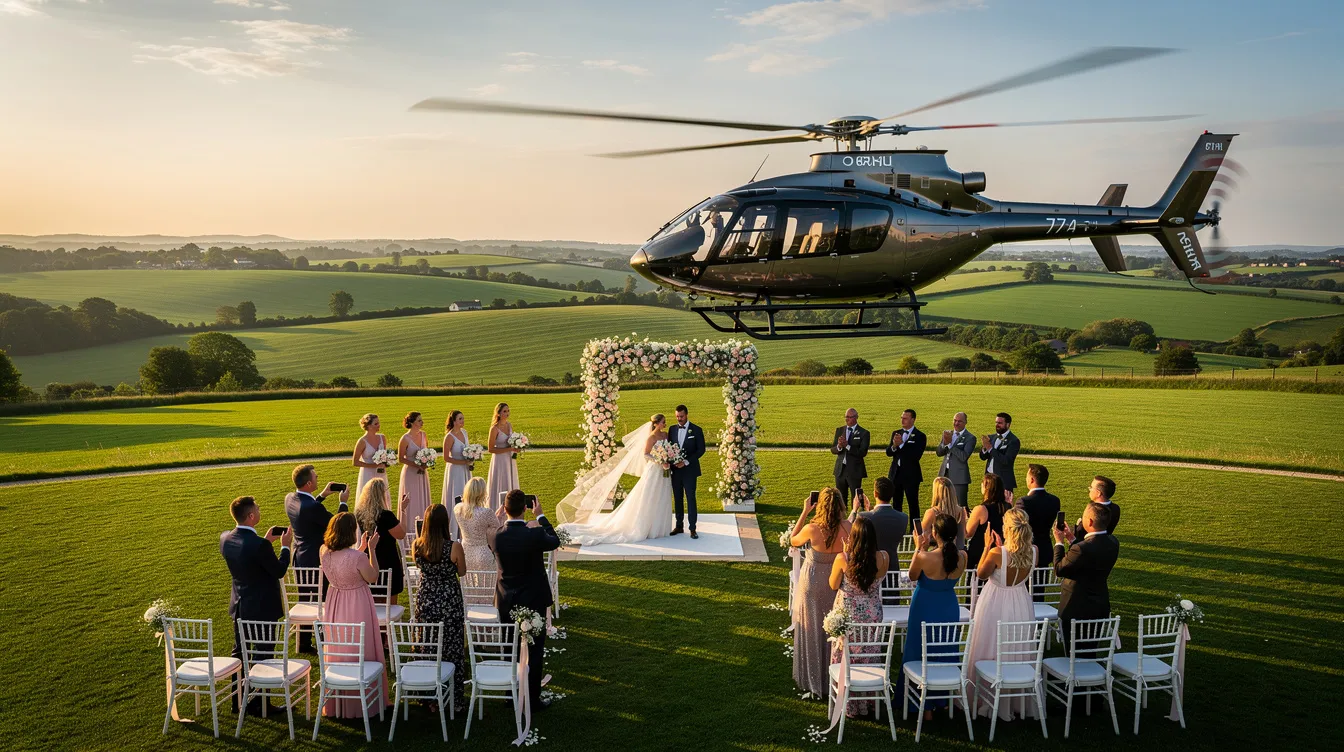
For weddings, product launches, and VIP occasions, helicopters often shuttle guests in multiple rotations rather than moving everyone at once. Common approaches include 4–6 seat helicopters running back-to-back flights, or a larger 10–12 seat model making fewer, higher-capacity trips.
Wedding photo flights for 2–3 people might use a small helicopter, while shuttle services for larger groups use medium or large models. For groups of 40–60 guests, Jettly can design an itinerary combining a short private jet leg with several helicopters handling last-mile access, sometimes leveraging regional airliners like the Embraer ERJ 145 for efficient feeder segments. Planning early and sharing guest counts with operators ensures enough capacity and suitable helipad infrastructure for various group sizes.
Passenger capacity is fundamentally a safety topic overseen by national aviation authorities. Operators cannot legally exceed certified seating or weight limits. All operators available through Jettly's helicopter charter platform hold appropriate commercial certificates and comply with local regulations on seating and passenger capacity.
Every flight begins with a safety briefing covering seat belts, doors, headsets, life vests (if over water), and emergency exits. Passenger weight is assessed before flights for safety—many operators weigh passengers at check-in or ask for accurate weights in advance.
Age restrictions apply: every passenger above a small infant threshold needs their own seat and seat belt. Lap seating is rarely allowed in commercial helicopter operations. Passengers over certain weight thresholds (often 250–300 lb) may be charged for an additional seat or placed in specific positions to maintain balance.
Travelers with accessibility needs or requiring a patient stretcher should discuss requirements during the Jettly booking process so operators can confirm whether the chosen helicopter is suitable, and frequent flyers may benefit from exploring Jettly's private jet memberships to streamline repeat bookings.
Picking the right helicopter means matching passenger capacity, route, budget, and comfort—not simply filling every seat in the largest aircraft available. Jettly's search tools let users enter route, date, and group size to see helicopters filtered by capacity and category alongside private charter aircraft and turboprops.
The platform shows instant pricing estimates for different cabin sizes, helping travelers decide whether to keep the group in one helicopter or operate across multiple aircraft while understanding one-flight private jet costs for fixed-wing segments. Jettly's support team can recommend specific models for popular routes, taking into account local helipads and performance limits.
Ready to fly? Explore helicopter and jet options or request a tailored quote for your group size at Jettly.
These FAQs address common questions about how many passengers can fly and what affects that number in practice.
Most private charters seat 3–8 passengers in one helicopter, with 4–6 being the most common group size for sightseeing and transfers. Larger helicopters can carry 10–15 passengers but are less widely available and typically reserved for offshore or shuttle contracts. Groups larger than 15–20 passengers usually split across multiple helicopters, make use of crowdsourced shared flights and empty seats, or combine a jet and several helicopters—something Jettly's team can coordinate.
Yes. Checked baggage and carry-ons count toward weight limits, so a full luggage load can require flying with fewer passengers than the maximum seat count. Helicopters have much smaller baggage holds than private jets, especially models like the R44 or Bell 407, which is important to remember if you're planning to buy just a seat on a private jet instead of chartering the whole aircraft. Share detailed baggage estimates during the Jettly quote process so the operator can confirm safe capacity.
In most commercial helicopter operations, every passenger above a very young infant age must have their own seat and seat belt. Lap seating is generally not allowed for safety reasons. Rules vary slightly by jurisdiction, but operators follow conservative policies because helicopters can experience sudden movements. Families should ask about child seating rules through Jettly before booking so the correct number of paid seats is reserved.
If actual weights exceed planned totals, the pilot may offload one or more passengers or bags, or adjust fuel plans, to stay within weight and balance limits. This is a legal and safety requirement, not the operator's preference. Providing accurate weights during Jettly's booking process and avoiding last-minute changes minimizes the risk of capacity adjustments at the helipad, especially when coordinating easy access to private jet seats or shared helicopter flights.
For weddings, corporate events, or groups larger than about 10 passengers, planning several weeks to a few months ahead is wise—especially during peak travel seasons. Early planning gives Jettly time to source multiple helicopters, secure helipad slots, and confirm weight assumptions with the operator, and frequent corporate travelers might also consider Jettly's jet card programs for predictable pricing and priority access. Last-minute changes in guest numbers are harder to accommodate when helicopter seating and weight limits are tight, so locking in capacity early ensures a smoother experience.
Understanding how many passengers can fit in a helicopter is crucial for planning safe, comfortable, and efficient travel. Helicopter capacity varies widely by size, model, and mission, typically ranging from 2 to 8 passengers for most civilian helicopters, with larger models accommodating 15 or more. Real-world factors such as weight limits, fuel requirements, weather, and safety regulations often reduce the number of passengers who can fly on any given trip.
Jettly’s platform offers a deeper look into helicopter options, helping travelers select the right aircraft and passenger capacity for their specific needs—whether for business transfers, sightseeing tours, or special events. Ready to experience private travel on your terms? Explore flight options or request a quote at https://www.jettly.com.
Share this post:
Jay Franco Serevilla
Jul 25, 2026
|
5
min read
Discover tips and trends in the industry.
5
min read
Flight Charter: How Jettly Makes Private Charter Flights Simple, Flexible, and Transparent
Jettly revolutionizes private charter flights by offering travelers the flexibility to choose their schedule, aircraft, and route. With access to over 20,000 certified aircraft worldwide, Jettly ensures transparent pricing and no long-term commitments. This guide explores the benefits of charter flights, including cost-saving options like empty leg flights and the convenience of booking through a digital platform.
Read More
5
min read
Charter Company: How Jettly Connects Travelers with Private Jets Worldwide
Jettly is a digital charter marketplace that connects travelers with over 20,000 private jets worldwide, offering flexibility and convenience without ownership commitments. This guide explores how charter companies operate, the benefits of private jet travel, and how Jettly reshapes the industry with instant pricing and transparent services.
Read MoreStay updated with our latest insights and tips to elevate your journey with us.
MEMBERSHIPS AND ASSOCIATIONS



Disclaimer: Jettly operates as a charter broker, offering access to a global digital jet charter marketplace. Jettly is not a direct air carrier and does not own or operate aircraft. All advertised flights are conducted by third-party air carriers that are fully licensed and hold the appropriate Part 135 or Part 121 certifications issued by the Federal Aviation Administration (FAA) or equivalent regulatory authorities under U.S. or foreign law. Jettly complies fully with the U.S. Department of Transportation's Part 295 and Part 298 Charter Broker regulations. Jettly does not carry additional liability insurance. Passengers are covered by aircraft operator insurance. TICO: 50023770


