


Login
Get Instant Pricing On 23,000+ Aircraft

>
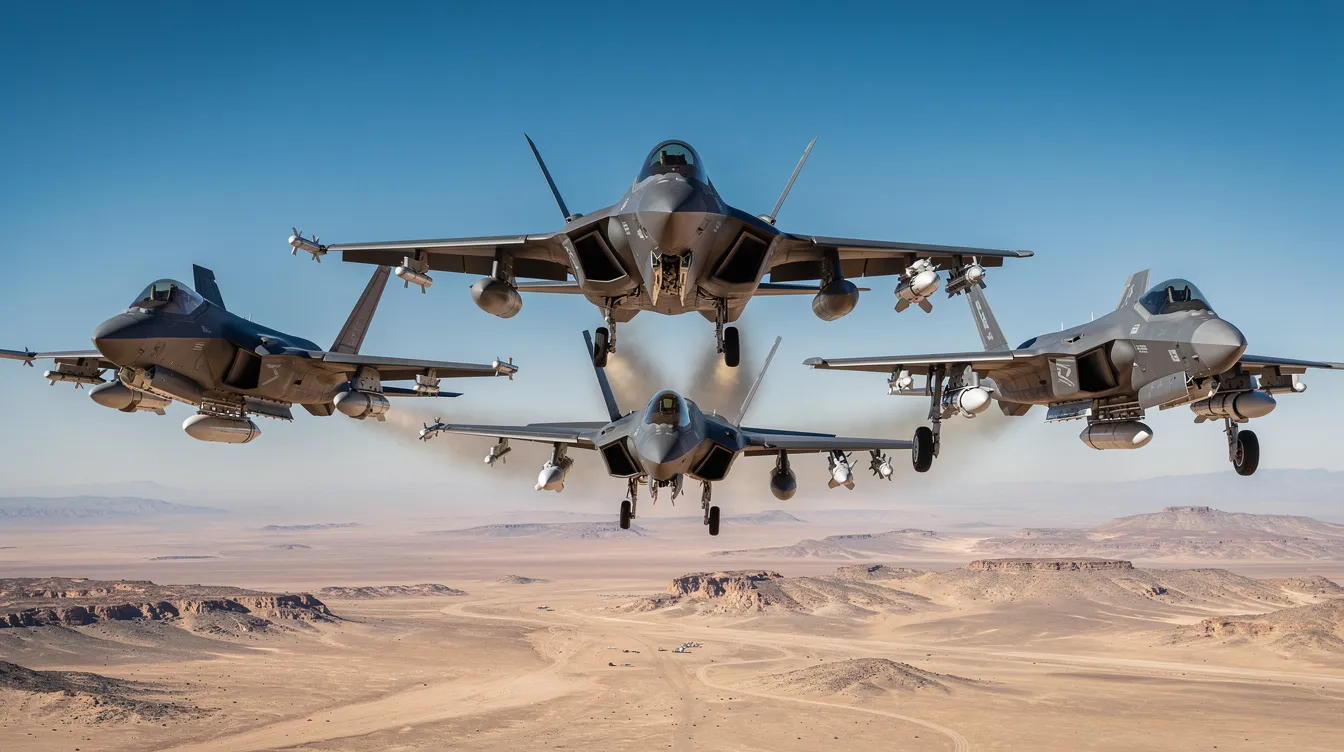
If you have ever wondered how many military jets the US has, the short answer is roughly 2,800 to 3,300 jet-powered combat aircraft spread across the Air Force, Navy, and Marine Corps, with about 3,300 fighter aircraft overall in recent Congressional Budget Office estimates. For aviation enthusiasts, frequent flyers, defense analysts, and anyone curious about American air power, that number offers a useful snapshot of the scale behind the US military’s global reach and the aerospace trends that often shape technology across the broader aviation market.
Here is a data-driven look at the current fleet, including branch-by-branch inventories, major fighter and bomber models, modernization trends, and the key differences between military and civil aviation, with added context on how those advances connect to private aviation and services like Jettly.
The United States operates approximately 3,300 fighter aircraft according to the Congressional Budget Office, making it the largest military aviation force in the world.
The U.S. Air Force holds the majority of military jets, with roughly 2,100 to 2,300 fighter, attack, and bomber airframes, while the Navy and Marine Corps combine for another 800 to 1,000 carrier- and land-based combat jets.
Numbers are in constant flux. The Air Force is retiring A-10s and legacy F-15C/D Eagles while building up F-35A and F-15EX deliveries.
The United States military operates roughly 12,000 to 13,000 total military aircraft when helicopters, trainers, transports, and other types are included.
The country's leadership in military aviation has fueled advances across the broader aerospace and private aviation sectors, including platforms like Jettly that connect people with charter flights worldwide.
The U.S. military's total active fleet includes various aircraft such as trainers, transports, and helicopters, but the primary fixed-wing tactical aircraft types active in the U.S. include fighter jets and bombers. The Department of Defense categorizes its jet inventory based on primary combat mission, separating air superiority fighters from multirole strike platforms and strategic bombers.
The U.S. military operates roughly 3,000 active fighter and attack jets. When bombers, electronic warfare, and reconnaissance aircraft are added, the number climbs toward the 3,300 figure the CBO listed in its mid-2026 reporting. These totals help show where the U.S. stands as a country with the world’s largest combat-jet fleet, and the breakdown by branch looks roughly like this:
Air Force (active, Air National Guard, Reserve): approximately 2,100–2,300 jets
Navy: approximately 550–700 combat jets
Marine Corps: approximately 250–350 combat jets
Hard exact figures are difficult to pin down. Some aircraft sit in depot maintenance, others are at forward posts, and a small number of airframes remain classified. This article uses the best open-source data available through the 2026 fiscal year.
The Air Force operates the largest share of American military aircraft, covering air superiority, global strike, and intelligence missions. Its fighter and attack fleet alone numbers roughly 1,978 airframes as of September 2025, with about 141 bombers on top of that.
Key fighter and attack types:
F-16C/D Fighting Falcon - approximately 700 in service across active, ANG, and Reserve units
F-35A Lightning II - around 500 airframes and climbing
F-15E Strike Eagle - about 200 in the current inventory
F-22A Raptor - roughly 184
F-15C/D Eagle - about 75, in drawdown
F-15EX Eagle II - small but growing, around 13 delivered
A-10C Thunderbolt II - around 163 remaining (with retirements ongoing)
Bombers:
B-52H Stratofortress - 72 active airframes
B-1B Lancer - roughly 45 after recent retirements
B-2A Spirit - 19 stealth bombers in service
B-21 Raider - entering limited early service, with exact numbers still classified
Specialized jet-powered platforms like the E-3 Sentry AWACS, RC-135 reconnaissance variants, and KC-46 tankers add further to the Air Force total. When all jet-powered fighters, bombers, and special-mission aircraft are included, the Air Force portion sits in the low-to-mid thousands.
The Navy and Marine Corps share several aircraft types and operate them primarily from carriers, amphibious assault ships, and forward land bases. Carrier aviation shapes these jets' design — reinforced landing gear, folding wings, and heavy corrosion protection distinguish them from most Air Force planes.
Core Navy jets:
F/A-18E/F Super Hornet - about 400 aircraft in service, the main Navy strike fighter
EA-18G Growler - roughly 150 electronic warfare variants
F-35C Lightning II - dozens delivered, with production expanding each year
Marine Corps tactical jets:
F-35B (STOVL variant) - more than 100 delivered by mid-2020s
AV-8B Harrier II - being phased out
Legacy F/A-18C/D Hornets - dozens remaining, in gradual retirement
The U.S. military also operates electronic warfare aircraft such as the EA-18G Growler and the U-2 Dragon Lady for high-altitude reconnaissance. Combined, Navy and Marine Corps jet inventories form a powerful sea-based air arm capable of projecting force across the globe.
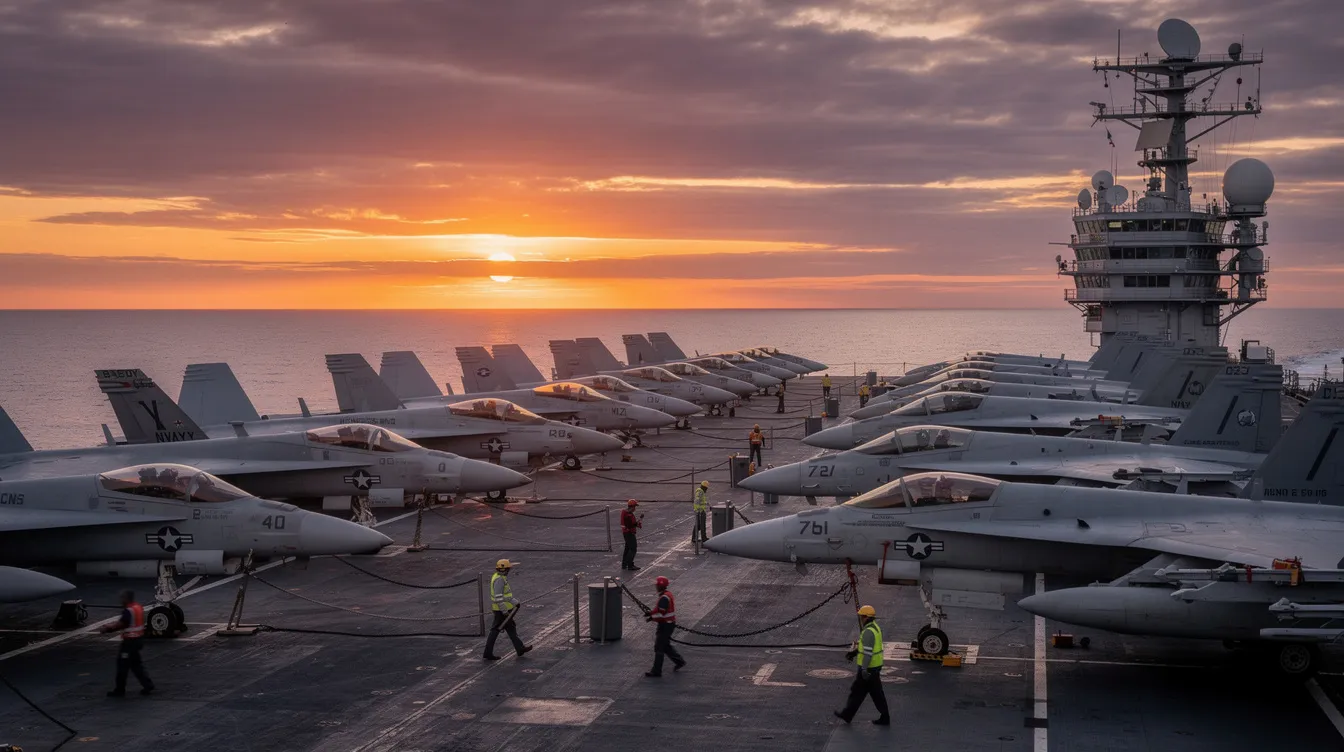
Fighter aircraft include types like the F-35 Lightning II, F-15 Eagle, and F-22 Raptor. Each carries a different designation that reflects its mission camp — air superiority, multirole strike, or fleet defense.
The F-15C/D Eagle holds a remarkable air-to-air kill ratio of 104:0 across decades of combat, though the type is now being drawn down.
The F-16C/D Fighting Falcon is flown by 25 different countries, making it one of the most widely exported fighters in history. The U.S. has approximately 700 in service.
The F-22 Raptor is a fifth-generation fighter with 180 units available, equipped with supercruise and advanced stealth. No army in the world fields a direct equivalent.
Over 1,000 F-35 Lightning II aircraft have been built for the US across all three variants, with sensor fusion and low-observable design giving the type a decisive advantage in contested airspace. Lessons from Ukraine and competition with China have accelerated procurement timelines.
Attack planes are optimized for air-to-ground missions, emphasizing payload and survivability over air-to-air performance.
The A-10 Thunderbolt II - the U.S. Air Force has around 280 A-10 Thunderbolts listed in its broader inventory records, though the number of combat-coded airframes is lower. Its GAU-8/A 30mm cannon remains iconic for close air support, but the type is in gradual retirement.
The AV-8B Harrier II served Marines from amphibious ships for decades but is now being replaced by the F-35B.
Strategic bombers including the B-1B Lancer, B-2 Spirit, and B-52 Stratofortress are operated by the U.S. to deliver long-range conventional and nuclear strikes.
The B-52H has been flying since the 1960s and is projected to serve beyond 2050 after engine and avionics upgrades — a comment on how building robust airframes pays dividends across generations.
The B-2A Spirit fleet of 19 aircraft provides stealth penetration capability, though high maintenance costs limit sortie rates.
The B-21 Raider is entering service to eventually replace both the B-1B and B-2, with weapons integration and stealth shaping informed by decades of operational data.
The U.S. is in the middle of a generational transition. Older fourth-generation jets are retiring while fifth-generation platforms like the F-35 and B-21 ramp up. About 27% of DoD fighter aircraft now feature stealth design, a number that will grow each year.
Key trends to watch:
F-35A/B/C deliveries accelerating across all three branches
F-15EX replacing aging F-15C/D airframes
B-21 Raider gradually taking over from B-1B and B-2 fleets
Integration with unmanned "loyal wingman" drones and networked warfare systems
Total jet numbers may stay roughly stable even as capability increases. More capable multirole aircraft are replacing several older, single-mission types, meaning people should not buy into the idea that a flat count equals stagnant power.
Military jets prioritize survivability, lethality, and mission flexibility. Civilian and private aircraft focus on safety, comfort, and efficiency. The design gap is enormous — ejection seats and weapons pylons versus spacious cabins and noise reduction.
Yet the U.S. experience in military aviation has fed directly into the private sector. Advanced avionics, engine materials, and composites developed for fighter programs now appear in business jets that fly executives across time zones.
Jettly operates in the private aviation space, connecting travelers to a global inventory of private charter aircraft including business jets, turboprops, and helicopters rather than military aircraft. Many of those private jets use technologies and manufacturing heritage originally refined in defense aerospace.
Just as the Air Force, Navy, and Marine Corps choose specialized military aircraft for different missions, civilian travelers benefit from selecting the right aircraft class for their trip, especially when exploring affordable airplane rental options. A short regional hop calls for a light jet or turboprop; a transatlantic business trip demands a heavy jet.
Jettly offers on-demand access to more than 20,000 aircraft worldwide, with instant pricing, transparent costs, integrated airport locator tools, and no long-term ownership commitment. The platform works with regulated operators that meet strict safety standards, mirroring the emphasis on maintenance and operational reliability found in military aviation.
Learn more about Jettly's charter options at jettly.com.
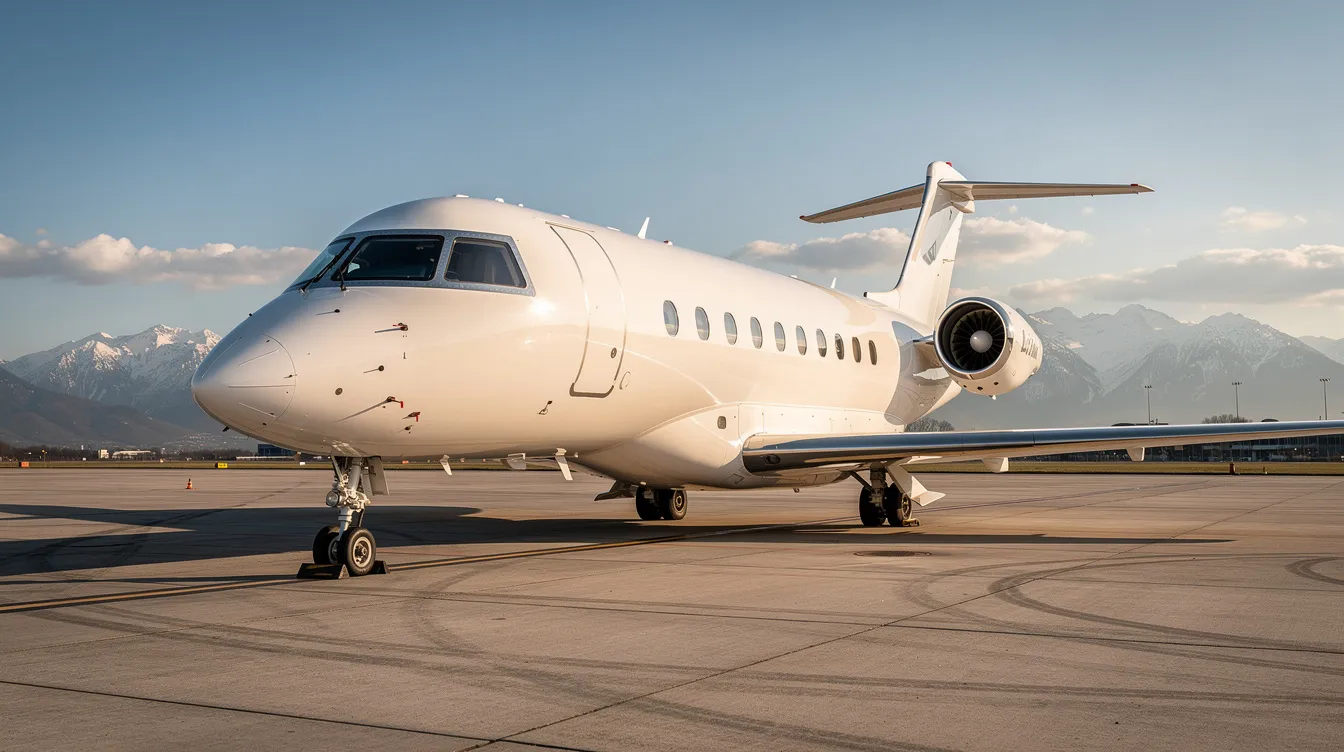
Official figures are updated annually through defense budget documents and Congressional reports, though day-to-day totals fluctuate as new aircraft arrive and older ones enter depot maintenance or retirement. Third-party surveys like FlightGlobal's World Air Forces report also publish data each year.
A small number of demilitarized jets end up in civilian hands, but the process is heavily regulated. Most retired military aircraft are stored at facilities like the 309th Aerospace Maintenance and Regeneration Group in Arizona, scrapped, or converted into training targets.
The United States operates by far the largest and most diverse fleet of military jets of any country in the world. Its combat jet inventory significantly exceeds those of Russia and China, and its global basing network amplifies this advantage further.
Military jets often burn more fuel per hour due to high power settings and afterburner use. However, total aviation emissions come from a mix of military, commercial, and private sources. Both defense and civil sectors are investing in sustainable aviation fuels and more efficient engine designs.
While military aircraft are not available for charter, private jet platforms offer high-performance business jets with fast climb rates, high cruise speeds, and direct routing to thousands of airports, while dedicated operators provide thrilling military jet experience flights for civilians under strict safety oversight. Ready to experience private travel on your terms? Explore flight options or request a quote at jettly.com.
The United States maintains the largest and most advanced military jet fleet in the world, with approximately 3,300 fighter and attack jets across the Air Force, Navy, and Marine Corps. This diverse and modern inventory includes cutting-edge fifth-generation fighters like the F-35 and F-22, reliable legacy platforms such as the F-15 and F-16, and a robust bomber force featuring the B-52, B-1, and stealthy B-2. As the military transitions to newer aircraft and integrates emerging technologies, its air power continues to shape global defense strategies and drive aerospace innovation.
For civilian travelers, the technological advancements and operational excellence of military aviation have influenced private aviation sectors, where platforms like Jettly offer flexible, transparent, and convenient access to private jet charters worldwide. Whether for business or leisure, private jet travel provides many of the benefits of military-grade performance, tailored for individual needs.
Ready to experience private travel on your terms? Explore flight options or request a quote at https://www.jettly.com.
Share this post:
Jay Franco Serevilla
Oct 11, 2026
|
5
min read
Discover tips and trends in the industry.

5
min read
Which Airlines Have the Most Accidents? (And What That Really Means for Safety)
When evaluating airline safety, historical accident totals can be misleading. Airlines with the most accidents, like American Airlines and Aeroflot, have improved significantly due to modern safety standards and regulations. Today, flying is statistically the safest form of long-distance transport, with a focus on accident rates per million flights providing a clearer picture of safety.
Read More
5
min read
Jet Airways: From Full-Service Icon to Modern Travel Alternatives
Jet Airways, once a leading full-service airline in India, ceased operations in 2019 and is now under liquidation. With no new tickets available, travelers are seeking alternatives for their air travel needs. Private jet charter services like Jettly offer flexible and convenient options for those looking to navigate the skies post-Jet Airways.
Read MoreStay updated with our latest insights and tips to elevate your journey with us.
MEMBERSHIPS AND ASSOCIATIONS



Disclaimer: Jettly operates as a charter broker, offering access to a global digital jet charter marketplace. Jettly is not a direct air carrier and does not own or operate aircraft. All advertised flights are conducted by third-party air carriers that are fully licensed and hold the appropriate Part 135 or Part 121 certifications issued by the Federal Aviation Administration (FAA) or equivalent regulatory authorities under U.S. or foreign law. Jettly complies fully with the U.S. Department of Transportation's Part 295 and Part 298 Charter Broker regulations. Jettly does not carry additional liability insurance. Passengers are covered by aircraft operator insurance. TICO: 50023770


