


Login
Get Instant Pricing On 23,000+ Aircraft

>
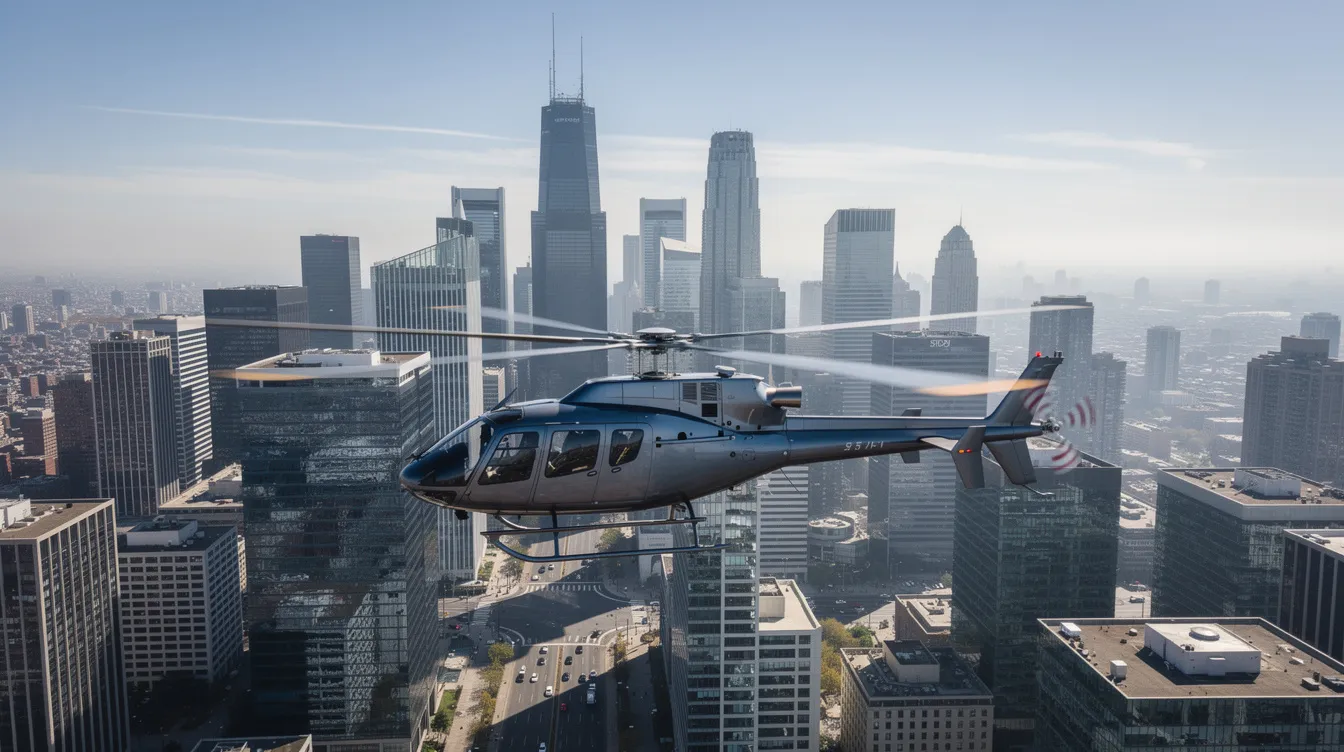
How many decibels is a helicopter? The answer depends on the aircraft, the distance, and the flight phase—but helicopters typically produce sound levels ranging from 83 to over 100 decibels during operations, with many measuring around 85 to 90 dBA at 500 feet overhead and peaking closer to 100 to 110 dBA during takeoff or landing.
For frequent flyers, corporate executives, and high-net-worth individuals or families considering private helicopter travel, those numbers affect more than curiosity: they shape passenger comfort, community impact, hearing safety for crew and ground staff, and the choice of quieter, more neighbourly charter options, especially when you compare typical helicopter rental costs across different aircraft types. This page breaks down helicopter noise levels in decibels, explains where helicopter noise comes from, shows how sound changes by situation and aircraft type, compares it with everyday sounds, and looks at the noise-reduction technology and flight practices platforms like Jettly use to offer quieter helicopter choices.
Helicopter noise levels typically range between 80 and 100 dBA during various operations. Here is what matters most:
At 500 feet overhead, typical noise levels for helicopters are 85 to 90 dBA. Light helicopters at higher altitudes sit closer to 80 dBA, while larger utility or military models push well past 100 dBA.
Close to the helipad during takeoff or landing, peak noise can reach 100 to 110 dBA, requiring hearing protection for crew and ground staff.
Advanced designs from Airbus Helicopters—including the H130, H135, H145, and H160—can be several decibels quieter than older models. The H160 helicopter has a 5 dB lower sound level than predecessors, which cuts perceived helicopter noise significantly.
Helicopter charters on platforms like Jettly can use modern, quieter aircraft and fly neighborly routes to lower noise impact for passengers and communities.
A helicopter's noise output depends on its size, rotor design, distance from the observer, and flight phase. In general, a typical helicopter flyover at about 150 meters produces around 83 to 89 dBA. A Bell J-2A helicopter at 100 feet produces roughly 100 dBA, while larger military helicopters can produce sound pressure levels exceeding 134 to 161 dB.
Sound levels decrease as the distance from the helicopter source increases. Decibels measure sound pressure on a logarithmic scale, and dB(A) weighting adjusts for how human hearing perceives different frequencies—making it the standard metric for aircraft noise.
For quick reference, here is how helicopter noise compares to everyday sounds:
|
Sound Source |
Approximate Level |
|---|---|
|
Normal conversation |
~60 dB(A) |
|
Busy city traffic |
~80 dB(A) |
|
Gas lawnmower |
~90 dB(A) |
|
Helicopter at 500 ft |
85–90 dB(A) |
|
Rock concert |
~110 dB(A) |
Regulations like FAA 14 CFR Part 36 set certified noise limits for different helicopter categories based on weight and flight phase.
Most helicopter noise is aerodynamic. Helicopter rotors produce the majority of external noise, generated by blades cutting through the air at tip speeds reaching 600 to 700 feet per second. Mechanical sources like the engine and gearbox add a smaller share.
The main source of rotor noise breaks down into several types:
Thickness noise – air displaced by spinning blade tips, especially at high Mach numbers
Loading noise – fluctuating pressure forces across the blade surface
Blade-vortex interaction (BVI) – the sharp, impulsive "blade slap" heard when blades cross vortices shed by previous passes. Helicopters are perceived as loud due to low-frequency blade slap and pulsing rotor noise, which is the single most noticeable sound to people on the ground
Traditional tail rotors generate sound at higher frequencies and can be a strong noise source for observers near the tail. Ducted rotors, such as the Fenestron design used on several Airbus helicopters, can change noise profiles for better urban integration by enclosing the blades and smoothing airflow.
Engine and gearbox noise is loudest near the helipad during spool-up and idle but is usually overshadowed by rotor acoustics once the aircraft gains altitude.
Noise levels vary with distance, altitude, flight phase, and aircraft type. Here is what to expect in real-world scenarios.
Typical noise levels near helicopters within tens of meters are about 100 to 110 dBA. Noise levels during takeoff and landing are typically between 84 and over 90 dBA at standard measurement distances. Noise levels can reach 87 to 91 dBA during helicopter landing at reference points farther from the pad. Ground crews are routinely exposed to these levels and wear hearing protection.
Light turbine helicopters generate sound around 80–90 dBA, while larger twins sit at 90–100 dBA. Flying at 1,000 feet halves the sound heard at 500 feet, thanks to the inverse-square relationship of sound propagation through air.
The Airbus Helicopters H130 and H135 are designed for low-noise footprints around city hospitals and sightseeing routes, often several dB quieter than older designs in the same class.
The same decibel level feels noticeably louder at night because background noise drops and cooler air can carry sound farther.
Interiors of helicopters may reach sound levels between 87 and 100+ dBA depending on flight conditions. Active-noise-reduction headsets bring perceived noise down to comfortable conversation levels for passengers.
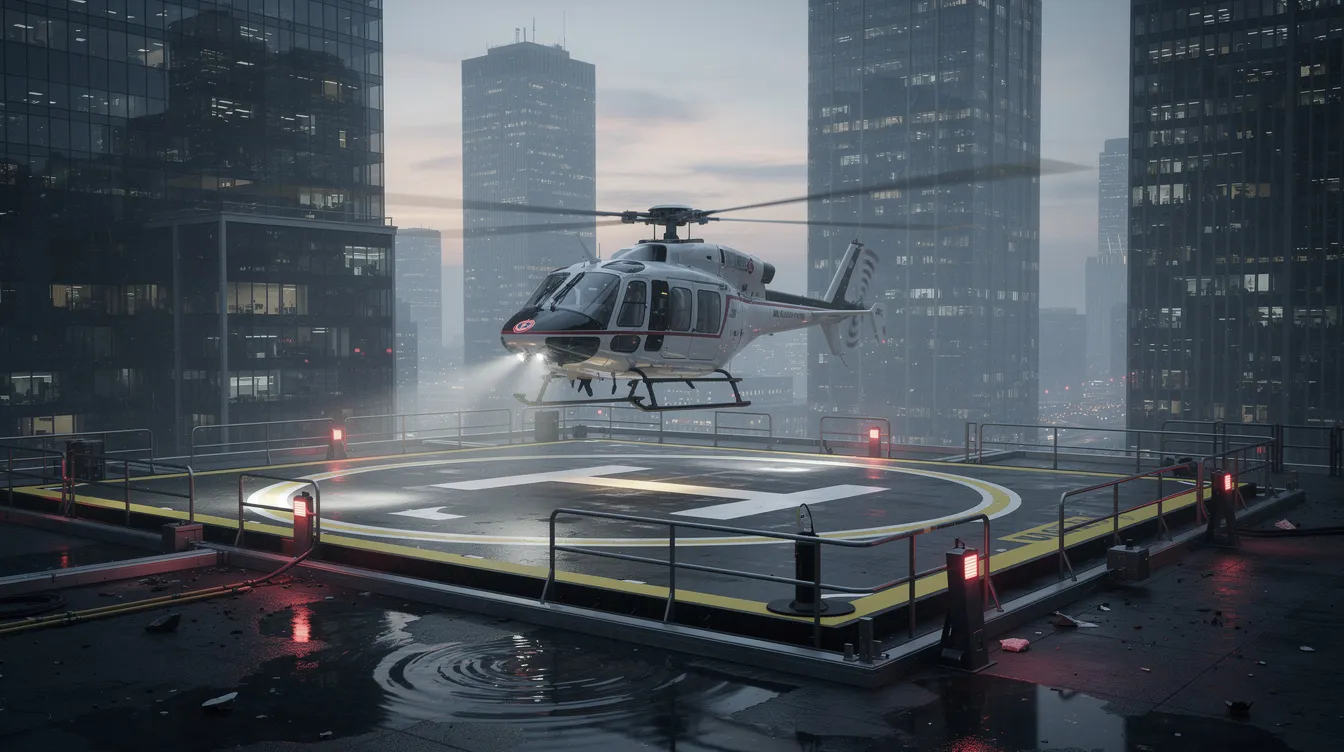
Decibel numbers are easier to understand when stacked against familiar references. The scale is logarithmic: a 10 dB increase represents roughly a tenfold increase in sound intensity, and helicopter noise is perceived as almost twice as loud as it actually is due to its impulsive, low-frequency character.
A normal conversation at arm's length: ~60 dB
Heavy traffic on a busy street: ~70–80 dB
A gas leaf blower or running lawnmower: ~90 dB
A helicopter passing overhead at a few hundred meters: ~83–89 dB
Standing near a running rotor system: comparable to loud power tools or a concert speaker at ~100–110 dB
The Environmental Protection Agency recommends a 24-hour noise exposure limit of 70 dBA to protect against hearing loss. OSHA requires hearing protection for workers exposed above 85 dBA over an eight-hour day, which is why pilots, mechanics, and ramp staff use helmets or headsets around helicopters.
Community annoyance depends on more than just the number. The rhythm, frequency content, and duration of helicopter noise make it more noticeable than a passing truck of similar loudness.
Modern helicopter and VTOL design focuses heavily on reducing helicopter noise to meet stricter regulations and improve public acceptance, especially in urban environments.
Blade design: As one example of current noise-reduction design, Blue Edge rotor blades used on the Airbus H160 reduce exterior sound levels by 50% compared to conventional blade shapes. The H160 helicopter has a 5 dB lower sound level, a difference that is clearly noticeable to people on the ground. Noise levels scale with rotor tip speed, reaching 600 to 700 feet per second on older types, so new generation blades with optimised tip shapes and lower RPM cut noise at the source.
Tail rotor innovations: Fenestron and other ducted or multi-blade concepts measured reductions of several dB in some models, producing a softer sound signature in urban areas.
Emerging electric VTOL: Distributed electric propulsion and, in addition, slower-turning rotors aim to lower both noise levels and low-frequency vibration for future urban air mobility, though most are still in testing or early certification as of the mid-2020s.
Flight techniques: The Fly Neighbourly Program provides noise abatement procedures—higher cruise altitudes over residential zones, avoiding steep descents that trigger blade-vortex interaction, and using established corridors; pilots may also adjust their course to keep noise away from sensitive locations.
Operators working with platforms like Jettly can prioritise quieter, newer aircraft and heliports with noise-abatement procedures in place as part of how they work while maintaining safety.
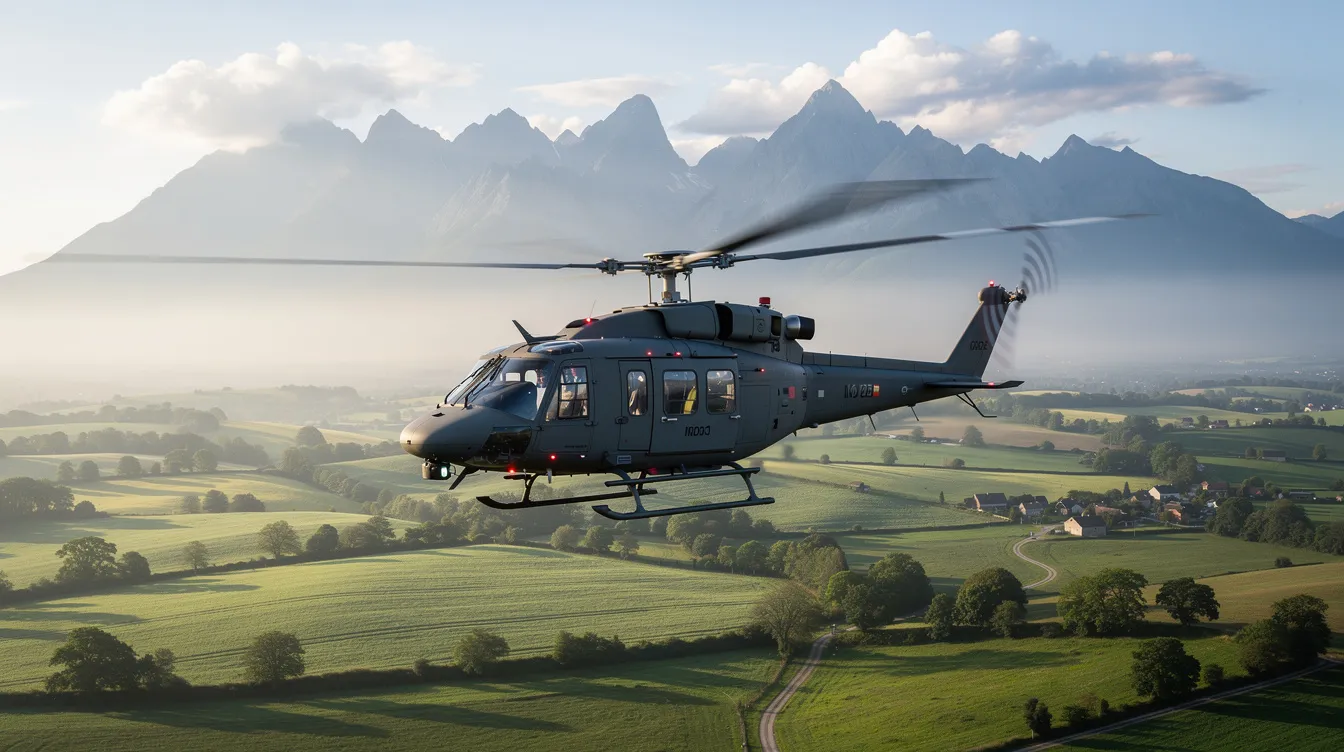
For many private charter customers, comfort extends beyond the cabin. How flights affect surrounding communities in terms of helicopter noise matters for keeping good relationships and avoiding route restrictions, and reducing noise also means helping operators acknowledge local concerns. Jettly's marketplace model gives travellers access to a broad range of aircraft, including quieter modern helicopters from Airbus Helicopters, Bell light twins, and advanced single-engine types studied for urban acceptance and city transfers, as well as an extensive catalogue of private charter aircraft for fixed‑wing missions. Learn more about available options on Jettly's helicopter charter page.
Chartered helicopter flights can often use dedicated heliports or less congested airports, reducing the need for long, low-altitude routes over dense neighbourhoods. Pilots and operators sourced through the platform follow local noise-abatement guidelines, including city-specific helicopter routes in places like New York, Los Angeles, and London, with quieter aircraft selection and local routing among the practical ways to limit neighbourhood impact, often informed by ongoing research and measured local conditions.
Inside the cabin, quality headsets, sound-dampening interiors, and shorter door-to-door travel times make helicopter transfers a safe, comfortable option for tight business schedules, with overall comfort also depending on helicopter passenger capacity and how the cabin is configured. For a breakdown of what these flights cost, see Jettly's helicopter ride price guide.
Ready to experience private travel on your terms? Explore flight options or request a quote at jettly.com.
Below are answers to common questions that go beyond the main sections of this article.
Short-term exposure for bystanders on the ground is typically not enough to damage hearing, since the helicopter is usually overhead for only a brief period and the distance provides a natural buffer. Pilots, crew, and maintenance staff working near running rotors can experience sustained levels above 85 dB, so they wear headsets or ear defenders to prevent long-term hearing loss. Passengers on charter flights are provided with aviation headsets, which reduce perceived noise to comfortable levels.
In quiet rural areas, people can often hear a helicopter from several miles away because low-frequency thumping travels far in calm air. In noisy city environments, background traffic can mask a distant helicopter, so it may only be clearly heard within a mile or two at lower altitudes. Wind direction, temperature layers, and whether the helicopter is climbing or descending all affect how far its sound carries.
Newer civil models designed for urban and tourism use—such as the Airbus Helicopters H130, H135, H145, and H160—are among the quietest conventionally powered rotorcraft in service today. They combine optimised main rotor blades, refined tail rotors including Fenestron designs, and digital engine controls. Emerging electric VTOL aircraft under development aim to be even quieter, though most are still in early certification stages.
The actual decibel output does not change much between day and night. However, cooler, more stable air can carry sound farther, and because background noise is lower at night, residents often perceive helicopters as louder. This is why many cities publish special nighttime routes and altitude requirements.
Travellers using Jettly can discuss aircraft preferences with the support team or specify requirements when requesting a quote, including a preference for newer, quieter helicopter types where available on the route. In many regions, the platform can match passengers with operators flying latest-generation Airbus Helicopters or other low-noise models suited for city transfers and resort access. Explore current options and request a tailored quote at jettly.com.
Understanding how many decibels a helicopter produces helps travellers, operators, and communities balance the benefits of private helicopter travel with noise considerations. Helicopter noise mainly comes from the rotors, with levels varying by aircraft type, flight phase, and distance. Modern engineering advances, such as quieter rotor blade designs and noise-abatement flight procedures, significantly reduce noise impact. Platforms like Jettly offer access to these quieter helicopters, providing a more comfortable experience for passengers and minimizing disturbance to communities. For those seeking efficient, flexible, and transparent private helicopter charter options, considering noise levels is an important part of choosing the right flight. Ready to experience private travel on your terms? Explore flight options or request a quote at https://www.jettly.com.Explore flight options or request a quote at https://www.jettly.com.
Helicopter noise levels vary significantly depending on the phase of flight, distance, and aircraft type. During takeoff and landing, noise typically ranges between 84 and over 90 dBA, with levels near the helipad often reaching 100 to 110 dBA within tens of meters. For example, a Bell J-2A helicopter at 100 feet produces roughly 100 dBA. As distance from the helicopter increases, sound levels decrease; a typical flyover at about 150 meters registers around 83 to 89 dBA, and at 500 feet overhead, noise generally falls between 85 to 90 dBA. Flying at 1,000 feet can reduce the sound heard on the ground by half compared to 500 feet.
Helicopter rotors are the primary source of external noise, generating low-frequency blade slap and pulsing rotor sounds that make helicopters seem almost twice as loud as their measured decibel levels. Rotor tip speeds can reach 600 to 700 feet per second, directly influencing noise intensity. Interiors can reach sound levels between 87 and over 100 dBA depending on flight conditions, which is why passengers and crew use noise-reducing headsets.
Noise levels typically range from 80 to 100 dBA during various operations, but larger military helicopters can exceed 134 to 161 dB, representing a substantial increase in sound intensity since a 10 dB rise corresponds to a tenfold increase. The Environmental Protection Agency recommends a 24-hour noise exposure limit of 70 dBA to protect hearing, underscoring the importance of noise abatement.
Technological advancements help reduce helicopter noise. The Airbus H160, for instance, features Blue Edge rotor blades that cut exterior sound levels by 50%, resulting in a 5 dB lower noise output compared to predecessors. Ducted rotors, such as the Fenestron design, lessen typical thumping noises. Additionally, the Fly Neighbourly Program promotes noise abatement procedures, encouraging pilots to adopt flight paths and techniques that minimise noise impact on communities.
By choosing modern, quieter helicopters and following noise reduction practices, platforms like Jettly provide private helicopter charter options that balance convenience with environmental and community considerations.
Share this post:
Jay Franco Serevilla
Jul 26, 2026
|
5
min read
Discover tips and trends in the industry.

5
min read
Leading Edge Helicopter Experiences with Jettly
Jettly offers leading-edge helicopter experiences that combine advanced rotorcraft, skilled pilots, and a seamless booking process. Ideal for both business and leisure travelers, Jettly connects users to a variety of helicopter tours and charter flights worldwide, ensuring safety and transparency in costs.
Read More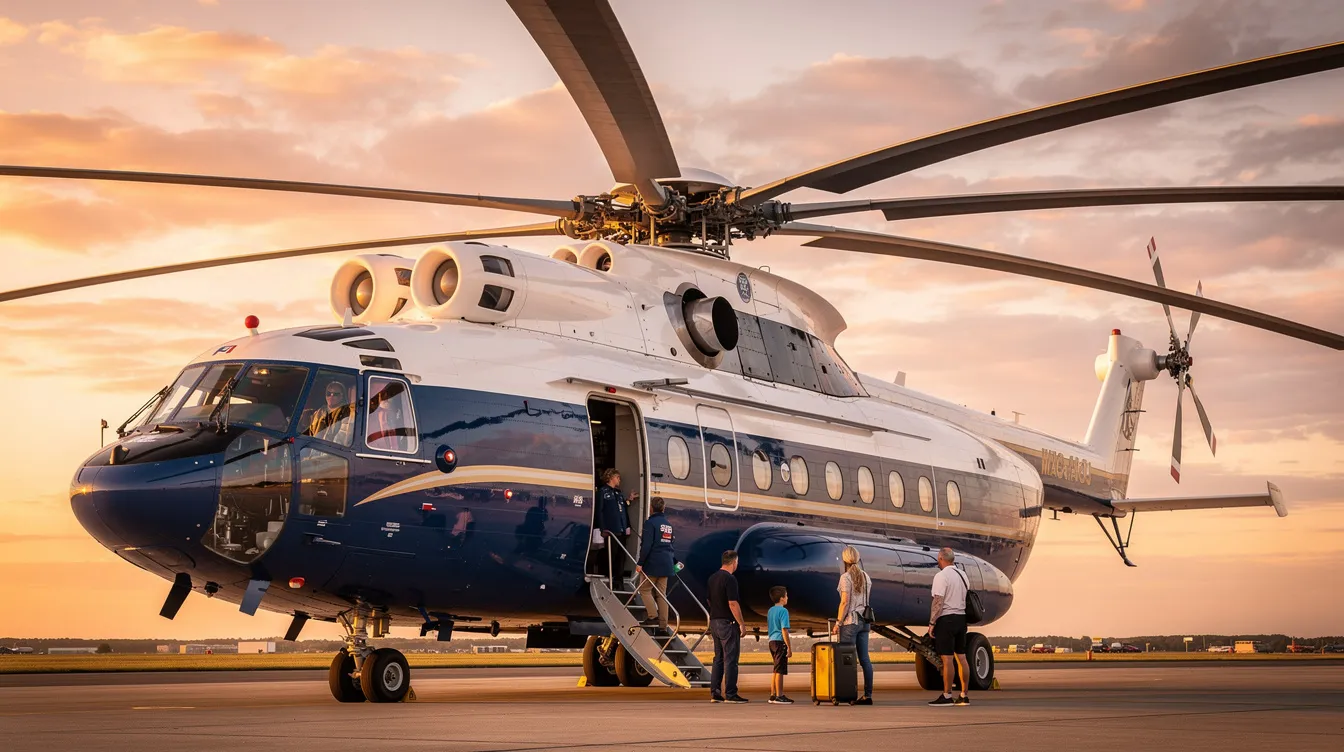
5
min read
Largest Passenger Helicopter: Capacity, Capabilities, and Charter Options
The Mil Mi-26 is the largest passenger helicopter, accommodating up to 83 people, while the Sikorsky S-92 is the leading choice for civil aviation with a capacity of 19 passengers. These helicopters play vital roles in offshore transport, search and rescue, and VIP services. Charter options are available through platforms like Jettly, which facilitate access to helicopters for specialized missions.
Read MoreStay updated with our latest insights and tips to elevate your journey with us.
MEMBERSHIPS AND ASSOCIATIONS



Disclaimer: Jettly operates as a charter broker, offering access to a global digital jet charter marketplace. Jettly is not a direct air carrier and does not own or operate aircraft. All advertised flights are conducted by third-party air carriers that are fully licensed and hold the appropriate Part 135 or Part 121 certifications issued by the Federal Aviation Administration (FAA) or equivalent regulatory authorities under U.S. or foreign law. Jettly complies fully with the U.S. Department of Transportation's Part 295 and Part 298 Charter Broker regulations. Jettly does not carry additional liability insurance. Passengers are covered by aircraft operator insurance. TICO: 50023770


