


Login
Get Instant Pricing On 23,000+ Aircraft

>

In-flight connectivity has dramatically improved over the past decade, with even a standard commercial flight now expected to offer Wi-Fi access. However, the speed and consistency of entry-level networking at 40,000 feet still leave a lot to be desired.
The market is already pricing in this demand: According to Grand View Research, the in-flight entertainment and connectivity (IFEC) sector is projected to exceed $11 billion by 2030. Two-thirds of this market is driven by connectivity-focused spending rather than entertainment.
This shift represents a high-speed revolution in airborne web access, moving away from legacy systems toward Low Earth Orbit (LEO) networks like Starlink. For decision-makers willing to invest in the upgrade, the promise of 500 Mbps download speeds transforms a private jet from a disconnected cabin into a fully functional, low-latency satellite office, Jettly, a private jet rental and fractional ownership service, reports.
Connection speed grabs headlines because execs understand its simplicity. However, there’s more to the story than the promise of 500Mbps speeds from LEO satellites, especially in comparison to traditional geostationary (GEO) equivalents.
As the National Business Aviation Association (NBAA) points out in its most recent report on in-flight connectivity, business travelers expect in-flight connectivity to be the default, but are often confounded by the quality of the experience in practice. Latency is singled out as the primary stumbling block because, with GEO satellites orbiting at 25,000 miles, the round-trip time (RTT) of the network signal cannot meet the requirements of even a simple Zoom call.
For videoconferencing, optimal latency is 100ms, while 500ms is deemed acceptable. In-flight Wi-Fi using GEO satellites can range from 700ms to over 1000ms, depending on several factors. In other words, the cost of using this tech in a private jet cannot be justified by executive travelers who primarily want to stay productive by hosting remote meetings.
LEO satellites orbit at 1,200 miles at most, meaning the signal travels a much shorter distance and RTT shrinks significantly. Thus, achieving optimal latency for video conferencing is no longer a big ask. This performance leap is physically enabled by the transition to Electronically Steered Antennas (ESA), which use phased-array technology to track multiple satellites simultaneously, ensuring a seamless connection even during high-speed maneuvers.
The capital commitment for LEO connectivity has become more rigid this year. Starlink currently maintains an MSRP of $145,000 for its aviation hardware, but the real shift is in the subscription model. In early 2026, Starlink formalized strict speed-based tiers:
Rival provider Gogo Business Aviation has countered with its Gogo Galileo (LEO) network. Their "Unlimited + Streaming" plans currently start around $5,500 per month, though these often include caps on LEO data with unlimited air-to-ground (ATG) data as a backup.
Business executives must carefully weigh these costs when considering upgrading their fleet with high-speed Wi-Fi. Justifying the expense of installation and ongoing use is easier if business jets get used day in, day out, and on-the-move productivity for the people onboard cannot be compromised. Conversely, those who only need occasional superfast, low-latency network access in-flight might think twice.
The last point to make about the arrival of LEO satellite tech in private aviation and its ability to overhaul in-flight Wi-Fi is that it has at least one notable drawback before executives go all-in on adoption.
Because LEO networks are made up of lots of different satellites orbiting the Earth rapidly, rather than a smaller number of geostationary ones with a fixed relative position, planes connecting via the likes of Starlink will hand off between satellites frequently during travel. This introduces the potential for service dropouts or, at best, small spikes in latency, which may impede productivity, at least in short bursts.
To mitigate these risks, many 2026 flight departments are adopting multi-orbit redundancy, layering LEO speed over traditional GEO backups to protect high-stakes encryption tunnels.
Ultimately, execs must factor in the potential for disruption when planning to host important meetings while flying, where major deals are on the table. As with any operational choice, it’s a balancing act, and hopefully the data provided here will steer you down the right path.
Share this post:
Jeff Ryan Serevilla
Apr 20, 2026
|
5
min read
Discover tips and trends in the industry.

5
min read
When Are Cheapest Flights? A Practical Guide for 2026 Travelers
Finding the cheapest flights relies on strategic timing rather than luck. This guide outlines optimal booking windows, the best days to fly, and how to leverage private jet options for savings. Understanding seasonal trends and setting price alerts can further enhance your chances of securing the best fares.
Read More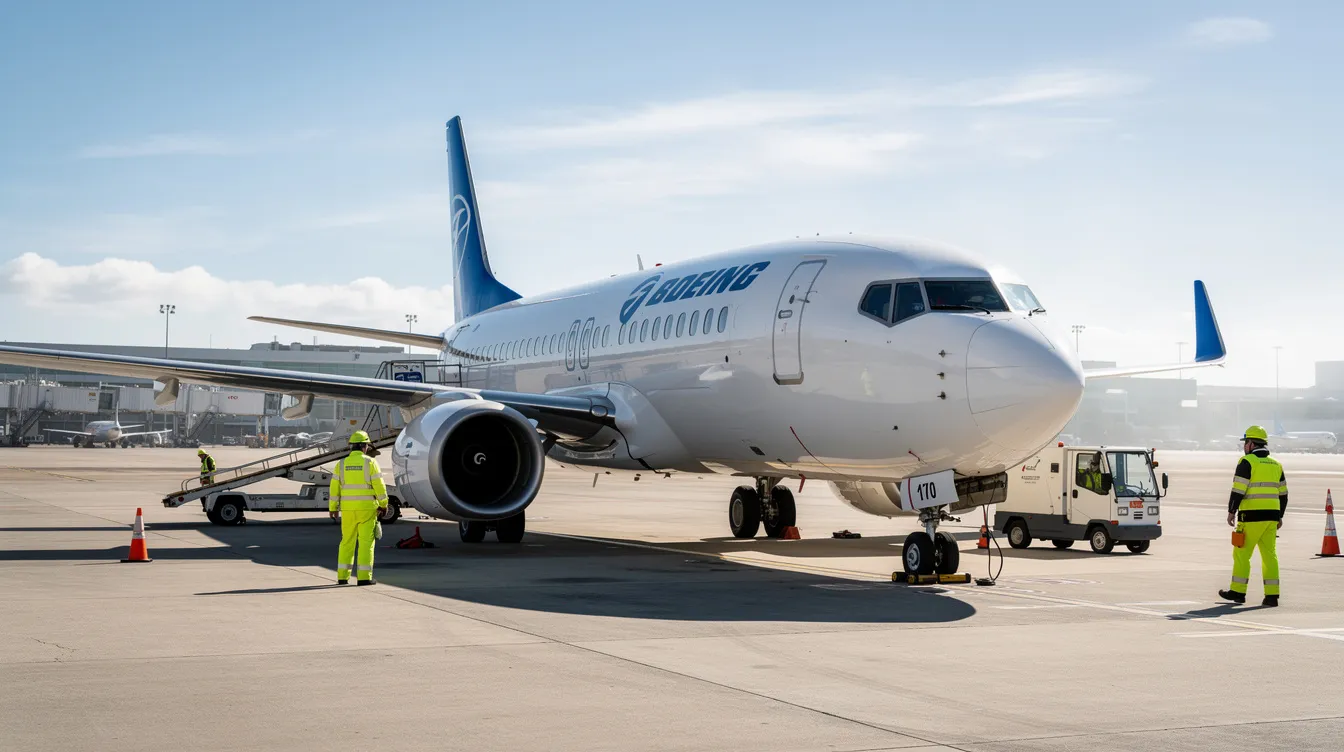
5
min read
Boeing 737 Seat Capacity: How Many Passengers Can Each Variant Carry?
The Boeing 737 is the most-produced commercial jetliner, with a seating capacity ranging from 85 to 230 passengers depending on the variant and configuration. This guide explores the seating capacities of various 737 models, highlighting how cabin layouts and airline choices impact passenger comfort and efficiency. Understanding these factors is crucial for travelers and airline planners alike.
Read MoreStay updated with our latest insights and tips to elevate your journey with us.
MEMBERSHIPS AND ASSOCIATIONS



Disclaimer: Jettly operates as a charter broker, offering access to a global digital jet charter marketplace. Jettly is not a direct air carrier and does not own or operate aircraft. All advertised flights are conducted by third-party air carriers that are fully licensed and hold the appropriate Part 135 or Part 121 certifications issued by the Federal Aviation Administration (FAA) or equivalent regulatory authorities under U.S. or foreign law. Jettly complies fully with the U.S. Department of Transportation's Part 295 and Part 298 Charter Broker regulations. Jettly does not carry additional liability insurance. Passengers are covered by aircraft operator insurance. TICO: 50023770


