



Login
Get Instant Pricing On 23,000+ Aircraft

>
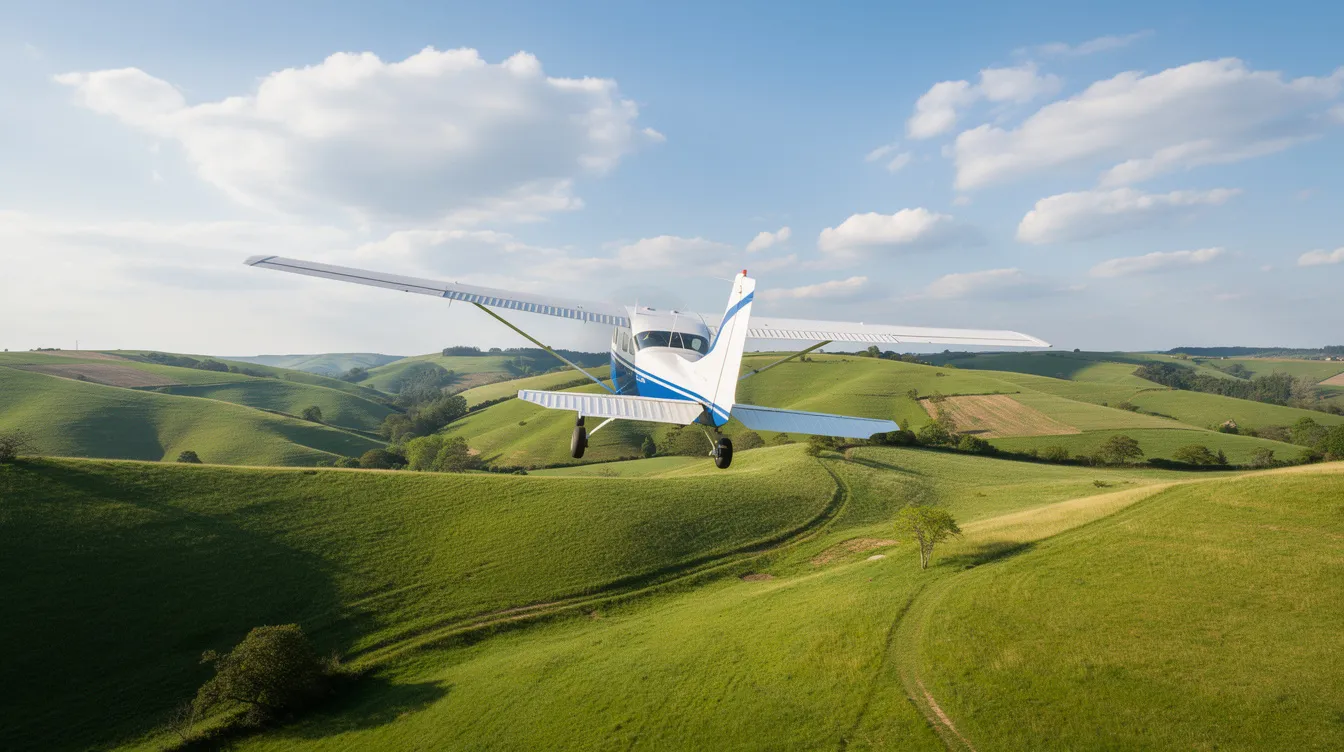
If you've ever wondered how fast a single-engine plane flies, the short answer is: it depends on the aircraft type. Most general aviation single-engine planes cruise between about 110 and 180 knots (roughly 125 to 205 mph). Step up to high-performance models and single-engine turboprops, and cruise speeds climb well past 200 knots-some exceeding 300.
This article breaks down real cruise speeds by category, walks through practical trip-time examples, and explains why cruise speed matters far more than top speed for anyone planning a flight or booking a charter.
The cruising speed of single-engine piston airplanes ranges from 100 to 180 knots, covering everything from basic trainers to fast cross-country machines. High-performance single-engine aircraft can exceed 200 knots, with the Mooney Acclaim Ultra reaching about 242 knots and single-engine turboprop aircraft cruising at speeds between 250 and 330 knots.
Cruise speed-not top speed-is what determines flight time and trip planning. Most pilots and charter customers should focus on typical cruise speed rather than brochure maximums.
Commercial airliners cruise around 450–490 knots, but modern single-engine turboprops and fast pistons narrow the door-to-door time gap on regional trips under 800–1,000 nautical miles.
Factors like altitude, weight, temperature, engine power, and aerodynamic design all influence how fast a single-engine aircraft actually flies on a given day.
Travelers who want the benefits of speed without owning a plane can access single-engine, multi-engine, and jet aircraft on-demand through Jettly's digital charter marketplace.
When most people ask about flight speed, they mean the typical cruising speed-the steady speed at altitude used for the majority of a trip. Not takeoff speed. Not maximum dive speed.
Cruise speed is expressed in knots true airspeed (KTAS), which accounts for air density at altitude. For reference, 120 KTAS equals roughly 138 mph. That true airspeed figure is what pilots use for trip planning.
There are a few speed terms worth knowing:
Indicated airspeed (IAS): What the cockpit instruments show. Affected by air density.
True airspeed (TAS): Corrected for altitude and temperature. Reflects actual speed through the air.
Ground speed: True airspeed adjusted by wind. A 20-knot tailwind adds 20 knots to ground speed; a headwind subtracts it. Wind affects ground speed but not the aircraft's true airspeed.
This article focuses on realistic cruise speeds pilots see in 2025–2026 across general aviation-not just brochure numbers.
Single-engine performance spans a wide range. Here's how the categories break down:
|
Category |
Cruise Speed Range |
Notable Examples |
|---|---|---|
|
Entry-level trainers |
~100–125 knots |
Cessna 152, Cessna 172, Piper Warrior |
|
Modern touring/training |
~135–150 knots |
Diamond DA40, Cirrus SR20, Piper Archer |
|
High-performance pistons |
~170–213 knots |
Cirrus SR22T, Mooney Ovation, Bonanza G36, Piper M350 |
|
Top-end pistons |
~230–242 knots |
Mooney Acclaim Ultra, Cessna TTx |
|
Single-engine turboprops |
~260–330 knots |
Pilatus PC-12 NGX, Daher TBM 960 |
Actual cruise choice is usually a compromise between speed and fuel burn. Most pilots fly 5–10 knots below max cruise to save fuel and reduce engine wear. Weight, altitude, and temperature can shift real-world cruise by several knots on any given day. Cruising speed varies based on aircraft design and engine horsepower.
Most new pilots first experience speed in common flight training aircraft. These planes prioritize stability, low stall speed, and predictable handling over raw speed. Design purpose affects the cruise speed of aircraft, with trainers prioritizing stability over outright speed.
Here's what flight schools typically fly:
Cessna 172S Skyhawk: The Cessna Skyhawk 172 cruises at around 124 knots (about 138 mph at 8,000 ft). It's the backbone of flight training worldwide.
Cessna 152: Around 100–107 knots, used for economical basic training.
Piper PA-28 Warrior/Archer: Roughly 115–125 knots, a popular low-wing trainer.
Diamond DA40 NG: The Diamond DA40 typically cruises at about 145–150 knots with the Austro diesel engine, offering strong fuel efficiency for a training platform.
Cirrus SR20: About 150 knots cruise, increasingly used in advanced training programs with advanced avionics and glass cockpits.
Fixed landing gear increases parasitic drag compared to retractable gear, which is one reason trainers sit at the lower end of the speed range. For flight training missions typically under 200–250 nautical miles, the extra speed of a high-performance engine plane usually makes less sense than low operating cost and simplicity. That's a practical choice for pilot training programs.
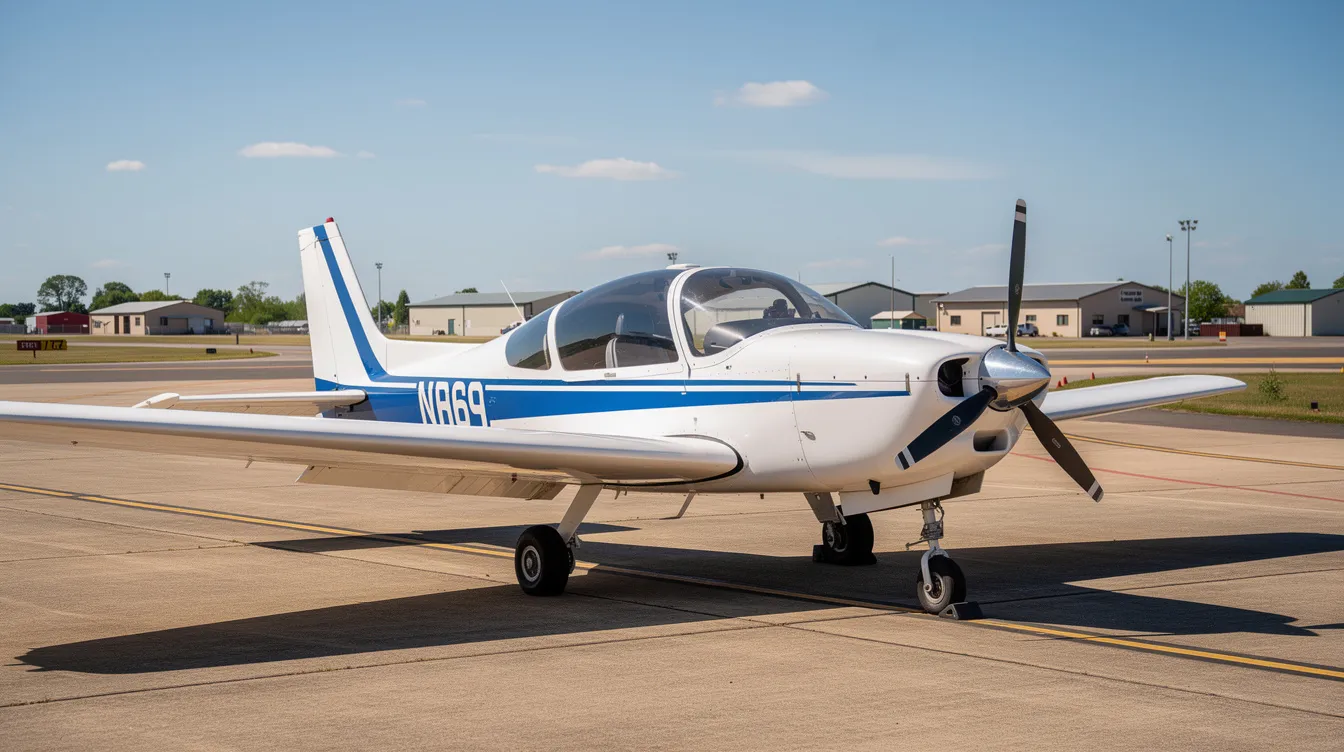
High-performance single-engine planes trade higher purchase and operating costs for significantly more speed and altitude capability. These are the machines pilots seeking greater speed and longer range choose for serious cross-country flying.
Specific cruise speed examples for piston performance leaders:
Cirrus SR22 (normally aspirated): About 180–185 knots.
Cirrus SR22T (turbocharged): The Cirrus SR22T has a maximum cruise speed of 213 knots at higher altitudes.
Beechcraft Bonanza G36: The Beechcraft Bonanza G36 cruises at around 176–180 knots.
Mooney Ovation (M20R/M20U): Around 190–197 knots, a fast normally aspirated option for owner pilots.
Piper M350: The Piper M350 also cruises at approximately 213 knots, making it competitive with the SR22T.
Mooney Acclaim Ultra (M20V): The Mooney Acclaim Ultra reaches about 242 knots-among the fastest single-engine pistons ever built.
In regulatory terms, "high performance" means more than 200 horsepower. Pilots need additional pilot training endorsements before flying these aircraft. Higher-performance models use turbocharged engines to maintain speed at altitude, which is why the Acclaim Ultra achieves its best numbers near FL250.
These speeds make 600–900 nautical mile non-stop trips practical in a single day, narrowing the time gap with commercial jets on regional routes and highlighting many of the same considerations that go into choosing the best cross-country plane for your travel needs.
Single-engine turboprops sit in a separate performance tier above piston singles. They're used in both owner-flown and charter operations for business, air ambulance, and personal trips.
Key models and their cruise speeds:
Pilatus PC-12 NGX: About 280–290 knots cruise (per Pilatus), widely used for business and medical missions.
Daher TBM 960: Around 305–330 knots at FL300–FL310, one of the fastest single-engine turboprops in general aviation.
Cessna Caravan (208B): Approximately 170–190 knots, prioritizing payload capacity over outright speed.
While these aircraft still have a single engine, their high speed, pressurization, and turbine reliability make them competitive with small jet aircraft on sub-1,000 nm routes. Travelers can often access PC-12 and TBM flights on-demand via platforms like Jettly when they need a speed boost without stepping into jet-level costs. Learn more in this guide to turboprop private jet options.
Commercial airliners like the Boeing 737 and Airbus A320 cruise around Mach 0.78–0.80-roughly 450–480 knots (515–550 mph). Even the fastest piston singles are about half that speed, while top single-engine turboprops reach roughly 60–70% of airliner cruise speed.
Here's how a 500 nm trip compares:
|
Aircraft Type |
Cruise Speed |
Approximate Cruise Time |
|---|---|---|
|
Airliner (737/A320) |
~460 knots |
~1 hr 05 min |
|
Fast turboprop (TBM 960) |
~300 knots |
~1 hr 40 min |
|
High-performance piston |
~190 knots |
~2 hr 40 min |
|
Entry-level trainer |
~115 knots |
~4 hr 20 min |
The numbers favor commercial jets on raw speed. But when airport access, security time, and boarding delays are included, a direct general aviation flight can rival or beat total door-to-door time on many regional routes. This is where private aviation charters arranged through platforms like Jettly often provide meaningful time savings for executives and families.
Cruise speed only matters insofar as it affects actual flight time and scheduling. Here are concrete examples:
250 nm hop (e.g., within a single state or province):
Trainer at 115 knots: about 2.2 hours
Touring aircraft at 145 knots: about 1.7 hours
High-performance piston at 190 knots: about 1.3 hours
600 nm trip:
Trainer: roughly 5+ hours with a likely fuel stop
High-performance piston: around 3–3.5 hours, often non-stop in one tank
Single-engine turboprop at 290 knots: just under three hours
Headwinds or tailwinds can add or subtract 20–40 knots to ground speed, changing time en route by 10–30% on longer flights. For flights under about 300 nautical miles, stepping up to a very high speed platform sometimes saves less total flight time than expected once preflight and ground time are considered. Thinking ahead about actual distance and weather makes more sense than chasing the fastest aircraft type.
Published cruise speeds assume ideal conditions. Real-world performance depends on both the aircraft and the environment.
Technical factors:
Engine power and propeller efficiency are crucial for achieving higher speeds. A 160 hp trainer behaves very differently from a 315 hp turbocharged engine.
Aerodynamic design influences the aircraft's speed through variations in drag. Sleek airframes with retractable gear and clean wing profiles-like Mooney and Cirrus designs-produce less drag and greater speed at cruise.
Constant-speed propellers optimize RPM and blade pitch for cruise, balancing speed and efficiency.
Retractable landing gear helps achieve faster cruise speeds by reducing drag compared to fixed-gear designs.
Environmental and operational factors:
True airspeed increases with altitude due to decreased air density. Thinner air at higher altitudes reduces drag on aircraft, which is why turbocharged engines shine at higher altitudes.
Heavier aircraft require a higher angle of attack to maintain sufficient lift, which creates more drag and reduces cruise speed. Weight affects lift and climb speed in airplanes.
Air density decreases with temperature and elevation, reducing engine power output in normally aspirated engines.
Airspeed affects lift generation in airplanes-slower speeds require more angle of attack to stay aloft.
Pilots and operators adjust power settings to balance performance with fuel economy and engine longevity.
Marketing materials often highlight maximum speed or "top of the green arc," which may not be sustainable or economical in daily flying. Here's the difference:
Maximum level-flight speed (top speed): The fastest an aircraft can go in straight and level flight at full power. Rarely used in practice.
Typical cruise speed: The speed used for planning, usually at 65–75% power. This is what determines your flight time.
Vne (never-exceed speed): A structural safety limit on the aircraft's structure, never intentionally approached in normal operations.
For example, the Mooney Acclaim Ultra may advertise 242 knots, but many owner pilots cruise at 216–220 knots to optimize fuel burn and engine temperatures. The Cirrus SR22T can reach over 210 knots TAS, yet many pilots plan around 190–200 knots for comfort and engine care.
For passengers and business travelers, consistency and reliability of cruise speed matter more than the absolute maximum number.
Moving from single-engine to multi-engine or jet aircraft increases cruise speed, climb rate, and redundancy-but also cost and complexity. Here's a quick comparison:
|
Aircraft Class |
Typical Cruise Speed |
|---|---|
|
Single-engine piston |
110–240 knots |
|
Multi-engine piston twin |
170–200 knots |
|
Light jets (Citation CJ, Phenom 100) |
380–420 knots |
|
Midsize to large business jets |
430–480 knots |
Turbojet engines deliver higher speeds at high altitudes, which is why jets dominate on longer routes. But a high-speed single-engine plane makes more sense in several situations:
Missions under 600–800 nautical miles where time saving is modest relative to higher hourly cost.
Routes into smaller airfields with shorter runways, gravel strips, or limited services.
Owners or charter clients prioritizing operating cost and access over raw speed.
For longer, multi-leg days or frequent coast-to-coast trips, stepping up to faster multi-engine or jet options accessible through Jettly often provides better value, especially when you tap into Jettly's broad selection of private charter aircraft across all categories. The question isn't just about speed-it's about mission profile.
Faster is not automatically safer. Safety depends on pilot training, aircraft maintenance, avionics, and adherence to regulations.
Key safety considerations:
Higher speeds increase workload, reduce reaction time, and shorten decision-making windows on approach and in busy airspace.
Many accidents in high-performance aircraft involve loss of control or fuel mismanagement rather than engine failure.
Regulatory and operational limits:
FAA speed limits include 250 knots indicated below 10,000 feet MSL and 200 knots near some controlled airports.
Pilots need high performance and often complex endorsements to fly faster retractable-gear or turbocharged aircraft.
The role of modern avionics:
Glass cockpits, synthetic vision, traffic and terrain alerts, and autopilots help manage workload at higher cruise speeds.
Systems such as the Cirrus CAPS parachute and envelope-protection autopilots improve safety statistics in high-performance general aviation, giving pilots seeking advanced capability an extra margin.
Jettly's charter partners operate under commercial regulations such as FAA Part 135, which mandate strict safety, maintenance, and pilot proficiency standards regardless of aircraft speed.
Higher speed usually comes with a higher purchase price, more fuel use, increased maintenance, and greater insurance premiums. Pilots and travelers must weigh speed against cost per mile.
Speed vs range tradeoffs:
Many aircraft have a "max range" speed that is slower than "max cruise" speed. Flying slightly slower can extend range by 10–20%.
Example: a high-performance piston might burn 17 gph at 190 knots vs 13–14 gph at 170 knots, making the slower speed the sweet spot for fuel efficiency per mile flown.
Single-engine planes have a range of 400 to 1,200 nautical miles. The Piper M350 has a range of about 1,343 nautical miles with full fuel and optimal conditions. For more on this, see this guide to the longest-range single-engine aircraft and an overview of the cheapest private aircraft options across categories.
Mission planning considers:
Actual distance (e.g., 300 vs 900 nautical miles).
Number of legs and fuel stops permitted by fuel capacity and weather.
Useful load-passengers, baggage, and whether full fuel is feasible alongside payload.
Annual ownership costs for single-engine planes range from $20,000 to $40,000, while chartering eliminates capital outlay and maintenance headaches. Ownership allows flying on your own schedule and customizing usage, but chartering is often better for those flying 20–60 hours per year. Owning a plane offers full control and availability, yet the economics often favor charter for most travelers. For a deeper breakdown of purchase vs operating expenses and alternatives like fractional ownership, see this guide on how much a private jet really costs and small private plane cost.
For a 350 nm business hop, a modern single-engine turboprop at 280–300 knots may be ideal. For 1,200+ nm trips, stepping up to a jet with 430–470 knot cruise via Jettly often saves significant time even at higher hourly rates.
Not everyone wants to own or manage a single-engine plane. Guides on choosing the best personal plane for your mission and budget can help prospective owners, while Jettly's digital marketplace gives travelers access to the right aircraft type for each trip without the commitment of ownership.
The platform includes, alongside flexible private jet memberships with wholesale-style pricing:
Single-engine pistons for short hops, sightseeing, and regional private travel, including many affordable planes suited to budget-conscious owners.
Single-engine turboprops like the PC-12 and TBM for high-speed trips into smaller airports, often built by leading private plane manufacturers that balance performance and comfort.
Multi-engine and jet options for time-critical business travel and longer routes, comparable to those profiled in this guide to charter airlines and private flight options.
Booking is straightforward. A user can enter departure, destination, and dates, then see instant pricing and estimated flight time based on cruise speed and actual distance. Comparing aircraft categories-single-engine piston vs turboprop vs. jet- helps balance performance, cost, and comfort.
Transparent pricing and on-demand access let customers pay only for actual flight time instead of taking on fixed ownership costs just to access higher cruise speeds. Travelers who are comparing charter to other options can also consult a complete guide to private jet rental costs. Use the charter cost estimator to see what different speed tiers cost for your route.
Ready to experience private travel on your terms? Explore flight options or request a quote at jettly.com.
Most common general aviation single-engine trainers and touring aircraft cruise between about 110 and 150 knots (125–175 mph) in normal conditions. More advanced, high-performance models like the Cirrus SR22 or Bonanza G36 often cruise between 175 and 200+ knots, with the fastest designs exceeding 230 knots. Pilots choose specific cruise power settings that trade a few knots of speed for lower fuel burn and engine wear.
The Mooney Acclaim Ultra (M20V) is often cited as one of the fastest production single-engine piston aircraft, reaching about 242 knots under optimal conditions at FL250. The Cessna TTx has a cruise speed of about 235 knots. Some experimental or kit aircraft can also reach or exceed 230 knots, but availability and production status vary as of 2025–2026. Performance depends on altitude, weight, and temperature, so real-world results can differ from brochure values. While supersonic and hypersonic flight remains the domain of military and experimental programs, piston singles continue to push their own speed boundaries.
Single-engine planes are slower in pure cruise speed, but they gain back time by using smaller airports closer to a traveler's true origin and destination. A 300–400 nm trip might take a similar door-to-door time in a fast single-engine turboprop versus flying commercial with early check-in, security, boarding, and possible connections. For long-haul flights over 1,000 nautical miles, commercial airliners and private jets typically remain much faster overall.
Insights from a private jet operating cost breakdown also apply in principle to faster single-engine aircraft, where higher cruise speeds typically drive up hourly expenses even if cost per mile stays competitive.
Higher speed usually means higher hourly fuel burn, larger engines, and more complex systems, increasing both operating and maintenance costs. Cost per mile can still be efficient if the aircraft is flown at an economical cruise setting, which is often slightly slower than maximum speed, requiring more fuel at higher power settings but covering more ground. Tools like a jet card flight cost estimator illustrate how these variables affect pricing on faster aircraft. Charter customers using Jettly see these tradeoffs reflected in hourly rates and can select the aircraft whose speed and price best match their itinerary.
When you discuss profiles with a trip coordinator, it helps to understand how one private flight’s total cost is built, since speed, routing, and aircraft choice all influence the final price.
Pilots determine exact cruise speed based on safety, weather, and aircraft performance. However, customers can discuss preferences such as prioritizing the fastest possible arrival versus fuel efficiency and a smoother ride. Modest adjustments in cruise power can change speed by 5–15 knots without significantly affecting comfort; large changes are at the pilot's discretion for safety and regulatory reasons. If you're interested in tailoring your trip profile-shortest flight time vs cost control-talk with a Jettly trip coordinator when booking or consult Jettly's guide on affordable private jet charter pricing to see how choices affect your budget.
Single-engine planes span a wide speed range, from roughly 110-knot trainers used in flight training to 230–240-knot high-performance models and 300+ knot turboprops. Cruise speed-not marketing top speed-determines real flight time. The "right" speed depends on mission length, budget, and airport access.
General aviation speeds are lower than those of commercial airliners, but point-to-point routing and flexible schedules often make general aviation and private charter more sense for many regional trips. Whether the goal is a quick 250 nm hop or a 600 nm business run, matching aircraft speed to your mission profile is where smart aviation decisions happen.
Want to experience the differences in speed between single-engine, turboprop, and jet aircraft without owning a plane? Many travelers compare NetJets-style programs with Jettly as a flexible NetJets alternative before deciding how to access aircraft. Explore options or request a quote at jettly.com.
Share this post:
Jay Franco Serevilla
Sep 7, 2026
|
5
min read
Discover tips and trends in the industry.

5
min read
Private Jet Membership: How to Choose the Right Membership for the Way You Fly
Choosing the right private jet membership is crucial for maximizing value and flexibility in private aviation. This guide outlines the different membership structures, including jet cards, fixed-fee subscriptions, and deposit-based programs, helping travelers make informed decisions based on their flying habits. Jettly's on-demand charter service offers a compelling alternative, allowing users to avoid large upfront commitments while enjoying transparent pricing.
Read More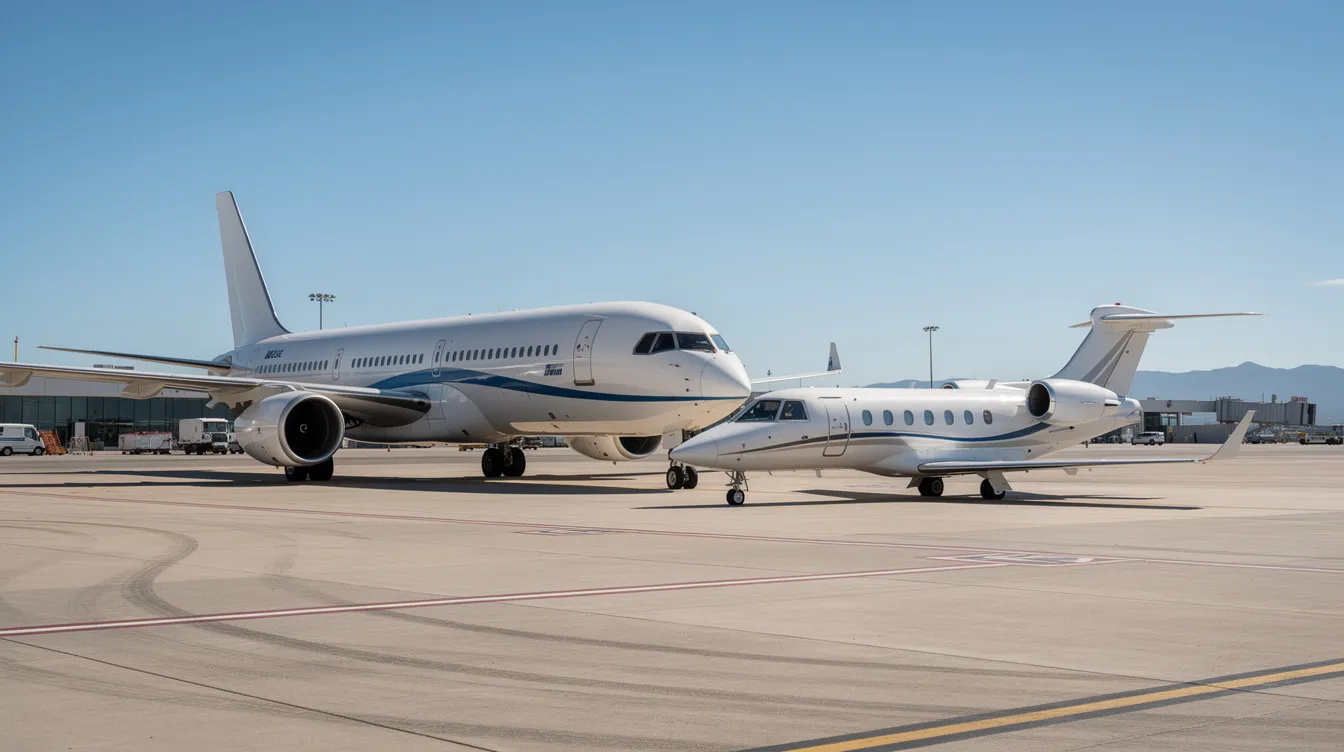
5
min read
Types of Planes in Civil Aviation: From Commercial Airliners to Private Jets
Civil aviation encompasses a diverse range of aircraft types, from commercial airliners to private jets. Understanding these categories helps travelers and aviation enthusiasts make informed decisions about their flying needs. This guide details the various aircraft types, their missions, and how to choose the right plane for specific travel requirements.
Read MoreStay updated with our latest insights and tips to elevate your journey with us.
MEMBERSHIPS AND ASSOCIATIONS



Disclaimer: Jettly operates as a charter broker, offering access to a global digital jet charter marketplace. Jettly is not a direct air carrier and does not own or operate aircraft. All advertised flights are conducted by third-party air carriers that are fully licensed and hold the appropriate Part 135 or Part 121 certifications issued by the Federal Aviation Administration (FAA) or equivalent regulatory authorities under U.S. or foreign law. Jettly complies fully with the U.S. Department of Transportation's Part 295 and Part 298 Charter Broker regulations. Jettly does not carry additional liability insurance. Passengers are covered by aircraft operator insurance. TICO: 50023770


