



Login
Get Instant Pricing On 23,000+ Aircraft

>
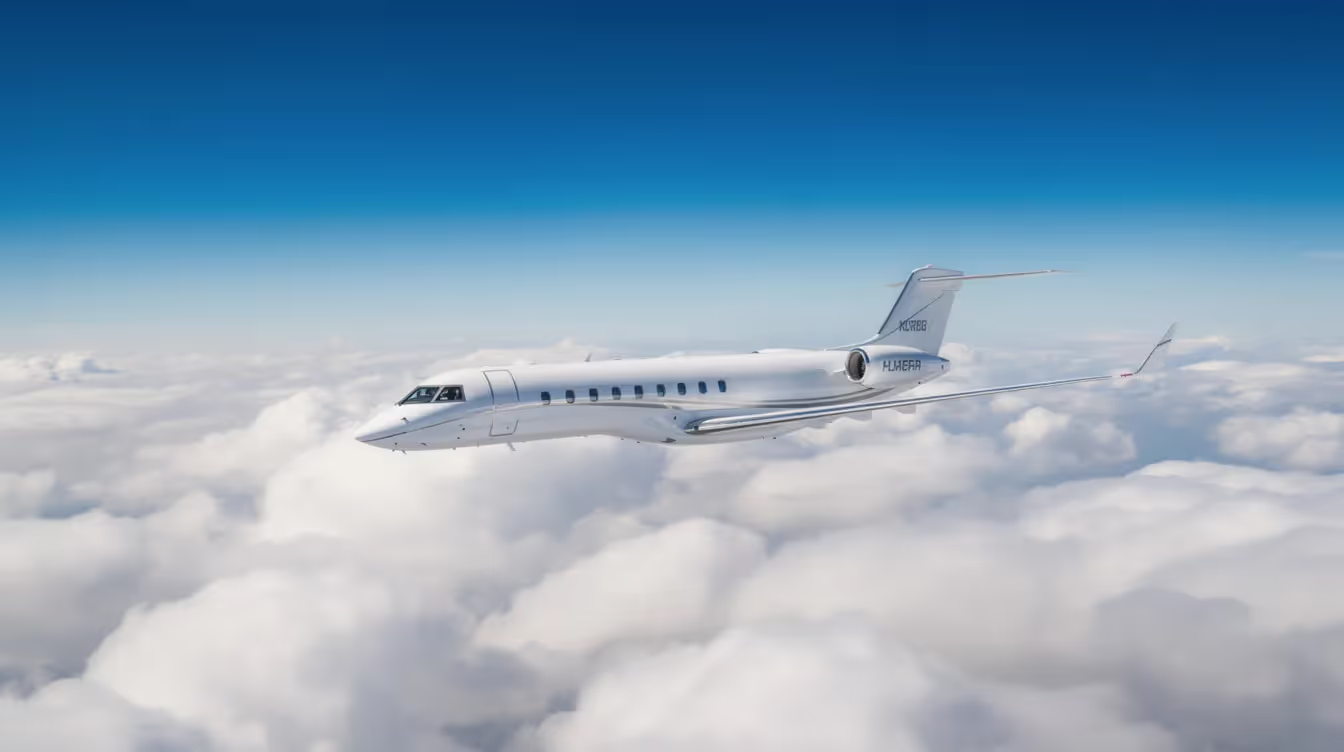
Jets are a cornerstone of modern air travel, offering speed and convenience that have transformed how people and goods move around the world. From private business jets to commercial airliners and military fighters, jet aircraft vary widely in their capabilities and typical speeds. Understanding how fast jets can go involves looking at different types of aircraft, their design, technology, and operational factors. This article explores the speeds of private jets, commercial planes, and military aircraft, highlighting what affects their velocity and how travelers benefit from these differences. Whether you’re considering a private charter flight with Jettly or curious about the fastest jets in the sky, this guide provides clear insights into jet speed and performance.
So, how fast can jets go? Private and commercial jets typically cruise between 420–600 mph (676–965 km/h), while the fastest military jets exceed Mach 2. The SR-71 Blackbird holds the record at 2,193 mph (3,529 km/h).
Most private jets cruise at 450–540 mph (Mach 0.80–0.90), and commercial airliners operate at similar speeds, optimized for fuel efficiency rather than maximum velocity.
Private jets are generally faster than commercial airliners, typically cruising between Mach 0.78 and 0.85.
Commercial jets typically cruise between 500 and 600 mph (Mach 0.74–0.85), balancing speed and fuel economy.
Private jets can fly at higher altitudes than commercial aircraft, allowing them to avoid air traffic and turbulence, which contributes to faster travel times.
Fighter jets like the F-22 and F-15 can exceed Mach 2, though combat missions rarely require sustained top speed.
The SR-71 Blackbird’s 1976 speed records of 2,193 mph remain unbroken by any crewed air-breathing aircraft as of 2026.
Real travel time depends heavily on airport access, boarding efficiency, and routing—areas where private jet charters through platforms like Jettly often outperform commercial flights.
Altitude, aircraft type, engine technology, and weather conditions (tailwinds or headwinds) all influence effective ground speed during flight.
Supersonic private travel remains in development; current private jet charters focus on subsonic speeds with efficiency, range, and time savings on the ground.
How fast jets can go depends entirely on the category of aircraft. Typical jet cruise speeds range from 420–600 mph (676–965 km/h), while high-performance military jets can exceed Mach 2 (roughly 1,500 mph or 2,414 km/h). The historical record-setter, the SR-71 Blackbird, reached 2,193 mph (3,529.6 km/h) during testing in 1976.
Understanding jet speed requires distinguishing between three measurements:
Indicated airspeed: What instruments display, calibrated for sea-level air density
True airspeed: Actual speed through the air, higher at altitude due to thinner air
Ground speed: Speed relative to the ground, affected by wind—a bit of tailwind or headwind can make a noticeable difference, sometimes resulting in higher or lower actual travel speeds, especially when jets encounter strong jet streams.
For practical comparison: a typical private jet charter cruises around 500–600 mph, generally faster than commercial aircraft that typically cruise between 420 and 580 mph. Modern commercial passenger jets typically reach maximum speeds of 600 to 700 mph (roughly Mach 0.85 to 0.92). Commercial jets usually fly at cruising speeds of 550 to 600 mph to maximize fuel efficiency. Many fast private jets operate at high subsonic speeds, around Mach 0.85–0.93 (approximately 650–700 mph). A strong tailwind can push an aircraft's ground speed over 800 mph.
For travelers using Jettly, effective door-to-door time savings typically come more from airport choice, direct routing, and faster boarding than from higher speeds in the air.
Aviation uses multiple speed units because pilots, engineers, and passengers have different needs. Understanding these units clarifies what “fast” really means when discussing how fast jets go.
Knots: Nautical miles per hour; 1 knot = 1.15078 mph or 1.852 km/h. Standard for pilots and navigation.
MPH: Miles per hour; common in American contexts.
KM/H: Kilometers per hour; standard in metric-system countries.
Mach: Speed relative to sound (~767 mph or 1,235 km/h at sea level under standard conditions).
Mach numbers shift with temperature and altitude. At 36,000 feet, colder air means the speed of sound drops to about 573 mph, so Mach 1 at cruise altitude is slower in absolute terms than Mach 1 at sea level. Additionally, wind patterns—especially jet streams and strong tailwinds—can push air over the wings and significantly increase an aircraft's ground speed, sometimes resulting in much higher travel speeds than the indicated airspeed.
Example conversion: A jet cruising at 450 knots in the skies equals roughly 518 mph or 833 km/h, around Mach 0.85. That number shifts based on altitude and conditions.
Private jets typically cruise between 400–600 mph (644–965 km/h), with high-performance business jets approaching Mach 0.90–0.93 (approximately 690 mph). Speed varies by aircraft category.
Aircraft like the Cessna Citation Mustang and Embraer Phenom 100 cruise at 380–450 knots (437–518 mph). These jets suit 1–3 hour regional trips—Los Angeles to Las Vegas or London to Geneva—where short runways and small passenger counts favor agility.
The Bombardier Challenger 300 and similar aircraft hit 430–470 knots (495–541 mph). These jets handle routes like New York to Miami or Toronto to Dallas efficiently, balancing cabin comfort with range up to 3,000 nautical miles. Jettly’s platform frequently matches business travelers with this category through its extensive private charter aircraft network.
Flagships like the Gulfstream G650ER cruise at Mach 0.85–0.90 (562–596 mph), spanning New York to London in 6.5 hours. The Bombardier Global 7500 and Dassault Falcon 8X offer similar performance at high altitude, equipped with efficient Pratt & Whitney engines for 6,000+ nautical mile legs. Ultra-long range jets typically travel at speeds of 500–530 knots (575–610 mph). Many fast private jets operate at high subsonic speeds, around Mach 0.85–0.93 (approx. 650–700 mph), with some reaching speeds up to 690 mph.
The practical advantage: direct routing, use of secondary airports, and minimal ground delays often make a private jet scheduled through Jettly faster door-to-door than an airliner with a marginally higher cruising speed.
Modern commercial aircraft cruise between Mach 0.74 and 0.85 (about 500–580 mph), optimized for fuel efficiency rather than maximum velocity. Airlines prioritize operating costs over raw speed.
Boeing 737 MAX and Airbus A320neo families cruise near Mach 0.78–0.80 (roughly 450–480 knots). CFM LEAP engines deliver 15–20% better fuel efficiency than predecessors, making these jets workhorses for 500–3,000 nautical mile routes.
Long-haul jets like the Boeing 777, 787 Dreamliner, and Airbus A350 cruise closer to Mach 0.84–0.85 (around 560 mph). The Boeing 777 typically cruises at Mach 0.84 (approx. 640 mph), and the Boeing 787 Dreamliner is certified for speeds up to Mach 0.90 (roughly 690 mph). The Airbus A380 has a maximum operating speed of approximately 634 mph (Mach 0.89), while the Boeing 747-8 can reach a maximum speed of 706 mph (Mach 0.92). Most large, long-range aircraft cruise around Mach 0.85 (roughly 550–600 mph). Modern commercial passenger jets typically reach maximum speeds of 600 to 700 mph (roughly Mach 0.85 to 0.92).
Airlines throttle back from maximum speeds for several reasons:
Fuel efficiency drops sharply at higher speeds
Engine maintenance cycles shorten
Air traffic control slots require specific timing
Passenger comfort improves at moderate cruising speeds
Flying faster than the recommended cruising speed significantly increases fuel consumption, which is why airlines usually fly at cruising speeds of 550 to 600 mph to maximize fuel efficiency. The structural speed limit (VMO) of commercial jets is usually around Mach 0.90 to 0.95, with maximum operating speeds reaching 600–700 mph at high altitudes.
Jet stream tailwinds regularly boost ground speed beyond 700 mph without exceeding airspeed limits. In 2024, transatlantic flights recorded groundspeeds of 1,247 km/h—far above typical cruise airspeed—thanks to favorable winds.
While private jets are faster than airliners in raw airspeed, charters booked through Jettly gain time by avoiding layovers, security queues, and congested hub airports, and travelers curious about performance details can compare how fast private jets fly relative to commercial aircraft.
The Concorde was the last passenger jet to fly supersonically, cruising at Mach 2.04 (~1,350 mph). Since its retirement, no commercial passenger aircraft have operated at supersonic speeds, largely due to fuel efficiency and noise restrictions.
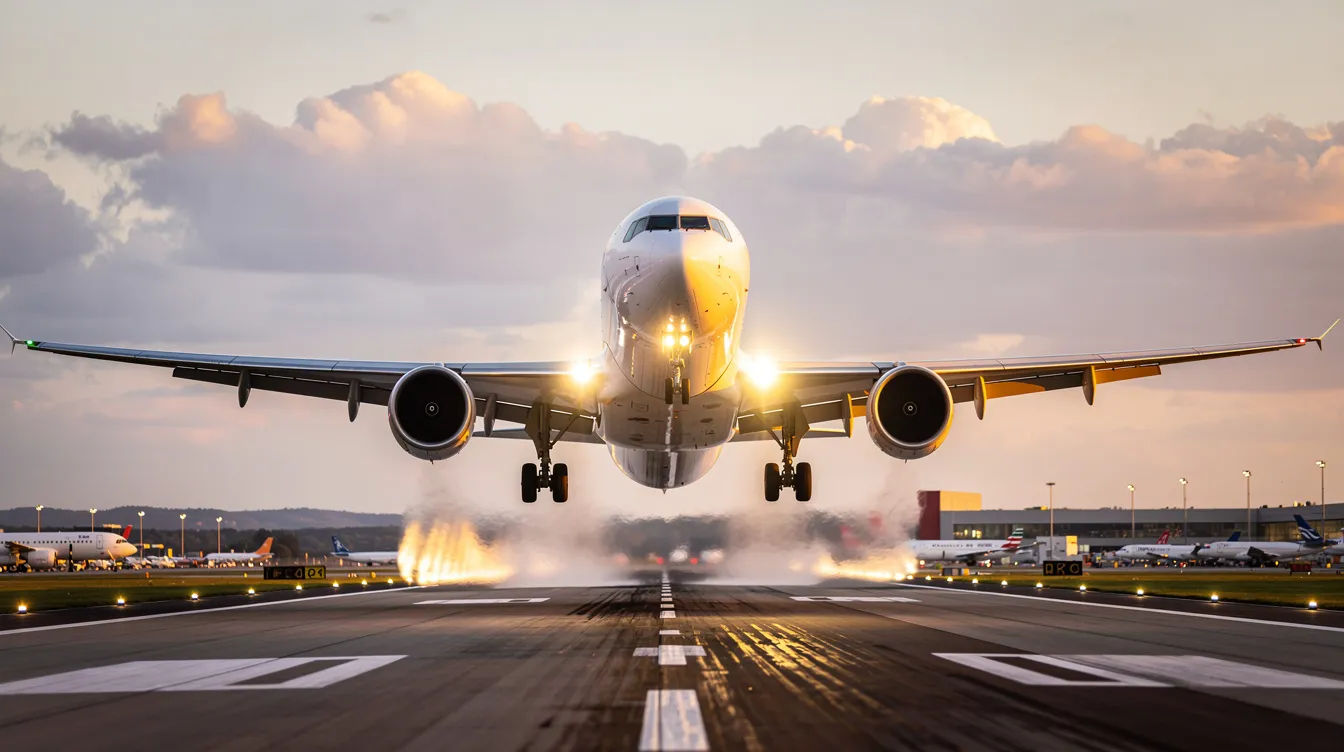
Fighter jets and specialized military aircraft far exceed civilian jet speeds, though routine operations rarely require maximum velocity. Military jets operate comfortably at supersonic speeds exceeding 1,000–2,100+ mph. Combat priorities favor maneuverability and fuel over sustained supersonic speeds, but these aircraft are also equipped with sophisticated weapons systems that play a crucial role in air combat strategies.
Front-line fighters like the F-16, F/A-18 Super Hornet, Eurofighter Typhoon, and Rafale reach speeds around Mach 1.8–2.0.Modern fighter jets are capable of supersonic speeds exceeding 1,000 miles (1,600 kilometers) per hour, with many operating at speeds above Mach 1.5 to 2.0.Air Force pilots prioritize agility and mission flexibility over breaking speed records during combat.
F-15 Eagle/EX: Capable of Mach 2.5+ (1,650+ mph) in clean configuration; the latest F-15EX Eagle II has been delivered as part of ongoing fleet upgrades.
F-22 Raptor: Top speed around Mach 2.25, but focuses on supercruise (sustained supersonic flight without afterburner) and stealth technology
The F-22’s thrust from twin F119 engines enables it to fly faster than the sound barrier without afterburner—a capability that delivers tactical advantages in combat while maintaining fuel efficiency. Aviation Week frequently reports on advanced military aircraft testing and performance milestones.
The SR-71 Blackbird’s official FAI record stands at 3,529.6 km/h (2,193.2 mph), set on July 28, 1976. This reconnaissance aircraft, developed during the post war period by Lockheed’s Skunk Works, remains the fastest air-breathing crewed jet ever flown. The US Navy and other aircraft never matched its sustained Mach 3+ performance. Some Cold War-era jets like the MiG-25 Foxbat and MiG-31 Foxhound can reach Mach 2.83 (approx. 1,900 mph).
Experimental rocket-powered aircraft like the X-15 reached Mach 6.72 (4,520 mph), but these fall outside typical jet travel categories. Operational limits for jet fighters stem from thermal stress—air molecules heat dramatically at higher speeds—and fuel consumption rates, just as long-range civil aircraft must balance cross-country plane speed and efficiency when covering large distances.
Published top speed figures represent theoretical limits. Real-world cruise speeds depend on multiple environmental and operational factors that pilots and operators must balance.
Thinner air at higher altitudes reduces drag significantly—by roughly 50% above 30,000 feet. This allows jets to achieve higher true airspeed for the same engine power. Private jets typically fly at higher altitudes than commercial aircraft, helping them avoid air traffic and turbulence, which contributes to faster travel times. Commercial and private jets climb to 30,000–51,000 feet for efficient cruising.
Heavier fuel loads and more passengers increase drag. Operators often choose slightly lower cruise speeds initially, then perform “step climbs” as fuel burns off to maintain fuel efficiency, since cruise settings directly influence overall private jet operating costs.
Civilian high-bypass turbofans (8:1 bypass ratio): Excel at subsonic speeds with excellent fuel efficiency
Military low-bypass engines with afterburners: Trade efficiency for 50–100% thrust increases, enabling supersonic speeds in short bursts
Afterburners inject extra fuel into the exhaust, creating massive thrust but consuming fuel rapidly—only aircraft like fighters or missiles use this capability regularly.
Tailwinds from the polar jet stream (100–200 knots) can push ground speed dramatically higher. Headwinds create the opposite effect. Turbulence or storms may force pilots to adjust altitude and airspeed, prioritizing safety over speed.
Even though private jets cruise at similar speeds to airliners, private charter significantly reduces total journey time. The advantage lies in logistics, not engine performance.
Private passengers typically arrive 15–30 minutes before departure versus 1–2 hours for commercial. No long security lines, no boarding groups, no baggage carousels. This efficiency saves hours on each trip.
Jettly’s platform sources aircraft capable of flying non-stop or with optimal fuel stops, and travelers can use a private jet charter cost estimator to understand how route length and aircraft choice affect pricing. Eliminating layovers and hub connections—common in commercial travel—cuts total travel time substantially.
Private jets access thousands of smaller airports and FBO terminals. Travelers land closer to their final destination, avoiding congested hubs like JFK, LAX, or Heathrow. The U.S. alone has over 5,000 public airports accessible to private aviation, versus roughly 500 served by major airlines, and tools like Jettly’s airport locator help identify the closest and most convenient options for each trip.
A Toronto–Chicago business trip illustrates the difference. Commercial flight time runs about 2 hours, but add 2+ hours for airport arrival, security, boarding, and baggage—plus potential connections. A Jettly-arranged charter covers the same route in 1.5 hours of flying with only 30 minutes of ground time, enabling practical same-day round trips.

As of 2026, no supersonic business jet operates in regular commercial use. However, development continues on several fronts within a broader private aviation landscape that already offers diverse charter airline and operator options.
Concepts like Boom Overture target Mach 1.7 (1,122 mph), potentially cutting New York–London flights to 3.5 hours. NASA’s X-59 aims to demonstrate quieter sonic boom technology by 2026, which could open supersonic land routes currently banned due to noise regulations.
Higher speeds mean higher fuel burn—supersonic jets consume roughly 4x the fuel of subsonic aircraft. Carbon emissions and community noise standards create significant hurdles for the commercial service of supersonic aircraft.
Current development focuses on improving how the rapidly growing global fleet of private jets operates in a more efficient and sustainable way:
Better aerodynamics and lighter materials
More efficient engines
Sustainable aviation fuel (SAF) compatibility
Advanced avionics for optimal routing
Platforms like Jettly focus on using today’s diverse fleet efficiently—matching travelers to the right aircraft and route—while monitoring advances in sustainable aviation technology, often positioning themselves as a flexible NetJets alternative for private flyers.
Jettly operates as a digital private jet charter marketplace, providing access to over 20,000 aircraft globally and helping travelers find affordable private jet charter options tailored to their routes. The platform emphasizes on-demand booking, transparent pricing, and matching travelers with appropriate aircraft.
Jettly’s value lies in optimization rather than chasing theoretical maximum speeds, supported by flexible private jet membership programs that prioritize access and convenience over aircraft ownership:
Light jets (380–430 knots) for short regional hops
Midsize jets (420–460 knots) for business routes
Large jets (450–490 knots) for long-haul, high-speed legs
Features like instant pricing and digital booking let frequent flyers compare speed, range, and cost across aircraft types, and tools like Jettly’s jet card flight cost estimator further clarify expected pricing for common routes. The platform’s access to a broad airport network enables significant time savings—choosing departure and arrival points closer to home, and destination minimizes ground transfers, and some travelers further reduce costs by using Jettly’s options to crowdsource private jet flights and share empty seats.
Ready to experience private travel on your terms? Explore flight options, consider jet card programs for frequent flyers, or request a quote at Jettly.
Ready to see how fast your next trip can really be? Compare private jet membership options, explore flight choices, or request a quote at Jettly.
The Lockheed SR-71 Blackbird holds the official record for the fastest air-breathing crewed jet, reaching 3,529.6 km/h (2,193.2 mph) on July 28, 1976. This record was recognized by the Fédération Aéronautique Internationale. The SR-71 was a specialized reconnaissance aircraft—not a passenger jet or typical fighter—and no operational crewed jet has publicly exceeded this speed as of 2026. The first aircraft to break Mach 3 sustained flight, it required special JP-7 fuel and titanium construction to withstand extreme air resistance and thermal stress.
Current private business jets operate just below the speed of sound, typically around Mach 0.80–0.92. This subsonic speed range optimizes fuel efficiency, passenger comfort, and regulatory compliance. Sonic booms from supersonic flight over land remain restricted in most countries. While experimental supersonic business jet concepts have been proposed (including designs targeting Mach 1.6), none are in mainstream commercial service. Charter flights arranged through platforms like Jettly operate subsonic aircraft that prioritize efficiency and range.
Flying near maximum speed dramatically increases fuel consumption, operating costs, and engine wear. Fuel burn rises exponentially with velocity—small reductions in cruise speed can save 5% or more in fuel costs. Airlines and private operators also consider air traffic management requirements, maintenance intervals, and passenger comfort. Additionally, flying at economical cruise speeds extends engine service life by thousands of cycles, reducing long-term maintenance expenses—an insight that can be valuable for partners promoting Jettly through its high-ticket affiliate program.
Total journey time—not just flight time—determines real travel efficiency. Private passengers typically arrive 15–30 minutes before departure instead of 1–2 hours, and many choose providers highlighted among the best private jet charter companies to maximize both time savings and service quality. They skip security lines, boarding groups, and baggage claim. Private jets access smaller airports closer to final destinations, eliminating lengthy ground transfers. Direct routing avoids hub connections, and brokered solutions like Dexter Air Taxi private jet services demonstrate how on-demand platforms streamline this experience. On a route like New York–Miami, these factors can save 3–or more hours compared to commercial options, making same-day round trips practical where airlines would require overnight stays.
Speeds vary by aircraft category available through Jettly:
Light jets: 380–430 knots (approximately 445–495 mph / 715–797 km/h)
Midsize jets: 420–460 knots (approximately 483–529 mph / 777–852 km/h)
Large/heavy jets: 450–490 knots (approximately 518–564 mph / 833–907 km/h)
Jettly’s platform helps match aircraft to your specific route, time constraints, and budget, while complementary services like Jettly Eats in-flight catering enhance comfort during your chosen flight. You can compare expected flight times and costs across different jet categories to find the optimal balance of speed, comfort, and value for your travel needs, much like travelers evaluating NetJets’ private aviation model when considering different service structures.
How fast can jets go? Private and commercial jets typically cruise around 420–600 mph. Fighter jets exceed Mach 2 when missions require it, and the only aircraft to break sustained Mach 3+ cruising remains the SR-71 Blackbird with its record of 2,193 mph.
For travelers, raw speed matters less than total journey time. Airport access, security processes, routing flexibility, and boarding efficiency—these factors often determine whether you make that evening meeting or need an overnight stay.
Jettly’s platform makes leveraging jet speed and flexibility straightforward through on-demand access, global aircraft inventory, and transparent pricing supported by tools like its private jet charter cost estimator. Whether you need a light jet for a quick hop or a heavy jet for transcontinental travel, the right match exists.
Share this post:
Jay Franco Serevilla
Apr 18, 2026
|
5
min read
Discover tips and trends in the industry.
5
min read
Worst Safety Record Aircraft: Deadliest Passenger Jets, Hull Losses, and What They Mean for Airline Safety
Certain aircraft have gained notoriety for their poor safety records, particularly the Fokker F28 and McDonnell Douglas MD-11, which exhibit high hull loss rates. While the Boeing 737 family has the highest total fatalities, this is largely due to its extensive use rather than inherent danger. Understanding these statistics is crucial for travelers assessing aviation safety.
Read More
5
min read
www trivago com flights: Cheap Flights vs. Private Jets with Jettly
This guide compares the use of Trivago for cheap flights and hotel deals with booking private jets through Jettly. While Trivago excels at finding budget-friendly options, Jettly offers flexibility and time savings for travelers needing efficient transportation. Understanding both platforms helps travelers make informed decisions based on their specific needs.
Read MoreStay updated with our latest insights and tips to elevate your journey with us.
MEMBERSHIPS AND ASSOCIATIONS



Disclaimer: Jettly operates as a charter broker, offering access to a global digital jet charter marketplace. Jettly is not a direct air carrier and does not own or operate aircraft. All advertised flights are conducted by third-party air carriers that are fully licensed and hold the appropriate Part 135 or Part 121 certifications issued by the Federal Aviation Administration (FAA) or equivalent regulatory authorities under U.S. or foreign law. Jettly complies fully with the U.S. Department of Transportation's Part 295 and Part 298 Charter Broker regulations. Jettly does not carry additional liability insurance. Passengers are covered by aircraft operator insurance. TICO: 50023770


