


Login
Get Instant Pricing On 23,000+ Aircraft

>
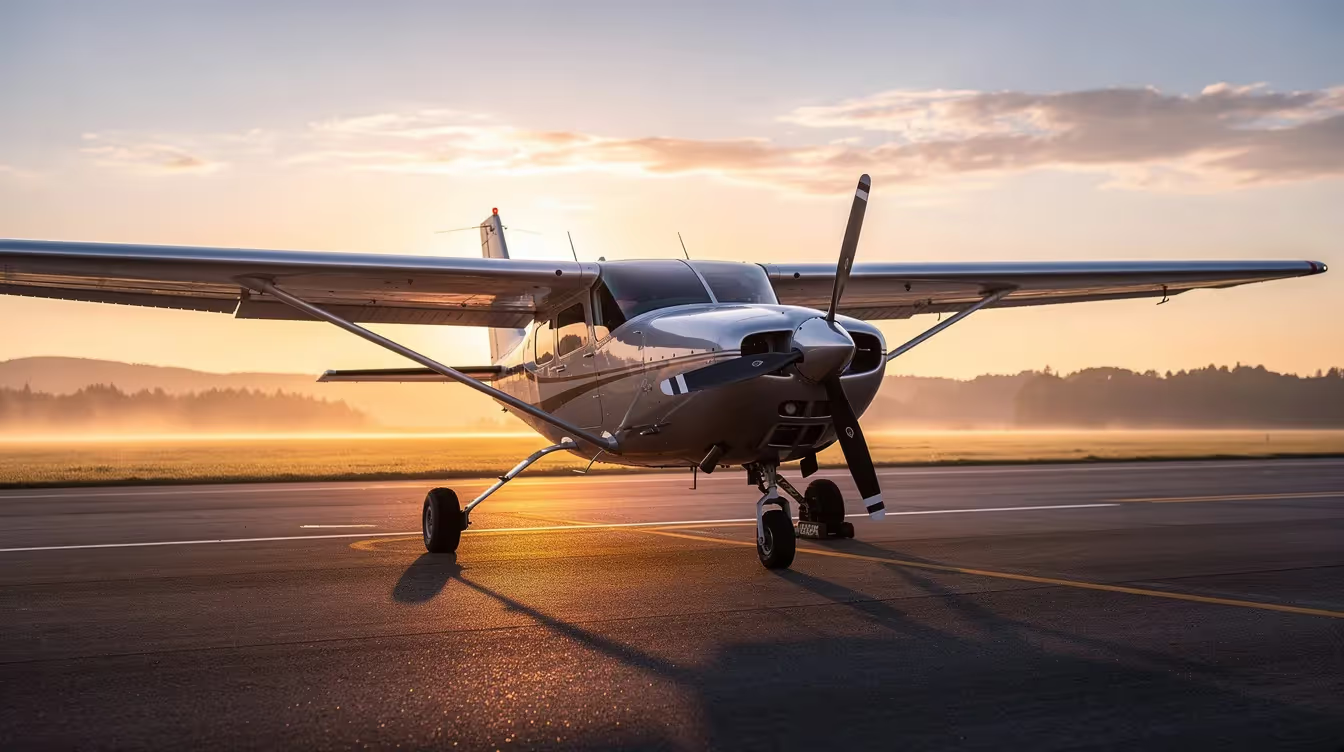
Understanding how far a Cessna can fly is essential for pilots, flight students, and aviation enthusiasts. The Cessna 172, known for its reliability and simplicity, is a common choice for training and personal flights. Its range depends on various factors such as fuel capacity, weight, weather conditions, and flight settings. This article explores the practical range of different Cessna models, focusing on the popular Cessna 172 Skyhawk, and offers insights into fuel consumption, flight planning, and real-world applications. Whether planning a cross-country trip or a regional flight, knowing the capabilities of a Cessna helps ensure safe and efficient travel.
How far can a Cessna fly? A typical Cessna 172S Skyhawk can practically fly about 500–640 NM, or 575–735 miles, on a full tank with reserves in favorable conditions.
A standard Cessna 172 can achieve a maximum range of 500 to 640 nautical miles under optimal cruise conditions before exhausting its safe fuel reserves.
The exact distance a Cessna can fly is influenced by specific conditions, including cruising altitude, headwinds/tailwinds, aircraft weight, and engine power settings.
Smart flight planning matters more than brochure range figures because fuel stops, alternates, wind conditions, and weather conditions shape every trip.
Cessnas are excellent training aircraft for short hops, while Jettly’s private jet marketplace is better suited for longer non-stop trips that need more speed, capacity, and comfort.
A modern Cessna 172, especially the Cessna 172 Skyhawk, has a typical maximum range of around 640 NM, about 740 miles or 1,185 km, at economy cruise with standard reserves. Generally, a Cessna 172 can cover a distance of about 600 to 800 nautical miles on a full fuel tank, with variations depending on the specific model, payload, weather conditions, and flying altitude.
The “book” maximum range in the Pilot’s Operating Handbook assumes a clean aircraft, correct leaning, standard air, and careful power settings. In real flying, pilots often use 70–80% of that number for planning. That means a sensible planning range may be closer to 400–550 NM.
For example, a 172 can often cover Los Angeles to San Francisco, Toronto to New York, or London to Berlin under good conditions. Many flight schools keep cross-country flights to 3–4 hour legs, or about 350–450 NM, so student pilots have comfort, safety margin, and weather flexibility, while owners who outgrow trainers often compare the cheapest private aircraft options across categories before upgrading from a Cessna 172.
As routes get longer, travelers often move from a single-engine plane such as the Cessna 172 to faster aircraft. Guides on finding the best cross-country plane can help match range and speed to each mission, and Jettly helps passengers compare private charter aircraft options when a piston airplane is no longer the right fit.
The Cessna 172 is one of the most produced aircraft in aviation history. The first production model arrived after the type first flew in 1955, and more than 44,000 have been built. That makes the 172 a staple of flight training around the world.
It is a four-seat, high-wing, single-engine airplane with fixed landing gear and easy access to the cabin. The design gives pilots good visibility, stable handling, and a forgiving stall speed. The baggage area is modest, but it can carry light bags on regional trips.
The current production model, the Cessna 172S Skyhawk, is commonly fitted with Garmin G1000 or G1000 NXi avionics. Its cockpit introduces student pilots to glass-panel systems similar to those used in larger turbine aircraft.
The aircraft’s performance is predictable, which is why instructors use it to teach fuel management, cruise speed, takeoff planning, landing technique, and range judgment. For owners evaluating the best personal plane for their own travel, the 172 is often a starting benchmark. Many private jet captains started in aircraft like the 172 before progressing to business jets available through platforms such as Jettly’s private jet memberships.
Most Cessna 172 models have a fuel capacity of 40 to 56 gallons, with usable fuel slightly less, allowing for about five hours of flight time before reserves under optimal conditions. Older models may have about 38 usable gallons, while a typical 172S has 56 gallons total and 53 usable.
Aviation gasoline weighs exactly 6 pounds per gallon, and filling a standard 53-gallon usable fuel tank adds 318 pounds to the plane. The useful load of a typical Cessna 172 is roughly 800 to 950 pounds, which includes the total weight of fuel, passengers, and baggage.
The typical fuel burn rate for a Cessna 172 is around 8-10 gallons per hour, which significantly impacts its range during flight planning. At 65–75% power, fuel burn may sit near 8–10 GPH, while lower economy settings can reduce fuel consumption.
Leaning the fuel mixture at cruise altitude improves fuel efficiency, allowing for longer flights on the same amount of fuel. Using the best economy power settings and flying at optimal altitudes can significantly enhance fuel efficiency in a Cessna 172.
For a simple example, 53 usable gallons at 9 gallons per hour gives just under six hours before dry tanks. After reserve fuel, practical endurance is closer to five hours. At an average ground speed near 110 knots, that supports roughly 550–600 NM in good air.
|
Cessna 172 setup |
Fuel burn |
Cruise speed |
Practical range |
|---|---|---|---|
|
Economy cruise |
5.5–7.5 GPH |
95–115 KTAS |
500–550 NM |
|
Higher cruise power |
9–10.5 GPH |
120–125 KTAS |
400–500 NM |
|
Older 172 with a smaller tank |
8–9 GPH |
105–110 KTAS |
350–450 NM |
Student pilots learn to track fuel in gallons and hour-by-hour endurance. Those habits transfer directly to larger charter aircraft, where fuel, load, safety, and tools like a private jet charter cost estimator still drive operational decisions.
Brochure numbers assume ideal conditions. Real flights depend on load, weather, altitude, engine management, and the condition of the aircraft.
The primary factors affecting a Cessna’s range include fuel weight, passenger and cargo weight, engine power settings, and atmospheric conditions. The range of a Cessna 172 can be significantly affected by the aircraft’s weight, as carrying extra passengers or cargo increases fuel consumption and reduces the distance it can travel on a full tank.
Weight matters because a higher gross weight increases ground roll, reduces climb performance, and may require less fuel if passengers and bags push the aircraft close to maximum weight. More fuel can increase endurance, but extra weight also reduces efficiency. A pilot may choose less fuel and a planned stop instead of loading the tank to the brim.
Weather conditions, such as headwinds and tailwinds, play a crucial role in determining the range of a Cessna 172; headwinds can decrease range, while tailwinds can increase it. Headwinds reduce a plane’s groundspeed, requiring more fuel to cover the same distance, while tailwinds can extend the aircraft’s physical range.
Altitude also matters. Optimally flying at higher altitudes, typically 6,000 to 8,000 feet, reduces aerodynamic drag and increases fuel efficiency. Flying at higher altitudes with leaner fuel mixtures can enhance the range of a Cessna 172, while full-power settings and excess weight can reduce efficiency and range—similar principles apply when planning international private jet flights.
Regular maintenance and engine checks are essential for maintaining fuel efficiency, as they ensure the engine operates optimally and reduces overall fuel consumption. A clean airframe, proper tire pressure, and a well-maintained engine all help with conserving fuel.
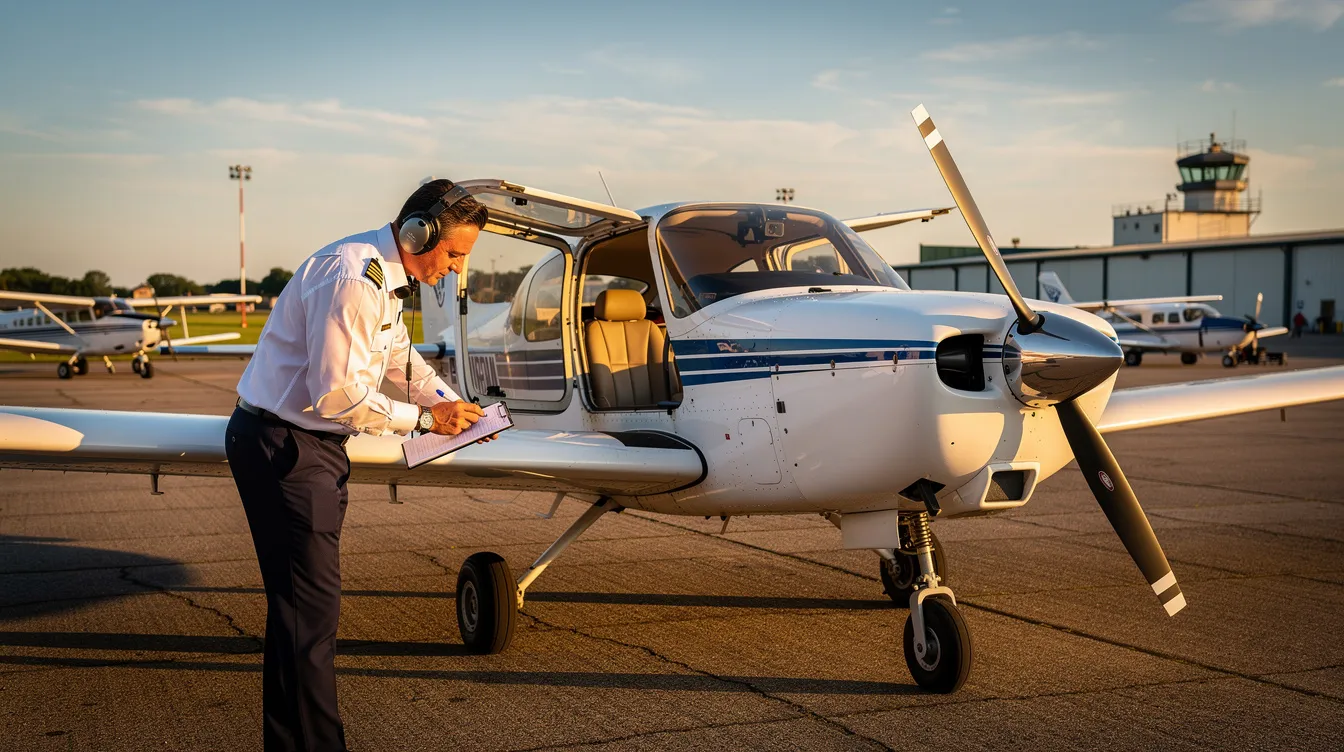
Safe flight planning is about margins, not squeezing every mile from the tank. Endurance is the number of hours in the air. Range is the distance covered. Ground speed connects the two because wind changes how far the aircraft travels each hour.
In the U.S., 14 CFR § 91.151 requires VFR fuel to the first intended landing point plus 30 minutes by day or 45 minutes by night. IFR rules under 14 CFR § 91.167 require fuel to the destination, then an alternate if required, plus 45 minutes.
A 400 NM trip in a Cessna 172 might be possible non-stop. Still, effective flight planning may include one fuel stop, alternate airports, terrain review, weather briefings, and a 45-minute reserve. Pilots also check runway length, expected climb, service ceiling, density altitude, and may use an airport locator tool to evaluate suitable fields, while private fliers, comparing platforms like XO charter flights and their alternatives, focus on similar route and airport considerations.
This is where small-aircraft flying differs from business travel. A piston Cessna is excellent for regional hops and training. For non-stop routes such as New York–Miami, Toronto–Vancouver, or a business trip involving Las Vegas, travelers often use private jets booked through Jettly, where they can buy a seat on a private jet and review affordable private jet charter costs before they fly, while also understanding what drives one-off private flight pricing.
Pilots use Cessna 172s for training, personal travel, aerial observation, and short business trips. The aircraft is not a long-haul machine, but it can handle meaningful regional distances when planned carefully.
Comfortable example legs include:
Los Angeles–San Francisco: about 275–300 NM, often 2.5–3 hours.
Paris–Geneva: about 220 NM, often near 2 hours.
Sydney–Melbourne: about 380 NM, often 3.5–4 hours depending on winds.
Chicago–Kansas City: about 450 NM, a realistic long leg with favorable weather and careful fuel planning.
Typical flight schools also use 100–200 NM cross-country flights. These let students practice navigation, radio work, fuel calculation, and landing at unfamiliar airports without pushing maximum range.
A Cessna 172 can cross the United States or Europe, but it requires several stops. The flight time may be rewarding for pilots, but it is rarely efficient for passengers on a schedule.
Compared with turboprops and light jets on the Jettly platform, the 172 is much slower. A light jet or turboprop can cover longer sectors, often 1,000–2,000 NM, while keeping the trip simpler for families or executives who get a seat on a private jet easily by applying tips for booking the cheapest private jet flights.
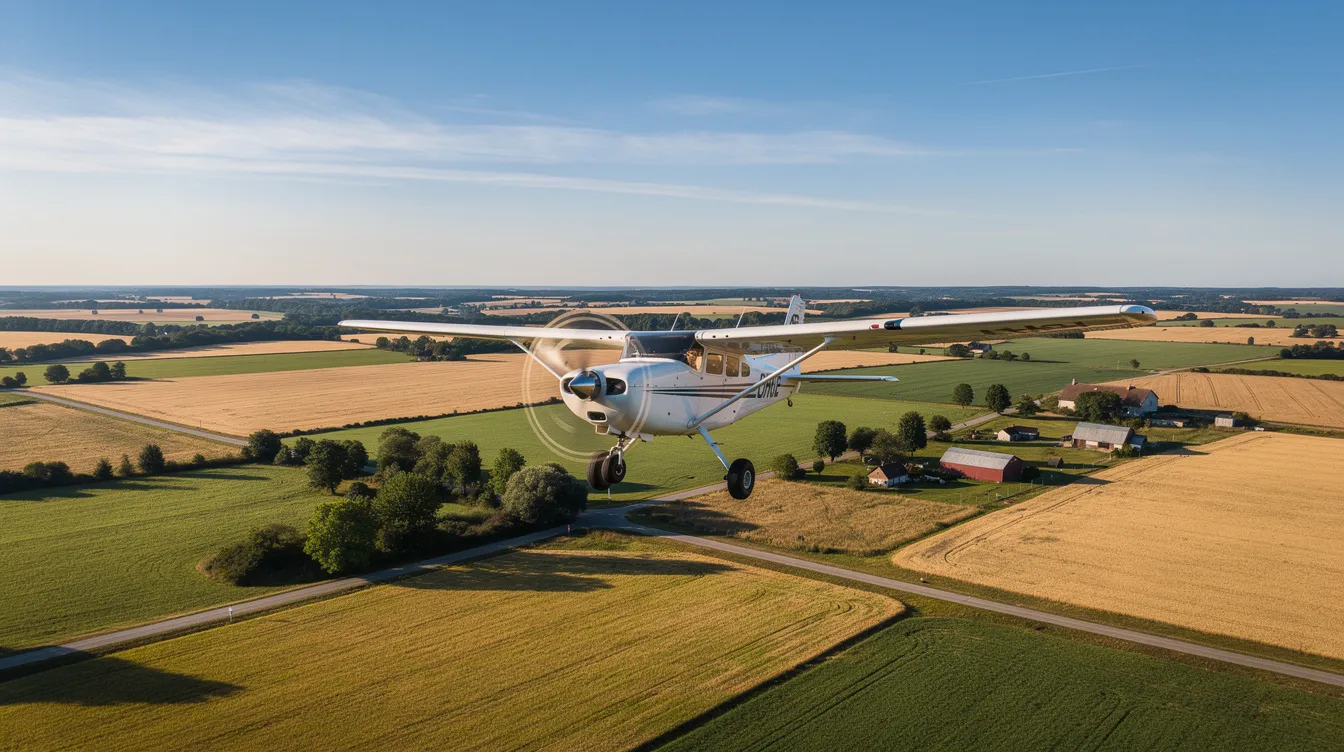
Many pilots start in a Cessna 172, then move to aircraft with more speed, more passengers, and longer range. The 172’s maximum speed is roughly in the 120–125 knot cruise range, making it best for regional flying rather than continent-spanning travel. The Piper Archer is another common training aircraft that pilots often compare at this stage.
The Cessna Skyhawk (172) has a maximum range of approximately 640 nautical miles, while the Cessna Skylane (182) can achieve around 915 nautical miles. The Cessna 340 has a range of around 1,400 nautical miles, while the Cessna Grand Caravan EX has a range of approximately 912 nautical miles. The Cessna 207’s specs and charter profile appeal to operators needing more seats from short fields, and the Cessna SkyCourier achieves around 920 to 940 nautical miles.
The maximum flying range for a Cessna aircraft can vary significantly, with single-engine piston models reaching around 600–900 nautical miles and high-end business jets extending to 3,500 nautical miles. The maximum flying range for various Cessna models varies, with smaller trainers having ranges around 450 nautical miles and large business jets reaching up to 3,500 nautical miles, and travelers evaluating these options often need a clear view of how much a private jet really costs.
|
Aircraft type |
Typical role |
Approximate range |
|---|---|---|
|
Cessna 172 Skyhawk |
Training and regional flying |
Up to ~640 NM |
|
Cessna 182 Skylane |
Personal travel |
~915 NM |
|
Grand Caravan EX |
Utility turboprop |
~912 NM |
|
SkyCourier |
Regional utility aircraft |
~920–940 NM |
|
Citation M2 Gen3 |
Light jet |
~1,550 NM |
|
Citation CJ4 Gen3 |
Light jet |
~2,165 NM |
|
Citation Longitude |
Super-midsize jet |
~3,500 NM |
Citation M2 Gen3 has a range of about 1,550 nautical miles, and the Citation CJ4 Gen3 can fly approximately 2,165 nautical miles. The Citation Longitude has a maximum range of 3,500 nautical miles, and a jet card flight cost estimator can help compare the economics of these longer-range options.
That difference changes the trip. A Cessna 172 may need multiple stops. A charter jet may fly non-stop, use more suitable airports, and reduce total travel time.
Jettly gives travelers access to a global aircraft inventory, instant pricing, and charter options without requiring ownership or a traditional jet card, working with marketplace partners like Zenflight’s instant-book private jet platform. For those wondering what a jet card is and how it works, jet card programs offer fixed hourly rates and additional benefits for frequent flyers, and many compare these against NetJets jet card costs and options. Travelers comparing the best jet card programs today and researching jet card costs can use Jettly as a flexible, on-demand alternative, and travel influencers or business owners can also join its high-ticket affiliate program to earn commissions by referring new clients. Learn more about Jettly’s charter options at https://www.jettly.com.
No, a Cessna 172 cannot typically fly across a country non-stop due to its limited fuel capacity and range. Cross-country flights require multiple fuel stops and careful planning to accommodate weather, airspace restrictions, and pilot rest. For long-distance travel, private jets or larger turboprops available on platforms like Jettly offer more speed, range, and comfort, and can serve as a flexible NetJets alternative without long-term ownership commitments for travelers who have already researched all about NetJets as a private aviation leader.
Key factors influencing range include fuel capacity, aircraft weight (passengers, baggage, and fuel), weather conditions (headwinds, tailwinds, turbulence), altitude, and engine power settings. Efficient fuel management, flying at optimal altitudes, and proper maintenance also play vital roles in maximizing range.
Pilots maximize range by flying at economy cruise power settings, leaning the fuel mixture appropriately, choosing altitudes with favorable winds, minimizing unnecessary weight, and ensuring the aircraft is well-maintained. Planning routes with tailwinds and avoiding turbulent weather also helps extend range.
The Cessna 172 Skyhawk offers a practical range of up to about 640 nautical miles. Larger models like the Cessna 182 Skylane extend range to approximately 915 nautical miles. Utility turboprops such as the Grand Caravan EX and SkyCourier reach around 912 to 940 nautical miles, while Cessna’s Citation jets can fly between 1,550 and 3,500 nautical miles, catering to longer trips and higher passenger capacity.
While the Cessna 172 is reliable and economical for short regional flights and training, it is not ideal for business travel requiring speed, range, or passenger comfort. For business trips, private jets chartered through platforms like Jettly or other top private jet charter companies provide faster, more comfortable, and non-stop travel options, typically operated by regulated Part 135 charter companies.
Experience private travel tailored to your needs. You can explore a broad list of private charter airlines, understand how you fit into the global fleet of private jets and travel trends, and discover flight options or get a quote at https://www.jettly.com.
Knowing how far a Cessna can fly is fundamental for effective flight planning, safety, and maximizing travel efficiency. While the Cessna 172 Skyhawk offers reliable performance for regional flights and flight training, its range and speed limit its use for longer trips or business travel. Factors such as fuel capacity, aircraft weight, weather conditions, and flight settings all influence the practical range of these aircraft. For travelers seeking faster, longer-range, and more comfortable options, platforms like Jettly provide access to a global inventory of private jets and turboprops with transparent pricing and instant booking. Whether flying a Cessna for training or chartering a private jet for business, understanding aircraft capabilities ensures every journey meets your needs.
Ready to experience private travel on your terms? Explore flight options, consider crowdsourced and shared private jet flights and other shared charter vs full charter options, or request a quote at https://www.jettly.com. Alongside options to buy a seat on a private jet or get a seat on a private jet easily, travelers can enhance their journey with in-flight catering for private jets and compare offerings from the best private plane manufacturers. Jettly also connects clients with operators like Dexter Air Taxi and provides local charter solutions in key markets, including private jet charter in Atlanta, Georgia, Chennai, Tamil Nadu, Hyderabad, Telangana, Jaipur, Rajasthan, Kolkata, West Bengal, Lagos, Nigeria with detailed guides to private jets in Nigeria and Lagos travel, New Delhi, Delhi, as well as dedicated services for private jet charter in Abuja, Bangalore, Houston, Islamabad, Karachi, Lucknow, Mumbai, and Vadodara.
Share this post:
Jay Franco Serevilla
May 22, 2026
|
5
min read
Discover tips and trends in the industry.

5
min read
Safest Passenger Planes in 2026: Models, Statistics, and How They Impact Your Flight
In 2026, the safest passenger planes include models like the Embraer ERJ family, Boeing 717, Airbus A340, and Airbus A380, all boasting zero fatal accidents. Understanding aircraft safety data helps travelers make informed decisions, as modern jets like the Airbus A350 and Boeing 787 also maintain exceptional safety records. With rigorous engineering and advanced technology, commercial aviation remains the safest mode of transportation.
Read More
5
min read
Topflightfares: How to Spot Real Deals and When to Choose Private Jets Instead
Travelers today face numerous options when booking flights, from premium commercial fares to private jet charters. This guide helps you evaluate deals, identify risks, and determine when private jets may offer better value, especially for groups or last-minute trips. With insights on pricing, hidden fees, and safety, you can make informed travel decisions.
Read MoreStay updated with our latest insights and tips to elevate your journey with us.
MEMBERSHIPS AND ASSOCIATIONS



Disclaimer: Jettly operates as a charter broker, offering access to a global digital jet charter marketplace. Jettly is not a direct air carrier and does not own or operate aircraft. All advertised flights are conducted by third-party air carriers that are fully licensed and hold the appropriate Part 135 or Part 121 certifications issued by the Federal Aviation Administration (FAA) or equivalent regulatory authorities under U.S. or foreign law. Jettly complies fully with the U.S. Department of Transportation's Part 295 and Part 298 Charter Broker regulations. Jettly does not carry additional liability insurance. Passengers are covered by aircraft operator insurance. TICO: 50023770


