


Login
Get Instant Pricing On 23,000+ Aircraft

>
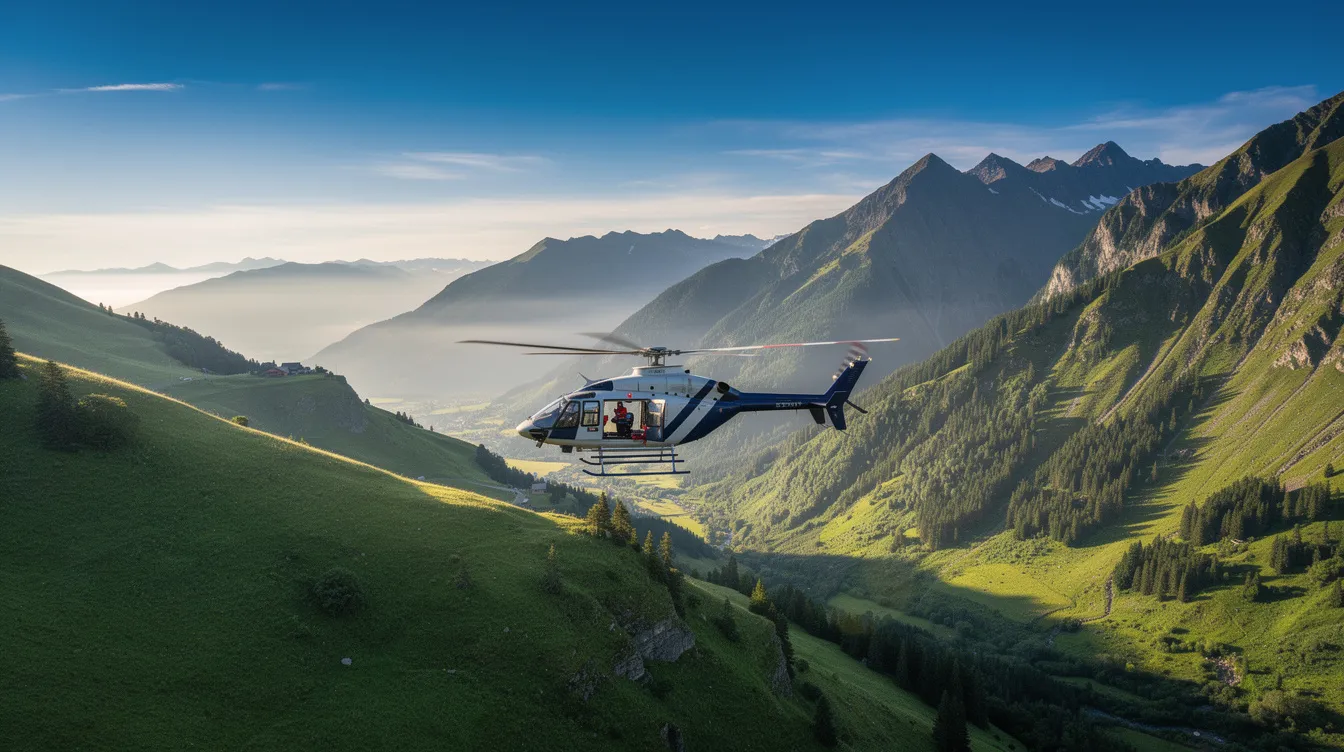
Helicopter specs are the manufacturer’s technical performance data—the numbers that define what a rotorcraft can do, from maximum takeoff weight, cruise speed, and range to passenger capacity, rotor configuration, and engine type. Understanding helicopter specs is the first step toward choosing the right aircraft for any mission, whether that’s a VIP airport transfer, a scenic mountain flight, an offshore crew shuttle, or another corporate, emergency, or leisure trip where feasibility, safety, comfort, and cost all matter.
Written for frequent flyers, business executives, high-net-worth travelers, and charter customers, this guide breaks down the numbers that matter most in plain language. You’ll see how helicopter categories, speed, range, payload, cabin layout, rotor and engine setups, safety standards, operating costs, and mission profiles translate into practical travel decisions—so you can compare options and select the right helicopter for the job.
This article provides a practical overview of helicopter specs - covering speed, range, payload, rotor systems, and engines - across common helicopter models used in private, commercial, and military aviation.
Helicopter specs vary widely by helicopter type. Helicopters are categorized into light, medium, and heavy classes, plus specialized military helicopters. Examples range from the Robinson R44 and Airbus H125 to the Sikorsky S-92 and Boeing AH-64 Apache.
The five headline specs to compare first across helicopter models are maximum takeoff weight (MTOW), cruise speed, range, passenger capacity, and engine or rotor configuration - including the tail rotor or alternative anti-torque system.
Jettly's platform focuses on civil and VIP operations, where helicopters are especially useful for short-range hops, remote sites, and city-to-city transfers where runways are unavailable.
The article also explains how specs translate to real missions - like airport transfers, offshore operations, rescue flights, and medical evacuation - and how to match a mission profile to the right helicopter category.
"Helicopter specs" refers to the technical performance data manufacturers publish for each aircraft: weight limits, rotor configuration, powerplant output, speed, range, and mission equipment. These numbers shape what a helicopter can do, where it can fly, and how many passengers it can carry.
Specs are drawn from manufacturer data sheets and flight manuals, measured under standard conditions - International Standard Atmosphere (ISA), sea level pressure, no wind, and specific weight assumptions. In reality, performance changes with temperature, altitude, payload, and wind, so published figures represent a baseline rather than a guarantee.
The main spec categories covered in this article include:
Dimensions - overall length, rotor diameter, and height
Weights - empty weight, useful load, and MTOW
Performance - cruise speed, VNE (never-exceed speed), hover ceilings, range, and endurance
Powerplant - engine type (piston or turboshaft) and power output
Rotor system - main rotor blades, tail rotor, Fenestron, or NOTAR anti-torque systems
Capacity - crew requirements, passengers, and typical seating layouts
For charter customers on a platform like Jettly, the most practically relevant specs are seating count, baggage volume, range at a typical payload, and performance in hot or high-altitude conditions.
Helicopters are commonly classified by size - light, medium, and heavy - with distinct spec ranges in each class. Military helicopters form a separate category with different priorities.
Light helicopters (e.g., Robinson R44, Airbus H125, Bell 206 JetRanger):
Typical MTOW range: 2,400–5,500 lb (1,100–2,500 kg)
Light helicopters carry 2 to 4 passengers (pilot + 3–5 occupants in some configurations)
Cruise speed: 100–140 kt
Range: 300–400 nm
Typical uses: training, sightseeing, private flights, aerial survey
The Airbus H125 is a popular light helicopter model, known for its simplicity and hot-and-high performance
Medium helicopters (e.g., Bell 407, Airbus H145, Leonardo AW109):
MTOW roughly 5,500–9,000 lb (2,500–4,000 kg)
Medium helicopters accommodate 5 to 8 passengers
Cruise speeds often 130–160 kt
Ranges roughly 350–450 nm
Used for corporate shuttles, HEMS, police, offshore support
Heavy helicopters (e.g., Sikorsky S-92, Airbus H225, CH-47 Chinook):
MTOW well above 20,000 lb (9,000+ kg)
Heavy helicopters transport large loads and troops, seating from a dozen to several dozen passengers.
Cruise speeds around 140–160 kt
Ranges up to 500+ nm
Roles: offshore crew transport, search and rescue, heavy lift, military logistics
Jettly's marketplace mainly features light and medium twins for VIP and business missions, with heavy types more common on specialized contracts like offshore or government work. For a deeper look at seating limits, see Helicopter Passenger Capacity: Types, Limits & FAQs.
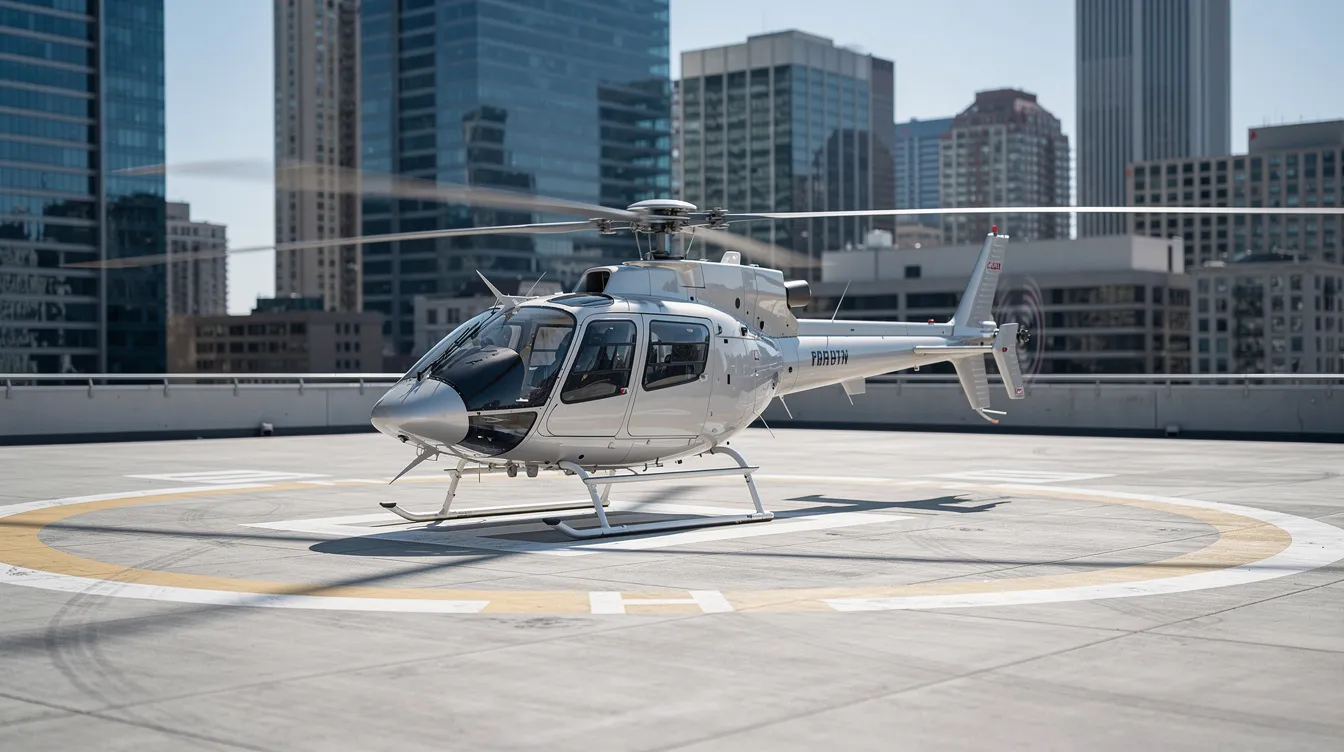
Helicopter performance metrics include speed, range, capacity, and service ceiling. These numbers dictate whether a given aircraft can realistically complete a specific route or mission.
Cruise speed vs. maximum speed (VNE):
Cruise speed is the efficient, comfortable speed a pilot uses on a typical flight. Most helicopters cruise between 130 and 160 knots, though lighter models like the R44 cruise closer to 110 kt. The Airbus AS350 B2 has a cruise speed of 140 knots.
VNE is the never-exceed limit, usually 10–20% higher, reserved for emergencies rather than normal operations.
Range and endurance:
Range represents the distance a helicopter can cover on standard fuel at a given speed while retaining required reserves. The average helicopter has a range of 250 to 500 miles, though some models push further - the HX50 helicopter has a maximum range of 700 nautical miles.
Endurance is total time aloft. The maximum endurance of the Airbus AS350 B2 is 4.4 hours, while many light helicopters offer 3–4 hours.
Headwinds, tailwinds, and heavier payload reduce effective range in practice. Factors affecting helicopter performance include density altitude and weight.
Altitude performance:
Service ceiling indicates the maximum altitude a helicopter can safely operate. Typical cruising altitude for helicopters is between 1,000 and 5,000 feet AGL, though ceilings can reach much higher.
Hover ceilings (IGE - in ground effect, and OGE - out of ground effect) matter most for mountainous terrain and hot climates, where high-altitude cities like Denver or La Paz demand more power, reducing available payload.
Example performance snapshots:
|
Model |
Cruise Speed |
Range |
Service Ceiling |
|---|---|---|---|
|
Robinson R44 Raven II |
~110 kt |
~300 nm |
~14,000 ft |
|
Airbus H145 |
~130 kt |
~351 nm |
~20,000 ft (takeoff/landing) |
|
Sikorsky S-92A |
~151 kt |
~547 nm |
~15,000 ft |
On Jettly, routing and pricing tools rely on accurate performance data to calculate viable legs, fuel stops, and flight times for each charter request, complementing dedicated resources that explain how far different helicopter types can fly and the factors that affect range.
Weight specs are often the limiting factor for real flights, especially when combining multiple passengers, fuel, and luggage. Maximum takeoff weight considers fuel, passengers, and cargo as a certified ceiling for safe operations.
Key definitions:
Empty weight: the aircraft with basic equipment and unusable fuel
MTOW: the certified maximum for safe takeoff
Useful load: the difference between MTOW and empty weight, consumed by fuel, people, baggage, and optional gear
A "6-seat helicopter" doesn't always mean six adults with full bags on a hot day. Helicopter payload capacity decreases as fuel load increases, so adding fuel for longer range directly eats into useful load.
Numerical examples:
Robinson R44 Raven II: MTOW ~2,500 pounds, empty ~1,500 lb, useful load ~1,000 lb. With a standard fuel load, a pilot and three passengers with light bags pushes the weight envelope tightly.
Airbus AS350 B2: The Airbus AS350 B2 has a maximum takeoff weight of 4,960 lbs, empty around 2,800 lb, useful around 2,100 lb. A sightseeing tour config versus a mountain rescue config would allocate that useful load very differently.
Sikorsky S-92: MTOW ~27,700 lb, typical useful load 7,000–8,000+ lb, enabling 19 offshore workers plus bags and fuel for multi-hour legs.
Baggage capacity is usually given in volume (cubic feet or liters) and weight. Storage location varies by model - rear hold, side lockers, or cabin area. For more on weight specifics, see How Much Does a Helicopter Weigh?.
On a platform like Jettly, accurate passenger weights and baggage estimates help ensure payload stays inside certified limits, which may affect aircraft selection or require fuel stops.
Rotor system specs define more than just lift. They shape handling, safety margins, cabin comfort, and noise levels - all of which matter at the landing zone and in the cabin.
Main rotor specs:
Number of blades (2, 3, 4, 5, or more) directly impacts vibration and noise. More blades generally smooth out vibration at the cost of mechanical complexity around the rotor hub.
Rotor diameter ranges from about 33 ft on the R44 to roughly 60 ft per rotor on the CH-47 Chinook. Larger diameter typically means better hover performance.
Rotor speed bands sit around 300–400 rpm for many civil types, with blade tip design (swept or anhedral tips) further reducing noise.
Anti-torque systems:
Conventional tail rotor mounted on a tail boom: used on the Bell 206, H125, and many others. Simple, effective, lightweight.
Fenestron (ducted tail rotor): found on Airbus helicopters like the H130 and H145. Offers reduced ground risk and lower noise, making it practical for urban heliports.
NOTAR (no tail rotor): used on the McDonnell Douglas MD 520N, relying on blown air and the Coandă effect for directional control.
Coaxial rotors (Kamov Ka-32) and tandem rotors (CH-47 Chinook) eliminate the need for a tail rotor entirely.
Key specs often quoted:
Tail rotor diameter and rpm
Maximum tail rotor authority and wind limits
Directional control limits and loss-of-tail-rotor-effectiveness considerations
Concrete rotor spec snapshots:
Airbus H145: 4-blade main rotor, Fenestron tail, rotor diameter ~36 ft
Boeing AH-64E Apache: 4-blade main rotor, 4-blade tail rotor, rotor diameter ~48 ft, giving strong maneuvering capability for a military helicopter
Charter clients care about rotors indirectly: rotor configuration influences landing site size, downwash force on the ground, noise footprint, and whether a helicopter can accept tight urban heliports.
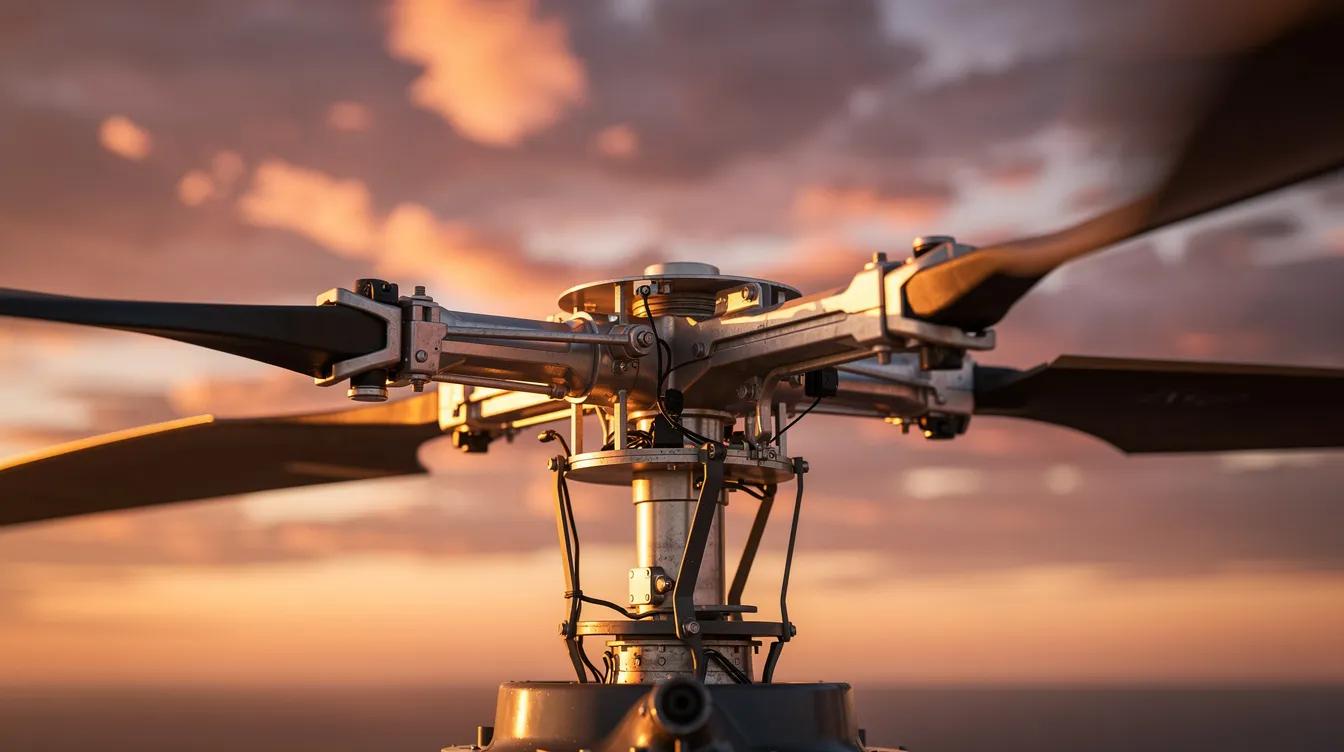
Engine specs determine climb rate, hot-and-high capability, speed, and overall operating cost. They sit at the center of any helicopter spec sheet.
Piston vs. turboshaft engines:
Piston engines (e.g., the Lycoming O-540 in Robinson R22 and R44) deliver lower power - typically 150–245 hp - with lower direct costs, but more limited performance at altitude. Their introduction to rotorcraft powered early civil models.
Turboshaft engines are preferred for most helicopters today. They deliver high power with low weight penalties, which is why they dominate everything from light singles to heavy transports. The first turbine-powered helicopter flew on December 11, 1951, marking a turning point in helicopter development.
The Turbomeca Arriel 1D1 engine produces 732 shaft horsepower (shp) and powers multiple Airbus helicopter variants.
The Hill GT50 engine has a maximum continuous power output of 400 hp, similar to the HX50 helicopter's powerplant.
Single-engine vs. twin-engine:
Single-engine helicopters (e.g., H125, Bell 407) are lighter and cheaper to operate. They have lower operating costs due to fuel efficiency and simpler maintenance.
Twin-engine helicopters (e.g., H145, AW139, S-76) offer redundancy, IFR capability, and are often required for over-water or night VIP missions. Multi-engine helicopters have higher operating costs and require experienced pilots, but are preferred for rescue operations.
Powerplant examples:
|
Helicopter |
Engine(s) |
Takeoff Power |
|---|---|---|
|
1× Safran Arriel 2D |
~952 shp |
|
|
Bell 407GXi |
1× Rolls-Royce M250-C47B |
~862 shp |
|
Leonardo AW139 |
2× Pratt & Whitney PT6C-67C |
~1,679 shp each |
|
CH-47F Chinook |
2× Honeywell T55-GA-714A |
~4,777 shp each |
|
Fuel consumption (rough estimates): |
Light piston trainers: ~8–12 US gal/hour
Light turbine singles like H125: around 35–45 US gal/hour
Medium twins: ~50–80 US gal/hour
Heavy helicopters: well beyond 100 US gal/hour
Fuel burn per hour is a major cost driver in hourly charter rates visible to Jettly users, especially on longer scenic or utility flights. For a broader look at the history of rotorcraft propulsion, see Helicopters: History, Technology, and How They Power Modern Private Travel.
Cabin specs matter most to end users. Seating count, legroom, noise levels, and visibility define the onboard experience during flights.
Typical cabin layouts:
"Club" seating arrangements in VIP-configured medium twins (e.g., AW109, EC135) allow passengers to face each other for conversation or work
Front dual controls (pilot + co-pilot) with bench or individual seats behind in light helicopters like R44 or Bell 206
Key cabin specs usually quoted:
Maximum occupants vs. common VIP configuration (e.g., H145 can seat up to 9, but VIP layouts seat 6–7 more comfortably)
Cabin length, width, and height - standing vs. crouch-in cabins make a real difference on longer legs
Door size and type (sliding vs. hinged), important for EMS and offshore operations
Cabin spec snapshots:
Robinson R44: 4 seats total, cabin width ~50 in (1.27 m), bubble canopy providing excellent visibility for sightseeing
Airbus H145: flat-floor cabin, internal volume ~213 ft³, large rear clamshell doors, often 8–9 seats in utility configuration
Sikorsky S-76D: typically 6–8 VIP seats, stand-up cabin for some passengers, quiet interior designed for corporate travel
The Airbus AS350 B2 can carry 1 pilot and 5 passengers in its standard configuration.
Refined rotor heads, active vibration control, and soundproofing in models like the H145 or AW139 improve comfort on 1–2 hour legs. Modern helicopter designs often feature digital glass cockpits and autopilot systems that also contribute to a smoother ride. Helicopter specifications vary based on intended use such as EMS or military operations, which changes how cabin space is allocated.
When booking via a digital marketplace, passengers can filter or request specific cabin types - window-seat-friendly for sightseeing, stretcher-capable for medical escort, or VIP-configured for executive travel, including light utility models like the Eurocopter EC30 with its modern avionics and short-hop performance.
Beyond size, each helicopter type is also defined by configuration (single vs. twin engine, rotor layout) and mission profile (utility, VIP, military, emergency services).
Single-engine utility and tour helicopters:
Examples: H125, Bell 407, Robinson R44
Specs geared toward good power-to-weight ratios, large windows, and relatively low operating costs
Single-engine helicopters are used for training and observation, as well as scenic tours and pilot training programs
Multi-engine VIP and corporate helicopters:
Examples: AW109, AW139, H145, Sikorsky S-76
Typical specs: twin engines, IFR-capable avionics, advanced autopilots, noise-reduced cabins, cruise 140–160 kt, range ~350–450 nm
Special-mission helicopters (HEMS, police, SAR):
Examples: Airbus H135/H145 for HEMS, Bell 429 for police and rescue
Specs include medical interiors, hoists, searchlights, and advanced navigation, with payload allowances tuned for equipment rather than extra seats
Medical evacuation configurations prioritize rapid patient loading and cabin access, with stretcher mounts replacing standard seating
Military helicopters:
Attack helicopters like the Boeing AH-64 Apache and Eurocopter Tiger carry heavy weapon and armor loads in tandem seating configurations
Transport and assault platforms (UH-60 Black Hawk, CH-47 Chinook) feature high MTOW, rear ramps, and short-field performance for military operations
While Jettly focuses on civil transport, retired or modified military helicopters sometimes serve as civil heavy-lift or utility aircraft, performing tasks like firefighting or cargo work
Matching a route or task - city transfer, mountain lodge, offshore rig, or VIP event - to the right helicopter type is as important as raw specs alone. Jettly’s booking tools can complement this by offering an airport locator tool and on-demand quote platform. Learn more about how to hire a helicopter for these missions.
Military helicopters share the same core aerodynamics as civilian models but have very different spec priorities: survivability, payload for troops or weapons, and the ability to operate in extreme environments.
Key spec differences:
Emphasis on armor, self-sealing fuel tanks, and redundant systems (hydraulic, electrical) - adding weight but improving survivability
High power-to-weight ratios for fast climb rates and aggressive maneuvering under forward flight
Larger internal bays or external pylons for weapons and cargo, which consume much of the useful load
Notable military helicopter models:
|
Model |
MTOW |
Crew/Troops |
Cruise |
Range |
|---|---|---|---|---|
|
Boeing AH-64E Apache |
~23,000 lb |
2 crew |
~150 kt |
~260 nm |
|
Sikorsky UH-60M Black Hawk |
~22,000 lb |
2 crew + 11 troops |
~151 kt |
~320 nm |
|
Mil Mi-24/35 "Hind" |
~27,500 lb |
2 crew + 8 troops |
~135 kt |
~280 nm |
Military helicopters cost $2 million to $3 million annually to operate, reflecting intensive maintenance, armor, and weapon systems. Some military helicopters have civil derivatives - the S-70 family, developed from the Black Hawk, has been certified for civil operations in several countries. Research into military avionics and stability systems has also led to advances adopted by civilian manufacturers.
Jettly does not broker combat operations, but some operators in its network may use ex-military airframes that have been demilitarized and reconfigured for firefighting, cargo, or utility work, still benefiting from their rugged specs and robust performance.
Beyond raw performance, safety-critical specs and certifications determine which missions regulators will permit a helicopter to fly. Helicopter safety protocols are critical during ground operations and in the air, just as regulatory frameworks for Part 135 charter companies and their safety standards govern many of the fixed-wing operators in Jettly’s network.
Key safety-related specifications:
Number of engines and their one-engine-inoperative (OEI) performance - the ability to continue flying if one engine fails
Crashworthy fuel systems and energy-absorbing seats
De-icing and anti-icing abilities for all-weather capability
Avionics suite: glass cockpit, synthetic vision, HTAWS (helicopter terrain awareness), TCAS (traffic collision avoidance)
Civil certification categories:
FAA/EASA Part 27: normal category, usually up to 7,000 kg / 15,000 lb
FAA/EASA Part 29: transport category for larger helicopters with more stringent performance, redundancy, and safety requirements
Examples in practice:
H145 and AW139 are IFR-capable, twin-engine helicopters widely used for HEMS and offshore due to strong OEI climb specs and advanced autopilots
Light singles like R44 are often VFR-only, with simpler avionics and lower system redundancy - suitable for day visual operations but not for demanding offshore or night IFR routes.s
Loss of control in flight is a major safety concern across the industry. The U.S. Helicopter Safety Team publishes accident reviews and recommendations that have shaped modern safety standards. Helicopter operators follow strict safety protocols during flights, and safety measures include pre-flight checks and briefings before every departure. A pilot must hold a valid license and accept responsibility for these procedures.
Reputable charter operators follow maintenance programs under FAA or EASA rules. Jettly's platform can surface operators' safety ratings and aircraft certification details, helping clients make informed choices, similar to the private jet sector described in guides to charter airlines and modern private aviation services. For more on how charter operators maintain standards, see Charter Operator: How Professional Air Charter Operators Work.
Hourly charter rates on a digital platform largely reflect underlying maintenance and operating specs: engine type, parts cost, maintenance intervals, and fuel burn. Operating costs depend on flight hours and cargo weight carried over time.
Typical annual operating cost ranges by class:
Light piston helicopters (e.g., R22, R44): light helicopters cost $40,000 to $100,000 annually, with overhaul limits at fixed flight hours
Light turbine singles (H125, Bell 407): roughly low- to mid-six-figure annual costs, depending on utilization
Medium twins (AW109, H145, Bell 429): medium helicopters cost $200,000 to $400,000 annually in direct operating and scheduled maintenance
Heavy helicopters (S-92, H225): heavy helicopters cost $1 million to $2 million annually, reflecting complex systems and intensive maintenance
Military helicopters cost between $2 million and $3 million per year, reflecting their specialized equipment and operational demands
Specs such as engine time-between-overhaul (TBO), rotor life limits, and avionics complexity drive maintenance schedules and downtime. A helicopter with 2,000-hour TBO intervals and composite rotor blades will have a different cost profile than one requiring overhauls every 1,200 hours.
For charter clients, these underlying costs translate into clearer hourly pricing and trip budgets, and tools like Jettly’s private jet charter cost estimator apply similar logic on the fixed-wing side:
Lower hourly rates for simple light helicopters doing short hops or scenic tours
Higher hourly rates for twin-engine VIP helicopters that can operate IFR, at night, or over water with higher safety margins
Jettly's transparent pricing model allows clients to see how choosing a lighter helicopter vs. a larger, more capable type affects per-hour charter costs. For a deeper price breakdown, see Helicopter Rental Costs: A Comprehensive Guide to Pricing, Price of Helicopter: What It Really Costs in 2026, and Jettly’s broader guide on affordable private jet charter costs and strategies to reduce pricing.
Spec sheets come alive when mapped to concrete use cases. Here's how different missions demand different spec priorities.
City-to-city or airport transfers (e.g., Manhattan heliport to JFK, LA to Palm Springs):
Required range is short (20–100 nm), so speed and noise are the dominant specs
Likely helicopter type: light or medium turbine with a good urban noise profile, such as the H130 or H145
Landing footprint and passenger comfort in the cabin drive aircraft selection
Remote resort or mountain lodge access:
Hover OGE ceiling and hot-and-high performance are critical
The H125 family excels in the Alps and Himalayas. In 2005, an AS350 B3 performed a landing and takeoff on Mount Everest's summit at ~29,029 ft - a feat that proved the model's extraordinary altitude capability.
Offshore platform or yacht transfers:
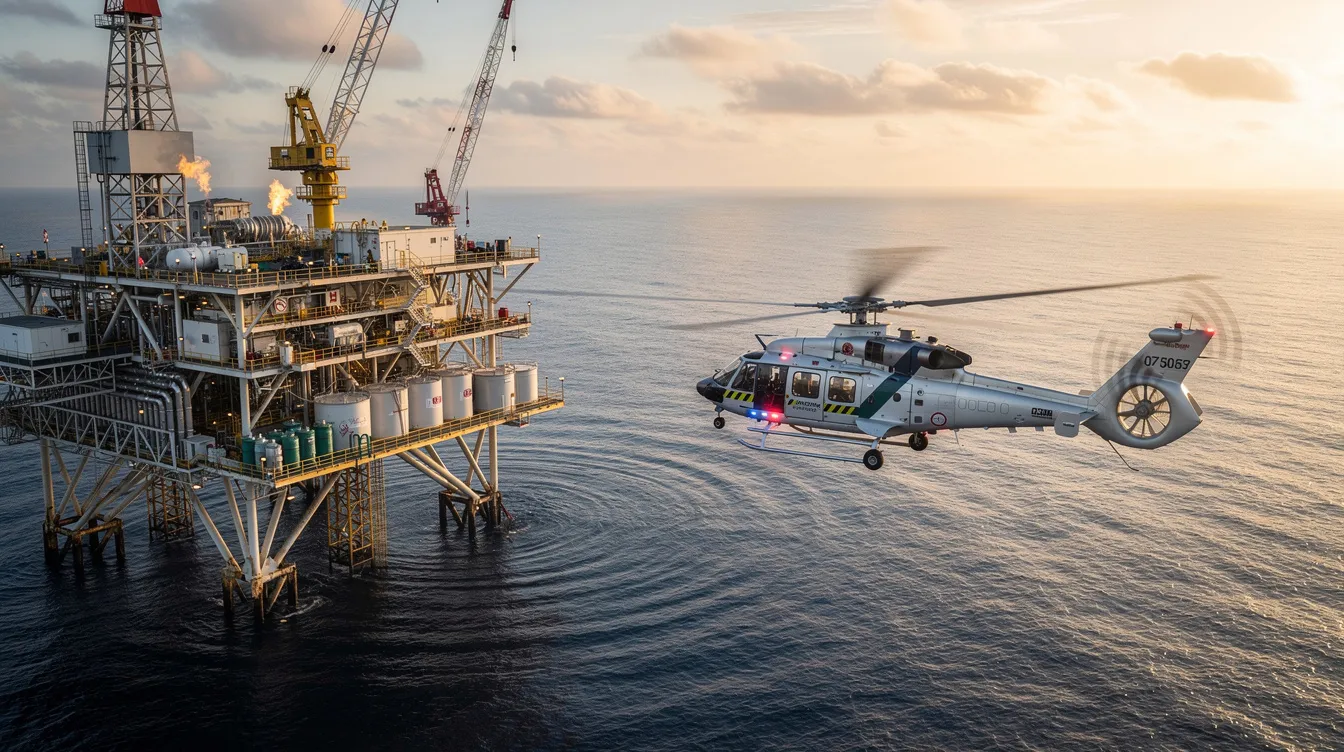
Twin-engine specs, IFR-capable avionics, and robust anti-corrosion measures are non-negotiable
AW139, Sikorsky S-76, and EC225/H225 have range and payload tuned for multi-hour over-water legs
Emergency and medical missions:
Rear clamshell doors, cabin volume, and power margins in the H145 or Bell 429 allow rapid patient loading and operations from hospital rooftops
These missions prioritize climb performance and the ability to fly and land in confined areas
On Jettly, users can describe their mission profile - distance, terrain, landing site constraints, passenger count - and the platform matches them to operators fielding helicopters with the right spec envelopes.
Jettly's inventory includes helicopters, private jets, and turboprops - so understanding how their specs compare helps travelers pick the right tool for the job, a topic explored in depth in overviews of charter airlines and private aviation options worldwide.
Key spec trade-offs:
Helicopters: slower cruise speeds (100–160 kt) and shorter ranges (often under 500 nm), but VTOL capability and direct point-to-point access without runways
Private jets: much higher cruise speeds (400+ kt) and ranges (1,000–7,000+ nm), but require airports with runways and supporting ground infrastructure.ure
For routes like New York–Miami or Toronto–Vancouver, fixed-wing jets are more efficient in speed and cost per mile, especially when booked through global broker networks such as Jettly’s Dexter Air Taxi private jet charter service. Helicopters excel on shorter links: city center to ski resort, yacht, or remote estate where no runway exists.
Cabin and weather differences:
Helicopters generally operate at lower altitudes and at ambient pressure, with more weather limitations
Jets and some turboprops climb above weather and provide pressurized cabins, improving comfort on longer legs
The most practical approach treats helicopters and jets as complementary alternatives on Jettly - helicopter for the "first or last 100 miles" and jet for the long trunk sector. For comparing costs, see How Much Does It Cost to Charter a Small Plane in 2026? Small Aircrafts: A Practical Guide, and a detailed guide to affordable aeroplane rental options and pricing factors.
Communities and regulators increasingly pay attention to environmental and noise specs, influencing heliport access and route planning around the world.
Fuel efficiency and emissions:
Modern turboshaft engines - such as the Safran Arriel series and Pratt & Whitney PT6 - have improved specific fuel consumption compared with older models
Lower fuel burn per seat-mile in newer medium twins reduces CO₂ output, a factor that functions as both a cost saving and an environmental benefit
Noise certification metrics:
External noise levels measured in decibels along takeoff and approach profiles determine whether a helicopter can operate at noise-sensitive locations
Features like Fenestron tail rotors, advanced blade design (swept or anhedral tips), and vibration control lower perceived noise on the ground
Examples:
Airbus H130 and H145 are advertised as "quiet" helicopters designed for tourism and urban operations with low noise footprints.
Newer models meet or exceed ICAO Chapter 8 and FAA Stage 3/4 noise limits, which were updated in September of the recent certification cycle.s
Some operators on platforms like Jettly participate in voluntary noise-abatement and carbon-offset programs, selecting routes and altitudes that reduce disturbance over populated areas.
This section serves as a practical guide to interpreting the spec tables buyers, pilots, and charter clients see on manufacturer websites, brochures, and booking platform page listings.
Recommended reading order:
Start with seating and payload - confirm it fits your group size and baggage
Check range and cruise speed - can the helicopter cover the intended distance without refueling?
Review engine and safety specs - number of engines, IFR capability, OEI performance
Examine cabin size, baggage capacity, and noise or vibration features
Caveats to accept when reading spec sheets:
"Up to" seating and range figures may assume no baggage and ideal conditions
MTOW and performance numbers usually refer to ISA conditions at sea level, so operators may derate in hot or high locations
Published range often excludes mandatory fuel reserves (typically 30–45 minutes), which further reduces usable distance.
Example walk-through - Airbus H145:
The H145 spec block shows MTOW of 8,378 lb, useful load ~4,200 lb, and recommended cruise ~130 kt. Range is listed at ~351 nm with standard fuel. The cabin fits up to 10 in utility layout or 6–7 in VIP configuration. Its twin Safran Arriel 2E engines provide strong OEI performance. In a real mission, subtract fuel for reserves, add passenger and baggage weight, then check hover OGE if landing at elevation. The sense of these numbers only becomes clear when stacked against a specific route and load.
Jettly users can apply these principles to compare helicopter options side-by-side with small jets or turboprops, deciding which aircraft type delivers the right mix of convenience, time savings, and price, much like pilots evaluating the best cross-country planes for different mission profiles.
These FAQs address common questions not fully covered above, focusing on practical concerns around choosing and comparing helicopters for travel, utility, and specialized missions.
Endurance is the maximum time a helicopter can stay airborne on a full fuel load under standard conditions - measured in hours and minutes. Range is the maximum distance it can cover in still air at a specified cruise setting while retaining required fuel reserves.
High-speed cruise may reduce endurance but cover more ground per hour, increasing point-to-point range. Slower, economical cruise maximizes time aloft, which is valuable for tasks like surveillance, photography, or search patterns. The first helicopter operators to classify these metrics separately helped shape how modern spec sheets present performance data.
Passengers rarely notice the tail rotor type directly but do experience its indirect effects: noise levels, vibration, and safety margins near obstacles. Fenestron and NOTAR systems are designed to reduce external noise and improve safety around people and ground crew, which makes a practical difference at tight urban heliports or yacht pads.
Conventional tail rotors remain extremely common and safe when operated correctly. The key for passengers is choosing certified operators with strong safety records rather than fixating on a specific anti-torque design. On Jettly's website, operator certifications and aircraft details help inform that decision.
Many helicopter models are multi-role platforms whose interiors can be reconfigured. Seats can be removed for cargo, medical equipment can be installed for patient transport, or a VIP interior with leather seating and soundproofing can be fitted for executive travel.
The Airbus H145 and Bell 429, for example, are commonly seen in both HEMS and corporate layouts using the same core airframe and performance specs. Operators on marketplaces like Jettly typically dedicate specific airframes to either VIP or utility roles, minimizing downtime between configuration changes.
Much of a military helicopter's gross weight and volume goes to non-passenger functions: armor, weapons, sensors, fuel, and mission systems. The AH-64 Apache carries only two crew but needs a large rotor system and fuselage to support targeting equipment, weapons pylons, and survivability features that enable it to operate under hostile conditions.
When similar airframes are adapted for civil use, the removal of military systems can free up payload and space for cargo or additional seats - something that has performed well in utility conversions worldwide.
A simple decision framework:
Choose a helicopter if you need to reach locations without runways - city centers, islands without airports, remote lodges, or yachts
Choose a light jet if both origin and destination have suitable airports and you value higher speed, lower noise, and a pressurized cabin.n
Consider group size, luggage, weather, and total travel time including ground transfers. A helicopter that lands you five minutes from your hotel may save more time than a faster jet that requires a 45-minute drive from the nearest airport. Compare options side-by-side using Jettly's search and quote tools at https://www.jettly.com.
Helicopter specs cover weight, power, rotor design, performance, and cabin configuration. These numbers vary dramatically between light trainers, VIP twins, heavy lifters, and military helicopters - and understanding them is the key to choosing the right aircraft.
The right helicopter type depends on mission details: distance, terrain, landing site constraints, passenger count, and regulatory or safety requirements. No single "best" spec number exists - what matters is how the full spec envelope aligns with the task at hand.
Jettly's digital platform makes it easier for travelers to compare helicopters against other aircraft categories, see transparent pricing tied to operating specs, and select aircraft that fit both schedule and comfort expectations, especially when paired with flexible private jet membership plans offering wholesale rates and priority access.
Ready to explore helicopter charter options or compare them with private jets for your next trip? You can enroll in Jettly’s jet card program with fixed hourly jet rates and premium benefits or leverage the platform’s ability to crowdsource flights and share empty private jet seats to reduce costs. Review available aircraft or request a tailored quote at https://www.jettly.com.
Share this post:
Jay Franco Serevilla
Jul 25, 2026
|
5
min read
Discover tips and trends in the industry.
5
min read
Airline Charter: How Private Charter Flights Work with Jettly
Airline charters provide travelers with the flexibility to choose their departure times, destinations, and aircraft, making them ideal for business and leisure travel. Jettly's platform connects users to over 20,000 aircraft globally, simplifying the booking process with instant pricing and no long-term commitments. This guide explores how private charter flights work and the advantages they offer over traditional scheduled flights.
Read More
5
min read
Ontario, CA to Carson, CA by Private Jet: Route Guide, Airports, and Travel Options
Traveling from Ontario, CA to Carson, CA offers various options, including driving, public transit, and private aviation. While driving is the most common method, private jets can significantly reduce travel time when combined with ground transfers. This guide provides insights into travel times, costs, and the best airports for a seamless journey.
Read MoreStay updated with our latest insights and tips to elevate your journey with us.
MEMBERSHIPS AND ASSOCIATIONS



Disclaimer: Jettly operates as a charter broker, offering access to a global digital jet charter marketplace. Jettly is not a direct air carrier and does not own or operate aircraft. All advertised flights are conducted by third-party air carriers that are fully licensed and hold the appropriate Part 135 or Part 121 certifications issued by the Federal Aviation Administration (FAA) or equivalent regulatory authorities under U.S. or foreign law. Jettly complies fully with the U.S. Department of Transportation's Part 295 and Part 298 Charter Broker regulations. Jettly does not carry additional liability insurance. Passengers are covered by aircraft operator insurance. TICO: 50023770


