


Login
Get Instant Pricing On 23,000+ Aircraft

>
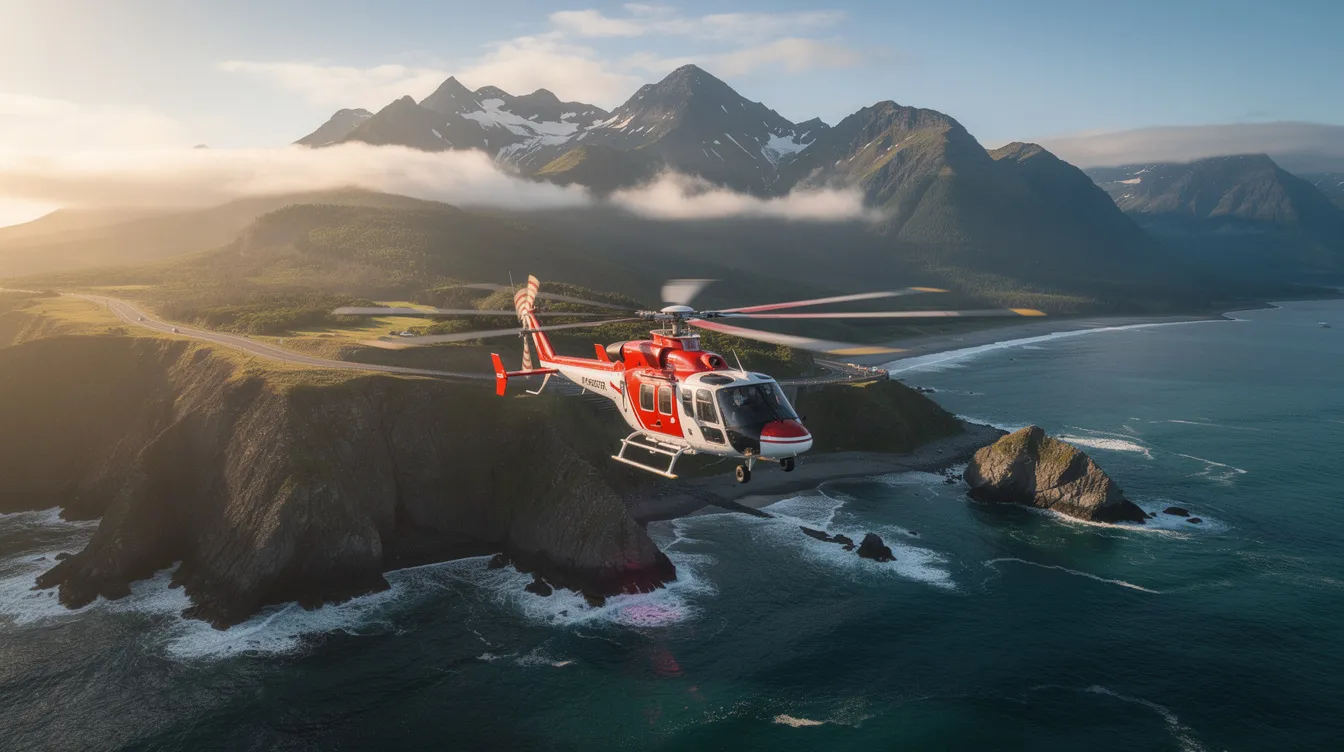
Most travelers booking a helicopter for the first time have one straightforward question: how long will the flight actually last? This guide is for travelers, charter clients, and aviation enthusiasts seeking to understand how long helicopter flights last and what factors influence duration. Knowing what affects helicopter flying time helps you plan trips, avoid surprises, and get the most value from your charter experience. The flying time of a helicopter depends on atmospheric conditions, weight, and operation. Flying time is affected by the actual trip route and external conditions as a combined equation. This guide breaks down helicopter flying time from every angle, covering sightseeing loops, point-to-point transfers, distance benchmarks, and the difference between what operators quote and what passengers actually experience in the air.
A quick answer on helicopter flight time: short sightseeing flights run 15–20 minutes, signature city tours land around 20–30 minutes, and longer transfers or scenic routes push past 45–60 minutes. Jettly offers a fast way to compare helicopter and fixed-wing options for any route.
When operators quote "helicopter flight time," they usually mean rotor turning time from start-up to shutdown. Airborne time, the portion passengers feel most, is a few minutes shorter because it excludes boarding, safety briefings, and the shutdown process on the ground.
Most people find 20–30 minute sightseeing flights the sweet spot for value and visual impact. Flights of 45–60 minutes or more suit point-to-point transfers, island hops, or serious aviation enthusiasts chasing extended airborne hours.
Distance, weather, aircraft type, and payload all change real-world flight duration and range. A 40 km helicopter flight takes about 15 to 20 minutes, while a helicopter covers 100 km in 23–27 minutes under standard conditions.
Explore private helicopter and jet charter options through Jettly to get indicative flight times and transparent pricing for specific routes.
Here is the quick answer. For a typical charter leg of around 100 km, expect roughly 23–27 minutes airborne. Stretch that to 300 km and the airborne time climbs to about 1 hour and 20 minutes. A fast helicopter covers about 86 miles in 30 minutes, which gives a practical feel for the pace.
The key difference passengers should understand is airborne time versus total trip time. Airborne time runs from lift-off to touchdown. Total trip time adds 10–15 minutes on each end for boarding, a safety briefing, engine start-up, hover checks, approach, and shutdown. A "25-minute flight" often means closer to 50–55 minutes from the moment you arrive at the heliport to the moment you step away at your destination.
Matching flight duration to purpose helps set the right expectations. A 15–20 minute flight works well for a first flight experience or a quick thrill ride. Flights of 20–30 minutes are the backbone of sightseeing flights over major cities and coastlines. And 45–60 minutes or longer suits transfers between cities or multi-stop business itineraries. For example, a hop from downtown Los Angeles to Santa Monica might take under ten minutes airborne, while Nice to Saint-Tropez runs closer to 20–25 minutes.
Jettly's platform can show indicative helicopter flight time alongside fixed-wing alternatives for the same route, and tools like its airport locator for private flights make it easy to weigh speed, access, and cost in one place.
The definition of "flight time" matters more than most passengers realize. Pilots, operators, and maintenance teams each track it differently because it drives billing, logbook records, safety scheduling, and insurance.
Helicopter flight time, in standard aviation usage, is basically the period from the moment the rotor begins turning at start-up to the moment it stops at shutdown. This is sometimes called block time or rotor time, and it captures everything the aircraft does while powered. The flying time of a helicopter depends on atmospheric conditions, weight, and operation.
Airborne time is a narrower measure. It covers only the window between take-off and landing, the point where the helicopter leaves the ground to the point it touches down. In many cases, airborne time runs three to eight minutes shorter than recorded helicopter flight time because it strips out ground-level engine run, hover taxi, and post-landing cool-down.
Hobbs time is an instrument-based log driven by a meter tied to engine operation. Many operators use it for maintenance intervals and charter billing because it closely mirrors block time. The difference between Hobbs time and airborne time matters most for pilots and mechanics. For passengers, the rounded "flight time" on a charter quote is usually all they need to see.
Choosing helicopter flight time by outcome rather than minutes alone leads to a better experience. A 15-minute flight serves a very different purpose than a 60-minute one, even if both involve the same aircraft.
10–15 minutes. These quick city circuits are ideal for nervous first-timers or as an add-on to a lunch reservation. They cover a tight loop over a downtown core or harbor. Flight training schools also use this duration for introductory lessons. The airborne time is short, but the adrenaline is real.
20–30 minutes. This is the range where most people feel they have had a proper helicopter flight. Signature tours over the New York skyline, Dubai's Palm, or Vancouver's harbor fit here. There is enough time to settle in, take photos, hear narration, and absorb the views without feeling rushed.
30–45 minutes. Longer scenic loops, winery landings, or proposal flights fall into this bracket. The extra minutes allow the pilot to reach more remote terrain or circle additional landmarks.
45–60+ minutes. Business shuttles between nearby cities like London to Birmingham, island-hopping in Greece, or glacier approaches in Alaska demand this kind of flight duration. These flights often replace ground journeys of several hours.
90+ minutes. Extended multi-point itineraries, remote location access, or dedicated aerial photography sessions. At this length, group size, cabin comfort, and reserve fuel planning become more important considerations.
Helicopter flight time is primarily determined by distance divided by planning cruise speed, then adjusted for routing and real-world conditions.
Planners begin with the straight-line, or great-circle, distance between the origin and destination coordinates. They then add extra track miles for controlled airspace near a major airport, terrain avoidance in mountainous areas, and noise-sensitive zones that require lateral detours.
Typical planning cruise speeds vary by aircraft type. Light single-engine models like the Robinson R44 cruise at about 110–130 knots, or roughly 220–260 km/h. Larger twin-engine helicopters reach 140–150 knots (260–280 km/h). Most civilian helicopters cruise at speeds between 100 and 170 mph, with typical cruising speeds for helicopters falling around 95 to 160 mph depending on the model.
Applying optimal cruising speeds maximizes a helicopter's endurance, which is why operators optimize route, speed, and altitude for fuel efficiency and plan around a specific power setting rather than pushing top speed. For a deeper dive into how far different rotorcraft can really go, including typical ranges by category, see this discussion of helicopter range and influencing factors. Hovering, by contrast, requires significantly more power compared to forward flight, which is one reason hover time is minimized during transit legs.
Headwinds, temperature, elevation, and payload all influence real-world speed, so operators quote a time window rather than a precise minute count. Charter quotes usually reflect rounded block or rotor time, which includes start-up, hover checks, and approaches in addition to pure airborne minutes.
This section serves as a practical planning guide. The estimates below assume a light-to-medium helicopter in fair weather with a moderate load.
|
Distance |
Approximate Airborne Time |
Door-to-Door Estimate |
|---|---|---|
|
50 km |
12–15 minutes |
~30 minutes |
|
100 km |
23–27 minutes |
~40 minutes |
|
200 km |
45–55 minutes |
~1 hour |
|
300 km |
1 h 10–1 h 20 |
~1 h 30 |
|
500 km |
1 h 55–2 h 15 |
~2 h 30 (may need refueling) |
|
1,000 km |
3 h 50–4 h 30 |
4–5+ hours with at least one fuel stop |
Passengers should add roughly 10–15 minutes at each end for boarding, safety briefing, start-up, and shutdown when estimating total journey time.
A helicopter can fly 500 km non-stop with a light load, but heavier configurations or hot conditions may force a fuel stop. Most standard helicopters can fly for about 2.5 hours or 250 to 400 miles before needing to refuel. A typical light utility helicopter can achieve a maximum endurance of roughly 3 hours, while real-world range for helicopters is commonly about 2 to 5 hours under typical conditions.
For perspective, most helicopters have a range of 250 to 500 miles. Light civilian helicopters typically range from 200 to 350 miles. Medium civilian helicopters can achieve ranges of 300 to 450 miles. Heavy-lift helicopters can range from 400 to 800 miles. Military models push even further, with some military helicopters reaching ranges up to 1,200 miles. The longest non-stop helicopter flight on record covered 2,213 miles.
A three-hour road journey along a congested coastal route can often shrink to a 20–30 minute helicopter flight. Real corridor examples include Monaco to Courchevel (roughly 45 minutes airborne) and Miami to Bimini (around 30 minutes over open water). When comparing itineraries like these, understanding helicopter rental costs and pricing factors helps you balance time savings against budget.
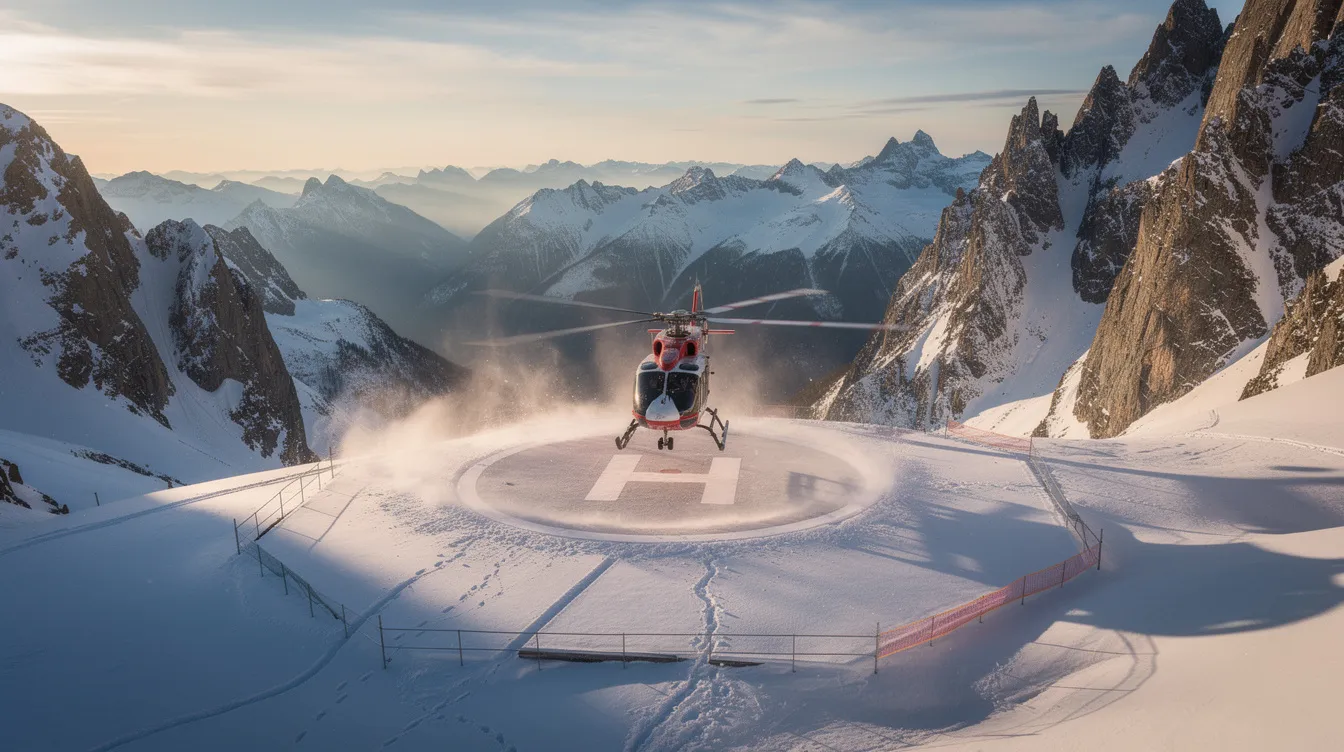
The flying time of a helicopter depends on atmospheric conditions, weight, and operation as a combined equation. Flying time is affected by the actual trip route and external conditions. Calculator results are estimates. The actual helicopter flight time on any given day depends on several operational factors that can shift arrival times.
Weather. Wind speed and direction influence helicopter flight time directly. Headwinds can increase airborne time by 10–15%, while low clouds or storms force route detours that add lateral distance. Wind can alter helicopter ground speed and affect trip duration significantly on longer legs. Icing conditions at altitude may force lower, slower routing.
Temperature and altitude. Higher altitude and temperatures reduce air density, affecting performance. Density altitude reduces air density and lift, increasing fuel consumption rates. Hot conditions can reduce engine power and increase fuel burn by up to 30%. Humidity also impacts helicopter hovering and takeoff performance, especially at elevated airfield locations.
Payload and fuel. Fuel weight and payload affect a helicopter's power requirements and endurance. More passengers and luggage can reduce range or force a refueling stop. Heavier helicopters consume fuel faster due to higher power demands, while lighter loads allow faster climbs and more direct routings. The flying time of a helicopter depends on atmospheric conditions, weight, and operation as a combined equation.
Airspace and terrain. Controlled zones near major cities, mountain passes, and noise-sensitive areas add lateral distance and minutes to a leg. Flying time is affected by the actual trip route and external conditions, and helicopter trip time can be influenced by routing and weather conditions simultaneously.
Ground delays. Scheduled traffic at heliports or busy airports can add a few minutes of hover or taxi waiting, subtly extending block and Hobbs time even if airborne time stays the same.
The difference between a sightseeing flight and a transfer flight shapes everything from route design to how long you spend airborne.
Sightseeing flights maximize views rather than distance. The pilot orbits landmarks, adjusts altitude for photo angles, and follows scenic corridors. Airborne time typically sits in the 15–45 minute range over compact areas like Manhattan, the Grand Canyon rim, or the French Riviera coast. Helicopter tour pricing reflects this focus on experience rather than efficiency, and some travelers reduce costs further by crowdsourcing private flights and sharing empty seats on select routes.
Transfer flights are the opposite. They prioritize door-to-door speed with direct routes, minimal orbiting, and optimized climb and descent profiles. Executives use them to connect airports and city centers, reach remote villas, or hop between islands. A 25-minute New York skyline tour is a fundamentally different product from a 40-minute Milan-to-Portofino transfer that replaces a three-hour ground journey.
Jettly can display both helicopter and private jet options for the same itinerary, helping travelers decide when a helicopter's shorter sector time and flexible landing locations provide more value than a jet's cabin space and cruise speed.
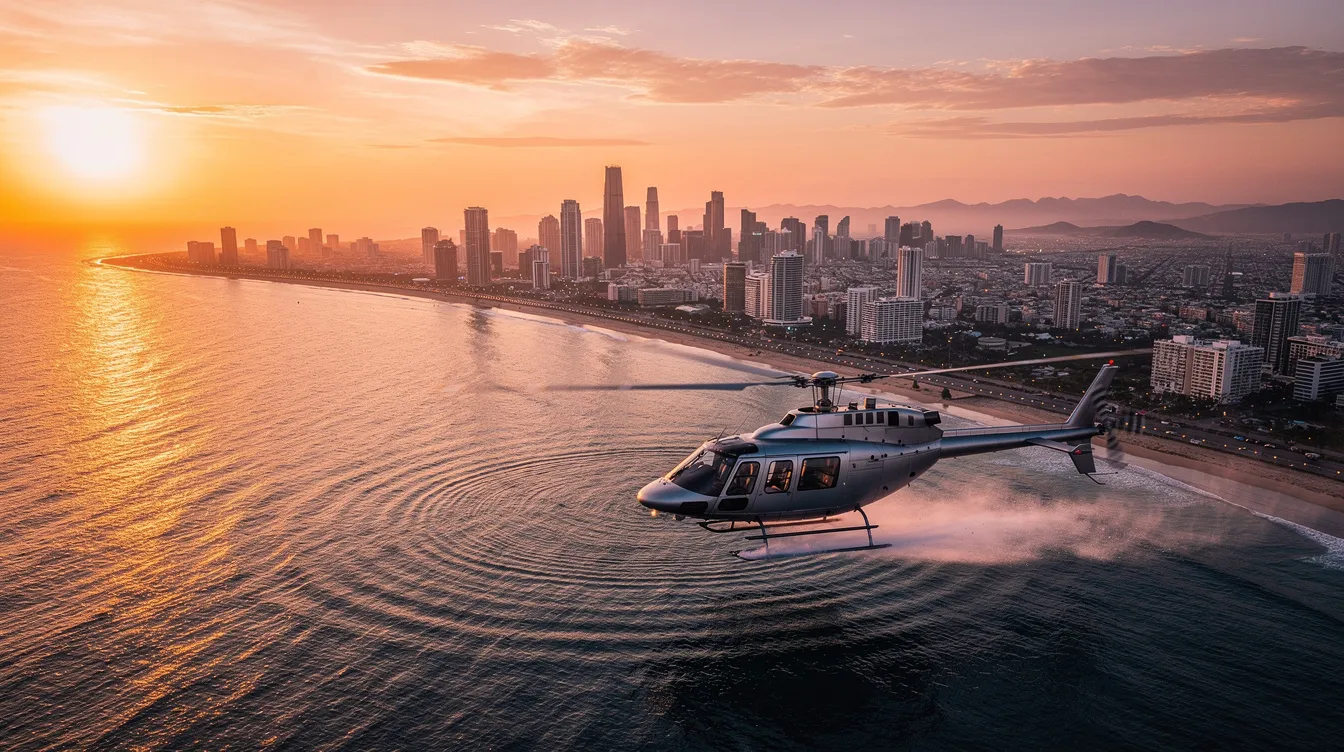
For pilots, helicopter flight time is more than an experience metric. It is a regulated measure that determines license eligibility, insurance thresholds, and career progression.
Aviation authorities like the FAA and EASA treat helicopter flight time as rotor turning time, and this is what appears in a pilot's log. The FAA requires a minimum of 40 hours for a Private Pilot Licence in helicopters, while EASA sets the bar at 45 hours. In practice, most students need 60–80 hours before they are ready for a checkride. A Commercial Pilot Licence requires 150 or more hours, and an ATP-Rotorcraft certificate demands at least 1,200 total flight hours.
The first step for aspiring pilots is often a time-building block, purchasing helicopter flight training hours in bundles of 10, 20, or 50 hours to consolidate skills. Understanding helicopter license costs and pilot lesson pricing helps students plan their budgets realistically.
While Jettly's primary focus is private charter rather than flight training, understanding how flight time is logged helps passengers appreciate why pilots are so disciplined about airborne time, Hobbs time, and duty limits. That discipline is a direct contributor to safety.
Helicopters usually win on short routes and direct access. Private jets win on longer sectors in terms of speed and cabin comfort. The crossover point sits at roughly 250–300 km.
Helicopters typically fly at speeds of 220–260 km/h, while light and midsize jets routinely cruise at 700–850 km/h. That speed gap means jets cover a 1,000 km leg in under 90 minutes, whereas a helicopter would need nearly four hours plus a fuel stop.
Helicopters excel for island-to-island hops in Greece, ski resort access in the Alps, or city-center transfers that skip the long drive from a distant airport. If you arrange your own helicopter or charter one for these short sectors, the time savings over ground transport are enormous.
Jets are the better choice for cross-country trips like New York to Miami or Toronto to Vancouver, where helicopters would need multiple fuel stops and several hours of airborne time. For those distances, airplanes simply deliver passengers faster and with more power to spare, especially if you choose a cross-country aircraft optimized for range and speed rather than a short-hop helicopter.
Jettly's global marketplace allows users to compare helicopter flight time against private jet time and pricing on the same route, offering a clear view of the trade-offs between speed, access, and price, while its private jet charter cost estimator lets you approximate fixed-wing pricing in seconds.
Jettly is a digital private aviation platform that connects travelers with a large network of helicopters and fixed-wing aircraft worldwide. The process is designed to be fast and transparent.
Planning typically starts with choosing a route, date, passenger count, and mission type, whether that is sightseeing, a one-way transfer, or a multi-leg business itinerary. Once those initial details are submitted, Jettly handles the rest. Jettly's instant pricing and inventory search can provide indicative helicopter flight time, available aircraft types equipped for the mission, and approximate cost ranges for each option, drawing on a global fleet of private charter aircraft across multiple categories.
A family might book a 30-minute sightseeing flight over Vancouver, while an executive team arranges a 45-minute shuttle between Geneva and Courchevel. In both cases, the platform handles seat availability, operator vetting, and the plan for how many passengers and how much luggage the helicopter can carry on a given leg, and frequent flyers can streamline this planning even further through flexible private jet memberships.
Misjudging helicopter flight time can mean missed connections, rushed meetings, or a disappointing sightseeing experience. Here are the errors that come up most often.
Assuming car time equals helicopter time. Helicopters follow more direct lines, but they also have start-up and shutdown phases. A 90-minute drive might become 20 minutes airborne, but the door-to-door journey is closer to 45–50 minutes once ground elements are included.
Underestimating ground time. Briefings, boarding, refueling, and ground transfers between heliports and final destinations add up. In many cases, these ground elements account for nearly as much time as the flight itself.
Booking too short. Some travelers book an 8–10 minute sightseeing flight expecting an hour-long experience. The delay between expectation and reality causes frustration. Always confirm whether the listed duration is pure airborne time or the full gate-to-gate experience.
Ignoring weather and seasonal factors. A flight plan built around summer conditions may not hold in winter. Wind, visibility, and temperature all shift expected arrival windows.
The best approach is to check with a charter specialist or use digital tools like Jettly's platform and support team to get realistic ranges for both airborne time and door-to-door timing before committing, and to reference guides to affordable private jet charter pricing when comparing helicopter options with fixed-wing alternatives.
These FAQs address common questions not fully covered elsewhere in the article, focusing on practical concerns for travelers and aspiring pilots.
For travelers deciding between a short helicopter loop and a longer private jet sector, it can also help to understand the broader landscape of private and charter airlines that service popular routes.
Most urban sightseeing flights advertise airborne time only. A "20-minute helicopter flight" means 20 minutes in the air, but total experience time at the heliport may run 45–60 minutes including the safety briefing, boarding, and post-flight photos. The global average price for a 25–35 minute scenic tour is about USD $342 per person. Always read product descriptions to confirm whether duration refers to helicopter flight time or gate-to-gate experience time.
If you frequently book short helicopter hops alongside longer jet legs, comparing billed time against a jet card flight cost estimator can clarify when a membership-style program makes better financial sense.
Charter billing usually follows Hobbs or block time, which starts when the helicopter is powered and the rotor begins turning, not strictly at lift-off. For simple point-to-point flights, billed time will be very close to quoted helicopter flight time. Holding, delay, or repositioning legs may be billed separately depending on the contract.
Travelers who anticipate regular schedule changes may prefer the flexibility of corporate jet card programs, which can simplify how last-minute extensions and minimums are handled on jet segments.
Extensions are sometimes possible if the aircraft schedule, crew duty limits, and fuel reserves allow, but they should not be assumed during busy seasons or at slot-constrained locations. Request any extension in advance when booking, or confirm the flexibility with the operator before departure.
On routes where you might otherwise rely on a fractional ownership provider, exploring a NetJets alternative like Jettly can show how on-demand and membership models affect availability and response times for night operations.
Night helicopter flights may be slightly longer due to more conservative routes, additional checks, or instrument procedures at certain airports and heliports. Only suitably equipped helicopters operated by instrument-rated crews can fly at night, which influences availability and pricing more than pure flight time.
Destination-specific pages like Jettly's guide to private jet charter in Kolkata are also useful for understanding how local airport options and congestion might influence both helicopter and jet sector minimums.
The same applies in international markets, where resources such as its Hyderabad private jet charter overview outline how regional operators structure minimum times and routing.
If your helicopter segment is part of a larger trip into a specific city, local guides like Jettly's private jet charter services in Houston can help you coordinate airport choices and ground transfers around those minimums.
Helicopter flying time varies widely depending on distance, weather, aircraft type, and operational factors. Understanding the difference between airborne time and total trip time helps travelers set realistic expectations. Short flights of 1520 minutes offer thrilling introductions or quick sightseeing, while 2030 minutes provide a balanced experience for city tours. Longer flights beyond 45 minutes are ideal for transfers, island hops, or immersive scenic journeys. Jettly's platform simplifies planning by offering transparent helicopter flight times alongside fixed-wing options, helping travelers choose the best solution for their itinerary. Whether for business or leisure, knowing how long your helicopter flight should really be ensures you maximize convenience, value, and enjoyment.
Ready to plan your next flight? Explore helicopter charter options and get a personalized quote at https://www.jettly.com.
Share this post:
Jay Franco Serevilla
Aug 30, 2026
|
5
min read
Discover tips and trends in the industry.
5
min read
When to Book Domestic Flight: Timing, Price Trends, and Private Jet Alternatives
Knowing when to book domestic flights can lead to significant savings, with optimal booking windows typically between 34 to 86 days before departure. Factors such as route type, travel dates, and seasonality play crucial roles in determining airfare prices. Additionally, private jet alternatives like Jettly can provide flexibility and value, especially for last-minute trips or multi-stop itineraries.
Read More
5
min read
US Fighter Jets: History, Technology, and Their Role in Global Security
US fighter jets have undergone significant evolution since 1945, transitioning from early subsonic models to advanced fifth-generation aircraft like the F-35. These jets play a crucial role in maintaining air superiority and global security, while also driving economic growth and technological advancements in civil aviation. The ongoing development of sixth-generation fighters promises to further enhance the capabilities of the US military and its allies.
Read MoreStay updated with our latest insights and tips to elevate your journey with us.
MEMBERSHIPS AND ASSOCIATIONS



Disclaimer: Jettly operates as a charter broker, offering access to a global digital jet charter marketplace. Jettly is not a direct air carrier and does not own or operate aircraft. All advertised flights are conducted by third-party air carriers that are fully licensed and hold the appropriate Part 135 or Part 121 certifications issued by the Federal Aviation Administration (FAA) or equivalent regulatory authorities under U.S. or foreign law. Jettly complies fully with the U.S. Department of Transportation's Part 295 and Part 298 Charter Broker regulations. Jettly does not carry additional liability insurance. Passengers are covered by aircraft operator insurance. TICO: 50023770


