



Login
Get Instant Pricing On 23,000+ Aircraft

>
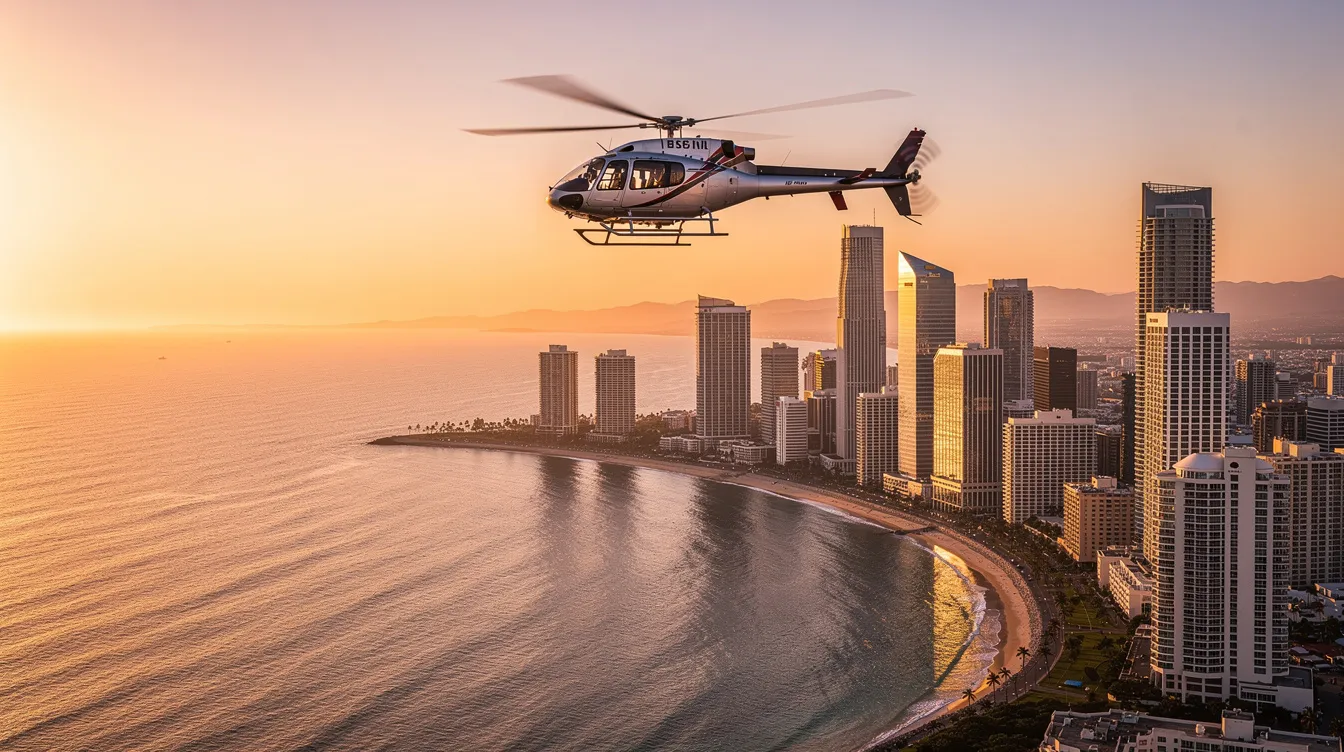
Helicopter flying time is one of the most common questions travelers ask before booking a charter, and the answer depends on more than just distance. This post breaks down what helicopter flight time really means, how it's calculated, and what to expect across common trip types, from quick sightseeing loops to longer intercity transfers.
Helicopter flight time is measured from rotor start to rotor stop, making it slightly longer than pure airborne time from takeoff to landing. Airborne time is typically 3–8 minutes shorter than total flight time.
A 50 km helicopter flight takes about 12–15 minutes in the air, while a 200 km trip often takes 45–55 minutes. Total trip time extends by 10–15 minutes for boarding, safety briefings, and shutdown.
Accurate flight planning accounts for fuel consumption, weather conditions, payload, and route constraints, all of which shift real-world helicopter flight time estimates.
Typical flight durations range from 10 to 45 minutes for sightseeing to 60 minutes or more for charters.
Jettly's platform helps travelers compare helicopter flight time with private jet and turboprop options for the same route.
Helicopter flight time for most charter trips falls between 10 minutes and two hours, depending on distance and aircraft type. Here are concrete examples that most passengers find useful:
New York City to the Hamptons (~150 km): roughly 35–40 minutes airborne, about 55–65 minutes total door-to-door.
London Battersea to Heathrow (~30 km): approximately 10–12 minutes airborne, 30–40 minutes total with ground process.
Los Angeles (Burbank) to Palm Springs (~180 km): around 45–50 minutes airborne.
A 25-minute flight often totals 50–55 minutes door-to-door once you account for arrival at the helipad, a safety briefing, rotor start, and shutdown at the other end.
Quoted flight time on a charter itinerary normally reflects block time (rotor turning), not just the airborne segment. A flight calculator or charter platform can provide quick planning estimates for specific routes or a round trip, but actual times vary with weather and routing. Jettly shows indicative helicopter and private jet flight times side by side when a user searches a trip.
Helicopter flight time sounds simple, but regulators such as the FAA, operators, and passengers may define and log it differently. According to ICAO's definition, flight time for helicopters runs from the moment the rotor blades start turning until they come to a complete stop at the destination.
In most charter scenarios, helicopter flight time equals block time or rotor time. Here's how the three common measures differ:
Flight time (block/rotor time): used for billing and schedule planning. Covers engine start through shutdown.
Airborne time: takeoff to landing only. This is the figure tied to cruise speed and distance calculations. Airborne time excludes ground operations like boarding and shutdown.
Hobbs time: an engine meter reading operators log for maintenance tracking and internal cost accounting.
For a 30-minute quoted flight, airborne time may be only 22–26 minutes. The rest is spent on engine run-up, hover transition, taxi, and shutdown. Pilots record these details in their logbook for training and record-keeping, but travelers mostly need to know the block time figure to plan the rest of their schedule.
Choosing the right helicopter flight time matters more than the specific model for most leisure and business trips. Helicopter flight durations vary significantly depending on the purpose of the trip. Here are common duration bands and what they suit best:
10–15 minutes: first-time flyer experiences, quick skyline loops, short airport-to-city heliport hops. Short sightseeing flights last 15–20 minutes, and even emergency medical services flights typically last 15 to 30 minutes in metro areas.
20–30 minutes: sightseeing and city tours typically last 15 to 30 minutes. Think classic landmark flights over Manhattan or Monaco–Nice transfers. Point-to-point transportation usually runs 20 to 45 minutes.
30–45 minutes: regional tours like Napa Valley vineyards from San Francisco, or intercity hops under 150 km.
45–60+ minutes: extended scenic tours range from 45 to 60 minutes. City-to-resort transfers, island hopping in Greece or the Caribbean, or trips from Toronto to Muskoka. Corporate charters can last longer than 60 to 90 minutes.
90+ minutes: long point-to-point missions that may approach fuel limits. Typical helicopter flights last about 10 minutes for quick tours to several hours for specialized missions, so these longer segments require careful planning, pricing awareness for helicopter rental costs, and potential refueling stops.
Planned helicopter flight time combines distance, typical cruise speed, routing, and operational buffers for accurate flight planning. Helicopter flight time is calculated by distance divided by speed, then adjusted for real-world factors.
Cruising speeds for helicopters range from 95 to 160 mph, depending on the aircraft type:
Light single-engine helicopters (Robinson R44, Airbus H125): roughly 110–130 knots (205–240 km/h).
Twin-engine corporate helicopters (AW109, H145): approximately 140–155 knots (260–285 km/h), comparable in role to light utility models like the Eurocopter EC30.
Worked example: A 100 km route planned at 220 km/h gives a base airborne time of about 27 minutes. Adding a 10% buffer for headwinds and indirect routing pushes the estimate to roughly 30 minutes airborne. Layer on rotor start and shutdown, and the total quoted block time reaches 40–45 minutes. A 100 km helicopter flight takes about 23–27 minutes of pure airborne time.
Professional operators use dispatch software that combines routing data, airspace constraints, and fuel consumption assumptions to refine these estimates beyond simple division.
The values below are planning figures for good weather conditions and average payload. Real-world helicopter flight time can shift based on wind, weight, and routing.
50 km: about 12–15 minutes airborne, 25–30 minutes total including boarding and checks. Total trip time includes 10–15 minutes for ground processes.
100 km: roughly 23–27 minutes airborne, 35–45 minutes total.
200 km: about 45–55 minutes airborne, around 1 hour total with start-up and shutdown.
300 km: a 300 km flight lasts approximately 1 hour and 20 minutes airborne, roughly 1h30 total. Some aircraft begin nearing fuel stop range at this distance.
400–500 km: often 1h45–2h30 airborne, frequently requiring at least one refueling stop. Helicopters can fly 500 km non-stop with a light load, but most light-to-mid utility helicopters have a maximum range of about 250 to 400 miles. Typical non-stop helicopter flights last between 2 and 3 hours.
For context, a taxi from Manhattan to JFK during rush hour can take 60–90 minutes, while a helicopter can skip much of that road traffic and long surface transfer time, covering about 20 km in roughly 7–10 minutes airborne. That kind of efficiency is where helicopter transfers earn their keep.
Jettly displays indicative flight time ranges for each aircraft option returned in a search, so travelers can quickly compare choices.
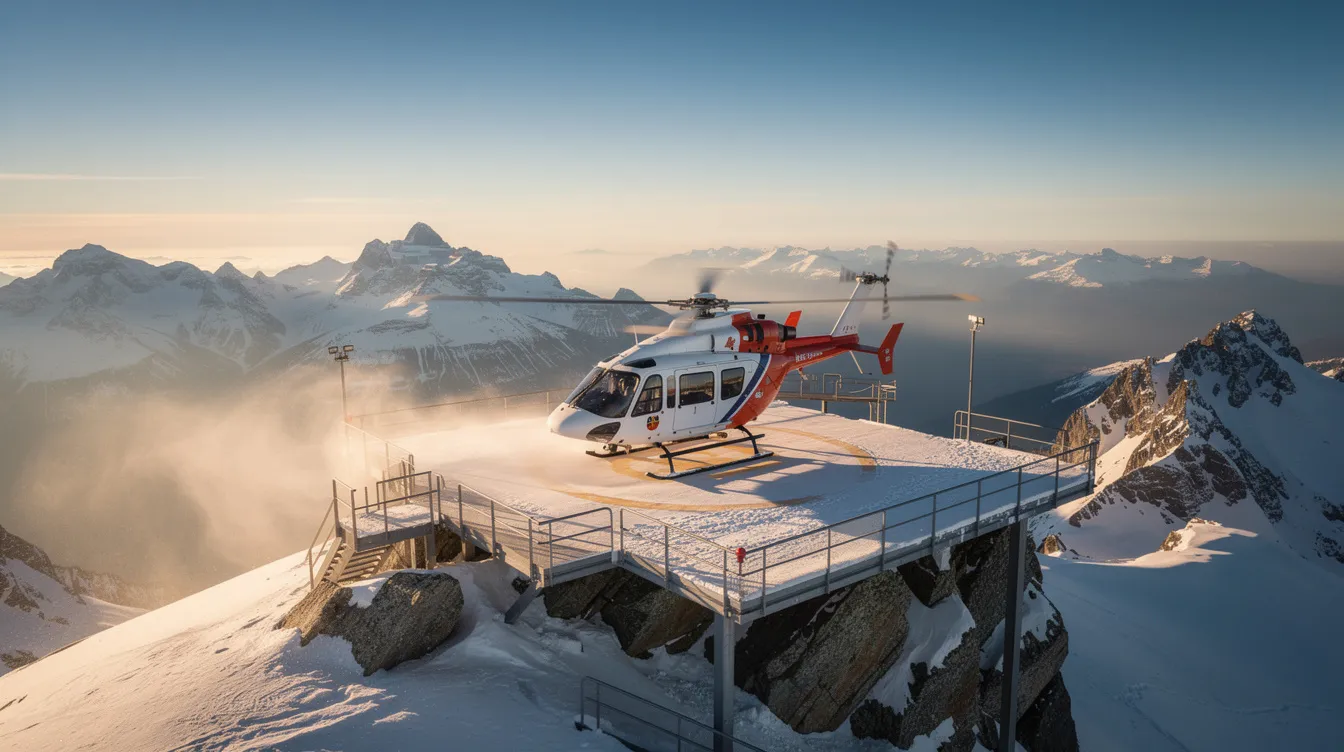
Estimated helicopter flight time is sensitive to environmental and operational variables, including regulatory limitations. The same aircraft flying the same route on two different days can log noticeably different times. Here are the key factors:
Weather and winds: helicopters are heavily impacted by weather and air traffic conditions. Strong headwinds can significantly reduce a helicopter's ground speed and increase travel time. Wind speed can increase flight time by 10–15%. Low cloud or storms may require longer, indirect routes.
Temperature and altitude: higher temperatures can increase fuel consumption by up to 30%. Hot, high, or humid conditions reduce air density and lift, sometimes pushing pilots to accept lighter loads or slower climbs at higher altitudes.
Payload and fuel: payload and weight impact helicopter performance and fuel efficiency. More passengers and luggage increase fuel burn. Payload affects a helicopter's power requirements and endurance, so operators may reduce fuel load and add a fuel stop on heavy flights. For details on passenger capacity by model, seating configuration matters.
Airspace and terrain: controlled airspace can add lateral distance to flight routes. Noise-sensitive areas and mountainous terrain can force indirect routing.
Ground delays: heliport congestion, slot restrictions, and security checks may extend total trip time. Ground delays can add minutes to total flight time even when airborne time is unchanged.
A summer afternoon departure from a high-altitude point like Aspen, where density altitude and traffic combine, can easily add 10–15 minutes to the plan. Accurate flight planning must account for these factors to avoid underestimating helicopter flight time.
Time, distance, and fuel usage are tightly linked and directly affect charter pricing, so understanding one flight cost in detail helps contextualize how helicopter block time translates into a final invoice. Operators plan fuel burn per hour for each helicopter type, and some travelers reduce per-seat expense by using crowdsourced private jet flights and shared empty seats on similar routes. A typical single-engine turbine burns roughly 140–170 kg/hour, while a twin-engine helicopter depends on the model and may burn 250+ kg/hour, similar to how private jet operating costs scale with aircraft size and mission profile.
Charter pricing is usually based on hourly helicopter flight time measured as block time. Longer transfers and point-to-point charters under slower conditions increase total costs, and understanding typical helicopter rental costs by model and region helps set realistic budgets. Minimum billing policies are common: many operators require at least 30 minutes or even several hours of billable time per day, similar to how jet card flight cost estimators factor in minimums and program rules on the fixed-wing side.
Accurate flight planning and use of a flight calculator or private jet charter cost estimator help estimate both flight time and fuel needs, reducing the risk of extra fuel stops or schedule disruption. For a deeper look at what drives helicopter flight costs, Jettly's platform presents estimated flight time alongside indicative pricing, helping travelers see how an extra 20–30 minutes of helicopter time compares with a short private jet sector on the same itinerary or with more affordable private jet charter strategies on similar routes.
Helicopters and fixed-wing aircraft serve complementary roles. Helicopters specialize in short, direct routes to locations where airplanes can't land, while private jets and turboprops excel on longer distances or affordable aeroplane rental arrangements for cross-country travel.
Cruise speed comparison tells most of the story:
Modern helicopters: roughly 200–260 km/h.
Light jets: approximately 650–750 km/h.
Large cabin jets: around 800–900 km/h.
Route examples show where each wins and how to think about the best cross-country plane for your travel journey:
New York–Boston (~300 km): helicopter takes about 1h10–1h20 airborne versus a light jet at 35–40 minutes. But the jet adds airport ground time.
Geneva–Courchevel: a helicopter flight saves hours of mountain driving despite the lower cruise speed. No runway needed at the resort end.
Toronto–New York (~550 km): a private jet clearly outperforms on total travel time and comfort. Flight times may need to consider fuel stop requirements on longer journeys by helicopter.
Jettly allows users to compare helicopter flight time and jet flight time for the same city pairs using its global private charter aircraft network. For many itineraries, the optimal solution combines both: jet for the main sector and helicopter for the final short transfer.
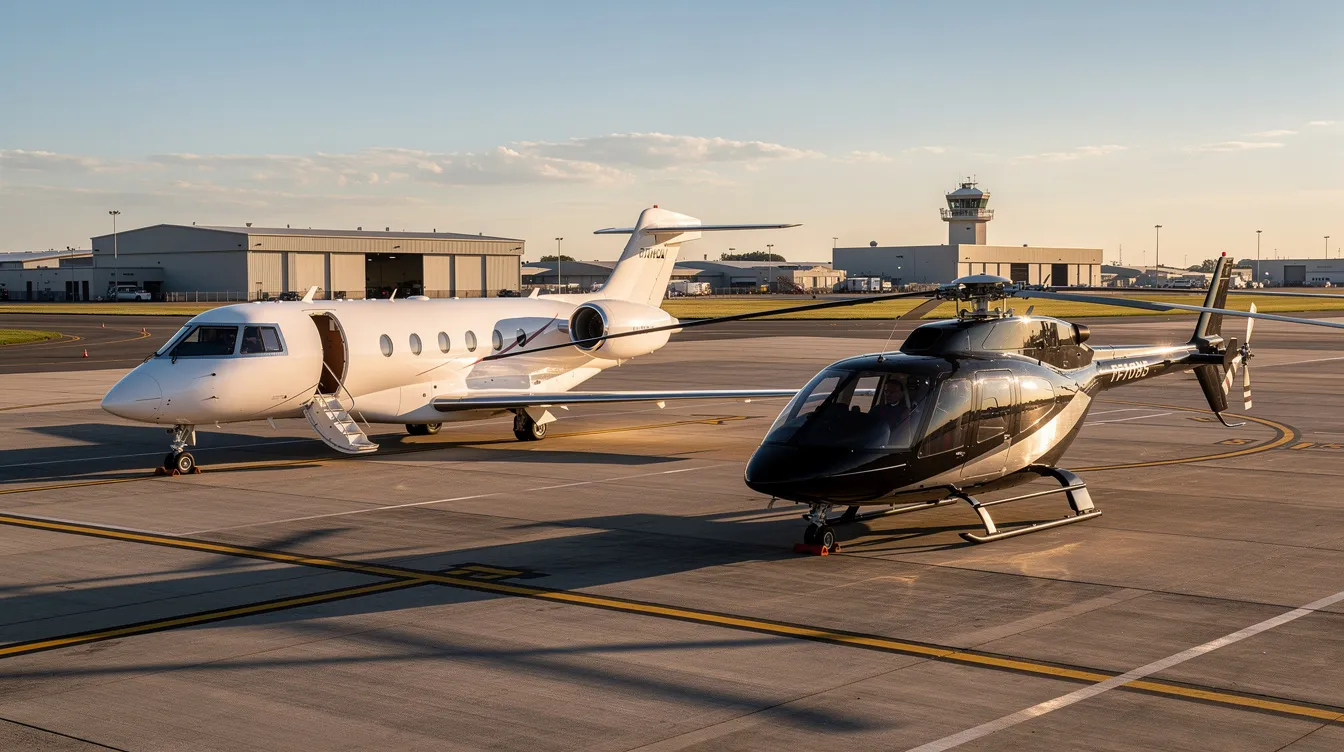
Jettly is a digital private aviation platform that connects travelers to helicopters, turboprops, and jets worldwide, with flexible private jet memberships for frequent flyers. The planning process is straightforward:
Enter your route, departure dates, and passenger count.
Jettly calculates indicative helicopter flight time and shows available aircraft.
The platform displays estimated flight time, distance, price range, and aircraft type for each option.
Jettly uses accurate flight planning inputs from professional operators, improving the reliability of quoted flight time compared to generic distance charts. The platform also helps compare helicopters against fixed-wing aircraft for the same itinerary, highlighting total travel time, access to smaller helipads, and budget considerations within the broader charter airlines and private aviation landscape.
Ready to compare helicopter and jet options for your next trip? Use Jettly's airport locator tool to explore departure and arrival options, and learn more about Jettly's charter options at https://www.jettly.com.
These FAQs cover practical concerns about helicopter flight time that weren't fully addressed above and may also interest readers considering Jettly's ULTRA high-ticket affiliate program for referring new charter clients.
Many charter operators apply minimums, often 15 or 30 minutes of billable helicopter flight time, even for very short positioning legs. In major hubs like New York, London, or Dubai, minimums are standard due to landing fees and airspace constraints. A 7-minute hop may still be billed at a 15–30 minute rate. Travelers should check minimum time policies when requesting a quote through platforms like Jettly or when comparing Jettly as a NetJets alternative for integrated helicopter and jet usage.
Private helicopter charters are more flexible than commercial flights, but most passengers are asked to arrive 20–30 minutes before the scheduled departure. This window covers safety briefings, baggage handling, and any last-minute adjustments to flight planning. For combined jet-and-helicopter itineraries, operators coordinate timing so that rotor start aligns with jet arrival, and services like Jettly Eats in-flight catering can be arranged across both segments for a seamless experience.
Same-day extensions are sometimes possible but depend on aircraft scheduling, crew duty limitations, night-flying approvals, and fuel planning, especially when connecting to or from services operated by partners like Dexter Air Taxi. Passengers who prefer extra sightseeing or an additional stop should build flexibility into the initial request, particularly in busy metro areas like Houston private jet and helicopter charter markets where slots can be tight. Jettly's support teams can often check same-day availability, but extensions are never guaranteed.
Planning estimates are usually accurate within a few minutes on short flights in good weather conditions, but the reality can differ by a few minutes depending on route complexity and conditions, while longer routes and complex airspace introduce more variability. Weather, traffic flow restrictions, and routing around busy airports may add 5–20 minutes. Real-world flight time varies due to weather and payload factors. Professional operators build conservative buffers into their schedule so minor variance doesn't compromise onward connections.
Most sightseeing operators market packages by airborne time, such as a "20-minute flight over the city," while charter brokers typically quote billable block time. A 25-minute scenic tour may involve 35–40 minutes on site including a safety briefing and boarding, but only 25 minutes of actual flying. Always ask whether the quoted duration is total experience time or rotor-turning helicopter flight time so expectations match the final invoice. For a closer look at what to expect on your first ride, see this helicopter passenger guide.
Helicopter flying time varies widely depending on distance, weather, aircraft type, and operational factors such as payload and airspace routing. Understanding the difference between rotor start-to-stop flight time and pure airborne time helps travelers set realistic expectations for their trip duration. Short flights of 10-15 minutes work well for quick sightseeing or short transfers, while 20-30 minutes suit city tours and moderate scenic experiences. Longer flights beyond 45 minutes accommodate intercity transfers, extended tours, or specialized missions.
Jettly platform offers transparent helicopter flight time estimates alongside fixed-wing alternatives, helping travelers choose the best option for their itinerary. By focusing on convenience, flexibility, and clear pricing, Jettly simplifies private helicopter charter planning. For a closer look at what to expect on your first ride, see this helicopter passenger guide.
Ready to experience private travel on your terms? Explore helicopter flight options or request a personalized quote at https://www.jettly.com.
Share this post:
Jay Franco Serevilla
Sep 4, 2026
|
5
min read
Discover tips and trends in the industry.
5
min read
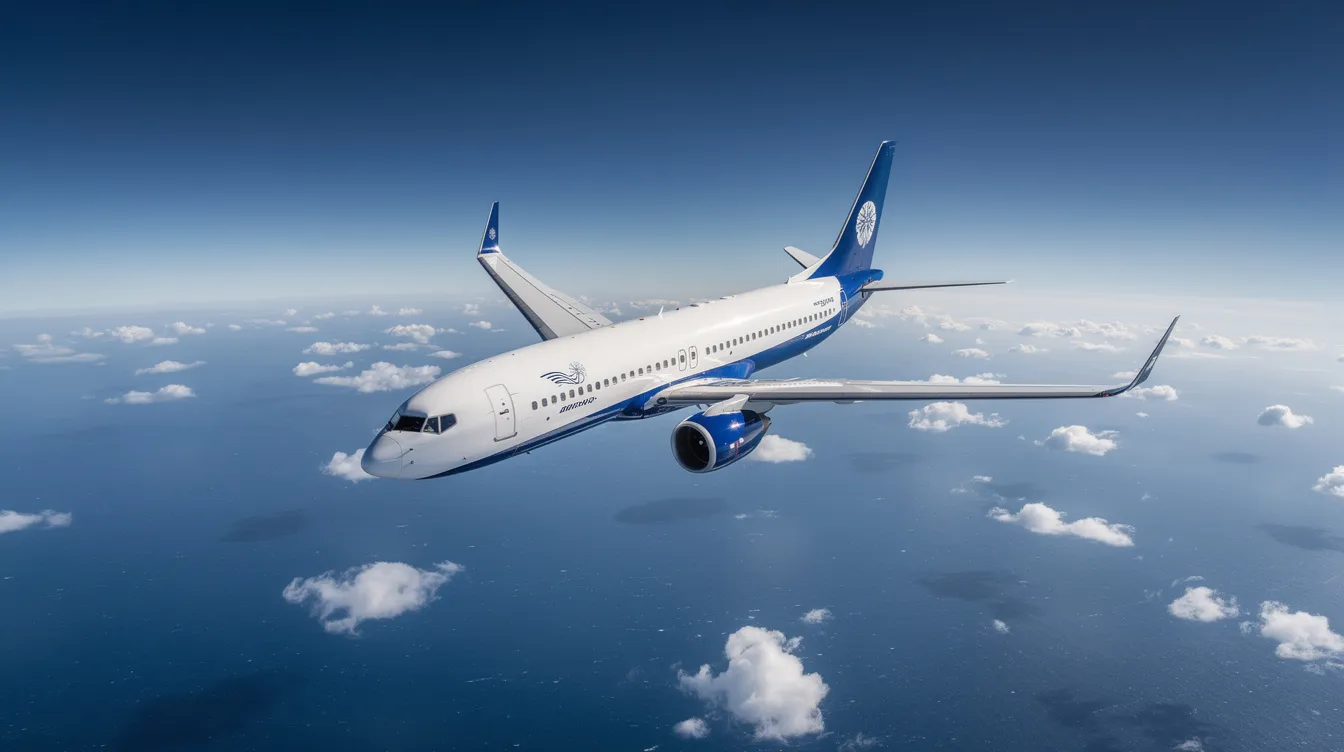
Range of the Boeing 737-800: How Far Can It Fly?
The Boeing 737-800 is a widely used single-aisle aircraft with a maximum range of approximately 3,377 nautical miles. However, real-world factors such as payload, weather, and airport conditions can significantly affect its effective range, typically reducing it to 2,800 to 3,100 nautical miles for commercial operations. This guide provides insights into the aircraft's range capabilities and practical considerations for travelers and charter customers.
Read More
5
min read
Boeing 777-300 & 777-300ER Overview
The Boeing 777-300 and 777-300ER are advanced long-haul aircraft known for their efficiency and capacity. With significant upgrades in range and engine power, the 777-300ER has become a preferred choice for intercontinental flights. This guide provides insights into their features, cabin layouts, and comparisons with private jet charters, helping travelers make informed decisions.
Read MoreStay updated with our latest insights and tips to elevate your journey with us.
MEMBERSHIPS AND ASSOCIATIONS



Disclaimer: Jettly operates as a charter broker, offering access to a global digital jet charter marketplace. Jettly is not a direct air carrier and does not own or operate aircraft. All advertised flights are conducted by third-party air carriers that are fully licensed and hold the appropriate Part 135 or Part 121 certifications issued by the Federal Aviation Administration (FAA) or equivalent regulatory authorities under U.S. or foreign law. Jettly complies fully with the U.S. Department of Transportation's Part 295 and Part 298 Charter Broker regulations. Jettly does not carry additional liability insurance. Passengers are covered by aircraft operator insurance. TICO: 50023770


