


Login
Get Instant Pricing On 23,000+ Aircraft

>
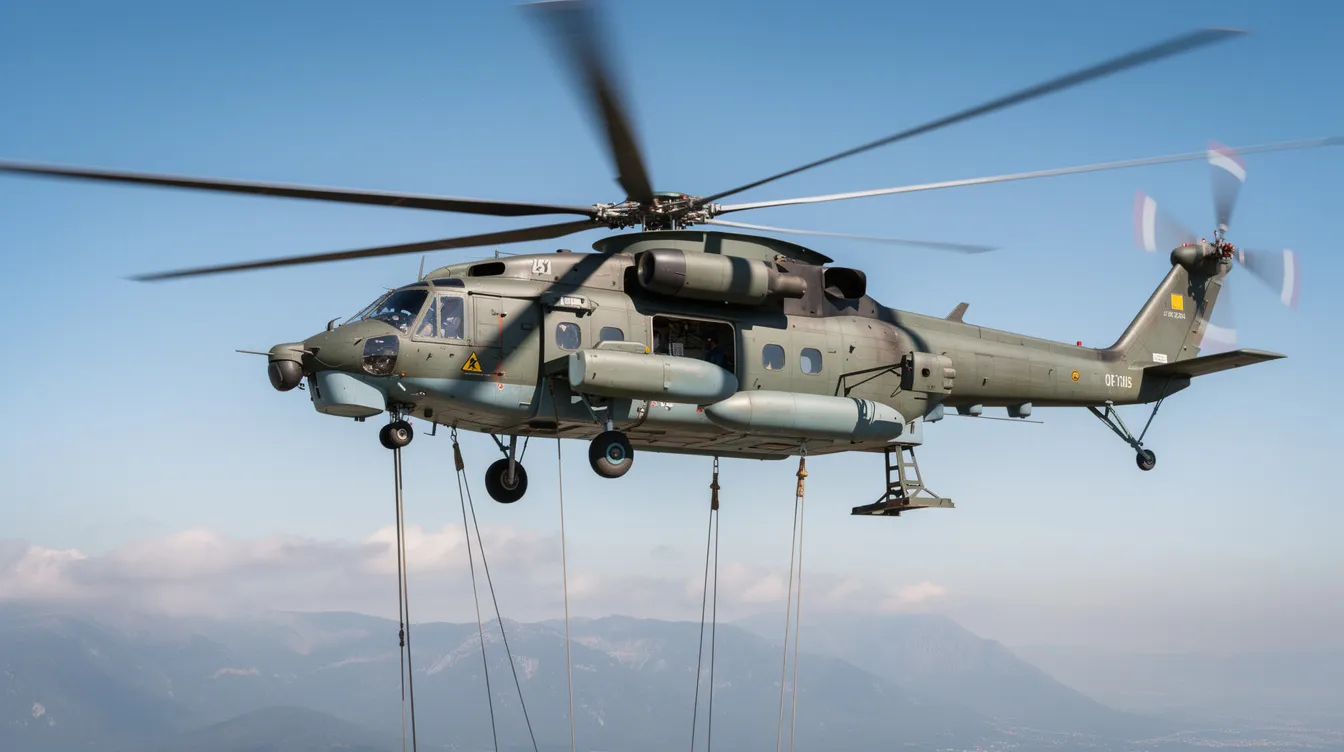
A heavy lift helicopter is built for one job above all others: moving loads that most aircraft simply cannot handle into places most aircraft cannot reach. These helicopters utilize powerful turboshaft engines for improved lifting performance, enabling them to carry internal or external payloads over 10 tons. From the Sikorsky CH-53E Super Stallion to the next-generation CH-53K King Stallion, these machines define what rotary-wing aviation can accomplish at scale. Specific models such as the Mil Mi-26 and Sikorsky CH-53K are among the most capable heavy lift helicopters in service today. While military platforms dominate the headlines, heavy lift helicopters also power civilian energy projects, construction, disaster relief, and remote logistics worldwide.
Heavy lift helicopters like the CH-53E Super Stallion and CH-53K King Stallion are designed to move outsized cargo, vehicles, and large teams where fixed-wing aircraft cannot land.
The CH-53K can carry up to 27 tons of payload, making it one of the most capable heavy lift helicopters in service as of 2026, with three 7,500 shaft horsepower engines and the ability to operate in 40-knot wind gusts.
The Mil Mi-26 can lift up to 20 tons of cargo, making it the world's largest production helicopter.
Beyond military use, heavy lift helicopters support energy projects, construction, aerial firefighting, rescue missions, disaster relief—including CH-53E helicopter support after Hurricane Katrina in 2005—and remote logistics where road or runway access is limited.
Precision placement of loads is a key advantage, allowing rapid site setups and reducing ground disruption by avoiding heavy trucks and earthworks.
Through a digital charter platform such as Jettly, private clients can coordinate helicopter support alongside a wide selection of private charter aircraft for point-to-point missions in remote or infrastructure-poor regions.
A heavy lift helicopter is a rotary-wing aircraft engineered to carry very large external or internal payloads, often ranging from 10 tons to 40,000 lbs depending on the model. These helicopters differ from light and medium utility helicopters in raw lifting ability, engine power, and structural reinforcement. Heavy lift helicopters can carry internal or external payloads over 10 tons, placing them in a class apart from standard transport rotorcraft.
Iconic examples anchor the category: the Sikorsky CH-53 family (Sea Stallion, Super Stallion, King Stallion), the Mil Mi-26, and the Boeing CH-47F Chinook, which can carry up to 21 tons. These machines utilize powerful turboshaft engines for improved lifting performance, paired with large multi-blade rotors, reinforced transmissions, wide cargo cabins, external cargo hooks, and rear loading ramps.
Heavy lift helicopters are optimized for high payload capacity rather than speed, with the CH-53K reaching maximum speeds up to 220 knots (400 km/h) and the CH-53E up to 200 knots (370 km/h). They provide access to remote locations without the need for roads or runways, and heavy lift operations reduce ground disruption by avoiding heavy trucks and earthworks.
Typical missions include:
Tactical troop lift and vehicle transport
Sling-loading containers, construction equipment, or bridge segments
Transporting oversized or irregular cargo efficiently
Aerial firefighting and rescue missions
Emergency evacuation in difficult terrain
Heavy lift helicopters support military logistics, disaster relief, and construction operations. They complement fixed-wing transport in a multi-leg itinerary: a private jet brings passengers to a regional hub, and a helicopter handles the final miles to a remote site, complementing cross-country aircraft options for long-distance travel.
Sikorsky Aircraft, founded in 1923, is a pioneer of U.S. military and civilian rotorcraft. Now a Lockheed Martin company, Sikorsky developed the CH-53 line into the western world's primary heavy lift helicopter family for naval and expeditionary operations.
The CH-53 family tree spans more than six decades of continuous improvement, with each generation adding lift, range, avionics, and survivability features at the request of the United States Marine Corps and Navy:
CH-53A Sea Stallion - First flight 1964; the original model produced for the U.S. Navy and Marine Corps.
CH-53D - An upgrade with more powerful engines, improved lift, and better avionics. Widely designated for fleet operations.
CH-53E Super Stallion - First flight 1974; entered service 1981. Added a third engine, a seven-blade main rotor, and dramatically increased payload capacity up to 16 tons. This powerful aircraft became the workhorse of marine heavy lift for decades and provided disaster relief after Hurricane Katrina in 2005. It also supported combat operations during the 1983 Beirut deployment, evacuated nationals from Mogadishu in 1991, and conducted the longest amphibious raid in history in 2001. The CH-53E fleet achieved one million flight hours by 2019.
CH-53K King Stallion - First flight October 2015; initial operational capability with USMC in the mid-2020s. Features a digital flight control system, composite rotor blades, and three engines rated at 7,500 shaft horsepower each. It can carry up to 27 tons of payload, lifting three times the load of its predecessor, and operate in 40-knot wind gusts.
Although Jettly does not broker military aircraft like the CH-53E or CH-53K, these models set the performance benchmarks that inform expectations across civilian heavy lift and cargo charter operations.
The CH-53E Super Stallion is a three-engine heavy lift helicopter developed by Sikorsky for the United States Marine Corps. It first flew in 1974 and entered service in 1981, quickly becoming the backbone of Marine Corps heavy logistics. Powered by three General Electric T64-GE-416A engines, its seven-blade main rotor and tail rotor configuration gave it a maximum external load of around 32,000 lb (16 tons). The CH-53E can carry up to 16 tons over 500 nautical miles and transport up to 55 troops in its cabin.
Key operational deployments shaped the aircraft's reputation:
The first shipboard deployment occurred in 1983 during the Beirut crisis.
In 1991, CH-53Es evacuated nationals from Mogadishu, Somalia.
The type saw extensive use in Operation Desert Storm, Afghanistan, and Iraq for long-range insertion and resupply.
The CH-53E fleet achieved one million flight hours by 2019.
The aircraft's main rotor diameter, empty weight, and cabin dimensions were designed around transporting heavy equipment, artillery, and supplies to austere forward operating bases. However, maintenance demand has been steep—reports indicate roughly 40 to 50 maintenance hours per flight hour. Aging airframes and parts obsolescence have pushed the Department of Defense toward the CH-53K replacement, but the CH-53E is intended to remain in service until the 2030s.
The CH-53K King Stallion is Sikorsky's latest heavy lift helicopter, purpose-built for the United States Marine Corps to replace the retired CH-53E fleet with significantly higher payload and better reliability. This aircraft was proposed and developed to carry up to 27 tons of payload, operate over distances up to 500 nautical miles, and reach speeds up to 220 knots (400 km/h).
Performance and technology highlights include:
Engines: Three GE T408-GE-400 turboshafts, each producing approximately 7,500 shaft horsepower, combined for an exceptional power-to-weight ratio.
Lift: Roughly 27,000 lb external load over a 110-nautical-mile radius in hot-and-high conditions, and it can lift three times the load of its predecessor.
Flight controls: It features full-authority fly-by-wire flight controls, replacing the mechanical linkages of the CH-53E with a digital flight control system that enables precision hover in 40-knot crosswinds.
Cockpit: Digital glass cockpit with advanced situational awareness for special operations and degraded visual environments.
Rotor: Advanced composite rotor blades with swept tips and elastic rotor heads to reduce maintenance hour requirements.
Milestones include first flight in October 2015, delivery of initial production aircraft to MCAS New River, and the broader introduction ecosystem that included a containerized flight training device for crew preparation. Although the King Stallion is strictly a military platform, its technology—automation, fly-by-wire control, efficient heavy lift under adverse conditions—shapes expectations for commercial heavy lift fleets that private charter clients may indirectly benefit from.
Outside the military domain, civil heavy lift operations rely on types like the Sikorsky S-64 Skycrane, the Mil Mi-26, the K-Max K-1200, and modified medium-heavy helicopters certified for commercial use.
The Mil Mi-26 is the world's largest production helicopter. First developed in the 1980s, it has a cargo capacity of up to 20 tons, can reach speeds of up to 250 km/h (approximately 135 knots), and its operational range is approximately 1,500 km (about 810 nautical miles). It played a significant role during the Chornobyl disaster in 1986, delivering concrete and supplies to the reactor site.
The S-64 Skycrane is a twin-engine flying crane capable of external hook loads around 20,000 lb, widely used for firefighting with internal water tanks. The K-Max K-1200 is another civil example and can carry up to 6,000 pounds externally, specializing in external load operations such as logging, construction, and firefighting.
Common commercial mission profiles include:
Tower and powerline installation for energy companies
HVAC unit placement onto skyscrapers and construction sites
Pipeline and wind turbine component delivery
Logging and mining support in roadless terrain
Search and rescue or disaster relief logistics
Operational planning requires careful attention to payload vs. altitude and temperature charts, sling-load rigging, ground crew coordination, and local aviation authority regulations, often working closely with Part 135 charter companies and other certified operators. In the U.S., FAA 14 CFR Part 133 governs rotorcraft external-load operations, classifying loads into four categories (A, B, C, D) based on jettisonability and configuration, and these rules intersect with practical limits on helicopter passenger capacity across different types. Payload, rigging, and site conditions can vary from one lift task to the next. A well-known heavy lift feat includes helicopter placement of bridge segments in mountainous Japan, where ground crane access was impossible, often requiring planners to use an airport locator tool to identify suitable staging airfields.
Understanding heavy lift performance starts with a few core metrics. Here is how leading types compare:
|
Aircraft |
Max External Load |
Range (with load) |
Cruise Speed |
Service Ceiling |
|---|---|---|---|---|
|
CH-53E Super Stallion |
~32,000 lb (16 tons) |
~500 nm |
150–170 knots |
~18,500 ft |
|
CH-53K King Stallion |
~54,000 lb (27 tons) |
~500 nm |
Up to 220 knots |
~18,500 ft |
|
Mil Mi-26 |
~44,000 lb (20 tons) |
~670 nm |
~135 knots |
~15,100 ft |
|
S-64 Skycrane |
~20,000 lb |
~230 mi |
~105–120 mph |
~15,000 ft |
Payload capacities typically range from 10 tons to 40,000 lbs for different models. Environmental conditions—density altitude, wind, temperature—directly affect how much an aircraft can lift on a given day. A helicopter capable of 27 tons at sea level on a cool morning may deliver far less at a hot, high-altitude site.
Precision placement of loads is a key advantage of heavy lift helicopters. Multi-hook systems and experienced loadmasters dampen load swing during flight, and heavy lift helicopters can quickly deploy in locations that are difficult for traditional cranes to reach. The CH-53K's wider cabin accommodates two 463L pallets or up to two up-armored Humvees, while the Mi-26 can lift up to 20 tons of cargo internally or externally. Heavy lift helicopters enable rapid site setups and are often used in construction where time is critical.
Heavy lift helicopters serve private and commercial charter scenarios that go well beyond standard passenger transfers. Here are realistic examples:
Remote mining operation: An energy company needs specialized equipment delivered to a mine 150 miles from the nearest paved road. A charter flight brings executives to the regional airport, then a civil heavy lift helicopter carries 15,000 lb drill assemblies to the site in a single sling load.
Luxury villa construction: A high-net-worth individual building a coastal retreat on a cliffside without road access contracts prefabricated modules weighing 10,000–20,000 lb each. A heavy lift helicopter delivers them with precision, avoiding the environmental damage of building an access road.
Disaster relief: After a flood destroys road bridges, a heavy lift helicopter places temporary bridge spans across a river, restoring access within hours rather than weeks.
Key decision points for these missions include:
Cost vs. time: Helicopter rental costs per hour are high, but faster than building roads or mobilizing tower cranes, especially when compared with other affordable airplane rental options and cost structures.
Payload vs. distance: Heavier loads over longer distances may require intermediate fuel stops.
Safety and regulation: Only certified operators with proper insurance and crew qualifications should be engaged, similar to choosing a flexible alternative to fractional ownership like Jettly when arranging fixed-wing support.
Coordination through a digital platform like Jettly aligns timing between fixed-wing arrivals and rotorcraft departures, simplifying complex multi-leg logistics.
Jettly operates as a global private aviation marketplace, primarily listing fixed-wing private jets while also providing access to vetted rotary-wing operators in select regions, all within a comprehensive private charter aircraft network. Project managers and private travelers can use the platform to coordinate multi-segment missions where a heavy lift or utility helicopter is paired with a light jet, midsize jet, or turboprop for efficient door-to-door movement, similar to turnkey solutions provided by dedicated private jet operators like Dexter Air Taxi.
Practical features include:
Instant pricing for many fixed-wing routes through the cost estimator and a dedicated jet card flight cost estimator for members
Access to over 20,000 aircraft globally through various private jet membership tiers with flexible access
Aviation specialists who handle complex helicopter requests, including operating requirements for heavy cargo and region-specific planning for private jet charters in key hubs like Houston, Texas
Transparent cost breakdowns with no long-term ownership commitment, supported by tools such as a jet card flight cost estimator
For example, an offshore energy inspection might require a business jet charter into a coastal airport, potentially using shared or crowdsourced private flights to reduce costs, connected to a locally based medium or heavy utility helicopter for the final leg to a platform. Jettly's team can arrange both segments under a single contract and manage crew duty schedules.
Not every mission needs a heavy lift helicopter. Here is a practical framework:
|
Factor |
Heavy Lift Helicopter |
Light/Executive Helicopter |
Private Jet |
|---|---|---|---|
|
Best for |
Oversized cargo, construction, remote logistics |
Short passenger transfers, VIP transport |
Fast, long-range passenger travel |
|
Payload |
10,000–44,000 lb |
1,000–4,000 lb |
Depends on aircraft; typically baggage only |
|
Landing flexibility |
Unprepared sites, no runway needed |
Helipads, open areas |
Requires runway |
|
Passenger comfort |
Minimal; utility-focused |
Moderate to high |
High |
|
Hourly cost |
Very high |
Moderate |
Varies by category |
|
Planning lead time |
Weeks (rigging, permits, crew) |
Days |
Hours to days |
Jettly users typically rely on private jets for fast, comfortable passenger travel and may leverage jet card programs for predictable hourly pricing, turning to heavy lift or utility helicopters only when the mission demands unique cargo capability or access to sites without runways. Aviation experts on the platform can help match aircraft category to route, group size, and cargo profile.
Heavy lift operations carry strict regulatory and safety requirements. In the U.S., operators must hold an FAA Part 133 certificate for external-load work. Analogous rules apply in Canada, the EU, and other jurisdictions. Crew licensing, airworthiness certification, and load-combination documentation are mandatory.
Key planning steps include:
Pre-flight route surveys to map obstacles, power lines, and terrain
Detailed weight and balance calculations for each load configuration
Contingency procedures for weather changes or load instability
On-site engineering assessments for pick-up and drop-off zones
Comprehensive insurance covering cargo, property, and third-party risk
Clients should expect longer lead times than standard helicopter or jet charters, and should factor in overall private jet operating costs and budgeting considerations when combining rotorcraft with fixed-wing support. Reputable platforms such as Jettly prioritize charter operators who meet strict safety standards, hold appropriate certifications, and maintain robust pilot training and maintenance programs—even when the mission involves demanding rotorcraft work—similar to the vetted providers highlighted in comprehensive guides to charter airlines and private aviation platforms.
Below are answers to common questions about heavy lift helicopters not fully covered above, complementing broader resources on aircraft rental costs and options.
Payload capacities vary by model. Commercial heavy lift helicopters like the S-64 Skycrane handle around 20,000 lb externally. Military-grade types carry more: the CH-53K King Stallion can carry up to 27 tons, while the Mil Mi-26 manages up to 20 tons. Actual capacity on any given day depends on temperature, altitude, fuel load, and distance, so precise figures are calculated during mission planning.
No. The CH-53E Super Stallion and CH-53K King Stallion are military aircraft operated by the United States Marine Corps and are not available for civilian charter. Private and commercial clients instead charter certified civil heavy lift helicopters and utility types operated by approved commercial operators, which Jettly can help source where available, and which are often promoted through its ULTRA high ticket affiliate program.
Typical unrefueled ranges fall between 200 and 500 nautical miles when carrying useful loads, comparable to many cross-country aircraft used for long-range private travel. The Mi-26's operational range is approximately 1,500 km. Mission planners may schedule intermediate fuel stops or pair helicopters with private jets to cover longer journeys efficiently.
Heavy lift helicopters are designed around payload and utility, not cabin refinement. Noise, vibration, and ride quality fall well below what VIP travelers expect. For comfort, light or twin-engine executive helicopters and private jets are the better choice—reserve heavy lift helicopters for when cargo or access demands override comfort—and many passengers further enhance the experience with dedicated in-flight catering services like Jettly Eats.
Begin with a clear description of cargo dimensions and weight, origin and destination coordinates, timing requirements, and any site constraints. Then submit a quote request at Jettly so aviation specialists can determine whether a heavy lift helicopter, standard helicopter, or private jet mix best fits the mission profile, with transparent pricing provided upfront.
Heavy lift helicopters play a vital role in moving oversized cargo and equipment to locations unreachable by traditional aircraft or ground transport. Models like the CH-53K King Stallion and Mil Mi-26 set the standard for payload capacity and operational versatility, supporting military, construction, disaster relief, and energy sector missions worldwide. While these helicopters are not available for private charter, platforms like Jettly provide access to certified commercial heavy lift and utility helicopters, seamlessly integrating rotorcraft with private jets for efficient, door-to-door travel solutions.
Whether coordinating complex logistics or reaching remote sites quickly, heavy lift helicopters offer unmatched flexibility and precision. To explore helicopter and private jet charter options tailored to your mission needs, visit https://www.jettly.com and request a quote today.
Share this post:
Jay Franco Serevilla
Jul 24, 2026
|
5
min read
Discover tips and trends in the industry.
5
min read
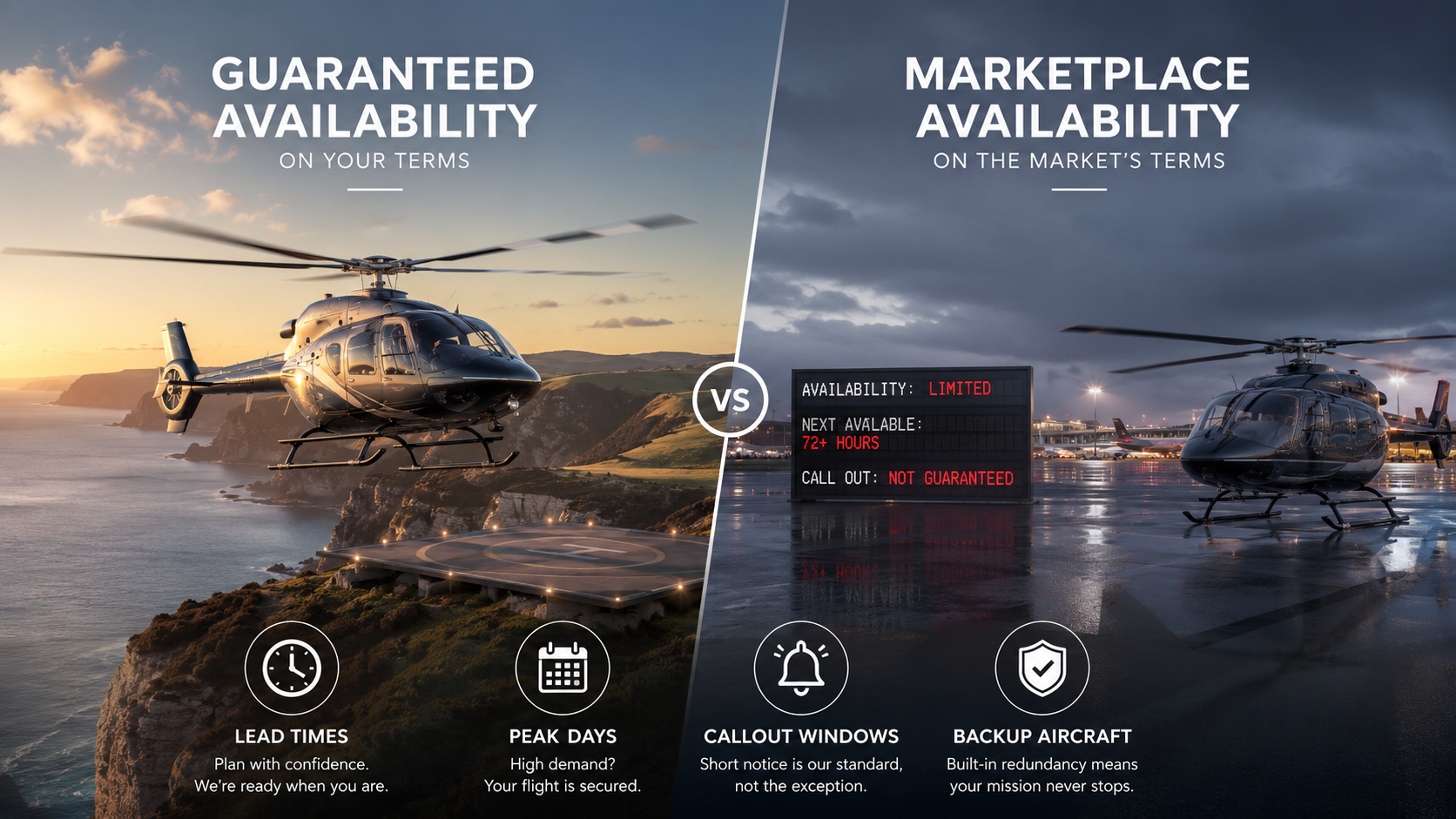
Guaranteed Availability vs Marketplace Availability (2026): Lead Times, Peak Days, Callout Windows & Backup Aircraft
In private aviation, guaranteed availability offers a contract-backed promise for aircraft access, while marketplace availability provides real-time access to a larger fleet based on supply and demand. Understanding the differences in lead times, peak days, and backup aircraft options is crucial for making informed decisions. This guide breaks down the nuances of both models to help you choose the best fit for your flying needs.
Read More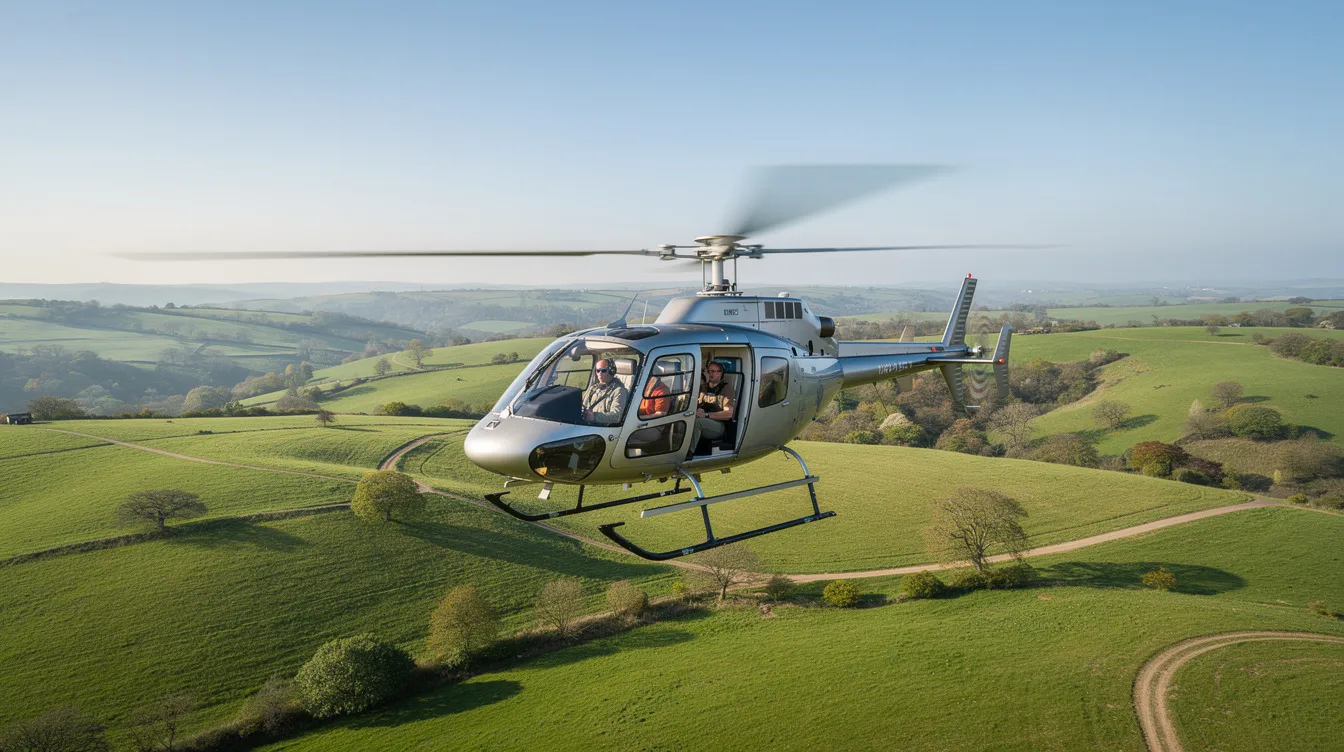
5
min read
How Many Passengers Can Fit in a Helicopter? Capacity, Limits & Booking Tips
Helicopter passenger capacity varies significantly based on the model, typically accommodating 2 to 8 passengers plus a pilot. Larger helicopters can carry 15 or more, but real-world factors like weight, baggage, and safety regulations often limit the actual number of passengers. Jettly's platform simplifies the process of selecting the right helicopter for your travel needs.
Read MoreStay updated with our latest insights and tips to elevate your journey with us.
MEMBERSHIPS AND ASSOCIATIONS



Disclaimer: Jettly operates as a charter broker, offering access to a global digital jet charter marketplace. Jettly is not a direct air carrier and does not own or operate aircraft. All advertised flights are conducted by third-party air carriers that are fully licensed and hold the appropriate Part 135 or Part 121 certifications issued by the Federal Aviation Administration (FAA) or equivalent regulatory authorities under U.S. or foreign law. Jettly complies fully with the U.S. Department of Transportation's Part 295 and Part 298 Charter Broker regulations. Jettly does not carry additional liability insurance. Passengers are covered by aircraft operator insurance. TICO: 50023770


