



Login
Get Instant Pricing On 23,000+ Aircraft

>

Heavy jets represent the pinnacle of private aviation, combining impressive range, spacious cabins, and unmatched comfort for long-distance travel. Whether you’re a business executive needing to cross continents efficiently or a discerning traveler seeking privacy and convenience, understanding heavy jets is key to unlocking seamless intercontinental journeys.
This comprehensive guide is designed for business travelers, charter clients, and aviation enthusiasts seeking to understand the world of heavy jets. Whether you’re planning intercontinental business trips or exploring private aviation options, knowing the features and benefits of heavy jets is essential for making informed decisions about long-range private travel. Discover what sets these aircraft apart and how they can elevate your travel experience.
Heavy jets are large cabin business jet aircraft built for long-range private travel, usually with maximum takeoff weight well above 50,000 lb and often around 70,000–105,000 lb in private aviation.
These jets typically accommodate 12 to 18 passengers and offer a range of 5,500 to over 8,000 miles, making them suitable for long-distance travel without refueling stops.
Travelers choose heavy private jets for intercontinental flights, stand-up cabins, strong baggage capacity, and non-stop routes such as New York–London, Los Angeles–Tokyo, or Toronto–Dubai.
Average cruise speed can reach up to 520 knots, with many models cruising near Mach 0.85.
Jettly provides on-demand access to heavy jets worldwide without ownership or fractional commitments. Learn more at https://www.jettly.com.
Heavy jets sit near the top of private aviation. They are built for passengers who need space, range, speed, and reliable access to international destinations without the structure of airline schedules.
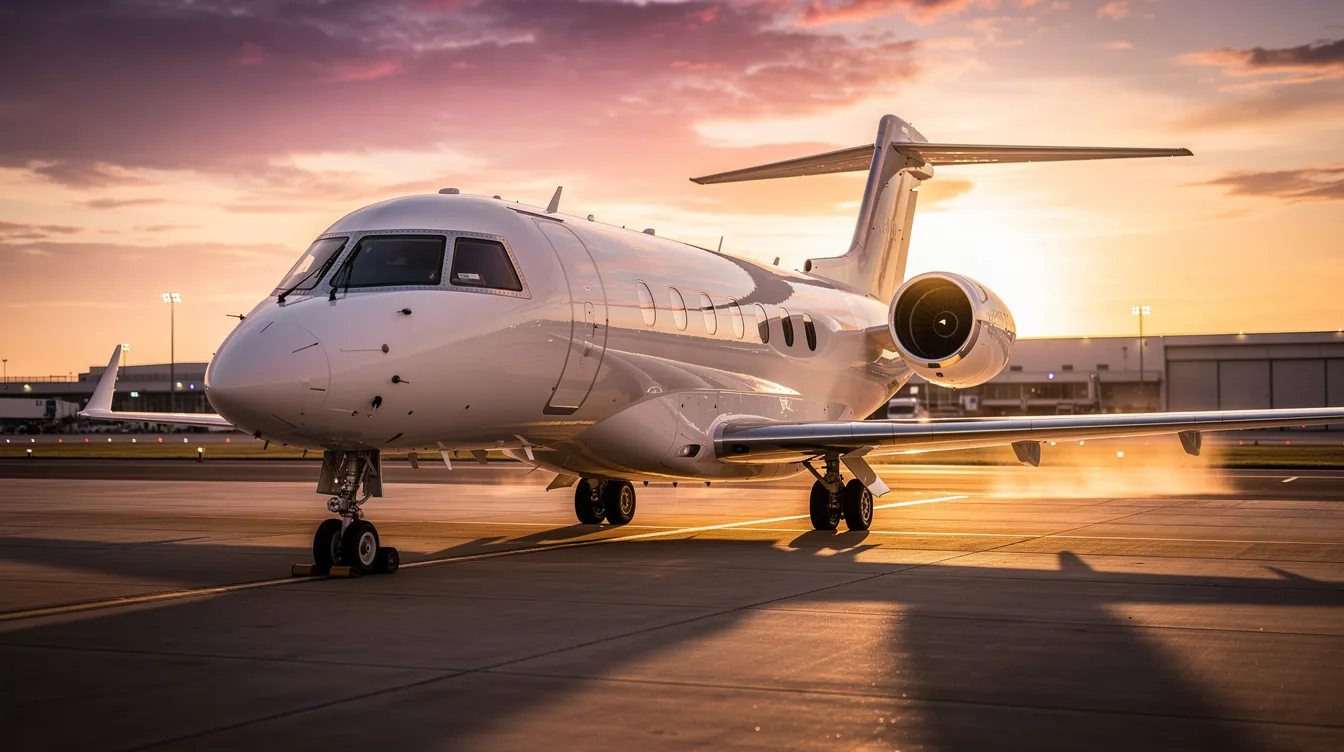
In aviation, the term "heavy jet" carries two different meanings depending on whether it refers to commercial air traffic control (ATC) classifications or private business aviation.
In commercial aviation and ATC, a heavy jet is defined as any aircraft with a maximum takeoff weight (MTOW) of 300,000 pounds (136,078 kg) or more. Heavy jets include large wide-body airliners like the Boeing 777 and Airbus A350, forming the backbone of long-haul international travel. These large aircraft also generate powerful wake turbulence due to their immense mass, leading to aerodynamic vortices behind them.
In business aviation, heavy jets mean large cabin private jets optimized for long-range capabilities. Private heavy jets typically have an MTOW exceeding 50,000 pounds and feature massive fuel tanks for long-haul travel.
Most heavy jets carry 10–16 passengers in charter layouts, though many can accommodate 12 to 18 passengers depending on the cabin. They are separate from commercial “heavy” aircraft and are designed around privacy, speed, passenger comfort, and flexible operation.
Jettly lists heavy jets alongside light, midsize, super midsize jets, turboprops, helicopters, and very light jets so customers can match each plane to the mission, and its global private charter aircraft marketplace helps travelers compare options in one place.
Maximum takeoff weight, cruise speed, cabin dimensions, and runway performance are the main technical markers that separate heavy jets from smaller business jets.
Typical private heavy jets have an MTOW of roughly 70,000–105,000 lb, with ultra-long range models exceeding 105,000 lb. MTOW matters because it affects fuel capacity, payload, cargo, runway length, and operating rules.
Heavy jets typically accommodate between 12 and 18 passengers and offer a range of 5,500 to over 8,000 miles (3,041 nm to over 6,951 nm). Private heavy jets can fly non-stop for 6 to 9 hours, covering distances of 3,500 to 6,000+ nautical miles. The newest long-range jets are capable of flying non-stop for over 13 hours, allowing for intercontinental travel without the need for refueling, which is a major benefit for frequent long-distance travelers.
Cabins usually offer a stand-up height of around 6 ft 2 in to 6 ft 6 in. Their large size supports a full galley, wider seats, multiple cabin zones, and more room for luggage than smaller jets. Under ISA conditions, published range and performance figures are best understood as planning benchmarks, not guarantees.
Compared with light and midsize jets, heavy jets offer far more space and endurance. Compared with super midsize jets, they usually fly at similar speeds but with better range capabilities and greater cabin capacity.
|
Model |
MTOW (lb) |
Passenger Capacity |
Range (nm) |
Cruise Speed (knots) |
Typical Use Case |
|---|---|---|---|---|---|
|
Gulfstream G550 |
91,000 |
Up to 19 |
6,750 |
513 |
Long-range business travel |
|
Bombardier Global 7500 |
114,850 |
Up to 19 |
7,700 |
531 |
Ultra-long-range intercontinental |
|
Dassault Falcon 6X |
77,459 |
Up to 16 |
5,500 |
516 |
Efficient long-range missions |
|
Embraer Legacy 650 |
53,572 |
Up to 14 |
3,900 |
450 |
Medium to long-range charters |
|
Gulfstream G700 |
107,600 |
Up to 19 |
7,750 |
536 |
Flagship ultra-long-range flights |
Large cabin comfort is one of the main reasons travelers select heavy jets for long-duration flights.
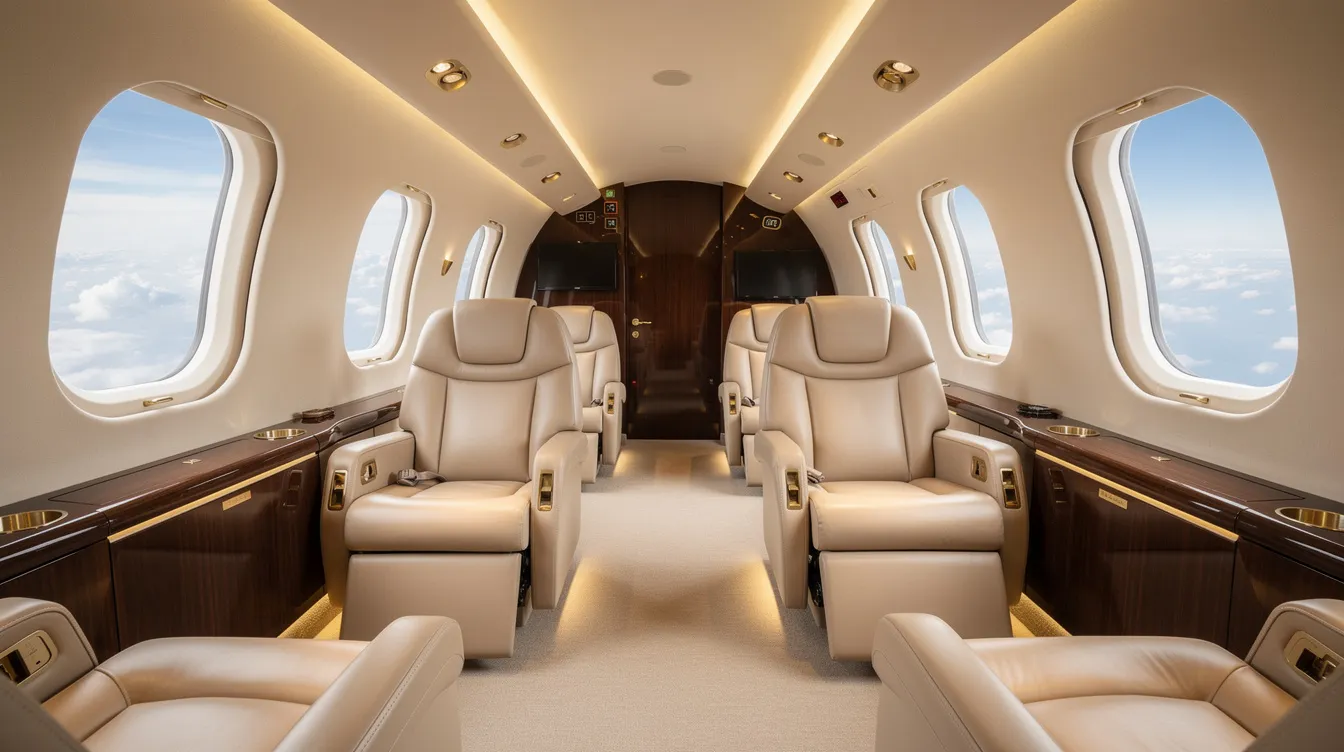
Heavy jets feature stand-up, multi-zone cabins with high clearance, full-sized galleys, and dedicated spaces for working, dining, and sleeping. A typical layout may include double-club seating, a conference table, divans that convert into beds, and a private rear cabin.
Many are equipped with enclosed lavatories, a forward galley, satellite internet, entertainment systems, and a flight attendant for longer international service. Some ultra-long-range models also include an optional shower.
Cabin zoning helps separate work, family time, and rest. For business executives, that can mean a quiet meeting area in flight. For families, it means children can rest while adults work or dine, especially when combined with tailored in‑flight catering for private jets.
The spacious and functional cabins of heavy jets provide ample storage space and comfort, which are significant advantages for travelers on long journeys. Jettly clients can request preferences such as bed count, Wi‑Fi level, conference seating, catering, or baggage capacity when asking for a charter quote.
Several heavy jets and ultra-long-range business jet models are common in global charter fleets, and many also appear in broader guides to the best private airplanes and luxury aircraft.
The Gulfstream G550 had its first flight in 2002 and entered service in 2003. It has a maximum takeoff weight (MTOW) of 91,000 lb (41,277 kg) and can accommodate up to 19 passengers, with a range of 6,750 NM (12,500 km). It cruises near Mach 0.85 and suits routes such as London–Los Angeles.
The G650ER is faster and longer-legged, often used for missions such as Hong Kong–San Francisco. It is a strong example of aerospace engineering focused on speed, range, and cabin efficiency.
Bombardier Global aircraft are widely used for international business. The Global 6000 entered service in 2012 and is known for about 6,000 nm of range.
The Global 7500 had its first flight in 2016 and entered service in 2018. It offers up to about 7,700 nm of range and a normal cruise near Mach 0.85. A route example is New York–Johannesburg non-stop in favorable conditions.
The Global 8000 is one of the important new models expected to enter service as an ultra-long-range model with higher performance and more power, standing out among high‑speed personal and business aircraft.
Dassault Falcon jets are known for efficient design and runway flexibility. The Dassault Falcon 6X is a long-range business jet with a maximum takeoff weight (MTOW) of 77,459 lb (35,135 kg) and can accommodate up to 16 passengers.
The Falcon 7X and 8X are tri-jets suitable for routes such as Paris–São Paulo. The Falcon 8X offers about 6,450 nm of long range and a cruise speed near Mach 0.85.
The Embraer Legacy 600 and 650 are smaller than the largest heavy jets but often serve similar business missions. The Praetor 600 is technically a super-midsize model, yet it is sometimes considered when clients want efficiency, modern avionics, and a strong range in a lower cost class.
The Gulfstream G700 is a newer flagship model. According to Gulfstream, it offers up to 7,750 nm of range at Mach 0.85, a maximum operating Mach of 0.935, and a large cabin with multiple living areas. It entered customer deliveries in 2024.
Jettly groups aircraft into light, midsize, super-midsize, heavy, and bizliner categories to simplify selection.
Very light jets and light jets are best for regional trips with 2–6 passengers. They cost less to operate but have compact cabins, shorter range, and limited luggage capacity.
Super midsize jets can cross continents and sometimes oceans, but heavy jets offer more cabin space, more baggage room, and greater endurance. This makes heavy jets the sweet spot for many international trips where comfort and schedule control are a priority.
Bizliners, Boeing Business Jets, and Airbus Corporate Jets are larger again. They offer airliner-sized cabin space, but with higher operating costs and more limited airport access. Heavy jets require longer runways and stronger pavement, and are limited to larger, well-equipped international airports compared with smaller private aircraft. Heavy jet aircraft differ from lighter jets in runway requirements, greater wake turbulence, and intercontinental flight capabilities, and they sit at the upper end of the spectrum when looking at how many passengers different private jets can carry.
Heavy jets are chosen when travelers need privacy, long range, and the ability to carry larger groups on single- or multi-leg itineraries.
Common examples include:
Board travel for 10–12 business executives across Europe, North America, or Asia
Family vacations with ski equipment, golf clubs, or yacht luggage
Entertainment, film, and music tours need predictable schedules
Medical, diplomatic, or urgent business trips where time is the priority
Heavy jets provide a low cost per seat-mile due to their high passenger capacity. That does not make them low-cost aircraft, but it can make sense when many passengers fly together over long distances, especially for travelers comparing options across the wider charter airline and private aviation market.
Commercial wide-body heavy jets also have massive space in their lower decks for commercial freight, acting as a secondary revenue stream for airlines. Private heavy jets focus more on baggage, cabin service, and passenger experience than on freight revenue.
Heavy jets are expensive to buy, maintain, and operate. That is why many clients choose charter instead of ownership and use tools like a private jet charter cost estimator to benchmark hourly and trip pricing before they fly.
Heavy jets typically range in purchase price from $15 million to $30 million, with new models generally priced at the higher end of this range and pre-owned jets at the lower end. Newer ultra-long-range flagships can cost more depending on the model, completion, and market conditions, and many rank among the top private jets worldwide for luxury and performance.
The operational costs for heavy jets can range from $5,000 to $6,500 per hour, depending on factors such as the age of the aircraft and the amenities included. Charter rates are usually higher because they include operator margin, crew, positioning, airport fees, service, and other trip costs, but there are strategies for finding more affordable private jet charter pricing.
Major cost drivers include:
Fuel burn and cruise profile
Flight crew salaries and rest rules
Maintenance and parts
Hangarage and insurance
Navigation, handling, and airport fees
Catering, Wi‑Fi, and ground transportation
Fractional ownership of heavy jets allows multiple parties to share the costs of ownership, including flight crew, maintenance, and hangarage, which can help reduce the financial burden of owning a heavy jet. Pure charter avoids capital risk, management overhead, and long-term commitments, and some travelers look for a NetJets alternative focused on on‑demand charter and memberships.
Jettly’s on-demand model and optional private jet memberships help frequent travelers compare cost per hour without locking into traditional jet card programs.
Jettly is a digital private aviation platform that connects travelers with access to more than 20,000 aircraft around the globe, including heavy jets and long-range jets.
The booking flow is straightforward, and tools like Jettly’s airport locator and on‑demand booking platform make it easier to plan complex heavy‑jet routes:
Enter route, dates, passenger count, and schedule needs.
Compare aircraft by size, age, cabin layout, range, and estimated price.
Review photos, operator details, and performance data where available.
Confirm the preferred aircraft with secure digital payment, or explore options to crowdsource flights and share empty seats on certain routes.
Jettly can also coordinate in-flight catering, ground transportation, special requests, and regulated operators. For flexible travelers, empty leg flights may occasionally reduce cost on specific routes.
Explore heavy jet availability, estimate one‑way pricing with a jet card flight cost estimator, or request on‑demand charter quotes at https://www.jettly.com.

Heavy jets burn more fuel per flight than smaller private aircraft. That gives them a higher carbon footprint per hour, especially on very long-range missions.
However, impact depends on passenger load, route length, flight planning, and whether a non-stop flight avoids multiple fuel stops. Newer aircraft improve efficiency through better engines, lighter materials, and cleaner wing design.
Travelers can also ask about carbon offsets, sustainable aviation fuel, where available, and operators using modern fleets. The business jet industry is under pressure to improve environmental performance, and efficiency is now a priority for many manufacturers and clients, even at the very top end of the market, where celebrity private jets and other high‑profile aircraft attract public scrutiny.
Aircraft choice should balance passenger count, distance, budget, luggage, and the desired cabin experience.
A heavy jet may be suitable when:
The group includes 8–14 passengers
The route is more than 3,000–5,000 nm
Lie-flat sleeping is important
Non-stop ocean crossing matters
Extra baggage capacity is required
The schedule includes multiple international destinations
For 2–4 passengers on short domestic routes, a light or midsize jet may be more cost-effective. For intercontinental travel, heavy jets often save flight time and reduce complexity.
Jettly can help customers compare heavy jets with super midsize jets for their exact route, budget, and schedule constraints, whether they’re flying with a dedicated private jet operator partner or arranging a private jet charter in regional hubs such as Kolkata.
For travelers planning multi‑city itineraries, similar capacity heavy jets are also available for private jet charter to and from New Delhi, and those with frequent demand can even explore Jettly’s ULTRA high‑ticket affiliate program to earn by referring new flyers.
Most heavy private jets in charter configuration seat about 10–14 passengers. Some aircraft can accommodate 16–19 passengers, depending on layout, certification, and operator rules.
Standard heavy jets usually offer 4,000–6,000 nm of range. Latest ultra-long-range jets, such as the Bombardier Global 7500 or Gulfstream G700, can exceed 7,000–7,500 nm in suitable conditions. Real-world range depends on payload, headwinds, cruise speed, and reserves.
Heavy jets operate from major international airports and many well-equipped regional airports. Smaller runways may not be suitable because heavy jets need more runway length, stronger pavement, and greater performance margins.
Most active charter heavy jets are equipped with high-speed internet, satellite communications, and business tools. Specific connectivity varies by model and operator, so travelers should confirm requirements before booking.
For complex international trips, booking several days to a few weeks ahead gives better aircraft selection. Jettly can often support shorter-notice charter requests, subject to aircraft availability, crew duty limits, permits, and airport slots.
Heavy jets are built for travelers who need range, room, speed, and international flexibility in one aircraft class. They are not the right fit for every trip, but they can be the best choice for long-duration flights, larger groups, and time-sensitive global travel.
Ready to compare heavy jets and request transparent pricing? Explore flight options or get a quote at https://www.jettly.com.
Share this post:
Jay Franco Serevilla
May 24, 2026
|
5
min read
Discover tips and trends in the industry.
5
min read
Stewardess: From Classic Airline Icon to Modern Flight Attendant
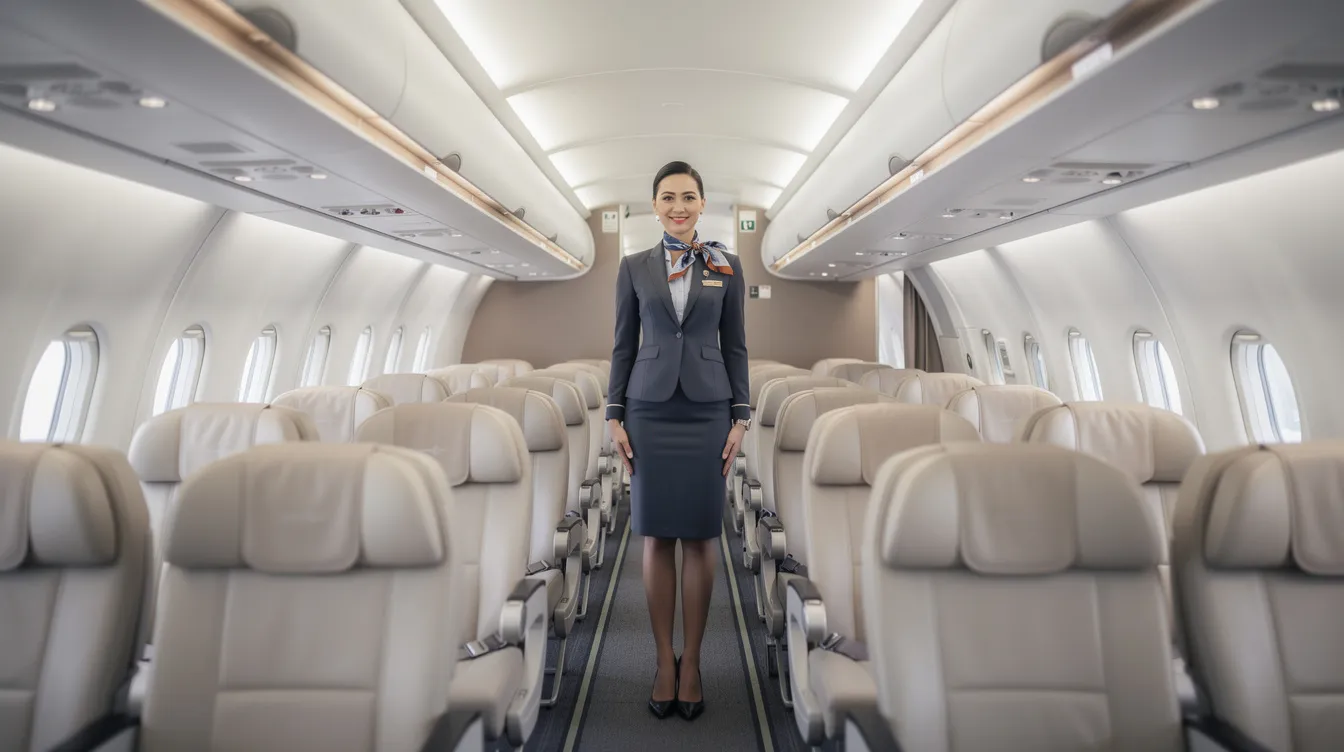
The term 'stewardess' has evolved into the more inclusive 'flight attendant,' reflecting the significant changes in the role from the mid-20th century to today. Modern flight attendants are trained safety professionals responsible for passenger safety, emergency response, and in-flight service, contrasting sharply with the outdated stereotypes of glamorous service. This article explores the history, training, and responsibilities of today's cabin crew across commercial and private aviation.
Read More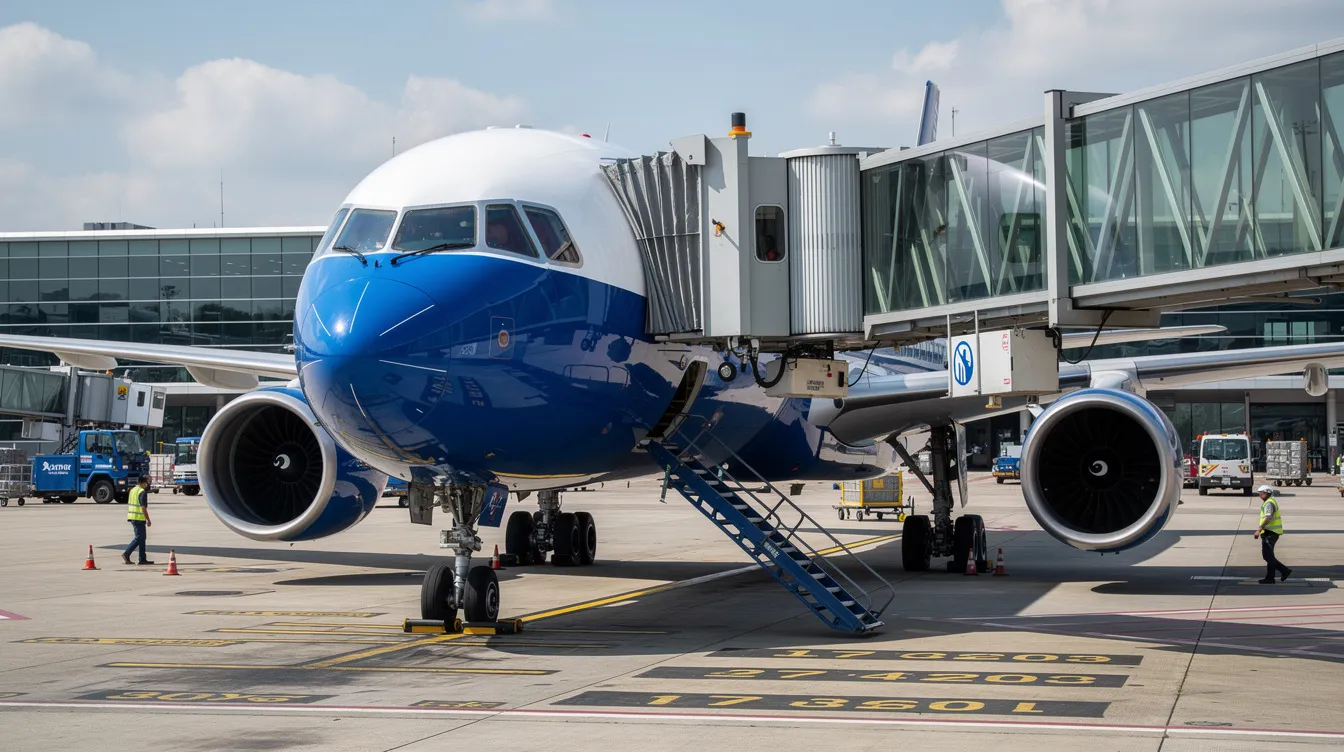
5
min read
DL 767: Delta Air Lines Flight DL767, Boeing 767‑300ER & Private Jet Alternatives
Delta Air Lines Flight DL 767 connects New York and Los Angeles using a Boeing 767-300ER, known for its reliability and comfort. This article explores the flight's features, the aircraft's specifications, and private jet alternatives for travelers seeking flexibility. With Delta planning to retire the 767-300ER by 2030, understanding your options is crucial for future travel.
Read MoreStay updated with our latest insights and tips to elevate your journey with us.
MEMBERSHIPS AND ASSOCIATIONS



Disclaimer: Jettly operates as a charter broker, offering access to a global digital jet charter marketplace. Jettly is not a direct air carrier and does not own or operate aircraft. All advertised flights are conducted by third-party air carriers that are fully licensed and hold the appropriate Part 135 or Part 121 certifications issued by the Federal Aviation Administration (FAA) or equivalent regulatory authorities under U.S. or foreign law. Jettly complies fully with the U.S. Department of Transportation's Part 295 and Part 298 Charter Broker regulations. Jettly does not carry additional liability insurance. Passengers are covered by aircraft operator insurance. TICO: 50023770


