


Login
Get Instant Pricing On 23,000+ Aircraft

>
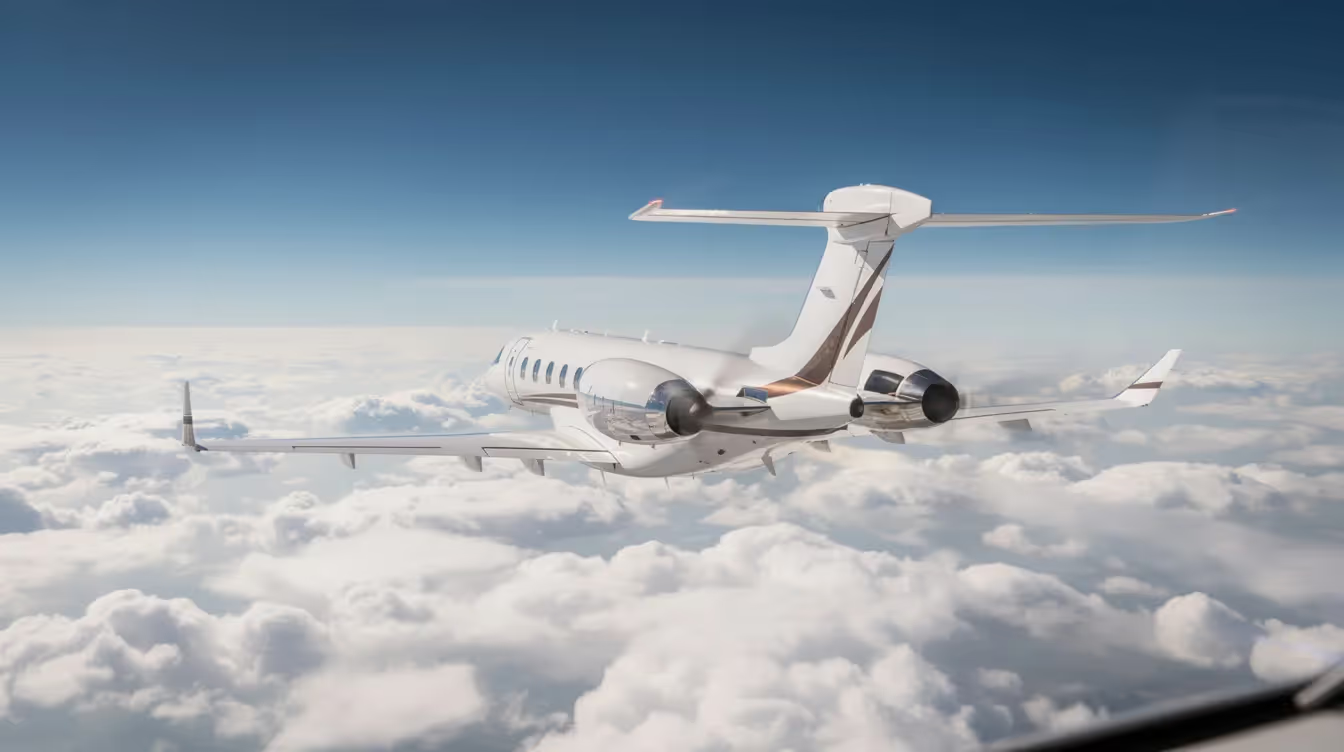
The H25B aircraft code appears frequently in charter searches, flight plans, and aviation databases—but what exactly does it represent? This guide breaks down everything private jet charter clients need to know about the Hawker 800 series, from performance specifications to cabin comfort and booking options through Jettly’s digital marketplace. Originally developed by British Aerospace, the Hawker 800 program was later acquired by Raytheon; the aircraft was improved and sold to Raytheon, leading to widespread production and commercial availability under various model names.
H25B is the ICAO aircraft type designator used for the Hawker 800 family, including the Hawker 800, 800A, 800XP, and related variants—a midsize twin-engine business jet ideal for regional and transcontinental private charter.
The Hawker 800XP typically cruises around 400 knots (approximately 740 km/h) with a maximum range of 2,190 nautical miles (about 4,070 kilometers), making it well-suited for routes like New York–Miami, Chicago–Denver, or London–Athens.
Over 1,000 Hawker 800 series aircraft have been built across all versions, creating strong availability in global charter fleets and competitive hourly rates compared to newer midsize jets.
Jettly’s platform lists multiple H25B aircraft globally, offering instant pricing, on-demand charter access, and side-by-side comparisons with other midsize jet options.
This article covers performance data, cabin experience, safety considerations, and how to charter an H25B aircraft through Jettly.
H25B is the ICAO code assigned to the Hawker 800 series of business jets. When users search for private charters or pilots file flight plans, this four-character designator tells air traffic control and booking platforms exactly which aircraft type is involved. It covers the Hawker 800, 800A, 800XP, and closely related variants within the midsize jet category.
The relationship between different models can seem confusing at first. The Hawker 700 preceded the 800 series, while later variants like the Hawker 800XP and 850XP refined the design further. For charter platforms and ATC purposes, H25B serves as a generic label grouping these similar aircraft together.
Key characteristics of the H25B include:
Twin-engine business jet configuration
Typical flight crew of two pilots
Seating for eight passengers in standard layouts, with a maximum capacity of fourteen in high-density configuration
Common missions include business shuttles, regional hops, and transcontinental flights
The manufacturer's history traces back to British Aerospace and the BAe-125 program in the 1960s–1970s. Raytheon acquired the program and developed it into the Hawker 800, with Hawker Beechcraft continuing production through the 2000s.
When browsing midsize jets on Jettly, users may see listings displayed as “H25B (Hawker 800/800XP)” to clarify the specific aircraft type available for charter.
The H25B designation primarily applies to the Hawker 800 family, though its roots extend back to earlier models. Understanding this lineage helps charter clients appreciate why the aircraft type remains so prevalent in today’s market. Among the most frequently encountered variants are the Hawker 800A and 800XP. It is easy to distinguish the Hawker 800A from the 800XP, as the 800A is easy to identify due to having winglets, whereas the 800XP does not.
Late 1970s: Hawker 700 enters service as an evolution of the original de Havilland DH.125 design
1984: Hawker 800 introduced with improved performance and cabin refinements
Mid-1990s (c. 1995): Hawker 800XP launched with upgraded Honeywell TFE731-5BR engines and enhanced climb/range capabilities
2006: Hawker 850XP certified, adding blended winglets for approximately 100 nautical miles of additional range
The Hawker 800 series includes several models, such as the Hawker 800A, 800SP, 800XP, and 850XP, and has been in service since 1977, with the 800 model introduced in 1984.
|
Feature |
Hawker 800 |
Hawker 800XP |
|---|---|---|
|
Engine Thrust |
~3,650 lbf |
~4,660 lbf |
|
Range |
~2,100 NM |
~2,500 NM |
|
Climb Performance |
Standard |
Improved 8% |
|
External Baggage |
Limited |
Up to 45 cu ft |
The Hawker 800 series is known for being one of the most popular private jets in the industry, with over 1,000 aircraft built across all versions. This production volume means H25B remains one of the most commonly available midsize jets in global charter fleets.
For charter clients, the most frequently encountered variants are the Hawker 800A and 800XP. Both offer nearly identical cabin dimensions, though the 800XP delivers slightly better performance profiles for longer routes or challenging airports, making Hawker 800XP private jet rentals a popular option for business and leisure travel.
This section provides high-level performance data relevant to charter planning rather than technical flight-manual specifications. These figures help travelers understand what routes are practical and what to expect from an H25B charter, complementing broader guidance on finding the best cross-country plane for your travel journey.
The H25B has a typical cruise speed of approximately 400 knots (around 740 km/h). At optimal cruise altitude, the aircraft achieves:
Long-range cruise: Mach 0.75 (400–430 kt TAS)
Maximum cruise: Mach 0.86 (approximately 463 kt)
Typical cruise altitude: FL 370–FL 410
The H25B has a maximum range of 2,190 nautical miles (approximately 4,070 kilometers). This makes it suitable for routes such as:
Toronto–Calgary
New York–Dallas
Paris–Moscow
Chicago–Denver
Los Angeles–Houston
Actual range depends on payload, weather conditions, and required fuel reserves.
The initial climb rate of the H25B is 2,000 feet per minute when climbing to 5,000 feet, with sustained climb rates around 1,500–2,000 ft/min to higher altitudes. The certified service ceiling reaches FL 410 (41,000 ft), allowing the aircraft to cruise above most weather and commercial traffic.
Typical runway requirements include:
Takeoff distance: 1,600–1,800 m at maximum weight
Landing distance: 900–1,000 m on dry runways
These figures give the H25B good access to regional and secondary airports like Teterboro (TEB), Aspen (ASE), or London Luton (EGGW).
Jettly’s instant pricing system factors performance data like range and field length into aircraft suggestions when users enter departure, destination, and passenger count, and travelers can use the private jet charter cost estimator to preview how these variables influence trip pricing.
The H25B aircraft type designation connects to regulatory and operational categories that charter clients may encounter in booking confirmations, flight plans, and aviation databases.
ICAO Type: H25B
Aircraft Category: L2J (landplane, two engines, jet)
Wake Turbulence Category: Medium (WTC M)
IATA Code: H25
The Hawker 800 series, including the H25B, has a maximum takeoff weight (MTOW) of 12,700 kg, placing it firmly in the medium wake turbulence category alongside other midsize business jets, and sits within Jettly’s broader portfolio of private charter aircraft available worldwide.
The H25B has a wingspan of 16.6 meters and a length of 15.6 meters. Additional specifications include:
Height: approximately 5.5 m
Wing configuration: Low-wing design
Engine placement: Rear fuselage-mounted
The aircraft features a distinctive cruciform tail and tricycle retractable landing gear, giving it the recognizable Hawker profile familiar to aviation enthusiasts and frequent charter clients alike.
The H25B model, part of the Hawker 800 series, features a shorter fuselage and is recognized for its twin turbofan engines, which provide significant performance capabilities. Engine variants include:
Hawker 700: Garrett TFE731-3 series (~16.2 kN thrust)
Hawker 800/800XP: Honeywell TFE731-5 series (~20.7 kN thrust)
The aircraft is certified for two-pilot crew operations under business jet regulations. H25B flights chartered through Jettly are always operated by licensed carriers compliant with regional authorities such as FAA Part 135 or EASA standards.
The Hawker 800/800XP cabin remains a primary reason for the aircraft’s enduring popularity in the midsize private jet segment. While not a stand-up cabin for most adults, it delivers comfortable seated headroom and practical amenities for flights lasting several hours.
Height: approximately 1.75 m (5 ft 9 in)
Width: approximately 1.83 m (6 ft)
Length: approximately 5.79 m (19 ft)
The aircraft can accommodate a flight crew of two and typically seats eight passengers, with a maximum capacity of fourteen in a high-density configuration for shuttle operations, and its layout also works well for crowdsourced and shared private jet flights where travelers book individual seats.
Common layouts include:
Four-seat club arrangement (two facing pairs)
Three-seat divan opposite the club
One or two individual seats
Typical charter configuration: 7–9 passengers
Fully enclosed aft lavatory
Forward refreshment center with sink and microwave
110V and USB power outlets (standard on post-2000 refurbishments)
In-flight Wi-Fi via Iridium Certus or Gogo systems on approximately 70% of the active fleet
Optional in-flight catering through Jettly Eats on many charter routes
Internal baggage space: 48–50 cubic feet
External baggage on 800XP variants: up to 45 cubic feet

The H25B cabin offers more width and luggage capacity than light jets, making it considerably more comfortable for 4–6 hour journeys. The 1.83 m cabin width provides better shoulder room than comparable aircraft like the Citation XLS+ (1.74 m) or Learjet 60 (1.55 m), which matters when executives need to work or families want to relax during flight.
Understanding when the Hawker 800/800XP excels helps charter clients match their travel needs with the right aircraft type or even explore more general guidance on how renting a plane works, including whether nearby airports identified with Jettly’s airport locator tool are suitable for H25B operations.
The H25B handles these non-stop routes comfortably within its range capabilities:
New York–Miami (1,070 NM)
Chicago–Denver (880 NM)
Los Angeles–Houston (1,240 NM)
London–Athens (1,500 NM)
Dubai–Mumbai (980 NM)
Toronto–Vancouver (2,000 NM with favorable conditions)
Executive teams visiting multiple cities in one day, often planning budgets in advance with a jet card flight cost estimator and deciding whether jet rentals or first-class tickets make more sense for corporate travel
Board meetings are conducted during flight using fold-out tables
Connecting regional offices where commercial schedules involve inefficient layovers
Last-minute travel when flexibility matters more than advance booking
Family ski trips to mountain destinations like Aspen
Golf weekends requiring equipment transport
Short-notice escapes to islands and coastal resorts
Group travel where the midsize cabin keeps everyone comfortable
Jettly’s marketplace displays multiple H25B options side-by-side, allowing travelers to compare:
Year of manufacture (mid-1990s to mid-2000s models)
Interior refurbishment status
Operator ratings and certifications
Available amenities like Wi-Fi
When comparing with other midsize jets such as the Citation XLS+ or Learjet 60, the Hawker 800XP often stands out for cabin width and competitive hourly rates due to its abundant market supply, especially for travelers using Jettly’s guidance on affordable private jet charter pricing.

Like all widely operated business jets, the H25B family has experienced incidents over its decades of service. These events are studied to continuously improve safety across the industry.
Analysis of accidents associated with the Hawker 800 series shows that most relate to operational or environmental factors rather than inherent design flaws. Contributing factors have included:
Weather conditions during the approach
Icing encounters
Human factors in decision-making
Controlled flight into terrain (CFIT)
The aircraft type itself has logged over 10 million flight hours since 1984, earning a reputation for structural robustness and dependable systems among operators and pilots worldwide.
Charter flights arranged through Jettly are operated only by certified air carriers meeting local regulatory safety standards:
FAA Part 135 compliance in the United States
EASA operator certification in Europe
Manufacturer-recommended maintenance schedules (such as Phase 5 inspections every 96 months)
Many Jettly partner operators hold ARGUS Platinum ratings, exceeding baseline regulatory requirements, and travelers can deepen their understanding of these operators by reviewing how Part 135 charter companies operate.
Travelers can request safety audit information or operator certificates when booking an H25B aircraft through the Jettly platform. This transparency helps clients make informed decisions about their charter provider.
Booking a Hawker 800 or 800XP through Jettly’s digital platform is straightforward, whether users search by aircraft type or simply enter their route requirements.
Enter route, dates, and passenger count
View instant pricing based on current market conditions
Filter results by aircraft type (selecting H25B)
Compare cabin photos, year of manufacture, and operator ratings
Confirm booking and arrange additional services
Midsize jet hourly charter rates typically fall in a broad range depending on market conditions, routing, and availability. Real-time quotes on Jettly reflect key drivers of one private jet flight cost, such as:
Current fleet positioning
Fuel costs
Operator pricing structures
Seasonal demand factors
The mature supply of H25B aircraft often translates to competitive pricing compared to newer midsize jets with smaller production numbers, and frequent flyers may further optimize costs and convenience through Jettly’s jet card programs or by comparing the best jet card programs on the market today.
Jettly offers flexibility for different travel patterns through its private jet membership programs:
Frequent flyers: Membership options with lower per-flight fees or added services
Occasional travelers: Purely on-demand booking with no long-term commitments
Beyond the flight itself, Jettly can help coordinate:
Ground transportation to and from airports
In-flight catering preferences
Preferred departure times
Access to smaller regional airports closer to home or the final destination
Explore H25B availability and get instant pricing at https://www.jettly.com, or use Jettly’s broader tips on how to get a seat on a private jet easily if you’re exploring more flexible ways to fly.
The H25B family was designed decades ago, so it does not match the fuel efficiency of the latest-generation jets. However, it still offers competitive performance per passenger on typical midsize missions, especially when compared with newer models from leading private plane manufacturers for every budget and need.
Average block fuel burn runs 250–350 gallons per hour, depending on cruise altitude and weight. Filling most of the 7–9 seats improves per-passenger emissions significantly compared with lightly loaded flights, and some travelers address both cost and sustainability by buying a seat on shared private jet flights or weighing shared charter flights vs. full charters rather than chartering the entire aircraft.
Several factors can reduce fuel burn on H25B operations, and working with experienced brokers and operators, such as those highlighted in Jettly’s Dexter Air Taxi partner profile, can help ensure efficient routing and aircraft selection:
Modern avionics upgrades enabling RNP/RNAV approaches, which many operators in Jettly’s network—such as Zenflight’s private jet services—have adopted
Optimized flight planning for favorable winds
Continuous descent approaches where ATC permits
Efficient cruising levels (FL 370–FL 410), which support nonstop H25B routes like New York–Miami or private jet charters to Houston
Some operators partnering with Jettly offer carbon offset programs or participation in sustainable aviation fuel (SAF) initiatives. Travelers can inquire about these options when booking an H25B charter to address environmental concerns, whether they are flying to major hubs or emerging destinations such as Hyderabad by private jet.
The H25B (Hawker 800/800XP) competes with several other midsize jets commonly available through Jettly, including the Cessna Citation XLS+, Learjet 60, and Gulfstream G150.
Cabin Width: The H25B’s 1.83 m width edges out the Citation XLS+ (1.74 m) and Learjet 60 (1.55 m), providing better shoulder room for passengers.
Range: Similar to the G150 (approximately 2,700 NM), though specific mission requirements may favor one aircraft over another.
Charter Pricing: H25B often costs 20–30% less than some competitors due to its larger fleet size (2,000+ units in service) and mature market supply.
Availability: Strong global availability makes last-minute H25B charters more feasible than rarer aircraft types, supporting spontaneous trips to busy centers like Kolkata via private jet charter.
The Hawker 800XP delivers a strong value proposition in charter pricing because of its proven track record, abundant supply, and reliable performance. For travelers prioritizing cabin comfort and competitive rates over having the newest aircraft, the H25B remains an excellent choice, particularly when leveraging Jettly as a flexible NetJets alternative.
Longer routes: Super midsize jets may be necessary for distances exceeding 2,500 NM
Very short sectors: Light jets or turboprops could be more economical for hops under 300 NM
Stand-up cabin required: Larger midsize or super-midsize aircraft offer taller cabins
Jettly’s comparison tools and customer support help travelers decide whether an H25B or an alternative aircraft type better fits their specific mission profile.

This FAQ addresses common questions about H25B aircraft that charter clients frequently ask when researching their options, while separate resources, such as Jettly’s ULTRA high ticket affiliate program, speak to partners interested in referring those clients and broader guides to the best private jet charter companies support provider selection decisions.
H25B is an ICAO aircraft code used for flight plans and databases. It typically refers to the Hawker 800 family, including the 800A and 800XP variants. From a passenger perspective, Hawker 800 and 800XP cabins feel very similar, but the 800XP typically has improved engines and slightly better climb and range performance. The Hawker 750 represents a different variant within the broader Hawker family.
Standard baggage capacity accommodates approximately 6–8 medium suitcases plus small carry-on bags. Internal baggage space totals 48–50 cubic feet, with external compartments on 800XP variants adding up to 45 cubic feet. Exact capacity depends on the specific aircraft and interior layout. Travelers should share details of skis, golf bags, or oversized items with Jettly when requesting a quote so the platform can match them with a suitable H25B aircraft.
Wi-Fi and power options vary by operator and individual aircraft. Approximately 70% of the active Hawker 800/800XP fleet has been upgraded with modern connectivity via Iridium Certus or Gogo systems. Older cabins may lack these features. Jettly users should confirm Wi-Fi availability and charging options at the quote stage if they plan to work online during the flight. Most post-2000 refurbishments include 110V and USB power outlets as standard.
Many operators apply a minimum flight time of 1.0–1.5 flight hours per leg for midsize jets like the H25B, even on very short routes. This covers positioning costs and operational overhead. Jettly’s instant pricing and customer support can clarify applicable minimums and advise if a smaller aircraft type might be more cost-effective for very short hops, and broader overviews like Jettly’s ultimate list of charter airlines can also help travelers understand the wider private aviation landscape.
The Hawker 800/800XP handles many regional and secondary airports thanks to its balanced field performance, with takeoff distances around 1,600–1,800 m and landing distances near 900–1,000 m. However, it still requires paved runways of adequate length and load-bearing capacity. Travelers should share preferred airports or nearby alternatives with Jettly so routing and aircraft suitability can be checked against runway length, elevation, and local regulations. Airports like Teterboro (TEB) and Aspen (ASE) are well within the aircraft’s capabilities.
Ready to experience private travel on your terms? Explore H25B flight options or request a quote at https://www.jettly.com, and review Jettly’s insights on jet card costs and pricing structures if you expect to fly frequently.
The H25B aircraft, encompassing the Hawker 800 and 800XP models, remains a reliable and popular choice for private jet charters. Its balanced performance, comfortable cabin, and strong availability make it an excellent option for both business and leisure travelers seeking midsize jet convenience. With competitive pricing and versatile range capabilities, the H25B suits a wide variety of routes and mission profiles.
Jettly’s digital platform simplifies the charter process by providing instant pricing, transparent options, and access to a global inventory of H25B aircraft. Whether booking on-demand or exploring membership benefits, travelers can efficiently compare aircraft and operators to find the best fit for their needs, much like they might when evaluating established providers such as NetJets, the industry leader in private aviation.
Ready to experience private travel on your terms? Explore H25B flight options or request a quote at https://jettly.com. As you compare options, high-level overviews like the ultimate list of charter airlines can provide additional context on operators and service models across the private aviation market.
Share this post:
Jay Franco Serevilla
May 11, 2026
|
5
min read
Discover tips and trends in the industry.
5
min read
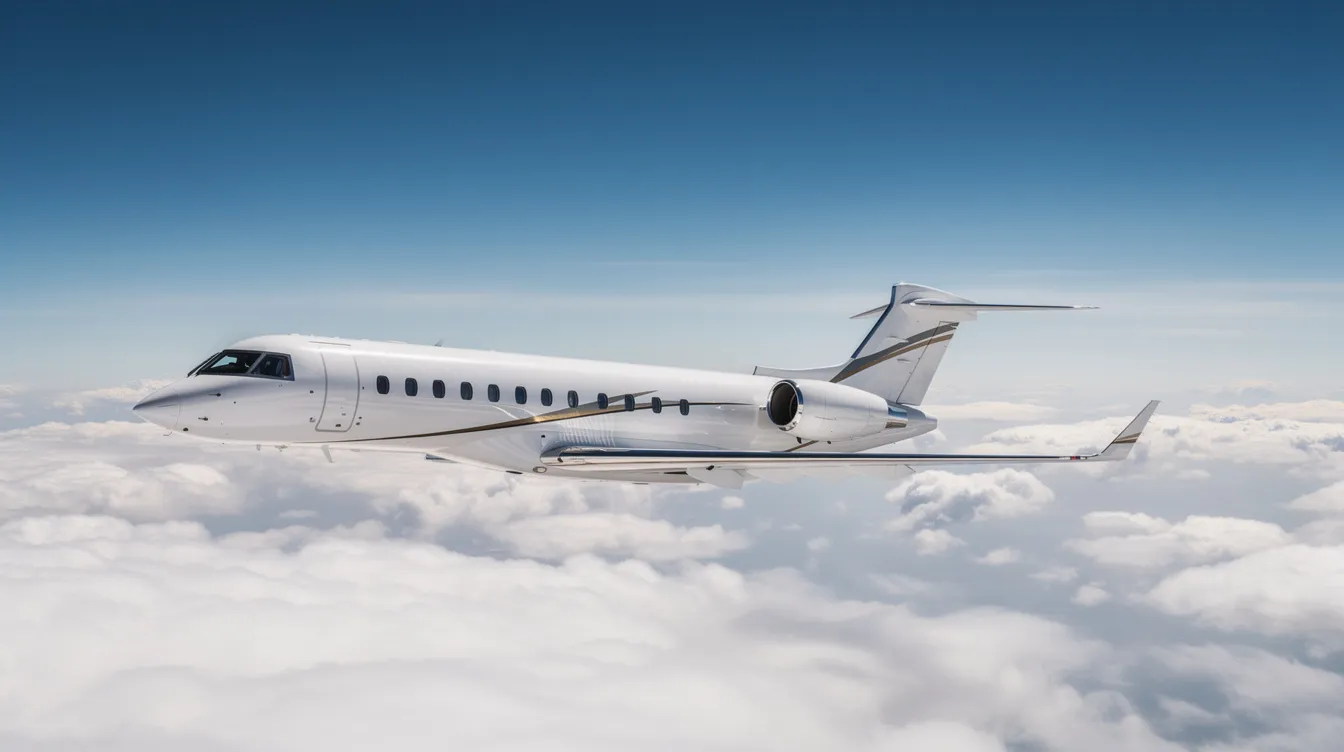
Hawker Beechcraft: Aircraft Family, History, and Charter Insights
Hawker Beechcraft, a prominent name in private aviation, combined the legacies of Beechcraft and Hawker to produce a diverse fleet of business jets and turboprops. Although the company no longer exists, its aircraft continue to operate globally, supported by Textron Aviation. This guide explores the history, aircraft families, and charter options available through platforms like Jettly.
Read More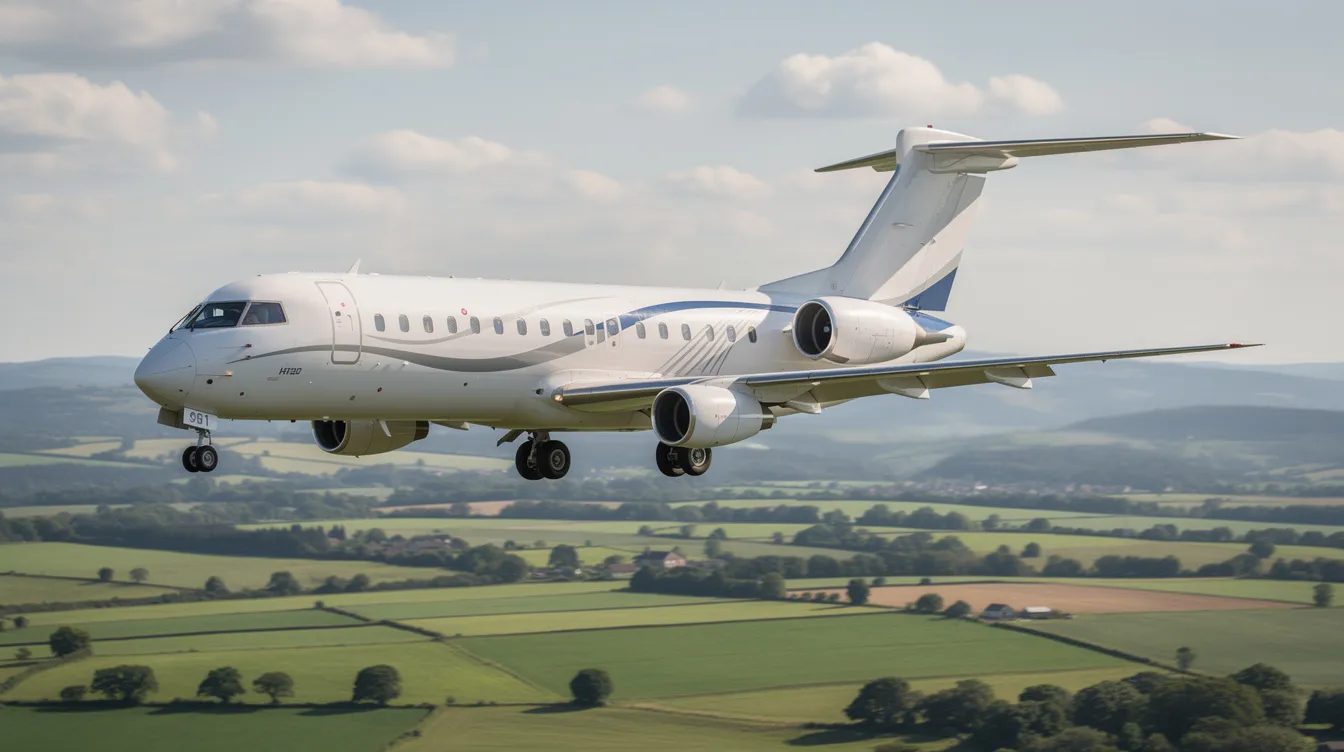
5
min read
British Aerospace BAe 146: Overview and Charter Guide
The British Aerospace BAe 146, known as the 'Whisperjet,' is a versatile regional jet designed for short runways and noise-sensitive airports. With a capacity ranging from 70 to 112 passengers, it serves various roles including passenger transport, cargo, and specialized missions. This guide provides insights into the BAe 146's history, design, operational capabilities, and charter options for travelers seeking access to challenging airports.
Read MoreStay updated with our latest insights and tips to elevate your journey with us.
MEMBERSHIPS AND ASSOCIATIONS



Disclaimer: Jettly operates as a charter broker, offering access to a global digital jet charter marketplace. Jettly is not a direct air carrier and does not own or operate aircraft. All advertised flights are conducted by third-party air carriers that are fully licensed and hold the appropriate Part 135 or Part 121 certifications issued by the Federal Aviation Administration (FAA) or equivalent regulatory authorities under U.S. or foreign law. Jettly complies fully with the U.S. Department of Transportation's Part 295 and Part 298 Charter Broker regulations. Jettly does not carry additional liability insurance. Passengers are covered by aircraft operator insurance. TICO: 50023770


