


Login
Get Instant Pricing On 23,000+ Aircraft

>
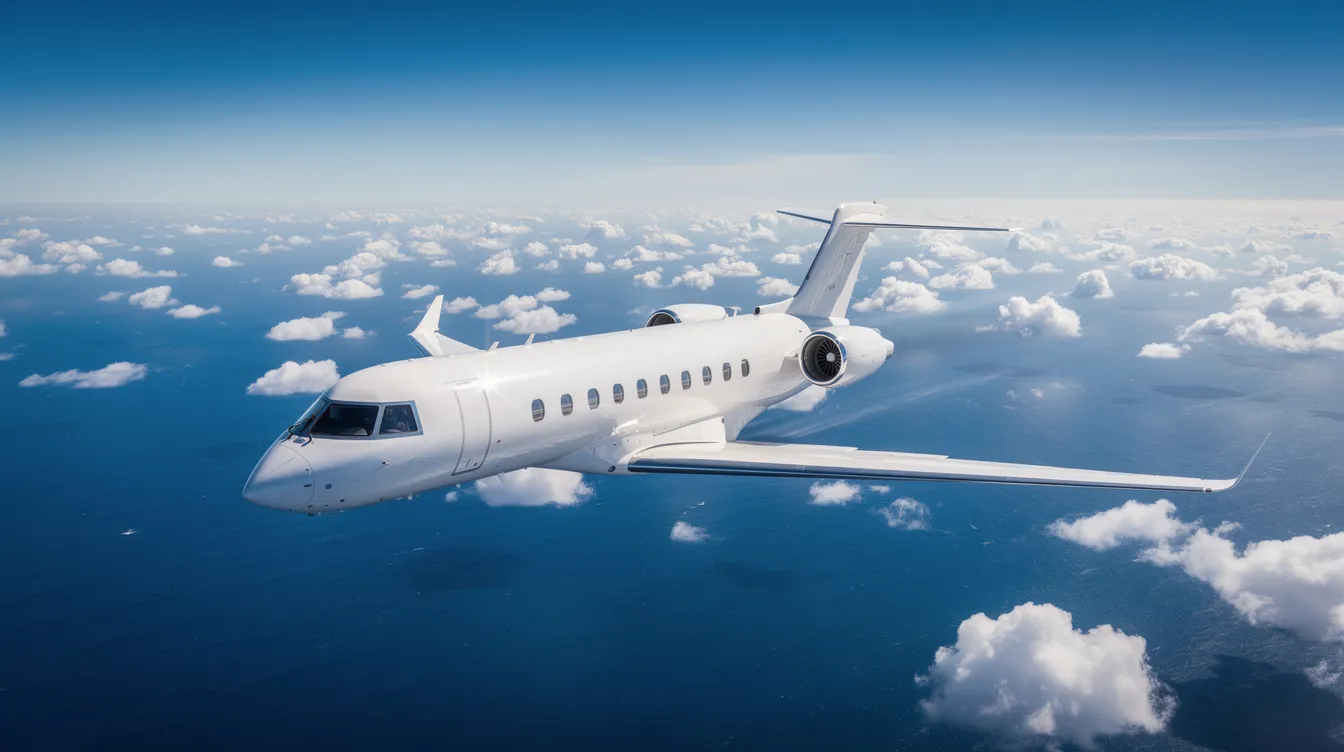
The Gulfstream GV range makes it one of the most capable intercontinental business jets ever built. Whether you are a corporate executive planning global business trips, a high-net-worth individual seeking seamless international travel, or an aviation enthusiast interested in the technical prowess of long-range jets, understanding the Gulfstream GV’s range is crucial for making informed decisions. The ability to fly nonstop between distant city pairs not only saves time but also enhances comfort and productivity during travel. This guide is intended for prospective buyers, charter clients, and aviation enthusiasts seeking detailed information on the Gulfstream GV’s range, performance, and ownership options.
The Gulfstream GV-first certified in 1997-pioneered the ultra-long-range business jet category and fundamentally changed intercontinental private aviation when introduced. It was the world's first ultra-long-range business jet, setting a standard that newer aircraft still follow.
The Gulfstream V offers a maximum range of about 6,500 nautical miles (roughly 12,038 km) under typical long range cruise conditions. That impressive range enables nonstop missions such as New York–Tokyo, London–Singapore, or Los Angeles–Paris, depending on payload and weather.
For real-world mission planning with IFR reserves, normal operational range for the Gulfstream GV is about 6,250 nautical miles. Operators build in margins for headwinds, diversions, and missed approaches.
The GV cruises at long range cruise speed around Mach 0.80 and can fly at higher cruise speeds up to approximately Mach 0.885, with a modest range penalty. Travelers who want to access this performance without owning the aircraft can do so through Jettly's charter platform, which also offers comparable Gulfstream options such as Gulfstream G-IVSP N144AB.
The Gulfstream GV is an ultra long range business aircraft produced from 1995 to 2002, with approximately 193 units built. Often referred to as the Gulfstream V, it set the benchmark for the longest-range business jet at the time of certification.
Key specifications:
Maximum range: 6,250–6,500 nm
Maximum operating Mach: ~0.885
Service ceiling: 51,000 feet
The Gulfstream GV typically seats 13 passengers in its most popular configuration seats, with high-density layouts able to accommodate up to 18 passengers
Cabin length is approximately 50 feet across three distinct cabin zones
Includes a full-sized galley and separate lavatories
The GV introduced a stretched fuselage, larger wing span, and two Rolls-Royce BR710 engines compared with earlier Gulfstream aircraft, enabling true intercontinental and transpacific reach. The aircraft is still widely used across corporate fleet operations, private ownership, and government roles-including Air Force and Coast Guard missions such as those based at Hickam Air Force Base-thanks to its combination of range, reliability, and cabin comfort, with many operators fielding complementary models like the Gulfstream G-450.
In business aviation, "range" refers to the maximum distance an aircraft can fly nonstop under specific conditions, typically with standard passengers and required fuel reserves.
Range in business aviation is defined under NBAA IFR reserves with standard passengers and economical cruise profiles. For a long range business jet like the Gulfstream GV, this matters because regulatory fuel reserves requirements directly affect operational range.
The GV delivers a maximum range of about 6,500 nautical miles at long range cruise, with a practical planning range of roughly 6,250 nm factoring in real-world conditions, similar to charterable examples like Gulfstream GV N150WJ. The GV can climb to 37,000 feet in just 18 minutes and can cruise at an altitude of 51,000 feet, where operational efficiency improves thanks to reduced drag and thinner air.
Long range cruise vs. high-speed cruise:
Long range cruise: ~Mach 0.80, maximizing fuel efficiency and distance
High-speed cruise: ~Mach 0.85–0.875, saving time with a minor range tradeoff
Flying faster increases fuel burn and reduces range
Concrete city-pair examples within the GV's capability under favorable conditions include New York–Tokyo, New York–Dubai, London–Singapore, and Los Angeles–Hong Kong, which are typical missions for ultra long range aircraft such as Gulfstream GV N702QV. The Gulfstream GV can perform nonstop flights from New York to Tokyo-a route that showcases its full intercontinental reach.
Several other factors influence actual range. Wind conditions significantly influence effective range: headwinds can reduce total flight range while tailwinds can extend it. Payload weight inversely affects range due to increased fuel consumption, and max takeoff weight limits how much fuel and cargo can be carried simultaneously. Weather deviations and ATC routing can affect the actual distance traveled. Operational factors such as weather and altitude can also limit range.
For charter clients, Jettly and its operators use performance planning tools to confirm whether a specific nonstop route is viable or if a technical stop is advisable, drawing on a global fleet of private charter aircraft and an airport locator tool to match suitable departure and arrival airports.
The GV's cabin was designed for long range comfort, focused work, and sleep on flights lasting 10–13 hours. Its dimensions are generous compared with smaller business jets, including other Gulfstream models like the Gulfstream G-IVSP N394AK:
Cabin length: approximately 50 ft 10 in (≈15.5 m)
Cabin width: around 7 ft 4 in (≈2.2 m)
Cabin height: approximately 6 ft 2 in (≈1.9 m)-enough for most adults to stand upright
Cabin volume: over 1,600 ft³
Baggage space: roughly 220–226 ft³
The typical three-zone layout divides the space into a forward club seating area for meetings, a mid cabin conference or dining area with fold out tables, and an aft section lounge convertible to sleeping berths, mirroring layouts found on aircraft such as Gulfstream G-IVSP N415MA.
These living areas allow passengers to separate work, dining, and rest. Large windows bring in natural light, while a full-sized galley and dedicated crew area support extended missions. The cabin can accommodate maximum payload configurations for shorter legs or spread out for overnight intercontinental flights.
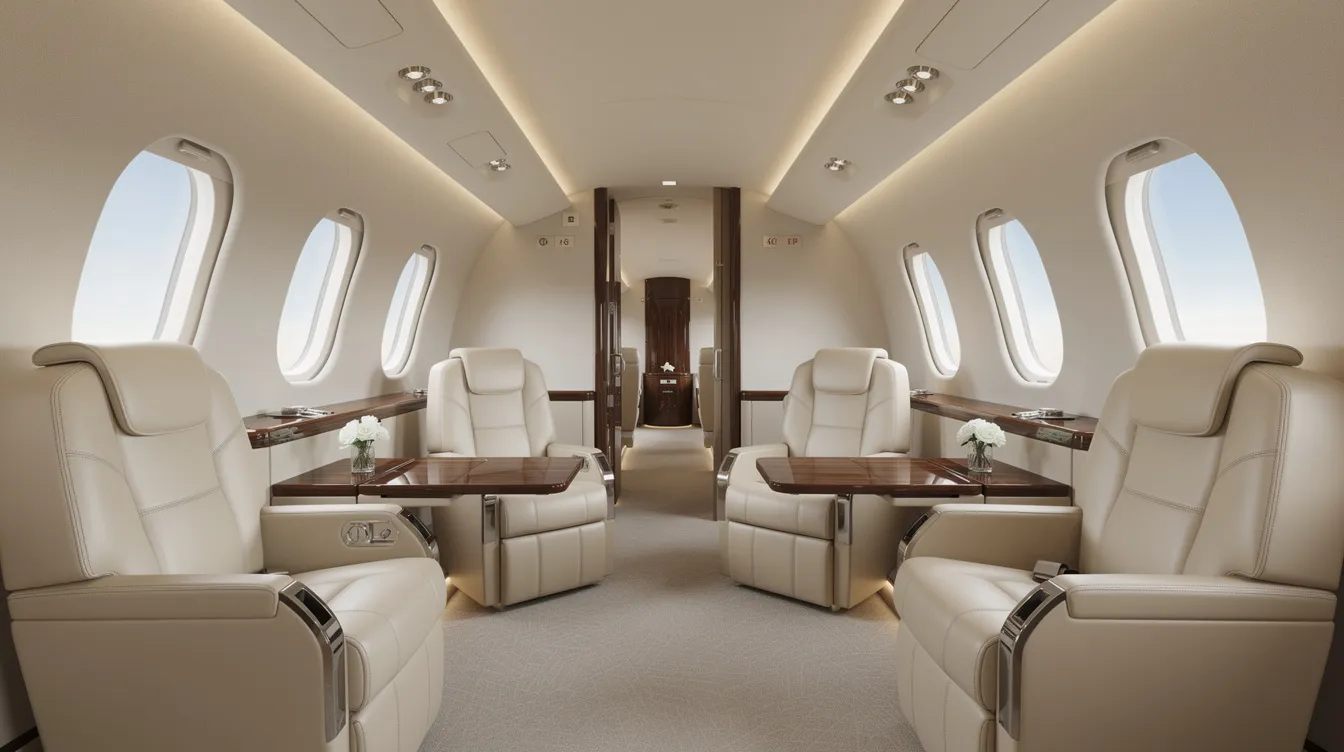
The GV cabin is optimized for productivity and rest on ultra-long-range missions that use the aircraft's full range. Seating in the most popular configuration seats 13 passengers across club, conference, and divan arrangements, with many seats converting to lie-flat beds for overnight segments, similar to long range layouts on Gulfstream G-IV N39AV.
Upgraded GVs are commonly outfitted and equipped with:
High-speed Wi-Fi and satellite communications for VPN and video calls
Satellite TV and multimedia entertainment systems with multiple monitors
Power outlets at every seat position for devices and focused work
Environmental comfort factors include relatively low cabin altitude compared to airliners, a quiet fuselage, advanced climate control, and LED lighting adjustable for different flight phases. The galley handles hot meal service, espresso machines, and refrigeration-enough for 10–13 hour trips.
Multi-zone living areas let some passengers hold meetings in club seating while others sleep in the aft section. For Jettly clients, specific Gulfstream interiors can be selected based on needs-boardroom-style layouts for business or lounge-focused configurations for family and leisure travel- accommodating high net worth individuals and corporate teams alike, with bespoke menus available through Jettly Eats in-flight catering.
While the Gulfstream GV is a legacy ultra-long-range business jet, its technology and safety systems remain competitive after avionics modernizations.
Engines: Two Rolls Royce BR710-A1-10 turbofans (the Rolls Royce engine model designated for the GV), each rated around 14,750 lb of thrust. With a high bypass ratio of approximately 4.2, these engines balance power, long range fuel efficiency, and reliability for transoceanic missions. Fuel consumption for the Gulfstream GV is 500 gallons per hour.
Avionics: The Gulfstream GV features the Honeywell SPZ-8500 avionics suite with six-tube EFIS, triple flight management systems, and enhanced weather radar.
Safety and situational awareness:
Head up display for precision approaches
It is equipped with an enhanced vision system for low-visibility landings
The aircraft includes a Terrain Awareness and Warning System
TCAS 7.1 and ADS-B Out compatibility
Many GVs aircraft operated on long range charter missions are equipped for oceanic navigation with FANS-1/A+ and CPDLC, and are flown by certified Part 135 charter companies that meet rigorous safety and regulatory standards. The Honeywell RE220 auxiliary power unit provides independent ground power and cabin conditioning, improving turnaround times at airports worldwide.
Owning a Gulfstream GV requires significant capital investment. The original new price was around $42.2 million in the early 2000s. Current pre-owned values range from roughly $6–14 million depending on year, total time, and upgrades, which many compare against projected hourly rates using a jet card flight cost estimator.
Many high-utilization flyers also evaluate jet card programs as an alternative to whole-aircraft ownership, using resources that explain jet card costs and pricing structures and compare options including NetJets card prices and benefits.
Annual operating cost breakdown:
|
Cost Category |
Amount |
|---|---|
|
Annual fixed costs (crew, insurance, hangar, training) |
$1,025,174 |
|
Total variable costs (fuel, maintenance, engines, fees) |
~$2,215,200 |
|
Total annual operating cost |
~$3.8 million |
|
Hourly operating cost |
$7,384 |
Chartering avoids the $3.8 million annual operating costs of ownership entirely. Through Jettly's digital platform, clients pay only for the hours they fly. Travelers comparing options can review how much a private jet costs in terms of purchase price, financing, and long-term ownership commitments versus chartering. Charter rates vary based on journey length, airports, season, and landing distance requirements-but there are no long-term commitments and no responsibility for maintenance or crew management, and travelers can consult Jettly's guide on affordable private jet charter costs alongside resources on affordable aeroplane rent costs and options, a complete breakdown of private jet operating costs, and guidance on one private jet flight cost factors or a complete guide to private jet rental pricing to understand the full range of pricing drivers.
How it works: enter route and dates on the platform, see instant pricing on suitable long range aircraft including Gulfstream GV options, compare configurations using Jettly's private jet charter cost estimator, and confirm online. Chartering offers flexibility without long-term commitments and provides access to over 20,000 aircraft globally through Jettly's network.
The Gulfstream GV has a maximum range of approximately 6,500 nautical miles, enabling nonstop intercontinental flights such as New York to Tokyo or London to Singapore.
The Gulfstream GV typically seats 13 passengers in its most common configuration, but can accommodate up to 18 passengers depending on the interior layout.
The GV cruises at a long range cruise speed of about Mach 0.80 and can reach high-speed cruise speeds up to approximately Mach 0.885.
The Gulfstream GV can climb to 37,000 feet in approximately 18 minutes and has a service ceiling of 51,000 feet.
Annual operating costs average around $3.8 million, including fixed costs such as crew, hangar, and insurance, and variable costs like fuel and maintenance. The hourly operating cost is about $7,384.
Yes, Jettly offers access to Gulfstream GV aircraft through its digital marketplace with instant pricing and booking options, providing flexibility without long-term ownership commitments.
The Gulfstream GV is equipped with the Honeywell SPZ-8500 avionics suite, enhanced vision systems for low-visibility landings, Terrain Awareness and Warning System, and offers connectivity options such as Ka-band Wi-Fi.
The GV excels on ultra-long-range routes such as New York to Tokyo, London to Singapore, and Los Angeles to Paris, where nonstop capability and cabin comfort are essential.
Chartering a Gulfstream GV avoids the high capital investment and $3.8 million annual operating costs of ownership. It offers flexible access to the aircraft on demand, transparent pricing, and no responsibility for maintenance or crew management.
The Gulfstream GV is most valuable when its long range and large-cabin capabilities are fully utilized across demanding missions, fitting squarely within the broader landscape of charter airlines and private aviation.
Business use cases:
Nonstop New York–Tokyo for a product launch, arriving rested for morning meetings
Multi-city investor roadshows: London–Johannesburg–Dubai in a single trip
Executive teams connecting financial centers like New York, London, and Hong Kong without commercial layovers
Leisure scenarios:
Family travel from North America to Southeast Asia or the Maldives
Europe to Australia with a single technical stop, maximizing time at the destination
Government and special missions: Organizations such as NASA operate the GV for research flights, and military branches use it for strategic long range transport-a testament to the platform's reliability and endurance at distances few other heavy jets can match, even when compared with newer platforms like the Gulfstream G-550.
Jettly customers can tailor routes and schedules around time-sensitive plans-departing after a late meeting, combining business and leisure legs, or flying nonstop where the specifications allow, and may further reduce per-seat costs by crowdsourcing private jet flights and sharing empty seats. Whether the subject is a board meeting in Tokyo or a family holiday in the Maldives, the Gulfstream GV range delivers intercontinental capability in a proven, comfortable aircraft.

Ready to experience private travel on your terms? Explore flight options or request a quote at Jettly.
Share this post:
Jeff Ryan Serevilla
Oct 4, 2026
|
5
min read
Discover tips and trends in the industry.
5
min read
Free Flight Tracker: How to Monitor Commercial and Private Flights in Real Time
Free flight trackers have revolutionized how we monitor aircraft in real-time, providing accessible tools for tracking both commercial and private flights. These platforms aggregate data from various sources to deliver live updates on flight status, routes, and estimated arrivals. While free versions offer essential features, premium options and services like Jettly enhance the experience by enabling booking and detailed trip management.
Read More
5
min read
Nearest Private Airport: How to Find the Best Option for Your Next Private Jet Flight
Finding the nearest private airport can significantly reduce travel time for private jet travelers. Jettly's platform simplifies the process by identifying suitable airports based on various factors, including runway length and customs availability. This guide provides insights into choosing the best airport for your private flight needs.
Read MoreStay updated with our latest insights and tips to elevate your journey with us.
MEMBERSHIPS AND ASSOCIATIONS



Disclaimer: Jettly operates as a charter broker, offering access to a global digital jet charter marketplace. Jettly is not a direct air carrier and does not own or operate aircraft. All advertised flights are conducted by third-party air carriers that are fully licensed and hold the appropriate Part 135 or Part 121 certifications issued by the Federal Aviation Administration (FAA) or equivalent regulatory authorities under U.S. or foreign law. Jettly complies fully with the U.S. Department of Transportation's Part 295 and Part 298 Charter Broker regulations. Jettly does not carry additional liability insurance. Passengers are covered by aircraft operator insurance. TICO: 50023770


