


Login
Get Instant Pricing On 23,000+ Aircraft

>

The Gulfstream G500 is a state-of-the-art business jet designed to meet the demands of modern corporate and private travelers. Combining long-range capability, advanced avionics, and a spacious, comfortable cabin, the G500 offers a compelling option for those seeking efficient, flexible, and reliable private air travel. This aircraft delivers superior speed and range, allowing nonstop flights on key global routes while providing the latest in safety and technology. Through platforms like Jettly, travelers can access the Gulfstream G500 for charter, benefiting from transparent pricing and on-demand availability without the need for ownership. This article explores the G500’s design, performance, cabin features, and how it fits into today’s private aviation landscape.
The Gulfstream G500 is a clean-sheet, next-generation heavy business jet with approximately 5,300 nautical miles of range and high-speed cruise near Mach 0.90, making it capable of nonstop transcontinental and transatlantic flights.
Entering service in 2018 as a replacement for the G450, the G500 offers significant improvements in speed, range, fuel efficiency, and cabin comfort.
The G500 is FAA- and EASA-certified for steep approach landings, allowing access to airports with steep terminal procedures, and can operate from runways as short as 5,000 feet, enhancing airport accessibility.
The Symmetry Flight Deck features active control sidesticks, fly-by-wire controls, synthetic vision, and an Enhanced Flight Vision System (EFVS) integrated into the head-up display (HUD) for improved situational awareness and low-visibility landings.
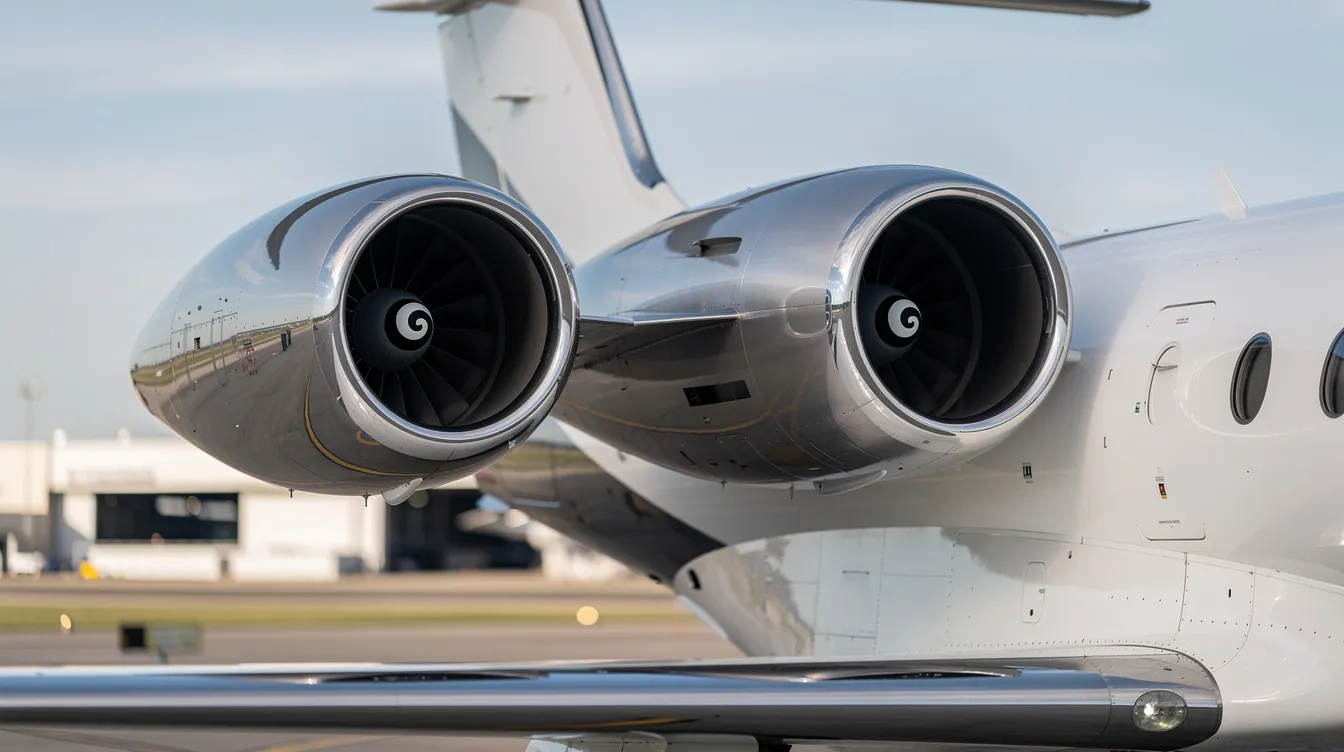
Pratt Whitney Canada PW814GA engines deliver approximately 15,144 pounds of takeoff thrust, providing the power needed for impressive performance and roughly 33% better fuel efficiency than the G450 on typical missions.
The cabin features 14 large panoramic oval windows—the largest in business aviation—maximizing natural light and views, and can be configured into three distinct living areas for work, dining, and sleeping.
The G500 is known for retaining high resale values due to its advanced technology and strong market demand.
Travelers can charter a Gulfstream G500 through Jettly’s digital marketplace, accessing instant pricing, transparent cost breakdowns, and global availability without long-term ownership commitments.
The Gulfstream G500 is a twin-engine, long-range business jet developed by Gulfstream Aerospace Corp as part of the GVII family. The aircraft completed its first flight in May 2017 and received FAA type certification, reaching the significant milestone to enter service in September 2018.
This clean-sheet Gulfstream design replaced the G450, offering higher cruise speed, longer range, a wider cabin, and modern powerplants. Equipped with two Pratt & Whitney Canada PW814GA engines, the G500 delivers impressive power that enhances its performance, achieving a maximum range of approximately 5,300 nautical miles at long-range cruise and sustaining high speed cruise near Mach 0.90, with a maximum operating speed of Mach 0.925.
Within Gulfstream’s current lineup, the G500 sits between the shorter-range G400 and the extended-reach G600. This positioning makes it suitable for global corporate travel, government operations, and high-end private charter missions requiring nonstop transatlantic capability.
Travelers seeking this level of performance and cabin comfort can charter a Gulfstream G500 on demand through Jettly’s digital marketplace for both business and leisure trips.
The G500 represents a clean sheet Gulfstream business jet design, featuring an entirely new fuselage, wing, and horizontal stabilizer engineered for speed, fuel efficiency, long range capability, and to fully harness the aircraft's power for superior performance. Gulfstream Aerospace used computational fluid dynamics to optimize the airframe for reduced drag and enhanced transonic performance.
|
Metric |
Value |
|---|---|
|
Range at Mach 0.85 |
~5,300 nm |
|
Range at Mach 0.90 |
~4,400-4,500 nm |
|
Service Ceiling |
51,000 ft |
|
High Speed Cruise |
Mach 0.90-0.905 |
|
Maximum Operating Speed |
Mach 0.925 |
|
Takeoff Distance |
5,000-5,300 ft |
The supercritical swept wing spans 86 feet 4 inches with approximately 37-degree sweep, paired with proprietary aerodynamic winglets that minimize induced drag and improve lift-to-drag ratios. This wing design enables efficient cruise at higher speeds and altitudes.
The Pratt Whitney Canada PW814GA engines deliver approximately 15,144 pounds of takeoff thrust each, with this power directly enhancing the G500’s impressive climb and cruise performance. These power plants incorporate:
TALON X combustor technology for up to 50% lower nitrogen oxide emissions
Full-authority digital engine control (FADEC) for real-time diagnostics
Extended time between overhauls of 10,000 hours per engine
Compliance with ICAO Annex 16 environmental standards
Fuel burn runs approximately 33% lower than the G450 on a theoretical 3,000 nautical mile mission with eight passengers at Mach 0.85. This improved fuel efficiency translates to lower operating costs and fewer fuel stops for charter passengers.
The airframe blends advanced aluminum-lithium alloys with composite materials in secondary structures, achieving high strength-to-weight ratios that support payload-range flexibility.
This performance profile makes the G500 suitable for nonstop routes such as New York to London, Los Angeles to Honolulu, or Dubai to Paris—typical missions seen on Jettly’s platform and comparable to other private jets that can fly to Europe.
The Symmetry Flight Deck represents a defining advancement in business jet design, focusing on safety, pilot workload reduction, and enhanced situational awareness. This flight deck integrates Honeywell Primus Epic avionics with four 14-inch active landscape displays.
The active control sidesticks, developed with BAE Systems, move together and provide tactile force-feedback synchronization between pilot and copilot inputs. This improves crew coordination compared to traditional yokes and enhances communication during all phases of flight.
The cockpit features extensive touchscreen interfaces on the overhead panel and pedestal, replacing over 200 mechanical switches. This cleaner layout reduces pilot errors and streamlines workflows through:
Contextual checklists that adapt to the flight phase
Intuitive display management
Reduced visual clutter
Simplified system monitoring
The avionics suite incorporates synthetic vision and head-up display capabilities that project flight and navigation data directly in the pilots’ line of sight. This heads-up approach allows crews to maintain external visual references while monitoring critical flight parameters.
The G500 features an Enhanced Flight Vision System (EFVS) integrated into the head-up display (HUD), enabling pilots to conduct landings in low-visibility conditions and improving safety during challenging approaches.
The phase-of-flight automation recognizes whether the jet is in preflight, taxi, takeoff, cruise, approach, or landing, adapting cockpit prompts accordingly. Aviation Week and Aviation International News have both covered how this system reduces crew workload during high-demand phases.
This advanced flight deck contributes to faster turnarounds, smoother operations, and consistent safety standards that charter customers booking through Jettly benefit from indirectly.
The G500 was engineered with multiple layers of active and passive safety systems, reflecting Gulfstream Aerospace’s commitment to operational reliability. The aircraft maintains an industry-leading safety record, including zero fatal accidents in its operational history.
The fly-by-wire (FBW) system includes built-in envelope protection that prevents:
Stalls and excessive angles of attack
Overspeeds beyond safe limits
Excessive bank angles
Structural overloads
Critically, pilots remain fully in the loop with authority maintained throughout all phases of flight.
The Enhanced Flight Vision System (EFVS) integrates with the head-up display, allowing qualified crews to land in very low visibility conditions. The system fuses infrared, low-light, and synthetic imagery to provide Category IIIB-equivalent landing capability in visibilities as low as 300 feet runway visual range.
The G500 is FAA- and EASA-certified for steep approach landings, enabling operations into challenging airports like London City and other locations with steep terminal procedures. This certification expands airport options for charter missions and provides access to locations that larger aircraft cannot reach.
Redundancies in electrical, hydraulic, and avionics systems support dispatch reliability above 99.9% for charter operations. This is also a logical progression from Gulfstream’s testing and development process, which emphasized fail-safe design throughout certification.
The G500 interior features a wide, stand-up cabin environment designed for long flights exceeding 10 hours. With approximately 91 inches (7 ft 7 in) of cabin width and 74 inches (6 ft 2 in) of height, passengers can move freely throughout the aircraft.
|
Dimension |
Measurement |
|---|---|
|
Cabin Length |
47 ft 7 in |
|
Cabin Width |
7 ft 7 in (widest in class) |
|
Cabin Height |
6 ft 2 in |
|
Baggage Capacity |
175-230 cu ft |
|
Volume |
1,441-1,669 cu ft |
|
The cabin includes 14 large panoramic oval windows—the largest in business aviation—maximizing natural light and providing sweeping views, enhancing passenger comfort and reducing fatigue. |
|
The G500 cabin can be configured into three distinct living areas, offering versatile space for work, dining, and sleeping. Common layouts include:
Forward and aft cabin zones with two club seats or four-place club seating
Conference areas for in-flight meetings
Divans that convert to sleeping surfaces
Optional aft cabin stateroom-style seating
Forward or aft galley placement with convection oven, microwave, and refrigeration
The production interior can range from standard layouts to bespoke interior configurations tailored to owner or operator preferences.
Gulfstream’s signature oval windows are 30% larger than predecessors, maximizing natural light and outside visibility. The cabin environment maintains:
Low cabin altitude of 4,850 ft at 51,000 ft cruise (versus 8,000 ft on airliners)
100% fresh air exchange
Active noise cancellation maintains sound levels below 50 decibels
Smooth pressurization that reduces fatigue on long sectors
Typical amenities include full-service galley capabilities, high-speed Wi-Fi (Gogo or Viasat, depending on operator), 4K entertainment systems, and a modern cabin management system for personalized climate, lighting, and privacy controls.
On Jettly, travelers can view available G500 layouts and amenities by operator, helping them choose an aircraft tailored to their business meeting, family trip, or special event.
The G500’s approximately 5,300 nautical mile maximum range and high speed capabilities enable nonstop intercontinental travel that saves significant time compared to connecting commercial flights.
|
Route |
Approximate Distance |
Flight Time at Mach 0.90 |
|---|---|---|
|
New York – London |
3,000 nm |
~6.5 hours |
|
Miami – São Paulo |
4,100 nm |
~9 hours |
|
Los Angeles – Honolulu |
2,200 nm |
~5 hours |
|
Dubai – Geneva |
2,800 nm |
~6 hours |
|
Singapore – Sydney |
3,400 nm |
~7.5 hours |
|
All routes shown can accommodate 8-10 passengers with NBAA IFR reserves while maintaining the aircraft’s performance envelope. |
||
Executive Roadshows: Multi-city trips across Europe and North America in a single day, such as New York to Dallas to San Francisco, become practical with the G500’s speed and range.
Transatlantic Business Travel: Board-level meetings requiring same-day presence in London or Paris while departing from East Coast cities.
Leisure Destinations: High-end vacations to island or resort locations, including Caribbean islands from Toronto or Hawaiian destinations from the West Coast, or region-specific getaways such as private jet charter in Kolkata, West Bengal.
Flying at Mach 0.90 or higher can save one to two hours on long legs versus slower business jets, which proves valuable for time-sensitive corporate travelers looking to apply tips for booking the cheapest private jet flights.
Nonstop capability means less time on the ground and a smoother experience, especially when arranged through an on-demand platform like Jettly’s private charter aircraft network. Fewer fuel stops translate to:
Faster total journey times
Reduced ground handling delays
Lower cumulative flight hours
Extended aircraft maintenance intervals
This logical progression of efficiency benefits both charter customers seeking convenience and operators managing fleet utilization.
The G500 sits within the GVII family alongside the G600 and newer G400, each filling slightly different ranges and cabin niches for various mission profiles.
The G500 replaced the G450 with substantial improvements:
|
Feature |
G450 |
G500 |
|---|---|---|
|
Range |
4,350 nm |
5,300 nm (+22%) |
|
Max Speed |
Mach 0.88 |
Mach 0.925 (+6%) |
|
Cabin Width |
~6.4 ft |
7.6 ft (+19%) |
|
Flight Deck |
Legacy avionics |
Symmetry Flight Deck |
|
Fuel Efficiency |
Baseline |
33% more efficient |
The G600 extends range beyond 6,600 nm with a 94-foot 2-inch wingspan, suited for ultra-long-haul sectors like Los Angeles to Singapore. The slightly larger cabin and wing make it ideal for Pacific crossings where the G500’s range would require a fuel stop.
The G400 targets approximately a 4,200 nm range with a slightly smaller fuselage. This model appeals to customers who do not require full intercontinental reach but still value the GVII family’s advanced systems and cabin comfort.
For charter customers using Jettly, the G500 is often selected as a balance of speed, range, and cabin space. The G600 or G650ER may be chosen for the very longest nonstop routes where the G500’s expected range falls short, while smaller aircraft serve regional missions more cost-effectively.
Neither Rolls-Royce nor other aircraft manufacturers offer a direct competitor combining the G500’s specific balance of range, speed, and cabin dimensions within the same development philosophy.
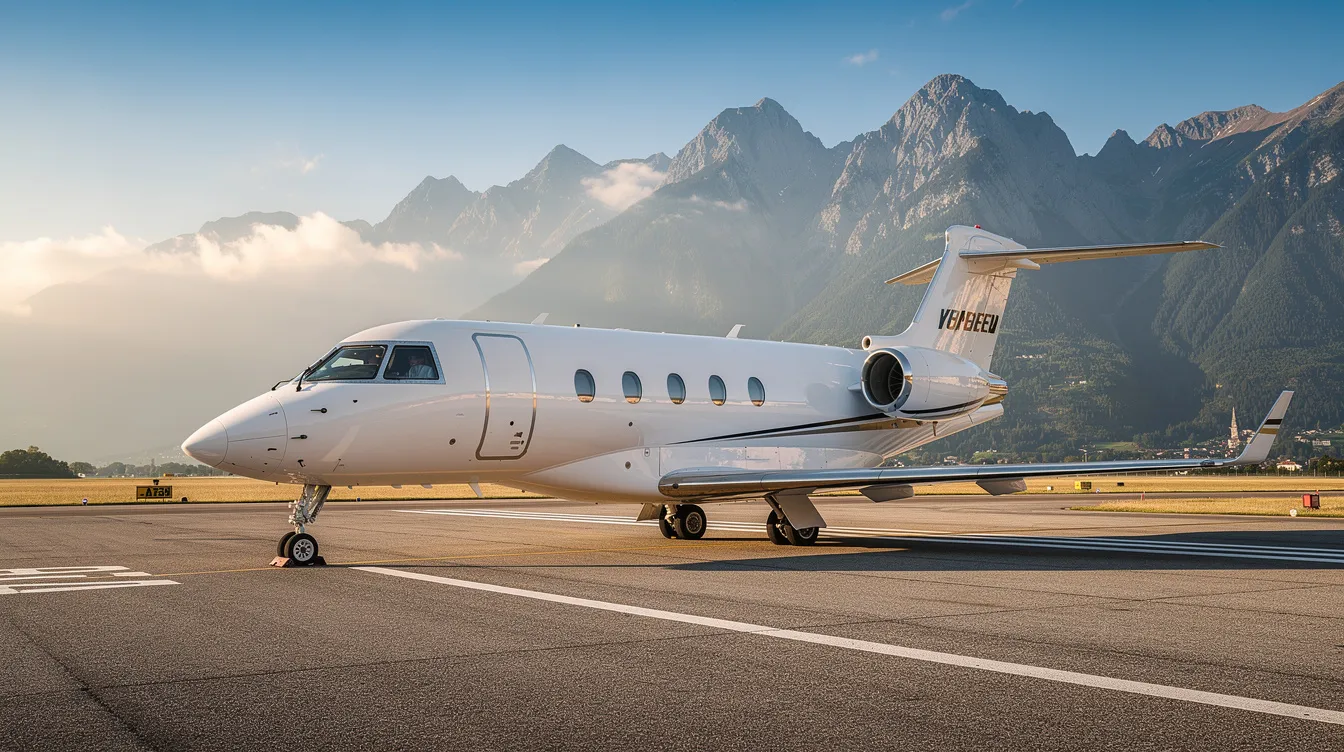
Jettly operates as a digital private jet charter platform providing on-demand access to aircraft like the Gulfstream G500 worldwide. The platform connects travelers with a network of operators for both business and leisure trips.
Users can search for a G500 or similar large-cabin jet by entering:
Departure and arrival airports
Travel dates and times
Passenger count
Specific aircraft preferences
Jettly provides instant or near-instant pricing with transparent cost breakdowns covering hourly rates, repositioning, taxes, and fees. Travelers can compare the G500 with other aircraft types before booking to find the right balance of comfort and budget.
Jettly works exclusively with certified operators and compliant air carriers. Any G500 offered through the platform meets:
FAA and EASA certification requirements, including steep approach capability
Current maintenance and inspection standards
Crew qualification and training requirements
Insurance and regulatory compliance
This ensures consistent safety and service quality across the fleet of available aircraft.
Corporate Roadshow: A same-day New York to Dallas to San Francisco trip for an executive team, with the G500’s speed enabling arrival before the end of business on the West Coast.
Family Holiday: Toronto to the Caribbean with tailored catering, ground transport coordination, and a cabin layout featuring club seats and a divan for children, potentially lowering costs by sharing empty seats on private jet flights.
Emergency Business Travel: Last-minute transatlantic flight with instant quote and rapid aircraft positioning through Jettly’s operator network.
Jettly offers both Jet Card programs and pure on-demand access. This flexibility allows travelers to:
Avoid long-term ownership commitments
Access recurring availability on aircraft like the G500
Benefit from potential member pricing advantages using tools like Jettly’s jet card flight cost estimator
Scale usage based on actual travel needs
Selecting newer, more efficient jets like the G500 reduces fuel consumption compared to older aircraft. Jettly also offers options for voluntary carbon offsetting where available, supporting travelers who prioritize environmental awareness in their flying decisions.
The future of private aviation increasingly involves sustainable aviation fuels (SAF) compatibility, and modern aircraft like the G500 are outfitted to accommodate these developments as they become more widely available.
Ready to experience private travel on your terms? Explore flight options or request a quote at https://www.jettly.com.
Most Gulfstream G500 configurations seat 12-13 passengers, typically arranged in three cabin zones with club seating, divans, and sometimes a conference group. The seats and cabin layout vary by operator and can include options like an aft cabin stateroom or expanded galley space.
The usable seat count for a specific charter may be slightly lower depending on the operator’s layout and weight-and-balance limits for long-range flights. When flying near maximum range, fuel requirements may limit passenger capacity.
Jettly’s aircraft profiles display seating arrangements and floor plans so customers can choose a layout matching their group size and comfort needs.
Typical hourly rates for a Gulfstream G500 charter often fall in the high five-figure range in USD, with market estimates around $10,000-$15,000 per flight hour depending on region and availability. Actual pricing depends on specific trip details and current demand.
Costs include factors beyond the hourly rate:
Repositioning flights to reach the departure airport
Airport and handling fees
De-icing charges in the winter months
Catering and ground transportation
Overnight crew expenses, if applicable
Use Jettly’s private jet charter cost estimator to request a live quote for specific routes and dates to see accurate, transparent pricing for a G500 charter.
The G500 is certified for steep approaches and demonstrates strong short-field performance for its class. This allows access to certain airports with shorter runways or approach constraints, including London City Airport under suitable conditions.
Actual airport availability depends on:
Runway length (minimum approximately 5,000 ft for takeoff)
Local approach and departure procedures
Obstacle clearance requirements
Current weather conditions
Provide preferred airports when requesting a quote through Jettly or use its airport locator tool so the platform and operators can confirm feasibility and suggest alternatives if needed.
While the G500 can certainly operate short regional legs, smaller light or midsize jets may prove more cost-effective for short hops with fewer passengers. The G500’s hourly operating costs exceed those of lighter aircraft, which may not make sense for a 500-mile trip with four travelers.
The G500’s advantages—cabin space, speed, and long range capability—deliver the most value on longer sectors or when passengers need full working and resting zones onboard. A business team requiring in-flight meetings and arrival refreshed benefits from the G500’s capabilities more than a quick shuttle flight, especially when leveraging strategies to get a seat on a private jet easily.
Jettly’s search and advisory tools, along with its guide on affordable private jet charter costs, help customers compare a G500 with other aircraft categories to balance comfort and budget appropriately.
Most charter G500S are equipped with high-speed Wi-Fi suitable for email, video conferencing, and streaming. However, bandwidth and coverage can vary by operator and route, particularly over oceanic segments without satellite coverage upgrades.
Confirm connectivity requirements, such as VPN access, video call platforms, or specific bandwidth needs, with Jettly during booking or through an appropriate private jet membership. The platform can match travelers with a suitably equipped aircraft from its network.
Additional connectivity packages or usage fees may apply on some flights. Jettly clarifies these costs in advance during the quote process, just as it explains how to buy a seat on a private jet for flexible travel.
The Gulfstream G500 combines long-range performance, a modern Symmetry Flight Deck, advanced safety systems including EFVS and steep approach certification, and a comfortable, large-cabin interior suited to global travel. From its first flight in 2017 through ongoing service today, this aircraft has established itself as a capable platform for demanding missions.
The Gulfstream G500 has become a popular choice for corporate, government, and private charter missions requiring speed, range, and reliability. Its clean sheet design, efficient engines, and thoughtful cabin environment reflect what modern travelers expect from a business jet in this class.
Jettly’s digital platform makes it straightforward to compare, price, and book a G500 or similar jet on demand without ownership commitments. Whether for a transatlantic business trip, multi-city roadshow, or leisure escape, access to this level of aircraft performance is available through a simple online search.
Ready to experience private travel on your terms? Explore flight options or request a quote at https://www.jettly.com.
Share this post:
Jay Franco Serevilla
Apr 18, 2026
|
5
min read
Discover tips and trends in the industry.
5
min read
Airline Charter: How Private Charter Flights Work with Jettly
Airline charters provide travelers with the flexibility to choose their departure times, destinations, and aircraft, making them ideal for business and leisure travel. Jettly's platform connects users to over 20,000 aircraft globally, simplifying the booking process with instant pricing and no long-term commitments. This guide explores how private charter flights work and the advantages they offer over traditional scheduled flights.
Read More
5
min read
Ontario, CA to Carson, CA by Private Jet: Route Guide, Airports, and Travel Options
Traveling from Ontario, CA to Carson, CA offers various options, including driving, public transit, and private aviation. While driving is the most common method, private jets can significantly reduce travel time when combined with ground transfers. This guide provides insights into travel times, costs, and the best airports for a seamless journey.
Read MoreStay updated with our latest insights and tips to elevate your journey with us.
MEMBERSHIPS AND ASSOCIATIONS



Disclaimer: Jettly operates as a charter broker, offering access to a global digital jet charter marketplace. Jettly is not a direct air carrier and does not own or operate aircraft. All advertised flights are conducted by third-party air carriers that are fully licensed and hold the appropriate Part 135 or Part 121 certifications issued by the Federal Aviation Administration (FAA) or equivalent regulatory authorities under U.S. or foreign law. Jettly complies fully with the U.S. Department of Transportation's Part 295 and Part 298 Charter Broker regulations. Jettly does not carry additional liability insurance. Passengers are covered by aircraft operator insurance. TICO: 50023770


