


Login
Get Instant Pricing On 23,000+ Aircraft

>
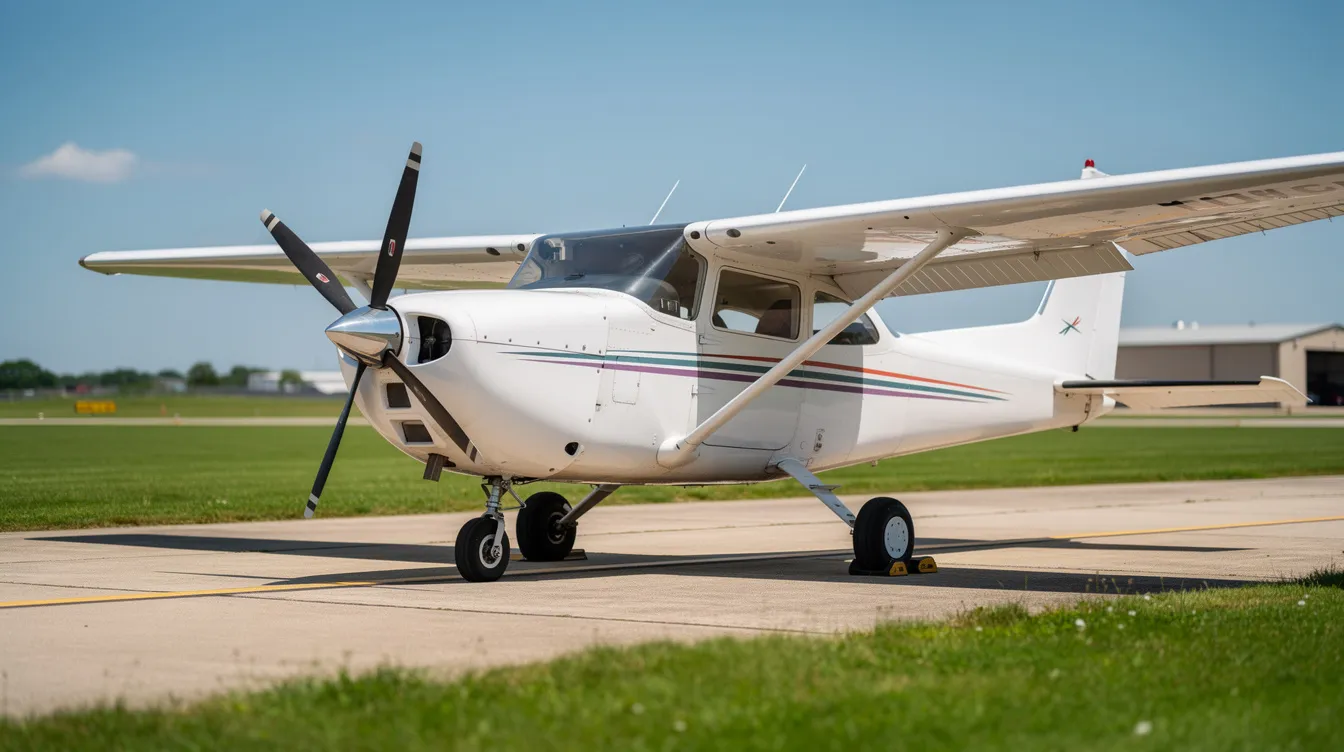
Choosing a good beginner airplane is one of the most consequential decisions any new pilot makes. The right first plane builds confidence, sharpens safety habits, and keeps operating costs manageable, while the wrong one can drain a bank account and overwhelm a pilot still learning fundamentals. This guide breaks down what matters most, from mission definition and aircraft types to ownership costs and when chartering a private jet is the smarter move.
The best beginner airplane is typically a simple, fixed-gear, single-engine aircraft like the Cessna 172 Skyhawk or Piper PA-28, not a high-performance model that overwhelms novice pilots.
Defining the primary mission (flight training, weekend cross-country trips, family travel) and setting an honest budget matters more than chasing the best plane by specs alone.
Beginner pilots should log 40–80 hours in rental aircraft before committing to a first aircraft purchase to clarify needs and preferences.
Common training aircraft include the Cessna 150, Cessna 172, and Piper PA-28, all chosen for predictability and low operational costs.
Many new pilots combine renting a trainer for skill building with on-demand private jet charter through platforms like Jettly for longer, time-sensitive trips where a piston single is not the right tool.
A first airplane shapes more than just a logbook. It defines flying habits, scan discipline, workload management, and how quickly a pilot builds genuine stick-and-rudder confidence. Beginner airplanes should prioritize stability and gentle handling characteristics so the pilot can focus on coordination, judgment, and energy management instead of wrestling with complex systems.
Contrast a forgiving trainer like the Cessna 172 or Cessna 152 with a higher-performance aircraft such as a Cirrus SR22 or Beechcraft Bonanza. The complex airplane brings retractable gear decisions, turbocharging management, higher approach speeds, and steeper insurance premiums. Low-time pilots buying too much airplane often face annual insurance bills two to three times higher, plus mandatory transition training before underwriters will even issue a policy.
When a pilot's actual travel needs demand speed and range beyond what piston singles deliver, chartering a private jet through Jettly is a more practical choice than buying an airplane that outpaces the pilot's skill level. Stable flight characteristics make it easier to learn basic maneuvers, and that learning curve should never be steepened by unnecessary complexity.
"Mission first, airplane second" is the core rule for any first aircraft purchase. Without a defined mission, aspiring pilots often overspend on capability they rarely use or underestimate the aircraft they actually need.
Think about your primary mission in concrete terms:
Local training and time building within 50–100 nautical miles of home base. A two-seat Cessna 150 or 152 handles this perfectly.
Weekend pleasure flights (the "$100 hamburger" run) with one passenger and light bags. Still trainer territory.
Regional cross-country trips of 300–500 nm with family or adult children. A four-seat aircraft like the Cessna 172 or Piper Cherokee fits well.
Business hops between cities like New York–Boston or LA–Las Vegas on tight schedules. This is where private jet charter through a platform that explains small aircraft options usually beats owning a piston single.
Key mission variables to evaluate include typical flight distance, number of occupants, runway length and surface at your home field and destinations, climate (mountain terrain, coastal winds, hot-and-high airports), and future goals such as an instrument rating.
Each mission profile points toward a specific category. Two-seat trainers cover training flights and fun. Four-seat all-rounders handle family and regional flying. And for long-range, time-critical travel, skipping ownership entirely and using on-demand charter is often the most cost-effective path.
Most beginner pilots should log 40–80 hours in rental aircraft before committing to ownership. That flying experience exposes a pilot to different types, clarifies which features genuinely matter, and helps gauge realistic annual usage, and resources like this guide to affordable aeroplane rent options can help benchmark realistic costs.
Advantages of renting:
Little to no upfront capital
Access to multiple aircraft types at different flight schools
No surprise maintenance bills, hangar fees, or insurance during months of low activity
Freedom to pause flying without ongoing fixed costs
Advantages of owning a first airplane:
Always-available schedule, no booking conflicts
Ability to customize avionics, interior, and equipment
Consistent training environment (same airplane, same performance envelope)
Emotional satisfaction of having your own plane
The realistic breakpoint sits around 50–75 hours per year. Below that, renting is almost always cheaper. Between 75 and 150 hours, ownership may start making financial sense. Above 150 hours, ownership is typically more economical, assuming the pilot has steady funds and nearby maintenance support.
Many high-net-worth individuals adopt a hybrid strategy: co-owning or renting a simple trainer locally for weekend fun, while booking private jets through Jettly for business or family travel that demands speed and range, especially after understanding how much a private jet really costs. This keeps the joy of hands-on flying separate from the efficiency of professional charter operations.
A good beginner airplane is stable, forgiving, easy to insure, and affordable to operate. It provides a margin for error during flight training so the pilot can learn from minor mistakes without catastrophic consequences.
Key technical traits to look for:
Fixed gear (no landing-gear extension decisions, fewer failure modes, lower insurance)
Non-turbocharged engine with manageable horsepower
Low stall speed, ideally under 50–55 knots, with forgiving stall characteristics that allow for gentle recoveries from stalls
Tricycle landing gear, which offers better ground visibility and easier handling compared to tailwheel designs
Simple systems that minimize cockpit workload for beginners, with optional modern avionics upgrades
Flat-bottom airfoil designs that generate high lift at low speeds, aiding slow-speed handling
Good visibility from the cockpit is essential for navigational understanding, traffic awareness, and pattern work. Training aircraft are selected for their predictability and low operational costs. Durable materials help beginner airplanes withstand minor impacts, whether a firm landing or a hangar rash.
The support ecosystem matters enormously. Popular trainers like the Cessna 172 and Piper PA-28 benefit from abundant spare parts, experienced instructors who know the type, mechanics at nearly every airport, and strong resale value when the pilot is ready to upgrade or transition to chartered jets.
The Cessna 150 and 152 are two-seat, all-metal classic trainer airplanes that have launched thousands of aviation journeys. The Cessna 150 was produced from 1958 to 1977, with over 23,800 units built. The Cessna 152 succeeded the 150 from 1978 to 1985, adding a slightly improved engine and gross weight.
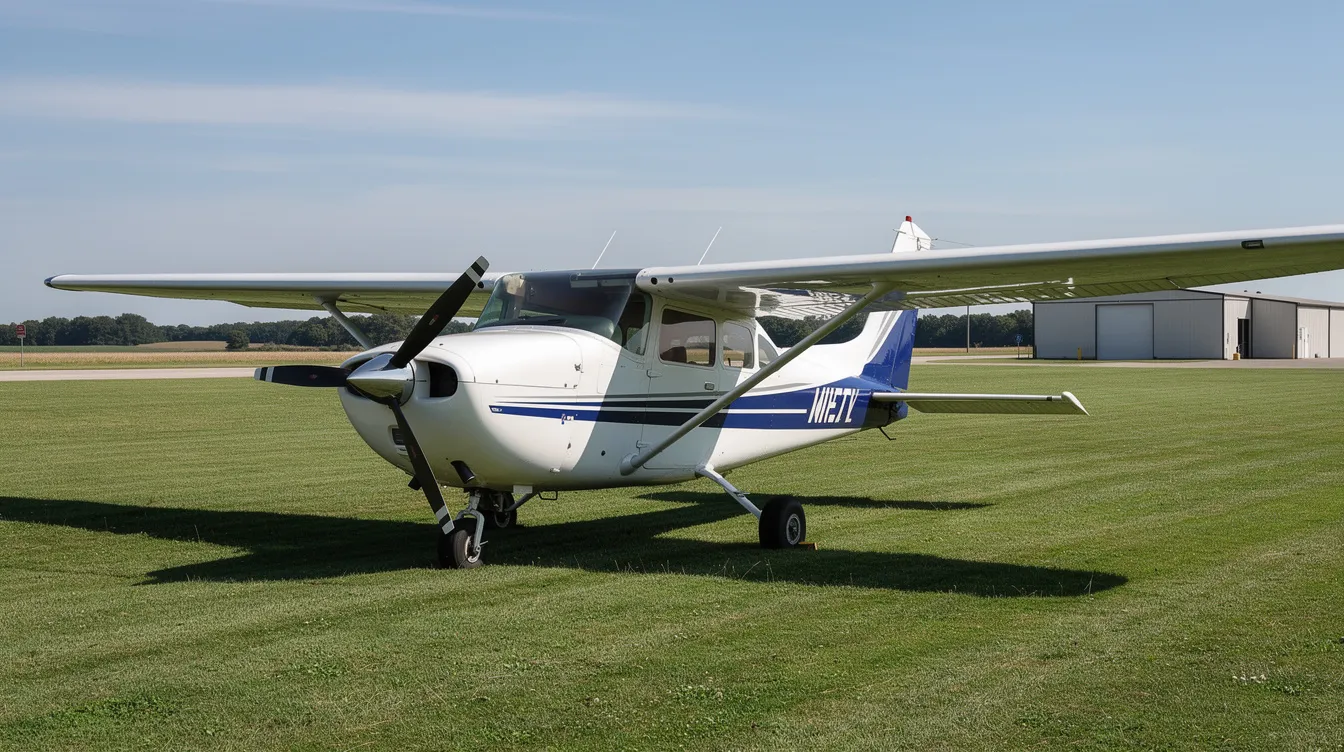
Handling qualities make these great airplanes for early exposure to flying. Approach speeds hover around 50–55 knots. Controls are responsive yet forgiving. The Cessna 150 has a cruise speed of 122 mph, enough for local training and short hops. The Cessna 150/152 offers low operating costs for training, with fuel burn around 6–7 gallons per hour, making them ideal for primary training and time building.
Cost ranges in the mid-2020s:
|
Item |
Approximate Range |
|---|---|
|
Purchase price (used) |
$25,000–$60,000 |
|
Fuel burn |
6–7 gph |
|
Annual insurance |
$1,000–$2,000 |
Limitations are real: cramped cabins for taller pilots, limited baggage capacity, modest range (roughly 300 nm or less), and airframes now 40–60 years old that require thorough pre-buy inspections for corrosion, spar condition, and wiring integrity.
The ideal use case is a cost-conscious student who trains locally under VFR, builds hours efficiently, and plans to move up to a Cessna 172 or onto private jet charter for cross-country travel once skills and mission demands grow.
The Cessna 172 Skyhawk is the most popular training aircraft in the world and arguably the best airplane candidate for most beginners. Over 44,000 Cessna 172s have been built since 1956, making it the most-produced airplane in history.
The Cessna 172 has excellent stability and predictable stall behavior. High-wing configurations provide natural stability and improve visibility, giving pilots clear sightlines during pattern work, cross-country navigation, and ground operations. It offers a spacious cabin and exceptional visibility for pilots. The aircraft has a cruise speed of 140 mph and a range of 730 miles, which comfortably covers most regional missions.
The four-seat layout with a useful load around 900–1,000 pounds means a pilot can carry a passenger or two plus baggage on a full-fuel load, making it a versatile aircraft for both primary and instrument training.
Real-world cost guidance (mid-2020s):
|
Model Era |
Approximate Purchase Price |
|---|---|
|
1970s (172M/N) |
|
|
1980s (172P) |
$85,000–$130,000 |
|
1997+ (172R/S) |
$150,000–$250,000 |
|
New 2026 172S |
~$465,000 |
Annual insurance for a low-time pilot with several hundred hours runs approximately $1,500–$3,000. Fixed costs total roughly $8,000–$14,000 per year. The Cessna 172 Skyhawk benefits from widespread use across flight schools, plentiful spare parts, and strong resale demand. For a deeper look at Cessna's lineup, see this Cessna models guide.
The Piper PA-28 family, which includes the Piper Cherokee, Warrior, and Archer, serves as the main low-wing alternative to the Cessna 172 for beginner pilots. Since 1960, over 32,000 PA-28 aircraft have been produced, and this family has been instrumental in training generations of pilots at flight schools worldwide.
The Piper Cherokee provides a "car-like" cockpit feel for pilots, with a lower seating position, a low-wing design that enhances visibility during turns, and a planted landing attitude that some students find more intuitive. The low-wing legend status is well-earned: the PA-28 is known for its stable performance and straightforward controls, making it an excellent platform for new pilots seeking a different sight picture from high-wing trainers.
Performance comparison with the Cessna 172:
|
Spec |
PA-28 Archer (180 hp) |
Cessna 172S |
|---|---|---|
|
Cruise speed |
~120–125 knots |
~110–120 knots |
|
Fuel burn |
8–10 gph |
8–9 gph |
|
Seats |
4 |
4 |
|
Gear |
Fixed |
Fixed |
Trade-offs to consider include a single cabin door (less convenient for some), reduced downward visibility while taxiing due to the low wing layout, and potential corrosion or spar issues on older models that demand thorough pre-buy inspections to assess aircraft condition. St airplane for local flying plus regional weekend trips.
Some beginner pilots want advanced avionics from day one, seeking early exposure to glass-cockpit technology that mirrors what they would encounter in modern composite aircraft and private jets. Two models dominate this category.
Diamond DA40: The Diamond DA40 features a composite airframe for efficiency, resulting in clean aerodynamics and low drag. It offers excellent visibility with its modern canopy design, wrapping glass around the pilot for nearly unobstructed sightlines. The DA40 is known for its fuel efficiency and low operating costs relative to other glass-equipped trainers. It is equipped with advanced avionics suitable for cross-country flying, typically the Garmin G1000 suite, and the DA40 is a popular choice for IFR training among beginners. Its fatal accident rate sits around 0.35 per 100,000 flight hours, one of the lowest in general aviation.
Cirrus SR20: The Cirrus SR20 features an integrated parachute system (CAPS) for safety, a feature unique among piston singles at this price point. It includes advanced avionics that simplify navigation tasks, and the SR20 offers a spacious, well-appointed cabin for comfort. Cruise speeds reach roughly 155 knots with a range near 780 nm, significantly outpacing legacy trainers. Training in an SR20 enhances systems management and risk management skills. The SR20 is suitable for higher-budget students seeking advanced training.
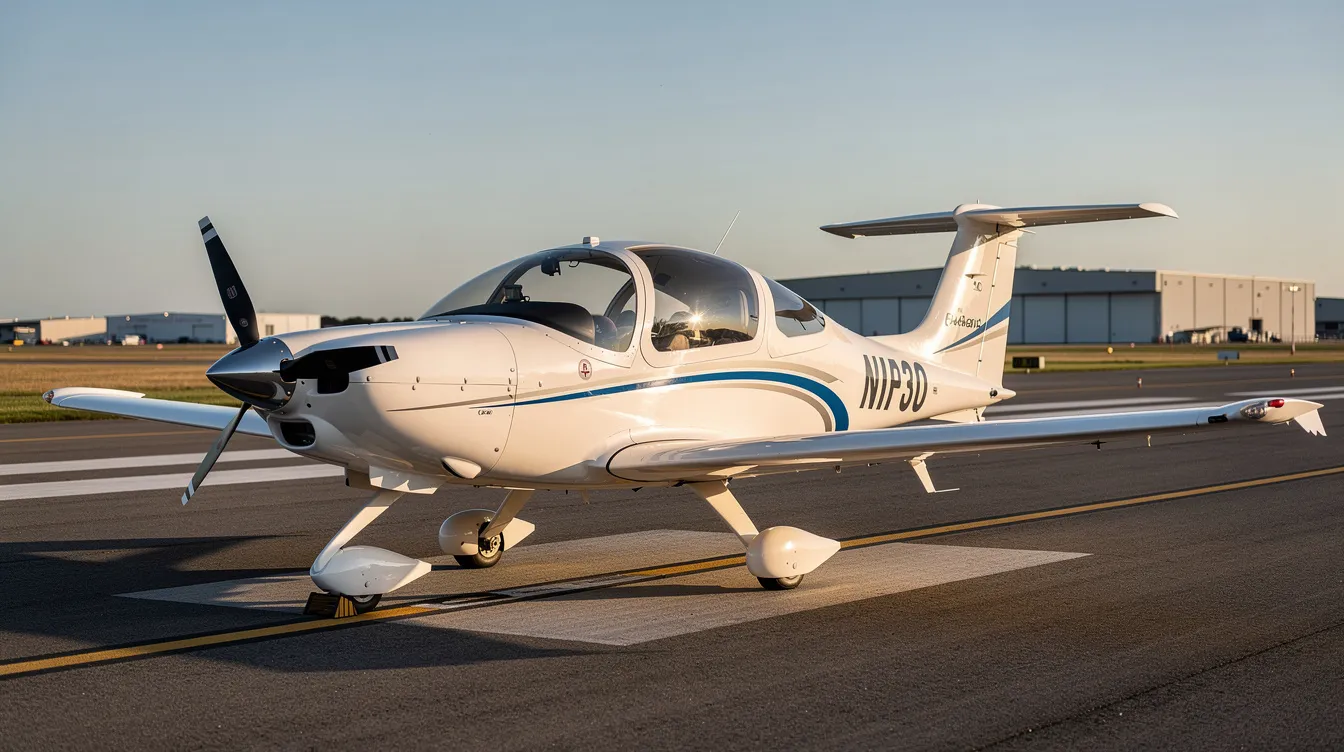
Both are strong choices for tech-oriented, higher-budget pilots seeking to build experience toward different types of planes and private aviation. However, insurance for an SR20 can run roughly 3.5 times higher than a DA40 for a similarly experienced pilot, and both demand structured transition training. For pure stick-and-rudder skill building, simpler metal trainers may still produce a more well-rounded pilot.
Wing position and gear configuration affect visibility, handling, and complexity for a first airplane. Understanding the trade-offs helps pilots seeking the right aircraft avoid unnecessary risk.
High wing vs low wing for beginners:
|
Factor |
High Wing (e.g., Cessna 172) |
Low Wing (e.g., PA-28) |
|---|---|---|
|
Downward visibility |
Excellent, unobstructed |
Blocked by wing during level flight |
|
Ramp shade |
Wing shelters cabin from sun |
No overhead shade |
|
Fuel system |
Gravity-fed, simpler |
Fuel pump required |
|
Ground effect on landing |
Less pronounced |
More noticeable |
|
Approach sight picture |
Higher eye line, sees runway earlier |
Lower perspective, different cues |
The high wing layout suits pilots who prioritize excellent ground visibility and simpler fuel systems. A low wing design appeals to those who prefer the "sports car" feel and a more planted landing attitude.
For gear type, most experienced pilots and instructors agree: choose fixed gear for a first airplane. Retractable gear introduces the risk of gear-up landings (one of general aviation's most common and expensive accidents), complicates emergency procedures, and raises insurance premiums substantially. Turbocharging and constant-speed propellers are likewise better left for a second or third aircraft after 200–300 hours of experience, when the learning curve of basic airmanship is behind you.
Purchase price is only the beginning. Ownership costs for any good beginner airplane include fixed expenses that accumulate whether the airplane flies or not, plus variable costs that scale with hours flown.
Fixed costs (annual, Cessna 172 example):
|
Expense |
Typical Range |
|---|---|
|
Hangar or tie-down |
$1,200–$6,000 |
|
Insurance |
$1,500–$3,000 |
|
Annual inspection |
$1,500–$3,000 |
|
Registration, charts, subscriptions |
$300–$800 |
|
Total fixed |
$8,000–$14,000 |
|
Variable costs (per flight hour): |
|
Expense |
Approximate Cost |
|---|---|
|
Fuel (8.5 gph × ~$6.50/gal) |
$55 |
|
Oil |
$2 |
|
Engine overhaul reserve |
$20–$25 |
|
Maintenance reserve |
$10–$15 |
|
Total variable |
$87–$97/hr |
For a pilot flying 100 hours per year in a mid-1980s Cessna 172P acquired for around $110,000, total annual operating costs land in the $18,000–$24,000 range. At fewer than 50 hours per year, fixed costs dominate, and the effective hourly rate climbs steeply.
Compare this with the pay-per-trip nature of private jet charter. While charter hourly rates are higher in absolute terms, tools like Jettly’s private jet charter cost estimator make it easier to understand those numbers, and there are no ongoing costs when the airplane is not flying. For pilots whose primary mission is longer business trips rather than local hobby flying, charter through Jettly can be a more financially rational choice.
Aircraft choice directly affects access to experienced instructors, maintenance shops, and a strong safety culture. Reliable support networks are crucial for common training aircraft, especially for pilots making a first aircraft purchase.
Popular types like the Cessna 172, Cessna 152, and Piper PA-28 benefit from:
Standardized training syllabi used at thousands of flight schools worldwide
Abundant online tutorials, forums, and type-specific owner communities
Mechanics at nearly every airport who have serviced these models for decades
Ready availability of parts, reducing downtime for maintenance
First-time buyers should base their beginner aircraft near an active flight school or flying club where checkouts, recurrent training, and safety seminars are readily available. This ecosystem accelerates learning and ensures a pilot does not fly in isolation without feedback.
Professional charter operators on platforms like Jettly rely on similar safety principles: audited operators, trained crews, and regulated maintenance standards. Whether flying a personal trainer or riding in a chartered jet, the underlying discipline is the same.
New pilots should schedule proficiency flights every three to six months, even after earning a private certificate. A discovery flight or refresher session with an experienced instructor keeps skills sharp, especially if the first airplane sits idle for long stretches between trips.
For some travelers, especially business leaders and frequent long-distance flyers, a chartered jet can be a more practical first airplane than a piston single they rarely fly. The math shifts when the mission involves:
Multi-city business trips in a single day
Long routes like Toronto–Vancouver or New York–Miami where a piston single would require fuel stops and many hours
Family vacations where time savings and comfort outweigh the satisfaction of hands-on flying
Jettly's digital platform gives access to thousands of private charter aircraft worldwide, instant pricing, and on-demand booking without long-term contracts or fractional ownership commitments. Learn more about how to book a private jet through the platform.
The contrast in responsibilities is stark. An owner-pilot manages maintenance costs, storage, insurance, annual inspections, and personal proficiency. A charter client focuses only on the itinerary and pays per flight, with professional crews handling all operations.
The smartest strategy for many aviation enthusiasts is a hybrid approach: rent or co-own a simple trainer like a Cessna 172 for local flying fun and skill building, using insights from a guide to affordable aeroplane rent, while using Jettly for serious travel where jets or turboprops are objectively the best aeroplane for the mission. This keeps the passion of piloting alive without forcing a single aircraft to serve every need inefficiently.
Even "affordable" beginner aircraft often involve six-figure transactions once purchase price, sales tax, and initial avionics or cosmetic upgrades are included. First-time buyers should plan financing carefully.
Common financing terms for piston singles in the 2020s:
Down payments typically range from 10%–20% of the aircraft purchase price
Interest rates vary from roughly 6%–9% depending on credit and lender
Loan terms commonly run 10–20 years through specialized aviation lenders
Ownership structures to consider:
Personal ownership: simplest, full control, full liability exposure
LLC ownership: provides liability protection and potential tax benefits; requires formation costs and annual filings
Partnerships or flying clubs: split fixed costs among several pilots, dramatically lowering per-person hangar, insurance, and inspection expenses; requires clear operating agreements drafted by an aviation attorney
Due diligence is non-negotiable. Get pre-approval from a lender, engage an aviation attorney for any partnership agreements, arrange a thorough pre-buy inspection by an independent mechanic, and conduct a title search before closing.
For clients whose primary need is flexible business travel rather than hobby flying, tying up capital in a first airplane may not be the best use of funds. Maintaining liquidity and using on-demand charter through platforms like Jettly for the best personal plane experience without the commitment can make more financial sense.
There is no single best plane for every beginner, but there is almost always a right aircraft category for each pilot's mission, budget, and skill level.
Quick-reference match:
|
Pilot Profile |
Best Fit |
|---|---|
|
Tight budget, pure primary training |
Cessna 150/152 |
|
Versatile four-seat, family or regional trips |
Cessna 172 Skyhawk |
|
Low wing preference, good trainer ecosystem |
Piper PA-28 Cherokee/Archer |
|
Higher budget, glass cockpit, IFR progression |
Diamond DA40 or Cirrus SR20 |
|
Business travel, long-range, time-critical |
Private jet charter via Jettly |
Reinforce key factors before signing anything: mission definition, realistic annual hour usage, personal comfort with complexity, local access to experienced instructors and maintenance, and total ownership costs over a five-year horizon.
The wisest path is incremental. Rent first. Get objective instructor input on which aircraft suits your flying habits and goals. Use charter for missions your trainer cannot handle efficiently. Upgrade aircraft only when skills and needs clearly justify it. A good trainer remains an excellent platform for building hundreds of hours of real-world experience before stepping into anything more demanding.
Ready to experience private travel on your terms? Explore flight options or request a quote at https://www.jettly.com.
Below are answers to common questions that new pilots and first-time buyers ask when evaluating a good beginner airplane.
The Cessna 172 Skyhawk is often considered the best overall first airplane. Its combination of four seats, excellent stability, forgiving flight characteristics, a massive support ecosystem, and strong resale value makes it hard to beat for most missions. It has trained generations of pilots and remains the global standard at flight schools.
That said, mission and budget can shift the answer. A pilot focused solely on affordable training flights might prefer the smaller Cessna 150 or 152. Pilots seeking modern avionics and early IFR capability might gravitate toward a Diamond DA40. The Cessna 172 simply covers the broadest range of beginner needs.
Most instructors recommend at least 40–80 hours of flight time, ideally through or beyond the private pilot checkride, before making an aircraft purchase. This experience gives enough exposure to different conditions and aircraft types to clarify what you actually need.
Some high-engagement students delay buying until they reach their instrument rating or 100+ hours total time. The extra experience ensures the pilot's defined mission is clear and avoids purchasing a plane that does not match long-term goals. Experienced pilots who have flown many types are less likely to make an expensive mismatch.
While some pilots do start in an SR22, its higher performance envelope, elevated maintenance costs, and stringent insurance requirements generally make it better suited as a second airplane. Underwriters often require extensive transition training, higher minimums for total flight time, and time-in-type documentation before issuing coverage to novice pilots in high-performance models.
If a low-time pilot insists on starting with an SR22, formal transition training with an experienced instructor is essential, and annual insurance premiums will be significantly higher than for a standard trainer. Building 200+ hours in a simpler type first reduces both risk and cost.
Glass avionics offer real advantages: better situational awareness, moving-map navigation, integrated engine monitoring, and a smoother transition to modern avionics in jets or turboprops. For pilots planning to pursue instrument training or who learn visually, early exposure to glass can accelerate progress.
However, glass also raises acquisition cost and can distract beginners from developing fundamental scan habits and raw stick-and-rudder skills. A well-equipped analog Cessna 172 with a simple GPS remains an excellent first airplane. The priority should be mastering basic airmanship first; modern avionics can always be added or upgraded later.
Many pilots separate "flying for fun" from "travel for efficiency." They rent or own a simple trainer for local enjoyment and skill building, then book private jets through Jettly for long-range, time-critical routes where a piston single would be slow, uncomfortable, or impractical.
Charter is a flexible tool that complements rather than replaces ownership of a good beginner aircraft. It fills the gap for missions like coast-to-coast business trips, family holidays requiring multiple stops, or same-day travel needs that no trainer can serve well. Over time, this hybrid approach keeps a pilot flying affordably while still accessing serious travel capability when needed.
Choosing a good beginner airplane is a foundational step that shapes a pilot’s skills, confidence, and enjoyment of flying. Prioritizing stable flight characteristics, predictable handling, and manageable ownership costs ensures a smoother learning curve and safer experience. Popular trainers like the Cessna 172 Skyhawk and Piper PA-28 offer proven ecosystems of support, parts availability, and instructor familiarity, making them ideal for most beginners. Modern glass-cockpit options like the Diamond DA40 and Cirrus SR20 suit pilots with higher budgets and a focus on advanced avionics but require disciplined training.
Renting aircraft before buying helps clarify mission needs and flying preferences, while on-demand private jet charter through platforms like Jettly provides efficient travel for longer, time-sensitive trips beyond the scope of piston singles. Ultimately, the best first airplane matches the pilot’s mission, budget, and skill level—not just the specs on paper. Careful planning, incremental experience, and access to professional support lay the groundwork for a rewarding aviation journey.
Ready to experience private travel on your terms? Explore flight options or request a quote at https://www.jettly.com.
Share this post:
Jay Franco Serevilla
Jul 15, 2026
|
5
min read
Discover tips and trends in the industry.
5
min read
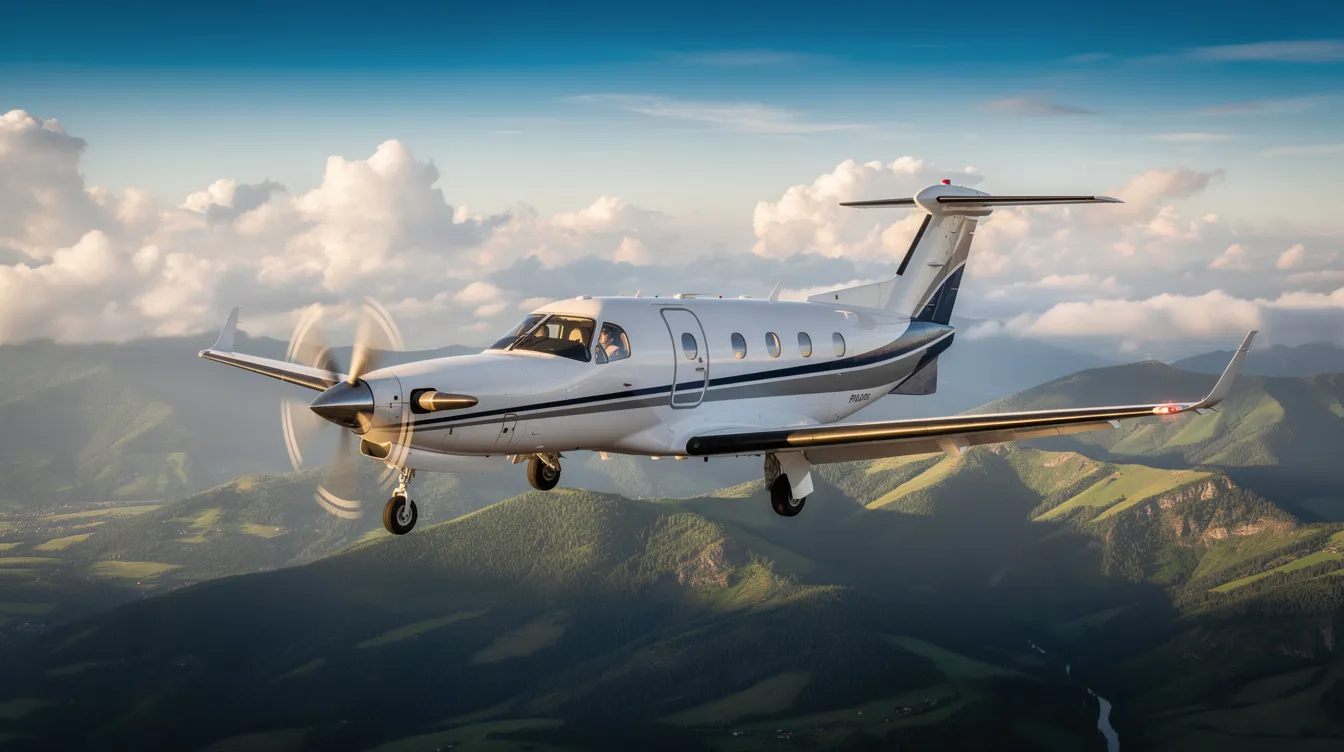
Pilatus Fractional Ownership: PC-12 Access vs. On‑Demand Charter with Jettly
Pilatus fractional ownership allows travelers to share the costs of a PC-12 aircraft, making private aviation more accessible. This option is ideal for frequent flyers with predictable travel patterns, while Jettly's on-demand charter offers flexibility for those with varied schedules. Understanding the differences in costs and commitments can help you choose the best option for your aviation needs.
Read More
5
min read
Helicopter Cockpit: Controls, Instruments, and What Sets It Apart from Other Aircraft
The helicopter cockpit is uniquely designed for rotorcraft flight, featuring cyclic and collective controls that differ significantly from fixed-wing aircraft. With advanced avionics and enhanced visibility, it allows pilots to manage vertical takeoff and low-speed maneuvers effectively. Platforms like Jettly facilitate access to various helicopter types, ensuring travelers can find the right aircraft for their needs.
Read MoreStay updated with our latest insights and tips to elevate your journey with us.
MEMBERSHIPS AND ASSOCIATIONS



Disclaimer: Jettly operates as a charter broker, offering access to a global digital jet charter marketplace. Jettly is not a direct air carrier and does not own or operate aircraft. All advertised flights are conducted by third-party air carriers that are fully licensed and hold the appropriate Part 135 or Part 121 certifications issued by the Federal Aviation Administration (FAA) or equivalent regulatory authorities under U.S. or foreign law. Jettly complies fully with the U.S. Department of Transportation's Part 295 and Part 298 Charter Broker regulations. Jettly does not carry additional liability insurance. Passengers are covered by aircraft operator insurance. TICO: 50023770


