



Login
Get Instant Pricing On 23,000+ Aircraft

>

Golden State Flying Club is one of the most recognized names in San Diego general aviation. Based at Gillespie Field in El Cajon, the club has built a reputation for accessible flight training, affordable aircraft rental, and a tight-knit pilot community. Whether you want to earn your private pilot license, add an instrument rating, or simply rent a plane for a weekend trip along the Southern California coast, the club offers a straightforward path into the cockpit.
This guide covers everything prospective students and members need to know — from training programs and cost breakdowns to how a flying club stacks up against private jet charter and private jet memberships when your travel needs grow beyond what a personal plane can handle.
Golden State Flying Club is a long-standing San Diego flying club based at Gillespie Field (KSEE) in El Cajon, offering flight training, aircraft rental, and club membership to pilots at all levels.
The club focuses on flexible, cost-effective training for private pilot, instrument rating, and commercial certificates using a fleet of Piper Cherokee Warriors and Archers equipped with glass panels, GPS, and autopilot. Joining a flying club can reduce flight training costs significantly compared with large commercial flight schools.
Aspiring pilots learn to fly with club-approved, experienced instructors rather than through a traditional flight school structure, often paying less per hour for aircraft and instruction.
Golden State Flying Club is FAA-approved for Part 141 flight training, providing structured curricula for various pilot certifications while still allowing scheduling flexibility.
For travelers who prefer to be passengers rather than pilots, private jet charter platforms like Jettly offer professionally crewed flights, instant booking, and global aircraft access for business and leisure travel out of San Diego and beyond.
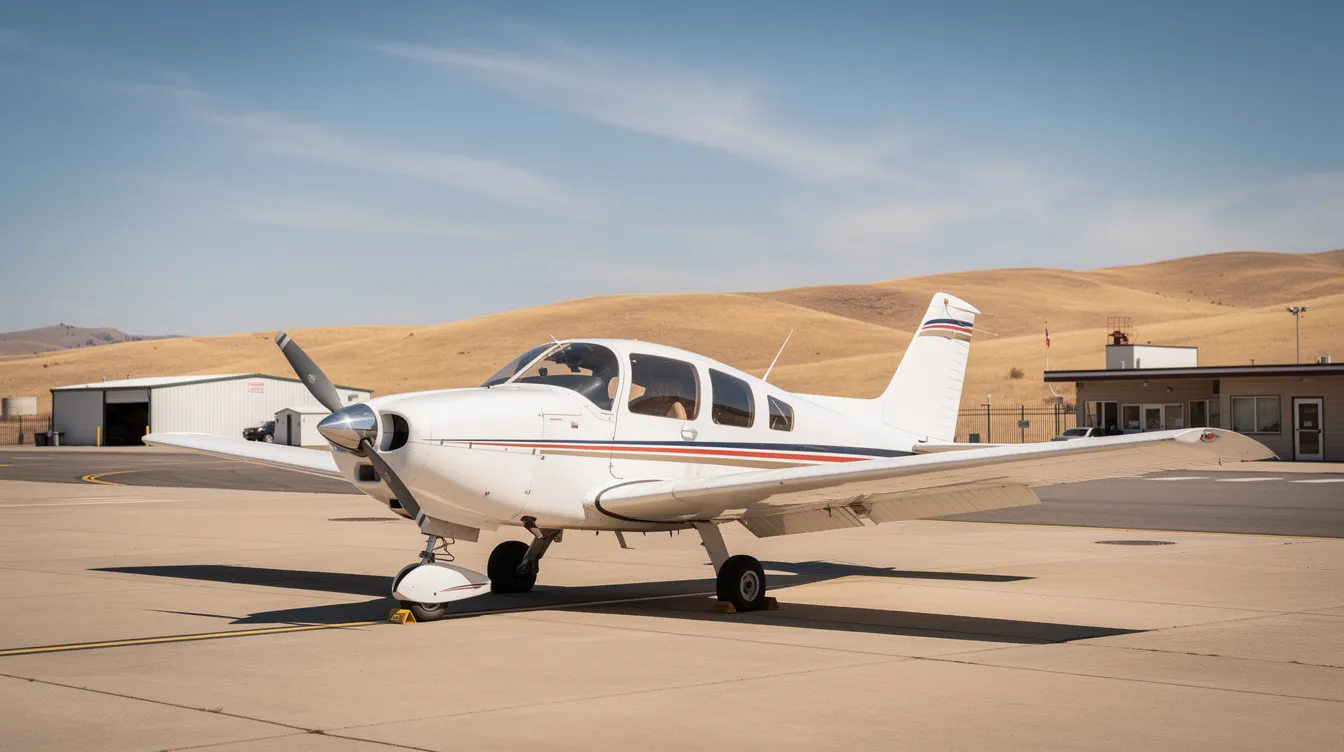
Golden State Flying Club operates from Gillespie Field (KSEE), 1640 North Johnson Avenue in El Cajon, a general aviation airport serving San Diego County's eastern neighborhoods. The club has been a fixture of the local GA community since the late 20th century, functioning as a member-based organization where pilots share access to club aircraft rather than owning planes outright.
The club provides a blend of flight training and aircraft rental. Members can book club airplanes for lessons with approved flight instructors, log cross-country hours to destinations across Southern California, or take weekend trips to places like Palm Springs or Catalina. Tools like Jettly’s airport locator tool can also help pilots and passengers scope out suitable airports beyond the immediate San Diego area. The model is straightforward: pay monthly dues, reserve the airplane you need, and fly.
Golden State Flying Club primarily serves the greater San Diego region. Pilots from La Mesa, Santee, and downtown San Diego choose Gillespie Field for its lower traffic volume, lower cost, and easier access compared with San Diego International (SAN). For students who want to learn to fly without the complexity of a major commercial airport, it's a practical home base.
The club's fleet consists mainly of Piper PA-28 models — Cherokee Warriors (160 HP) and at least one Archer (180 HP). Several Warriors are classified as Technically Advanced Aircraft (TAA) with glass panels, Garmin GPS, and autopilot. Other San Diego-area clubs like Let's Fly San Diego provide a variety of aircraft types for training, while SoCal Flying Club offers advanced G1000 aircraft. Prospective members should check Golden State Flying Club's official fleet page for current tail numbers and avionics details.
Membership basics at a high level: a refundable $600 deposit plus $1,500 in prepaid flight time upon joining, with monthly dues of $35 per family. Members benefit from wet rental rates (fuel included) - Warriors at approximately $150 per hour and Archers at roughly $160 per hour, plus a 9% fuel surcharge. There are no daily minimum charges for aircraft use, and insurance is included with a $100 deductible.
While Golden State Flying Club focuses on pilot training and self-flown trips, platforms like Jettly focus on on-demand private jet charter in San Diego for travelers who prefer to be passengers. The two serve different needs but can complement each other — many club-trained pilots still charter professionally crewed jets for longer distances or time-critical business travel.
Golden State Flying Club offers structured flight training for multiple FAA certificates, using independent but club-approved flight instructors based at Gillespie Field. Instruction is available from beginner to advanced ratings, covering everything from first-flight introductions to commercial pilot checkride preparation.
Flight training includes structured curricula for various pilot certifications. The club holds FAA Part 141 approval, which means its training syllabi meet rigorous federal standards. While Part 141 programs can allow slightly fewer minimum hours on paper (35 for private pilot versus 40 under Part 61), students at Golden State Flying Club typically need 55 to 70 hours to reach checkride readiness. Flight instruction costs $80 per hour for private pilot dual instruction at Golden State Flying Club, while some clubs offer rates as low as $75 per hour, making the club competitive with other San Diego options.
Students schedule lessons directly with flight instructors and reserve aircraft through the club's booking system. This setup can lower overall costs compared with large commercial flight schools in San Diego, where traditional programs are often more expensive because overhead and aircraft rates tend to run higher. Additionally, independent instructors can keep more of the instruction fee because there are no administrators taking a large share. Membership in flying clubs can reduce training costs significantly by giving students access to shared fleet resources and wet rental rates.
Golden State Flying Club's instructors are experienced CFIs and CFIIs who provide ground school, dual instruction, stage checks, and checkride preparation. Ground school classes assist in preparation for FAA exams, and instructors publish their hourly rates so students can plan budgets ahead of time. Advanced and instrument flight instruction runs approximately $85 per hour.
Training covers areas such as solo flying and cross-country navigation. Typical lesson areas include local pattern work at Gillespie Field, practice areas east of San Diego, and cross-country flights to airports like Montgomery-Gibbs (MYF), Ramona (KRNM), and Carlsbad (KCRQ). Students can integrate online ground training or self-study with in-aircraft instruction, similar to how other regional flying clubs and independent schools operate.
A Private Pilot Certificate allows you to fly a single-engine aircraft day or night under Visual Flight Rules (VFR), carrying passengers for non-commercial purposes anywhere in the United States. It's the foundational certification that opens the door to the entire world of general aviation — from weekend trips to building toward a professional career in aviation.
You must be at least 17 years old for a private pilot license. Additional eligibility requirements include the ability to read, write, speak, and understand English, and holding at least a 3rd Class Medical Certificate obtained from an Aviation Medical Examiner. San Diego has several AMEs available for scheduling.
Private pilot training requires a minimum of 40 flight hours under FAA Part 61 rules. That includes at least 20 hours of dual instruction and 10 hours of solo, plus required cross-country, night, and basic instrument training. Under Part 141, the minimum drops to 35 hours. However, most students at Golden State Flying Club realistically need closer to 55 to 70 hours. Based on PilotBound estimates, the total cost for a private pilot certificate at Golden State Flying Club runs approximately $19,000 when flying twice per week.
Here's how Golden State Flying Club structures private pilot training:
Introductory flight - a discovery flight where beginners get hands-on stick time
Pre-solo maneuvers - dual instruction covering climbs, turns, stalls, and pattern work at Gillespie Field
First solo - flying the traffic pattern alone after your instructor signs you off
Cross-country flights - solo and dual trips to MYF, KCRQ, and inland airports
Knowledge test preparation - one-on-one ground lessons plus recommended online test prep resources
Checkride - oral exam and flight test meeting FAA Airman Certification Standards
The club provides diverse opportunities including introductory flights and safety reviews throughout the training process. Many private pilots later transition to using platforms like Jettly for business or family travel when they prefer the convenience of private jet charter over renting and flying themselves on longer trips.
An instrument rating is an add-on to a private pilot certificate that allows you to fly under Instrument Flight Rules (IFR) and in low-visibility conditions. Instead of relying on visual references outside the cockpit, instrument-rated pilots navigate using cockpit instruments and air traffic control clearances. For pilots based in San Diego, where marine layer fog can ground VFR flights for hours, this rating is especially valuable.
Core FAA requirements for an instrument rating include:
Holding at least a Private Pilot Certificate
You need 50 hours of cross-country flight time as Pilot in Command
Accumulating a minimum of 40 hours of actual or simulated instrument time
Completing at least 15 hours of instrument instruction with an instrument-rated instructor
Golden State Flying Club uses IFR-equipped aircraft for instrument training. Their Warriors and Archers feature Garmin GPS, glass panels, and autopilot — similar to how Bakersfield Flying Club's aircraft are IFR-equipped with Garmin GPS for their training programs. Students practice approaches into Southern California airports with instrument procedures, including Gillespie Field (KSEE), Montgomery-Gibbs (MYF), San Diego International (SAN), and Carlsbad (KCRQ).
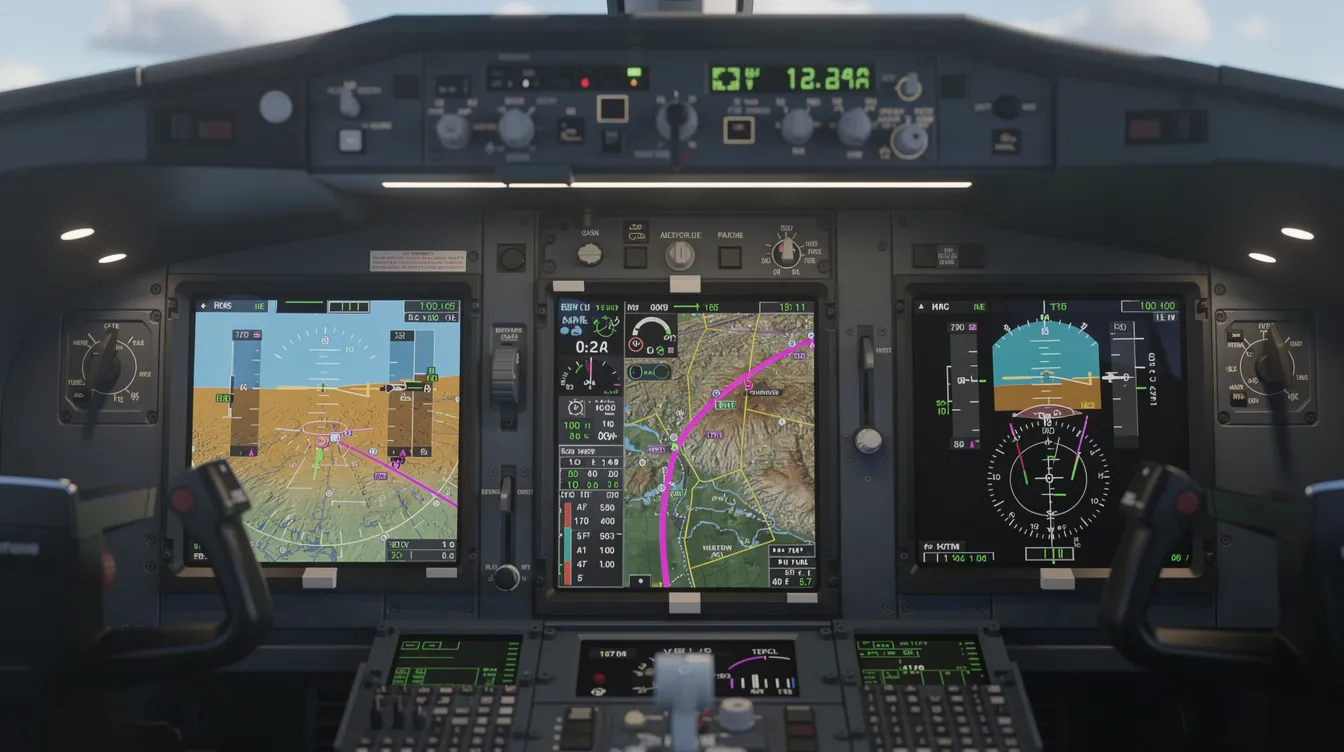
Key skills covered during instrument rating training at Golden State Flying Club include:
Holding patterns and approach briefings
ILS and RNAV (GPS) approaches
Missed approach procedures
En-route IFR navigation using both ground-based navaids and GPS
Communication and clearance management with ATC
Instrument rating training at Golden State Flying Club improves safety for pilots who frequently fly in the marine layer and changing coastal weather common around San Diego. Advanced and instrument flight instruction at the club costs approximately $85 per hour, plus the standard aircraft wet rate and fuel surcharge.
Some pilots use their instrument rating to fly more reliably on regional trips — say, San Diego to San Francisco — while relying on private jet charter through platforms like Jettly for longer routes or international private jet travel, or tight business itineraries where larger, faster aircraft make more sense.
Beyond private pilot and instrument rating, Golden State Flying Club supports training paths toward commercial pilot certification, complex endorsements, and Certified Flight Instructor certificates through affiliated instructors.
Commercial pilots must log at least 250 flight hours. The commercial rating requires a minimum of 250 flight hours total, including specified cross-country and PIC hours, plus training in a complex or technically advanced aircraft. Golden State Flying Club's TAA Warriors and Archers can satisfy certain TAA requirements for commercial training, though the fleet is limited to single-engine piston aircraft. Multi-engine ratings would require external training at a partner provider.
Members pursuing a flying career — airline, charter, or corporate pilot — often build time by renting club aircraft, sharing flights with other members, and logging cross-country hours throughout California and neighboring states. As they progress, some transition from piston trainers to a broader universe of private charter aircraft operated by certificated carriers. The club's wet rental rates and no daily minimum policy make time-building more affordable than renting from a standalone FBO.
While Golden State Flying Club focuses on training and time-building, actual charter employment would be with certificated operators. Some of these operators supply aircraft to digital brokers like Jettly for private jet charter missions, connecting the training pipeline to the broader charter airlines ecosystem and the professional aviation world.
Students interested in instructing can work with senior CFIs at the club to prepare for CFI, CFII, and MEI checkrides. Using club aircraft where appropriate, aspiring instructors can build the teaching skills and flight experience needed to launch a career in aviation education.
Aircraft rental is a core service at Golden State Flying Club. Members get affordable access to a fleet of single-engine trainers and cross-country aircraft based at Gillespie Field, without the financial burden of aircraft ownership or the higher rates charged by standalone FBOs.
The club rents aircraft at wet rates (fuel included), billed on a Hobbs-time basis. In contrast, private aviation platforms may offer options such as crowdsourced shared charter flights to lower per-seat costs for travelers:
|
Aircraft |
Hourly Rate (Wet) |
Engine |
Key Features |
|---|---|---|---|
|
Piper Cherokee Warrior |
~$150/hr + 9% fuel surcharge |
160 HP |
Glass panel, GPS, autopilot (TAA) |
|
Piper Cherokee Archer |
~$160/hr + 9% fuel surcharge |
180 HP |
Garmin 750, autopilot |
Renter requirements include completion of a club checkout with a CFI, proof of at least a student pilot certificate for solo practice, and appropriate endorsements for advanced avionics or higher-performance aircraft. Many flying clubs provide access to modern aircraft 24/7, and Stanford Flying Club aircraft are available 24/7 via online scheduling; Golden State Flying Club similarly uses an aircraft reservation system where members choose planes, instructors, and time slots. Prime weekend and evening slots fill quickly, so early booking is recommended.
Members can use club aircraft for personal trips without daily minimum charges. A popular example: flying four people to Palm Springs for a three-day weekend costs roughly $300 round-trip total, since you only pay for the hours flown out and back. Insurance is included, and fuel is covered by the wet rate. For travelers comparing club rental to on-demand charter, tools like Jettly’s jet card flight cost estimator can provide ballpark pricing for equivalent private jet routes. Bakersfield Flying Club aircraft undergo regular 100-hour inspections to maintain airworthiness, and Golden State Flying Club follows similar maintenance standards to keep its fleet safe and reliable.
For those who need a crewed, larger aircraft — whether for a multi-city business trip or a family vacation beyond piston range — Gillespie Field private jet charter options through Jettly offer a different class of travel entirely.
Membership at Golden State Flying Club is more than aircraft access. It's a community of pilots, students, and aviation enthusiasts centered around general aviation at Gillespie Field in San Diego County. Flying clubs offer a community for pilots and aviation enthusiasts that's hard to replicate at a commercial flight school.
Membership involves a refundable deposit and monthly dues without long-term commitments. Here's the current structure:
Refundable deposit: $600
Prepaid flight time: $1,500 (applied toward future flights)
Monthly dues: $35 per family
Total upfront: $2,100
The club offers free access to facilities such as Wi-Fi and flight simulators, plus headsets, computers, printers, and a comfortable place to study or debrief after flights. Members receive regular updates on safety and proficiency requirements, keeping everyone current on club policies and FAA standards.
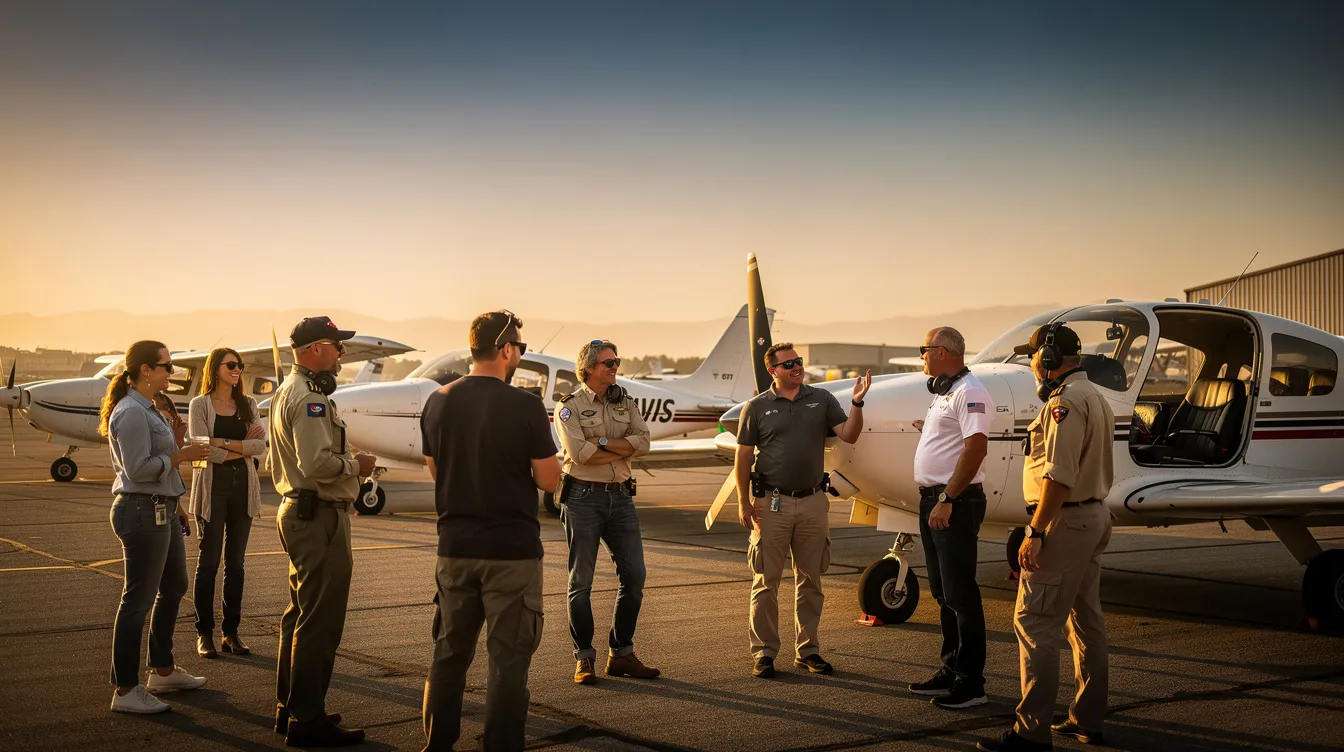
Members range from first-time students learning to fly to experienced instrument-rated pilots, passionate aviation hobbyists, and retired airline captains. This creates natural opportunities for mentorship and networking. Members can share costs on group fly-outs to destinations like Catalina (KAVX), Palm Springs, or the Central Coast. Flying clubs often host safety seminars for pilots, and Golden State Flying Club is no exception—the club schedules proficiency clinics and informal social gatherings throughout the year, where members can learn a lot about flying. Members can email the club with questions or to find out about upcoming seminars or events.
The flying club model has a long history in American aviation. The Stanford Flying Club was established in 1930, making it one of the oldest in the country. Bakersfield Flying Club started in 2011 for aspiring pilots in California's Central Valley. Golden State Flying Club fits squarely in this tradition, offering an open, accessible path into aviation for the general public in the San Diego area.
Golden State Flying Club membership can complement, not replace, private jet travel. Some members still choose private jet charters or structured jet card programs through services like Jettly for time-critical business trips or international itineraries where renting and flying themselves is impractical.
Golden State Flying Club is centered on flight training and self-piloted aircraft rental in piston planes. Private jet charter platforms like Jettly arrange professionally crewed flights on turboprops and jets worldwide and sit alongside other top private jet charter companies in the broader business aviation market. They serve fundamentally different purposes, but understanding both helps you pick the right option for any given trip.
|
Factor |
Golden State Flying Club |
Jettly Private Jet Charter |
|---|---|---|
|
Experience |
You fly the airplane |
Professional crew handles everything |
|
Aircraft |
Single-engine piston aircraft (Warriors, Archers) |
Light jets, midsize jets, heavy jets, turboprops |
|
Cost structure |
Membership + hourly wet rate + instructor fees |
Per-flight pricing, no training investment |
|
Geographic reach |
Regional (few hundred miles) |
Domestic and international |
|
Speed |
110–130 knots |
300–500+ knots |
|
Typical use |
Training, time-building, recreational trips |
Business travel, family trips, urgent travel |
|
Scheduling |
Self-book aircraft and instructor |
Learning to fly at Golden State Flying Club is ideal for passionate aviation enthusiasts, aspiring professional pilots, and anyone who wants hands-on control of a small airplane for regional trips around California and the western U.S., even if they later choose a NetJets alternative like Jettly for longer-range or more demanding missions.
Jettly caters to business leaders, families, and high-frequency travelers who value time savings, direct routing into smaller airports, and the ability to work or relax while professional crews handle the flying. Travelers who don’t need a whole aircraft can explore options for buying a seat on a private jet, and you can learn more about how private jet charter works on Jettly's page.
Many pilots trained at clubs like Golden State eventually use private jet charter for longer-range or international travel. When weather, schedule pressure, or passenger counts exceed what a light piston aircraft comfortably supports, charter becomes the practical choice. For occasional trips, there are many ways to get a seat on a private jet easily without committing to ownership. A pilot who earned their private pilot license at Gillespie Field might still book a Jettly flight from San Diego to New York for a board meeting the following morning.
If chartering sounds like the right fit for your next trip, explore Jettly's global private jet marketplace and instant pricing tools for flights originating from San Diego and other major cities, whether you prefer shared charter flights or full charters.
These questions address practical details that new students and prospective members often ask about Golden State Flying Club and how it fits alongside private jet charter options.
Most students training part-time in San Diego conditions take 6 to 12 months to earn a private pilot certificate, depending on their schedule, weather, and lesson frequency. A minimum of 40 flight hours is required for a private pilot license under FAA rules, but the realistic range at Golden State Flying Club is 55 to 70 hours. Students who fly twice per week tend to finish closer to the six-month mark, while those flying once per week or less may need a full year.
Complete beginners are welcome. You can begin with an introductory discovery flight to see if flying is right for you. After that, you apply for an FAA student pilot certificate and obtain a medical certificate from an Aviation Medical Examiner before committing to a structured flight training syllabus. No prior experience is needed — just the motivation to learn.
Most flying clubs, including Golden State, operate on a pay-as-you-go model for aircraft rental and instructor fees. You pay for each flight lesson and ground session as you go, plus monthly membership dues. The club does offer financing for qualified students, and many students also use third-party aviation lenders, personal loans, or savings plans to manage costs over time. Members can add $1,500 increments to their flying account and receive a 5% discount.
Yes. Qualified members who have completed a club checkout and meet experience requirements can book aircraft for day trips or multi-day cross-country flights. There are no daily minimum rental hours at Golden State Flying Club — you only pay for the hours you actually fly. The club's policies on overnight tie-downs, fueling at away airports, and aircraft care apply, so read the member handbook or contact the office before planning your first overnight trip.
Charter is typically better for longer distances beyond piston aircraft range, tight business schedules where arrival time matters, larger groups that exceed four-seat capacity, or poor-weather scenarios where a bigger, faster, professionally flown aircraft offers more safety margin and comfort. If you need to travel internationally, fly coast-to-coast, or arrive ready for a meeting rather than fatigued from piloting, a private jet charter is the better tool. Visit jettly.com for instant charter pricing and options from San Diego and hundreds of other cities worldwide.
Golden State Flying Club offers an accessible, cost-effective path for aspiring pilots and aviation enthusiasts in the San Diego area to learn to fly, build hours, and enjoy personal aircraft rental. With its experienced instructors, well-maintained fleet, and supportive community, the club provides a strong foundation for private pilot, instrument, and commercial training. For those whose travel needs extend beyond the regional range or who prefer to be passengers, private jet charter platforms like Jettly offer a complementary solution. Jettly’s global marketplace provides instant pricing, a wide selection of professionally crewed jets, and seamless digital booking for business and leisure travelers worldwide.
Whether you want hands-on flight training at Gillespie Field or convenient private jet travel from San Diego and beyond, combining Golden State Flying Club with Jettly’s charter services ensures you have the right aviation option for every journey.
Ready to experience private travel on your terms? Explore flight options or request a quote at https://www.jettly.com.
Share this post:
Jay Franco Serevilla
Oct 17, 2026
|
5
min read
Discover tips and trends in the industry.
5
min read
Capacity of the Boeing 737-800: Seating, Layouts, and Comparisons
The Boeing 737-800 is a versatile aircraft with a seating capacity ranging from 162 to 189 passengers, depending on the airline's configuration. It is widely used for short- to medium-haul flights due to its fuel efficiency and reliability. Understanding its layout options helps travelers set expectations for comfort and plan their journeys effectively.
Read More
5
min read
Boeing 737 Models: Generations, Uses, and What They Mean for Modern Air Travel
The Boeing 737 is the best-selling commercial aircraft series, evolving through four generations since 1967. Each generation has enhanced fuel efficiency, passenger comfort, and operational range, making it a staple in both commercial and private aviation. This guide explores the various models, their uses, and their significance in modern air travel.
Read MoreStay updated with our latest insights and tips to elevate your journey with us.
MEMBERSHIPS AND ASSOCIATIONS



Disclaimer: Jettly operates as a charter broker, offering access to a global digital jet charter marketplace. Jettly is not a direct air carrier and does not own or operate aircraft. All advertised flights are conducted by third-party air carriers that are fully licensed and hold the appropriate Part 135 or Part 121 certifications issued by the Federal Aviation Administration (FAA) or equivalent regulatory authorities under U.S. or foreign law. Jettly complies fully with the U.S. Department of Transportation's Part 295 and Part 298 Charter Broker regulations. Jettly does not carry additional liability insurance. Passengers are covered by aircraft operator insurance. TICO: 50023770


