


Login
Get Instant Pricing On 23,000+ Aircraft

>

Private aviation is undergoing a remarkable transformation. Once seen solely as a luxury reserved for the ultra-wealthy, the futuristic private jet is now emerging as a symbol of innovation, sustainability, and forward-thinking design. As technology evolves, the future of private air travel is poised to deliver more than just convenience; it promises an entirely new experience in the sky.
Leading manufacturers like Airbus, known for their high-end customizable jets, and innovative companies such as Otto, which is developing next-generation private jets with a strong commitment to the environment and sustainability, are driving this evolution. Otto Aviation plans to have the Phantom 3500 jet in service by 2030, pending FAA certification. The Phantom 3500 is promoted as using up to 60% less fuel than rival jets while producing 92% fewer emissions, thanks to its lightweight, low-drag design, making it a standout in sustainable aviation. Designed to cruise at altitudes of 51,000 feet, the Phantom 3500 accommodates four to six passengers, offering an exclusive and efficient travel experience.
Additionally, the Phantom 3500 aims to operate more efficiently in turbulent conditions, further enhancing its appeal as a sustainable and reliable option. Its windowless design provides a panoramic digital experience instead of traditional windows, enhancing both aerodynamics and passenger immersion.
With a rising demand for personalized and on-demand flight options, businesses and individuals alike are exploring the benefits of private aviation. This shift is driving innovation across the industry, giving birth to aircraft that prioritize fuel efficiency, carbon reduction, digital connectivity, and interior elegance like never before. AI enhances pilot decision-making by providing real-time data and predictive maintenance through algorithms that analyze large datasets. And platforms like Jettly are making this level of luxury and innovation more accessible than ever.
The world of private air travel is experiencing a remarkable evolution, as cutting-edge technology, sustainability, and luxury converge to redefine what it means to fly. With demand for private jets and luxury private jets on the rise, leading manufacturers are racing to create a new standard in business aviation, one that prioritizes efficiency, speed, and unparalleled comfort.
Today’s new jet models are more than just aircraft; they are sophisticated marvels engineered to deliver a seamless blend of performance and opulence. From advanced aerodynamics that allow jets to fly faster and farther, to smart cabin features that enhance every moment on board, the latest innovations are setting a bold new direction for private air travel.
Sustainability is also at the forefront, with manufacturers integrating eco-friendly materials and fuel-efficient technologies to minimize environmental impact without compromising luxury. Sustainable Aviation Fuel (SAF), made from renewable resources like waste oils, agricultural residues, and algae, is playing a key role in reducing the carbon footprint of private aviation. As a result, the private jet experience is being transformed for a new generation of travelers who expect both world-class comfort and a commitment to responsible aviation.
In this article, we’ll explore how these advancements are shaping the future of business aviation, from the debut of revolutionary new jets to the integration of state-of-the-art technology and sustainable solutions. Discover how the next era of private jets is being conceived, where luxury, efficiency, and innovation take flight.
Futuristic private jets are engineered with a blend of advanced aerodynamics, cutting-edge materials, and luxurious aesthetics. These aircraft are not just transportation; they’re design masterpieces built with performance and comfort in mind. The Phantom 3500, for instance, utilizes laminar flow technology to maximize aerodynamic efficiency, reducing fuel burn and enhancing overall performance.
Additionally, the Phantom 3500 features a panoramic visual experience called 'Super Natural Vision,' replacing traditional windows to enhance aerodynamics and provide a unique cabin experience. This windowless design not only improves fuel efficiency but also offers passengers a futuristic and immersive view.
Advanced Aerodynamics: New aircraft models feature winglets, blended wing bodies, and advancements in fuselage design that not only reduce drag and enhance speed while minimizing fuel consumption, but also maximize cabin space and spaciousness for superior passenger comfort.
Larger Windows & Natural Light: Passengers can now enjoy sweeping views of the sky, mountains, or cityscapes below through panoramic windows, making the journey feel even more serene and immersive.
Precision Engineering: Every detail, from the curvature of the cabin walls to the feel of the leather seating, is designed with exacting standards. Carbon fiber composites and lightweight alloys enhance both durability and flight range.
Spacious Interiors: Compared to traditional models, the latest jets offer significantly larger cabins, with some providing over 2,000 sq. ft of living space. These sleek, open layouts enhance spaciousness, featuring multiple full-sized suites and separate living and entertainment areas that transform the cabin space into a hotel-like environment.
What sets a luxury private jet apart isn’t just its speed or technology, it’s the attention to personal detail and curated comfort. Futuristic jets bring the sophistication of five-star hotels into the skies.
Custom Interiors: Clients can design interiors to reflect their personal or brand identity, choosing materials, color palettes, and layouts to suit their lifestyle. For owners, meticulous attention to detail and a focus on discretion are paramount, ensuring a truly personalized and private experience.
Gourmet Kitchens: Many luxury jets now feature full-service galleys, allowing for gourmet meals, wine pairings, and even on-demand culinary experiences mid-flight.
Lavish Bathrooms: Expect spa-like bathrooms with rainfall showers, premium toiletries, and full-length mirrors.
Quiet Cabins: Acoustic insulation and smart pressurization systems ensure a tranquil atmosphere, perfect for both business discussions and uninterrupted sleep.
Entertainment Systems: The latest audio-visual tech includes 4K UHD screens, surround sound, and full-device connectivity for movies, games, or live streaming.
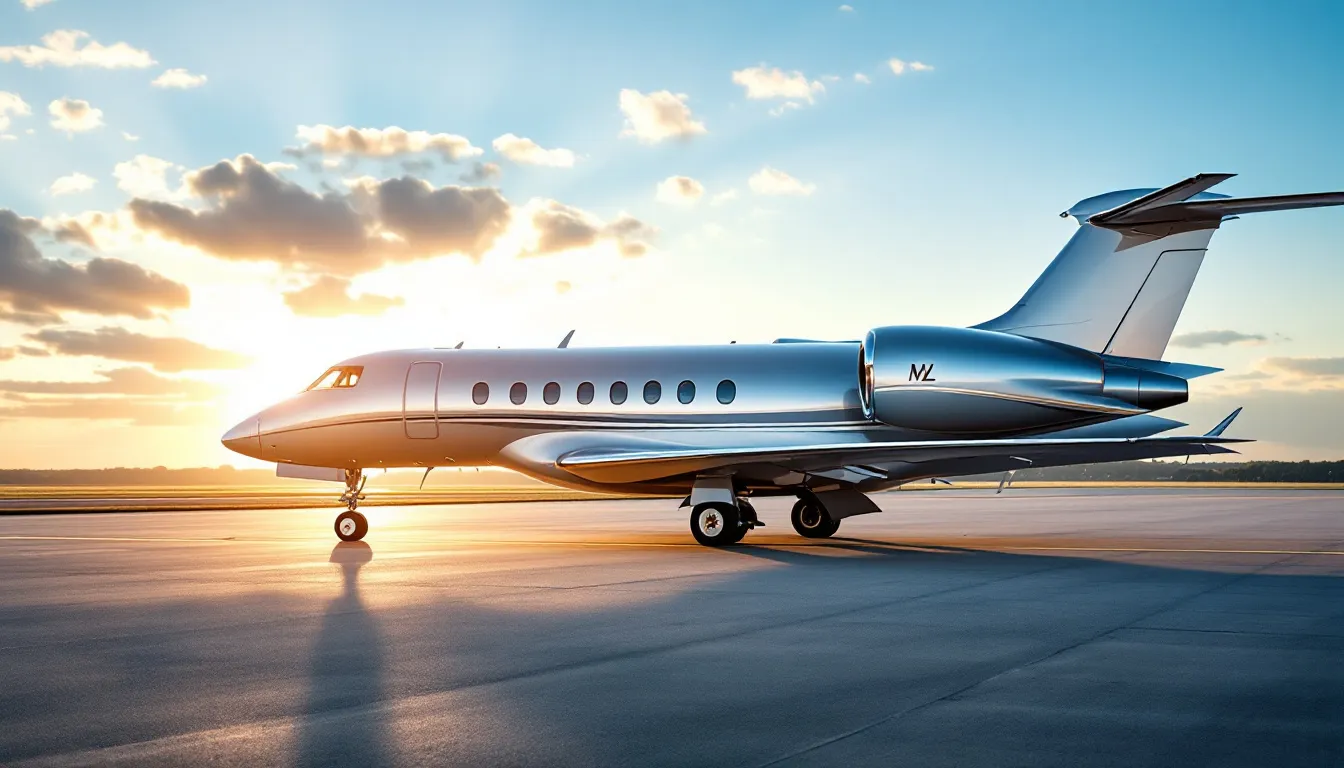
Technology is at the heart of every futuristic private jet, driving innovation from cockpit to tailfin. Advancements in private jet technology include alternative fuels, supersonic flight, AI-driven cockpits, and wellness-focused cabins, ensuring that these aircraft are not only luxurious but also efficient and forward-thinking.
Hybrid-electric aircraft, for instance, utilize a combination of traditional engines and electric motors, using electric power for takeoff and landing, which significantly reduces emissions and noise. The Global 8000's Smooth Flĕx Wing technology is engineered to provide the best wet and dry runway performance, enhancing fuel efficiency.
Fly-by-Wire Systems: Replacing manual controls with electronic interfaces, these systems allow for smoother flight control, automated corrections, and enhanced safety.
Smart Connectivity: High-speed Wi-Fi, real-time weather updates, and satellite phone systems keep passengers and crew connected globally.
Advanced Avionics: Industry leaders like Collins Aerospace and Bombardier are at the forefront of providing cutting-edge cockpit technology and avionics systems. These innovations support pilots with advanced navigation, autopilot, and terrain awareness, enabling precise routing and safer landings, even in remote or challenging locations.
Digital Window Innovation: Some futuristic jets are replacing traditional windows with digital screens that provide virtual views, enhancing the cabin experience, improving structural integrity, and contributing to fuel efficiency.
Sustainable Materials: Interior materials now include recycled composites, sustainably sourced woods, and vegan leather options, aligning luxury with eco-consciousness.
Hydrogen & Electric Propulsion: While still in early adoption, some next-generation jets are exploring hybrid-electric or hydrogen fuel systems to reduce environmental impact.
Blockchain Technology: Blockchain is being utilized for secure biometric identification and enhancing data privacy in private aviation.
Advanced Materials: Next-generation jet construction incorporates carbon fiber composites, 3D printing, and thermoplastics for weight reduction and fuel efficiency. Both the Phantom 3500 and Global 8000 aim to integrate advanced technology in their cabin designs for improved passenger experience. High-speed, satellite-based Wi-Fi is becoming a standard feature in private jets, ensuring seamless connectivity for passengers.
Futuristic private jets don’t just look impressive; they deliver on performance, too.
Longer Ranges: Modern jets, such as the Gulfstream G650ER and G500, are capable of flying 7,000+ nautical miles non-stop, making them ideal planes for long-range missions that connect continents like never before. The Global 8000, the fastest civilian aircraft since Concorde, boasts a range of 8,000 nautical miles, enabling ultra-long-range routes and a top speed of Mach 0.94.
High Speeds: Supersonic private jets are making a comeback, with concepts like the Boom Overture aiming to halve transatlantic flight times.
Short Runway Takeoff: Enhanced lift systems allow for operation from shorter, more remote airstrips, giving passengers greater access to private destinations.
Turbulence Management: Real-time data analytics and responsive control surfaces help reduce in-flight turbulence, offering a smoother ride.
Enhanced Safety: Redundant systems, synthetic vision, and automated alert systems ensure that safety is always a top priority.
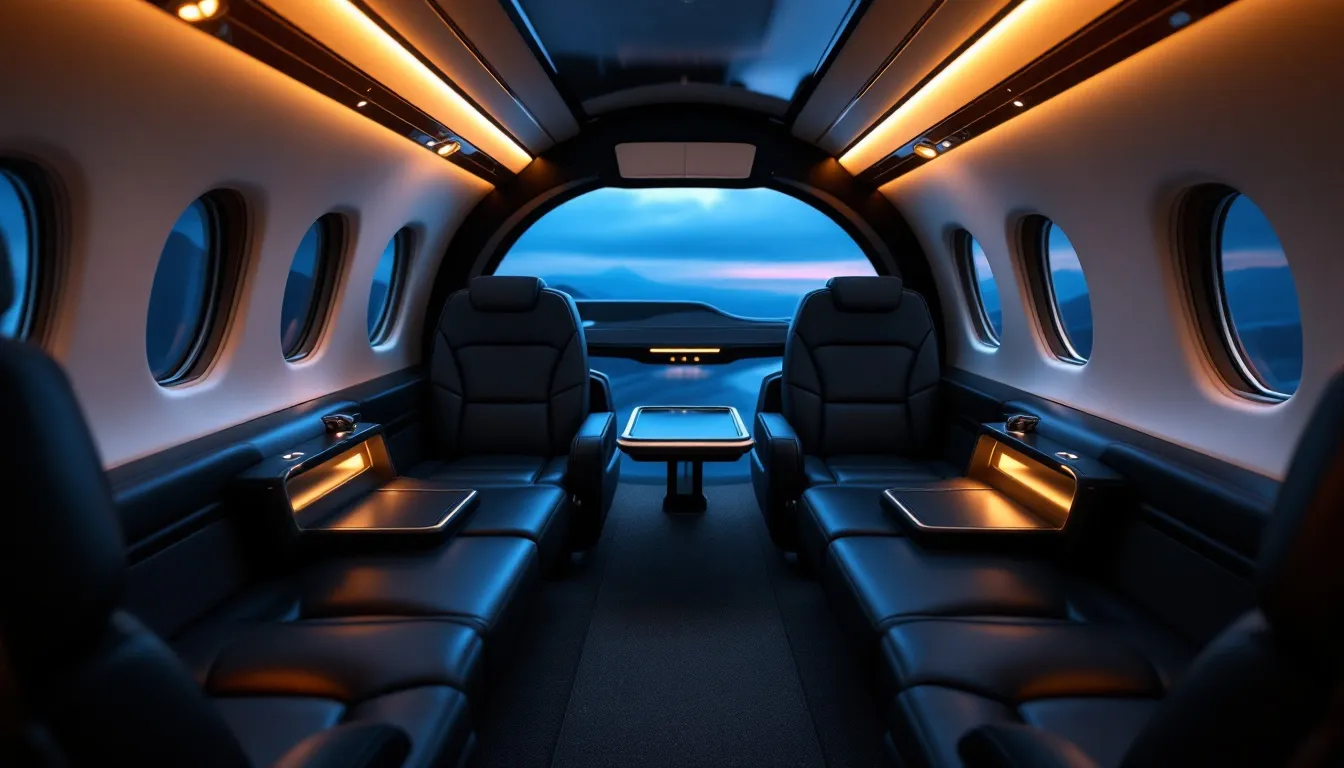
Inside the cabin, the futuristic private jet transforms into a fully functional and luxurious space.
Modular Seating: Easily switch from boardroom-style seating to lie-flat beds with privacy screens.
Wellness Features: Humidity control, circadian lighting, and air purification systems help reduce jet lag and fatigue. The Soleil lighting system, featured in some jets like the Global 8000, simulates natural light cycles to combat jet lag further. These features ensure passengers are well-prepared and arrive at their destination feeling refreshed and ready. Post-pandemic trends in private jet design have also introduced health-centric features, including hospital-grade air filtration and advanced pressurization systems, to enhance passenger well-being. The Global 8000 also features an ultra-low cabin altitude of 2,900 feet, enhancing passenger comfort and reducing fatigue during long flights. Additionally, its Smooth Flĕx Wing technology helps dampen turbulence, ensuring a smoother ride for passengers.
Multi-Zone Layouts: Dedicated areas for dining, sleeping, working, and lounging make long flights feel shorter.
Touch-Free Controls: Voice-activated and motion-sensitive systems reduce the need for physical touch, enhancing hygiene and convenience.
Onboard Office Setup: Encrypted communications, printers, and workstations make the jet a seamless extension of the office, with the cabin specifically designed to maximize productivity for travelers.
Cleaner Cabin Air: Bombardier's Pũr Air system features a HEPA filter that captures up to 99.99% of particles, ensuring a healthier onboard environment. The Global 8000 also incorporates a Nuage seat with a zero-gravity seating position for enhanced comfort.
Whether looking to fly occasionally or regularly, today’s travelers have multiple options to access a futuristic private jet.
Full Ownership: Ideal for frequent flyers, full ownership offers total control over aircraft design, usage, and branding. The jet can be customized to reflect the owner's preferences, lifestyle, and status, ensuring every detail matches their unique requirements.
Fractional Ownership: Purchase a share of a jet and enjoy access proportional to your ownership level, perfect for business teams or multi-family arrangements.
Jet Cards: Prepaid flight hours that offer fixed pricing and guaranteed availability without long-term commitment.
On-Demand Charter: With services like Jettly, clients can charter a private jet to virtually any destination, with personalized service and access to thousands of aircraft globally.
Customers should provide advance notice when booking a charter to ensure availability and a seamless, personalized experience.
Each model caters to different needs, but all options emphasize convenience, luxury, and the freedom to fly on your schedule.
Flying on or owning a futuristic private jet is a significant financial commitment, but one that many see as worthwhile for its time savings and convenience. Owners should also be aware of the expected ongoing expenses, such as regular maintenance, fuel, and crew costs, which can add up substantially over time.
Charter Rates: Vary widely by aircraft type, distance, and location. Light jets may cost $2,000–$3,000 per hour, while ultra-long-range jets can reach $10,000+ per hour.
Ownership Costs: Include initial purchase price (often tens of millions), crew salaries, hangar fees, insurance, and ongoing maintenance. For example, a midsize jet owner can expect to pay $700,000–$1 million annually for staffing, storage, and routine upkeep, in addition to fuel and insurance. Private jet ownership and private jet leasing involve significant operational costs beyond the initial purchase price, which can vary depending on the size and complexity of the aircraft.
Jet Cards and Memberships: Provide cost predictability for frequent flyers, with upfront pricing and no surprise fees.
Tax Benefits: In some jurisdictions, jet ownership can come with depreciation deductions or corporate write-offs.
Cost Transparency: Platforms like Jettly provide upfront pricing so that travelers can make informed decisions without hidden fees.
The private aviation industry is poised for a future shaped by recent trends in the past, such as the increase in carbon pollution from private jets over the past five years, which have influenced the push toward more sustainable and innovative solutions:
Supersonic Travel: Efforts to bring back supersonic jets aim to cut flight times in half while maintaining cabin comfort and sustainability, with new models dubbed "the next Concorde" leading the charge in high-speed travel. Engineers are making supersonic travel commercially viable by focusing on fuel efficiency, emissions, and noise reduction. Boom Supersonic plans to develop a commercial supersonic airliner called the Boom Overture, which uses design technologies to reduce sonic booms.
eVTOL Integration: Electric vertical takeoff and landing aircraft could soon connect travelers to private jets from urban helipads, reducing total door-to-door travel time.
AI and Automation: Predictive maintenance, automated flight planning, and smart crew management will improve operational efficiency.
Digital Booking Platforms: Tech-forward services like Jettly are making it easier to access private aviation with just a few clicks.
Net-Zero Goals: Sustainable aviation fuel (SAF), carbon offset programs, and electric aircraft development will help the industry align with climate goals.
The appeal of private jets goes far beyond glamour. The world's most exclusive private jets offer unparalleled benefits, setting new standards in luxury and performance:
Time Efficiency: No security lines or boarding delays. Private jet airports and exclusive terminals streamline the travel experience, allowing you to fly directly to smaller airports closer to your destination.
Privacy: Ideal for high-profile individuals or sensitive business travel.
Health and Safety: Avoid crowded terminals and commercial cabin environments.
Flexibility: Leave when you want, change your schedule mid-flight, and choose from thousands of global destinations.
Tailored Experience: From cabin temperature to onboard menus, nearly every aspect is customizable.
Futuristic private jets are designed to meet the needs of both business and leisure travelers.
For Business:
Enables executives to visit multiple cities in one day.
Conduct confidential meetings in-flight.
Arrive refreshed and ready for negotiations.
For Leisure:
Take spontaneous weekend trips to exclusive resorts or private islands.
Travel with pets, family, and friends in complete comfort.
Access hard-to-reach destinations with ease.
The value and perception of luxury private jet travel can vary greatly depending on the traveler's perspective, with different individuals or groups prioritizing unique features and upgrades.
Whether flying for work or pleasure, private jets elevate every journey.
The path to eco-friendly aviation is being paved with serious innovation.
Sustainable Aviation Fuel (SAF): Reduces life-cycle carbon emissions by up to 80% compared to traditional jet fuel.
Electric & Hybrid Propulsion: Still in development, but promising cleaner flights in the near future.
Carbon Offset Programs: Many operators, including those on Jettly, offer carbon offset options to neutralize emissions.
Eco-Conscious Interiors: Jets are now outfitted with recycled or renewable materials and smart energy systems.
Flight Optimization Software: Reduces fuel usage through efficient routing and real-time analytics.
Sustainability is no longer optional; it’s the future of private air travel.
The evolution of the futuristic private jet is not just about speed and luxury; it’s about a smarter, more sustainable, and personalized way to fly. From supersonic travel to AI-enhanced cabins, the innovations in private aviation are set to reshape how we think about air travel entirely.
For those ready to experience what’s next in aviation, Jettly offers unparalleled access to the future of private flight. Whether you're booking a one-time charter or considering long-term ownership, Jettly connects you to a world of futuristic travel that’s luxurious, efficient, and tailored to your needs.
Book your next flight with Jettly and redefine the way you fly.
Visit https://jettly.com to learn more.
Share this post:
Jay Franco Serevilla
Sep 7, 2025
|
5
min read
Discover tips and trends in the industry.

5
min read
Private Jet Charter Colorado Springs: Fly Smarter with Jettly
Private jet charter in Colorado Springs offers a convenient and flexible travel solution for business and leisure travelers. With access to over 20,000 aircraft through Jettly, booking a flight is quick and hassle-free, allowing you to bypass commercial airline delays and enjoy tailored services. Experience the benefits of private aviation, including direct airport access and personalized itineraries.
Read More
5
min read
Boise Charter Flights with Jettly: Private Jets, Pricing & Top Routes
Boise charter flights with Jettly offer travelers a flexible and efficient way to fly in and out of Idaho's capital. With access to over 20,000 aircraft, Jettly provides personalized scheduling, enhanced privacy, and direct routing to numerous destinations, making it ideal for both business and leisure travel.
Read MoreStay updated with our latest insights and tips to elevate your journey with us.
MEMBERSHIPS AND ASSOCIATIONS



Disclaimer: Jettly operates as a charter broker, offering access to a global digital jet charter marketplace. Jettly is not a direct air carrier and does not own or operate aircraft. All advertised flights are conducted by third-party air carriers that are fully licensed and hold the appropriate Part 135 or Part 121 certifications issued by the Federal Aviation Administration (FAA) or equivalent regulatory authorities under U.S. or foreign law. Jettly complies fully with the U.S. Department of Transportation's Part 295 and Part 298 Charter Broker regulations. Jettly does not carry additional liability insurance. Passengers are covered by aircraft operator insurance. TICO: 50023770


