


Login
Get Instant Pricing On 23,000+ Aircraft

>

If you fly frequently and you are tired of the stress and hassle of commercial airlines, private flying can be a great way forward.
Owning your own plane gives you a lot of freedom. If private jet ownership is something you are interested in, there are multiple paths you can take.
While some people choose to purchase a plane outright, many others choose fractional private jet ownership. This is where you purchase a “share” of a jet with other individual buyers.
In this blog, we will explore some of the pros and cons of each type of ownership to help you choose the best option for your lifestyle.
Whole aircraft ownership means you personally own a private jet. Owning your own jet comes with a lot of prestige, but also a lot of challenges. You have complete control over your jet including when and where you fly, any amenities you want, and your in-flight experience.
While you may have full control of your jet, you also take on the full responsibility of ownership, including all costs and risks. A single private jet can cost at least $1 million. From there, you will also be responsible for any maintenance and logistical costs.
Imagine the freedom of being able to fly whenever you want. Whole aircraft ownership gives you versatility and distinction.
If you are considering whole aircraft ownership, here are some of the benefits you can expect:
In addition to these benefits, there are some downsides to owning your own jet:
Fractional jet ownership can be compared to a timeshare. You buy a portion of an aircraft, and you share it with other individuals. This can make private jet ownership more affordable. However, the initial cost of fractional jet ownership will still be at least $100,000. From there, you must navigate “sharing” your aircraft with others including heavy-flying times, usage times, and dates.
To join a fractional ownership program, you must sign a contract. While the contract lengths will vary, a typical contract lasts for 3-7 years.
The fractional jet ownership cost can be more manageable than complete ownership for some people. However, the lower costs also come with less freedom.
Here are some of the benefits of a fractional ownership program:
There are some significant drawbacks to fractional ownership that make it less appealing:
If jet ownership of any kind seems like too much of a commitment, you can try on-demand private jet chartering with Jettly. We give you access to over 20,000 private aircraft around the world through easy online booking and accessible pricing.
To enjoy even more benefits of private flying, we also offer a membership program. Depending on the level you choose, it gives you access to food credits, a personal flight coordinator, and special pricing.
Ready to hit the skies? Contact us or start your first online quote request today.
Share this post:
Justin Crabbe
May 7, 2025
|
5 minutes
min read
Discover tips and trends in the industry.
5
min read
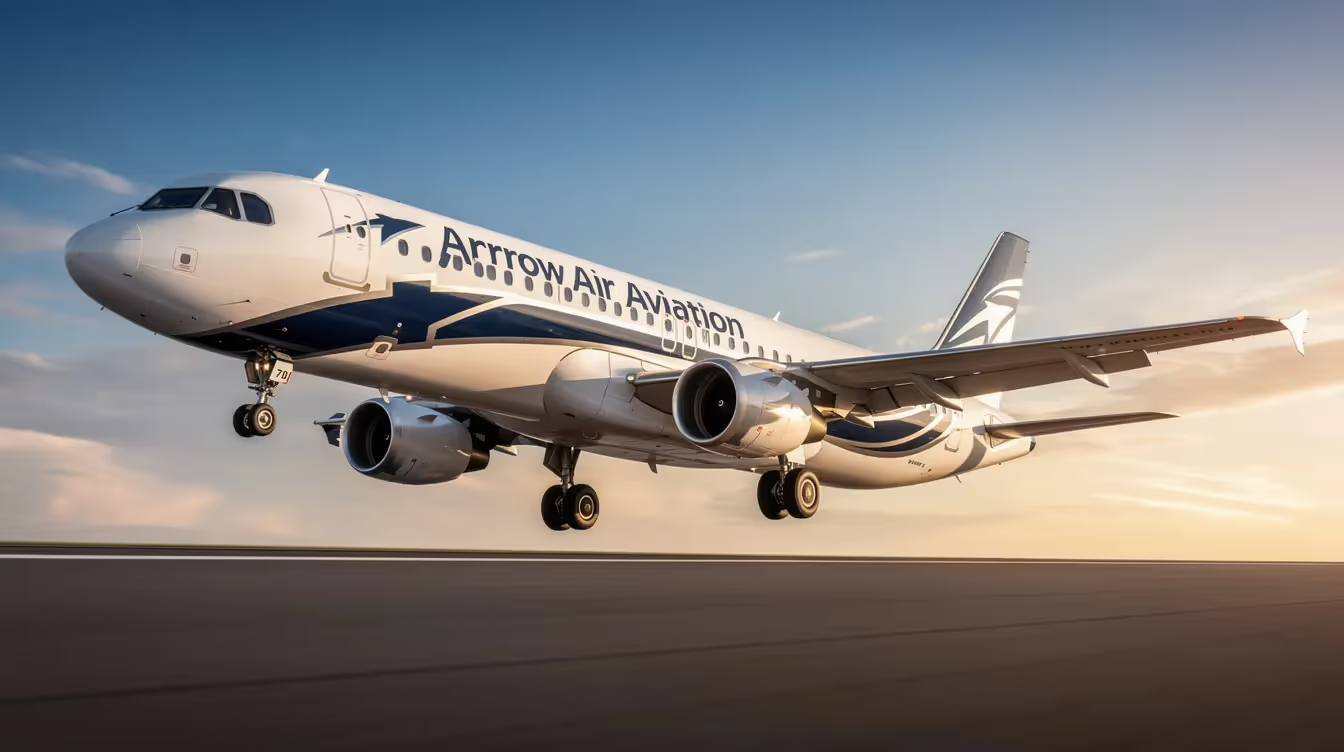
Arrow Air: History, Flight 1285, and Its Legacy in Aviation Safety
Arrow Air Flight 1285 crashed on December 12, 1985, shortly after takeoff from Gander, Newfoundland, resulting in the deaths of all 256 people on board, making it Canada's deadliest aviation disaster. The investigation revealed that ice contamination on the wings and an underestimation of the aircraft's weight contributed to the crash, leading to significant changes in aviation safety protocols in Canada. The controversy surrounding the investigation, including a dissenting minority report that proposed alternative theories, ultimately led to the dissolution of the Canadian Aviation Safety Board and the establishment of the Transportation Safety Board of Canada. Today, lessons from this tragedy continue to shape modern aviation practices, emphasizing rigorous safety standards, data-driven flight planning, and transparency in operations, as exemplified by platforms like Jettly.
Read More
5
min read
Austin Executive Airport (EDC) Guide for Private Flyers
Austin Executive Airport (EDC) serves as a vital hub for private and business aviation in the Austin area, offering a streamlined alternative to Austin–Bergstrom International Airport. With a 6,025-foot runway and modern facilities, EDC caters to corporate travelers and private pilots, providing quick access to downtown Austin and nearby tech campuses. The airport features 24-hour FBO services through Henriksen Jet Center, ensuring exceptional customer service and operational efficiency. Jettly's platform simplifies the charter process, allowing users to compare aircraft options and pricing for a seamless private travel experience.
Read MoreStay updated with our latest insights and tips to elevate your journey with us.
MEMBERSHIPS AND ASSOCIATIONS



Disclaimer: Jettly operates as a charter broker, offering access to a global digital jet charter marketplace. Jettly is not a direct air carrier and does not own or operate aircraft. All advertised flights are conducted by third-party air carriers that are fully licensed and hold the appropriate Part 135 or Part 121 certifications issued by the Federal Aviation Administration (FAA) or equivalent regulatory authorities under U.S. or foreign law. Jettly complies fully with the U.S. Department of Transportation's Part 295 and Part 298 Charter Broker regulations. Jettly does not carry additional liability insurance. Passengers are covered by aircraft operator insurance. TICO: 50023770


