



Login
Get Instant Pricing On 23,000+ Aircraft

>
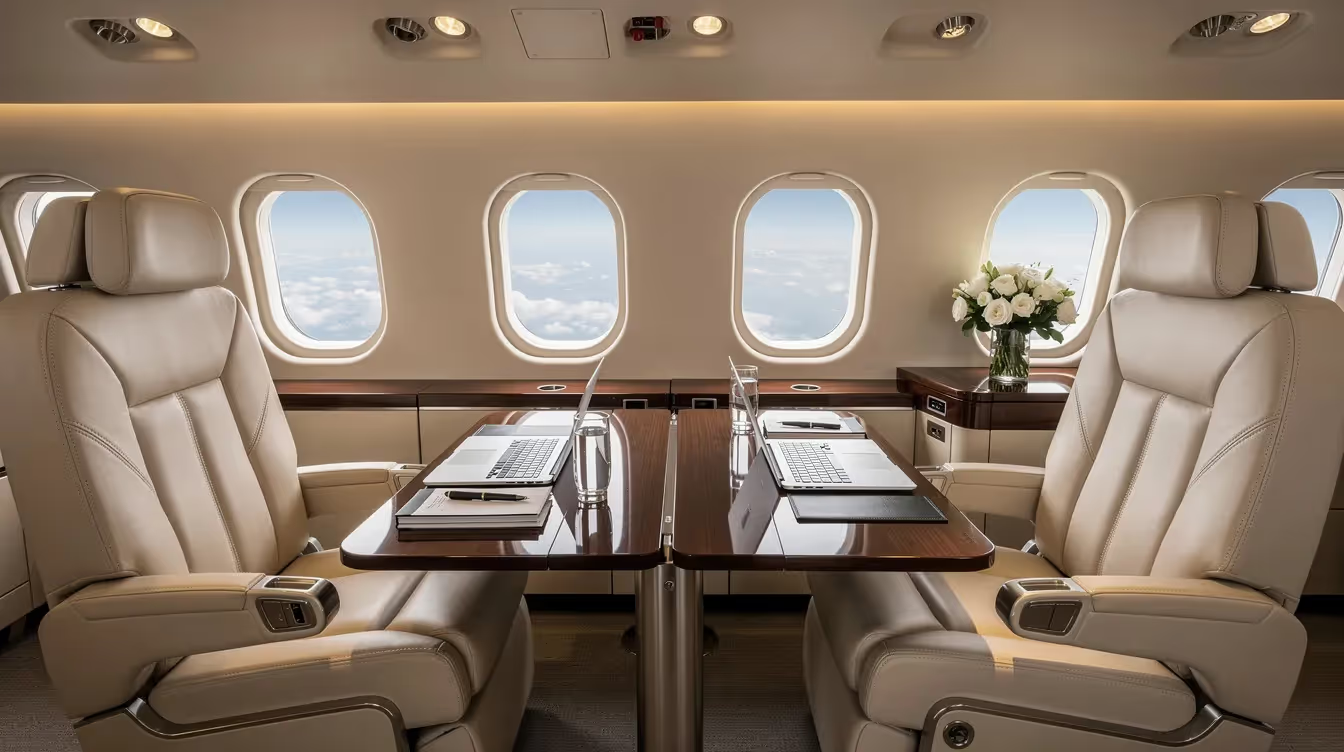
Fractional jet ownership typically costs approximately $500,000–$1.5M+ to acquire a share of a light or midsize jet, such as a 1/16 to 1/8 share, plus $8,000–$25,000 per month in management fees, plus $4,000–$9,000 per occupied flight hour, depending on aircraft type. Over 5 years, total all-in costs can exceed $1M–$4M, depending on usage. Here is every cost broken down.
Fractional jet ownership enables multiple individuals or entities to share ownership of a single aircraft, with each owner allocated a specific number of flight hours annually based on their ownership percentage. These arrangements are typically structured as leases, granting owners a share rather than full direct ownership of the aircraft, which provides flexibility in selecting different aircraft types, akin to fractional ownership models like that of a Cessna 172. Fractional jet ownership typically includes three primary expense categories: upfront acquisition costs, fixed monthly management fees, and variable hourly flight rates.
This guide is for business executives, frequent private flyers, and anyone considering fractional jet ownership in 2026. Understanding every fee and hidden cost is essential for making an informed investment decision.
Understanding fractional jet ownership starts with recognizing that the price is not one number. Fractional ownership is a layered ownership model with an initial purchase price, monthly management fees, an occupied hourly fee, fuel surcharges, peak-day charges, taxes, and resale exposure. When evaluating fractional jet ownership, it is important to consider key factors such as total costs, your specific travel needs, and the lifestyle implications of shared aircraft access.
Fractional jet ownership allows multiple individuals or companies to collectively own a single aircraft, with each owner entitled to a specified number of flight hours annually proportional to their ownership share. These arrangements are commonly structured as leases, providing owners with a share rather than full direct ownership of the aircraft, thereby offering flexibility in choosing different aircraft types.
Most NetJets pricing, Flexjet proposals, and other fractional ownership program brochures emphasize acquisition cost and hourly rates. The CFO-level question is different: what is the 5-year cost after operating costs, fuel costs, Federal Excise Tax of 7.5% on U.S. flight charges, depreciation, and exit fees?
The three primary expense categories are:
|
Fixed Costs |
Variable Costs |
Lifecycle Costs |
|---|---|---|
|
Acquisition cost, capital at risk, monthly fees, aircraft storage fees, hangar fees, and program overhead |
Occupied flight hour charges, landing fees, catering, fuel surcharges, de-icing, international operations, and other operational expenses |
Aircraft share depreciation, fair market value uncertainty, resale commissions, and early termination penalties |
Jettly’s fractional jet ownership cost analysis is designed to expose the full cost structure so buyers can compare aircraft ownership against jet cards, on-demand charter flight options, and pay-as-you-go private aviation with financial clarity.
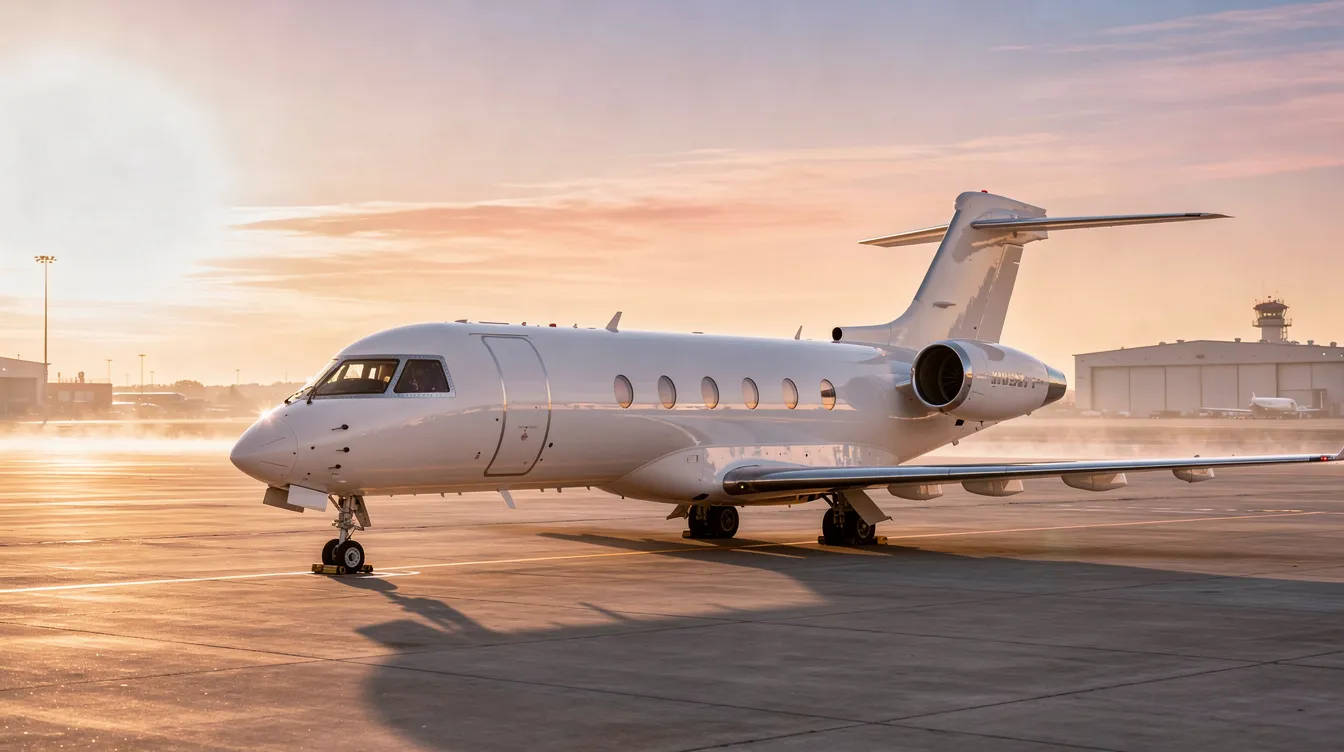
The acquisition cost is the upfront cost paid for fractional jet shares. In 2026, the acquisition cost for a fractional jet ownership share typically ranges from $300,000 to over $3 million, depending on the aircraft type and share size, with a 1/16 share usually providing around 50 flight hours per year. Larger aircraft cabins lead to higher expenses across all categories, while smaller jets require lower capital buy-ins.
The initial investment required for fractional jet ownership typically ranges from about $300,000 to more than $3 million for a 1/16 share, varying based on the aircraft type and share size. Late-model large cabin jets can push the substantial upfront investment even higher. A Citation XLS+, Challenger 350, or Global 6000 will each produce a very different private jet ownership costs profile.
Fractional jets also accelerate depreciation because they usually fly more hours than sole-owner aircraft. That matters because buyers often recover only fair market value at exit, less fees, not the original initial investment.
A 1/16 fractional jet share usually provides about 50 flight hours per year. It is the more accessible entry point into private aviation for people flying privately on predictable short trips.
Typical 2026 acquisition ranges:
Turboprop: $250,000–$350,000
Light jet: $350,000–$550,000
Midsize jet: $450,000–$700,000
Best fit: 30–60 hours per year, regional business travel, family trips
Watch item: peak travel times can incur premiums or restrict availability
Fractional ownership allows owners to customize their flight schedules, providing greater flexibility compared to commercial airline schedules. It also allows owners to access a wider range of airports, including smaller regional airports, which enhances convenience and saves time. However, shared availability can create scheduling conflicts among multiple owners, especially during holidays.
A 1/8 share generally includes about 100 occupied hours annually. This is the share size many executives use when comparing NetJets share price, business jet fractional ownership fees, and a 100-hour jet card.
Typical 2026 ranges are $700,000–$1.2M for light or midsize jets, $1.3M–$2.0M for super-midsize aircraft, and $2.5M+ for large-cabin aircraft. Owners may receive better booking priority and access to multiple aircraft in the same category.
At 100 hours per year, the key question is whether fractional ownership offers real cost savings after depreciation and ongoing fees. Buyers should compare this against a jet card flight cost estimator or structured on-demand program before assuming fractional ownership is cost-effective.
A 1/4 share usually provides about 200 occupied hours per year. This begins to resemble a corporate fleet strategy rather than occasional private jet travel.
Typical 2026 acquisition ranges are $1.4M–$2.2M for midsize jets, $2.2M–$3.8M for super-midsize jets, and $3.5M–$6.0M+ for large cabin jets. Buyers receive a stronger scheduling priority, but the capital tied up can reach several million dollars.
At this level, compare fractional ownership with full aircraft ownership, whole jet ownership, whole ownership, and outright ownership. Full ownership gives complete control over the entire aircraft, but also brings full aircraft ownership burdens: private jet operating costs such as pilot salaries, crew salaries, ongoing maintenance, insurance, hangarage, and annual costs.
|
Share size |
Typical acquisition cost range |
Annual flight hours included |
Monthly management fee range |
Occupied hourly rate range |
Estimated 5-year total cost all-in |
|---|---|---|---|---|---|
|
1/16 share |
$300K–$700K |
~50 |
$8K–$16K |
$4.5K–$7.5K |
$1.2M–$2.8M+ |
|
1/8 share |
$700K–$2.4M+ |
~100 |
$9K–$18K |
$5K–$9.5K |
$3.0M–$7.0M+ |
|
1/4 share |
$1.4M–$6.0M+ |
~200 |
$16K–$30K |
$6K–$12K |
$8.0M–$17M+ |
|
1/2 share |
$4M–$8M+ |
~400 |
$30K–$50K+ |
$7K–$14K+ |
$18M–$35M+ |
In 2026, monthly management fees for fractional jets typically run from about $6,000–$10,000 for turboprops and light jets, $10,000–$18,000 for midsize and super-midsize jets, and $18,000–$30,000+ for large-cabin aircraft. More broadly, monthly management fees for fractional ownership typically range from $4,000 to over $28,000, covering fixed expenses such as pilots, maintenance, insurance, and hangarage.
These fees apply regardless of flight activity. Fractional ownership programs are usually managed by specialized companies that handle ongoing maintenance, crew staffing, scheduling, dispatch, insurance, and regulatory compliance, ensuring that owners have dependable access to the aircraft whenever needed.
|
Usually Included |
Usually Not Included |
|---|---|
|
Crew staffing, pilot training, basic maintenance, insurance, dispatch, scheduling, hangarage, fleet management, and administration |
Fuel surcharges, de-icing, catering, international handling, peak-day surcharges, carbon offsets, special repositioning, taxes |
Many contracts escalate monthly management fees by 3–6% annually. With Jettly’s private jet charter platform, there is no monthly management fee; costs are incurred when a customer books actual flight time.
Occupied hourly rates for fractional jet ownership can vary widely, generally ranging from $2,000 to over $10,000 per hour, depending on aircraft type and specific operational costs. For mainstream 2026 programs, fractional hourly rates often look like this:
Turboprops: $3,000–$4,500 per hour for short regional trips.
Light jet: $4,000–$6,000 per hour for 4–7 passengers and short business routes.
Midsize jet: $5,000–$7,500 per hour for longer domestic missions.
Super-midsize: $7,000–$9,500 per hour for transcontinental range.
Heavy jet / large cabin: $10,000–$14,000+ per hour for international range.
The occupied hourly rate may cover variable costs such as fuel and maintenance, but many fractional program contracts add separate fuel surcharges. Flying multiple short legs often results in paying for unused time, as fractional providers usually charge a minimum flight time per leg, typically set at one hour.
Fractional jet ownership eliminates one-way flight fees in many primary service areas, allowing more flexible travel plans without additional costs associated with repositioning flights. But this is program-specific; some routings and budget programs still pass through repositioning or ferry costs.
All-in cost for fractional ownership equals acquisition cost minus residual value, plus 60 months of management fees, occupied hourly charges, fuel surcharges, FET, peak fees, and exit costs.
Fractional ownership front-loads capital and fixed costs. It can work for people who fly frequently, use their full number of flight hours, and value guaranteed availability. But below 150–200 hours annually, jet ownership vs jet card cost often favors access models.
|
Annual Flight Hours |
Recommended Model |
|---|---|
|
Under 50–75 |
Jet cards or on-demand charter |
|
75–150 |
Compare carefully; unused hours and fixed fees matter |
|
150–200+ |
Fractional ownership can make sense, depending on aircraft type |
Need to purchase additional flight hours? Additional flight hours may be priced at premium program rates.
With Jettly, there is no asset ownership, no acquisition cost, no resale risk, and no mandatory ongoing expenses. Review Jettly’s jet card pricing guide or compare fractional vs jet card economics before committing capital.
Fractional jet ownership involves a complex, multi-tiered cost structure that typically includes upfront, recurring, and usage-based fees. Costs associated with fractional jet ownership can exceed $1,000,000 all-in, even for smaller shares, making it important to understand affordable aeroplane rental costs and options as competing ways to access aircraft.
The hidden costs in fractional jet ownership are not necessarily unfair. They are structural realities of aircraft ownership, shared fleets, and high-utilization private aviation industry operations, as outlined in fractional private jet ownership pros and cons.
Fuel surcharges are variable adjustments added above the published private jet hourly cost breakdown. In 2026, they often add $200–$800 per flight hour equivalent. A 3-hour leg can add $600–$2,400.
Example: a 2.5-hour light jet trip at a $4,800 base hourly rate may add $1,000–$1,500 in fuel surcharges. Fractional jet ownership typically involves high ongoing costs, including fuel surcharges, Federal Excise Tax of 7.5% applied to U.S. flight charges, and potential peak day surcharges.
Fractional programs may define 30–60 peak days per year. Peak-day surcharges commonly run 10–25% above the occupied hourly rate or $2,000–$10,000+ per trip.
Example: a Christmas week New York–Palm Beach round trip on a midsize jet could add $7,000–$15,000 beyond brochure pricing. Fractional ownership can limit spontaneity because owners typically need advance notice to secure desired flight times, which may not always be possible for last-minute trips.
Over five years, fractional jet shares often lose 35–60% of their acquisition value. A $1.0M 1/8 share may sell back for $500,000–$650,000, creating $350,000–$500,000 of capital loss.
Resale may be based on fair market value in the used aircraft market, less remarketing fees of 7–12%. This is one of the biggest differences between fractional ownership and Jettly: Jettly has no aircraft share depreciation exposure.
Fractional contracts are multi-year commitments. Early termination fees often equal 5–20% of remaining share value, with common dollar ranges of $50,000–$250,000+.
A year-three exit from a five-year contract can create a six-figure penalty plus resale risk. Operational extras can also appear: de-icing fees of $500–$2,500 per event and repositioning costs of $2,000–$15,000+, depending on routing.

The cheapest fractional jet program is usually not the cheapest long-term aviation solution. Lower pricing often comes from older aircraft, regional limits, narrower service areas, stricter peak-day rules, or higher back-end surcharges, which is why understanding the best fractional jet ownership companies and costs matters.
Budget 2026 profiles include turboprop-only fleets with 1/16 shares around $200,000–$350,000, older light jets with hourly rates near $3,000–$4,500, or limited-geography midsize fleets. These can reduce capital buy-in, but dispatch reliability, cabin comfort, aircraft age, and maintenance downtime matter, so it’s critical to understand fractional jet ownership pros, cons, costs, and FAQs.
Although fractional ownership offers savings compared to full ownership, the expenses involved in fractional jet ownership remain significant, necessitating considerable upfront investment and ongoing fees. Compare any lowest-price offer against NetJets alternatives, Jettly as a NetJets alternative, and pay-per-flight access.
The table below compares a representative 1/8 share at 100 hours per year with a Jettly jet card or structured charter plan for similar annual usage, echoing the analysis in Jettly’s guide to jet card costs and pricing structures.
|
Cost item over 5 years |
Fractional 1/8 midsize share |
Jettly jet card / structured charter |
|---|---|---|
|
Acquisition cost |
$1,000,000 |
$0 |
|
Residual value after 5 years |
-$500,000 |
$0 |
|
Depreciation cost |
$500,000 |
$0 |
|
Monthly fees x 60 months |
$720,000 |
$0 |
|
Occupied hours x hourly rate |
500 x $6,000 = $3,000,000 |
500 x $7,250 = $3,625,000 |
|
Fuel/handling estimate |
$450,000 |
Quoted per trip; assume included/transparent |
|
FET and taxes estimate |
$250,000+ |
Quoted per trip where applicable |
|
Exit fees |
Possible $50K–$250K+ |
$0 |
|
Estimated 5-year total |
~$4.9M–$5.2M+ |
~$3.6M–$4.0M |
Once depreciation, monthly fees, and variable costs are included, the effective fractional cost often lands in the $9,000–$11,000+ per occupied flight hour range for 100-hour users. Comparable Jettly access can be lower because there is no capital commitment, no mandatory monthly fees, and no market value risk. Fractional ownership also typically allows access to the same aircraft for each trip, providing a consistent experience and scheduling reliability—unlike jet cards or charter options, where the specific aircraft may vary from flight to flight, which is a key point in broader explanations of what a jet card is and how it works.
For users flying under roughly 150 hours per year, a Jettly jet card can deliver similar private aviation access with significantly lower total lifetime cost and no capital risk exposure. Very high-utilization users may still justify fractional structures for specific operational reasons.

In 2026, fractional jet ownership typically requires $500,000–$1.5M+ upfront for a 1/16–1/8 share of a light or midsize jet, plus $8,000–$25,000 per month in management fees, plus $4,000–$9,000 per occupied hour. Five-year totals commonly exceed $1M–$4M+ depending on aircraft type and usage. The cost structure includes acquisition, fixed monthly management fees, variable hourly flight rates, fuel surcharges, FET, and depreciation. Effective all-in hourly cost often reaches $7,000–$12,000+ after lifecycle costs. Buyers flying under roughly 150 hours per year should compare fractional totals with Jettly or jet cards, using tools like a private jet charter cost estimator to benchmark alternatives.
A 1/8 jet share, usually about 100 hours per year, typically costs $700,000–$1.2M for light or midsize jets in 2026. Newer super-midsize and large-cabin aircraft can cost $1.3M–$2.4M+. Owners also pay monthly management fees, often $9,000–$16,000, plus occupied hourly rates of $5,000–$9,500 depending on aircraft type. Over five years, including depreciation, taxes, surcharges, and operating costs, a 1/8 share can exceed $3M–$7M in total cost. A 100-hour Jettly jet card or affordable private jet charter pricing may provide similar access with no acquisition cost or resale risk.
Monthly management fees on a fractional jet usually range from about $6,000–$10,000 for turboprops and light jets, $10,000–$18,000 for midsize and super-midsize jets, and $18,000–$30,000+ for large-cabin aircraft. Broad market estimates range from $4,000 to over $28,000. These fixed fees cover pilots, training, insurance, hangarage, routine maintenance, dispatch, scheduling, and program administration. They are due whether or not the owner flies. Many contracts allow 3–6% annual increases, which materially raises the 5-year total. Jettly has no mandatory monthly management fees.
The hidden costs of fractional jet ownership include fuel surcharges of $200–$800 per hour, peak-day uplifts of 10–25% or $2,000–$10,000 per trip, de-icing at $500–$2,500 per event, repositioning at $2,000–$15,000+, and early exit penalties of $50,000–$250,000+. Depreciation is often the highest hidden cost, with fractional shares losing 35–60% of acquisition value over five years. Remarketing fees can add 7–12% on resale. These items can add hundreds of thousands of dollars beyond headline estimates. Jettly avoids depreciation and exit fees entirely.
The cheapest fractional jet program in 2026 is usually a regional turboprop or older light-jet program. A 1/16 share may start around $200,000–$350,000, with hourly rates around $3,000–$4,500. Those savings often come with trade-offs: older aircraft, limited geography, stricter booking rules, smaller cabins, more downtime, or more aggressive surcharge structures. Even low-cost fractional programs still require meaningful capital, monthly management fees, and ongoing costs, so 5-year totals can exceed $1M. Cost-focused flyers should compare these programs against Jettly’s pay-per-flight model before committing.
Fractional ownership can show a lower base hourly rate than some jet cards, but after acquisition cost, depreciation, monthly management fees, fuel surcharges, taxes, and exit risk, the effective all-in hourly cost is often similar or higher. Fractional all-in costs frequently fall in the $7,000–$12,000+ per hour range, while well-priced jet cards or Jettly-style charter may be $6,000–$10,000 all-in for comparable aircraft. Fractional ownership can make sense for highly consistent 150–200+ hour users. For most flyers under 150 hours per year, jet cards or on-demand charter are usually more flexible and cost-efficient.
Analyze your annual flight profile before buying a share. If ownership risk, liquidity, and fixed fees matter, compare total cost structures with Jettly and review the best jet card programs compared before signing a long-term fractional contract.
Fractional jet ownership offers a compelling path into private aviation, combining shared capital investment with guaranteed flight hours and consistent aircraft access. However, the financial rigor required to evaluate this model goes far beyond the initial acquisition price, as detailed in Jettly’s broader fractional jet ownership cost breakdown. Buyers must carefully consider monthly management fees, occupied hourly rates, fuel surcharges, peak day fees, depreciation exposure, and exit penalties to grasp the full 5-year cost picture.
Jettly’s transparent cost breakdown exposes these layered expenses and hidden fees often omitted in marketing materials, enabling CFO-level comparisons against jet cards and pay-as-you-go private aviation solutions. For those flying under 150–200 hours annually, fractional ownership’s fixed costs and capital risk may outweigh its benefits, making flexible alternatives like Jettly’s jet card a more financially prudent choice.
Ultimately, understanding the total cost structure and operational realities is essential before committing to fractional ownership; a broader view of how much a private jet really costs can further inform this decision. This guide empowers high-intent buyers to make fully informed decisions, balancing cost, convenience, flexibility, and risk in private aviation for 2026 and beyond.
Share this post:
Jeff Ryan Serevilla
May 17, 2026
|
5
min read
Discover tips and trends in the industry.
5
min read
Boeing 737-700 Safety: What Passengers and Private Charter Flyers Should Know
The Boeing 737-700 boasts a strong safety record since its introduction in 1998, distinct from the 737 MAX series. Governed by the FAA and other global regulators, its safety is maintained through rigorous inspections and operator compliance. Passengers can trust the 737-700 for both commercial and private charters, as it lacks the controversial MCAS system found in the MAX models.
Read More
5
min read
Delta Comfort Plus Seating Chart: How to Choose the Best Seats (and When to Go Private)
Navigating the Delta Comfort Plus seating chart can enhance your travel experience by providing extra legroom and amenities. This guide details how to choose the best seats, understand aircraft layouts, and when to consider private jet charters for more comfort. Discover the benefits of Comfort Plus and how it compares to other classes, ensuring you arrive at your destination refreshed.
Read MoreStay updated with our latest insights and tips to elevate your journey with us.
MEMBERSHIPS AND ASSOCIATIONS



Disclaimer: Jettly operates as a charter broker, offering access to a global digital jet charter marketplace. Jettly is not a direct air carrier and does not own or operate aircraft. All advertised flights are conducted by third-party air carriers that are fully licensed and hold the appropriate Part 135 or Part 121 certifications issued by the Federal Aviation Administration (FAA) or equivalent regulatory authorities under U.S. or foreign law. Jettly complies fully with the U.S. Department of Transportation's Part 295 and Part 298 Charter Broker regulations. Jettly does not carry additional liability insurance. Passengers are covered by aircraft operator insurance. TICO: 50023770


