


Login
Get Instant Pricing On 23,000+ Aircraft

>
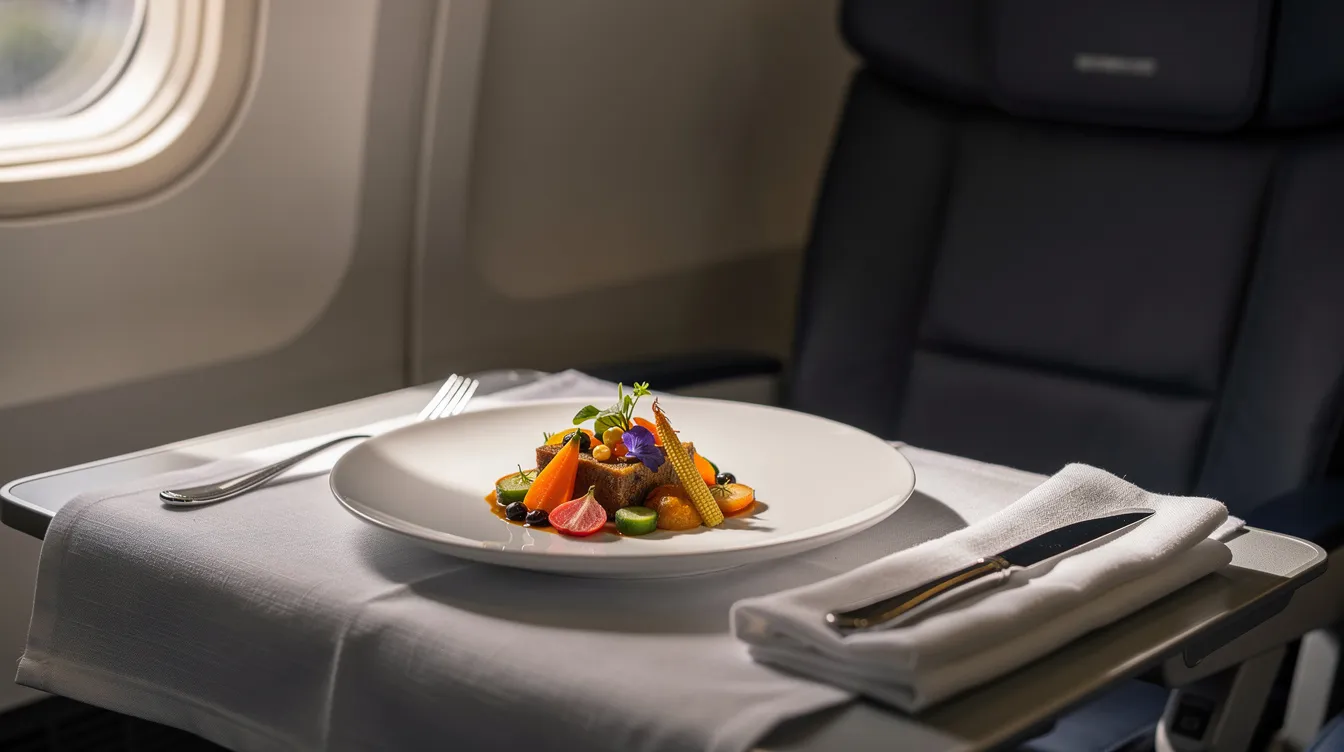
The concept of a flying chef has moved from a commercial airline novelty to a defining feature of premium private jet travel. These professionally trained culinary experts board aircraft to prepare meals, design menus, and deliver culinary excellence at cruising altitude. Here's how this role is reshaping what passengers expect when they fly.
This guide is for private jet travelers, aviation enthusiasts, and anyone interested in the evolution of in-flight dining. Understanding the role of flying chefs reveals how luxury travel is evolving to meet rising passenger expectations.
A flying chef is a trained culinary professional who joins a flight to oversee, finish, or fully prepare meals in the air. Unlike standard flight attendants who focus on safety and general service, flying chefs bring formal kitchen education, fine-dining experience, and direct involvement in food production. Their position on board is specifically to elevate what passengers eat.
Flying chefs aim to provide a fine-dining experience at high altitudes, and they've become common on long-haul first-class menus. Etihad Airways introduced its "Flying Chef" service in December 2012, and Etihad employs chefs specifically for first-class dining experiences. Airlines like Turkish Airlines employ flying chefs to enhance business class dining as well, helping them stand out against competitors in premium onboard dining.
The concept began in commercial aviation but has developed quickly in private charters. Flying chefs offer a personalized, interactive service style compared to traditional catering. They interact with passengers to enhance the dining experience, taking orders directly, adjusting dishes on the spot, and ensuring every plate meets a high standard before it reaches the guest.
For travelers booking through digital platforms like Jettly, this level of attention is increasingly available on select larger aircraft and airplanes—bringing the same passion for cooking found in top restaurants into the sky.
The history of airline meals stretches back further than most people realize, with this story beginning in 1919. In 1927, the first recorded full-service in-flight meal was served, and the first hot meal was served by Lufthansa in 1928.
The airline industry scaled quickly from there. In 1946, Delta Air Lines, founded in 1925, established the first independent airline kitchen, and the first usable microwave oven was installed on an aircraft in 1954. By the 1980s, most airlines relied on centralized flight kitchens and mass catering operations, marking an operational shift away from more distributed onboard preparation. Traditional catering typically pre-cooks food and reheats it on-site, and most in-flight meals are still prepared on the ground and reheated today.
The scale is staggering. Emirates produces 225,000 meals daily at its Dubai facility to serve passengers across its global network. First-class meals often include gourmet options like caviar and lobster, and airlines are enhancing dining with personalized chef services to compete for premium customers. Airlines also use awards to validate the quality of their onboard dining.
Contrast a five-hour transatlantic overnight flight—where a full dinner and breakfast are expected—with a short regional hop where a cold plate and fresh pastry suffice. In both cases, private jet travelers now expect quality that matches or exceeds the best commercial first class. That expectation is what makes flying chefs relevant beyond the airline world.
Chefs on planes face real challenges cooking at 35,000 feet. The cabin environment at cruising altitude features low humidity, reduced air pressure, persistent noise, and vibration. These conditions change how food tastes and how safely it can be handled.
Altitude can diminish human sensitivity to sweet and salty flavors. Research has shown that cabin pressure reduces taste bud sensitivity by about 10%, meaning dishes that taste balanced on the ground can seem flat in the air. A study on gastrophysics confirmed that thresholds for salt, sugar, and glutamate increase notably at simulated cabin pressure, prompting the addition of these flavor elements at altitude.
Flying chefs adapt by using bolder seasoning, umami-rich ingredients like miso and mushroom, and sauces designed to reheat well. For example, instead of a grilled steak—difficult to cook properly and even harder to reheat—a chef might serve a braised short rib with root-vegetable puree and red wine demi-glace. The dish holds its texture, reheats evenly, and delivers flavor at altitude.
Flying chefs use specialized galleys and ovens to cook on planes, and they must navigate strict aviation safety regulations in confined spaces. No open flame is permitted, and knives are also restricted in onboard kitchens for safety. Flying chefs also manage food safety protocols during flights, ensuring cold chain integrity and proper allergen handling. Equipment varies widely: a widebody airliner might have convection ovens and blast chillers, while a midsize private jet kitchen may offer only a compact convection oven and limited counter space.
Flying chefs turn a standard meal service into a curated dining experience. The difference starts before the plane leaves the ground—and it's felt long after landing.
Flying chefs source high-quality ingredients regardless of flight location. They customize menus based on passenger dietary needs and preferences, whether that means a gluten-free starter, a kosher main, or a vegan dessert. This level of personalization is a clear step above pre-set airline menus where guests choose from two or three fixed options.
Flying chefs also adapt menus during flights based on passenger cravings. If a guest on an overnight charter wants a lighter main course or an extra dessert, the chef can adjust in real time. This flexibility is one reason passengers often remember the meal as a trip highlight, driving word-of-mouth and social sharing.
The crew and chef collaborate closely. The chef leads menu execution, plating, and food timing. The cabin crew handles beverages, guest interaction, and safety duties. Consider a business team flying New York to London on an overnight charter: dinner service begins shortly after takeoff—a refined three-course meal with wine—followed by rest, then a light continental breakfast prepared before descent. That kind of coordinated business is what separates a flying chef experience from standard catering.
Jettly is a digital private jet charter platform with access to over 20,000 aircraft worldwide. Beyond matching travelers with the right plane, the platform coordinates ancillary services through the Jettly website—including elevated in-flight catering and access to chef-driven meal programs.
On select super-midsize and heavy jets, Jettly can arrange flying chefs or premium catering through partner operators and vetted culinary specialists. Austrian Airlines, for comparison, employs a chef on every long-haul flight. Jettly brings a similar concept into private aviation, scaled to individual trips.
The booking process is straightforward from a culinary standpoint. Customers specify preferences—Mediterranean menu, children's dishes, plant-based options, or specific dietary restrictions—during the quote stage. That information goes directly to caterers, ensuring the right ingredients and preparation are in place before boarding.
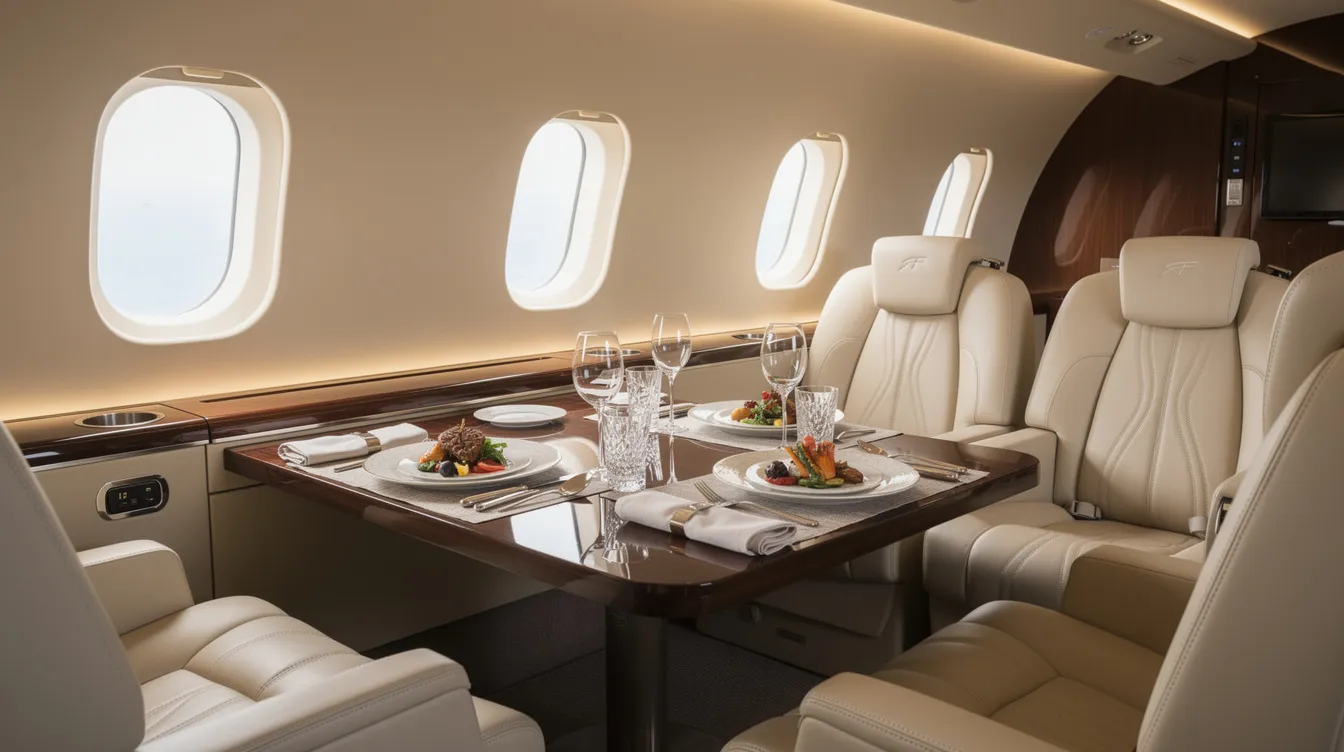
Key advantages for Jettly customers include transparent pricing on catering as a separate line item, the ability to replicate favorite restaurant dishes, and consistent quality across routes. The company also assists with related services like ground transportation and regional specialty menus for popular routes such as Toronto–Vancouver, Los Angeles–Las Vegas, or London–Nice.
Menu design for the airline industry is a collaboration between chefs, nutritionists, operators, and food safety staff. It's a behind-the-scenes production process that determines whether a meal succeeds at 40,000 feet.
Menus are tested on the ground first. Some facilities simulate pressurized cabin conditions to check how dishes behave at altitude. Flavors, textures, and presentation are all evaluated before a menu goes into regular rotation.
For private jet charters, meals are usually prepared in certified kitchens, blast-chilled to preserve quality, and transported under strict temperature control. Hot items may be par-cooked and finished on board. Cold items are assembled closer to departure. Every dish is labeled with allergen information, reheating instructions, and service order.
Key menu principles include moderate portion size, easy-to-eat presentations that hold up during turbulence, balanced nutrition for long flights, and smart use of both shelf-stable and fresh components. For a deeper look at how this works in practice, Jettly's guide to luxury private jet food covers what travelers can expect.
A sample three-course evening menu for a five-to-six-hour charter might include:
Starter: Chilled lobster bisque with crispy chive croutons (served cold, no reheating needed)
Main: Slow-braised short rib with root-vegetable puree and red wine demi-glace (reheats evenly, holds texture)
Dessert: Chocolate fondant with seasonal fruit (rich enough to register at altitude)
The future of flying chefs and airline meals sits at the intersection of food technology, data, and sustainability. Digital booking platforms like Jettly can use passenger profiles and past preferences to pre-select menus and dietary patterns for repeat travelers, saving time and ensuring consistency.
Sustainability is gaining ground. More caterers are turning to seasonal, locally sourced ingredients, reducing food waste through accurate passenger counts, and offering plant-forward courses. These efforts lower costs and environmental impact without compromising quality.
Emerging food technologies—improved shelf-stable techniques, high-quality frozen components, sous-vide finishing in flight-are making it easier to deliver restaurant-level meals in the air. Flying chefs will increasingly serve as curators of regional cuisine, especially on routes connecting culinary capitals like Paris to New York or Tokyo to Los Angeles.
A flying chef is a trained culinary professional who joins a flight to prepare, finish, or oversee meals in the air, providing a personalized fine-dining experience at cruising altitude.
Flying chefs adjust recipes by using bolder seasonings and umami-rich ingredients to compensate for reduced taste sensitivity caused by lower cabin pressure.
Yes, flying chefs customize menus based on passenger preferences and dietary restrictions, including gluten-free, kosher, vegan, and other specialized diets.
Yes, platforms like Jettly can arrange flying chefs or premium catering on select private jets, enhancing the in-flight dining experience.
Flying chefs provide interactive service, tailor meals on demand, and ensure high-quality presentation, turning meals into memorable parts of the journey.
They use specialized galleys with convection ovens and follow strict aviation safety regulations, working within confined spaces without open flames or sharp knives.
Costs vary; platforms like Jettly offer transparent pricing with catering as a separate line item, allowing travelers to choose flying chef services based on their preferences and budget.
Flying chefs have reshaped what passengers expect from dining in the air. What began as a commercial airline experiment is now a standard of success in private aviation, where the meal is as much a part of the travel experience as the aircraft itself.
Jettly enables travelers to match their flight experience—with or without a dedicated flying chef—to the level of comfort, flexibility, and value they enjoy on the ground. From menu personalization to transparent catering costs, the platform makes it simple to book a private jet with every detail handled.
Ready to experience private travel on your terms? Explore flight options or request a quote at https://www.jettly.com.
Share this post:
Jeff Ryan Serevilla
Sep 22, 2026
|
5
min read
Discover tips and trends in the industry.

5
min read
Small Airplane Flights: How Private Small Aircraft Transform Short-Haul Trave
Small airplane flights revolutionize regional travel by offering faster, more convenient alternatives to commercial airlines. With access to more airports and flexible schedules, travelers can save significant time and enjoy personalized experiences. Jettly's platform simplifies booking, providing a wide range of aircraft options and transparent pricing.
Read More
5
min read
Best Ultralight Aircraft: Top Models, Rules, and How They Fit a Private Aviation Lifestyle
This comprehensive guide explores the world of ultralight aircraft, highlighting the best models, essential rules, and their role in a private aviation lifestyle. Ideal for aspiring pilots and aviation enthusiasts, it covers everything from FAA regulations to the unique flying experiences ultralights offer. Discover how ultralight flying complements private jet charter for varied travel needs.
Read MoreStay updated with our latest insights and tips to elevate your journey with us.
MEMBERSHIPS AND ASSOCIATIONS



Disclaimer: Jettly operates as a charter broker, offering access to a global digital jet charter marketplace. Jettly is not a direct air carrier and does not own or operate aircraft. All advertised flights are conducted by third-party air carriers that are fully licensed and hold the appropriate Part 135 or Part 121 certifications issued by the Federal Aviation Administration (FAA) or equivalent regulatory authorities under U.S. or foreign law. Jettly complies fully with the U.S. Department of Transportation's Part 295 and Part 298 Charter Broker regulations. Jettly does not carry additional liability insurance. Passengers are covered by aircraft operator insurance. TICO: 50023770


