



Login
Get Instant Pricing On 23,000+ Aircraft

>
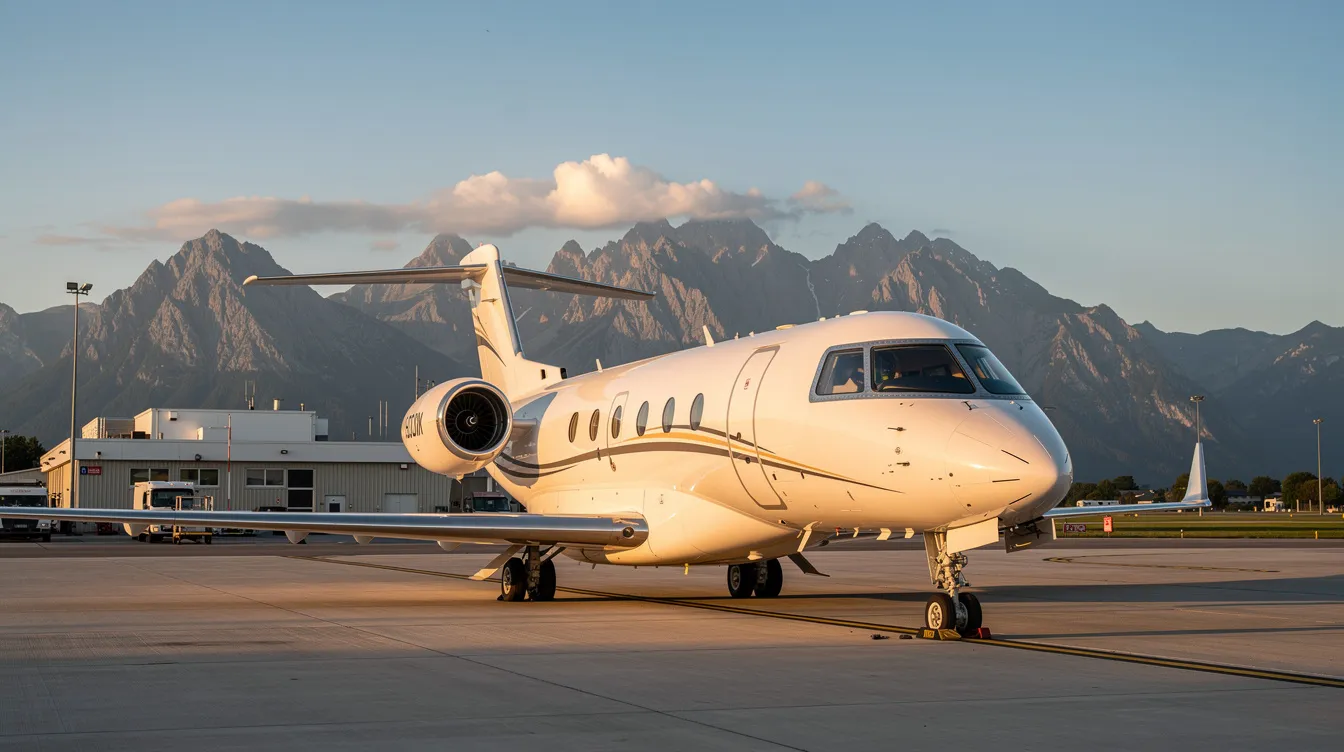
A flight charter puts travelers in control of when, where, and how they fly. Instead of building a trip around an airline's published schedule, charter flights let passengers set the departure time, pick the airports, and choose the aircraft that fits the mission. Jettly's digital platform connects travelers with over 20,000 certified aircraft worldwide, making private jet charter accessible without long-term commitments, hidden fees, or guesswork.
This guide covers how charter flights work, what they cost, which aircraft types match which missions, and how tools like empty leg flights can cut costs significantly.
Charter flights operate on the traveler's schedule, flying direct to thousands of airports that commercial airlines don't serve, and private jet charter services can reduce total travel time by half compared to scheduled and charter flights on commercial carriers.
Jettly offers on-demand charter access to 20,000+ aircraft, transparent charter pricing with instant quotes, and no requirement for traditional jet card deposits or long-term commitments.
Aircraft types range from turboprop aircraft for short regional hops to heavy jets for intercontinental missions, with the right choice depending on passenger count, luggage, and distance.
Empty leg flights - also known as dead-heads or ferry flights - can save travelers 25–75% on private charter, and Jettly lists these deals across popular routes.
Safety is non-negotiable: all charter operators must meet aviation safety standards and hold appropriate certifications, and travelers should verify safety ratings before booking.
A charter flight is a privately booked aircraft that flies according to the traveler's schedule rather than a published airline route. The client picks the departure city, destination, date, and time. The aircraft goes point-to-point, often landing at smaller airports closer to the final destination.
Chartering a flight provides total control over schedule and route. Private charter flights bypass the hub-and-spoke model that forces passengers through connecting airports, layovers, and crowded terminals. Passengers can usually arrive just 15 to 30 minutes before takeoff, and private jet charters eliminate TSA lines and long waits entirely.
Common reasons travelers choose charter over commercial:
Executive travel - A CEO flying New York to Chicago for a same-day meeting saves hours by avoiding airline schedules and hub connections.
Family vacations - A family heading from Toronto to Nassau flies direct instead of connecting through a busy U.S. hub.
Last-minute or urgent trips - Private flights can be arranged in as little as four hours, covering medical evacuations, time-critical business, or unexpected personal travel.
Privacy - The cabin of a chartered aircraft is reserved for the traveling group, ensuring privacy for business meetings and personal travel alike.
|
Feature |
Charter Flight |
Commercial Flight |
|---|---|---|
|
Schedule |
Set by the traveler |
Fixed airline timetable |
|
Airports |
3,000+ worldwide, including smaller airports |
Major hubs only |
|
Check-in |
15–30 minutes before departure |
1–3 hours before departure |
|
Privacy |
Entire cabin is private |
Shared with other passengers |
|
Routing |
Direct, point-to-point |
Often requires connections |
|
Flexibility |
Change times, routes on short notice |
Rigid; change fees apply |
Chartering a flight allows for flexible scheduling and direct routes, which is why demand has grown steadily - the global private jet charter services market was valued at USD 25.87 billion in 2025 and is projected to reach USD 48.19 billion by 2034.
Jettly operates as a digital private charter broker and marketplace, connecting travelers with a vetted global operator network rather than owning or operating aircraft directly. The platform provides access to a diverse fleet spanning turboprops, light jets, midsize and heavy jets, helicopters, and even VIP airliners.
The booking flow is straightforward. (1) Enter a route - say, Los Angeles to Las Vegas - along with dates and how many passengers will fly. (2) Receive instant charter pricing across available aircraft types within seconds. (3) Compare options by filtering for aircraft category, amenities like Wi-Fi or an enclosed lavatory, pet-friendly policies, and catering preferences. (4) Confirm and book securely through the platform.
Jettly connects travelers to over 20,000 certified aircraft across North America, Europe, the Caribbean, and beyond. Travelers can access quotes and aircraft options via the platform's digital marketplace, covering popular routes like New York to Miami, London to Nice, and thousands of less common city pairs. Charter options include private aircraft, on-demand charters, and seat-sharing services depending on the route and availability.
Travelers can book private flights with no long-term commitments, or choose from Jettly's private jet memberships for added benefits. There are no mandatory membership fees or annual contracts required to request a quote or fly.
Choosing the right aircraft type depends on passenger count, luggage requirements, and distance. Jettly offers access to over 20,000 unique aircraft, and matching the mission to the right category keeps costs reasonable and comfort high. For a deeper look at categories, see this guide to aircraft types and classes.
Turboprop aircraft (e.g., Pilatus PC-12, King Air 350) - The Pilatus PC-12 can carry 6 to 8 passengers with a range of around 1,500–1,800 nautical miles. Ideal for short runway operations and regional hops under two hours.
Very light jets (e.g., Phenom 100, Citation Mustang) - Seat 4–5 passengers. Very light jets can fly for up to 2 hours, making them efficient aircraft for short city-pair connections. Very light jets typically charter for $2,500 to $4,800 per hour.
Light jets (e.g., Citation CJ3+, Phenom 300) - Light jets typically accommodate 6 to 8 passengers with ranges around 1,600–2,100 nautical miles, fitting well on domestic routes of 2–3 hours.
Midsize and super-midsize jets (e.g., Hawker 900XP, Challenger 350, Citation Latitude) - Seat 7–10 passengers. Midsize jets can fly for up to 4.5 hours, covering cross-country and some international missions.
Heavy jets (e.g., Gulfstream G550, Falcon 900LX) - Seat 10–16 passengers for intercontinental or transatlantic travel. The Gulfstream G-550 has a range of over 8,000 miles.
VIP airliners (e.g., Embraer 170, Airbus A320-200) - Used for corporate shuttles, group charters, sports teams, and large-scale events.
|
Aircraft Category |
Best For |
|---|---|
|
Turboprop |
Short-runway access, regional hops, island transfers |
|
Very Light / Light Jet |
Business meetings, weekend trips, 2–6 passengers |
|
Midsize Jet |
Cross-country flights, family travel, ski trips |
|
Heavy Jet |
Transcontinental routes, groups larger than 10 |
|
VIP Airliner |
Sports teams, music tours, corporate shuttles, large groups |
Passenger count and itinerary are essential factors when choosing a charter aircraft. A couple flying two hours to a resort needs a different aircraft than a 14-person executive team crossing the Atlantic.
Charter pricing works on an hourly-rate basis, multiplied by total flight time, plus taxes, airport fees, and any repositioning costs. The total price of a charter may include multiple factors beyond basic fees, and Jettly's goal is competitive pricing with full transparency so travelers know what they're paying before confirming.
Realistic 2026 price ranges by category:
Turboprops: ~$1,500–$3,000 per flight hour
Light jets: Charter costs for light jets start at $3,500 per hour, ranging up to ~$5,500
Midsize jets: ~$4,000–$7,500 per hour
Super-midsize jets: ~$5,500–$10,500 per hour
Heavy/large cabin jets: Large cabin jets can cost $10,000 per hour or more, with ultra-long-range models reaching $22,000+ per hour
Charter pricing varies based on aircraft type and distance. A light jet from Dallas to Aspen (roughly 1.5 hours) might cost approximately $5,000–$8,000 one-way, while a midsize jet on the same route could run $6,000–$11,000 depending on the operator and season; Jettly offers additional guidance on affordable private jet charter pricing.
For accurate numbers on any route, Jettly's cost estimator provides instant pricing. Always request a transparent quote that includes potential additional fees beyond hourly rates - things like fuel surcharges, overnight crew costs, landing fees, and international handling charges.
Factors that push the price up or down:
Route popularity: High-demand corridors (New York to Miami) often have more available aircraft and competitive rates.
Positioning: If an aircraft must reposition from another city, that leg adds cost.
Peak dates: Holidays, ski season, and major events increase demand and pricing.
Aircraft age and configuration: Newer jets with modern interiors typically command higher rates.
Jettly's software compares charter flights across thousands of operators to surface cost-effective options, giving travelers the best prices without traditional membership lock-ins. For a full breakdown, read more about private jet costs and pricing.
An empty leg flight is a repositioning flight without passengers. When an aircraft drops off clients at a destination and needs to return to base - or fly to its next pickup - that return leg often flies empty. Operators list these legs at steep discounts to offset fuel and crew costs. Empty leg flights are also known as dead-heads or ferry flights.
Empty leg flights can offer discounts of 25–75% off standard charter rates, and some travelers further lower costs by using Jettly's platform to crowdsource private jet flights and share empty seats. To learn more about how these deals work, visit Jettly's empty leg flights page.

Key details about empty legs:
Savings are real: Empty leg flights can save travelers 25–75% on charters. A midsize jet that would normally cost $20,000 on a given route might appear as an empty leg for $5,000–$8,000.
Fixed schedule: The date, time, and route are set by the operator. Flexibility is required.
Short notice: Many empty legs appear 48–72 hours before departure, so they reward spontaneity over planning.
Availability varies: Popular corridors like Los Angeles to Las Vegas, Miami to Teterboro, and London to Geneva produce the most listings.
Flexible travelers can take advantage of empty leg deals for spontaneous trips. Consider a family that sees a Friday-afternoon empty leg from Miami to Nassau on a light jet listed for $3,500 instead of the usual $9,000. They pack bags, head to the FBO, and start the weekend early. The trade-off is accepting a fixed departure window, but the significant savings make it worthwhile for those who can adapt.
For more strategies on finding affordable private flights, check out this guide to private jet ferry flights and empty legs.
Traditional private jet travel often requires either a jet card (prepaid flight hours with a large upfront deposit) or fractional ownership (a capital-intensive share of an aircraft). Both models suit frequent flyers who fly dozens of hours annually, but they carry long-term commitments and tie up significant capital.
Jettly's approach is different. The platform focuses on on-demand charter access, allowing travelers to pay per trip with real-time charter pricing and no mandatory membership fees. This model works well for:
Travelers who fly privately a few times per year and don't want to prepay 25+ hours
Businesses with variable travel needs that change quarter to quarter
Anyone who values comparing options across a vast network of operators rather than being locked to one fleet
That said, Jettly also offers jet card programs with predictable pricing and membership options that deliver some jet card-like benefits - predictable pricing tiers, concierge support, and faster booking - without the large capital outlay. For a detailed comparison, see this jet card pricing and rates guide.
On-Demand vs. Jet Card at a glance:
On-demand - No upfront deposit, pay per flight, access to 20,000+ aircraft, full flexibility on aircraft type
Jet card - Large prepaid buy-in ($100,000+), fixed hourly rate, limited to one operator's fleet, guaranteed availability windows
Which traveler profiles benefit most from each? Very frequent flyers logging 50+ hours per year may find jet card rates cost-effective and can benefit from resources that break down jet card costs and pricing structures. Everyone else typically saves money and gains flexibility through on-demand booking.
Jettly frequently connects travelers across North America, Europe, the Caribbean, and selected routes in the Middle East and Asia-Pacific. Private jets can access over 3,000 airports worldwide, and Jettly's platform reaches 5,000+ airports in North America alone, including smaller regional fields closer to final destinations, which travelers can explore using Jettly's airport locator tool.
Private jets utilize smaller regional airports located closer to destinations, which cuts ground transportation time significantly. Instead of landing at a congested major hub, charter passengers use dedicated FBOs at airports like Teterboro Airport (TEB) near New York, Van Nuys (VNY) in Los Angeles, or Dallas Love Field (DAL). For more on how FBOs work, see this guide to private jet terminals.
|
Route |
Approx. Flight Time |
Typical Aircraft Category |
|---|---|---|
|
New York (Teterboro) → Miami |
~2.5 hours |
Light jet |
|
Los Angeles → Las Vegas |
~1 hour |
Very light/light jet |
|
Toronto → Vancouver |
~5 hours |
Super-midsize / heavy jet |
|
London → Nice |
~1.5 hours |
Light jet |
|
San Juan → St. Barts |
~1–2 hours |
Turboprop / light jet |
Flight charters can fly directly to smaller airports not served by commercial airlines - think mountain airfields near ski resorts, island strips in the Caribbean, or private fields adjacent to country estates. Browse this comprehensive guide to charter airlines and private flights and popular private jet charter routes for more examples.
The charter experience starts before boarding. Private flights typically use fixed-base operator terminals rather than crowded airline terminals, meaning no long security queues, no gate announcements, and no overhead-bin battles. Passengers drive up, walk through the FBO, and board directly from the ramp.
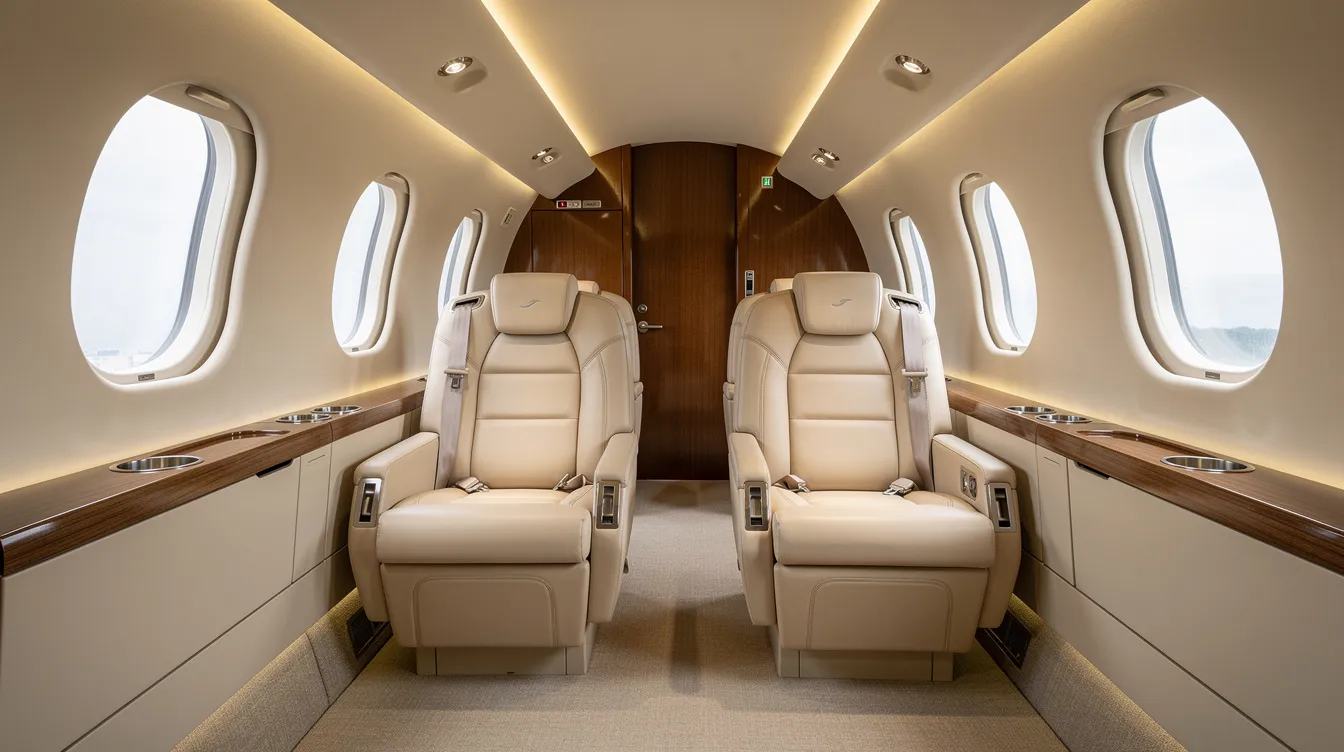
What makes the onboard experience different:
Quiet, private cabin - The entire aircraft belongs to your group. Hold meetings, take calls, or simply relax without strangers nearby.
Work-friendly setup - Many jets offer Wi-Fi, power outlets, and club-style seating that converts into a productive workspace or meeting room.
Catering - From light snacks and beverages to full meals tailored to dietary preferences. Chartering a flight allows for customization of onboard services and amenities, including requests for specific menus, children's meals, or allergy accommodations.
Enclosed lavatory - Available on most light jet and larger aircraft.
Pet-friendly - Many operators welcome pets in the cabin, a detail travelers can specify during booking.
For executives, entertainers, and high-profile clients, privacy and confidentiality are non-negotiable. Reputable operators follow strict discretion protocols, and the seamless travel experience from car to cabin to destination is a key reason clients return; many compare offerings using guides to the best private jet charter companies before choosing a provider.
Charter flights serve purposes well beyond individual business or leisure travel. Different types of charters are available for various passenger and cargo needs.
Corporate shuttles - Companies with multiple offices use weekly or bi-weekly charter shuttles between cities (e.g., Houston to Midland for energy firms, San Francisco to Seattle for tech teams). Flexible scheduling and block-booking through Jettly can reduce per-seat costs and boost productivity.
Group charters - Sports teams, music tours, incentive trips, and conference delegations often charter regional jets or VIP-configured airliners. Aircraft like the Embraer 170 or Airbus A320-200 can carry groups larger than 50 in reconfigured layouts. Chartering a flight is generally more cost-effective for larger groups traveling together versus buying dozens of individual commercial tickets, and travelers can weigh shared charter flights versus full charters to find the best fit.
Medical and humanitarian missions - Urgent cargo, organ transport, disaster relief, and patient evacuations rely on charters' speed and flexibility.
Film and production logistics - Moving crew and equipment to remote locations on tight schedules.
Jettly's aviation experts can offer tailored solutions for each mission type, helping clients select the right aircraft and schedule to match their travel needs.
Charter flights can cater to specific scheduling needs, including last-minute plans. Early-morning departures, late-night returns, and same-day round-trip itineraries that would be impossible on commercial airlines are routine in private aviation.
Jettly can often source aircraft for same-day or next-day departures, especially on dense charter corridors like New York to South Florida or London to Geneva.
Private flights can be arranged in as little as four hours on many routes.
Flexible scheduling means departure time adjusts to the traveler, not the other way around.
Seasonal peaks affect both availability and pricing. Winter ski season drives demand to Aspen, Vail, and the Alps. Summer fills Mediterranean routes. Major events - Art Basel Miami, the World Economic Forum in Davos, Formula 1 weekends - tighten supply and push rates higher.
Practical advice for managing peaks, along with additional tips for booking the cheapest private jet flights:
Book earlier for holiday and event travel to lock in preferred aircraft types and better pricing.
Stay flexible on departure times or airport choices to access lower rates.
Monitor empty leg listings - operators reposition heavily during peak periods, creating more deal opportunities- and review strategies on how to get a seat on a private jet easily. For timing tips, see when the cheapest time is to buy flights.
Example: A consultant learns at 2 PM on a Tuesday that a Wednesday morning meeting in Dallas is mandatory. Commercial options involve a 6 AM connection through Atlanta. Jettly sources a light jet departing at 7:30 AM direct from Teterboro Airport, arriving in time for a 10 AM meeting - a round trip completed the same day.
Safety is the foundation of every charter flight. All charter operators must meet aviation safety standards and hold appropriate certifications. In the U.S., operators fly under FAA Part 135 certification, with approximately 1,787 active certificate holders operating around 11,458 aircraft, and travelers can learn more from this overview of Part 135 charter companies and why they matter. Equivalent frameworks exist globally: EASA Part-CAT in Europe, CAAC in China, and others.
Third-party safety audits - Programs like ARGUS, Wyvern, and IS-BAO provide independent oversight. Airshare has IS-BAO Stage 3 and ARGUS Platinum designations, representing top-tier safety maturity. Tradewind Aviation operates under FAA Part 135 certification, and all Tradewind flights operate with two pilots for safety.
Crew qualifications - Experienced captains and first officers are type-rated on the specific aircraft they fly and complete recurrent training and check rides.
Maintenance and insurance - Operators maintain aircraft to manufacturer standards (or better), carry required insurance, and undergo periodic audits.
Operator vetting - Charter Flight Group partners with trusted charter operators for safety, and platforms like Jettly take safety ratings and regulatory requirements into account when listing operators.
Travelers should verify safety ratings and operator certification before booking a charter flight. A strong safety record, current certifications, and recognized third-party audit ratings together form the baseline that separates professional operators from the rest, whether booking directly or via vetted partners such as Zenflight private jet operator.
Jettly's digital interface lets travelers search, compare, and book flights online with instant pricing for 20,000+ aircraft worldwide. The platform is built to make the booking process as simple as searching for a commercial flight - but with the flexibility private aviation demands.
Key platform features:
Instant quoting - Enter origin, destination, dates, and passenger count to see real-time pricing across multiple aircraft.
Trip management - Handle itineraries, passenger manifests, and special requests (catering, ground transportation, pets) in one place.
Dedicated support - Account managers assist with complex routing, multi-leg itineraries, or last-minute changes. Aviation experts are available to help match travelers with the right flight.
Ground transport integration - Where available, the platform can coordinate car service to and from the airport, providing access to a door-to-door seamless travel experience.
Travelers who need help with a multi-city journey or a complex corporate shuttle program can contact Jettly's team directly for hands-on trip planning or explore how Jettly positions itself as a flexible NetJets alternative.
Private aviation carries a larger per-passenger carbon footprint than commercial air travel. That reality matters, and the industry is taking steps to address it.
Sustainable Aviation Fuel (SAF) - Availability is expanding, though cost and supply remain challenges. Some operators offer SAF blends at select airports.
Right-sizing aircraft - Using efficient aircraft matched to the actual mission (rather than flying a heavy jet with two passengers) reduces fuel burn per trip.
Empty legs reduce waste - Filling repositioning flights that would fly anyway means fewer total aircraft movements per passenger-mile.
Carbon offset programs - Some operators and platforms offer offset purchasing so travelers can account for their flight's emissions.
Group travel efficiency - Putting 8–12 people on a single midsize jet can produce lower per-passenger emissions than booking the same group across multiple commercial itineraries with connections.
Jettly can help identify more fuel-efficient aircraft types for certain missions and connect travelers with operators offering SAF or offset options where available, and cost-conscious flyers can also consult the jet card flight cost estimator when evaluating different ways to fly.
Getting started takes minutes, not meetings. Here's how:
Visit https://www.jettly.com and enter your trip details: origin, destination, dates, and number of passengers.
Review instant charter pricing across available aircraft, filtered by category, amenities, and budget.
Experiment with different dates, nearby airports, or aircraft types to see how pricing shifts in real time.
Confirm your selection and pay securely through the platform.
For complex routes, multi-city trips, or corporate shuttle programs, Jettly's team is available to build a custom itinerary. Whether the need is a spontaneous weekend getaway or a recurring business shuttle, the platform is designed to match every traveler with the ideal choice for their journey.
Ready to experience private travel on your terms? Explore charter options or request a quote at https://www.jettly.com, and if you share charter solutions with your audience, consider joining Jettly's ULTRA high-ticket affiliate program to earn on referrals.
Below are answers to practical questions about private charter that weren't fully covered above.
Many trips are arranged 3–7 days ahead, but Jettly can often source aircraft within 24 hours or even same-day on busy routes. Peak periods - Christmas and New Year in the Caribbean, February ski season to Aspen, major conferences - benefit from earlier booking to secure preferred aircraft types and better pricing. For a step-by-step walkthrough, see this guide on how to charter a flight or explore region-specific options such as private jet charter in Kolkata, West Bengal.
Luggage limits depend on aircraft size. Turboprops and light jets have more limited baggage capacity than midsize and heavy jets. Share approximate baggage details - number of suitcases, golf bags, skis, or oversized items - with Jettly during the quote so the platform can recommend suitable aircraft types with adequate cargo space.
Many charter flights arranged through Jettly are pet-friendly, subject to operator policies and local regulations. Declare pets during booking so the operator can prepare the cabin, advise on carrier requirements, and disclose any cleaning fees in advance. Pets typically ride in the cabin with passengers rather than in cargo.
All standard immigration rules apply. Travelers must carry valid passports and obtain any required visas when flying internationally on a charter flight. Confirm entry requirements with official government sources and share passport details in advance so handling agents can prepare customs paperwork efficiently, particularly when arranging flights to hubs like New Delhi for private jet charter.
Flexible scheduling is a core benefit of private charter. Jettly can often adjust departure times or routing, subject to aircraft and crew availability. Change fees or pricing adjustments may apply depending on how close to departure the change occurs. Contact a Jettly representative or use the platform as soon as a schedule change is known to explore options or to coordinate with partner operators like Dexter Air Taxi.
Private flight charter offers unmatched flexibility, convenience, and control over travel plans. Jettly’s digital platform simplifies private jet charter by providing transparent pricing, instant quotes, and access to a vast network of over 20,000 certified aircraft worldwide. Whether flying for business, leisure, or special missions, travelers benefit from customized schedules, direct routes, and a seamless onboard experience. With options ranging from turboprops to heavy jets and affordable empty leg deals, private charter makes efficient, comfortable travel accessible without long-term commitments or hidden fees.
Ready to experience private travel on your terms? Explore flight options or request a quote at https://www.jettly.com. Learn more about Jettly’s charter options at https://www.jettly.com/post/charter-flights-101 and discover how to save with empty leg flights at https://jettly.com/empty-leg-flights.
Share this post:
Jay Franco Serevilla
Sep 7, 2026
|
5
min read
Discover tips and trends in the industry.

5
min read
Worst Safety Record Aircraft: Deadliest Passenger Jets, Hull Losses, and What They Mean for Airline Safety
Certain aircraft have gained notoriety for their poor safety records, particularly the Fokker F28 and McDonnell Douglas MD-11, which exhibit high hull loss rates. While the Boeing 737 family has the highest total fatalities, this is largely due to its extensive use rather than inherent danger. Understanding these statistics is crucial for travelers assessing aviation safety.
Read More
5
min read
www trivago com flights: Cheap Flights vs. Private Jets with Jettly
This guide compares the use of Trivago for cheap flights and hotel deals with booking private jets through Jettly. While Trivago excels at finding budget-friendly options, Jettly offers flexibility and time savings for travelers needing efficient transportation. Understanding both platforms helps travelers make informed decisions based on their specific needs.
Read MoreStay updated with our latest insights and tips to elevate your journey with us.
MEMBERSHIPS AND ASSOCIATIONS



Disclaimer: Jettly operates as a charter broker, offering access to a global digital jet charter marketplace. Jettly is not a direct air carrier and does not own or operate aircraft. All advertised flights are conducted by third-party air carriers that are fully licensed and hold the appropriate Part 135 or Part 121 certifications issued by the Federal Aviation Administration (FAA) or equivalent regulatory authorities under U.S. or foreign law. Jettly complies fully with the U.S. Department of Transportation's Part 295 and Part 298 Charter Broker regulations. Jettly does not carry additional liability insurance. Passengers are covered by aircraft operator insurance. TICO: 50023770


