


Login
Get Instant Pricing On 23,000+ Aircraft

>
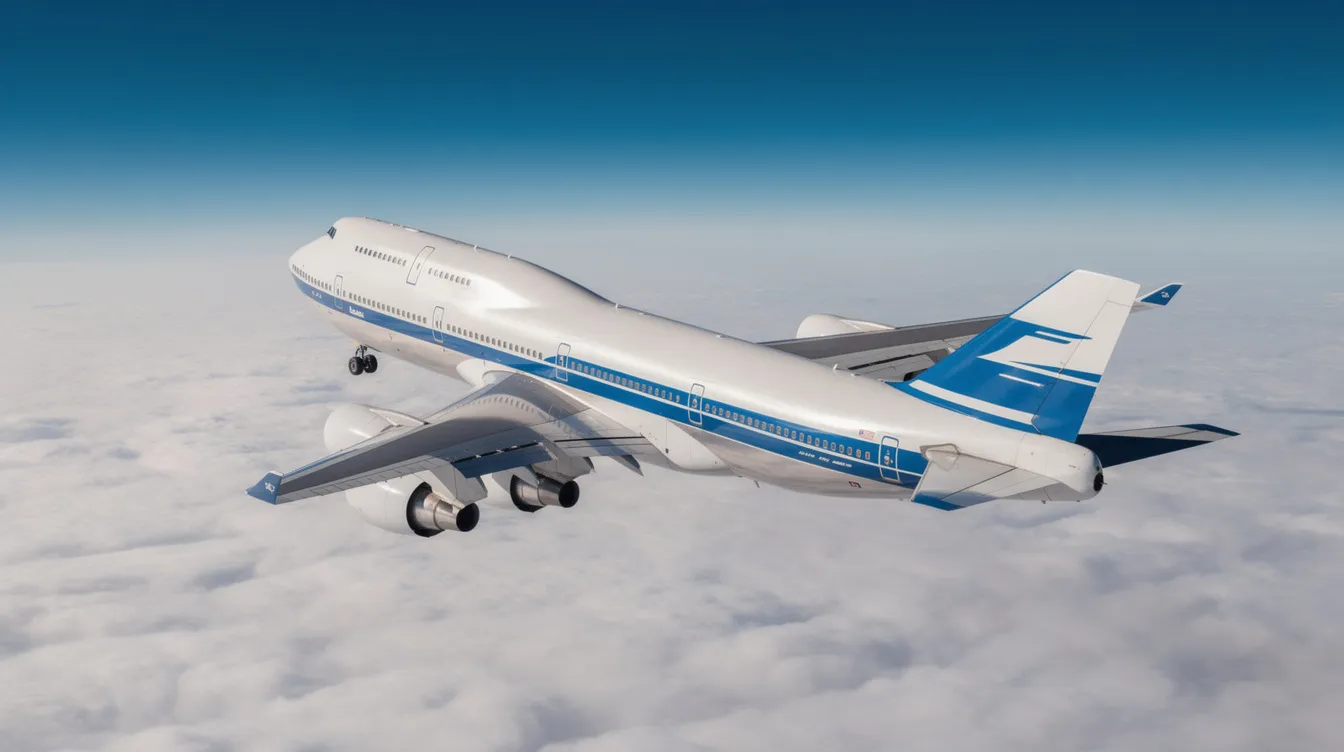
The fastest commercial jet in service today doesn't break the sound barrier. It cruises comfortably below it, optimized for fuel efficiency and range rather than raw speed. But how fast is fast, and what does that mean for travelers who value every minute? This guide breaks down the real numbers behind commercial airliner speeds, compares them with private jet performance, and explains why total trip time often matters more than cruise speed alone.
The Boeing 747-8i is the fastest commercial passenger airliner in scheduled service today, with a typical cruise speed around Mach 0.855 (about 564 mph) and a maximum operating Mach number of approximately 0.90.
Cruising speed and ground speed are different measurements. An aircraft cruising at 570 mph through the air can achieve a ground speed above 630 mph with favorable tailwinds, or drop well below 500 mph into a headwind.
Historic supersonic aircraft like Concorde (Mach 2.04) and the Tupolev Tu-144 (up to Mach 2.15) were far faster than anything flying commercial routes today, but both left passenger service decades ago.
Modern business jets such as the Bombardier Global 8000 (Mach 0.95) and Cessna Citation X+ (Mach 0.935) can fly faster than most commercial airliners, and private jet charter through platforms like Jettly often delivers shorter door-to-door travel times thanks to flexible routing, smaller airports, and on-demand scheduling.
The fastest commercial airliner still carrying passengers on scheduled flights in 2026 is the Boeing 747-8i. It cruises at Mach 0.855—roughly 564 mph or 908 km h at typical cruising altitude—and has a maximum operating Mach number of about 0.90. The Boeing 747-400, its predecessor, holds a maximum speed of Mach 0.92, making it one of the fastest subsonic commercial aircraft ever built.
For context, most other commercial airliners cruise between Mach 0.78 and 0.82 for narrow-body jets and Mach 0.84 to 0.85 for wide-body aircraft. The 747-8i's speed advantage is real but measured in single-digit percentage points, not leaps.
While the term "fastest commercial jet" usually refers to scheduled airline service, some business jets and chartered aircraft can match or exceed these speeds on specific routes—a point worth exploring for travelers who prioritize time.
Most commercial aircraft fly within a narrow speed band during cruise, typically between Mach 0.78 and Mach 0.85. This range reflects a balance between speed and lowered fuel consumption rather than the aircraft's absolute capability. Modern commercial airliners usually cruise at speeds of Mach 0.82 to Mach 0.85, and most modern commercial airliners aim to balance speed and fuel efficiency around Mach 0.85.
Wide-body jets cruise faster than narrow-body jets at Mach 0.85, while narrow-body airplanes like the Boeing 737 MAX and Airbus A320neo family typically hold around Mach 0.78 to 0.80. Actual ground speed on any flight can vary by 100 mph or more due to winds aloft and jet streams, even when the true airspeed and aircraft type stay the same.
|
Aircraft Type |
Typical Cruise Mach |
Approx. True Airspeed (mph) |
Examples |
|---|---|---|---|
|
Narrow-body jet |
0.78–0.80 |
515–530 |
Boeing 737 MAX, Airbus A320neo |
|
Wide-body jet |
0.84–0.855 |
555–575 |
Boeing 787, Airbus A350, 747-8i |
|
Regional jet |
0.78–0.80 |
500–530 |
Embraer E-Jets |
|
Turboprop |
N/A |
250–350 |
ATR 72, Dash 8 |
Confusion around the fastest commercial aircraft often comes from mixing up three different ways to measure speed.
True airspeed is how fast the plane moves through the surrounding air mass at altitude. Performance specs and cruise speed figures nearly always reference true airspeed or Mach number at cruising altitude.
Ground speed is true airspeed plus or minus the wind component. A jet cruising at 570 mph through the air with a 100 mph tailwind achieves a ground speed of 670 mph. The same jet flying into a 100 mph headwind covers ground at only 470 mph. Neither scenario changes the actual speed shown on the pilot's instruments relative to the air.
Mach number is the ratio of the aircraft's speed to the local speed of sound. At typical airliner cruising altitudes (35,000–40,000 ft), the speed of sound is roughly 660 mph-lower than at sea level. So Mach 0.85 at altitude works out to about 561 mph of true airspeed.
Key concepts at a glance:
True airspeed: the plane's speed through the air, used for performance planning
Ground speed: what determines how quickly you cover distance on a map
Mach number: ratio to local speed of sound, the standard reference for cruise and maximum operating limits
Below is a ranked overview of the fastest commercial airliners by maximum operating Mach number and typical cruise speed. Each of these aircraft entered service as a workhorse for major airlines around the world, and their speed differences- while low in percentage terms—add up on long-haul routes.
|
Aircraft |
First Flight |
Typical Cruise (Mach / mph) |
Max Operating Mach |
|---|---|---|---|
|
Boeing 747-400 |
1988 |
0.85 / ~561 mph |
0.92 |
|
Boeing 747-8i |
2010 |
0.855 / ~564 mph |
0.90 |
|
Boeing 787 Dreamliner |
2009 |
0.85 / ~561 mph |
0.90 |
|
Boeing 777 |
1994 |
0.84 / ~555 mph |
0.89 |
|
Airbus A350-900/1000 |
2013 |
0.85 / ~561 mph |
0.89 |
|
Airbus A380 |
2005 |
0.85 / ~561 mph |
0.89 |
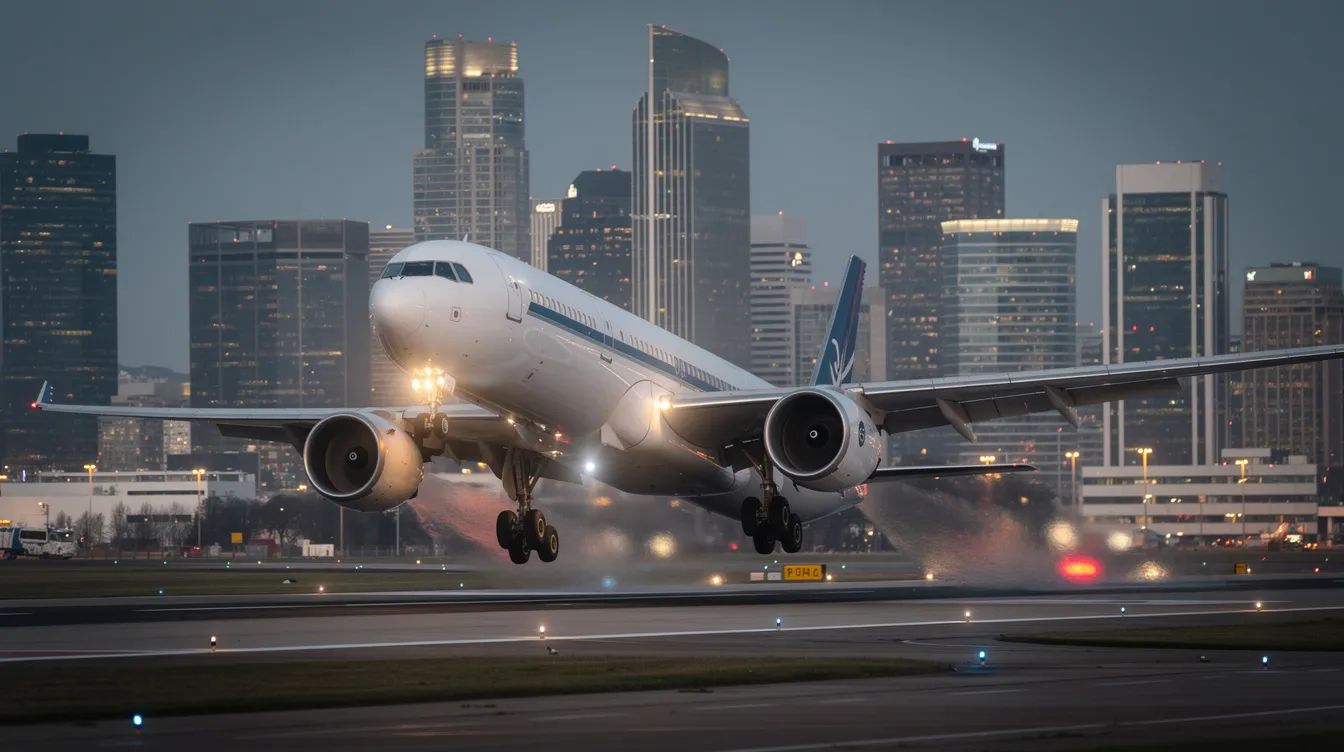
The Boeing 747-400 has a maximum speed of Mach 0.92, giving it the highest speed ceiling of any commercial airliner on this list. The 747-8i cruises at Mach 0.855 in daily operations, with raked wingtips contributing to improved aerodynamic efficiency. The Boeing 787 Dreamliner has a cruising speed of Mach 0.85 and benefits from composite construction for fuel savings. The Boeing 777 has a cruise speed of Mach 0.89 as its max operating limit, with a typical cruise speed slightly below that. The Airbus A380 has a cruise speed of Mach 0.85, and the Airbus A350 matches it while carrying fewer passengers on many routes operated by airlines like United Airlines and British Airways.
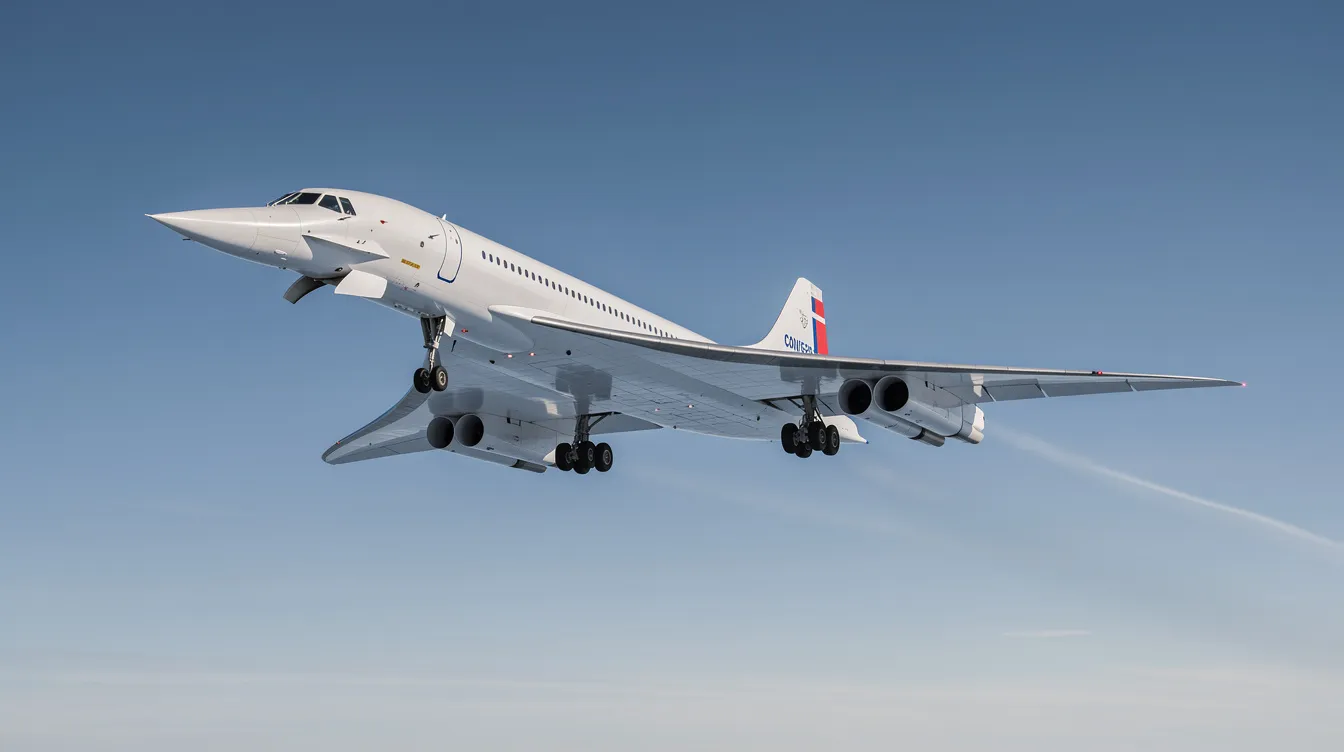
The absolute fastest commercial aircraft in history were not subsonic. Two aircraft broke the sound barrier in scheduled passenger service: the Anglo-French Concorde and the Soviet Tupolev Tu-144.
Concorde's top speed reached approximately Mach 2.04-roughly 1,354 mph or 2,180 km h at altitude. In typical service, it cruised at a speed of Mach 2.0 in level flight above 50,000 feet, completing the London–New York route in under 3.5 hours. British Airways and Air France operated Concorde from its first flight in 1969 through its retirement from commercial service in 2003. The history of supersonic flight in commercial aviation began and ended—for now—with this aircraft.
The Tupolev Tu-144 was the first aircraft to break Mach 2 in the supersonic transport class during test flights. It achieved speeds up to Mach 2.15 in testing, though its passenger service lasted only from 1977 to 1978 before reliability issues ended commercial operations.
Both disappeared from regular service due to extreme fuel burn, noise restrictions over populated areas, limited route networks, and-in Concorde's case—declining demand after the 2000 crash and post-World War II era economics that no longer justified the airline operating costs of supersonic flight.
The central constraint is physics. As a commercial aircraft approaches the speed of sound, wave drag becomes a significant factor. Drag increases sharply in the transonic range, demanding far more fuel to gain even small speed increments. High-speed commercial jets rely on minimizing drag and managing compressibility effects to maintain efficiency at their design cruise speed.
Swept-back wings help delay the formation of shock waves during flight, and aerodynamic design choices help commercial jets achieve high speeds without crossing into the punishing drag rise near Mach 1. High-bypass turbofan engines provide significant thrust with high efficiency, but their power output is optimized for the Mach 0.80–0.85 sweet spot—not for pushing past it.
Even raising cruise from Mach 0.84 to Mach 0.86 can increase fuel consumption by several percent while saving only a few minutes on medium-haul routes. For airlines managing tight margins, that trade-off rarely makes sense.
Main constraints keeping other airliners subsonic:
Transonic drag rise and shockwave formation
Disproportionate fuel cost increases above Mach 0.85
Noise and environmental regulations, including sonic boom restrictions
Air traffic control spacing and speed limits below 10,000 feet
Maintenance and structural fatigue from sustained high-speed operations
Published cruise speed numbers tell only part of the story. Several factors determine how fast a commercial flight actually covers a route:
Winds aloft and jet streams can add or subtract 50–150 mph from ground speed, especially on transatlantic and transpacific routes
The pilot and airline may select a lower cruise Mach number on a given day based on fuel pricing and schedule needs
Air traffic control routing, holding patterns, and vectoring often add distance and time to a flight
Aircraft weight and cargo load affect performance limits in each phase of flight, including the ability to maintain the highest speed at altitude
Weather deviations and turbulence avoidance can redirect a plane hundreds of miles off the great-circle route
The gap between spec-sheet average speed and real-world performance is often wide. A three-hour scheduled flight on a modern airliner might arrive 20–30 minutes early with strong tailwinds, or land late after routing around storms.
On a New York–London route, for example, a Boeing 787 with a typical cruise speed of Mach 0.85 (about 561 mph) might register a ground speed above 650 mph eastbound in the jet stream—while the same plane westbound might average under 500 mph over the ground. Same aircraft, same pilot, very different actual speed experienced by passengers.
While large commercial airliners have impressive cruising speeds, modern business jets are designed to cruise at similar or higher Mach numbers. Private jets can reach speeds up to Mach 0.935, and the Cessna Citation X+ is the fastest private jet at Mach 0.935. The Bombardier Global 8000 has a top speed of Mach 0.95, making it the fastest civil aircraft since Concorde. It was certified in early 2026, according to Aviation Week, marking a new era in subsonic civil aviation speed. The Global 8000 offers a range of 8,000 nautical miles and features four true living spaces for long-haul comfort.
But raw cruise speed is only one variable. The practical advantages of a private jet include the ability to use smaller airports closer to city centers, direct routing without connections, and quick boarding with minimal ground time. These factors often make total journey time shorter than flying commercial aviation on an equivalent route.
Consider the difference:
New York–Miami commercial: ~3.5 hours gate-to-gate, plus 1.5–2 hours of check-in, security, and boarding. Total: ~5–5.5 hours door-to-door—similar comparisons apply to other city pairs, such as using a private jet charter in New Delhi instead of scheduled airlines.
New York–Miami private jet: ~2.5 hours flight time from a nearby airport, with 15 minutes of ground handling. Total: ~3–3.5 hours door-to-door, especially when leveraging affordable private jet charter options that balance speed and cost.
Los Angeles–Las Vegas commercial: ~1.5 hours flight plus airport overhead. Private jet: under 1 hour flight with minimal ground wait, similar to how regional routes like private jet charter in Kolkata can dramatically cut door-to-door travel time.
For time-sensitive travelers, chartering through a platform like Jettly can shave hours off a trip even when the jet's cruise speed matches a commercial airliner's, and understanding how fast private jets fly clarifies where those time savings really come from.
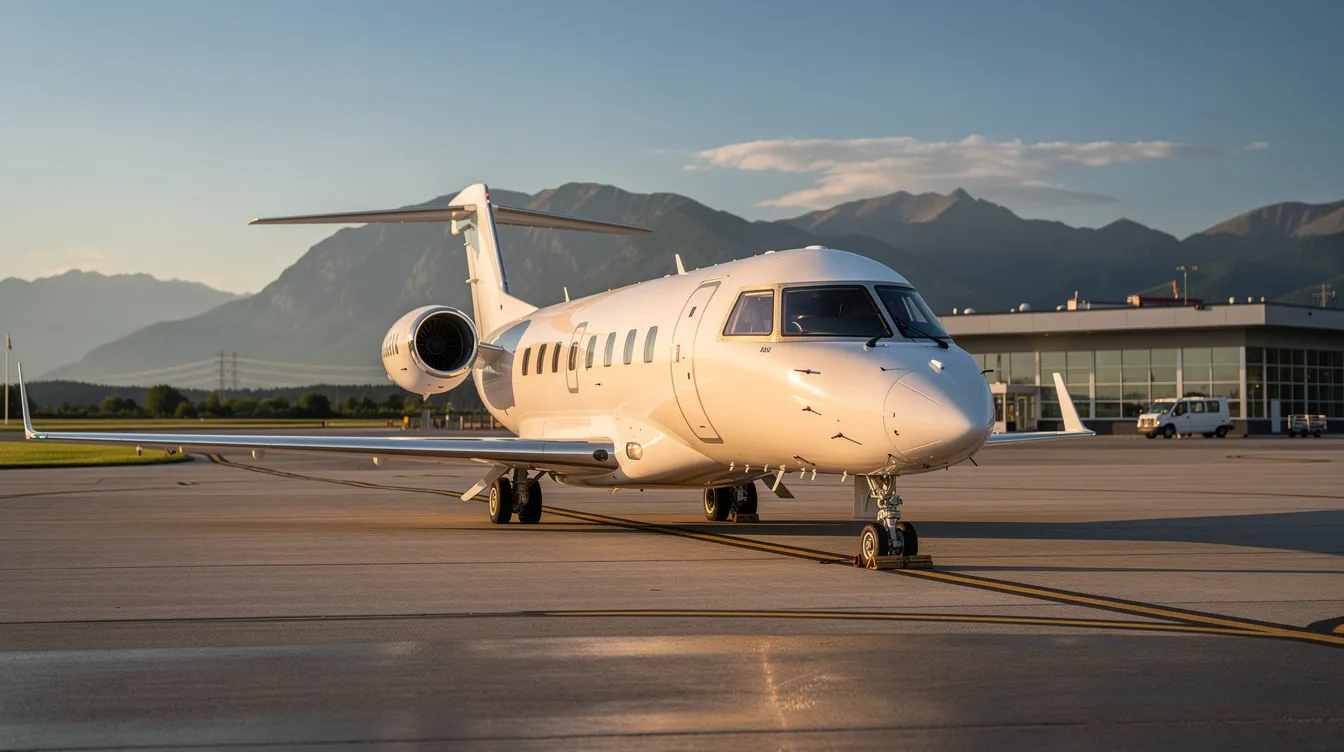
Jettly is a digital private aviation platform that enables travelers to fly faster in real-world terms. Even when cruise speeds are comparable to large commercial airliners, the time savings come from everything that happens on the ground and in the route planning.
Access to thousands of airports worldwide, including smaller ones closer to home or destination, using Jettly's airport locator tool
Avoiding check-in queues, long security lines, and boarding delays
Departing on the customer's schedule instead of fixed airline timetables
Direct, nonstop routes that bypass connections and layovers
Jettly's global private charter aircraft inventory includes over 20,000 aircraft, covering everything from turboprops for short hops to ultra-long-range business jets capable of high cruise speeds on intercontinental legs. The platform offers instant pricing, on-demand booking, and membership options for frequent flyers who value rapid, predictable travel.
Ready to experience private travel on your terms? Explore flight options or request a quote at jettly.com, and review these tips for booking the cheapest private jet flights if you're optimizing both time and budget.
As of 2026, no supersonic commercial airliner is in mainstream scheduled passenger service. Subsonic designs still dominate every commercial aircraft fleet in the world. But development is underway:
Next-generation supersonic passenger concepts, including Boom Supersonic and small supersonic business jets with low-boom designs, are being studied by several manufacturers. Flying Magazine and the Washington Post have both covered the regulatory and technical hurdles these programs face.
Ambitious hypersonic airliner concepts (above Mach 5) are discussed for potential mid-21st-century entry, though realistic timelines point to the late 2030s or 2040s at the earliest.
Major challenges remain: sonic boom regulations over land, noise around airports, fuel efficiency at supersonic and hypersonic speeds, and environmental and climate concerns that affect certification.
Business aviation and charter operators will likely be early adopters of new high-speed aircraft types once technology and regulations allow, expanding the already diverse landscape outlined in this ultimate list of charter airlines. Until then, private jet charter solutions like those available through Jettly remain the fastest practical way to fly for most routes.
The fastest commercial jet is only one piece of the travel puzzle. Choosing the right aircraft class for a specific mission often matters more than chasing the highest speed numbers.
Turboprops for short regional hops where airport proximity matters more than raw cruise speed (250–350 mph, ideal under 500 miles), and where travelers can often get a seat on a private jet easily by leveraging last-minute or shared flights
Light and midsize business jets for regional and medium-haul trips at typical jet cruising speeds (430–470 knots), where it may be more practical to buy a seat on a private jet through shared or semi-private options
Large cabin and ultra-long-range business jets for intercontinental routes at high subsonic Mach numbers (Mach 0.85–0.95), many of which are capable of flying internationally by private jet across oceans and between continents
Large commercial airliners for dense trunk routes with strong economies of scale but less schedule flexibility
|
Aircraft Category |
Typical Cruise Speed |
Ideal Route Length |
Passengers |
Charter vs. Commercial Edge |
|---|---|---|---|---|
|
Turboprop |
250–350 mph |
Under 500 mi |
4–9 |
Closer airports, short hops |
|
Light / Midsize jet |
430–500 mph |
500–2,000 mi |
6–10 |
Direct routing, speed |
|
Large / Ultra-long-range jet |
530–600+ mph |
2,000–7,500+ mi |
8–19 |
Highest speed, luxury, range |
|
Commercial airliner |
530–575 mph |
500–8,000+ mi |
150–500+ |
Lowest per-seat cost |
Jettly's platform allows users to filter by aircraft type, range, and pricing to find the optimal combination of speed, comfort, and budget, and a private jet charter cost estimator helps approximate pricing for different missions. Learn more about how Jettly works to match aircraft to your route.
Total trip time and flexibility often matter more than cruise speed alone—especially for business and family travelers with crew quarters worth of luggage and tight connections to manage.
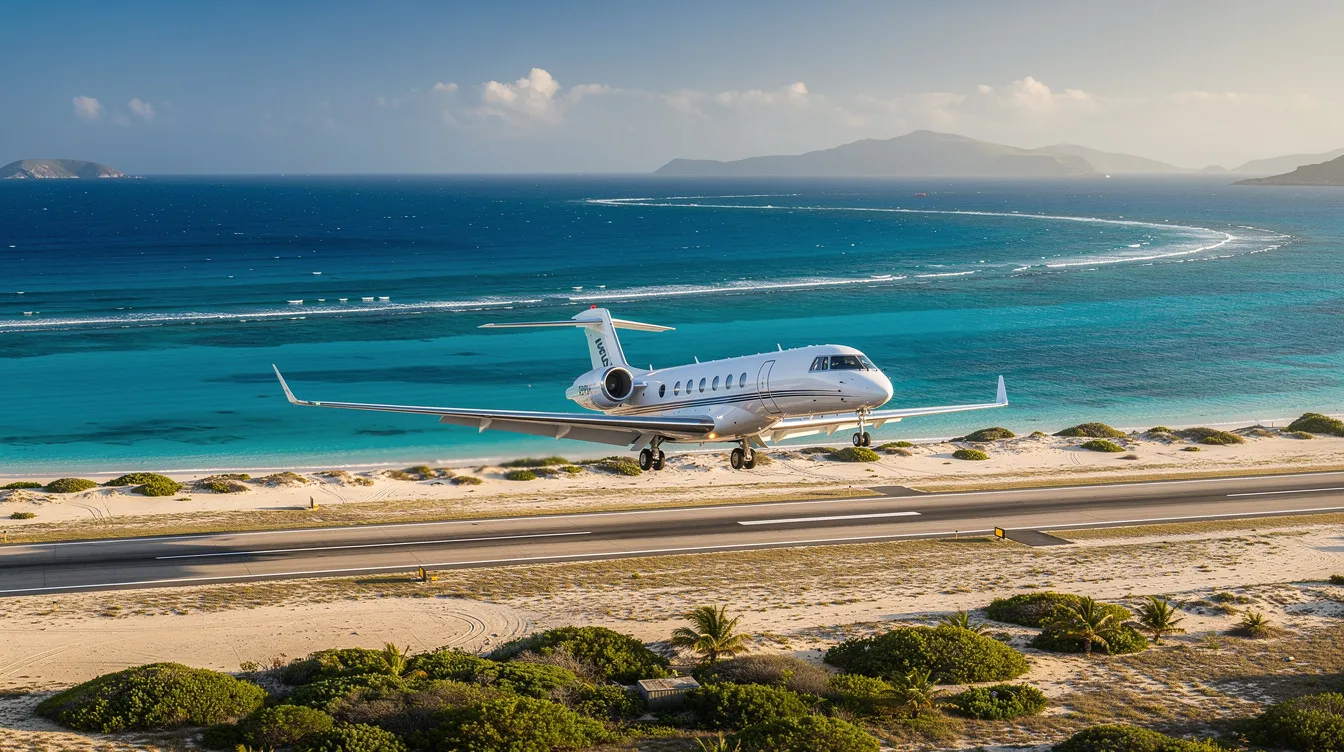
The Boeing 747-8i remains among the fastest subsonic commercial airliners ever built, with a typical cruise speed of Mach 0.855 and a maximum operating Mach of 0.90. As of 2026, only a limited number of airlines still operate it on passenger routes. Other modern airliners like the Boeing 787 and Airbus A350 cruise at very similar speeds, so the difference in flight time is usually just a few minutes on most long-haul routes.
The Bombardier Global 8000, certified in early 2026, reaches a top speed of Mach 0.95, making it the fastest civil aircraft since Concorde. The Cessna Citation X+ reaches a top speed of Mach 0.935, and the Gulfstream G700/G800 match that figure. In practice, these jets typically cruise slightly below maximum to balance fuel efficiency and range. Travelers can use Jettly's charter marketplace to compare high-speed business jet options on specific routes, similar to the top operators outlined in this guide to the best private jet charter companies.
On most routes, the difference between a fast and an average-speed commercial jet is roughly 10–20 minutes of cruise time. Door-to-door savings come more from avoiding connections, using closer airports, and minimizing ground time—areas where private jet charter, including options to share or crowdsource private jet flights, creates much larger gains than small differences in cruising speed alone.
Strong tailwinds within jet streams can push a commercial airliner's ground speed far above its published cruise speed—sometimes exceeding 700 mph over the ground on transatlantic legs. The aircraft is still flying at its normal airspeed relative to the surrounding air; the air mass itself is moving. A west-to-east Atlantic crossing might arrive 30–40 minutes early thanks to favorable winds, even though the pilot held standard cruise parameters throughout.
Start with a typical cruising speed for the chosen aircraft category—around 350 mph for turboprops and 450–530 mph for most business jets—and divide the great-circle distance by that speed. Then factor in the real-world benefits: minimal ground time, direct routing, and proximity of private terminals to parking or ground transport. For precise door-to-door estimates on specific city pairs, use Jettly's platform or contact the support team for a quote. You can also use Jettly's jet card flight cost estimator to gauge pricing for frequent one-way routes. For precise door-to-door estimates on specific city pairs, use Jettly's platform or contact the support team for a quote.
Commercial jets achieve their speeds through advanced aerodynamic design and engineering. Swept-back wings, for example, help delay the formation of shock waves during flight, which is crucial as aircraft approach the speed of sound. Wave drag—a sharp increase in aerodynamic drag near Mach 1—is a significant factor that designers must minimize to maintain efficiency.
Most modern commercial airliners aim to balance speed and fuel efficiency around Mach 0.85, cruising typically between Mach 0.82 and Mach 0.85. Aerodynamic design choices such as wing shape, raked wingtips, and smooth fuselage contours help jets achieve these high speeds while managing compressibility effects effectively.
High-bypass turbofan engines provide significant thrust with high efficiency, powering aircraft like the Boeing 747-8i, which cruises at Mach 0.855, making it the fastest commercial passenger airliner in scheduled service today. The Boeing 747-400, an earlier model, has a maximum speed of Mach 0.92. Other wide-body jets like the Airbus A380 and Boeing 787 Dreamliner cruise at Mach 0.85, while the Boeing 777 cruises slightly faster at Mach 0.89.
Commercial airliners typically cruise at speeds ranging from Mach 0.78 to 0.85, with wide-body jets generally cruising faster than narrow-body jets, which usually operate closer to Mach 0.78.
Private jets can reach even higher speeds, with some models cruising near or above Mach 0.9. The Cessna Citation X+ is currently the fastest private jet, reaching speeds up to Mach 0.935. The Bombardier Global 8000 surpasses this with a top speed of Mach 0.95, making it the fastest civil aircraft since the Concorde.
The Global 8000 also offers an impressive range of 8,000 nautical miles and features four true living spaces, combining speed with comfort for long-haul travel. These performance and luxury features make private jets an attractive option for travelers who prioritize time and comfort, especially when paired with structured jet card programs that simplify access and pricing.
Ready to experience private travel on your terms? Explore flight options or request a quote at jettly.com.
The fastest commercial jets today, led by the Boeing 747-8i cruising at Mach 0.855, demonstrate the balance between speed, efficiency, and operational practicality that defines modern air travel. While supersonic passenger service remains a technology of the past for now, advances in private jet capabilities like the Bombardier Global 8000 show that higher speeds are achievable within subsonic limits. Ultimately, the fastest way to reach your destination often depends on more than just cruise speed—it involves airport access, routing flexibility, and minimizing ground time. Platforms like Jettly leverage these advantages to provide travelers with faster, more convenient options beyond traditional commercial flights, positioning themselves as a flexible NetJets alternative with on-demand charter and membership solutions.
Ready to experience private travel on your terms? Explore flight options or request a quote at jettly.com.
Share this post:
Jay Franco Serevilla
Sep 13, 2026
|
5
min read
Discover tips and trends in the industry.
5
min read
Jet Rides: How to Experience Real Fighter Jet Flights with Jettly
Jet rides offer a thrilling range of experiences, from luxurious private jet charters to adrenaline-pumping fighter jet flights. Jettly connects travelers with vetted operators for both comfort and adventure, making it easy to compare options and book unforgettable flights. Whether you're an aviation enthusiast or looking for a unique gift, this guide covers everything you need to know about jet rides.
Read More5
min read
Fastest Commercial Jet: How Fast Passenger Planes Really Fly in 2026
In 2026, the Boeing 747-8i remains the fastest commercial jet, cruising at Mach 0.855. While modern airliners prioritize fuel efficiency over speed, private jets like the Bombardier Global 8000 offer competitive speeds and greater flexibility, often resulting in shorter total travel times. This guide explores the nuances of commercial jet speeds and the advantages of private aviation.
Read MoreStay updated with our latest insights and tips to elevate your journey with us.
MEMBERSHIPS AND ASSOCIATIONS



Disclaimer: Jettly operates as a charter broker, offering access to a global digital jet charter marketplace. Jettly is not a direct air carrier and does not own or operate aircraft. All advertised flights are conducted by third-party air carriers that are fully licensed and hold the appropriate Part 135 or Part 121 certifications issued by the Federal Aviation Administration (FAA) or equivalent regulatory authorities under U.S. or foreign law. Jettly complies fully with the U.S. Department of Transportation's Part 295 and Part 298 Charter Broker regulations. Jettly does not carry additional liability insurance. Passengers are covered by aircraft operator insurance. TICO: 50023770


