


Login
Get Instant Pricing On 23,000+ Aircraft

>
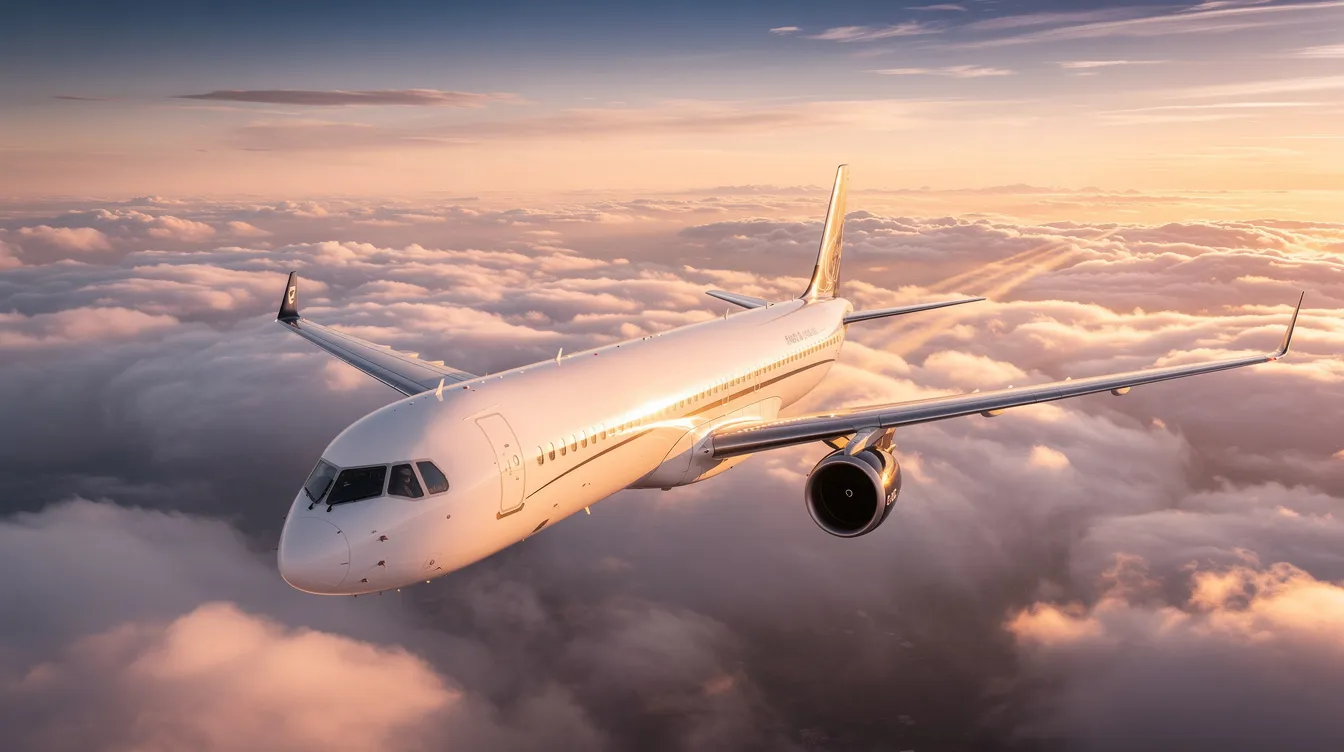
The Falcon 10X cockpit is shaping up to be one of the most advanced flight decks ever fitted to a purpose-built business jet: The Dassault Falcon 10X features the NeXus flight deck, which is designed for enhanced situational awareness and integrates military aircraft design principles and fighter-derived technologies. Dassault’s NeXus flight deck pairs four 14-inch multi-touch displays with Honeywell Primus Epic avionics, a third-generation digital fly-by-wire system, fighter-derived controls, and the FalconEye combined vision system for ultra-long-range operations. For private jet travelers, corporate flight departments, charter buyers, and aviation enthusiasts evaluating next-generation business aircraft, that mix of automation and pilot visibility is not just impressive on paper.
It directly affects safety, pilot workload, airport access, and how reliably the aircraft can operate in challenging weather, all of which matter to passengers booking long-haul private travel through platforms like Jettly. Here’s a closer look at the Falcon 10X cockpit design, how the NeXus architecture, Smart Throttle, digital flight controls, and ergonomic layout compare with rival jets, and what those choices mean for smoother, more flexible charter flights.
The Dassault Falcon 10X cockpit features four 14-inch multi-touch displays, a third-generation digital flight control system, and the FalconEye combined vision system, all built on Honeywell Primus Epic avionics.
Dassault Aviation designed the aircraft for missions up to 7,500 nautical miles, where reduced pilot workload and deep automation are essential for safety during flights exceeding 15 hours.
The Smart Throttle and fly-by-wire controls bring Rafale fighter jet DNA into the business jet segment, with envelope protection and automatic recovery modes.
For charter users on platforms like Jettly, the cockpit translates into smoother flights, better airport access in low visibility conditions, and fewer weather-related delays.
Dassault Aviation announced the Dassault Falcon 10X in May 2021 as its flagship advanced business jet, targeting entry into service around 2027. It competes directly with the Bombardier Global 7500 and the Gulfstream G700 in the ultra-long-range class.
The aircraft is equipped with two Rolls-Royce Pearl 10X engines from the Pearl series, each delivering more than 18,000 pounds of thrust. This powerful and efficient engine family gives the Falcon 10X a range of 7,500 nautical miles at a cruise speed around Mach 0.85, with a maximum speed of Mach 0.925. It can fly nonstop on routes like Los Angeles to Sydney or New York to Hong Kong, with a service ceiling of 51,000 feet and a cruising altitude that keeps passengers comfortable by maintaining a cabin altitude of just 3,000 feet at 41,000 feet. The aircraft requires less than 6,000 feet for takeoff.
The Falcon 10X features the largest cabin in its class. Its cabin width measures 9 feet 1 inch, and it stands 6 feet 8 inches tall, making it the tallest and widest in this segment. The cabin maintains a low cabin altitude of 3,000 feet at cruising altitude, and 38 large windows flood the interior with natural light. With four distinct cabin zones, customizable layouts can include a private stateroom, a queen-size bed, a stand-up shower, berthable seats, and large screen monitors with broadband access. Acoustic dampening keeps the cabin quiet, setting a new standard for passenger comfort.
But performance and cabin are only part of the story. The cockpit is where the Dassault business jet truly differentiates itself, centering everything on the NeXus flight deck and Dassault's flight control philosophy, which builds on the brand’s reputation among leading private plane manufacturers.
The NeXus flight deck is Dassault Falcon's latest cockpit generation, built on an evolution of the EASy IV architecture powered by Honeywell Primus Epic avionics. It was optimized specifically for the Falcon 10X's mission profile and reflects broader trends across private and charter airlines moving toward highly automated, integrated flight decks.
The physical layout centers on four large 14-inch touchscreens arranged across the instrument panel. These multi-touch displays handle everything from flight management and navigation to system synoptics and checklist handling. Pilots can pinch, zoom, and swipe, and when turbulence makes touchscreens impractical, cursor control devices on the center pedestal provide backup input.
The cockpit emphasizes "heads-up, eyes-out" operations. Automation handles routine monitoring so flight crews can focus on trajectory and external cues. Integrated electronic flight bag functions, branded FalconSphere, bring digital charts, performance calculations, and company documents directly onto the primary displays rather than relying on separate tablets.
The overall design reduces clutter. Overhead switches are minimized. Automated start sequences and contextual emergency checklists pop up when needed rather than requiring manual selection.
The Falcon 10X uses Dassault's third-generation digital flight control system, a fly-by-wire architecture directly descended from the Rafale fighter jet. Pilot inputs through side-stick controllers are interpreted as flight path requests rather than direct surface commands, and the system includes full envelope protection against stalls, overspeed, and excessive bank or pitch.
Key features of this pioneering safety innovations package include:
Smart Throttle: A single-lever power control managing both Rolls-Royce Pearl 10X engines. It automates thrust settings across takeoff, climb, cruise, and engine-out scenarios, including noise-abatement procedures and reduced-thrust takeoffs. This helps reduce pilot workload significantly on long sectors.
Automatic Recovery Mode: If wake turbulence or an unusual attitude occurs, the autopilot and Smart Throttle work together to return the aircraft to safe flight parameters automatically, extending Dassault’s tradition of integrating advanced protections into long-range types such as the Falcon 900B private jet.
Flight path stability: The closed-loop digital flight system maintains trajectory with minimal trimming, producing smoother rides even in turbulent conditions.
Steep approach capability: The aircraft's high-performance composite wing, with its high sweep design and multiple slats and flaps, combined with the flight control system's low speed performance management, enables steep approaches into airports like London City Airport and operations over difficult terrain, expanding the list of fields that show up as viable options in an airport locator tool when planning complex missions.
The FAA issued special conditions for the Falcon 10X's side-stick controls in August 2025, prescribing specific force limits to ensure safety equivalency with traditional yoke-based systems. This reflects how seriously regulators treat the aircraft's novel controller design and aligns with a wider focus on safest private jet technologies across the industry.
FalconEye is Dassault's combined vision system. It merges enhanced vision from six onboard sensors (visible light, near-infrared, and thermal) with synthetic vision drawn from terrain and obstacle databases. The result is projected onto dual primary head-up displays in the cockpit, providing enhanced flying capability and giving charter operators and brokers such as Dexter Air Taxi’s private jet service a compelling talking point when explaining safety and capability to clients.
What this means in practice:
Both pilots see the same visual cues simultaneously, improving crew coordination during challenging approaches in fog, snow, or night-over-water conditions.
Certified EFVS approaches down to 100 feet allow operations in low visibility conditions that would force diversions in aircraft without this technology.
Improved situational awareness during taxiing at complex airports reduces the risk of runway incursions.
Ultra-long-range flights often arrive early morning or late at night when weather at destination airports can be marginal. FalconEye directly addresses that problem and complements the situational awareness enhancements already familiar to pilots of advanced light aircraft like the Cessna 340.
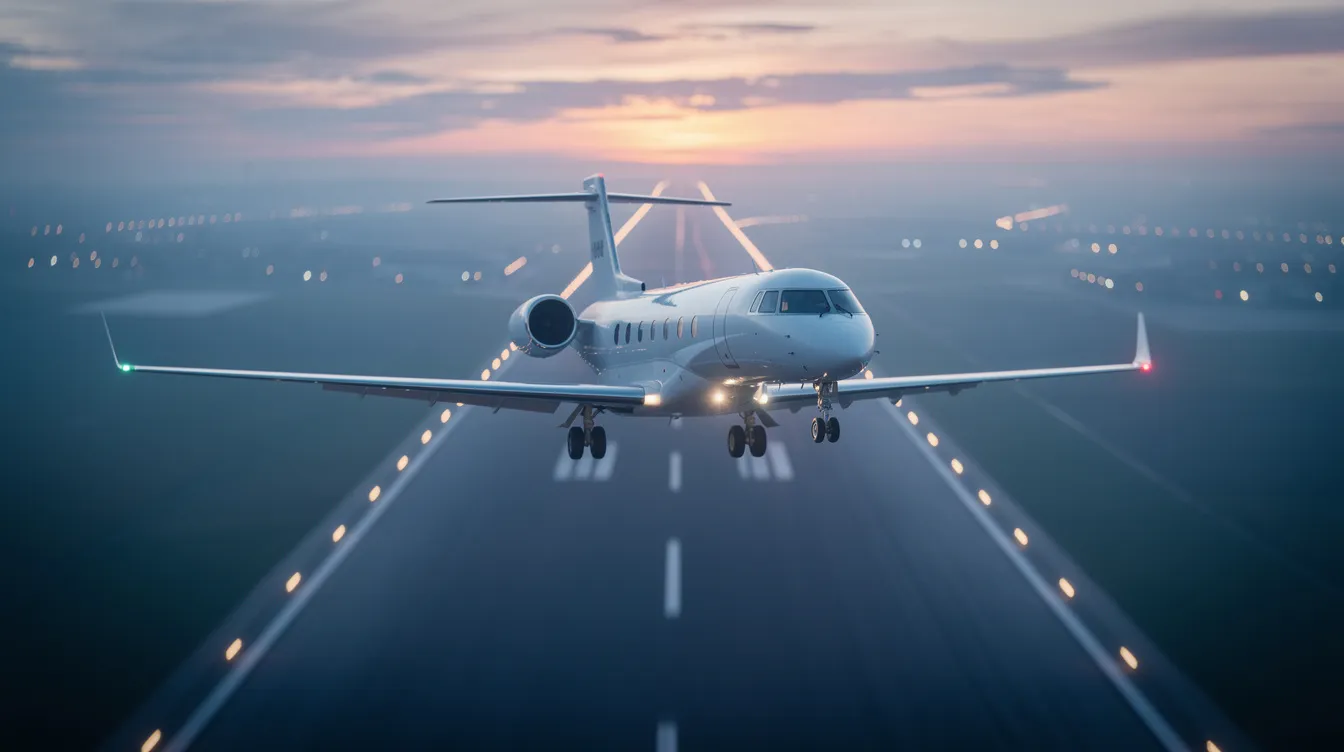
Missions on the Falcon 10X can exceed 15 hours. The cockpit is designed accordingly.
Seating: Fully reclining, high-support pilot seats with optimized reach to all controls and displays. The cockpit is physically larger than previous Dassault Falcon models, with enlarged side windows to reduce visual strain and feelings of confinement.
Phase-based information: The NeXus flight deck shows pilots only what they need at each moment. Takeoff, cruise, and descent each present different data sets, reducing cognitive load and task switching.
Automated checklists and synoptics: Emergency and normal checklists trigger contextually rather than requiring manual selection, cutting repetitive tasks during long cruise segments.
Third-pilot integration: For ultra-long-range routes requiring augmented crews, the standardized display logic and consistent procedures make crew transitions straightforward, supporting regulatory requirements for crew rest and complementing more conventional charter options like midsize private jets for rent on shorter missions.
These ergonomic choices directly reduce pilot workload across the full flight envelope, which contributes to safer operations on routes that push both aircraft and crew endurance, factoring in NBAA IFR reserves and fuel capacity planning, much as earlier long-range Falcons like the Falcon 900B charter jet were optimized for demanding intercontinental profiles.
The heavy jet segment at the top end includes three primary contenders, all targeting a range of 7,500 nautical miles or more, and aligns well with fixed-hourly-rate jet card programs aimed at frequent long-range travelers:
Dassault Falcon 10X: Single-lever Smart Throttle, Rafale-derived fly-by-wire, dual HUDs usable as primary flight displays, extensive touchscreen philosophy, and a safety lineage that builds on earlier Dassault platforms such as the Falcon 7X long-range business jet.
Gulfstream G700: Symmetry flight deck with large displays and active control sidesticks, integrated EVS/SVS, but a different approach to throttle control and automation depth, more comparable to widebody VIP airliners like the Boeing 767-300ER for charter.
Bombardier Global 7500: Proven platform with a strong cabin, advanced avionics, but cockpit architecture from an earlier design generation that differs markedly from modernized airliner-derived platforms like the Boeing 737-800.
From a charter client standpoint, these differences mainly translate into schedule robustness, access to more airports with challenging approaches, and potentially smoother flights, whether booked as traditional whole-aircraft charters or via shared and crowdsourced private jet flights. The Falcon 10X's automatic recovery mode and deep automation for abnormal procedures represent a newer philosophy in the long range business jet space, with its speed of Mach 0.925 matching the fastest in class. The aircraft's empty weight and high-performance composites construction also contribute to its efficient performance envelope.
When the Dassault Falcon 10X becomes available through operators on Jettly's platform, charter customers will benefit from its flight deck technology without managing ownership, crew training, or maintenance, just as they do today with high-performance types like the Citation X private jet.
Practical advantages for Jettly users include:
Weather resilience: FalconEye-certified low-visibility approaches mean fewer diversions and better on-time performance.
Airport access: Low speed handling and steep approach capability open up airports that some competing ultra-long-range jets cannot reach, adding a valuable ultra-long-range option to Jettly’s broader private charter aircraft portfolio.
Route flexibility: A corporate team flying nonstop from New York to Dubai, a family trip from Los Angeles to Sydney, or back-to-back transatlantic meetings all benefit from the aircraft's range and cockpit efficiency, while tools like a private jet charter cost estimator help quantify the budget impact of those long sectors.
Jettly offers on-demand access to a large global aircraft inventory with transparent charter pricing and instant digital booking, supported by flexible private jet memberships and resources that explain affordable private jet charter costs. That makes it straightforward to compare the Falcon 10X with other Dassault Falcon or large-cabin options. Learn more about how to charter a private jet through the platform.
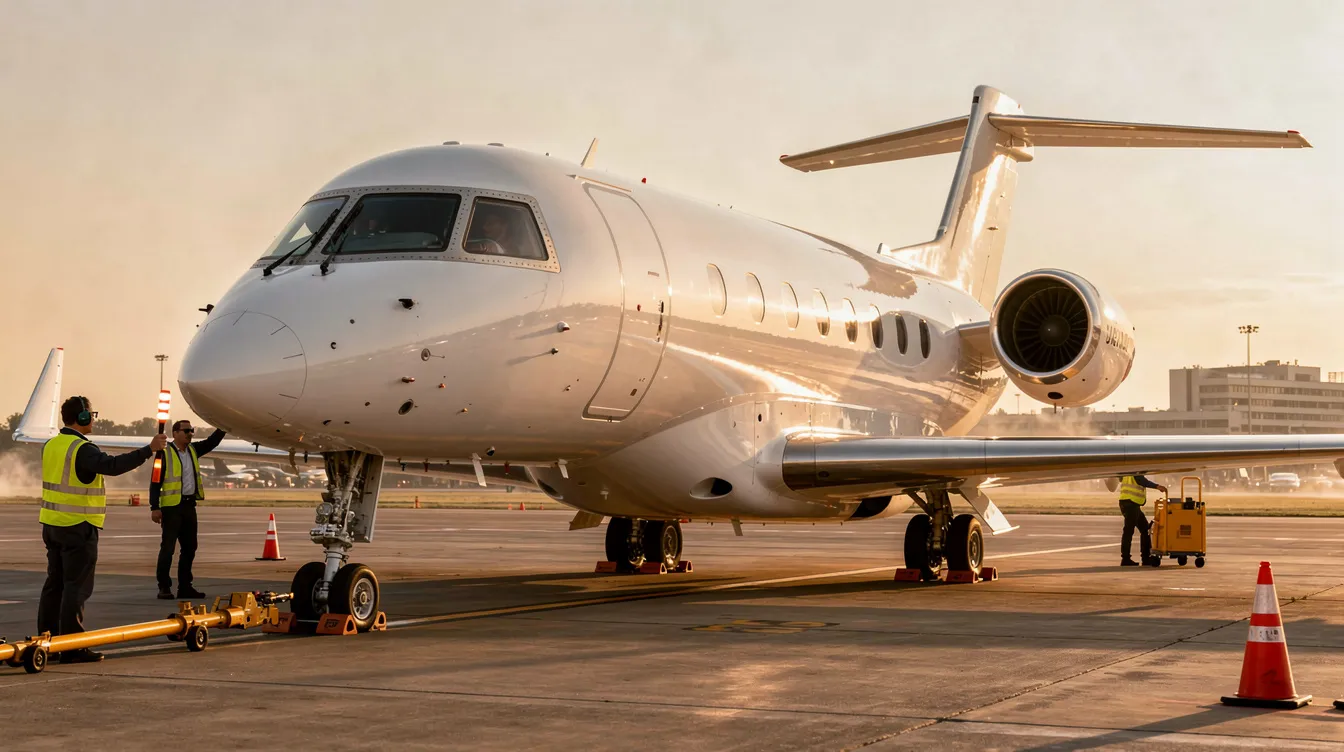
Dassault Aviation announced the Falcon 10X in May 2021. Development and flight testing continue, with entry into service currently targeted for the latter part of this decade, around 2027, subject to certification timelines with EASA and the FAA.
Safety gains come from third-generation digital fly-by-wire with envelope protection, automated engine management through the Smart Throttle, combined vision on dual head-up displays, and integrated electronic checklists that reduce the chance of human error across all phases of flight.
Yes. The Falcon 10X has been designed for steep approaches and low speed handling, assisted by its carbon-fibre wing and flight control software. This gives pilots the capability to operate into demanding airports such as London City Airport, subject to final certification.
The NeXus flight deck emphasizes intuitive layouts, touchscreen interaction, and standardized procedures. These design choices can ease transitions for pilots moving between different Dassault Falcon models or other modern glass-cockpit aircraft, though type-rating training is still required.
Once operators add the Dassault Falcon 10X to their fleets, travelers will be able to search for and compare it alongside other heavy and ultra-long-range jets on Jettly's platform, receive instant pricing, and finalize charters digitally without long-term ownership commitments.
The Falcon 10X cockpit brings a fully digital flight deck, advanced automation, and fighter-derived flight controls into the ultra-long-range business aviation segment, supporting missions up to 7,500 nautical miles at a speed of Mach 0.925. For charter clients, these technologies translate into fewer delays, smoother operations, and confident scheduling on complex international routes.
As the Dassault Falcon 10X enters service and appears in charter fleets, Jettly will make it simple to compare this aircraft against other large-cabin options and book it on-demand.
Discover the freedom of private travel tailored to your needs. Browse available flights or get a personalized quote at https://www.jettly.com.
Share this post:
Jay Franco Serevilla
Aug 9, 2026
|
5
min read
Discover tips and trends in the industry.
5
min read
Private Flight Club Membership Cost: What You Really Pay For
Private flight club memberships offer a range of costs influenced by initiation fees, monthly dues, and hourly rates. Understanding these components helps travelers make informed decisions between membership and on-demand charter options. With costs varying significantly based on aircraft type and usage, it's essential to evaluate personal travel needs and frequency before committing.
Read More
5
min read
Taneja Aerospace Share Price: Live Updates, Fundamentals & Investor Guide
Taneja Aerospace & Aviation Ltd's current share price is ₹344.20, reflecting a 1.7% decrease. With a P/E ratio of approximately 47, the stock indicates strong growth expectations in the aerospace sector, making it an intriguing option for investors. This guide provides essential trading data, valuation metrics, and insights into the company's fundamentals and market trends.
Read MoreStay updated with our latest insights and tips to elevate your journey with us.
MEMBERSHIPS AND ASSOCIATIONS



Disclaimer: Jettly operates as a charter broker, offering access to a global digital jet charter marketplace. Jettly is not a direct air carrier and does not own or operate aircraft. All advertised flights are conducted by third-party air carriers that are fully licensed and hold the appropriate Part 135 or Part 121 certifications issued by the Federal Aviation Administration (FAA) or equivalent regulatory authorities under U.S. or foreign law. Jettly complies fully with the U.S. Department of Transportation's Part 295 and Part 298 Charter Broker regulations. Jettly does not carry additional liability insurance. Passengers are covered by aircraft operator insurance. TICO: 50023770


