


Login
Get Instant Pricing On 23,000+ Aircraft

>
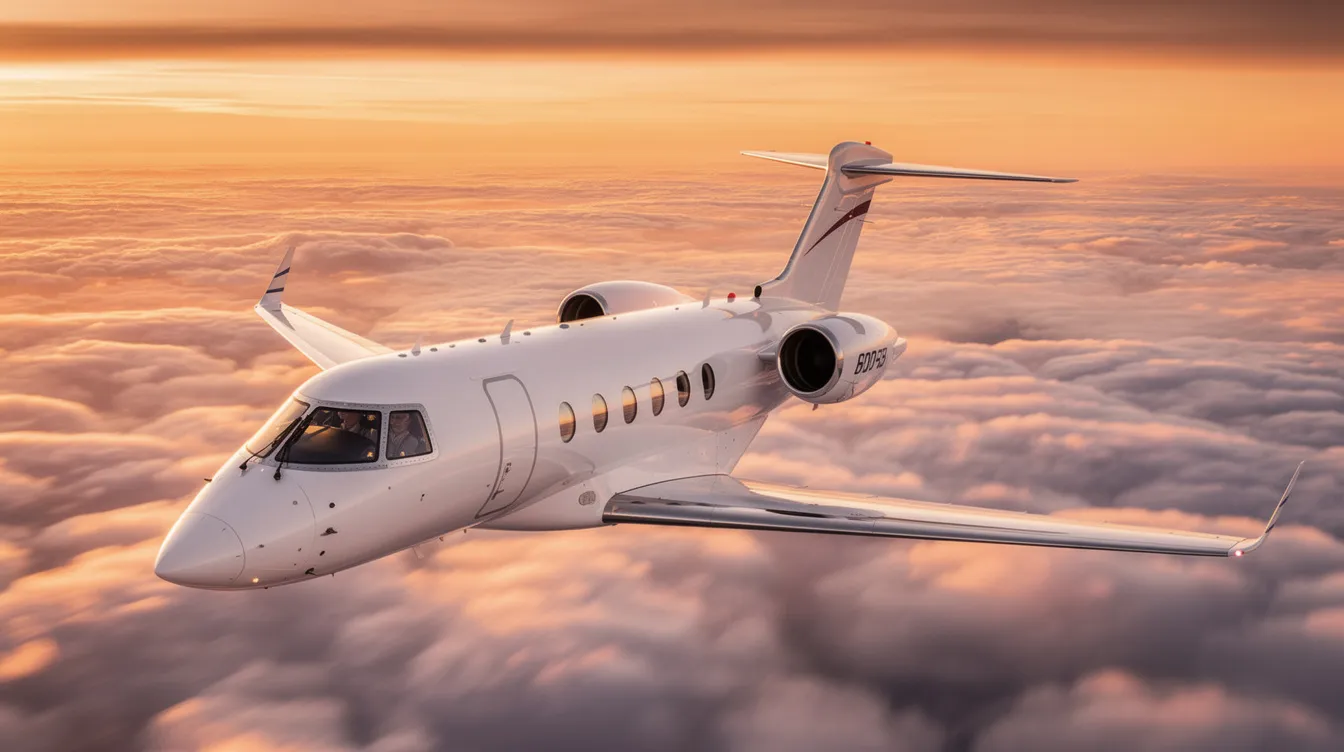
The Dassault Falcon 100 is a twin-engine, light-to-midsize business jet, meaning it is designed for private or corporate travel with a smaller cabin and shorter range than larger jets. Produced from 1983 until 1989 as a successor to the Falcon 10, this aircraft remains popular in the charter and used aircraft market for travelers who need speed, flexibility, and access to smaller airports on short-to-medium-range routes. Here is everything you need to know about its specs, history, and how to charter one today.
The Falcon 100 was introduced in 1983 as an upgraded redesigned continuation of the Dassault Falcon 10, featuring improved baggage access, a higher maximum takeoff weight, and one of the first certified private aircraft to carry a factory-standard EFIS glass cockpit with color screens.
The aircraft seats up to six passengers in a typical executive club configuration, with a cruise speed of roughly 450 6476 knots and a range in the 1,500 61,620 nautical mile band — ideal for routes like New York 6Miami or London 6Barcelona.
Only 37 Falcon 100s were built before production halted in 1989. Current Falcon 100 prices average around $650,000 for a pre-owned aircraft, while charter hourly rates average about $3,250 per hour.
The aircraft is known for its speed and operational efficiency, capable of accessing smaller airports due to its compact size and short landing distances.
Jettly's platform can arrange Falcon 100 and comparable light jet charters globally with instant pricing and on-demand booking.
The Falcon 100 is a light business jet produced by Dassault Aviation between 1983 and 1989. As a light-to-midsize business jet, it is designed for private or corporate travel with a smaller cabin and shorter range than larger jets, making it ideal for regional and short-to-medium-range missions. It was developed as an enhanced version of the Falcon 10, incorporating structural refinements, better cabin amenities, and modernized avionics. It is used in the private aviation sector for short-to-medium-range travel, serving corporate operators, charter fleets, and private owners worldwide.
Within the broader Dassault Falcon family, the Falcon 100 sits at the lighter end — smaller and more nimble than models like the Falcon 50 or Falcon 900. That positioning makes it efficient for regional segments within about 1,500 nm, where its speed and runway performance outweigh the need for a larger cabin.
Despite production ending over three decades ago, many Falcon 100s remain in active service. Operators have invested in avionics upgrades, cabin refurbishments, and interior refreshes, which directly affect comfort and operating economics for charter clients today, especially when compared with newer options across Jettly's broader private charter aircraft fleet.
The Falcon 10 project began in the late 1960s as Dassault sought a compact, fast liaison jet to slot below the larger Falcon 20. Its first flight took place on 1 December 1970, and FAA certification followed in 1973. The model was remotorized with Garrett/Honeywell TFE731 turbofan engines, improving fuel efficiency and reducing noise compared to earlier turbojets.
Customer feedback during the redesign period pointed to shortcomings in baggage capacity, avionics presentation, and interior comfort. Dassault responded by introducing the Falcon 100 at launch in 1983. Key changes included an unpressurized rear baggage compartment with external access, an additional cabin window on the starboard side, higher maximum takeoff weight, and the adoption of EFIS technology with color screens as a factory standard.
Only 37 Falcon 100s were produced before the line closed in 1989. Combined deliveries of the Falcon 10 and Falcon 100 reached roughly 226 units worldwide. The two models share a core airframe, wing area, and engine configuration, but the Falcon 100 brought exceptional refinements that extended the platform's relevance, much as larger Dassault types like the Falcon 900B long-range business jet evolved to serve intercontinental missions.
For charter passengers, the cabin is where the Falcon 100 earns its keep — or reveals its age.
The cabin dimensions are compact: a cabin length of approximately 12.9 feet, a cabin width of about 5 feet, and headroom of roughly 4.8 feet. Passengers cannot stand fully upright, but seated comfort for four to six passengers is good, with enough width for side-by-side seating.
The standard configuration is a four-seat executive club configuration with two additional seats forward or aft, comfortably accommodating six passengers. Some aircraft are certified for up to 9 passengers in a high-density arrangement, though legroom and luggage space suffer at that count.
Common amenities include:
Enclosed or semi-enclosed lavatory at the rear
Refreshment center with fold-out tables for laptops and dining
Multiple cabin windows for natural light
An exterior-access baggage compartment, enlarged compared with the Falcon 10, suitable for carry-on cases, golf bags, or compact skis
Many Falcon 100s flying today feature upgraded soft furnishings, LED lighting, USB power, and refreshed soundproofing. Jettly can also coordinate tailored in-flight dining through Jettly Eats private jet catering. Specific amenities vary by tail number — Jettly's team can clarify available cabin features at the quote stage.
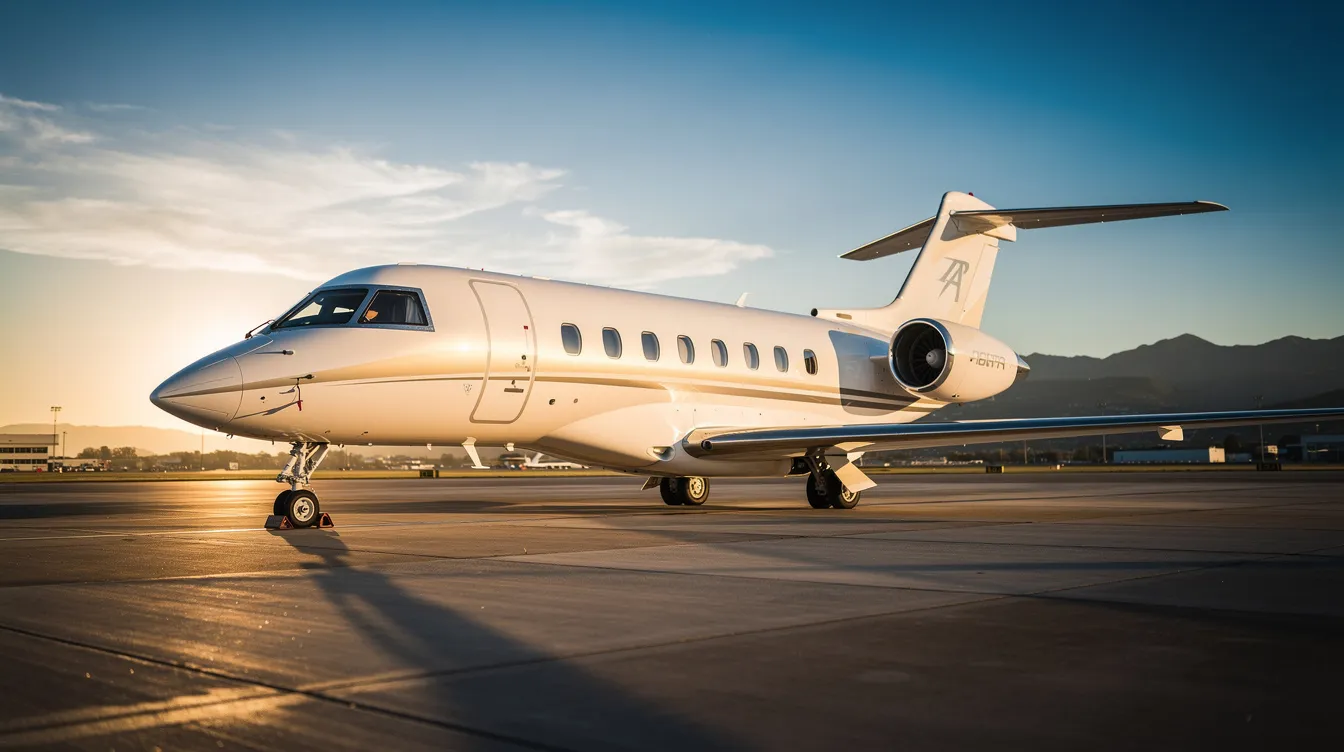
The Falcon 100 holds historical significance as one of the first certified private aircraft to ship with an Electronic Flight Instrument System (EFIS). The Falcon 100 features an Electronic Flight Instrument System (EFIS) with color displays, which was a significant advancement in cockpit technology at the time. At a time when most light jets still relied on electromechanical gauges, the Falcon 100's cockpit featured color displays for primary flight and navigation data — 6a genuine step forward in glass cockpit technology.
This glass cockpit layout improved situational awareness and reduced pilot workload, paving the way for later Dassault flight decks equipped with fully integrated suites. Many surviving Falcon 100s have since been retrofitted with modern avionics. Elliott Aviation's Elite Series cockpit, for example, adds Universal EFI-890R flat-panel displays, a Global GNS XLS FMS, ADS-B Out compliance, and LPV approach capability.
For charter clients, these upgrades matter: aircraft with updated avionics can access more airports, fly more efficient routings, and achieve better dispatch reliability — especially in complex European or North American airspace, where tools like Jettly's airport locator platform help match aircraft capabilities with specific fields.
The Falcon 100 is powered by two Honeywell TFE 731-2-1C engines, each delivering 3,230 pounds of thrust.These turbofans were known for relatively low specific fuel consumption for their era, burning approximately 200 6220 gallons per hour at typical cruise settings.
|
Metric |
Value |
|---|---|
|
Maximum speed |
~476 knots |
|
Long-range cruise speed |
~430 6440 knots |
|
Service ceiling |
45,000 feet |
|
Range (typical payload) |
1,532 61,620 nautical miles |
|
Maximum range (optimistic) |
Up to ~2,162 nautical miles |
|
Takeoff distance (sea level) |
~4,500 feet |
|
Landing distance |
~2,200 feet (62,300 ft) |
|
Maximum takeoff weight |
~18,740 lbs |
|
Payload with full fuel |
~6,700 lbs useful load |
The Falcon 100 has a maximum range of approximately 1,500 to 2,162 nautical miles depending on payload and reserves, comfortably covering routes like Los Angeles 6Denver, London 6Rome, or Toronto 6Orlando without fuel stops. The aircraft allows for rapid transit times across its operational range.
Its short landing distance means it can access many smaller regional and business airports that larger jets cannot reach.
Cost-conscious travelers may occasionally consider repositioning deals via empty leg private jet flights, taking advantage of the Falcon 100's operational flexibility and efficiency.
The Falcon 100 is no longer in production, so all aircraft are pre-owned. Values depend on year of manufacture, total time, engine status, and the quality of avionics and cabin upgrades.
The average purchase price of a pre-owned Falcon 100 is roughly $650,000, though individual listings on sites like GlobalAir.com, which features current Falcon 100 aircraft for sale from verified sellers, range from about $400,000 for high-time airframes to over $1 million for low-hour, well-equipped examples. For reference, the average purchase price of a new Falcon 100 was approximately $4,700,000 when the model was still in production. Owners should also budget for ongoing maintenance, inspection interval costs, engine programs, insurance, crew, and hangar fees, which can significantly exceed the purchase price over time.
Charter economics offer a different equation. The average hourly rental rate is $3,250, plus positioning, landing, handling, and catering fees. Charter customers avoid long-term financial and regulatory responsibilities entirely. For a broader look at price drivers across aircraft types, Jettly's guide on affordable private jet charter costs explains how distance, aircraft size, and trip profile affect your final quote. Jettly's charter cost estimator provides instant, transparent pricing for the Falcon 100 and similar aircraft, making it easy to compare costs on specific routes and dates.
The Falcon 100 is a practical choice for small groups needing speed and comfort on short- and mid-range routes. Here are a few scenarios where it fits well:
A four-person executive team flying New York 6Chicago for same-day meetings, departing Teterboro mid-morning and returning that evening
A family of five heading from Los Angeles to Cabo San Lucas for a long weekend, with luggage and a flexible departure schedule
A European summer hop from Paris to Ibiza, where access to a smaller airfield and reduced ground time make private travel far more practical than commercial alternatives
Jettly sources Falcon 100 aircraft only from certified private aircraft operators meeting relevant regulatory oversight, such as FAA Part 135 in the U.S. or EASA-regulated AOCs in Europe. The platform lets travelers view multiple aircraft options in real time, compare cabins and performance, and select the best fit based on price, schedule, and comfort, much like the broader industry landscape outlined in Jettly's guide to charter airlines and private flights. Learn more about Jettly's charter options at jettly.com.
Many travelers cross-shop the Falcon 100 against similar light jets and sometimes the original Falcon 10. A concise comparison helps set expectations.
Falcon 100 vs. Falcon 10: The two share a core airframe, wing design, and engine type. The Falcon 100 adds an enlarged baggage area, EFIS-equipped cockpit, and a higher maximum takeoff weight. Range and speed are broadly comparable, but the Falcon 100 edges ahead on practical convenience for passengers.
Falcon 100 vs. modern light jets (e.g., Citation CJ series, Learjet 40/45, or the Phenom 300E): Newer aircraft typically offer quieter cabins, more modern interiors, and potentially better fuel efficiency per seat. However, the Falcon 100 remains competitive on charter pricing and remains exceptionally fast for its class. Passengers who prioritize brand-new interiors or Wi-Fi might lean toward newer types, while those focused on value and speed will find there are good reasons the Falcon 100 still gets booked, especially when you compare providers using resources like Jettly's guide to the best private jet charter companies.
Within Jettly's marketplace, customers can filter by light jet category, compare aircraft specs, and balance price against comfort and age before making a decision.
Booking a Falcon 100 — or a comparable light jet - through Jettly is straightforward, whether it's your first time flying private or you're a regular charter client.
Enter your route, dates, and passenger count on the platform
Receive instant pricing results and filter by aircraft type or category
Select a Falcon 100 when available, or review alternative light jets with similar seating and performance
If a Falcon 100 is not available on a given day, the platform will propose alternatives to replace it, ensuring minimal disruption to travel plans. Users can choose between pure on-demand charter and private jet membership plans that may reduce per-hour costs depending on annual flying habits.
Jettly can also coordinate optional services around each flight: ground transportation, catering tailored to dietary requirements, and multi-leg itineraries using a mix of aircraft types for maximum flexibility and assistance, with jet card membership programs available for those who prefer fixed rates and guaranteed access. Travelers who fly frequently can estimate their spending in advance using Jettly's jet card flight cost estimator.
Ready to experience private travel on your terms? Explore live availability and request a tailored quote at jettly.com.
Below are answers to common questions not fully covered above, focusing on safety, availability, and practical considerations for brokers and direct customers alike.
Age alone does not determine safety. Certified operators must maintain each Falcon 100 under strict regulatory programs, including regular inspections and overhauls based on hours, cycles, and calendar limits. Charter flights arranged through Jettly use operators with valid Air Operator Certificates, properly licensed crews, and compliance with regional safety standards. Customers can search for and review maintenance and safety history details at the quote stage for extra reassurance, whether they ultimately fly with a boutique operator like Dexter Air Taxi private jet services or another partner in Jettly's network.
The Falcon 100 can seat up to six passengers in a standard executive layout with good legroom and workspace. Typical configurations allow for a maximum of 9 passengers in high-density layouts, but comfort and baggage capacity are reduced at higher loads. Travelers looking to lower per-person pricing can also explore Jettly's crowdsourced private jet seat-sharing platform. Share your passenger count and luggage expectations with Jettly when requesting a quote to ensure the right seating and space configuration.
The Falcon 100 is ideal for sectors up to roughly two to three hours in duration - think New York 6Miami, Dallas 6Chicago, London 6Barcelona, or Dubai 6Muscat. For longer missions requiring more passengers and payload, a midsize or super-midsize jet from Jettly's network may land you a more appropriate option. The platform can automatically suggest alternate aircraft when route length or payload would push the Falcon 100 beyond its optimal envelope, and those simply seeking an easy way to secure a seat can draw on strategies from Jettly's guide to getting a seat on a private jet easily.
In many markets, Jettly can note preferences for a specific aircraft or operator, including a particular Falcon 100, subject to availability, maintenance, and crew scheduling. When Jon or any client's requested tail is not available, the platform will propose comparable certified private aircraft with similar cabin size and performance. Early booking helps during peak periods if you have strong preferences about aircraft type.
Newer designs from Collins and other manufacturers typically offer incremental fuel-efficiency and emissions benefits per seat compared to older platforms. However, efficient routing, flying at optimal cruise altitudes, and full passenger loads can reduce per-passenger impact regardless of aircraft age. Environmentally conscious travelers can speak with Jettly about selecting more fuel-efficient types or adding carbon offset programs to their charter bookings.
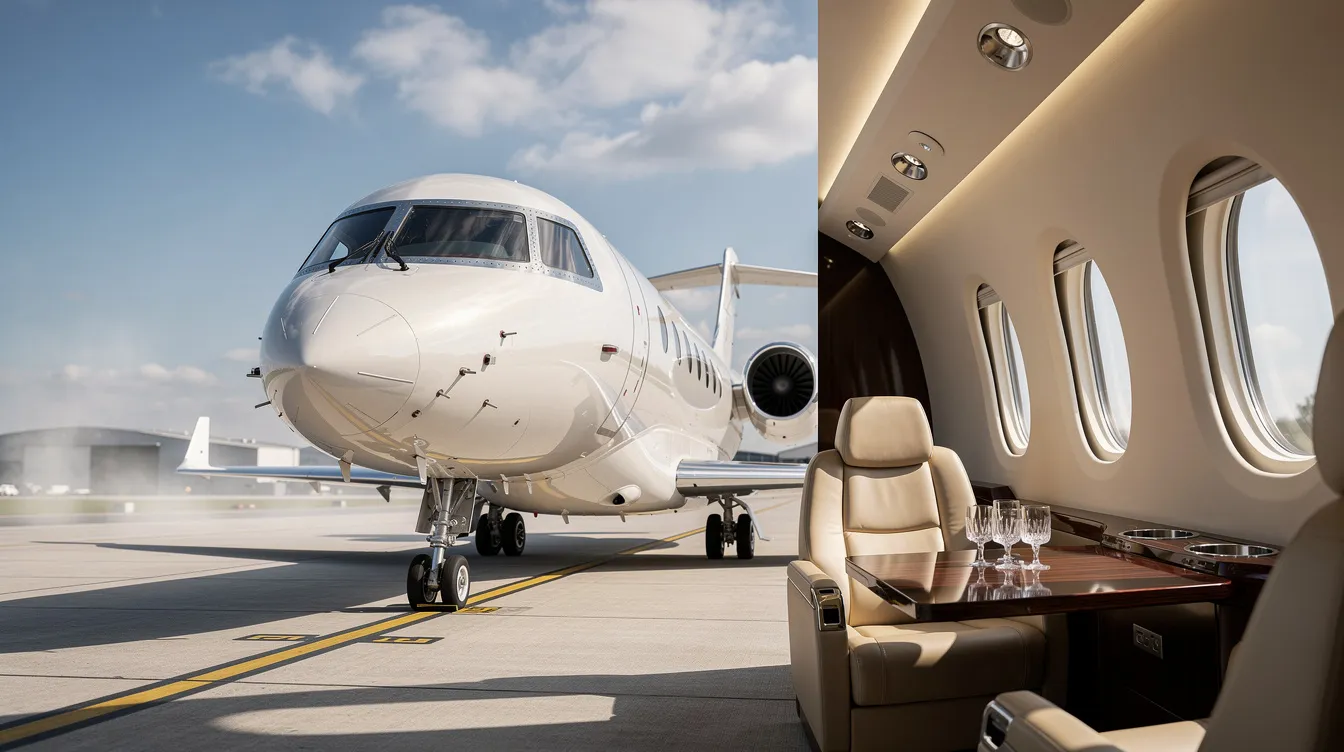
The Dassault Falcon 100 remains a compelling choice for private jet travelers seeking a blend of speed, efficiency, and operational flexibility on short-to-medium-range missions. With its pioneering EFIS glass cockpit technology, compact cabin suited for up to six passengers, and powerful Honeywell engines delivering 3,230 pounds of thrust each, the Falcon 100 offers reliable performance and access to smaller airports that commercial flights cannot match. Whether you're flying for business or leisure, this jet balances comfort with cost-effectiveness, especially in the pre-owned market.
For travelers booking private jets for the first time or seasoned flyers alike, Jettly provides a seamless digital platform to explore Falcon 100 availability, compare pricing, and book instantly. The platform’s transparent pricing and extensive global aircraft inventory make it easy to find the right jet for your specific route and schedule.
Ready to experience private travel on your terms? Explore flight options or request a quote at https://jettly.com.
Learn more about the Dassault Falcon family, discover private jet charter costs, explore affordable private jet options, and understand how to get a seat on a private jet easily.
Share this post:
Jay Franco Serevilla
Sep 19, 2026
|
5
min read
Discover tips and trends in the industry.
5
min read
Best Executive Jet: How to Choose the Right Aircraft for High-Level Travel
Choosing the best executive jet depends on specific travel needs such as distance, passenger count, and budget. This guide compares various aircraft categories, from light jets to ultra-long-range models, helping executives select the right jet for their missions. Jettly's platform simplifies the booking process, offering access to over 20,000 aircraft tailored to each trip's requirements.
Read More
5
min read
Private Jet from Dallas to Las Vegas: 2026 Guide to Flight Time, Costs, and Best Jets
Chartering a private jet from Dallas to Las Vegas offers a swift and luxurious travel experience, averaging 2 hours and 10 minutes for the journey. With costs ranging from $13,000 to over $34,000 depending on the aircraft type, travelers can choose from a variety of jets to suit their needs. This guide provides insights into flight times, costs, and tips for optimizing your private jet experience.
Read MoreStay updated with our latest insights and tips to elevate your journey with us.
MEMBERSHIPS AND ASSOCIATIONS



Disclaimer: Jettly operates as a charter broker, offering access to a global digital jet charter marketplace. Jettly is not a direct air carrier and does not own or operate aircraft. All advertised flights are conducted by third-party air carriers that are fully licensed and hold the appropriate Part 135 or Part 121 certifications issued by the Federal Aviation Administration (FAA) or equivalent regulatory authorities under U.S. or foreign law. Jettly complies fully with the U.S. Department of Transportation's Part 295 and Part 298 Charter Broker regulations. Jettly does not carry additional liability insurance. Passengers are covered by aircraft operator insurance. TICO: 50023770


