



Login
Get Instant Pricing On 23,000+ Aircraft

>

The Embraer ERJ family (ERJ stands for Embraer Regional Jet) reshaped regional aviation when it entered the market in the mid-1990s. ERJ stands for Embraer Regional Jet, a designation covering a series of twin-engine jets designed by the Brazilian company Embraer to serve the regional airline market. Built around a common airframe and powered by Rolls-Royce AE 3007 turbofan engines, the ERJ aircraft lineup spans regional jets, business aviation, and military roles. For charter customers considering group travel, corporate shuttles, or government transport, these aircraft remain a practical and cost-effective choice.
This guide is intended for charter customers, aviation enthusiasts, and anyone interested in the ERJ family’s role in regional and private aviation.
Here's what you need to know about the ERJ family—its history, variants, specifications, and how to book one through Jettly.
The Embraer ERJ family includes the ERJ-135, ERJ-140, and ERJ-145 regional jets, the Legacy 600 business jet, and the R-99 military aircraft—all built on the same core platform.
The ERJ-145 first flew on August 11, 1995, and was introduced into service on April 6, 1997, quickly becoming a regional aviation staple.
Over 1,200 ERJ aircraft have been produced, with Embraer delivering 892 units by 2006, and approximately 40% remain active in fleets worldwide as of 2025.
With a maximum range of up to 2,000 nautical miles and seating for up to 60 passengers, the ERJ family covers short- to medium-haul routes efficiently, often operating flights ranging from 20 minutes to 3 hours.
Jettly's platform allows travelers to search, compare, and book ERJ family aircraft for group charters, corporate shuttles, and special missions.
The ERJ family established Embraer as a leader in regional aviation. It includes the ERJ-135, ERJ-140, and ERJ-145 models, sharing a common cockpit layout that enhances maintenance efficiency and pilot training. This commonality simplifies operations and supports airlines in offering more frequent departures by right-sizing flights to demand.
The ERJ-145 first flew on August 11, 1995, and entered service in 1997 with ExpressJet in North America. The ERJ-135 and ERJ-140 variants followed between 1999 and 2001. The ERJ-135 seats 37 passengers and measures 26.33 meters in length, while the ERJ-140 seats 44 passengers and is 28.45 meters long. The ERJ-145 typically seats up to 60 passengers in a 2-by-1 or 3-abreast seating layout. Embraer delivered 892 ERJ units by 2006, and the family has since become a backbone for short-haul airline networks worldwide.
ERJ aircraft maintenance can be managed using electronic templates, and software like WinAir improves data accuracy and streamlines maintenance management. This approach supports operators in handling multiple ERJ models efficiently and maintaining high safety standards.

Embraer launched the ERJ program in 1989, thinking beyond the turboprop era. The goal was to produce a 50-seat jet offering higher cruise speeds, better comfort, and the ability to compete on regional routes where turboprops dominated. Early design work drew on the EMB-120 Brasilia lineage but led to major changes: a supercritical wing with a higher aspect ratio and refined leading edge, rear-mounted engines, and a T-tail configuration that was tested through extensive aerodynamic evaluation.
The ERJ-145 series revolutionized regional air travel in the mid-1990s. Certification came in 1996, and within months, launch customers in North America began operations. ERJs allowed airlines to offer more frequent departures by right-sizing flights for routes that didn't need full-size narrowbody aircraft. The classic ERJ family quickly became the backbone for short-haul networks of airlines across North and South America and parts of Europe.
Later ERJ iterations, such as the ERJ 145 XR, feature enhanced aerodynamic capabilities, including winglets and increased fuel capacity for extended range. This ongoing development has helped the ERJ family remain relevant in a competitive regional market.
The civilian models in the ERJ family cover a spectrum from thin-route regional jets to long-range business aviation. Here's how the main variants compare:
|
Model |
Typical Seating |
Length (m) |
Range |
Cruise Speed |
Role |
|---|---|---|---|---|---|
|
~37 seats |
26.33 |
~1,200–1,550 nmi |
Mach 0.78 |
Thin routes, corporate shuttles |
|
|
ERJ-140 |
~44 seats |
28.45 |
~1,550 nmi |
Mach 0.78 |
U.S. scope-clause operations |
|
Up to 60 seats |
29.87 |
~1,550–2,000 nmi |
Mach 0.78 |
Regional airline workhorse |
|
|
Legacy 600 |
~13 VIP |
N/A |
~3,250 nmi |
Mach 0.78–0.80 |
Executive and family travel |
The ERJ-145 is the baseline variant, displayed most commonly in airline fleets. The ERJ-140 is a slightly shortened version introduced to meet scope-clause limits in the United States, while the ERJ-135 serves thinner routes or corporate shuttle missions. The Legacy 600, introduced in the early 2000s, is a business jet derivative based on the ERJ-135 airframe. It features a redesigned three-zone cabin, additional fuel tanks, and winglets, with a range suitable for longer sectors.
ERJ aircraft can be converted for semi-private configurations, with operators upgrading interiors, adding amenities like Wi-Fi, enhanced catering, and customized seating arrangements. These conversions make the ERJ family attractive for VIP corporate transport and government operations.
The R-99 is the primary military aircraft derived from the ERJ platform, entering service with the Brazilian Air Force in 2001. Its role centers on airborne early warning and control (AEW&C), maritime patrol, and signals intelligence, powered by enhanced versions of the same AE 3007 engines used in civilian variants.
Countries including Brazil, Greece, Mexico, and India have operated special-mission derivatives based on the ERJ airframe. While the R-99 is not available on civilian charter platforms like Jettly, its existence provides clear evidence of the platform's versatility and durability.
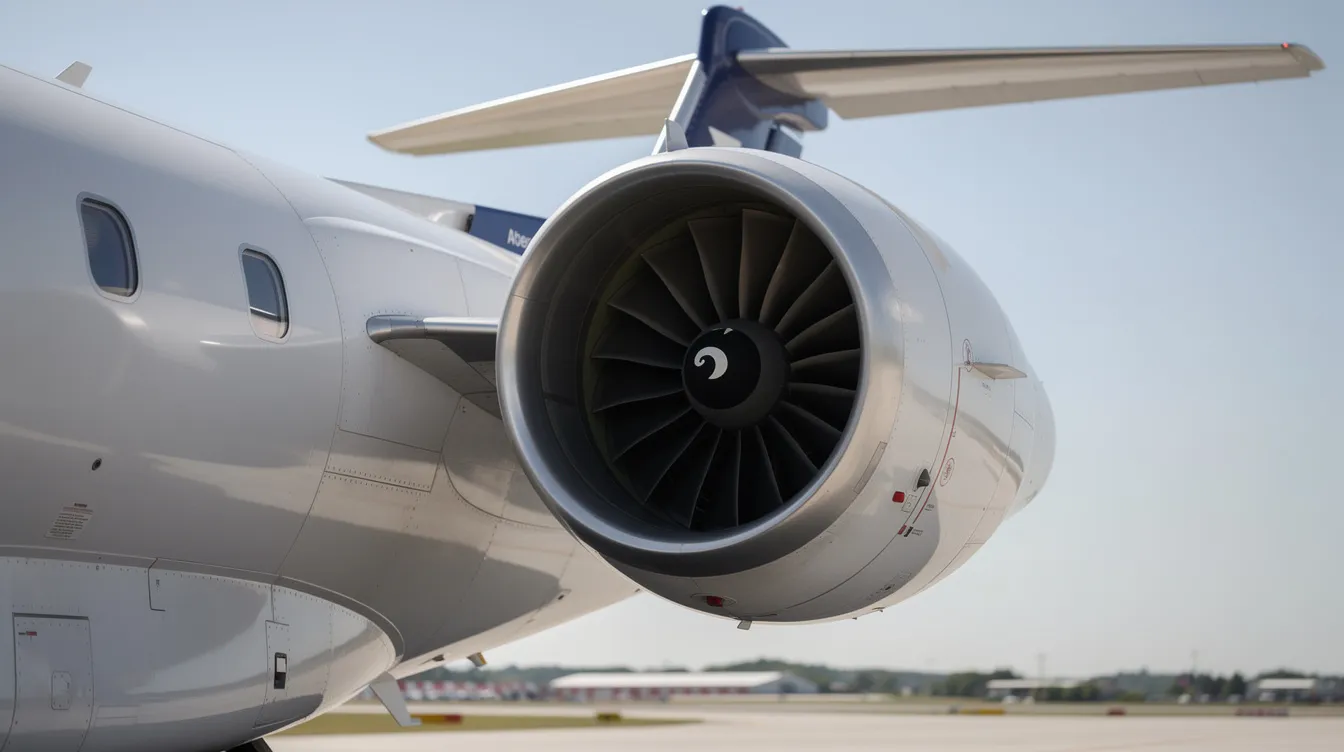
Across the ERJ family, shared engineering traits include swept wings, a T-tail, twin rear-fuselage-mounted AE 3007 turbofans, and Honeywell Primus avionics suites. The ERJ family was designed to maximize parts commonality and operational efficiency, which remain a practical benefit for operators managing multiple aircraft types efficiently.
Key technical aspects worth noting:
A common pilot type rating across ERJ-135, ERJ-140, and ERJ-145 simplifies crew scheduling and training.
The cabin typically features a 2-by-1 or 3-abreast seating layout in a narrow single-aisle configuration.
Cabin dimensions: approximately 2.06 m wide and 1.82 m tall—functional for short sectors.
ERJ aircraft maintenance can be managed using electronic templates, and tools like WinAir software improve data accuracy in aircraft maintenance management.
In VIP or corporate conversions, operators can specify aftermarket options for cabin upgrades and onboard technology enhancements, including lie-flat seating, conference tables, enhanced soundproofing, and upgraded galleys. The Legacy 600 comes factory-built with these features, providing comfort comparable to dedicated business jets. While ERJ cabins were originally designed for short sectors, modern refurbishments can create a more spacious atmosphere that accounts for longer flight times.
The ERJ-145 entered service with carriers such as ExpressJet in December 1996, quickly becoming a workhorse on regional routes. Major airlines use ERJ aircraft for hub-and-spoke passenger shuttling, and ERJ aircraft often operate flights ranging from 20 minutes to 3 hours. Comparable regional jets such as the Canadair CRJ-200 have followed similar deployment patterns within the broader landscape of charter and regional airlines worldwide. By the early 2010s, the fleet had accumulated over 26 million flight hours across 36 airlines in 26 countries.
The published safety record of the ERJ family shows historically low fatality rates relative to fleet hours. Notable incidents have typically been attributed to external factors—such as ATC or pilot errors—rather than systemic design flaws.
Through the 2010s and 2020s, airlines began phasing out ERJs in favor of newer-generation regional jets. Approximately 40% of ERJ aircraft are still active in fleets worldwide as of 2025. This phase-out from scheduled service creates opportunities on platforms like Jettly to offer ERJ aircraft as cost-effective charter solutions for groups who value affordability and reliability.
Jettly, as a digital private charter aircraft marketplace, sources ERJ family aircraft from certified operators and makes them available for on-demand charter worldwide through partner operators such as Dexter Air Taxi and other private jet providers. Common charter configurations include:
High-density seating (30–50 seats) for corporate shuttles, sports teams, or music tours
VIP layouts with fewer, more spacious seats for executive groups and families
Hybrid configurations blending some cargo space with passenger seating for film crews or event logistics
The types of trips best suited to ERJ charter include regional sectors like New York–Chicago, Toronto–Vancouver, São Paulo–Brasília, or London–Geneva—typically within the 1,000–2,000 nmi range. Similar regional missions include private jet charter routes to Atlanta, Georgia, or within India, such as Kolkata, West Bengal, New Delhi, or Jaipur, Rajasthan. Jettly's instant pricing tools help customers compare ERJ options against smaller jets or turboprops, especially when traveling with 20–40 passengers, where per-seat cost becomes attractive.

Operational advantages for charter customers include access to secondary airports, fast turnarounds, and integration with ground transportation and in-flight catering coordinated through the platform.
Charter pricing for ERJ aircraft depends on hourly rates, sector length, airport fees, and positioning legs. Travelers can use Jettly's private jet charter cost estimator and broader guide on affordable private jet charter pricing to better understand likely trip costs, while precise quotes are available through Jettly's pricing tools. As a general order of magnitude, Legacy 600 charters run approximately $12,000–$16,000 per hour, while regional ERJ variants can vary based on configuration and operator.
When does an ERJ make sense over other jet types?
|
Scenario |
Best Fit |
Why |
|---|---|---|
|
Corporate roadshow, 30+ passengers |
ERJ-145 |
Per-seat cost drops significantly with high seat counts |
|
Executive team of 4–6 |
Light or midsize jet |
More comfort, lower total hourly cost |
|
Sports team travel, regional |
ERJ-135 or ERJ-145 |
Capacity, baggage volume, one-aircraft simplicity |
|
Intercontinental, small group |
Heavy jet |
Range exceeds ERJ capability |
While a single ERJ uses more fuel than a light jet, its per-seat fuel efficiency can be competitive when carrying many passengers. This makes it a strong choice in peak travel months or for institutional travel like university teams and government delegations.
Booking through Jettly follows a straightforward digital process:
Search your route and dates on the platform.
View instant pricing on available aircraft, including ERJ options.
Click to confirm and finalize through the online dashboard.
Before requesting a quote, prepare the following: origin and destination airports, preferred dates and times, passenger count, baggage needs, and any special requests such as VIP seating or onboard Wi-Fi. For step-by-step guidance, check Jettly's how-to book a private jet page.
Jettly offers both on-demand booking and private jet membership options. Frequent users may benefit from reduced per-flight costs without long-term ownership commitments, especially when pairing trip planning with tools like Jettly's jet card flight cost estimator and exploring world-class corporate jet card programs for predictable hourly rates. All ERJ aircraft in the network are operated by licensed carriers—such as FAA Part 135 in the United States or equivalent certifications—and must follow strict maintenance and safety standards.
Explore Embraer ERJ family availability, pricing, and route planning at https://www.jettly.com, and consider how Jettly positions itself as a flexible alternative to NetJets-style programs amid established leaders like NetJets in private aviation.
Regional jets like the ERJ are less fuel-efficient per seat-mile than newer-generation aircraft. However, operators increasingly use optimized routing, modern avionics upgrades, and weight-saving cabin refurbishments to improve the effectiveness of ERJ family aircraft still in active service.
Some charter operators participating in Jettly's marketplace offer carbon-offset or emissions reporting options, providing customers a way to account for the environmental impact of their flights. Others experiment with crowdsourced and shared private jet flights to improve seat utilization. The broader industry trend involves transitioning some missions to newer, more efficient models and making it easier to get a seat on a private jet through memberships, empty legs, and shared options, while ERJ aircraft continue to fill important niches for group charter where capacity and cost per seat matter most.
Travelers interested in lower-impact options can discuss route planning, aircraft selection, and offset programs with Jettly's support partners when considering ERJ charters.
All three belong to the same ERJ family and share core systems—engines, avionics, and airframe design. The primary difference is fuselage length and seating capacity: the ERJ-135 seats around 37 passengers, the ERJ-140 around 44, and the ERJ-145 up to about 60 seats in maximum-density airline configurations. In private charter use, seats are often removed or reconfigured into roomier layouts, so passenger counts on Jettly flights vary by operator and mission.
Yes. Many former airline ERJ aircraft are converted into corporate shuttles or VIP layouts with fewer seats, upgraded interiors, and amenities like Wi-Fi and enhanced catering. The Legacy 600 is a factory-built business jet derivative already configured with a long-range, multi-zone cabin suited to executive and family travel.
Most ERJ regional jets are optimized for short- to medium-haul routes—typically up to roughly 2,000 nautical miles. This makes them ideal for domestic or near-regional missions rather than intercontinental sectors. The Legacy 600 extends that to about 3,250 nmi. Travelers needing true long-haul range should compare ERJ options with larger business jets capable of non-stop transatlantic flights.
The total hourly cost of chartering an ERJ is generally higher than a light or midsize jet. However, the per-passenger cost becomes competitive or even lower when traveling with 20–40 passengers. Jettly's instant quote tools let travelers compare multiple aircraft types for the same route, balancing group size, comfort, and budget.
ERJ aircraft in Jettly's marketplace are operated by licensed air carriers holding FAA Part 135 certification (in the United States) or equivalent certifications in other regions. These operators must follow strict maintenance and operational regulations. Safety-conscious customers can request details on operator certifications, maintenance programs, and crew experience as part of the quoting process on the platform. They may also ask to review documents showing the certification year and current maintenance status for the aircraft and crew.
The Embraer ERJ family evolved from airline-focused regional jets and military aircraft into versatile platforms now widely used for private, corporate, and government charters. With proven reliability, flexible seating for medium-to-large groups, and solid performance on regional routes, the series remains relevant decades after its introduction. For travelers comparing aircraft types, ERJs can sit alongside some of the best private planes for families and group travel and are frequently offered by leading private jet charter companies in the market.
Jettly's digital platform makes it simple to compare ERJ aircraft with other types—from the ERJ 190 to heavy jets—and obtain instant pricing for flights tailored to specific needs. Whether the mission involves a corporate shuttle, a sports team transfer, or a government delegation, the ERJ family delivers capacity and value that few other aircraft in its class can match.
Ready to explore ERJ charter options? Request a quote or browse available flights at https://www.jettly.com.
Share this post:
Jay Franco Serevilla
Jun 30, 2026
|
5
min read
Discover tips and trends in the industry.
5
min read
Aircraft Classification: How Plane Types Shape Modern Civil and Private Aviation
Aircraft classification is crucial for understanding the diverse types of planes used in civil and private aviation. By categorizing aircraft based on design, purpose, and certification, travelers can make informed choices that enhance safety and efficiency. Jettly's digital charter marketplace simplifies this process, matching clients with the right aircraft for their specific missions.
Read More
5
min read
Private Jet Stock: How To Choose the Right Aircraft Images for Your Brand
The demand for high-quality private jet stock imagery is surging as the private aviation market grows. Choosing the right visuals is crucial for brands to effectively communicate their value and attract customers. This guide offers practical tips on selecting, sourcing, and optimizing private jet images to enhance brand perception and drive conversions.
Read MoreStay updated with our latest insights and tips to elevate your journey with us.
MEMBERSHIPS AND ASSOCIATIONS



Disclaimer: Jettly operates as a charter broker, offering access to a global digital jet charter marketplace. Jettly is not a direct air carrier and does not own or operate aircraft. All advertised flights are conducted by third-party air carriers that are fully licensed and hold the appropriate Part 135 or Part 121 certifications issued by the Federal Aviation Administration (FAA) or equivalent regulatory authorities under U.S. or foreign law. Jettly complies fully with the U.S. Department of Transportation's Part 295 and Part 298 Charter Broker regulations. Jettly does not carry additional liability insurance. Passengers are covered by aircraft operator insurance. TICO: 50023770


