


Login
Get Instant Pricing On 23,000+ Aircraft

>

Key benefits include:
Time savings: Skip long security lines and board within minutes at private terminals
Smaller airport access: Fly into facilities like Teterboro instead of JFK, or Farnborough instead of Heathrow, by using tools such as Jettly’s airport locator tool
Privacy and flexibility: Set your own schedule and travel on your terms
Cost efficiency: Pay only for what you use, without fixed ownership expenses
Ready to compare options? Explore entry-level private jet availability and get instant pricing at jettly.com.
Private aviation is no longer reserved solely for celebrities and Fortune 500 executives. In recent years, it has become increasingly accessible to a broader range of individuals and businesses, thanks to advancements in aircraft technology, innovative ownership models, and the rise of digital charter platforms. Whether you’re a business traveler seeking to maximize productivity or a family looking for a more comfortable way to reach remote destinations, private aviation offers a compelling alternative to commercial airlines.
At the heart of this industry are a variety of aircraft types designed to meet different needs and budgets. Very Light Jets (VLJs) are defined as private jets with a maximum take-off weight of 10,000 lbs or less, typically seating between four and six passengers, and designed for short-haul flights. These jets often require only one pilot, reducing crew costs while maintaining safety and convenience. The typical range for VLJs is between 750 and 1,250 nautical miles, making them suitable for regional travel and short trips.
Light jets, such as the Cessna Citation Mustang and Embraer Phenom 100, offer a balance of luxury, comfort, and affordability, making them ideal for business trips or family travel. Manufacturers like Honda Aircraft Company have played a pivotal role in expanding the very light jet category, introducing innovative models like the HondaJet that combine advanced technology, excellent fuel efficiency, and single-pilot operation. The Vision Jet from Cirrus Aircraft is another standout, offering a personal-jet experience with features such as synthetic vision and the ability to access smaller airports—perfect for business travelers and private-jet owners who value flexibility and time savings.
For those considering private aircraft ownership, understanding the full spectrum of costs is essential. Operational costs for private jets typically include both fixed and variable expenses, with variable costs covering hourly fuel and maintenance, as well as significant private jet maintenance expenses. Fuel typically accounts for 25–35% of total operating costs, with fuel costs ranging from $300 to $700 per hour depending on aircraft type and conditions. Maintenance costs can range from $50,000 to $200,000 annually, while hangar fees vary from $1,000 to $3,000 per month, depending on location and storage type. Annual operating costs for a mid-size jet can total hundreds of thousands of dollars, making it essential to budget carefully for long-term ownership.
Alternatives to outright ownership, such as jet card programs, provide prepaid blocks of flight hours on specific aircraft types at fixed hourly rates, offering a flexible option for frequent flyers. Chartering or fractional private jet ownership is often recommended for those not ready to purchase a jet, allowing travelers to understand typical mission profiles before full ownership. Chartering also offers flexibility in scheduling and eliminates the complexities of maintenance, crew management, and fixed costs.
Private jet operators must adhere to strict safety regulations set by aviation authorities such as the FAA in the United States, including regular maintenance checks and pilot training requirements. Many jets are equipped with advanced safety features like modern avionics, autopilot systems, and, in some cases, whole-airframe parachutes, enhancing operational safety. Operators often undergo third-party safety audits such as ARGUS or Wyvern ratings to ensure compliance with safety management systems and operational standards.
New VLJs start at around $2 million, while pre-owned light jets can often be purchased for $1 million to $3 million, making private jet ownership more accessible than ever for those considering the cheapest private aircraft options across segments.
Ultimately, private aviation empowers travelers to fly private on their own terms, bypassing the limitations of commercial flights and larger jets. Whether your priority is business efficiency, personal comfort, or the freedom to explore new destinations, there is an entry-level jet or light business jet that fits your needs. With more options than ever before, now is the perfect time to discover how private aviation can transform your travel experience—delivering unparalleled flexibility, privacy, and productivity.
An entry-level private jet refers to the smallest category of certified business jets, typically called very light jets (VLJs). These compact aircraft—including the Embraer Phenom 100, Cessna Citation Mustang, Cirrus Vision Jet SF50, and HondaJet HA-420—seat four to six passengers and handle trips up to approximately 1,000–1,200 nautical miles. Since around 2015, demand for these jets has grown significantly as travelers seek alternatives to commercial aviation’s delays and crowded terminals.
Chartering through a platform like Jettly avoids the multi-million-dollar acquisition costs and high annual operating expenses that come with ownership. Hourly charter rates for entry-level jets typically start in the low four figures, making private aviation accessible to business travelers, families, and frequent flyers who don’t need large-cabin capacity, especially once you understand how much it costs to rent a private jet.
An entry-level private jet is the smallest certified business jet in private aviation, typically with a maximum takeoff weight of around 10,000 pounds. These aircraft, often called very light jets or personal jets, seat four to six passengers and cover ranges of approximately 750–1,250 nautical miles.
This very light jet category emerged in the mid-2000s. The Eclipse 500 and Cessna Citation Mustang both received certification in 2006, establishing the segment. Embraer followed with the Phenom 100 in 2008, while Cirrus Aircraft introduced the Vision Jet SF50—the first single-engine certified personal jet—in 2016. As a single-engine aircraft, the Vision Jet offers a more affordable and accessible option for private flying, with lower operating costs, easier handling, and suitability for short flights, small groups, or beginners.
Terminology overlaps in this space. “Entry level jet,” “VLJ,” and “personal jet” are used interchangeably. Some slightly heavier aircraft today, such as the HondaJet HA-420 from Honda Aircraft Company, also fall into the entry-level discussion due to similar mission profiles. Honda’s entry into private jet manufacturing generated excitement and innovation within the aviation industry, further expanding options for travelers.
Typical performance includes:
Cruise speed between 300 and 420 knots
Non-stop sectors like New York–Chicago (680 nm), London–Berlin (500 nm), or Toronto–Halifax (600 nm)
Ability to access smaller airports with shorter runways than larger jets require
Most entry-level jets are designed for short to medium-range trips, approximately 1,000–1,500 nautical miles.
This article focuses on charter access through Jettly’s marketplace, relevant for both frequent travelers and those booking their first private jet experience.
Entry-level private jets offer a cost-effective path to core private aviation benefits—time savings, scheduling flexibility, and privacy—without the large-cabin capacity small groups rarely need.
Key advantages include:
Smaller airport access: Depart from facilities like Teterboro instead of JFK, or London Luton instead of Heathrow. Land closer to your final destination, cutting total trip time by several hours, reflecting how private jets use a wide range of airports.
Lower hourly costs: Charter rates run 20–50% below midsize jets, which often start above $4,000 per hour.
Practical missions: Ideal for 1–4 passengers on 1–3-hour flights, such as Los Angeles–Las Vegas (230 nm), Miami–Nassau (180 nm), or Paris–Geneva (200 nm). Same-day returns become realistic for meetings or quick weekend trips.
For business travelers moving up from commercial business or first class, entry-level jets offer an ideal first step into flying private. The comfort mirrors business class with pressurized cabins, club seating for four, leather upholstery, power outlets, and—in newer models—Wi-Fi connectivity, especially when you follow tips for booking the cheapest private jet flights to keep costs manageable.
Some limitations exist. Very compact VLJs may have limited or no fully enclosed lavatory and minimal galley space. For flights under two hours, most travelers find this acceptable. For longer sectors, confirming cabin layout before booking is worthwhile.
The market is dominated by proven aircraft families from manufacturers including Embraer, Cessna (Textron), Cirrus, Honda, and Eclipse. Each offers distinct advantages depending on range requirements, passenger count, and comfort expectations, and many appear among the best private plane manufacturers for every budget and need, as well as broader guides to affordable planes and budget-friendly aircraft choices.
Jettly’s private charter aircraft platform provides access to thousands of flights on these models worldwide, though specific availability and configurations vary by operator and region. The profiles below cover typical charter use cases and comfort considerations.
The Embraer Phenom 100 family, first delivered in 2008 with 100E and 100EV upgrades through the 2010s, ranks among the most popular entry-level private jet series in charter fleets globally.
|
Specification |
Details |
|---|---|
|
Seating |
4 passengers (club) + 1 side-facing; up to 6 on short flights |
|
Range |
1,000–1,200 nm |
|
Cruise Speed |
~406 knots |
|
Cabin Height |
4.9 ft |
|
Cabin Width |
5.1 ft |
|
The Phenom 100 enables nonstop routes such as London–Copenhagen, New York–Miami (under favorable conditions), or Dubai–Riyadh for small groups. Charter clients value its relatively spacious cabin for the category, large windows, Garmin G3000 Prodigy Touch avionics, and enclosed rear lavatory—making it attractive for medium-haul flights of 2–3 hours. |
|
|
Hourly charter pricing typically sits in the mid-range of the entry-level segment. Many operators across Europe and North America list Phenom 100 family aircraft on Jettly’s marketplace, which also highlights affordable private jet charter options and the factors that influence price. |
The Cessna Citation Mustang, certified in 2006, helped define the entry-level business jet segment for owner pilots and charter users alike. This light business jet remains a practical workhorse in many fleets.
|
Specification |
Details |
|---|---|
|
Seating |
4 passengers + optional 5th seat |
|
Range |
1,000–1,150 nm |
|
Cruise Speed |
~340 knots |
|
Cabin Height |
4.25 ft |
|
Cabin Width |
4.8 ft |
|
The Mustang suits short business trips like Barcelona–Marbella (~600 nm), Vienna–Berlin, or Toronto–New York (~340 nm). Its efficient fuel burn from Williams FJ44 turbofans contributes to lower operating costs, translating to competitive hourly charter rates. |
|
|
Many Mustangs have compact or limited lavatory facilities and modest baggage volume (63 cubic feet). Travelers should confirm cabin layouts when booking through Jettly. Despite these constraints, the Cessna Citation Mustang delivers strong value for cost-conscious entry into private jet travel, especially for short hops with 2–4 passengers. |
The Cirrus Vision Jet SF50, first delivered in 2016 with G2 and later upgrades, represents the first certified single-engine personal jet—a notable example of an ultra-efficient small private jet.
|
Specification |
Details |
|---|---|
|
Seating |
Up to 5 adults + 1–2 children |
|
Range |
1,000–1,275 nm |
|
Cruise Speed |
~311 knots |
|
Engine |
Single Williams FJ33 |
|
Structure |
Carbon fiber airframe |
|
The Vision Jet appeals to families and small executive teams on regional routes. Key safety features include the Cirrus Airframe Parachute System (CAPS) and, in newer models, Safe Return autoland—both of which appeal to safety-focused travelers even when flying with professional pilots. |
|
|
The cabin feels similar in size to a large SUV and may lack a traditional, fully enclosed lavatory on shorter flights. However, it delivers jet-like speeds with excellent fuel efficiency, comparable to turboprop aircraft, often translating into competitive charter rates. Vision Jets appear in select charter fleets worldwide through platforms like Jettly. |
The HondaJet HA-420, in service since around 2015, and its Elite/HondaJet Elite II variants feature innovative over-the-wing engine mounts that reduce cabin noise and free interior space. Honda Aircraft Company designed this aircraft today to bridge the gap between compact jets and the light jet category.
|
Specification |
Details |
|---|---|
|
Seating |
4 passengers (club) + 1; fully enclosed lavatory |
|
Range |
1,200–1,547 nm |
|
Cruise Speed |
~422 knots |
|
Cabin Height |
4.83 ft |
|
Avionics |
Garmin G3000 |
|
This maximum range enables routes like Chicago–Denver (~900 nm) or London–Málaga without fuel stops under favorable conditions. The quiet cabin, modern avionics with synthetic vision, and contemporary interior design make it popular among small-business teams and illustrate the trends covered in our guide to private and charter airlines. |
|
|
While hourly charter pricing may be slightly higher than some early VLJs, many travelers consider the extra comfort and range worthwhile. Jettly’s instant pricing helps compare HondaJet options against similar private aircraft on the same route. |
The Eclipse 500/EA500, introduced in the early 2000s, was among the earliest VLJs focused on very low operating costs. It seats four passengers on regional missions with lower fixed costs than many alternatives. However, cabin space and baggage capacity are more limited than in newer designs.
Early CitationJet (CE-525) and CJ1/CJ1+ models bridge the gap between older light jets and today’s entry-level segment, offering 4–6 seats and improved fuel efficiency. Many still operate in charter fleets, especially in Europe and North America, including the King Air turboprop series for travelers who prioritize operational costs over jet speeds.
These older light jets can deliver exceptional value for short and cross-country flights, provided maintenance and cabin refurbishments meet current standards, especially when compared with the best private jet charter companies and their fleets. Typical missions include:
Intra-European hops: Brussels–Geneva, Munich–Milan
Regional US flights: Dallas–Nashville, Atlanta–New Orleans with 2–5 passengers
Jettly’s aircraft details and photos allow users to compare cabin age, refurbishment dates, and operator ratings before booking any of these models.
Jettly operates as a digital private aviation marketplace, connecting travelers to a global fleet of over 20,000 aircraft—including a wide range of entry-level private jets—via instant search and pricing tools.
The booking flow is straightforward:
Enter your route (e.g., New York–Miami), date, and passenger count
Filter results to very light jets and light jets
Compare options like Phenom 100, Citation Mustang, or Vision Jet side-by-side
Review price, flight time, operator ratings, and cabin photos
Book directly through the platform
Jettly works with certified operators who meet regulatory requirements, such as Federal Aviation Administration Part 135 in the US and EASA standards in Europe. The platform can highlight third-party safety ratings, including ARGUS and Wyvern audits, reinforcing its positioning as a NetJets alternative for flexible private flying, and positioning Jettly as a competitor to NetJets and its fractional ownership model.
A key differentiator: transparent pricing with minimal traditional brokerage markups. Travelers see multiple single aircraft options for each trip rather than being locked into a single fleet. No jet cards or fractional ownership required.
Additional services—catering, ground transfers, special requests—can be coordinated through Jettly, ensuring that even smaller jets support a complete end-to-end travel experience for business aviation, particularly for travelers using Jettly’s jet card programs.

The financial gap between owning and chartering an entry-level private jet is substantial. Understanding both models helps travelers make informed decisions. While chartering offers flexibility without long-term commitments, owning a jet provides greater travel flexibility, privacy, and luxury, making private aviation more accessible to a broader audience.
Purchase price ranges (2024–2025 estimates):
|
Aircraft |
New Price |
Pre-Owned Market |
|---|---|---|
|
Cessna Citation Mustang |
N/A (out of production) |
$1.5–2.5 million |
|
Embraer Phenom 100 series |
~$4.5–5 million |
$2–3.5 million |
|
Cirrus Vision Jet |
~$3–3.5 million |
Limited availability |
|
HondaJet Elite variants |
$4–6+ million |
Varies |
|
Annual ownership costs beyond purchase price: |
Fuel: $300–700 per flight hour, accounting for 25–35% of total operating costs
Maintenance: $50,000–$200,000 annually
Hangar/storage: $1,000–$3,000 per month
Insurance: $20,000–50,000
Engine reserves: $200–400 per hour
Crew (if needed): $150,000+ for salaries and training
Fixed annual costs to maintain a private jet can range from $500,000 to over $1 million, depending on factors such as age, maintenance schedule, and usage. Routine maintenance is often estimated at 2% of the aircraft's original purchase price annually, with older jets possibly requiring more frequent repairs—figures that align with broader analyses of how much a private jet really costs.
Operating costs for the Cessna Citation Mustang are estimated at $1,000 to $1,200 per hour, while the Embraer Phenom 100's operating costs are estimated at $1,200 to $1,500 per hour.
Many entry-level jets allow single-pilot operation, reducing crew costs, though many owners prefer a two-pilot crew for safety and convenience, and some compare these ownership economics with the cost of private jet leases, contract structures, and fractional jet ownership companies and programs before committing.
For private jet owners flying fewer than 100 hours annually, on-demand charter through platforms like Jettly typically makes more financial sense than private aircraft ownership or fractional programs. Travelers comparing these options can also use Jettly’s jet card flight cost estimator to understand how jet card pricing compares with ad hoc charter and to break down the factors that affect private jet flight costs. Charter rates for entry-level jets generally range from the low four figures per flight hour, varying by region, aircraft age, and repositioning needs.
Jettly’s live pricing and private jet charter cost estimator provide precise quotes for specific routes and dates—no guesswork required. This model suits travelers seeking affordable access to private aircraft without ongoing costs.
Entry-level private jets excel on short-haul and regional missions where speed and schedule control matter more than large-cabin space. Their ability to access smaller airports significantly expands route options.
Business scenarios:
Day trips for executive meetings: New York–Boston (187 nm), London–Amsterdam (230 nm), Frankfurt–Copenhagen (380 nm)
Multi-city investor or site visits within one region
Urgent client meetings impractical with commercial flights
Single-pilot operation capability for owner pilots with appropriate ratings
Leisure scenarios: Travelers departing from specific regions, such as India, can also leverage regional services like private jet charter in Kolkata, West Bengal, for both business and leisure missions.
Long weekend trips: Los Angeles–Palm Springs (100 nm), London–Nice (650 nm), Zurich–St. Tropez (300 nm)
Family holidays to island locations via smaller airports, or city breaks using regional services such as private jet charter in New Delhi
Last-minute trips for events, sports matches, or concerts at remote destinations
Special situations:
Medical or family emergencies requiring rapid same-day travel
Time-critical relocations
Reaching locations with limited commercial airline service
Door-to-door time savings often reach 3–6 hours per trip compared with commercial aviation, reducing overnight stays and improving quality of life for frequent flyers choosing Jettly’s on-demand options or private jet memberships, as well as those simply buying a seat on a private jet through shared or semi-private flights.

Entry-level private jets prioritize cost efficiency first, with comfort comparable to or better than commercial business class—but without the cabin space of midsize or larger jets.
Typical cabin dimensions:
Height: 1.35–1.55 meters (4.25–5.1 ft)—most passengers cannot stand fully upright
Width: Similar range, accommodating club seating for four
Legroom: Generally 3.5–4 feet, allowing comfortable positioning for up to six passengers on shorter flights
Lavatory expectations vary:
|
Aircraft |
Lavatory |
|---|---|
|
Phenom 100 |
Fully enclosed lavatory |
|
HondaJet |
Enclosed lavatories |
|
Citation Mustang |
Limited/compact |
|
Eclipse 500 |
Minimal or none |
|
Vision Jet |
Limited to short flights |
|
Common amenities: |
Leather seating with fold-out tables
Reading lights and power outlets
Wi-Fi and in-flight entertainment on newer/upgraded aircraft
Light catering (snacks, beverages); elaborate meals on request, often coordinated through dedicated services like Jettly Eats in-flight catering
Baggage considerations:
Small baggage holds (50–85 cubic feet) and weight limits mean travelers should pack efficiently. Jettly’s platform typically provides baggage capacity details, helping users select the right aircraft for golf bags, ski gear, or multiple suitcases.
Although smaller jets, entry-level private jets, meet rigorous aviation safety standards. They operate under strict regulations through licensed commercial operators—FAA Part 135 in the United States, EASA rules in Europe.
Jettly works only with vetted operators meeting national and international safety requirements. Where available, the platform highlights third-party safety ratings from organizations such as ARGUS and Wyvern.
Modern safety features include:
Advanced avionics suites (Garmin G1000/G3000 or equivalent)
Synthetic vision systems
Traffic and terrain awareness (TAWS)
Automation is reducing pilot workload
CAPS parachute system (Cirrus Vision Jet)
Safe Return autoland (newer Vision Jet models)
Environmental considerations:
VLJs offer better fuel burn per hour than larger jets. Optimizing aircraft size to mission—booking a small jet instead of a heavy jet for two passengers—reduces overall fuel use and operational costs.
Travelers using Jettly can inquire about carbon offset options or, where available, operators using sustainable aviation fuel (SAF) to align private travel with broader sustainability goals, while also reducing costs and emissions per passenger through crowdsourced and shared private jet flights or exploring affordable airplane rental options and cost structures.
Selecting the best entry-level private jet depends on route length, passenger count, baggage needs, budget, and airport constraints.
Decision process:
Define typical leg distance: Under 500 nm vs. 1,000+ nm
Estimate passenger numbers: 2–3 passengers vs. 4–5
Check lavatory requirements: Essential for flights over 2 hours?
Consider airport constraints: Short runways at origin or destination?
Model comparison guide:
|
Need |
Best Fit |
|---|---|
|
Very short hops, 2–3 passengers, light bags |
Citation Mustang, Eclipse 500 |
|
2–3 hour legs, 3–5 passengers, lavatory needed |
Phenom 100, HondaJet |
|
Family travel, single-engine turboprops, alternative, safety features |
Vision Jet |
|
Longer range (1,200+ nm), quiet cabin |
HondaJet Elite II |
|
Jettly’s search tools allow filtering by aircraft size and features, then comparing multiple options by price, operator rating, and cabin photos. |
|
|
Example scenario: A family of four flying from London to Ibiza compares a Mustang, Phenom 100, and HondaJet on Jettly. Factoring baggage for a beach holiday, cabin layout preferences, and total trip price, they select the Phenom 100 for its enclosed lavatory and larger baggage hold—all visible in the platform’s comparison view. |
Travelers typically get the best selection and pricing by booking 3–7 days in advance for popular routes and weekends. While same-day or next-day trips are sometimes possible, advance planning expands options.
Availability tightens around peak periods—major events, holiday weekends in July–August, or late December. In busy markets like New York–Florida or London–Mediterranean routes, 1–2 weeks’ notice is advisable during these windows.
Jettly’s platform handles last-minute requests by searching its operator network in real time, though repositioning and limited inventory may increase costs. Travelers with flexible schedules can compare multiple departure times to find more favorable pricing and fixed hourly rates.
No membership is required. Jettly offers both on-demand charter without a long-term commitment and an optional membership for frequent flyers. Neither requires buying a jet or signing up for fractional ownership.
Casual or first-time users can search, compare, and book single trips, paying per flight with transparent pricing shown upfront. Memberships benefit travelers flying more often, offering lower service fees, dedicated support, or access to certain pricing structures—while still avoiding traditional jet card lock-ins.
Those unsure of their annual flying needs can start with on-demand bookings and consider membership later if usage grows, using strategies like finding a seat on a private jet easily through empty legs, shared flights, and flexible booking options.
Unlike commercial flights, passengers typically arrive 20–30 minutes before departure at a private terminal or FBO (Fixed Base Operator). There are no long security lines or boarding queues typical of commercial aviation.
Travelers present identification, confirm details with FBO staff, and are escorted directly to the aircraft. Baggage is loaded by ground personnel, with minimal waiting. Jettly, or the operating partner, provides precise directions to the correct terminal and can coordinate ground transfers so that vehicles meet passengers planeside, where permitted.
This streamlined process delivers major time savings, particularly on short-haul flights where total door-to-door time matters most.
Many operators allow pets on board entry-level private jets, though policies vary by aircraft, operator, route, and destination country regulations. Passengers should declare pets during the booking process so Jettly can filter for pet-friendly operators.
International flights may require health certificates, vaccinations, and specific documentation—especially for travel within or into regions like the EU or UK. Additional cleaning fees or restrictions on cabin areas may apply. Reviewing these conditions before confirming ensures a smooth experience for travelers with pets.
Flexibility is a key advantage of charter, though changes depend on operator availability and contract terms displayed during booking. Options typically include adjusting the departure time for the same day, shifting it to a different time on the same date, or moving the flight to a different date.
Change fees or fare differences may apply depending on notice given and aircraft positioning. Last-minute cancellations during peak periods may incur higher penalties. Travelers should review cancellation and change policies before confirming.
Contact Jettly’s support team promptly if plans shift—the team works with operators to re-optimize schedules and minimize extra costs whenever possible.
Entry-level private jets—very light jets like the Phenom 100, Citation Mustang, Cirrus Vision Jet, HondaJet, and similar models—offer an efficient, flexible way to experience private aviation for regional trips without the expense of larger cabins or the outright cost of jet ownership.
The core benefits remain compelling: lower operating costs than larger jets, access to more airports, significant time savings compared to commercial flights, and the ability to tailor each trip’s aircraft selection through a digital platform. No fractional ownership, no jet cards, no long-term commitments required.
Jettly makes it simple to compare and book the right entry-level private jet for each mission—whether for business meetings, family travel, or urgent last-minute journeys. Advanced technology in the platform delivers transparent pricing, operator ratings, and cabin details in one search.
Ready to experience private travel on your terms? Explore entry-level private jet options or request a quote today at jettly.com.
Share this post:
Jay Franco Serevilla
Apr 11, 2026
|
5
min read
Discover tips and trends in the industry.
5
min read
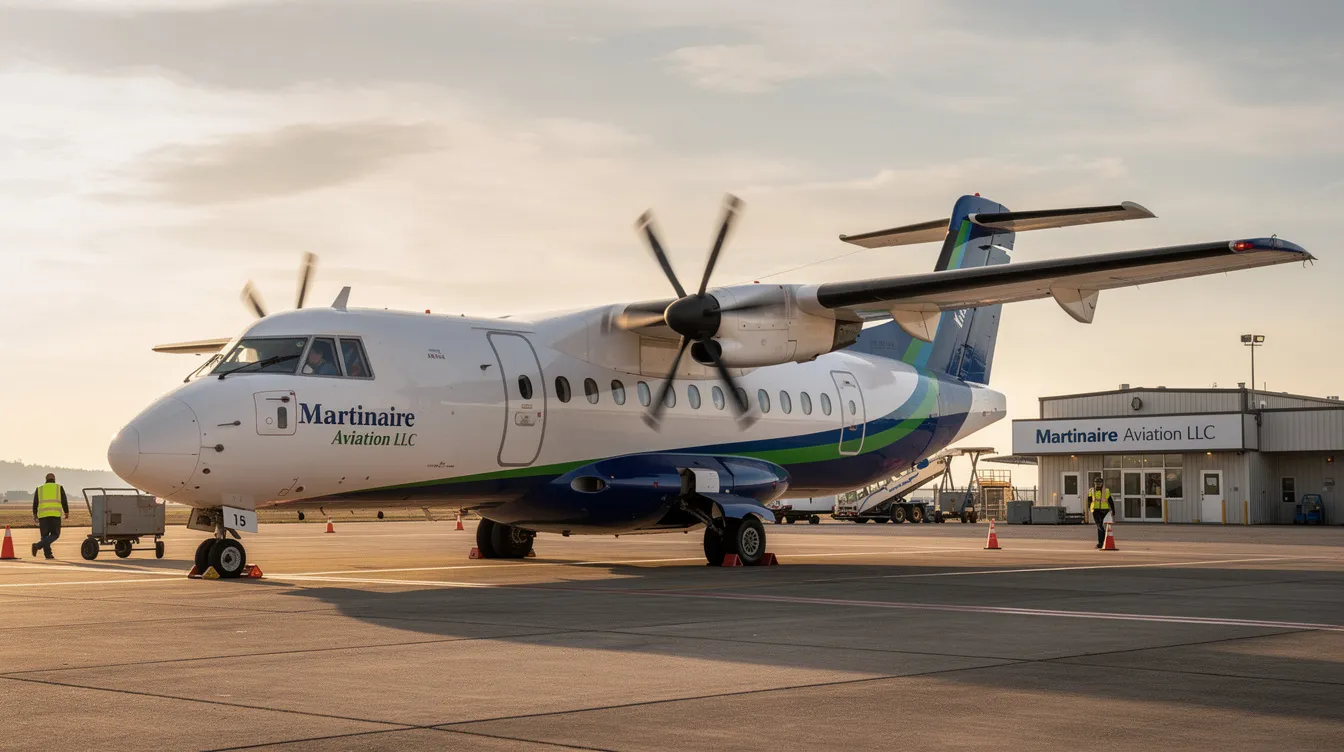
Martinaire Aviation LLC: Cargo Operations, Careers, and How It Compares to Private Charter
Martinaire Aviation LLC, founded in 1978, is a leading cargo feeder carrier in the U.S., specializing in overnight freight operations. With a fleet of turboprop aircraft, it connects regional airports to major sorting hubs, primarily serving integrators like UPS. This article explores Martinaire's operations, career opportunities, and how it contrasts with private charter services like Jettly.
Read More
5
min read
Alerion Aviation: Charter, Aircraft Management, and How Jettly Helps You Compare Options
Alerion Aviation is a premier boutique private aviation company specializing in aircraft management, on-demand charter, and in-house maintenance. With a strong safety record and a large fleet operating from key U.S. locations, Alerion offers personalized service for travelers and aircraft owners. Jettly enhances the experience by providing a digital marketplace for comparing charter options, ensuring travelers find the best fit for their needs.
Read MoreStay updated with our latest insights and tips to elevate your journey with us.
MEMBERSHIPS AND ASSOCIATIONS



Disclaimer: Jettly operates as a charter broker, offering access to a global digital jet charter marketplace. Jettly is not a direct air carrier and does not own or operate aircraft. All advertised flights are conducted by third-party air carriers that are fully licensed and hold the appropriate Part 135 or Part 121 certifications issued by the Federal Aviation Administration (FAA) or equivalent regulatory authorities under U.S. or foreign law. Jettly complies fully with the U.S. Department of Transportation's Part 295 and Part 298 Charter Broker regulations. Jettly does not carry additional liability insurance. Passengers are covered by aircraft operator insurance. TICO: 50023770


