


Login
Get Instant Pricing On 23,000+ Aircraft

>
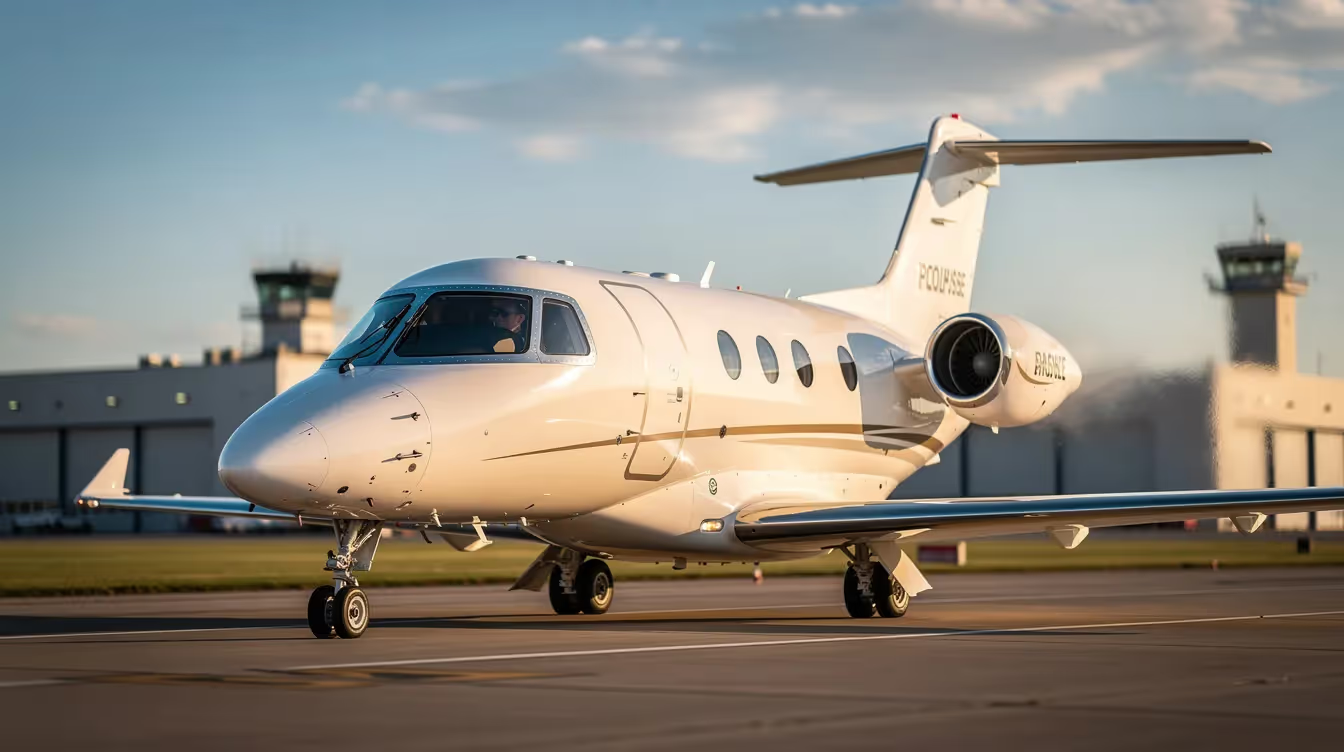
When travelers search for an Eclipse plane, they usually mean one of the most fuel-efficient twin-engine jets ever built: the Eclipse 500 and its upgraded variants. These very light jets carved out a unique position in private aviation by offering jet speed at operating costs closer to turboprops than traditional light jets.
In astronomy, the term "ecliptic plane" refers to the imaginary plane defined by Earth's orbit around the Sun. The tilt of the ecliptic plane, 23.5 degrees relative to Earth's equatorial plane, causes our seasons. The Moon's orbit is inclined by about 5 degrees to the ecliptic, which usually causes it to pass above or below the ecliptic plane during new and full moons, preventing eclipses from occurring every month. The term 'ecliptic' comes from the fact that eclipses only occur when the Moon crosses this plane at points called 'nodes.' During a new moon, the Moon crosses the ecliptic plane directly between the Sun and Earth, resulting in a solar eclipse, while during a full moon, it crosses on the opposite side, resulting in a lunar eclipse. Mercury has the highest tilt of the major planets at about 7 degrees, and all major planets have orbits that are slightly tilted relative to the ecliptic plane.
This guide covers everything travelers and potential buyers need to know about Eclipse aircraft—from their turbulent corporate history to their practical advantages for charter customers today.
An Eclipse plane typically refers to the Eclipse 500, Eclipse 550, or Eclipse Special Edition (Eclipse SE)-compact, very light jets developed by Eclipse Aviation Corporation and later continued by Eclipse Aerospace and ONE Aviation.
Eclipse Aviation pioneered the use of friction stir welding in aircraft structures, creating stronger and lighter airframes that contribute to the jet’s remarkable fuel efficiency of 48-59 gallons per hour.
Despite bankruptcy in 2008-2009, the Eclipse fleet survived through refurbishment programs and continues serving owner-pilots and charter operators who value low operating costs and access to smaller airports.
The Eclipse 500 jet can operate from shorter runways, allowing access to over 10,000 airports in the United States, far more than larger jets requiring longer runways.
Travelers can experience Eclipse jets through Jettly’s on-demand marketplace without purchasing an aircraft, avoiding ownership costs while gaining the flexibility of private flights. Explore options at Jettly.
The term “eclipse plane” usually refers to the Eclipse 500 and its upgraded variants, the Eclipse 550 and Eclipse SE, developed by Eclipse Aviation and later Eclipse Aerospace. These aircraft belong to the very light jet (VLJ) category, designed to bridge the gap between high-performance turboprops and traditional light jets.
The Eclipse 500 was built in Albuquerque, New Mexico, and received FAA type certification in 2006. The aircraft targeted owner-pilots and on-demand charter operators seeking jet performance without jet-sized operating costs.
Within the light jet category, Eclipse models sit alongside aircraft like the Cessna Citation Mustang, Embraer Phenom 100, and HondaJet. However, Eclipse jets typically offer lower acquisition and operating costs, though with a more compact cabin.
After the original Eclipse Aviation bankruptcy in 2008-2009, Eclipse Aerospace and later ONE Aviation continued production, support, and upgrades. Today, travelers are more likely to encounter an eclipse plane through charter platforms like Jettly rather than through new aircraft sales.
Note: The term “eclipse” in aviation should not be confused with the ecliptic plane in astronomy. The ecliptic plane is an imaginary, flat surface that passes through the center of the Sun and contains Earth’s orbit. The constellations of the zodiac lie directly on or near the ecliptic plane, and most planets in our solar system orbit the Sun in nearly the same plane due to their formation from a single, rotating, and flattened disk of gas and dust.

Eclipse Aviation launched in the late 1990s with an ambitious goal: to democratize jet travel by producing an affordable, efficient very light jet. Founded by former Microsoft executive Vern Raburn, the company attracted early investment from Bill Gates and established its manufacturing facility in New Mexico.
2001-2006: Development and Certification
The first Eclipse 500 prototype flew in August 2002
FAA production certificate granted in 2006
Early orders flooded in from air-taxi concepts like DayJet, which ordered over 1,400 aircraft
2007-2008: Financial Pressures Mount
Rising production costs and supplier challenges emerged
Hampson Aerospace, which built tail sections, created delays
ETIRC Aviation invested over $100 million in attempting to stabilize operations
CEO Vern Raburn resigned in mid-2008
Workforce reduced by more than one-third
DayJet ceased operations in September 2008, removing a major order commitment
November 2008: Bankruptcy
Eclipse Aviation filed for Chapter 11 bankruptcy
Company owed approximately $702.6 million
Roughly 259 Eclipse 500 jets had been delivered when production stopped
2009-2015: Eclipse Aerospace Era
Eclipse Aerospace acquired assets after a failed interim bid by EclipseJet Aviation International
Restarted support, refurbishment, and limited production
Developed the Eclipse 550 with upgraded avionics and safety systems
2015-2021: ONE Aviation and Beyond
Eclipse Aerospace merged with Kestrel Aircraft to form ONE Aviation
ONE Aviation continued 500 and 550 support but faced financial struggles
ONE Aviation entered Chapter 7 liquidation in 2021
New ownership resumed limited 550 production in 2023
Despite corporate turbulence, the aircraft itself built a loyal following. Aircraft owners appreciated the fuel efficiency, small-airport capability, and operating costs that rivaled some turboprops.
|
Specification |
Eclipse 500 / SE |
Typical Light Jet Competitor* |
|---|---|---|
|
Maximum Cruise Speed |
370-375 knots (425 mph) |
350-400 knots |
|
Maximum Range |
Approximately 1,125 nautical miles |
1,200-1,300 nautical miles |
|
Service Ceiling |
41,000 feet |
41,000 feet |
|
Fuel Burn |
48-59 gallons per hour |
60-80 gallons per hour |
|
Takeoff Distance |
~2,300-2,400 feet |
3,000+ feet |
|
Passenger Capacity |
Typically 4-6 |
5-7 |
|
Operating Cost per NM |
~$2.02 |
$2.50-$3.50 |
|
Runway Accessibility |
Access to 10,000+ airports |
Limited to larger airports |
Competitors include Cessna Citation Mustang, Embraer Phenom 100, and HondaJet.
This table highlights how the Eclipse 500 and its variants offer competitive speed, range, and operational efficiency with lower fuel burn and operating costs, making it an economical choice for regional private jet travel.
The Eclipse 500 is a six-seat aircraft designed for short to medium regional flights. Powered by two Pratt & Whitney Canada PW610F turbofan engines mounted on the aft fuselage, the airplane typically carries four passengers plus one or two pilots.
The jet aircraft features a T-tail configuration and a pressurized cabin certified to a service ceiling of 41,000 feet. This altitude capability allows pilots to operate at efficient cruising altitudes, enabling the Eclipse 500 to cruise above most weather and congested airspace, which improves both comfort and fuel efficiency during cruise.
Key performance specifications include:
Maximum cruise speed of approximately 370-375 knots (around 425 mph)
Maximum range of approximately 1,125 nautical miles
Maximum speed of 425 knots under optimal conditions
Takeoff and landing performance suitable for shorter runways
The Eclipse 500’s design optimizes fuel payload, allowing for an efficient full fuel payload that supports its range and operational flexibility. The aircraft’s fuel payload capacity is engineered to maximize range without sacrificing passenger or baggage capacity, helping it compete effectively in the broader private charter aircraft marketplace.
The Pratt & Whitney Canada PW610F engines deliver significant thrust, directly contributing to the Eclipse 500’s impressive speed and overall performance. This thrust enables efficient climbs, high cruising speeds, and reliable operation across a variety of mission profiles.
The Eclipse 500 was conceived as a step up from high-performance piston and turboprop aircraft in speed and altitude, while keeping operating costs closer to turboprops than other jets in the light jet category, a profile that aligns with broader analyses of private jet operating costs and expense breakdowns.
The Eclipse 500’s compact footprint-about 34 feet in length and 11 feet in height-allows operations from regional and secondary airports closer to business destinations than major hubs.
Eclipse Aerospace pioneered the use of friction stir welding in aircraft structures, enabling stronger, lighter airframes compared to traditional riveting methods. This manufacturing innovation replaced approximately 7,000 rivets per airframe with about 128 meters of friction stir-welded seams, contributing to the jet’s overall performance and efficiency.
The aerodynamic shaping includes a clean wing design and smoothly faired engine nacelles, both of which reduce drag. These design choices contribute to fuel burn as low as 48-59 gallons per hour in cruise profiles, making the Eclipse 500 jet recognized for its fuel efficiency as one of the most economical twin-engine jets available.
Key Dimensions:
Length: ~33.5 feet (10.2 m)
Height: ~11.2 feet (3.4 m)
Wingspan: ~38 feet (11.4 m)
Cabin length: ~12 feet 4 inches
Cabin width: ~4 feet 8 inches
Cabin height: ~4 feet 2 inches
Baggage: ~16 cubic feet
The typical cabin layout can accommodate 4 main passengers, with optional fifth- or sixth-seat configurations, making the Eclipse well-suited to small groups for short or private flights. The interior focuses on short-leg comfort rather than long-haul luxury, though amenities such as in-flight catering for private jets can still enhance the onboard experience.
Cabin configurations vary by use case:
Owner-operator setups often include a standard all-leather interior with business-focused amenities
Charter configurations may include fully reclining seats for passenger comfort
Air-taxi layouts historically maximized seating capacity
Most Eclipse 500s do not have a fully enclosed lavatory because of the aircraft’s role in 1-2 hour missions. This limitation affects how charter brokers like Jettly position the aircraft for clients expecting amenities found on larger jets.
Interior upgrades in refurbished programs and the Eclipse SE include improved soundproofing, refreshed upholstery, and more ergonomic seating. For Jettly customers, the Eclipse 500’s cabin works best for small teams or families taking quick point-to-point hops where speed and airport access matter more than stand-up headroom.
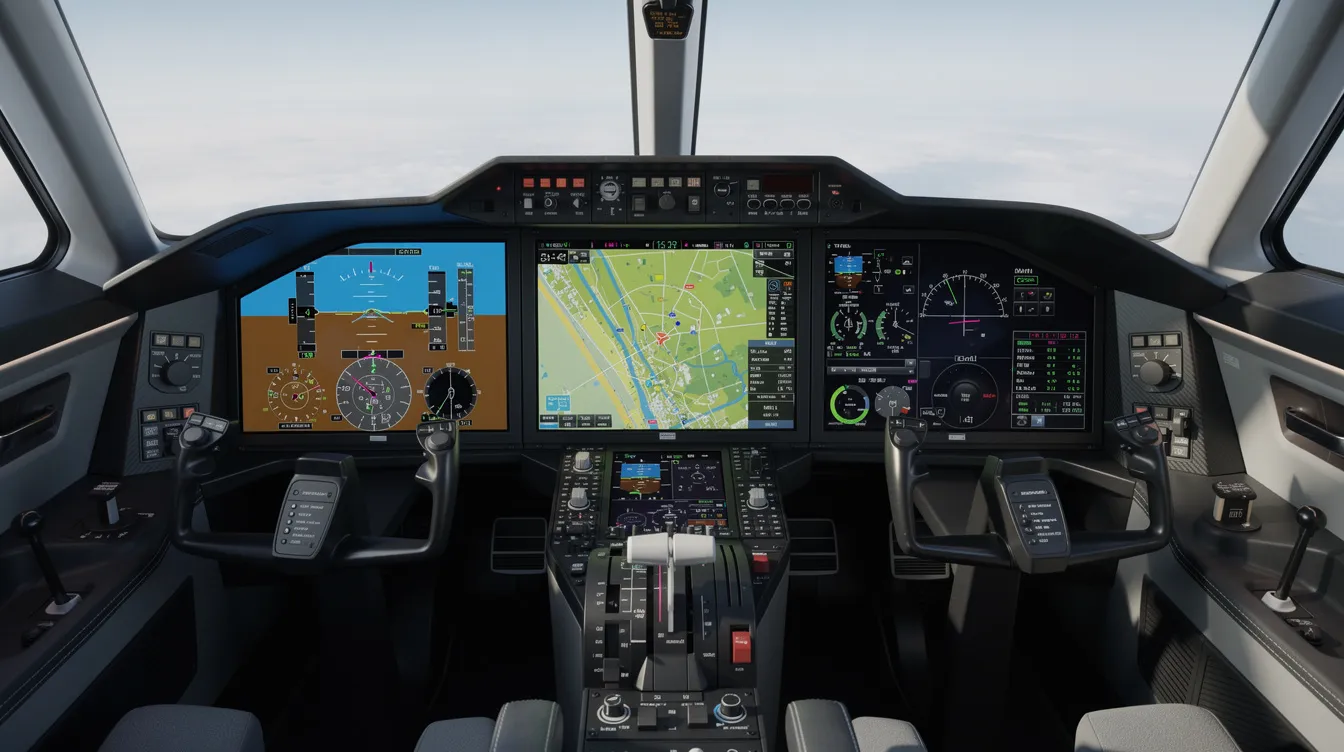
The Avio NG integrated flight deck includes digital displays for primary flight information, navigation, and engine data. The Eclipse 550 features a Dual Avio Integrated Flight Management System (IFMS) that simplifies piloting by reducing the number of switches and dials in the cockpit.
Key safety equipment includes:
De-icing systems certified for flight into known icing conditions (FIKI)
Terrain awareness and warning systems (TAWS)
Traffic surveillance
Modern autopilot capabilities
Anti-skid braking system on upgraded models
The Eclipse 550’s Anti-Skid Brake system allows for maximum braking energy and skid control, enabling the aircraft to stop in approximately 700 feet at normal landing speeds.
Regarding engines, the Eclipse 500 is powered by two Pratt & Whitney Canada PW610F turbofan engines, while the Eclipse 550 is equipped with Williams International FJX-2 engines certified for known icing conditions.
The service ceiling of 41,000 feet allows these jets to cruise above most weather and congested airspace, improving both safety and flying efficiency.
Many Eclipse plane models flying today are not factory-new but refurbished Eclipse 500s upgraded through structured programs. These refurbishment efforts extended the fleet’s useful life and improved market appeal.
Total Eclipse Program (2010) Eclipse Aerospace launched this program around March 2010 to finish partially completed EA500s. The program standardized aircraft configuration with GNSS-coupled autopilots and FIKI capability.
Eclipse Special Edition Program (2015). In June 2015, ONE Aviation introduced the Eclipse SE program. This went beyond avionics to include new interiors and systems upgrades approaching Eclipse 550 standards.
The Eclipse SE typically adds:
Anti-skid braking
Updated glass cockpit suites
Enhanced de-icing capability
Refreshed cabin materials and soundproofing
Refurbished Eclipse special-edition aircraft were priced at roughly $2-2.5 million, significantly below many new light jets but with competitive avionics and performance.
The use of friction stir welding in primary structure construction and modular manufacturing made it cost-effective to refurbish older airframes. This manufacturing approach extended the fleet lifecycle and supports ongoing charter availability through platforms like Jettly.
The Eclipse 500 and Eclipse SE performance profiles connect directly to the needs of private travelers and charter operators seeking rapid point-to-point trips at lower cost than traditional jets.
Performance Summary:
|
Metric |
Eclipse 500/SE |
|---|---|
|
Cruise Speed |
370-400 knots |
|
Range |
1,100-1,125 nm |
|
Service Ceiling |
41,000 feet |
|
Fuel Burn |
48-59 GPH |
|
Takeoff Distance |
~2,300-2,400 feet |
The Eclipse 500 jet consumes between 48 and 59 gallons of fuel per hour, which contributes to its low operating costs compared to other jets. This fuel efficiency underpins the Eclipse Jet reputation as one of the most economical twin-engine jets ever produced—consuming less fuel than many competing light jets. As a result, clients save significant money on operational costs, fuel, and overall travel expenses compared to traditional jet ownership or charter.
Practical Use Cases:
Same-day business runs: Dallas-Houston, Los Angeles-Las Vegas
Family weekends: Toronto to Montreal, Boston to New York
Regional access: Reaching smaller airports where larger jets cannot land
The Eclipse 500 jet can operate from shorter runways, allowing access to over 10,000 airports in the United States. This runway flexibility enhances versatility for business travel compared to larger jets that require longer runways.
These strengths make Eclipse planes a natural fit for on-demand charter through digital platforms like Jettly, where clients value time savings and cost efficiency over cabin size. As a twin-engine jet, the Eclipse 500 offers operational efficiency and reliability, making it especially suitable for business travel.

Understanding the economics helps travelers decide between ownership and charter, whether they evaluate private jet operating costs in detail or use a private jet charter cost estimator to compare trip-by-trip pricing.
Key Cost Components:
Fuel (48-59 GPH at current jet fuel prices)
Maintenance and engine reserves
Insurance and hangar fees
Crew costs (if hiring pilots)
Periodic avionics and software upgrades
The operating cost of the Eclipse 500 jet is estimated at around $2.02 per nautical mile, making it one of the most economical twin-engine jets available. Eclipse’s Jet Complete program guarantees a maintenance cost of $209 per flight hour for owners flying between 300 and 3,000 hours over three years.
However, real-world owners still face annual fixed expenses that can reach into six figures. The economics work best for aircraft owners flying several hundred hours per year, which utilization many private individuals or small businesses may not reach; that is why many travelers instead explore affordable airplane rental options.
Charter as an Alternative: Customers can use Eclipse planes and other light jets only when needed through Jettly, avoiding:
Acquisition costs and depreciation
Long-term commitments like jet cards or fractional shares
Regulatory compliance responsibilities
Maintenance management
Charter shifts these burdens to the operator, which appeals to travelers who prefer not to manage an aircraft asset and who may be comparing affordable private jet charter pricing options or considering recurring-use solutions like private jet memberships from Jettly.
How do Eclipse 500/SE models compare with competing light jets?
Advantages of Eclipse:
Lower fuel burn than Citation Mustang and Phenom 100
Often, lower direct operating costs per flight hour
Ability to use shorter runways, increasing the number of accessible airports
Lower acquisition cost for used aircraft
Trade-offs:
Smaller cabin volume than competitors
No stand-up room
Limited or no lavatory on most aircraft
Tighter baggage capacity than some competitors
Eclipse jets are optimized for regional flights of 1-2 hours, accommodating up to 4 passengers. Some competing light jets offer more comfort for longer legs or larger groups.
Within Jettly’s inventory, Eclipse models serve cost-focused customers well, while travelers prioritizing cabin comfort may prefer slightly larger light jets, similar to those highlighted in broader guides to the best private jet charter companies and comprehensive overviews of charter airlines and private flight options.
Jettly operates a global private jet charter marketplace with access to more than 20,000 private charter aircraft, including Eclipse 500, Eclipse 550, and other light jets operated by licensed carriers that meet stringent Part 135 charter company safety and regulatory standards.
How to Book:
Visit Jettly and enter trip details
Compare aircraft types and pricing for your route
Review operator safety credentials
Confirm the charter with transparent, upfront costs
Jettly offers on-demand charter without requiring jet cards or fractional ownership, while still giving frequent flyers the option of private jet memberships or even using a jet card flight cost estimator to plan predictable travel budgets. This model is particularly attractive for customers who appreciate the economics of Eclipse aircraft but do not want to purchase one.
If an Eclipse aircraft is not available for a given date or region, Jettly can display suitable alternatives-other VLJs, turboprops, or slightly larger light jets-ensuring travelers find appropriate air travel options and nearby departure points through tools like its airport locator and route planning platform.
Ideal Candidates:
Small executive teams needing same-day out-and-back trips
Consultants visiting multiple client sites across regions
Families traveling between regional cities with limited commercial service
Travelers who are comfortable with compact cabins and who prioritize time savings
For short flights under about 500-700 nautical miles, a chartered Eclipse 500 or SE can be more economical than larger jets while still offering private flight convenience and schedule control, especially when travelers tap into options for sharing or crowdsourcing private jet flights or buying individual seats on private jets.
Example Itinerary: A two-city business day-Chicago to Indianapolis to Cleveland-where an Eclipse charter enables meetings in all locations with a return home the same evening. Commercial alternatives would require overnight stays or multiple connections.

The Eclipse 500’s early history included regulatory scrutiny and operational issues. However, subsequent actions improved reliability and market perception.
June 2008 FAA Grounding: The Eclipse 500 was grounded by the FAA in June 2008 after an incident involving a sudden shift in headwinds, prompting the pilots to shut down one engine to safely land. This event prompted a software change to increase throttle range and prevent out-of-range conditions. The corrective update resolved the issue, and flying resumed.
March 2011 Airworthiness Directive: The FAA issued an Airworthiness Directive in March 2011 that restricted the operation of the entire EA500 fleet to 30,000 feet due to engine surge incidents caused by carbon deposits. Pratt Whitney Canada and Eclipse Aerospace responded with technical fixes to address the engine surge concerns.
Certification Review: Congressional and FAA investigations examined the Eclipse 500 certification process. The FAA conducted a 30-day special review, and hearings in the U.S. House Aviation Subcommittee questioned whether FAA regulations were properly followed during certification.
The Eclipse 500’s certification process was reviewed by the FAA and found valid, but it recommended a root cause analysis of owner-reported problems with the aircraft’s systems, indicating ongoing safety oversight.
Over time, the market has come to view the Eclipse 500 and its successors as viable, economical jets when properly maintained by qualified operators, which is why they appear in modern charter fleets. To remain competitive and ensure customer satisfaction, operators must maintain market share, operational efficiency, and robust aircraft support.
The VLJ and light jets segment continues to evolve, with growing demand for efficient, low-cost private flying options.
Market Growth: Demand for Very Light Jets (VLJs) is rising as they offer speed and affordability, making them increasingly popular among business travelers who need reliable, efficient transportation. The market for very light jets is expanding, with more businesses and individuals showing interest in aircraft like the Eclipse 500 due to their fuel efficiency and low operating costs.
The very light jet market is projected to reach USD 9.69 billion by 2025, with a compound annual growth rate (CAGR) of 6.79%, indicating strong growth potential for aircraft like the Eclipse 500.
Fleet Relevance: Although large-scale new production of Eclipse jets has slowed, refurbishment programs (Eclipse SE and similar) keep the existing fleet relevant for charter and owner-operator markets.
Industry trends favor:
Improved fuel efficiency
Quieter operations
Potential hybrid-electric technologies
Lower operating costs per nautical mile
The Eclipse 500’s original focus on low operating costs foreshadowed these priorities.
Charter platforms like Jettly are central to the next phase of light jets. Instead of every customer owning an aircraft, many will access jets on-demand, increasing utilization of efficient types like the Eclipse and turning to services that position Jettly as a cost-effective NetJets alternative.
As business travelers and high-net-worth individuals seek flexibility without ownership commitments, Eclipse planes and comparable VLJs will remain important tools in modern private aviation.
Ready to experience private travel on your terms? Whether you’re comparing world-class jet card programs or researching jet card costs and pricing structures, you can explore flight options or request a quote at Jettly.
The cabin comfortably accommodates 3-4 adults on flights of up to 1.5-2 hours. Seats are arranged to allow conversation and laptop work, making it suitable for business purposes.
The lack of a full lavatory on many Eclipse 500s is typically not an issue on shorter legs. However, travelers expecting stand-up cabins or full amenities may prefer larger light jets. Jettly’s advisors can help match passengers and luggage to the right aircraft size for each mission.
Eclipse aircraft are fully certified by the FAA and EASA. Known early issues were addressed through software updates, airworthiness directives, and design refinements in the 550 and SE variants.
On Jettly, eclipse planes are operated by certified air carriers that comply with national aviation authority regulations and maintenance standards. Modern avionics, FIKI de-icing, and redundant systems give the Eclipse 500 a safety toolkit comparable to other VLJs when flown by qualified crews.
Direct operating costs for an Eclipse 500 are lower than those of many light jets due to efficient engines and a light airframe. Fuel burn runs 48-59 gallons per hour, depending on conditions, with costs around $2.02 per nautical mile.
Charter pricing bundles these costs with crew, maintenance reserves, and operator overhead. Hourly charter rates often undercut larger light jets on similar routes. For specific pricing, use Jettly’s instant quote tools or request a tailored estimate for your route.
Eclipse 500 and SE models perform best on routes up to about 800-1,000 nautical miles with a small passenger load. Popular routes include New York-Chicago, Toronto-Halifax, or similar regional city pairs.
Short-field performance opens many regional and secondary airports to commercial airlines. This capability significantly reduces total door-to-door travel time. Jettly’s platform can automatically suggest suitable departure and arrival airports based on traveler location and Eclipse performance limits, whether you’re searching with its airport locator tool or arranging region-specific services such as private jet charter in Atlanta, Georgia, private jet charter in Kolkata, West Bengal, or private jet charter in New Delhi.
The process is straightforward:
Visit Jettly
Enter trip details (departure, destination, dates, passengers)
Review aircraft options, including Eclipse plane listings where available
Compare price, flight time, and cabin size
Select your preferred aircraft and confirm booking
Jettly provides instant pricing and transparent costs. Explore the inventory and request a quote to see real-time pricing and availability for your next private flight.
Eclipse planes, including the Eclipse 500, Eclipse 550, and Eclipse SE, offer a compelling blend of fuel efficiency, performance, and cost-effectiveness in the very light jet category. Their ability to operate from shorter runways and access thousands of regional airports makes them especially valuable for business travelers and small groups seeking flexible, time-saving private flights. While the aircraft have faced challenges in their history, ongoing refurbishment programs and upgrades keep them relevant and reliable for today’s charter market.
For travelers who want to enjoy the benefits of an Eclipse jet without the commitments of ownership, Jettly provides a seamless platform to book these efficient jets on demand. With instant pricing, transparent costs, and access to a broad network of aircraft, Jettly simplifies private jet charter and makes it more accessible. Whether for business or leisure, exploring Eclipse jet options through Jettly can offer a smart, convenient way to experience private aviation on your terms.
Ready to experience private travel on your terms? Explore flight options or request a quote at Jettly.
Share this post:
Jay Franco Serevilla
May 15, 2026
|
5
min read
Discover tips and trends in the industry.
5
min read
Lease a Cessna: How to Access Cessna Aircraft Without Buying
Leasing a Cessna aircraft provides an affordable alternative to ownership, allowing pilots, flight schools, and businesses to access various models without significant upfront costs. With options like dry and wet leases, operators can tailor agreements to their specific needs while enjoying predictable budgeting. For those seeking flexibility, platforms like Jettly offer on-demand charter services as a viable alternative.
Read More
5
min read
Flights to Zapopan: How to Get There, Save Time, and Upgrade with Private Charter
Traveling to Zapopan requires flying into Guadalajara Miguel Hidalgo y Costilla International Airport (GDL), located about 25-30 km away. This guide outlines both commercial and private flight options, helping travelers save time and choose the best fit for their needs. With competitive pricing and flexible scheduling, private jet charters through Jettly offer a convenient alternative for those seeking comfort and efficiency.
Read MoreStay updated with our latest insights and tips to elevate your journey with us.
MEMBERSHIPS AND ASSOCIATIONS



Disclaimer: Jettly operates as a charter broker, offering access to a global digital jet charter marketplace. Jettly is not a direct air carrier and does not own or operate aircraft. All advertised flights are conducted by third-party air carriers that are fully licensed and hold the appropriate Part 135 or Part 121 certifications issued by the Federal Aviation Administration (FAA) or equivalent regulatory authorities under U.S. or foreign law. Jettly complies fully with the U.S. Department of Transportation's Part 295 and Part 298 Charter Broker regulations. Jettly does not carry additional liability insurance. Passengers are covered by aircraft operator insurance. TICO: 50023770


