


Login
Get Instant Pricing On 23,000+ Aircraft

>
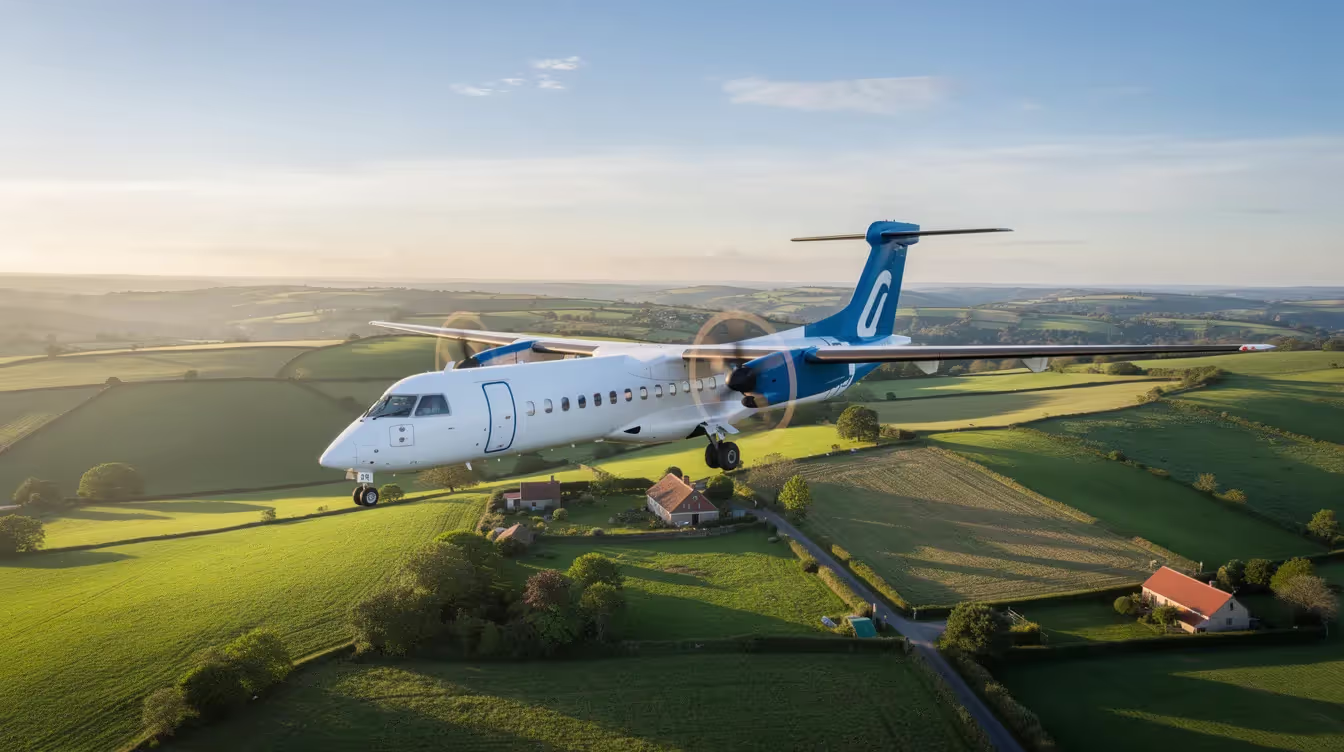
The Dornier Do 328 is a highly versatile civilian plane designed for regional airlines, known for its “third-generation” design that offers a blend of turboprop efficiency and jet-like performance. This twin-engine regional turboprop accommodates approximately 30 passengers and was introduced into service in 1993 after making its first flight in December 1991.
This guide is intended for aviation enthusiasts, charter clients, and industry professionals seeking a comprehensive overview of the Dornier Do 328’s history, technical features, and modern charter applications.
The terminology is straightforward: “Dornier 328” and “Do 328” refer to the turboprop models, which include several variants: the Do 328-100, the initial production model introduced in 1993; the Do 328-110, offering increased operational range and weights; the Do 328-120, designed to enhance Short Take-Off and Landing (STOL) capabilities; and the Do 328-130, featuring improved high-speed rudder functionality. The Dornier 328JET denotes the later turbofan variant. The original design goal centered on delivering jet-like speed and comfort with turboprop economics on regional routes up to 1,000 nm, allowing the plane to fly efficiently at higher cruise speeds.
Today, the aircraft continues operating with regional airlines, government agencies, and charter operators, supported by 328 Support Services and Deutsche Aircraft. The Dornier Do 328 can fly at a maximum service ceiling altitude of 31,000 feet, giving it strong high-altitude performance. On platforms like Jettly, the Dornier 328 fills the gap between large turboprops and regional jets—ideal for corporate groups, sports teams, or shuttle operations.
The Dornier 328 is a 30-seat regional turboprop certified in October 1993, combining turboprop efficiency with near-jet speed for short-haul routes up to 1,850 nautical miles.
Introduced as a civilian regional airliner after its first flight in December 1991, the Dornier Do 328 also has military variants, such as the C-146A Wolfhound, highlighting its dual civilian and military roles.
A total of 217 units were produced by 2000.
Originally developed by Dornier Luftfahrt GmbH, the program passed through Fairchild Dornier GmbH and now sits with Deutsche Aircraft-related entities for support and future development.
Key strengths include short-runway capability, flexible cabin layouts for corporate shuttles and special missions, and cost-efficient group transport.
The family includes turboprop variants (328-100/110/120/130) and the jet-powered Dornier 328JET, with the D328eco representing the next generation under Deutsche Aircraft.
Travelers can charter Dornier 328 aircraft on-demand through Jettly’s marketplace with transparent pricing and digital booking.

The Dornier 328 originated at Dornier Luftfahrt GmbH in Germany during the late 1980s. Design work progressed through Deutsche Aerospace (DASA), targeting competition with the ATR 42 and Dash 8. The aircraft achieved its maiden flight on December 6, 1991, from Oberpfaffenhofen, with JAA certification following in October 1993.
In 1996, Deutsche Aerospace sold the majority of Dornier Luftfahrt GmbH to Fairchild Aircraft, and Fairchild Dornier GmbH was formed as a new manufacturer aiming to become a major player in the regional aircraft market. This expansion brought the program to North America and yielded orders from carriers like United Express.
As a manufacturer, Fairchild Dornier produced several variants of the Dornier Do 328:
Do 328-100: Initial production model introduced in 1993
Do 328-110: Increased operational range and weights
Do 328-120: Enhanced Short Take-Off and Landing (STOL) capabilities
Do 328-130: Improved high-speed rudder functionality
A total of 217 units were produced by 2000, including both turboprops and the jet derivative. The Dornier 328JET, previously known as the Do 328-300, replaced turboprop engines with turbofan engines for different operational needs. Plans for stretched models like the 428JET were part of Fairchild Dornier’s broader regional jet strategy.
The original production run ended with Fairchild Dornier's bankruptcy in 2002. Subsequently, AvCraft Aviation acquired the rights to the Dornier 328 and 328JET models, but this company also went bankrupt within three years. In June 2006, 328 Support Services GmbH obtained the type certificate for the Dornier 328 and has since provided maintenance, repair, and overhaul services for the existing fleet.
The Dornier 328 was engineered for high cruise speed, smooth handling, and short-field performance. Its modern airframe incorporates a supercritical wing derived from the Dornier 228, with composites comprising up to 20% of the structure to reduce weight and noise.
Length: 21.11 m (69.3 ft)
Wingspan: 20.98 m (68.8 ft)
Height: 7.25 m (23.8 ft)
Fuselage: Three-abreast cabin cross-section with pressurized, wide-bodied cabin
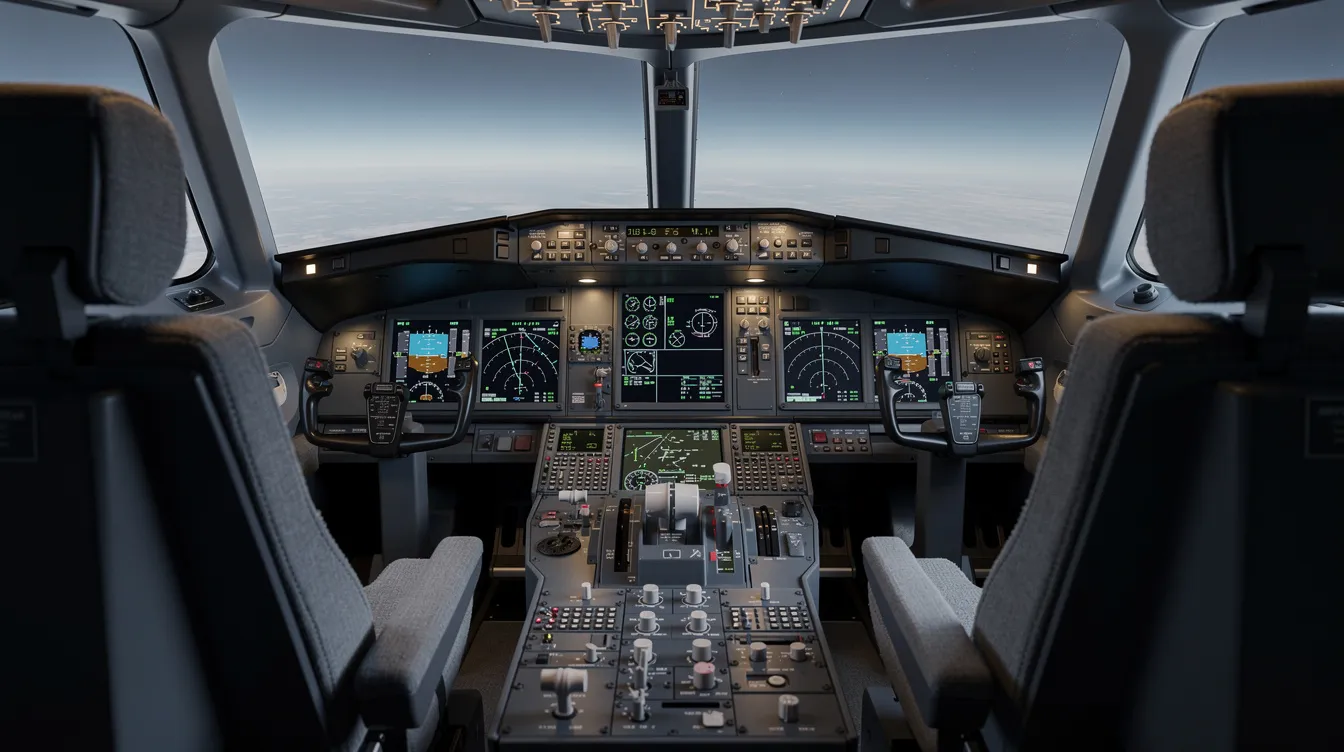
The flight deck is fitted with a two-crew glass cockpit featuring Honeywell Primus 2000 EFIS, five CRT displays, integrated weather radar, and TCAS. The instrument panels displayed in the cockpit provide pilots with essential flight data. This avionics suite supports modern navigation standards and aligns with current safety expectations.
The Dornier Do 328 is powered by two Pratt & Whitney Canada PW119B turboprop engines, each producing 2,179 horsepower and driving six-bladed propellers. These power plants deliver efficient regional cruise with low noise profiles.
Maximum cruising speed: 620 km/h (385 mph / 335 knots)
Service ceiling (altitude): 31,020 ft (9,455 m)
Maximum range: approximately 1,850 nautical miles (3,400 km)
The retractable landing gear includes high-flotation tires and gravel guards, enabling operations from short and semi-prepared runways—valuable for remote airports in private charter scenarios.
The Do 328 features a pressurized, wide-bodied cabin offering a height of 6ft 2in, contributing to passenger comfort. Stand-up headroom throughout makes movement easy during flight.
Standard 30-seat regional layout
High-density commuter arrangements
Corporate shuttle with fewer seats and increased legroom
Medevac and combi layouts with cargo plus seating
The Do 328 is suitable for various roles, including regional passenger transport, corporate shuttle, and special missions. Typical amenities include a flight attendant on many operations, a large baggage hold (approximately 260 cubic feet for skis, golf clubs, or equipment), and a full lavatory. The aircraft's design allows for efficient loading and unloading of luggage or equipment, making it ideal for group charters and special missions. Additionally, an optional galley is available to enhance in-flight service, which can be complemented by dedicated in-flight catering for private jets.
For private and group charters through Jettly, the Dornier 328 offers cost-efficient per-seat pricing for 20-30 travelers and access to smaller airports closer to final destinations, and travelers can use Jettly’s private jet charter cost estimator to model pricing versus smaller jets.
Corporate shuttle between regional business hubs
Sports team transport to cities with shorter runways
Family leisure trips to ski resorts or island airports
While a light jet serves 6-8 passengers with speed, the Dornier 328 moves larger groups with similar block times on sub-1,000 nm sectors, often at lower total cost per passenger; travelers comparing options can benefit from a broader guide to affordable airplane rent costs and options.
Peak airline use occurred in the late 1990s and early 2000s, with the plane serving as a regional feeder for major operators across Europe and North America, including United Express and US Airways Express affiliates, often alongside narrowbodies such as the Boeing 737-800.
Special-mission roles expanded the aircraft’s footprint. In 2005, the Australian Maritime Safety Authority awarded a contract to AeroRescue to provide long-range search and rescue capability using five Dornier 328-100s, which were fitted with advanced electronic sensor suites and capable of 24-hour response operations.
The Dornier Do 328 has been utilized by the United States Air Force as the C-146A ‘Wolfhound’, a military variant with approximately 20 airframes procured for special operations requiring austere field access.
By August 2019, there were 58 Dornier 328 turboprops and 50 jets in service, with the largest operators being the US Air Force (20 units) and Danish carrier Sun-Air (12 units) operating under British Airways franchise. Other major operators include German charter operator Private Wings and U.S.-based Ultimate Jetcharters, alongside operators flying larger narrowbodies such as the Boeing 737-800 for private charter.
This versatile plane can fly from a wide range of places, including semi-prepared and remote runways, making it adaptable for operations in challenging environments. Its operational flexibility has also made it suitable for international deployments, such as military exercises and disaster response scenarios in the Philippines, similar in some mission profiles to long-range widebodies like the Boeing 767-300ER.
Remaining aircraft concentrate in niche roles: corporate transport, ACMI charter work, government logistics, and medevac missions. Spares, maintenance, and upgrades flow through 328 Support Services, keeping the type viable for charter fleets on platforms like Jettly, whether serving European shuttles or Asian city pairs, such as private jet charter in Kolkata, West Bengal.

The legacy Dornier 328 connects to modern plans under Deutsche Aircraft, a manufacturer with significant global reach in the world of regional aviation, targeting lower emissions and higher efficiency for regional operations.
The rights transition proceeded through several stages: AvCraft’s post-Fairchild Dornier involvement, acquisition by 328 Support Services GmbH, and ultimately the formation of Deutsche Aircraft. In 2015, Sierra Nevada Corporation acquired 328 Support Services GmbH and initiated plans to manufacture a modernized version of the Dornier 328, known as the D328eco, which is set to include advanced avionics and improved performance. In addition, the manufacturer has focused on expanding production capabilities and forging new partnerships to support the D328eco program.
Stretched fuselage by approximately 2 meters for roughly 40 passengers
Modern Pratt & Whitney Canada PW127XT-S engines
Target cruise around 600 km/h at 30,000 ft ceiling
Production planned at Leipzig/Halle Airport in Germany
The D328eco, introduced by Deutsche Aircraft, is an environmentally-friendly variant that utilizes a power-to-liquid SAF engine scheme relying on green hydrogen. Additionally, improved fuel efficiency, lower CO₂ per seat, and sustainable aviation fuel compatibility position modern turboprops for eco-conscious regional networks.
If the D328eco enters service as planned, it could eventually join charter fleets, offering groups a quieter, more sustainable alternative for sub-1,000 nm trips bookable through digital platforms like Jettly and its wider private charter aircraft marketplace.
The following table summarizes key specifications for the standard Dornier 328-110 turboprop variant:
|
Specification |
Value |
|---|---|
|
Wingspan |
20.98 m (68.8 ft) |
|
Length |
21.11 m (69.3 ft) |
|
Height |
7.25 m (23.8 ft) |
|
Cabin Height |
1.87 m (6 ft 2 in) |
|
Max Cruise Speed |
620 km/h (335 kt) |
|
Service Ceiling |
31,020 ft |
|
Range |
1,000-1,100 nm (30 pax) |
|
Powerplant |
2x PW119B (2,179 shp each) |
|
Propellers |
Six-blade Hartzell |
|
Typical Seating |
30 passengers |
Compared to aircraft like the Embraer EMB-120 Brasilia or Saab 340, the Dornier 328 typically exceeds competitors in cruise speed and cabin comfort while maintaining similar turboprop economics.
In practice, the Dornier 328 frequently appears on regional routes linking business centers such as Houston, Texas, with private jet charter services and surrounding secondary airports.
Within Jettly’s global inventory of 20,000+ aircraft, the Dornier 328 sits in the regional turboprop category rather than classic business jets, and tools like the airport locator platform help match the aircraft to suitable regional fields.
Common charter missions include corporate shuttles between secondary airports, group incentives, sports team logistics, and ad-hoc series charters during peak demand, with some itineraries taking advantage of Jettly’s ability to crowdsource private jet flights and share empty seats. While hourly rates exceed smaller turboprops, the cost per seat for 20-30 passengers remains competitive versus multiple light jets or commercial options.
Booking through Jettly offers instant pricing requests, visibility into operators flying the type, and quick comparison with alternative aircraft categories. Convenience features include custom departure times, smaller airport access, tailored catering, and coordinated ground transportation, all of which are enhanced for frequent travelers through Jettly’s private jet memberships.
Ready to explore regional turboprop charter options? Visit https://www.jettly.com to request a quote, or review Jettly’s overview of affordable private jet charter costs to understand typical pricing drivers.
Original Dornier 328 turboprop production ended in the early 2000s after Fairchild Dornier’s bankruptcy. No new classic 328 airframes are being built. However, 328 Support Services GmbH and Deutsche Aircraft manage support, maintenance, and upgrades while developing the modernized D328eco—a redesigned evolution rather than a production restart.
For travelers planning multiple regional trips each year, Jettly’s jet card flight cost estimator can help compare block-hour pricing with ad-hoc charter.
The Dornier 328 turboprop offers typical maximum seating of approximately 30 passengers in standard regional configuration, making it a mid-size option compared with wide-body types like the Airbus A330-300. Charter operators may provide high-density layouts near this maximum or more spacious corporate arrangements with fewer seats. Exact seating can be confirmed during the quote process on Jettly based on the specific aircraft.
Heavy users of regional charter might pair the Dornier 328 with Jettly’s jet card programs for corporate travelers, securing predictable hourly rates across aircraft categories.
On sub-1,000 nm routes, block times between the Dornier 328 and many light or midsize jets are often comparable due to the 328’s short-field performance and efficient climb. Key differences include the turboprop noise profile versus jets, larger cabin volume and baggage space on the 328, and better economics for groups of 20-30. Smaller parties of 4-8 travelers may prefer a light jet such as the Cessna 340 for privacy and speed.
Travelers needing frequent access to remote fields can also browse Jettly’s broader private charter aircraft portfolio to match aircraft performance with specific runway requirements.
Short-field and semi-prepared runway capability ranks among the Dornier 328’s strengths. High-lift wing design, powerful turboprops, and reinforced landing gear with gravel guards enable access to regional, island, or mountainous airports unsuitable for certain jets. Runway suitability depends on length, surface, elevation, and weather—always evaluated by operators during trip planning, with brokers like Jettly connecting clients to operators such as Dexter Air Taxi private jet services.
Individuals, travel advisors, or content creators who regularly refer new flyers to Jettly may benefit from joining the company’s ULTRA high-ticket affiliate program, earning commissions on qualifying bookings.
Submit your route, dates, and passenger count on Jettly’s platform. Review instant or rapid quotes that may include the Dornier 328, where available, then compare with other aircraft options. Jettly’s tools can filter for aircraft accommodating 20-30 seats with turboprop economics, and its jet card flight cost estimator can help frequent flyers gauge savings on recurring routes. Explore live availability and request a no-obligation quote at https://www.jettly.com.
The Dornier Do 328 remains a distinctive and practical choice for regional turboprop charter, offering a unique balance of speed, comfort, and operational flexibility. Its ability to serve short and semi-prepared runways, combined with a spacious cabin and efficient performance, makes it ideal for groups seeking cost-effective and convenient travel options. As the aircraft evolves with modern variants like the D328eco, it continues to align with industry trends toward sustainability and advanced technology.
For travelers and organizations interested in leveraging the Dornier 328 for their next trip, Jettly provides a seamless platform to explore availability, compare pricing, and book flights instantly. With access to a global network of aircraft and operators, Jettly simplifies private jet charter, making it accessible and transparent.
Ready to experience the convenience and efficiency of the Dornier Do 328? Explore flight options or request a personalized quote today at https://jettly.com/.
Share this post:
Jay Franco Serevilla
May 12, 2026
|
5
min read
Discover tips and trends in the industry.
5
min read
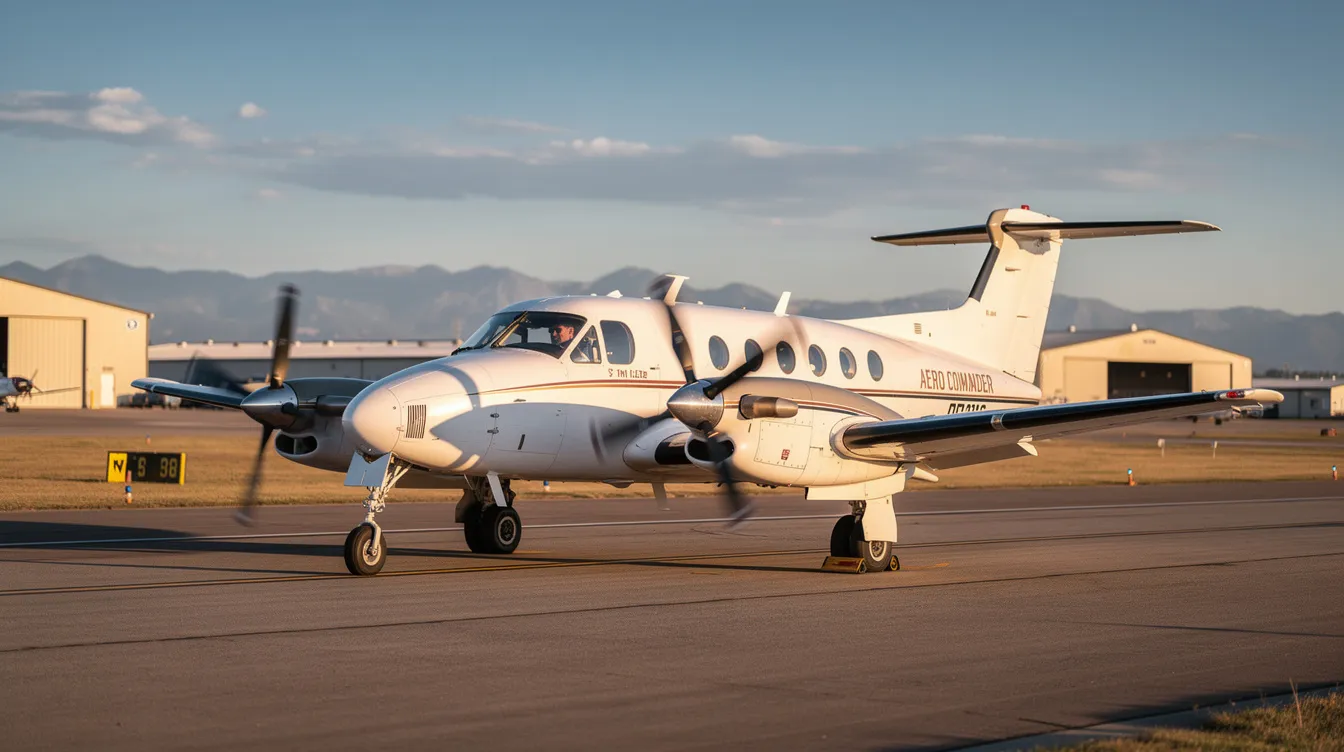
Aero Commander 690: Turboprop Charter Guide
The Aero Commander 690 is a versatile twin-turboprop aircraft ideal for regional charter flights, accommodating 5 to 9 passengers. Known for its short-field capabilities and cost-effectiveness, it offers a practical solution for business and leisure travel. With a range of approximately 1,790 miles and powered by reliable Honeywell engines, it's a popular choice for those seeking efficient air travel.
Read More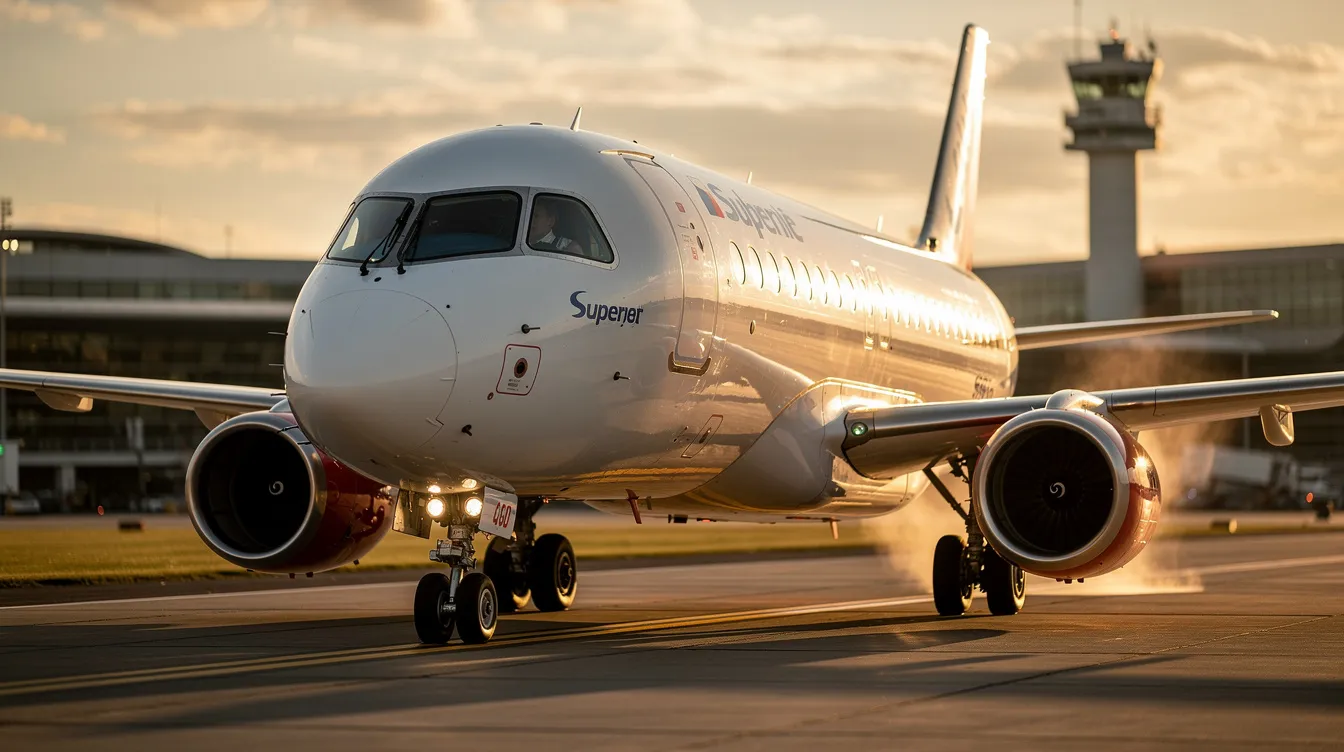
5
min read
Sukhoi Superjet SSJ100: Regional Jet Overview, Variants, and Charter Use
The Sukhoi Superjet SSJ100 is Russia's premier regional jet, designed for short to medium-haul routes with a capacity of 68-103 passengers. Despite its modern design and capabilities, the aircraft faces challenges due to sanctions and limited global support, impacting its international operations. This guide provides insights into its variants, charter use, and operational considerations for aviation enthusiasts and travel planners.
Read MoreStay updated with our latest insights and tips to elevate your journey with us.
MEMBERSHIPS AND ASSOCIATIONS



Disclaimer: Jettly operates as a charter broker, offering access to a global digital jet charter marketplace. Jettly is not a direct air carrier and does not own or operate aircraft. All advertised flights are conducted by third-party air carriers that are fully licensed and hold the appropriate Part 135 or Part 121 certifications issued by the Federal Aviation Administration (FAA) or equivalent regulatory authorities under U.S. or foreign law. Jettly complies fully with the U.S. Department of Transportation's Part 295 and Part 298 Charter Broker regulations. Jettly does not carry additional liability insurance. Passengers are covered by aircraft operator insurance. TICO: 50023770


