


Login
Get Instant Pricing On 23,000+ Aircraft

>
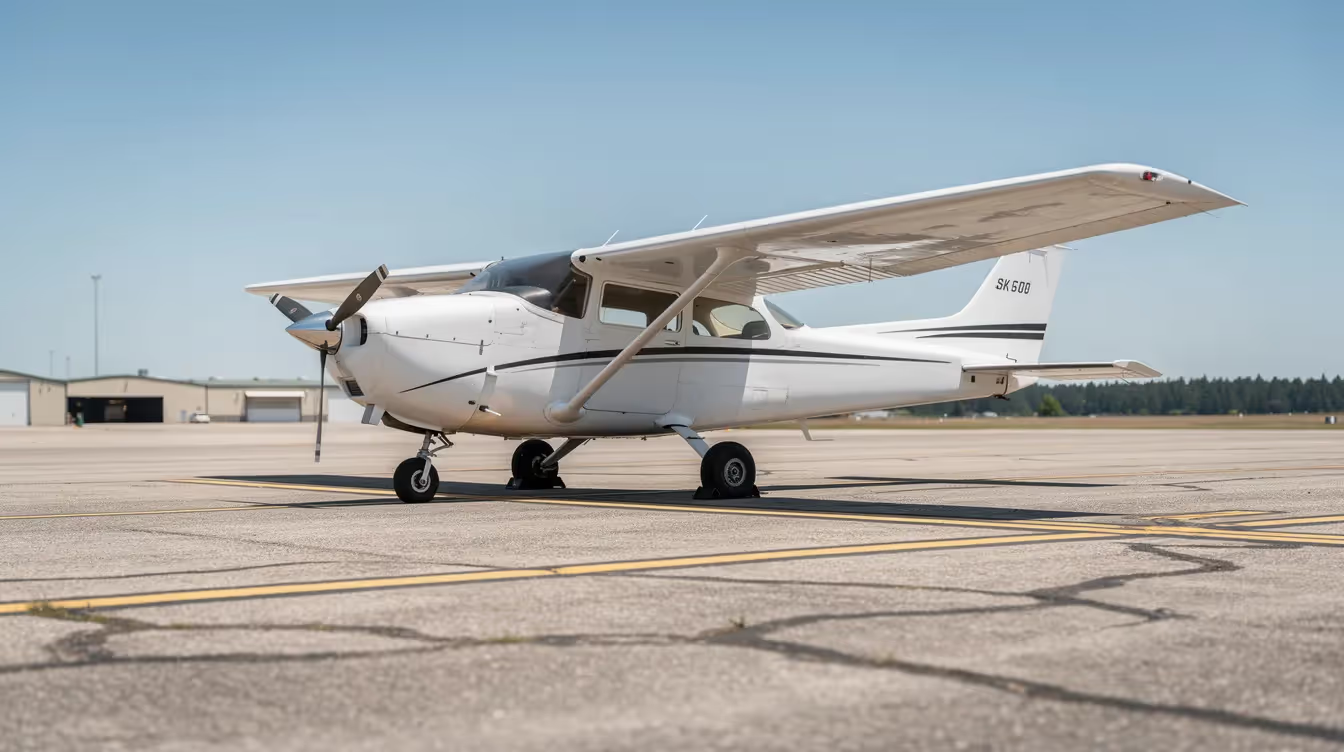
The Cessna 172 Skyhawk holds the record for the highest production number in aviation history, with over 44,000 units built since 1955—a testament to its popularity and success. For pilots, flight students, and aviation enthusiasts alike, one of the most common questions about this iconic trainer is straightforward: how many seats does a Cessna 172 have? The answer is four—but the practical reality involves more than just counting cushions.
The Cessna 172 Skyhawk is a four-seat, single-engine aircraft, including the pilot. This configuration has remained consistent across decades of production, from early models to the current 172S manufactured by Textron Aviation.
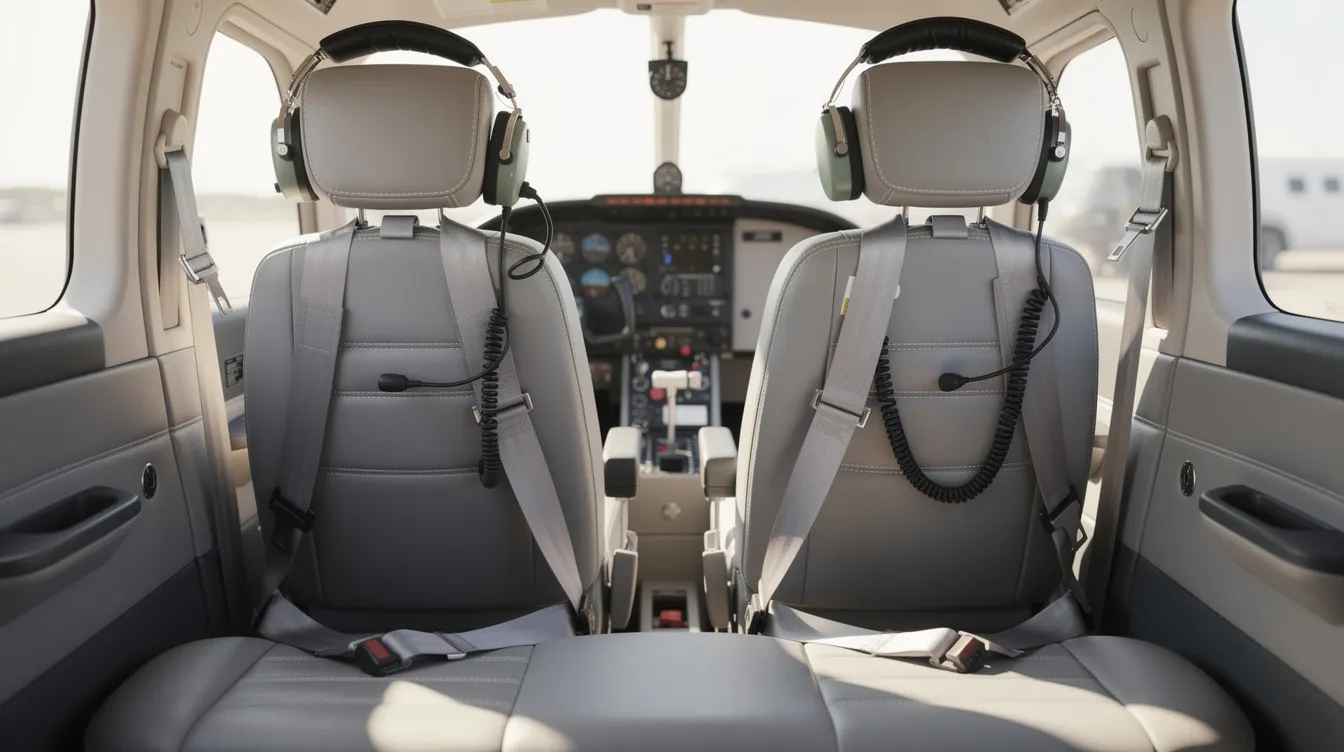
The typical seating layout includes two individual front seats (pilot and front passenger) and a rear bench designed for two additional passengers, certified for a maximum of four occupants under normal operations.
While the aircraft physically accommodates four people, actual passenger count is often limited by maximum takeoff weight, fuel load, and legal restraint requirements—not just available seats.
Practical passenger capacity in the Cessna 172 Skyhawk is often limited by weight, fuel, and balance considerations, making it comfortable for a pilot and 2-3 passengers depending on their weight and cargo.
The 172’s four-seat layout is standard among training aircraft and general aviation singles, but differs significantly from larger private charter aircraft available across the global fleet of private jets through platforms like Jettly, a private jet charter platform that offers on-demand access to a wide network of aircraft globally for business and leisure travel.
The Cessna 172 is a single-engine, high-wing aircraft with four seats that has been a fundamental part of flight training and personal aviation since its initial flight in 1955. Manufactured today by Textron Aviation, this successful aircraft continues production with the same fundamental cabin configuration that made it famous.
The Cessna 172 can accommodate a total of four occupants, including the pilot—this means one pilot and three passengers in standard operations.
Seating consists of two individual front seats for the pilot and one passenger, plus a rear bench designed for two additional passengers.
Common variants, including the 172N, 172R, and 172S Skyhawk, all maintain four-seat certification, even as interior trim, avionics, and seat materials evolved over production years. These models have used different engines throughout their history, with previous engines including both Continental and Lycoming types, reflecting changes in performance, power output, and fuel injection systems across various years and variants.
The Cessna Aircraft Company designed the 172 with simplistic flight characteristics that make it ideal for student pilots while remaining practical for cross-country travel.
Similar single-engine aircraft like the Piper PA-28 Cherokee and Cirrus SR20/SR22 also typically seat four, and many pilots evaluating the best plane for a family of four find this configuration standard for small-group personal aviation.
The Cessna 172 cabin offers a compact but functional four-seat layout that has proven practical for flight schools and private owners worldwide. Despite being designed primarily as a training aircraft, the interior provides adequate space for short to medium-length flights.
|
Cabin Dimension |
Measurement |
|---|---|
|
Height |
48 inches |
|
Width |
40 inches |
|
Length |
11 feet 10 inches (172S) |
The Cessna 172 features a spacious cabin that enhances the flying experience, allowing for easy access through two doors without the need to climb over the wings—a significant advantage over low-wing designs.
The seating layout places two adjustable front bucket seats forward, with the rear bench (sometimes split in newer models) providing space for two adults or two children plus luggage.
The interior of newer Cessna 172 models includes robust seats with dual USB ports, designed to support passengers throughout the flight and enhance comfort on longer trips.
Compared to smaller trainers like the Cessna 150/152, the 172’s extra cabin width and the ability to carry three passengers make it significantly more versatile for flight training that includes cross-country segments with observers, and it often serves as a reference point when exploring affordable airplane rental costs and options.
Integrated cockpit avionics in post-1998 Skyhawks include headset jacks and enhanced visibility through the high wing design, improving both training value and passenger experience.
Although the Cessna 172 has four seats, the practical limit on occupants stems from maximum takeoff weight, center-of-gravity range, and baggage capacity. Understanding these constraints is essential for most pilots operating this aircraft.
|
Weight Category |
Pounds (lbs) |
|---|---|
|
Maximum Takeoff Weight |
~2,550 |
|
Basic Empty Weight |
~1,691 |
|
Useful Load |
~859 |
|
Fuel Weight (Full) |
~318 (53 gal) |
|
Passenger Weight Limit |
~900 |
While the Cessna 172 has four seats, actual occupancy often depends on weight and balance considerations, especially when fuel tanks are full, just as trip distance and loading drive estimates in any private jet charter cost estimator.
The Cessna 172 is designed to hold around 900 pounds of passenger weight, allowing for four people with plenty of leg room—but only when fuel load is reduced accordingly.
With full usable fuel (~53 gallons at approximately 6 pounds per gallon), the fuel weight alone consumes about 318 pounds, leaving roughly 540 pounds for passengers and baggage.
A realistic example: four adults averaging 170 pounds each (680 pounds total) plus 318 pounds of fuel and 100 pounds of baggage equals 2,789 pounds—exceeding maximum gross weight by 239 pounds.
To stay legal and safe, pilots often must reduce fuel load when carrying four adults, trading range for passenger weight, much like travelers balance payload and distance when reviewing affordable private jet charter costs.
The Cessna 172 has a maximum climb rate of 730 feet per minute and a service ceiling of 14,000 feet, but these performance figures degrade significantly when operating near MTOW, especially at higher altitudes or in warm weather.
Proper weight-and-balance calculations are mandatory preflight tasks in both general aviation operations and structured flight training programs.
The question of how many seats can actually be used ties directly to fuel planning. Fuel and passengers share the same useful load, creating an either-or decision for pilots planning trips in this aircraft.
|
Fuel Specification |
Amount |
|---|---|
|
Total Fuel Capacity |
56 gallons |
|
Usable Fuel |
53 gallons |
|
Typical Fuel Burn Rate |
8-10 gallons/hour |
|
Maximum Range (full fuel) |
~640 nautical miles |
The Cessna 172 typically burns around 8-10 gallons of fuel per hour, allowing for about five hours of flight time before reserves, assuming optimal power settings and conditions.
Fuel consumption at cruise typically runs 8.5-9.5 gallons per hour at lean-of-peak settings, with higher fuel needs during climb phases at full rich mixture.
Example configuration with full fuel: a pilot and one adult passenger (340 pounds combined) plus full tanks stays well within limits, allowing maximum range for cross-country flights.
Alternative configuration: two adults plus two children (approximately 580 pounds total) with full fuel still works, while four 180-pound adults would require reducing fuel by 15-20 gallons.
For short local flights or pattern work during flight training, instructors routinely depart with partial fuel tanks (15-20 gallons) to maintain performance margins and teach load management.
Regulations require minimum fuel reserves—typically 30 minutes for day VFR or 45 minutes for night/IFR operations—so flight students learn to balance fuel capacity, route length, winds, and passenger weight during flight planning, often using tools similar to an airport locator platform when planning more complex trips.
The Cessna 172 is certified for four seats, and aviation regulations require each occupant to have their own approved seat and safety belt during critical phases of flight.
Under U.S. FAA rules (specifically FAR 91.107), each person must occupy an approved seat with an individual restraint properly secured during taxi, takeoff, and landing, with narrow exceptions for infants held on a parent’s lap.
Sharing one seatbelt between multiple older children or adults is generally considered unsafe and typically violates regulations, even if physical space appears adequate.
Placing passengers in the baggage compartment—which lacks certified seating and restraints—is illegal under modern regulations regardless of passenger weight or aircraft loading.
Some older 172s operating under previous regulations or foreign rules have historically allowed two small children to share the back seat bench, but modern best practice mandates one person per belt.
When required, an approved child seat can be installed in the rear, though proper documentation and compliance with aviation authority requirements are essential.
Insurance policies and operator standards at many flight schools may be stricter than minimum FAA requirements, further limiting how many passengers can be legally carried.
The aircraft’s type certificate data sheet (TCDS 3A12) explicitly approves the airframe for one crew member and three passengers, establishing the four-person limit regardless of physical space.
The four-seat configuration is central to why the Cessna 172 remains one of the best aircraft for flight training worldwide. This layout balances training utility with real-world applicability for new aircraft operations. Training with a new Cessna 172 offers additional advantages, such as modern avionics and enhanced reliability, making it especially attractive for flight schools and student pilots.

The Cessna 172 Skyhawk has been used to train more pilots than any other airplane in aviation history, making it the most popular training aircraft worldwide—a status directly tied to its practical seating arrangement.
Front dual controls allow the instructor and student pilot to share flying duties, while rear seats accommodate safety pilots, checkride examiners, or observers when weight permits.
Flight schools benefit from the 172’s versatility: training missions can include cross-country flights carrying friends or family members, making instruction more realistic and cost-effective, and providing real-world context for those later considering aircraft rental options and pricing.
The aircraft’s tricycle landing gear enhances stability and control during landing, making it easier for student pilots to operate, which contributes to its popularity as a training aircraft.
The Cessna 172 Skyhawk is well-regarded for its safety features, boasting a low fatality rate of 0.56 fatal crashes per 100,000 flying hours, which is significantly better than the industry average of 1.2-1.4.
High-wing design provides enhanced visibility during ground operations and slow flight maneuvers, helping flight students focus on procedures rather than aircraft handling.
The 172’s benign stall characteristics, relatively low ground roll requirements (approximately 1,630 feet at sea level), and forgiving top speed range make it ideal for pilots building foundational skills.
Many pilots transition from the four-seat Cessna 172 into more capable multi-seat aircraft, including light jets and turboprops available through platforms like Jettly, and later explore the broader charter airline and private aviation landscape, so comfort with crew and passenger management begins here.
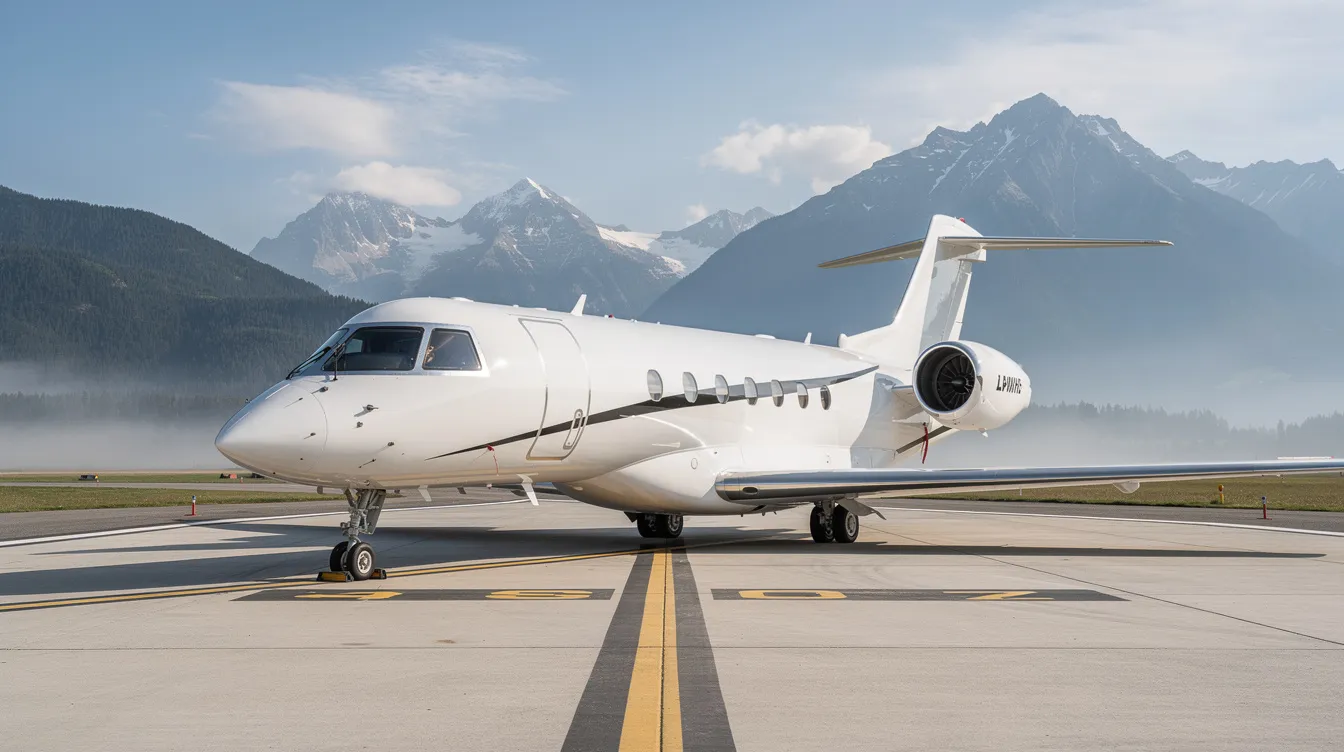
The Cessna 172 serves as an excellent trainer and personal aircraft, but its four-seat capacity represents the smaller end of the private aviation world. For travelers requiring more space, platforms like Jettly provide access to significantly larger aircraft.
|
Aircraft Type |
Typical Seating Capacity |
Cruise Speed (knots) |
Range (nautical miles) |
|---|---|---|---|
|
Cessna 172 |
4 |
120-125 |
~640 |
|
King Air 90 (Turboprop) |
7-9 |
~280 |
~1,200 |
|
Phenom 100 (Light Jet) |
4-5 |
390+ |
~1,200 |
|
Citation CJ3 (Midsize Jet) |
6-8 |
400+ |
2,000+ |
The Cessna 172 is a piston-powered single-engine aircraft cruising around 120-125 knots, while charter clients on Jettly typically select light jets or turboprops seating 6-9 passengers for faster, longer-range trips.
Twin-engine turboprops like the King Air 90 offer 7-9 seats with useful loads around 1,800 pounds and cruise speeds near 280 knots—dramatically exceeding the 172’s capabilities and illustrating the step up available in private charter aircraft fleets.
Light jets such as the Phenom 100 accommodate 4-5 passengers in pressurized comfort with 400+ nautical miles of additional range compared to piston singles, fitting well into Jettly’s role as a NetJets alternative for flexible private flying.
Midsize jets in the Citation CJ3 category provide 6-8 seats with 2,000+ nautical mile range, suitable for coast-to-coast travel that would require multiple fuel stops in a Cessna.
Example use case: a Cessna 172 flight from New York to Las Vegas would require 8+ hours with fuel stops, while a midsize jet covers the same route in approximately 4 hours direct, and certain aircraft even support international private jet operations over long distances.
Jettly’s digital platform offers transparent pricing, instant booking, and private jet membership options, making it simple for travelers to access a wide range of aircraft categories based on seat count, range, and price.
The Cessna 172 Skyhawk is commonly used for training, personal travel, and flight instruction, while families or executive groups who have outgrown four seats can use Jettly to charter larger aircraft for trips such as New York-Miami or Toronto-Vancouver.
When all four seats are occupied, careful flight planning becomes critical for maintaining safety margins and legal compliance. These considerations form the foundation of what flight students learn early in their training.
Key planning steps include calculating weight and balance for four persons, checking density altitude, estimating takeoff and landing distances, and confirming adequate runway length at departure and destination airports, often using an airport locator tool when operating into unfamiliar fields.
Fuel planning with full occupancy requires deciding how much fuel to carry based on flight distance, forecast headwinds, mandatory reserves, and the constraint of staying within MTOW, a similar balancing act to using a jet card flight cost estimator when planning longer private trips.
At high-density altitudes—such as a 5,000-foot elevation airport on a 90°F day—climb rates can drop below 400 feet per minute at max weight, potentially creating obstacle clearance concerns.
Pilots may choose cooler departure times, lower elevation airports, or more conservative power settings when operating near maximum weight to preserve performance margins.
The baggage compartment capacity (30 cubic feet) and weight limits must be factored alongside passenger weight to avoid aft CG conditions that could compromise elevator authority.
ForeFlight and similar electronic flight planning tools help pilots calculate weight and balance quickly, but understanding the underlying principles remains essential for safe operations and for interpreting outputs from any private jet charter cost estimator.
Private jet flight planning on Jettly involves similar considerations—operators balance passenger count, fuel load, runway performance, and weather—but with aircraft offering much higher payloads, cruise speeds, and range capabilities, as outlined in broader charter airline and private flight guides.
The Cessna 172 Skyhawk, produced by Textron Aviation Company, is a four-seat, single-engine aircraft whose practical passenger capacity depends on weight, fuel load, and regulatory requirements rather than simply counting available seats.
The 172’s cabin layout, fuel efficiency, air-cooled engine reliability, and forgiving handling characteristics—backed by Textron Aviation's reputation for safety and reliability—have made it the most successful aircraft in production today for flight training and personal aviation since the 1950s.
Its enduring popularity stems from the balance of four-seat utility, safety features, and simplistic flight characteristics that help student pilots build foundational skills.
While the Cessna 172 excels for training and short regional trips, travelers needing more seats, higher speeds, and greater range often turn to charter options, including turboprops and jets.
For those ready to explore private charter aircraft beyond the four-seat trainer world, Jettly offers instant access to over 20,000 aircraft worldwide with transparent pricing and convenient digital booking.
Ready to experience private travel on your terms? Explore flight options or request a quote at https://www.jettly.com.
This FAQ addresses common follow-up questions about Cessna 172 seating, weight limitations, and how this training aircraft compares to private charter options.
The Cessna 172 typically has four seats: two in the front for the pilot and co-pilot, and two in the rear for passengers.
The maximum useful load (including passengers, baggage, and fuel) varies by model, but is generally around 800-900 lbs (363-408 kg). Always check the specific aircraft’s weight and balance limitations.
While the Cessna 172 is primarily used for flight training and short leisure flights, it is not typically offered for luxury private jet charters. For private charter, larger aircraft with more seating and amenities are available through platforms like Jettly.
Yes, the Cessna 172 has a remarkable operational history. John Cook set a world record for flight endurance in a Cessna 172, staying airborne for over 64 days alongside Robert Timm. Additionally, specialized versions of the Cessna 172 and larger single-engine models like the Cessna 207 with increased seating capacity have been used for aerial surveillance missions by military and law enforcement agencies, including border patrol and reconnaissance operations.
No. The Cessna 172 is certified as a four-seat aircraft, and modern regulations require each occupant (beyond small infants on laps) to have their own approved seat and individual restraint system. Carrying five people would violate the aircraft’s type certificate and FAA regulations, regardless of whether the weight limits appear satisfactory. The certification explicitly lists “Maximum Occupants: 4,” and operating beyond this limit voids insurance coverage and creates significant legal liability.
Some owners have historically added an extra belt or child seat under supplemental type certificates (STCs) or foreign regulatory approvals, but such modifications require proper engineering, documentation, and aviation authority approval. Even with modifications, the aircraft’s certified seating capacity typically remains four. Any alteration should also be cleared with the aircraft’s insurer. Safety and legal compliance should always take precedence over attempting to squeeze in extra passengers, and those needing more capacity can instead consider sharing empty seats on private jet flights.
Two adults can sit in the rear bench, but legroom (approximately 28-30 inches) and shoulder room (40 inches) are modest. The back seat works well for shorter flights or smaller passengers, but tall adults over 6 feet may prefer the front seat on trips exceeding two hours. The Cessna 172 cabin dimensions are 48 inches in height and 40 inches in width, providing ample space for passengers during shorter flights but requiring realistic expectations for extended journeys, especially when compared with roomier six-seat cabins like the Cessna 340 business aircraft.
The 172 works well for small families—such as two adults and one or two children—for regional trips when weight and balance requirements are met, and weather conditions are suitable. The combination of wing area stability, two-door easy access, and four-seat capacity makes it practical for weekend getaways and short cross-country flights. For larger families, long-distance travel, or higher comfort expectations, chartering a larger aircraft through Jettly or partners like Zenflight private jet operator offers more seats, cabin space, and speed.
A typical light jet available through Jettly seats 6-8 passengers in a pressurized cabin with cruise speeds around 400+ knots and ranges exceeding 1,500 nautical miles—dramatically outperforming the 172’s 120-knot cruise and 640-nautical-mile range. The Cessna 172’s four-seat cabin and slower speed make it ideal for training and short hops rather than long business or luxury trips. Travelers interested in multi-seat private aviation can explore aircraft options and instant charter pricing at https://www.jettly.com.
The Cessna 172 Skyhawk remains a cornerstone in general aviation, offering a reliable, safe, and practical four-seat configuration that has made it the most popular training aircraft in history. Its balance of comfort, performance, and simplicity makes it ideal for student pilots, personal use, and short regional trips. However, for travelers seeking more seats, a greater range, and faster speeds, platforms like Jettly provide access to a diverse fleet of private aircraft worldwide. Jettly’s transparent pricing, instant booking, and wide selection of aircraft categories—from light jets to turboprops—offer a convenient solution for those ready to move beyond the four-seat trainer and experience private aviation on their own terms.
Ready to experience private travel on your terms? Explore flight options at https://www.jettly.com or learn about Jettly’s ultra-high ticket affiliate program if you want to earn by referring new private flyers.
Share this post:
Jay Franco Serevilla
May 12, 2026
|
5
min read
Discover tips and trends in the industry.
5
min read
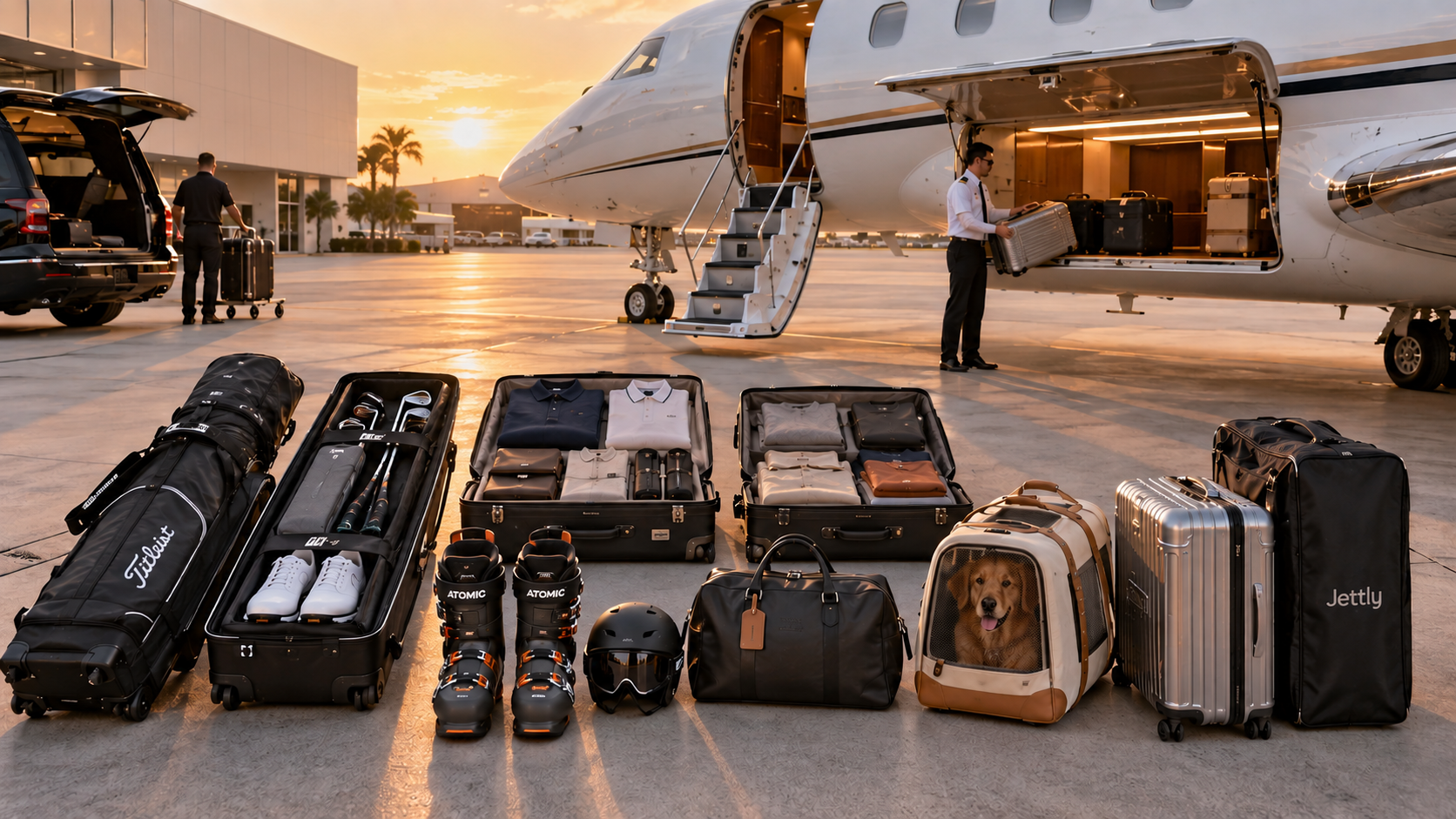
Private Jet Charter Baggage Limits: Luggage Allowance in 2026 (by Aircraft Class)
Understanding private jet baggage limits is crucial for a smooth travel experience, especially for first-time charter travelers. Unlike commercial airlines, private jet luggage policies vary by aircraft class and operator, focusing on baggage volume, weight, and fit through the baggage door. This guide provides insights into luggage allowances by aircraft class for 2026, helping travelers plan effectively.
Read More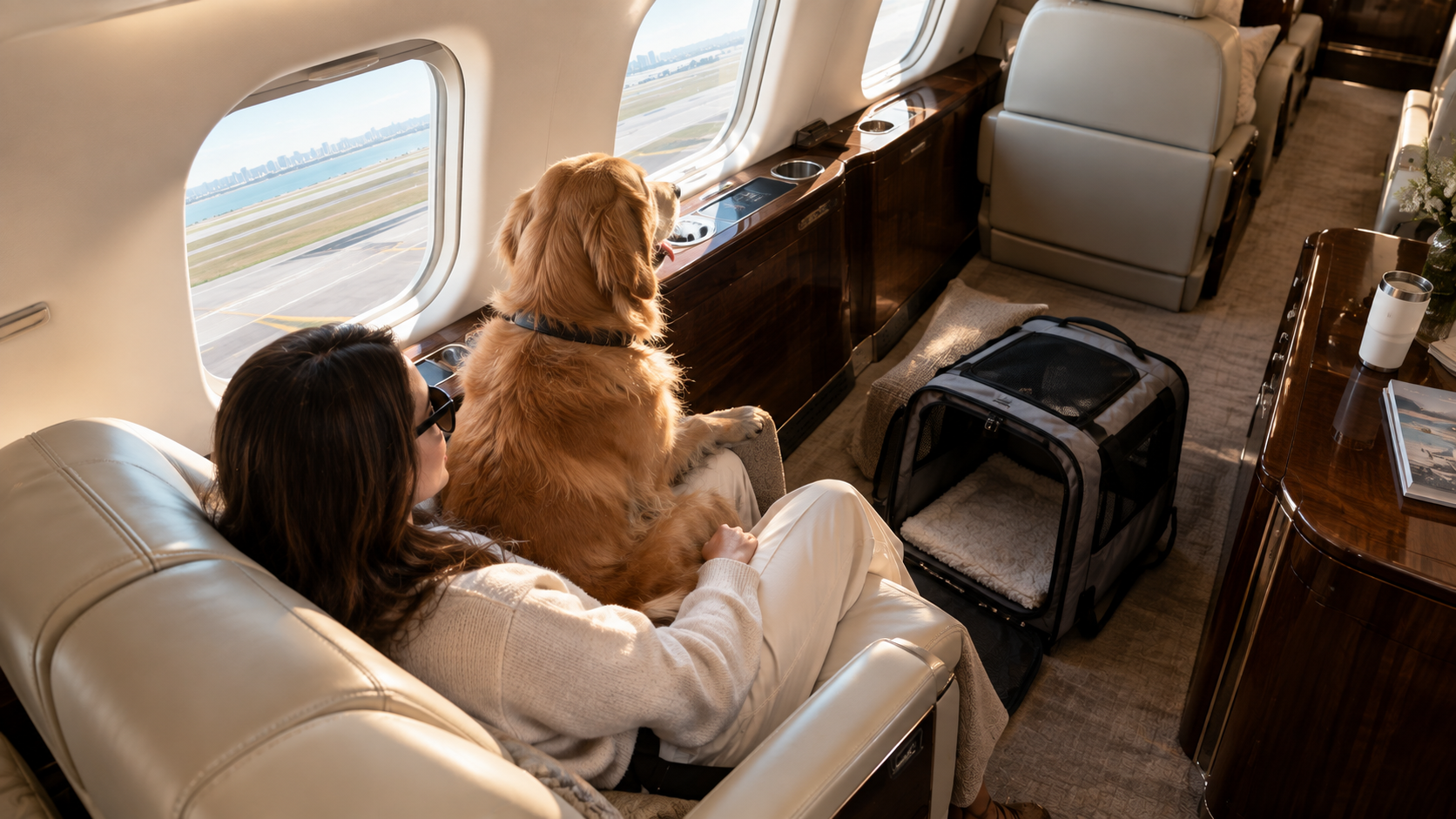
5
min read
Pets on Private Jets in 2026: Size Limits, Crate vs. Cabin Rules, and International Paperwork
This comprehensive guide for pet owners covers everything you need to know about flying with pets on private jets in 2026. It details size limits, cabin versus crate rules, and essential international paperwork to ensure a smooth travel experience. Understanding these guidelines helps avoid surprises and keeps your pet comfortable during the journey.
Read MoreStay updated with our latest insights and tips to elevate your journey with us.
MEMBERSHIPS AND ASSOCIATIONS



Disclaimer: Jettly operates as a charter broker, offering access to a global digital jet charter marketplace. Jettly is not a direct air carrier and does not own or operate aircraft. All advertised flights are conducted by third-party air carriers that are fully licensed and hold the appropriate Part 135 or Part 121 certifications issued by the Federal Aviation Administration (FAA) or equivalent regulatory authorities under U.S. or foreign law. Jettly complies fully with the U.S. Department of Transportation's Part 295 and Part 298 Charter Broker regulations. Jettly does not carry additional liability insurance. Passengers are covered by aircraft operator insurance. TICO: 50023770


