



Login
Get Instant Pricing On 23,000+ Aircraft

>
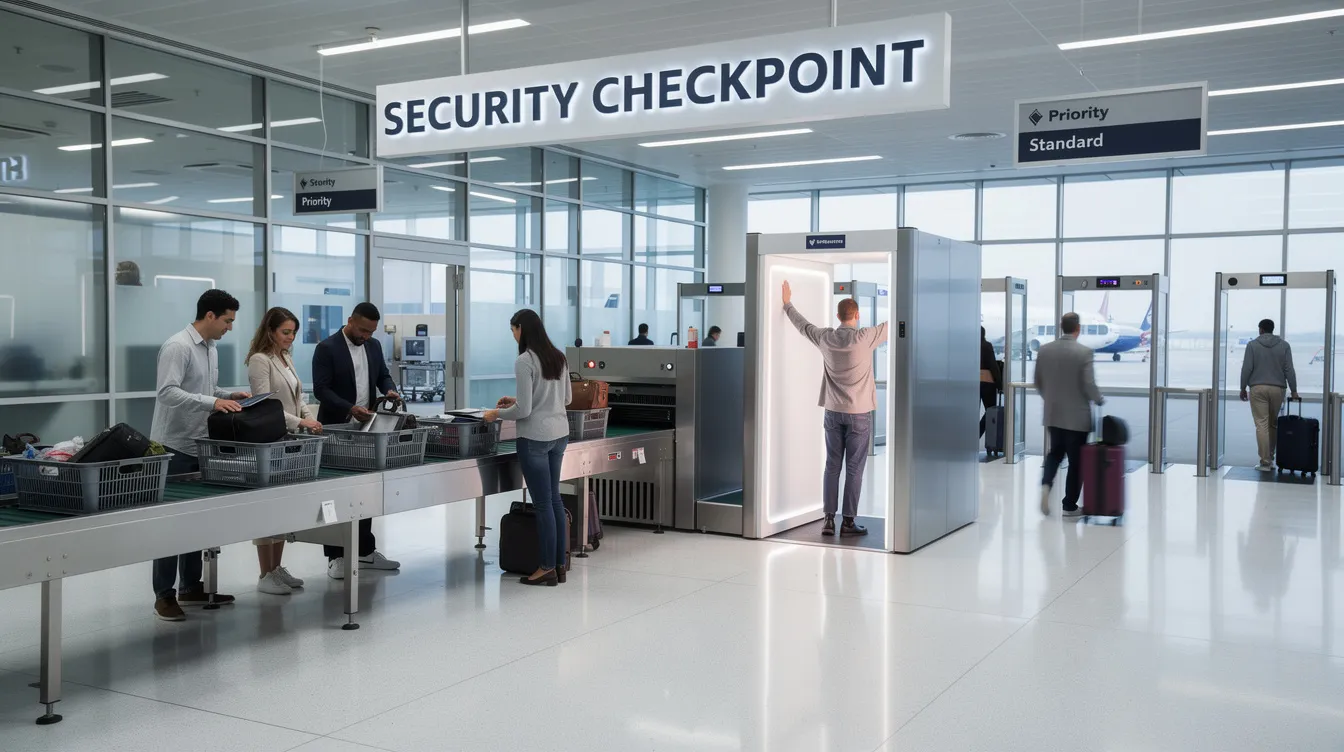
If you have ever wondered whether the Transportation Security Administration runs a full background check on you every time you fly, you are not alone. The short answer: TSA does not conduct background checks on standard passengers. Instead, it relies on a focused system of watchlist matching and physical screening to keep flights safe. This guide breaks down what actually happens behind the scenes when you arrive at the airport, what a real TSA background check looks like for those who do undergo one, and how private jet travel offers a different security experience.
Does TSA run background checks on passengers? Not in the way most people imagine. A "background check" in TSA's world can mean several things, from a quick name-against-watchlist scan to a full fingerprint-based criminal history review. Understanding the difference matters for anyone planning to fly, whether commercially or privately.
TSA does not conduct background checks on commercial passengers in the traditional sense. The standard security screening process uses the Secure Flight program, which matches passenger data against federal terrorism watchlists — not criminal databases, credit reports, or employment records.
Full security threat assessments involving fingerprinting and FBI criminal history review are reserved for specific groups: TSA PreCheck applicants, airport workers with secure area access, airline crew, Transportation Worker Identification Credential holders, and TSA employees.
Most criminal records, including many felonies, do not automatically prevent someone from flying as a regular passenger. Only specific disqualifying offenses — and placement on federal watchlists — limit access to certain programs or boarding itself.
Private jet charter platforms like Jettly follow FAA and TSA regulations, but the experience at private terminals (FBOs) is typically faster and more private, with security vetting handled primarily for operators, crew, and ground staff rather than passengers standing in long lines.
TSA does not run a full criminal background check on every passenger who walks through a commercial airport terminal. This is one of the most common misconceptions about aviation security.
Here is what actually happens. When you book a commercial flight, your airline collects your full name (as it appears on your government ID), date of birth, and gender. This passenger data is transmitted to TSA's Secure Flight program, which matches it against multiple terrorist watchlists - including the No-Fly List and Selectee List - maintained for national security purposes. TSA's primary passenger-vetting process focuses on identity verification and security watchlists, not on scanning your criminal history or financial records.
If a match is found, the passenger may be denied boarding or flagged for additional screening. If no match is found, you proceed normally.
At the security checkpoint itself, the screening process looks like this:
A TSA officer checks your ID and boarding pass
Your carry-on bags go through X-ray screening
You walk through a metal detector or advanced imaging technology body scanner
If an alarm triggers or you are randomly selected, a pat-down or secondary inspection may follow
None of these steps involve pulling up your criminal record, checking for outstanding warrants, or reviewing your financial history. Checkpoint screening by TSA does not check for local warrants or unpaid traffic tickets. The focus is on detecting physical threats — weapons, explosives, and prohibited items — not on running a pre-crime assessment of every traveler.
For a closer look at how TSA privatization could change screening procedures, Jettly covers the topic in a separate guide.
The word “check” can describe different processes. This comparison shows what each one is intended to do:
|
Process |
Who is screened? |
What it checks |
Typical timing |
|---|---|---|---|
|
Secure Flight |
Passengers booked on commercial flights |
Identity details matched against federal security watchlists |
Before travel, after booking data is submitted |
|
Airport checkpoint screening |
Passengers entering the secure area |
ID and boarding pass, bags, and physical items for prohibited threats |
At the airport |
|
TSA PreCheck security threat assessment |
People applying to TSA PreCheck |
Identity, fingerprints, criminal history, and security-related records |
Usually 3–5 days; some cases take up to 60 days |
|
Worker or airport credential screening |
TSA employees and workers needing secure-area access |
Identity, criminal history, and security threat assessment |
Often 30–45 days |
|
Private terminal process |
Private charter passengers |
Identity and reservation confirmation; requirements vary by operator and route |
Usually a shorter, operator-managed check-in |
These processes are not interchangeable. A watchlist match is not a review of a passenger’s entire criminal history, and physical screening is designed to find prohibited items rather than investigate personal records.
A TSA security threat assessment is a formal vetting process that goes well beyond what ordinary passengers experience at airport checkpoints. It is reserved for individuals who need elevated access or who are enrolling in programs that require deeper trust verification.
The core components of an STA include:
Identity verification using government-issued documents
Fingerprint collection submitted to the FBI for criminal history checks
Review of citizenship status and immigration documentation
Checks against government and private databases, including terrorism and national security watchlists
Assessment of any disqualifying offenses, both permanent and interim
STAs are required for TSA PreCheck enrollment, airport badge holders, airline crew, baggage handlers with access to secure areas, and Transportation Worker Identification Credential applicants. TWIC holders must also pass TSA background screening before being granted access.
These assessments focus on security related offenses and serious crimes - not minor civil infractions, old parking tickets, or very old misdemeanors unrelated to safety. The goal is to identify potential threats to the transportation system, not to penalize every past mistake.
The Secure Flight program is the backbone of TSA's passenger vetting for commercial air travel. Mandated by the Intelligence Reform and Terrorism Prevention Act of 2004, it shifted watchlist matching from individual airlines to a centralized government process managed by TSA.
Here is precisely what information TSA collects and how it is used:
Your full legal name, exactly as it appears on your ID
Your date of birth
Your gender
Your redress number, if you have one (used to prevent misidentification)
Secure Flight matches passenger data against government watchlists maintained by the Terrorist Screening Center, part of homeland security infrastructure. These include the No-Fly List and Selectee List.
What the Secure Flight program does not do is equally important:
It does not pull full criminal records
It does not check credit scores or property records
It does not access employment history or past travel itineraries in a broader sense
It does not run a traditional criminal background check
In short, Secure Flight is a narrow risk assessment designed to catch national security threats. If your name, date of birth, and gender do not match a watchlist entry, you are cleared. No fingerprinting, no deep data dive.
For ordinary passengers, TSA officers at the airport checkpoints do not run on-the-spot criminal history searches when you hand over your ID. They verify that your identity matches your boarding pass and confirm your Secure Flight status. That is it.
Full criminal history review using fingerprints and FBI databases occurs only when someone applies for programs or jobs that require a TSA security threat assessment. If you are simply buying a ticket and clearing security, your criminal background is not part of the equation.
Having a criminal conviction does not automatically prevent someone from flying. A decade-old DUI, a past theft charge, or even certain felony convictions generally will not stop you from purchasing a ticket, clearing security screening, or boarding a commercial aircraft.
The exception: convictions tied to terrorism, aviation security threats, or certain federal crimes can lead to placement on watchlists, which indirectly affects your ability to fly. For example, a conviction for attempting to sabotage an aircraft would very likely result in No-Fly List placement. But a conviction for money laundering from 15 years ago, while serious, would not automatically appear on TSA's radar during routine checkpoint screening.
The distinction matters. TSA's checkpoint role is physical screening — detecting weapons, explosives, and prohibited items. Criminal background checks are a separate process reserved for specific vetting programs.
Permanently disqualifying offenses are specific crimes that bar someone from obtaining certain TSA-regulated credentials or participating in trusted traveler programs — often for life. These do not necessarily prevent someone from walking through a standard commercial security line, but they close the door on elevated access.
Examples of permanently disqualifying offenses include:
Espionage, treason, or sedition
Federal crimes of terrorism, including hijacking, bombing, or similar acts
Improper transportation or use of explosives or weapons of mass destruction
Serious violations related to transportation security incidents or hazardous materials laws
Offenses involving transportation system disruption on a large scale
Permanent disqualifying offenses include terrorism and espionage convictions, and a conviction for any of these results in a lifetime bar from TSA positions, airport secure-area badges, TSA PreCheck, TWIC, and similar programs.
Even with such a conviction, a person might technically appear at an airport. But federal watchlists, No-Fly restrictions, and other national security controls can block boarding independently. The two systems - credential eligibility and watchlist status - work in parallel but are not identical.
Interim disqualifying offenses are crimes that lead to a temporary denial of credentials or program membership. Unlike permanent bars, these come with a defined lookback window — typically seven to ten years from the date of conviction or release from incarceration.
Examples of interim disqualifying offenses include:
Certain assault convictions
Firearms violations
Robbery or burglary
Fraud or forgery
Drug trafficking where incarceration exceeded 365 days
Immigration violations resulting in criminal conviction
These offenses affect access to TSA jobs, airport badges, or TSA PreCheck enrollment. They do not automatically remove the right to fly on a commercial ticket. Once the lookback period expires and any terms of incarceration or probation are complete, individuals may become eligible again for certain TSA-regulated roles, subject to reevaluation.
Waiver paths exist in some cases. Applicants who can demonstrate rehabilitation or present mitigating circumstances may have interim disqualifying offenses considered on a case-by-case basis. The duration since the offense, its severity, and the applicant's conduct since then all factor into the decision.
TSA PreCheck is a trusted traveler program that grants access to expedited security screening lanes at participating airports. Unlike the same process every commercial passenger goes through, TSA PreCheck requires a formal security threat assessment — including a real background investigation.
The enrollment process works like this:
Complete an online application and pay the enrollment fee (roughly $78 to $85, depending on the provider)
Schedule and attend an in-person interview at an authorized enrollment center
Present identity documents (passport, driver's license, or equivalent)
Provide fingerprints for FBI criminal history review
Consent to checks against terrorism watchlists and, where relevant, citizenship status or immigration documentation
Background checks for TSA PreCheck include fingerprinting and criminal history review. TSA PreCheck applications typically take 3 to 5 days to process. However, some TSA PreCheck background checks may take up to 60 days when records are complex, identity mismatches exist, or FBI response times are delayed.
Once approved, travelers receive a Known Traveler Number and can use PreCheck lanes, which typically involve keeping shoes on, leaving laptops in bags, and skipping some of the more invasive physical screening steps.
Approval is not permanent in the sense that it cannot be revoked. If new criminal offenses or security concerns arise, TSA can suspend or revoke PreCheck status.
All TSA employees undergo rigorous background screening before being hired. The same applies to a wide range of airport and airline workers.
Airport staff with secure area access must pass TSA background checks. This includes airline crews, baggage handlers, ground crew, vendors operating airside, and anyone else who needs unescorted access to secure areas of an airport.
The typical vetting process involves:
Employment application and identity verification
Fingerprint collection
FBI criminal history check
Security threat assessment including watchlist and federal database review
Issuance (or denial) of an airport ID badge for secure area access
These background checks are revalidated periodically. Many airports and programs now use the FBI's Rap Back system for continuous monitoring, which flags any new criminal offenses after the initial check. This means a baggage handler or airline crew member who passes an initial check but later commits a disqualifying crime can have their access revoked.
Failing a background check for airport employment prevents access to secure areas but does not always affect a person's ability to fly as a paying passenger. The two systems operate on different tracks. For more on how private jet safety ratings apply to crew and operator vetting, Jettly offers a detailed breakdown.
Certain TSA-regulated roles and credentials are limited to U.S. citizens, U.S. nationals, or lawful permanent residents. Citizenship status is verified as part of the background check for these programs.
Here is how it breaks down:
TSA PreCheck applicants must provide proof of citizenship or legal status (U.S. passport, naturalization certificate, or permanent resident card)
TWIC and airport badge applicants face similar requirements, including alien registration or I-94 documentation for noncitizens
Workers without valid immigration status are generally ineligible for secure-area credentials
For ordinary passengers, citizenship status does not determine whether TSA runs a criminal history check. Foreign nationals departing from U.S. airports go through the same checkpoint procedures as U.S. citizens. Any additional immigration screening happens at borders and customs — handled by agencies like U.S. Customs and Border Protection, not TSA.
Immigration status interacts with program rules and federal regulations, but it is not the sole factor in whether someone faces a more intensive screening process.
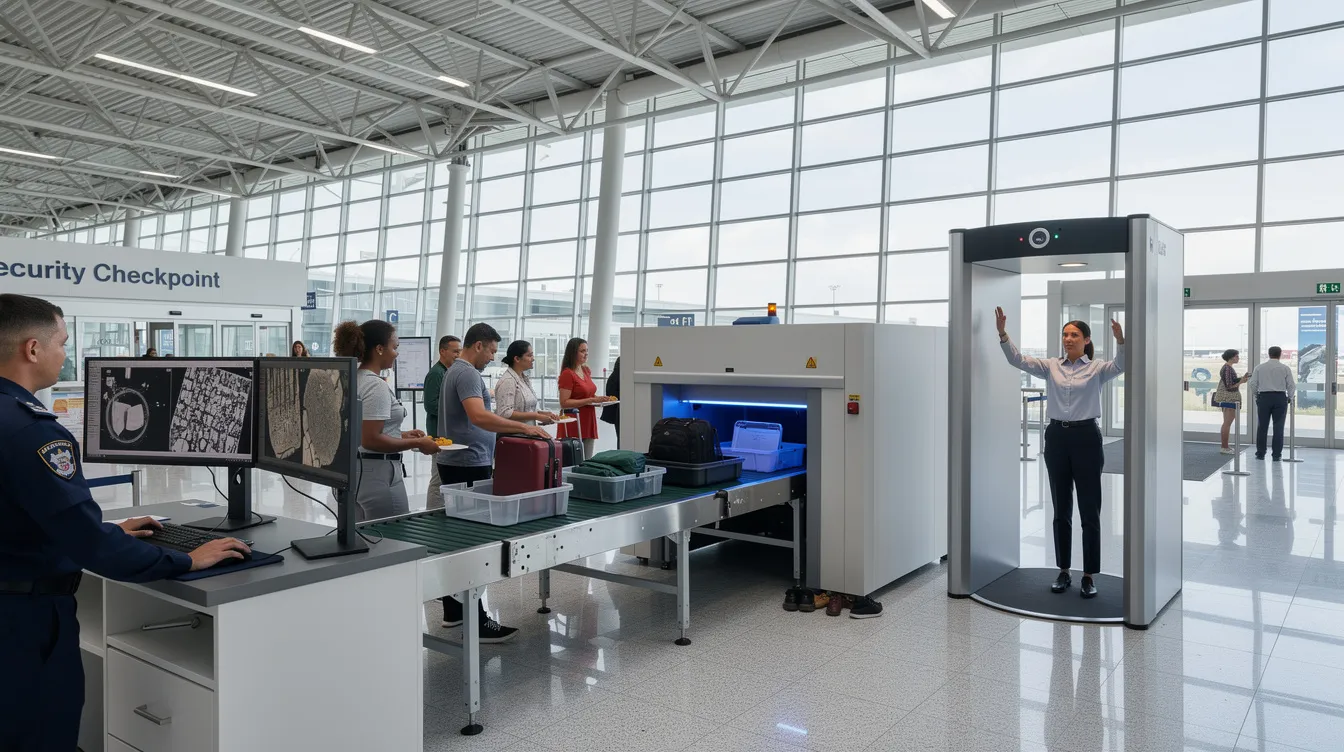
The TSA implements a multi-layered security approach to screen passengers at airports. The equipment used at checkpoints is designed to detect physical threats, not to perform background checks.
Here is what each piece of equipment does:
Standard luggage screening includes X-ray and computed tomography technology for prohibited items, scanning carry-on bags for weapons, explosives, and other banned objects
Walk-through metal detectors catch metallic items on a person's body
Advanced imaging technology (body scanners) creates images that highlight anomalies without exposing the passenger's physical characteristics in detail to the officer
Explosive trace detection swabs test for chemical residues
TSA uses identity verification technology, including facial comparison systems at checkpoints, particularly through Credential Authentication Technology (CAT) units that verify IDs and match them to reservation data
Liquids rules, electronics screening, and random selection for additional screening all fit within this physical security strategy. None of these tools access criminal databases. If an item or anomaly is flagged, TSA may conduct a manual bag search or pat-down — still a physical screening measure, not a gateway to your personal history.
Processing times vary significantly depending on the type of check:
Secure Flight watchlist matching: happens near-instantly, within seconds to minutes of the airline submitting your booking data
TSA PreCheck enrollment: most applicants are processed within 3 to 5 days, though complex cases can extend to 60 days or more
TSA background checks typically take 30 to 45 days for airport roles, including SIDA badge holders, TWIC applicants, and airline crew credentialing
Periodic re-vetting for existing workers may happen every five years, with ongoing monitoring via FBI Rap Back
Think of it as minutes versus weeks. The fast Secure Flight check covers every ticketed passenger. The longer, deeper checks apply only to those seeking credentials, employment, or trusted status.
If you are applying for TSA PreCheck or a worker credential, the best advice is to apply early - especially before busy travel seasons - and ensure your name, date of birth, and identity documents are consistent across all records to avoid delays.
If TSA denies someone's security threat assessment for PreCheck, an airport badge, or another credential, the agency issues written notice. That notice includes the reasons for denial and instructions on how to appeal or request a waiver.
The Traveler Redress Inquiry Program (DHS TRIP) serves a different purpose. It is designed for travelers who believe they have been wrongly watchlisted, misidentified, or repeatedly subjected to enhanced screening - such as consistently seeing a code indicating "SSSS" on their boarding pass. Filing a TRIP inquiry allows DHS to review the case and, if warranted, correct the issue.
Key points about the process:
Some interim disqualifying offenses may qualify for waivers if the applicant demonstrates rehabilitation or mitigating circumstances
Appeals and waivers are reviewed case by case and can take several weeks or months
The process is administrative, not adversarial - but expectations should be realistic about timelines
Travelers can consult legal counsel for personalized advice, especially for complex cases involving both criminal history and immigration concerns
Federal watchlists are a central tool in aviation security. TSA uses federal watchlists to screen passengers, and the No-Fly List is part of TSA's watchlist system. These lists are maintained by the Terrorist Screening Center and interface with the Secure Flight program before boarding passes are issued.
If a passenger's information matches a Selectee List entry, their boarding pass may be printed with "SSSS" - Secondary Security Screening Selection. This means:
More thorough pat-downs at the checkpoint
Detailed inspection of carry-on and checked bags
Possible additional questioning
Travelers flagged by watchlists may undergo enhanced screening each time they fly until the issue is resolved. Being on a watchlist is not the same as having a criminal record. Many people with criminal histories are never placed on these lists, and some people with no criminal history end up flagged due to name similarities.
Mistaken identity can cause false matches on watchlists, especially with common names. If this happens repeatedly, DHS TRIP is the primary avenue for resolving the misidentification and getting a redress number assigned.
In most cases, a criminal record - including many felonies - does not automatically prevent someone from flying domestically or internationally as a ticketed passenger. TSA does not conduct background checks on commercial passengers during routine screening.
Exceptions exist, and they are worth understanding:
Court orders or parole/probation restrictions may legally prevent travel outside a jurisdiction
Outstanding warrants could lead to arrest at the airport if law enforcement identifies you, though TSA itself is not checking for warrants
Active cases involving serious crimes may include bail conditions that prohibit air travel
Severe security-related criminal offenses may lead to federal watchlist placement, which can prevent boarding
Consider a practical scenario: someone with an old theft conviction planning a family vacation will have no trouble buying a ticket and clearing security. TSA does not see that conviction at the checkpoint. But someone under active probation with a no-travel condition could face legal consequences for attempting to fly, regardless of TSA.
International travel adds another layer. Entry requirements at the destination are governed by that country's laws - some countries deny entry based on certain criminal offenses. TSA's role remains the same at departure, but border protection and immigration authorities abroad apply their own rules.
Finding a prohibited item in your bag - an oversized bottle of shampoo, a forgotten pocket knife, a small tool - usually results in confiscation, a brief conversation with TSA, and a return to your gate. It does not trigger an automatic deep dive into criminal databases.
Clear threats to aviation or national security are handled differently. Attempting to bring a firearm or explosive device through security can result in immediate law enforcement involvement. At that point, local or federal authorities - not TSA checkpoint officers - may run a full criminal background check, initiate an arrest, or conduct a background investigation.
TSA's immediate focus at the checkpoint is physical screening. If officers suspect a crime in progress (e.g., false documents, intentional smuggling of dangerous items), they call law enforcement. Those agencies have the authority and tools to access federal databases, run risk assessments, and make arrests. TSA officers at the checkpoint do not have that same access for routine travelers.
Routine mistakes are handled with proportional responses. Intentional security violations escalate quickly. The two are treated very differently.
TSA operates under the Privacy Act and undergoes regular oversight from DHS privacy offices. The data TSA collects is governed by published Privacy Impact Assessments and Systems of Records Notices.
For standard passengers, TSA collects only minimal information through Secure Flight: name, date of birth, and gender. It is unclear precisely how long certain passenger records are retained, but published privacy assessments indicate that watchlist match data and past travel reservations are stored under defined retention schedules.
For STA programs (PreCheck, worker credentials), additional data is collected - fingerprints, citizenship documentation, the applicant's identity details - and stored with appropriate access controls.
Important limits:
TSA does not have unlimited access to all personal records. It cannot pull your tax identification number for routine screening or access property records, credit reports, or employment files for regular passengers.
Background checks are tied to specific programs or roles with a clear security rationale
Passengers can request corrections through DHS TRIP or FOIA requests, though classified or sensitive information may be withheld
Private companies that operate as charter brokers or FBOs do not receive TSA's passenger screening data
Commercial flights require standardized TSA screening for all passengers. Every person flying from a commercial terminal goes through the same process: ID check, carry-on scan, body scan or metal detector, and potential secondary screening. The system is designed for high volume, and it works — but it is not fast or private.
Private aviation operates differently. Flights departing from Fixed Base Operators (FBOs) or private terminals use a more personalized security model. Passengers still present ID and go through reservation confirmation, but there are no long lines, no centralized TSA checkpoints in the commercial sense, and no mass screening queues.
Private jet passengers experience faster security at private terminals, and tools like Jettly's airport locator platform make it easier to choose convenient departure and arrival points. The experience typically involves arriving 30 to 45 minutes before departure, verifying identity with the FBO or operator, and boarding directly.
However, private flights are not outside federal oversight. Aircraft operators and crew still undergo background checks and security threat assessments required for their roles. FAA Part 135 operators are audited. Pilots need current certifications. Safety and security compliance happens behind the scenes, even if the passenger-facing experience feels seamless.
For a deeper comparison, Jettly's guide on whether private jets go through TSA covers the regulatory details, and understanding Part 135 charter companies and their safety framework helps clarify how operators are vetted behind the scenes.

Jettly is a digital private jet charter marketplace that connects travelers with a global network of certified third-party aircraft operators. It is a charter broker, not an airline - meaning the flights are operated by properly certified carriers who must comply with all applicable FAA and TSA regulations.
What that means for security:
Operators on the Jettly platform maintain crew certifications, undergo security threat assessments, and ensure their pilots and staff pass required background checks
Private jet travel involves security vetting of operators and crew, so clients benefit from vetted professionals without personally undergoing TSA checkpoint procedures
Flights typically depart from FBOs, providing controlled access, quick identity verification, and fewer public interactions compared with busy commercial terminals
For corporate executives, high-net-worth travelers, and frequent flyers, these advantages go beyond security. Direct routing, flexible departure times, controlled passenger lists, and access to an extensive range of over 20,000 private charter aircraft worldwide make private charter a practical tool for managing time and privacy.
Learn more about Jettly's approach to secure air charter and how operators are vetted for safety and compliance.
Chartering a private jet through Jettly can significantly reduce time spent navigating security screening, especially at large hubs during peak travel seasons. The difference is tangible.
Consider two scenarios:
An executive flying between New York and Miami for same-day meetings. At a commercial terminal, arriving 90 minutes early, clearing TSA lines, and navigating the terminal adds hours. At a private terminal, arriving 30 to 45 minutes before departure, a quick ID check, and direct boarding mean more productive time and less time standing in line.
A family traveling from Toronto to Vancouver for a holiday. With young children and bags, commercial security screening is stressful. A private charter simplifies the process to a brief check-in at the FBO, no removing shoes, no separate liquids bag, no crowded queues.
In both cases, FAA Part 135 operators are audited for safety. Crew must meet all TSA regulations and certification requirements. The security framework is intact — the friction is reduced.
For travelers who value time savings and predictability, this model offers a different way to fly without compromising on safety. Before booking, many passengers consult a private jet charter cost estimator to understand pricing. Jettly's guide on private jet privacy and security explores how this works in practice, and first-time flyers can reference the first-time flying private jet guide for a full walkthrough.

If you are worried about how your background might affect your ability to fly, here are practical steps to take:
Review your own records. Know whether you have any court-imposed travel restrictions, outstanding warrants, or probation conditions that limit movement. TSA will not flag these, but law enforcement can.
Apply for TSA PreCheck early if you are eligible. Delays happen when identity records are inconsistent or criminal history is complex. Make sure your name, date of birth, and gender match across all ID documents and reservations.
If you repeatedly receive "SSSS" or enhanced screening without explanation, file a DHS TRIP redress request. Misidentifications due to common names are documented, and a redress number can resolve the issue.
For low risk passengers who want more control and privacy in their travel day, private jet charter through platforms like Jettly offers a different security experience - compliant with federal rules but without the congestion of commercial terminals, especially when using flexible private jet membership programs to simplify booking.
Carry a valid government-issued ID, arrive prepared, and know that most travelers with past convictions face no issues at standard airport security.
For secure executive travel options that balance privacy with compliance, Jettly's dedicated guide covers the specifics, and corporate jet card programs can further streamline frequent private flying.
The following questions address common concerns and edge cases not fully covered in the sections above. Each answer is designed to stand on its own for readers who skip directly here.
No. TSA runs a Secure Flight watchlist check using your name, date of birth, and gender for every booked flight, but this is not a full criminal background check. It checks your data against terrorism and national security watchlists only.
Full background checks involving fingerprinting and FBI criminal history review happen only for specific programs and jobs — TSA PreCheck enrollment, airport badge applications, and similar credentialed roles. Regular checkpoint security screening looks for weapons and explosives, not for reasons to pull criminal histories.
Most travelers will never undergo a full TSA background check unless they actively apply for one of these programs.
TSA itself does not automatically block passengers from flying because of pending charges or probation. However, judges and probation officers can set travel restrictions as a condition of release or supervision.
Violating a court order about travel can lead to serious legal consequences - arrest, revocation of bail, or probation violation - even if TSA allows you through security screening. Travelers under supervision should confirm any travel plans with their attorney or supervising officer before booking.
Serious security-related charges, such as those involving economic disruption through terrorism, can also lead to watchlist placement, which may prevent boarding regardless of ticket purchase.
TSA uses similar Secure Flight watchlist checks for both domestic and outbound international flights departing from U.S. airports. The same process applies in terms of what TSA screens for.
Additional checks at borders - passport screening, immigration interviews, and entry assessments - are handled by U.S. Customs and Border Protection and foreign authorities, not TSA. Any criminal history or immigration checks upon arrival are governed by the destination country's laws.
Travelers with complex legal or immigration histories should review entry requirements for each country they plan to visit. For guidance on international private travel, Jettly's private plane international travel guide covers the details.
Denial from TSA PreCheck usually affects only access to the expedited screening lane. It does not prevent you from flying on a paid ticket.
Unless the denial is tied to a watchlist issue or other national security concern, travelers can continue using standard security screening lines at any commercial airport. TSA provides a reason for denial and, in some cases, instructions on appeal or reapplication after the disqualifying conditions change.
Serious permanently disqualifying offenses may also affect other transportation credentials, but this is separate from basic passenger rights on a commercial flight.
Private jet flights booked through Jettly still operate under FAA and TSA rules. Passengers are not exempt from national security requirements. However, the experience is different.
Security is handled at private terminals or FBOs, with ID checks and controlled access tailored to smaller passenger groups rather than large public checkpoints. Background checks for pilots, crew, and operators occur behind the scenes through regulatory compliance. Clients experience a streamlined process without skipping safety.
For travelers who prioritize privacy, speed, and predictability in security screening, private charter offers clear advantages, and Jettly's guide to affordable private jet charter costs explains how pricing works in practice. Explore options and get instant pricing at https://www.jettly.com.
TSA does not run full criminal background checks on everyday passengers. It uses Secure Flight watchlist matching to protect national security on every trip — a narrow, focused check that is very different from the fingerprint-based criminal history review required for TSA PreCheck, airport workers, and other credentialed roles.
Comprehensive security threat assessments apply mainly to trusted traveler programs and transportation workers. These are guided by specific disqualifying and interim disqualifying offenses, with defined lookback periods and waiver processes.
Most travelers with past convictions can still fly. Access to programs like TSA PreCheck may be limited by certain offenses, and court-ordered restrictions operate independently of TSA. But for standard commercial travel, your criminal history is not something TSA sees at the checkpoint.
For travelers seeking faster, more private security experiences - without sacrificing safety - private jet charter with Jettly offers a practical alternative. Operators and crew undergo the required background checks. Passengers benefit from FBO departures, controlled access, and far less time in security lines, while resources explaining how much a private jet really costs help set expectations.
Ready to experience private travel on your terms? You can review a comprehensive overview of charter airlines and private flight options to better understand the market, then explore flight options or request a quote at https://www.jettly.com.
Share this post:
Jay Franco Serevilla
Nov 9, 2026
|
5
min read
Discover tips and trends in the industry.

5
min read
flights for dogs
Flying with dogs on private jets offers a stress-free alternative to commercial airlines, allowing pets of all sizes to travel in the cabin with their owners. Private charters provide tailored aircraft options, ensuring comfort and safety while bypassing the risks associated with cargo travel. Jettly simplifies the booking process for pet-friendly flights, making it easier for pet owners to travel with their furry companions.
Read More
5
min read
Food Service for Airlines: How Jettly Elevates In‑Flight Catering
Jettly revolutionizes in-flight catering for private jets by offering fully customizable meal options tailored to passenger preferences. Unlike commercial airlines, Jettly connects travelers with specialized aviation caterers, ensuring a personalized dining experience that enhances the journey. From light snacks to gourmet multi-course meals, every detail is meticulously coordinated for maximum satisfaction.
Read MoreStay updated with our latest insights and tips to elevate your journey with us.
MEMBERSHIPS AND ASSOCIATIONS



© 2026 Jettly Inc. All rights reserved.
Disclaimer: Jettly operates as a charter broker, offering access to a global digital jet charter marketplace. Jettly is not a direct air carrier and does not own or operate aircraft. All advertised flights are conducted by third-party air carriers that are fully licensed and hold the appropriate Part 135 or Part 121 certifications issued by the Federal Aviation Administration (FAA) or equivalent regulatory authorities under U.S. or foreign law. Jettly complies fully with the U.S. Department of Transportation's Part 295 and Part 298 Charter Broker regulations. Jettly does not carry additional liability insurance. Passengers are covered by aircraft operator insurance. TICO: 50023770


