


Login
Get Instant Pricing On 23,000+ Aircraft

>

Private jet Wi-Fi has gone from luxury add-on to baseline expectation. For both business and leisure travelers considering private jet charter, understanding WiFi options is crucial. Business travelers rely on in-flight connectivity for productivity, such as video conferencing, accessing cloud documents, and staying in touch with teams. Leisure travelers value WiFi for entertainment, streaming, and staying connected with friends and family. Additionally, knowing what WiFi systems are available helps travelers control costs and avoid surprises, as connectivity options and charges can vary widely between aircraft and operators. Here is what travelers actually get in the cabin, what it costs, and how to make sure the aircraft matches the mission.
Many private jets have WiFi, but not all of them. Whether a specific aircraft offers in-flight WiFi depends on its category, age, installed hardware, and the route it flies. Modern midsize and large jets typically come equipped with Wi-Fi services. Small or light jets often lack Wi-Fi or have basic, low-speed systems. Older models across all categories may have no cabin connectivity at all.
In private aviation today, most super-midsize and large-cabin aircraft used for domestic flights and international flights offer onboard WiFi as either standard or optional. Very light jets may lack onboard internet or feature basic systems for low-bandwidth tasks like email. Turboprops used for short regional hops frequently skip connectivity hardware to keep operating costs down, so travelers often look closely at private charter aircraft categories when prioritizing connectivity.
Before booking, confirm Wi-Fi installation, quality, and usage policies, since private jet operators vary in onboard connectivity. Jettly's marketplace lets travelers filter and request aircraft with WiFi access and compare private jet providers by connectivity options during the quoting process, so there are no surprises after wheels up.
Private jets use two core technologies for in-flight Wi-Fi: air-to-ground (ATG) systems that rely on ground-based cell towers, and satellite internet connections that relay data through orbiting satellites. The sections below break down how each works, what speeds to expect, and what private jet WiFi cost looks like for passengers.
Cabin connectivity became a core expectation in private aviation around 2018, especially among business travelers running operations from the air.
CEOs join video calls mid-flight. Investment teams pull live market data. Legal departments review contracts on VPNs using personal devices while crossing time zones. High-end connectivity allows for video calls and streaming on equipped jets, turning the cabin into a functional office. With fewer passengers than commercial first class (often 4 to 16 seats), each user gets a larger share of available bandwidth in a quieter environment than on commercial airlines. Learn more about this shift in How High-Speed Wi-Fi is Transforming the Airborne Office.
Leisure travelers want WiFi too. Families stream Netflix on long flights. Teens game online. Couples post from weekend trips like Los Angeles to Las Vegas. WiFi connectivity reduces dead time on short domestic flights (New York to Chicago, 2 hours) and longer routes (Toronto to Vancouver, 4.5 hours) alike. Many Jettly clients request high-speed internet services and curated in-flight catering through Jettly Eats, so a charter flight doubles as a secure workspace or a connected family cabin.
Private jet internet services rely on two system types: air-to-ground and satellite-based systems. Air-to-ground WiFi uses ground-based cell towers to provide connectivity primarily over land. Satellite WiFi connects via orbiting satellites, enabling coverage over oceans and remote areas.
Air-to-ground WiFi works much like how cell phones hand off between towers as they move. Antennas on the aircraft connect to ground-based cell towers along the flight path, using ground-based systems over land. This connectivity system works well over covered land but drops coverage over oceans and remote regions without ground infrastructure.
Satellite WiFi uses satellite communication to connect the aircraft to satellites in orbit, which relay data to ground stations. Satellite Wi-Fi can provide coverage over oceans and remote areas where no cell towers exist. Three satellite bands matter:
Ku-band: older geostationary systems with moderate speeds
Ka-band: newer geostationary systems with higher throughput
LEO (low-Earth orbit): constellations like Starlink Aviation delivering lower latency and faster speeds
Well-known service providers in business aviation include Gogo AVANCE for ATG and Viasat Jet ConneX or Honeywell JetWave X for satellite. When Jettly sources an aircraft, the installed WiFi system and the service provider on that tail number matter more than the aircraft brand alone for real-world flight connectivity.
ATG is common on light jets and some midsize jets flying frequent routes like Dallas to Houston or New York to Boston. Air-to-ground systems offer speeds of 3 to 10 MB per second under typical conditions, with peaks up to about 25 Mbps in ideal tower density.
That speed range handles email, messaging, web browsing, and standard-definition video calls when few devices share the onboard router. Coverage extends across the continental US, southern Canada, and parts of Western Europe, then fades roughly 50 miles offshore, creating coverage gaps beyond land-based reach.
Pros: Lower hardware and WiFi cost, lighter weight, simpler installation, less aircraft downtime. ATG is attractive for cost-conscious charter operators and short-range missions.
Cons: No service over oceans or remote regions, where coverage gaps limit ATG on overwater and remote segments. Performance drops in congested airspace when many aircraft share the same tower cell. The WiFi signal disappears on any overwater segment.
Jettly customers planning purely domestic flights with moderate data usage can often choose ATG-equipped aircraft to balance cost and WiFi availability, using tools like Jettly’s airport locator and on-demand charter platform to match routes with suitable connectivity.
For long-range missions like New York to London, Dubai to Nice, or Los Angeles to Honolulu, these aircraft often offer in-flight internet via satellite-based cabin connectivity, including on international and remote routes. Large-cabin aircraft and heavy jets flying these routes are more likely to have satellite internet, and larger jets are more likely to carry advanced satellite systems in general, similar to the connectivity standards seen with industry leaders like NetJets.
Ku-band operates in the 12 to 18 GHz frequency range. It provides download speeds between 3 MBps and 12 MBps with high latency (500 to 600 ms round trip). Fine for email and light browsing; weaker for real-time video conferencing. Satellite WiFi speeds on private jets using Ku-band range from 3 to 20 Mbps depending on congestion.
Ka-band operates in the 26.5 to 40 GHz frequency range, delivering 25 to 100+ Mbps on well-equipped aircraft. Ka-band WiFi allows faster speeds suitable for HD video calls, multiple simultaneous streams, and large file transfers. Providers like Viasat (Jet ConneX) dominate this segment.
LEO systems such as Starlink Aviation and Gogo Galileo offer the newest satellite connection technology. Low-Earth orbit systems can provide speeds from 40 to 220 Mbps with latency under 100 ms, making Zoom or Teams calls feel closer to ground-based broadband. Jettly can source jets equipped for international travel with Ka or LEO satellite systems for clients who need always-on internet connectivity on transoceanic routes.
Speed on a private jet depends on the connectivity system installed, the number of users, the route, and the operator's subscription plan. Older air-to-ground or satellite systems have limited speeds and higher latency. Connectivity performance varies based on network technology and flight route.
|
System Type |
Typical Download Speed |
Latency |
Best For |
|---|---|---|---|
|
ATG (Gogo AVANCE) |
3-10 Mbps |
Under 100 ms over land |
Email, browsing, messaging |
|
Ku-band GEO satellite |
3-12 Mbps |
500-600 ms |
Email, light browsing |
|
Ka-band GEO satellite |
25-100+ Mbps |
Higher but workable |
HD video calls, streaming |
|
LEO satellite (Starlink, Galileo) |
40-220+ Mbps |
Under 100 ms |
Multiple HD streams, VPN, large files |
For comparison, average US household internet speed in 2026 sits around 100-200 Mbps. LEO-equipped private jets approach that range. ATG and Ku-band fall well short. Wi-Fi quality depends on the aircraft's installed connectivity hardware, and streaming services may be restricted on older or less capable systems.
Multiple personal devices in the cabin (phones, tablets, laptops) share the same satellite WiFi speeds. Smart onboard routers can prioritize business-critical traffic (VPN, video calls) over background streaming. Jettly travelers should communicate connectivity priorities in advance so the charter team matches WiFi performance to mission needs, whether flying via traditional operators or leveraging Jettly as a NetJets alternative with flexible aircraft access.
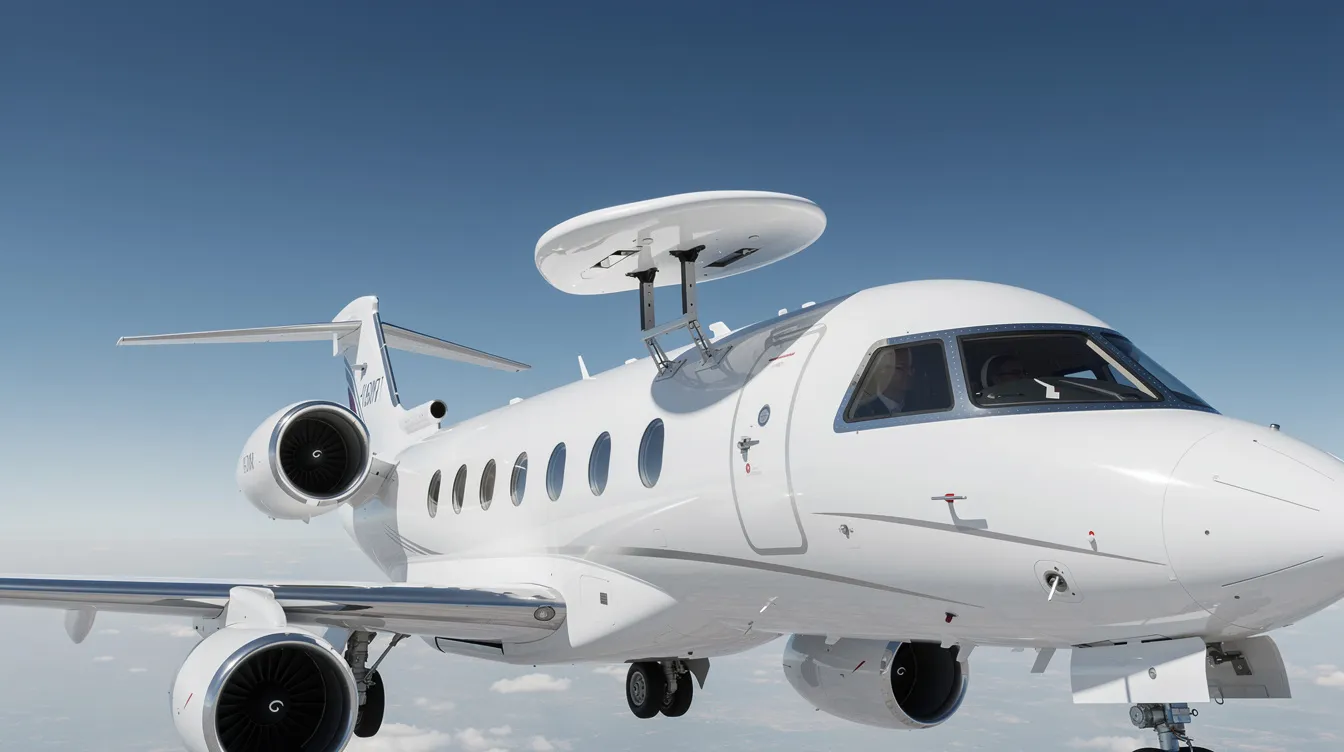
Not every private jet has WiFi. WiFi availability and functionality differ by aircraft size and type. Heavy and long-range jets are more likely to have advanced satellite systems. Light jets and turboprops vary. Flight route, aircraft age, and technology installed all impact Wi-Fi reliability. Not every private aircraft with Wi-Fi provides reliable connectivity for all tasks.
Jets delivered after roughly 2015 in midsize and larger categories were typically factory-fitted with built-in internet capabilities or pre-wired for easy installation. Older aircraft may carry legacy Ku-band hardware or no system at all.
Since about 2022, retrofit activity has accelerated. VistaJet, for example, selected Gogo Galileo for a fleet-wide retrofit announced in October 2025, reflecting broader trends among the top private jet charter companies investing in upgraded connectivity. Retrofits require structural work (antenna mounts on the fuselage), Supplemental Type Certificates (STCs), and aircraft downtime, which is why not every charter aircraft upgrades at the same pace, even among major operators and branded services like Dexter Air Taxi powered by Jettly’s broker platform.
Jettly's platform and support team highlight whether an aircraft has WiFi, what type of connectivity system is installed, and whether it suits the customer's planned route, functioning alongside broader resources like Jettly’s guide to charter airlines and private aviation options.
Private jet WiFi cost splits into two layers: what aircraft owners pay and what charter passengers see on their invoice.
Operator-side costs:
Installation ranges from roughly $225,000 on light jets to $350,000-$400,000+ on large-cabin aircraft for Ka-band or LEO systems
Starlink Aero terminal hardware alone runs about $145,000
Monthly data subscriptions for global unlimited plans cost approximately $20,000 per month
Passenger-side costs:
Wi-Fi services on private jets can be billed separately or included in the charter price. WiFi costs on private jets range from $3 to $15 per megabyte on metered plans. International satellite WiFi typically costs $7 to $10 per megabyte. Some operators charge $50 to $100 per hour for satellite WiFi as a flat hourly rate. WiFi may be included in the overall flight cost by some providers, especially on newer heavy jets. Costs can reach thousands of dollars for extensive data usage on metered satellite plans, so some travelers consider shared charter flights versus full charters to balance privacy, cost, and connectivity.
Use Jettly's charter cost estimator to get a baseline, explore jet card pricing with fixed hourly rates, then ask the team during quoting whether WiFi service is included, metered, or restricted. Confirm policies in writing to avoid surprise charges on longer journeys.
What passengers can do online depends on the installed system and how much data the operator's subscription plans allow. Those looking to lower overall trip costs might also consider crowdsourced and shared private jet flights, where empty seats are sold to reduce the per-passenger expense without sacrificing connectivity.
Work tasks (Ka-band or LEO recommended):
Secure corporate email and cloud document collaboration (Google Workspace, Microsoft 365)
VPN access to corporate networks
HD video calls for board meetings or client pitches
Large file uploads and downloads
Entertainment tasks: On some itineraries, travelers can further reduce per-seat cost by using shared-seat and semi-private booking options while still enjoying onboard WiFi.
HD streaming movies on Netflix or Amazon Prime (Ka/LEO systems) while taking advantage of accessible ways to get a private jet seat
Music streaming, social media browsing
Light online gaming for frequent travelers or children
With modern Ka or LEO satellite systems, multiple passengers can stream or join calls simultaneously. ATG systems handle one or two high-bandwidth activities at a time before service quality degrades. On large cabin aircraft used for long-haul trips, cabin connectivity also supports smart lighting, temperature control, and onboard content servers.
Jettly advisors can recommend specific aircraft types when clients specify mission profiles like "flying office" vs. "family entertainment hub." By leveraging Jettly’s global private charter aircraft inventory, it becomes easier to match WiFi capabilities with the mission profile. For more on how to charter a private jet that fits your connectivity needs, Jettly's team walks through options during the quote process.
Jettly is a digital private aviation platform connecting travelers with a global inventory of over 20,000 aircraft, including regional offerings such as private jet charter services in Atlanta, Georgia. Many of those aircraft offer high-speed Wi-Fi, and the platform's instant pricing tools can flag WiFi availability, aircraft category, and route range so customers can shortlist jets that match their internet access needs. Frequent flyers can further streamline this process through Jettly’s private jet membership programs, which prioritize access to suitable aircraft and connectivity.
Jettly's team can verify the specific WiFi system on a tail number, whether it runs ATG or satellite, Ka-band or LEO, and advise whether it is appropriate for routes like New York to Miami, Toronto to Vancouver, or London to Dubai. For frequent travelers, tools like Jettly’s jet card flight cost estimator and membership options provide more predictable access to aircraft with reliable connectivity, transparent pricing, and consistent service standards.
Choosing the right connectivity option reduces downtime, supports real-time decision-making for business jet missions, and makes private jet travel more productive for both business travelers and leisure travelers. Whether the priority is staying connected for a cross-country deal or streaming movies for the family, confirming the onboard WiFi system before booking is the step that matters most, especially when you factor in overall private jet charter costs for different aircraft types and routes.
Ready to fly with the right connectivity? Explore charter options or request a quote for your next private jet flight at https://www.jettly.com.
Share this post:
Jeff Ryan Serevilla
Sep 20, 2026
|
5
min read
Discover tips and trends in the industry.

5
min read
How Private Jet Platforms Like Jettly Really Offer "Private Low Fares" to Fly Private
Private Low Fares reviews reveal significant risks for travelers seeking cheap flight deals. Many customers report issues such as missing tickets, unexpected fees, and poor customer service. It's crucial to verify the credibility of booking sites and consider safer alternatives like Jettly for private jet travel.
Read More
5
min read
Falcon 100: Specs, History, and Charter Guide
The Dassault Falcon 100 is a light-to-midsize business jet known for its speed and operational efficiency, ideal for short-to-medium-range travel. Produced from 1983 to 1989, it features a compact cabin accommodating up to six passengers and advanced avionics for its time. Despite its age, the Falcon 100 remains popular in the charter market, offering flexibility and access to smaller airports.
Read MoreStay updated with our latest insights and tips to elevate your journey with us.
MEMBERSHIPS AND ASSOCIATIONS



Disclaimer: Jettly operates as a charter broker, offering access to a global digital jet charter marketplace. Jettly is not a direct air carrier and does not own or operate aircraft. All advertised flights are conducted by third-party air carriers that are fully licensed and hold the appropriate Part 135 or Part 121 certifications issued by the Federal Aviation Administration (FAA) or equivalent regulatory authorities under U.S. or foreign law. Jettly complies fully with the U.S. Department of Transportation's Part 295 and Part 298 Charter Broker regulations. Jettly does not carry additional liability insurance. Passengers are covered by aircraft operator insurance. TICO: 50023770


