


Login
Get Instant Pricing On 23,000+ Aircraft

>
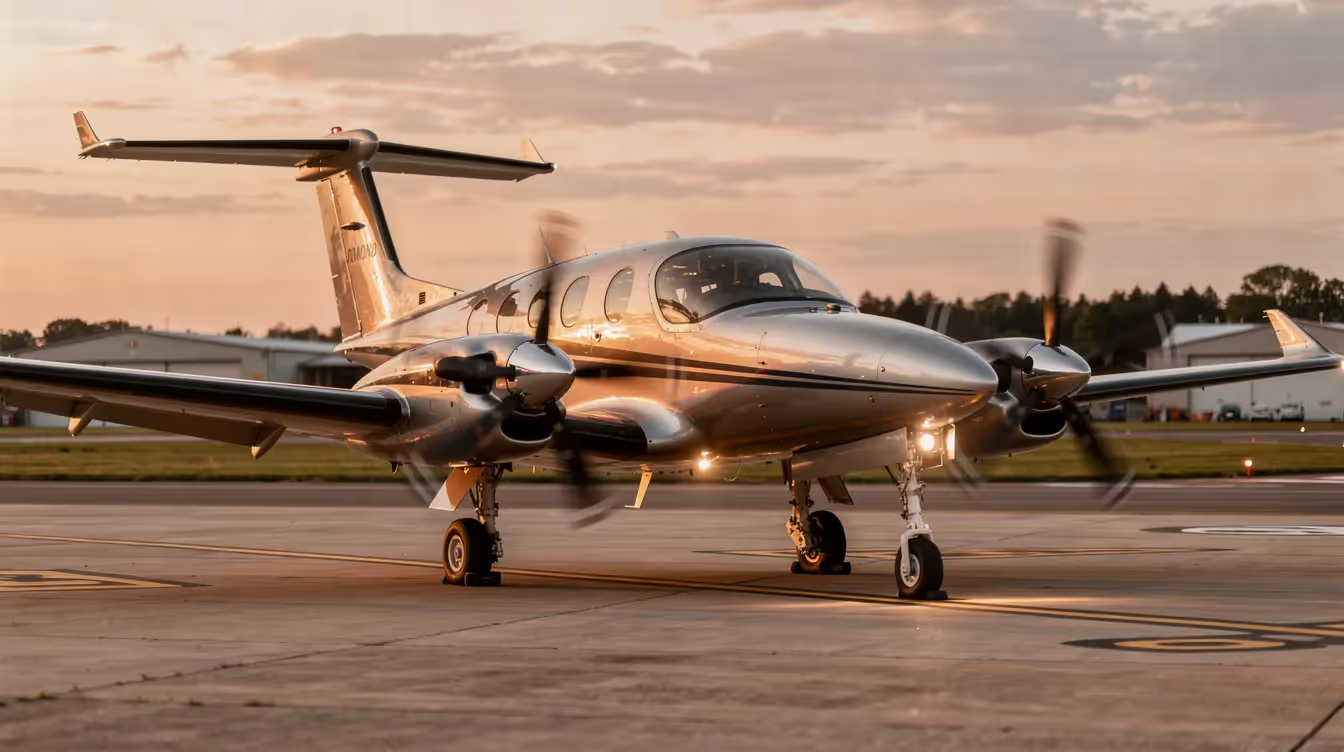
Diamond DA62 is a modern twin-engine piston airplane that Diamond Aircraft has delivered since 2015. This aircraft sits at the intersection of efficient performance, seven seats of cabin flexibility, and the reassurance of two engines.
Powered by twin 180 hp Austro Engines AE330 diesels burning widely available Jet A fuel, the DA62 features composite construction, forward gull wing doors for pilot access, and a huge rear door for passengers. Typical specs include max cruise around 192 KTAS at 14,000 feet, max range near 1,280–1,290 nm with auxiliary tank capacity, and a service ceiling of 20,000 feet with the built-in oxygen system.
Many private owners and charter operators use the Diamond D 62 as a “flying family SUV,” ideal for regional hops such as New York–Miami or London–Palma de Mallorca. The airplane’s first flight occurred in April 2012, with EASA certification following in 2015 and FAA certification in early 2016.
The Diamond DA62 (Diamond D 62) is a seven-seat, twin-engine aircraft cruising around 192 KTAS with roughly 1,280+ nm range and exceptional fuel efficiency around 11–12 gal/h total on Jet A fuel.
Its carbon fiber composite airframe, redundant systems, and Garmin G1000 NXi avionics with synthetic vision make it attractive for both private owners and charter platforms like Jettly.
The cabin delivers a “luxury SUV of the air” experience with three rows of seats, generous nose compartments, and premium finishes suitable for business and family flights.
Compared with high-performance single aircraft like the SR22T, the Diamond DA62 offers twin power reassurance with similar or better fuel burn and strong payload capability for more passengers.
Travelers can often charter a Diamond D 62 through Jettly’s on-demand marketplace for regional trips across North America and Europe.
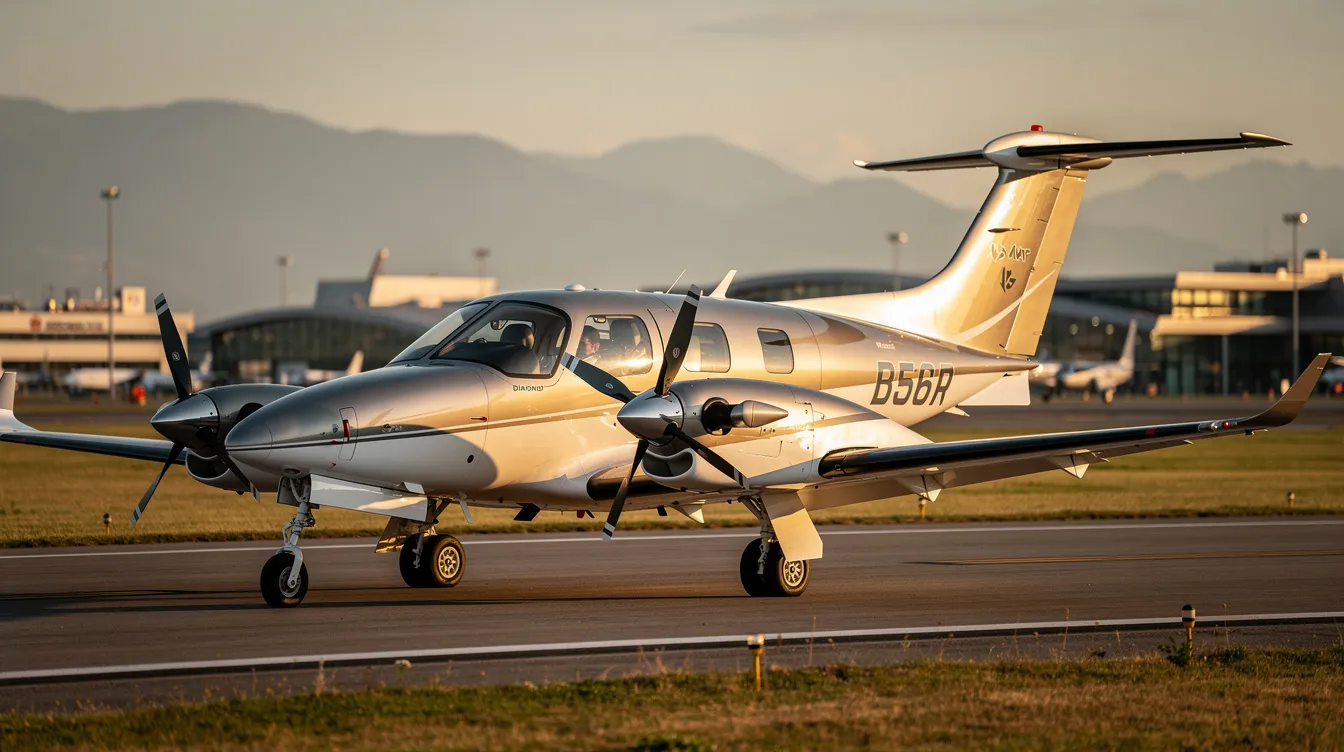
The Diamond D 62 represents an evolution of the DA42 Twin Star platform. Diamond Aircraft scaled up the design with a longer wingspan of approximately 47.7 feet, a larger T-tail, a wider fuselage, and a max takeoff weight above 5,000 lb (around 2,300 kg).
Key structural features include:
Carbon fiber reinforced polymer throughout the fuselage, wings, and empennage
Lower empty weight (around 3,461 lb), enabling useful loads up to 730 kg (approximately 1,565 pounds)
Superior crash energy absorption compared to aluminum airframes, thanks to the composite structure and advanced aerodynamics, providing high crashworthiness and occupant protection
Wing area optimized for efficient performance at cruise altitudes
The cabin design evokes an aviation SUV concept with gull-wing doors for dual pilot access, a separate rear passenger door, and optional third row seating. Exterior styling includes sleek engine nacelles and factory paint options like sapphire blue, ruby red, carbon, gold, or gloss white, with custom finishes available.
The design earned recognition, including the German Design Award Special 2017 and fliegermagazin “Best New Aircraft” award in 2016.
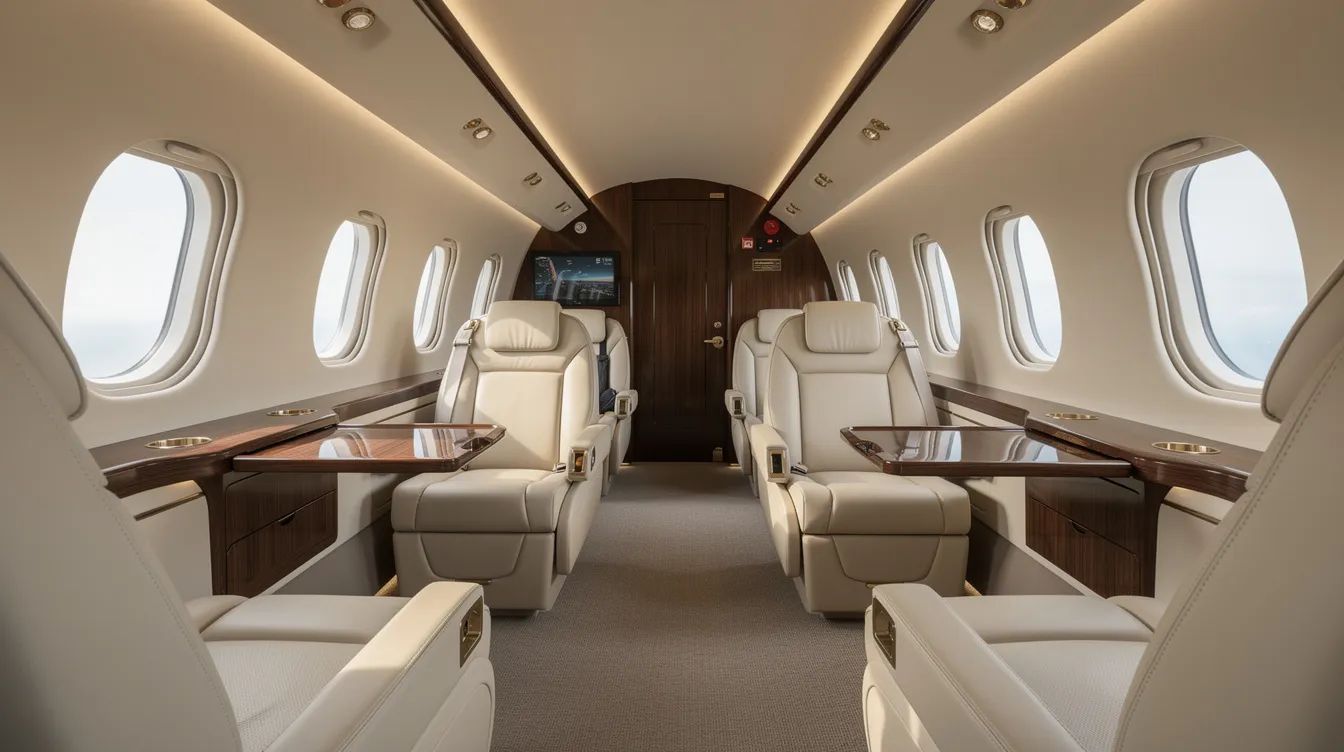
Cabin volume and layout are key reasons private travelers and charter customers choose the Diamond D 62 over older piston twins. The interior is designed with luxury in mind, featuring premium finishes, adjustable front seats, and a 60/40 split folding second row. Optional air conditioning enhances comfort on warmer days.
|
Row |
Configuration |
Best For |
|---|---|---|
|
Front |
Two adjustable pilot/passenger seats |
Adults, any flight length |
|
Second |
60/40 split-fold capability |
Adults, full comfort |
|
Third |
Optional narrow rear seats |
Children or short adults |
Premium interior options include leather upholstery, soft LED cabin lighting, and customizable color schemes. The low noise environment—thanks to diesel engines and composite structure—keeps cruise levels often below 80 dB.
Practical storage comes via dual nose baggage compartments (up to 100 kg forward), aft baggage (70 kg), and the ability to fold the third row for a flat cargo area. Skis, golf bags, and several standard suitcases fit comfortably. Easy ingress through the two forward gull-wing doors and the large rear door with handholds makes boarding straightforward for charter passengers.
The Diamond DA62’s propulsion comes from twin Austro Engines AE330 turbocharged 2.0-liter common-rail diesels. Each produces 180 hp and runs on Jet A or Jet-A1, with some regions approving JP-8. The aircraft is equipped with a FADEC (Full Authority Digital Engine Control) system that simplifies engine management and enhances safety by automatically feathering the propeller in the event of an engine failure. This system enables single power lever control for each powerplant—delivering single engine simplicity despite twin engine redundancy.
|
Metric |
Value |
|---|---|
|
Max cruise speed |
192 KTAS at 14,000 ft |
|
75% cruise |
171 KTAS |
|
Fuel burn (60% power) |
11.8 US gal/h total |
|
Rate of climb |
1,028 fpm at sea level |
|
Max range |
1,288 nm with auxiliary tank |
|
Hour total endurance |
Up to 10 hours |
|
Service ceiling |
20,000 ft (with oxygen) |
Range allows non-stop legs like Toronto–Orlando or Paris–Málaga under favorable conditions. The fuel capacity supports flexibility for routing decisions.
For single-engine operations, the service ceiling sits around 11,000–13,000 feet, depending on weight. If one engine fails, pilots can maintain altitude or climb slowly—an important safety and dispatch-reliability factor.
The fuel efficiency means the Diamond D 62 often burns less fuel than some high performance single aircraft despite having two engines. This translates to lower operating costs and reduced emissions per seat-mile.
Diamond’s safety philosophy combines passive safety features with active safety features to reduce accident risk and occupant injury. This approach helps avoid accidents while protecting occupants if incidents occur.
Rigid carbon fiber safety cell around passengers
Centrally located fuel tanks within the protected wing box
Energy-absorbing seats certified to the latest standards
Crash-resistant fuel system design
Composite structure and advanced aerodynamics contribute to high crashworthiness and occupant protection
Inherent handling stability throughout the flight envelope
Propulsion redundancies with two independent engines
FADEC system automatically feathering propellers in engine failure events
Redundant electrical systems with single switch backup activation
The aircraft's cockpit is equipped with the Garmin G1000 NXi avionics suite, which provides enhanced stability protection, simplifies navigation and flight management, and contributes to lower pilot workload. Avionics options include integrated weather radar for enhanced situational awareness.
For icing conditions, many DA62s carry TKS fluid anti-icing with FIKI certification. Combined with the built-in oxygen system, pilots can safely operate to the 20,000-foot ceiling. The advanced blade geometry of MT three-blade composite propellers contributes to efficient performance and lower cabin noise.
The DA62 is designed as a modern alternative to older light twin aircraft, with configurations available for special missions including law enforcement and surveillance.
The DA62’s safety record is exemplary, with no fatal accidents attributed to airframe or engine issues in early fleets.
Buyers and commercial operators weigh total operating cost—fuel, maintenance, engine reserves—when comparing the Diamond D 62 to other twins and high-end singles. The diesel advantage shows clearly in the numbers.
Fuel: Typical cruise fuel flow in the low teens (US gal/h) combined, significantly less than many avgas-burning piston twins
Maintenance: FADEC-controlled engines reduce pilot-induced wear; extended TBO on AE330s improves lifecycle economics
Programs: Hourly maintenance options like PistonPower offer “power by the hour” cost predictability
A brand new airplane with full equipment runs around $1.47M USD as of the mid-2020s. Used market listings range from mid-$800k for early units to $1.2–1.3M for low-time examples, depending on options like FIKI or weather radar.
Operators justify acquisition costs via fuel savings of 30-50% below comparable twins, more payload flexibility, and strong charter demand. The annual inspection and routine maintenance requirements align with typical Part 23 aircraft, with no unusual complexity for qualified technicians.
Pilots may either own a Diamond D 62 outright or access it on demand through a digital charter marketplace like Jettly. Each approach suits different travel patterns and budgets.
Experienced pilots moving up from single-engine aircraft
Families needing a regional “flying family SUV.”
Small companies seeking point-to-point travel solutions
Commercial pilot training organizations
500–900 nm business trips (Chicago–Dallas, Frankfurt–Nice)
Family holidays to secondary airports near resorts
Mixed passenger-cargo runs with sports equipment farther from major hubs
Time-critical regional transport offering maximum loading flexibility
Jettly integrates the Diamond D 62 into its marketplace by listing aircraft from vetted operators. The platform offers instant pricing and booking for regional routes where a seven-seat piston twin proves more cost-effective than a light jet.
Charter customers benefit from departing from smaller airports, customized schedules, a quiet cabin, and per-flight booking through Jettly without long-term jet card or fractional commitments. This approach can perfectly suit travelers who fly privately a few times per year.
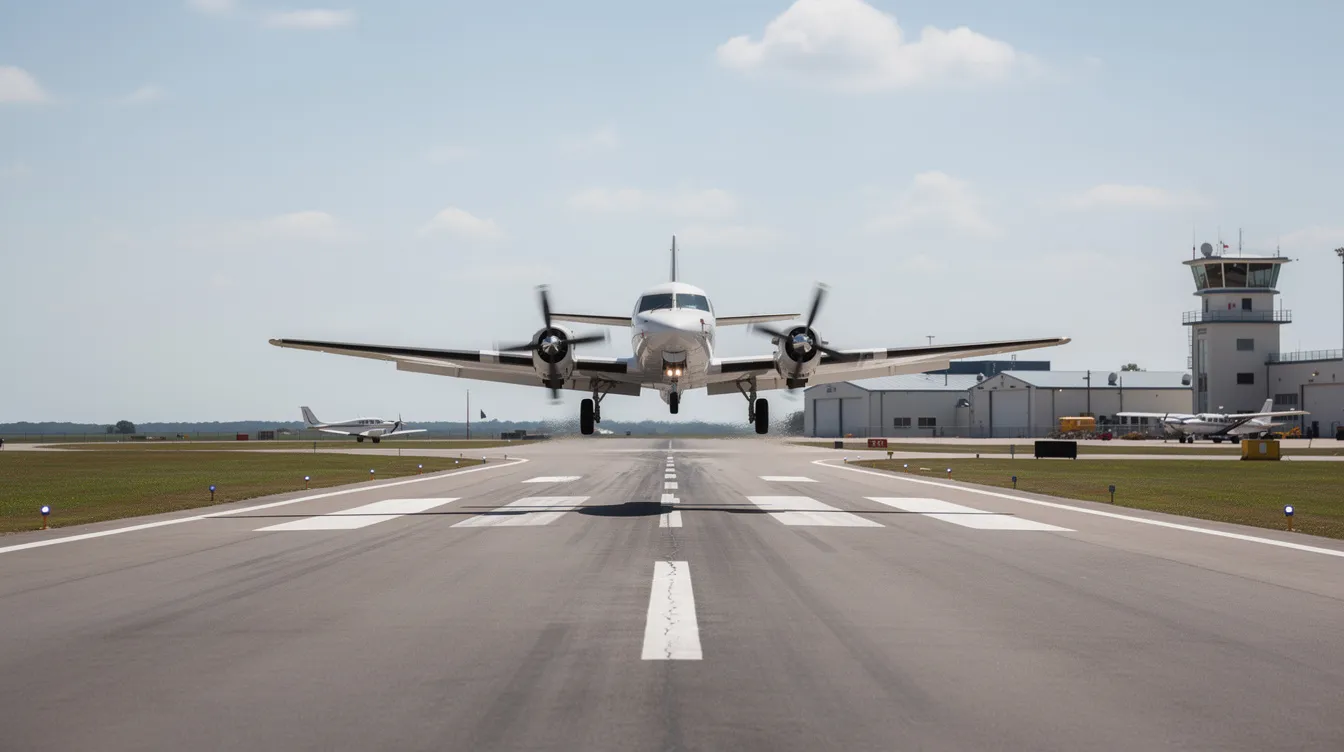
Many travelers compare the Diamond D 62 to aircraft such as the Cirrus SR22T or entry-level light jets when choosing a charter or purchase. Each category involves trade-offs.
|
Feature |
Diamond DA62 |
Cirrus SR22T |
|---|---|---|
|
Engines |
Two engines |
Single engine |
|
Seats |
Seven seats |
4-5 seats |
|
Cruise speed |
180-192 KTAS |
180-190 KTAS |
|
Fuel burn |
11.8 gal/h |
17-20 gal/h |
|
Critical engine redundancy |
Yes |
No (second engine not available) |
The Diamond D 62 offers twin-engine reassurance without the left engine or right engine failure becoming a critical engine emergency that a high-performance single cannot address.
Jets cruise faster (350-400 KTAS) and higher
Jets cost significantly more per hour ($2,000+ vs $500-800 estimated)
DA62 accesses shorter runways that jets cannot use
Time difference shrinks on sub-1,000 nm sectors
For regional trips under about 3 hours block time, the Diamond D 62 via Jettly offers a compelling blend of cost, safety, and comfort. The steep turns, handling, and docile flight characteristics—praised in every pilot report—make it pleasant for passengers and pilots alike.
The Diamond D 62 fits into a broader trend toward more fuel-efficient, lower-emission aircraft in private aviation. Jet A diesel engines deliver better specific fuel consumption than comparable avgas engines, translating to less CO₂ per nautical mile flown.
Key environmental points:
Lower overall fuel burn reduces emissions per passenger when seats are occupied
Diesel engines emit less lead than avgas alternatives
Efficient routing from smaller airports minimizes time in the air
Compatible with sustainable aviation fuel (SAF) where available
Charter passengers using Jettly can combine efficient aircraft choices like the Diamond D 62 with voluntary carbon offset programs. Flexible departure times and direct routing to regional airports further reduce environmental impact compared to positioning through major hubs.
The Diamond DA62 has gained steady traction since initial deliveries. Production numbers have grown during the early 2020s, with annual deliveries ranging roughly 25-50 aircraft per year since 2015.
Total units delivered: 273+
Primary markets: Europe, North America, the Middle East, Asia-Pacific
Primary use: Private owners, with charter operators holding a meaningful share
For travelers, this means increasing availability of Diamond D 62 aircraft through charter brokers and digital platforms like Jettly, especially on popular regional routes. The aircraft appears on operator certificates for charter, training, and aerial work across multiple continents.
Prospective buyers find used Diamond D 62 listings regularly on the pre-owned market. Prices reflect year of manufacture, equipment level (FIKI, radar), and engine/airframe time. An important line item for any buyer: confirming recent maintenance compliance and reviewing time since overhaul on both engines.
Jettly’s online platform makes it simple to request a Diamond D 62 or similar aircraft for specific dates and routes. The process takes minutes.
Enter departure and arrival airports
Select preferred dates and times
Specify passenger count (up to seven people)
Review instant pricing on suitable aircraft
Users can filter or request specific aircraft types, including piston twins like the Diamond D 62, depending on region and operator inventory in Jettly’s 20,000+ aircraft network. The platform shows transparent pricing before booking, requires no long-term commitment, and allows comparison of the Diamond D 62’s cost against turboprops or light jets on the same route.
Travelers flying with more payload requirements or specialized baggage can note these during the booking process. Learn more or request a quote directly at Jettly’s website.
This section answers common questions about the Diamond D 62 for both prospective owners and travelers considering it for charter.
Actual luggage capacity depends on passenger count and fuel load. For practical planning, four adults with standard checked bags and carry-ons typically fit comfortably on regional legs.
The dual generous nose compartments accommodate up to 100 kg forward, while aft storage behind the last row handles another 70 kg. Folding the third row creates a flat cargo area for skis, golf bags, or photography equipment farther back in the cabin.
When requesting a quote through Jettly, share detailed luggage information so operators can confirm weight and balance constraints. Soft-sided luggage often fits more efficiently than large hard-shell suitcases in piston twins.
Private owners need a commercial pilot or private pilot certificate with a multi-engine rating and appropriate DA62 type-specific training, often completed through Diamond-approved training centers.
For charter flights through Jettly, operators use professional, commercially licensed pilots with multi-engine and instrument ratings meeting local regulatory requirements. Many impose minimum experience thresholds—often 500+ total hours with significant time in type.
Passengers using Jettly don’t manage pilot qualifications; the platform works only with vetted operators meeting safety and regulatory standards.
The first two rows provide the most space and suit adults well on flights of 2–3 hours. Legroom compares to a comfortable car or SUV. Air conditioning keeps the cabin pleasant in warm climates.
The optional third row works best for children or shorter adults, especially on journeys over 90–120 minutes. For maximum comfort on longer legs, limiting passenger count to five or six keeps the cabin open and allows flexible baggage distribution.
Charter customers can discuss seating preferences with Jettly when booking to ensure the cabin layout matches their group.
Exact pricing depends on route, region, and operator, but a Diamond D 62 typically costs significantly less per flight hour than entry-level light jets—often $4,000-7,000 for a 500-1,000 nm trip versus double that for jets.
For regional trips under 800–1,000 nm, the time difference between a Diamond D 62 and a very light jet shrinks considerably once climb, descent, and ground handling are factored in. Fuel efficiency and lower maintenance costs help keep charter rates competitive.
Use Jettly’s instant pricing to compare a Diamond D 62 quote directly against light jet options on your specific route.
Yes. The Diamond D 62’s takeoff ground roll of approximately 1,574 feet and landing distances around 1,446 feet enable access to many shorter regional runways. With a high degree of flexibility, the aircraft reaches island airstrips, mountain towns, and secondary business airports where jets face performance limitations.
Operating from smaller airports often reduces ground transfer time substantially—more impactful than modest cruise speed differences on short sectors. Jettly customers can specify exact airports or general destination areas, and the platform identifies suitable nearby fields where the Diamond D 62 safely operates.
The Diamond D 62 offers a rare combination of twin-engine safety, low fuel burn, modern avionics, and seven seats of flexibility. For regional business and family flights, it delivers value that neither a single nor a light jet can match in the same way.
The key numbers tell the story: 180+ knot cruise, about 1,280 nm range, quiet composite cabin, and a strong safety record backed by Diamond’s active and passive safety philosophy. The diamond d 62 represents a smart choice for travelers wanting private aviation efficiency without stepping up to a full jet on every route.
Whether through ownership or charter, this aircraft fits the needs of executives, families, and groups seeking time savings, flexibility, and comfort on regional sectors.
Ready to experience private travel on your terms? Explore flight options or request a quote at https://www.jettly.com.
Share this post:
Jay Franco Serevilla
Apr 16, 2026
|
5
min read
Discover tips and trends in the industry.
5
min read
Martinaire Aviation LLC: Cargo Operations, Careers, and How It Compares to Private Charter
Martinaire Aviation LLC, founded in 1978, is a leading cargo feeder carrier in the U.S., specializing in overnight freight operations. With a fleet of turboprop aircraft, it connects regional airports to major sorting hubs, primarily serving integrators like UPS. This article explores Martinaire's operations, career opportunities, and how it contrasts with private charter services like Jettly.
Read More
5
min read
Alerion Aviation: Charter, Aircraft Management, and How Jettly Helps You Compare Options
Alerion Aviation is a premier boutique private aviation company specializing in aircraft management, on-demand charter, and in-house maintenance. With a strong safety record and a large fleet operating from key U.S. locations, Alerion offers personalized service for travelers and aircraft owners. Jettly enhances the experience by providing a digital marketplace for comparing charter options, ensuring travelers find the best fit for their needs.
Read MoreStay updated with our latest insights and tips to elevate your journey with us.
MEMBERSHIPS AND ASSOCIATIONS



Disclaimer: Jettly operates as a charter broker, offering access to a global digital jet charter marketplace. Jettly is not a direct air carrier and does not own or operate aircraft. All advertised flights are conducted by third-party air carriers that are fully licensed and hold the appropriate Part 135 or Part 121 certifications issued by the Federal Aviation Administration (FAA) or equivalent regulatory authorities under U.S. or foreign law. Jettly complies fully with the U.S. Department of Transportation's Part 295 and Part 298 Charter Broker regulations. Jettly does not carry additional liability insurance. Passengers are covered by aircraft operator insurance. TICO: 50023770


