


Login
Get Instant Pricing On 23,000+ Aircraft

>
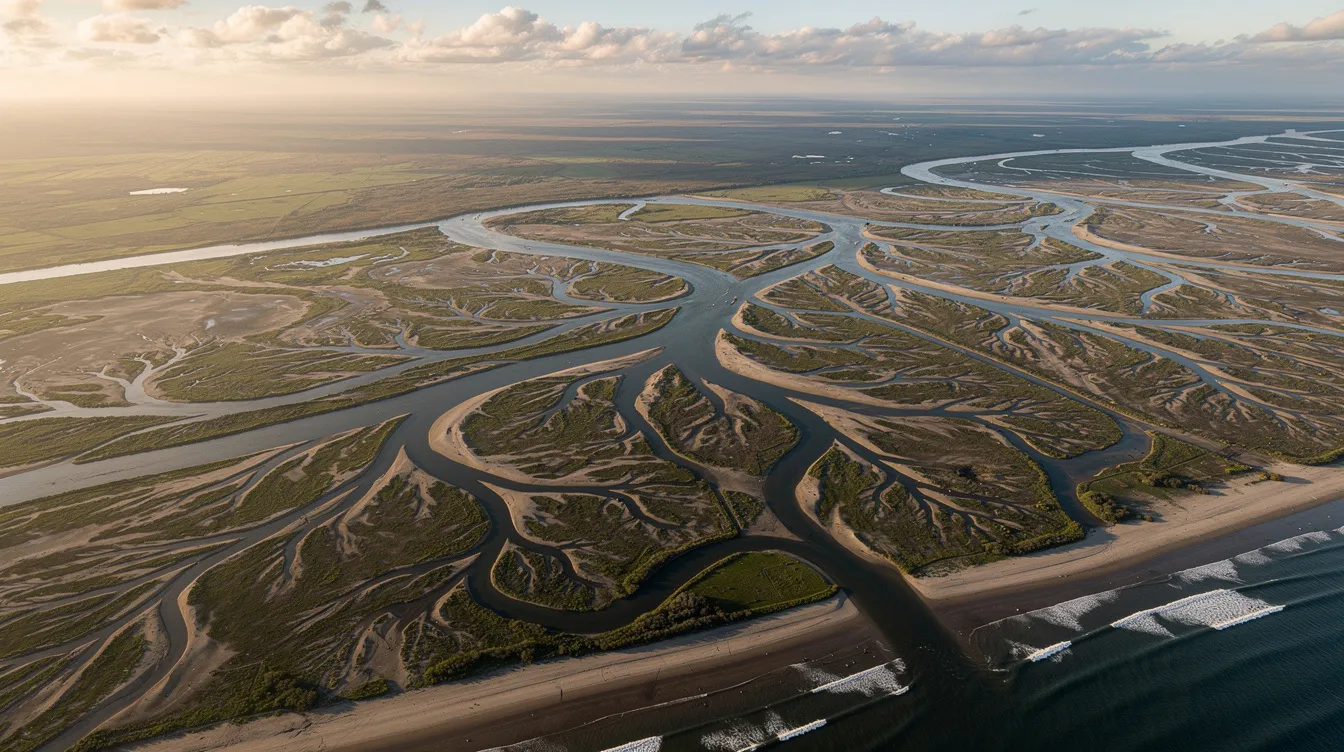
The word delta carries weight across multiple fields - it can mean Delta Air Lines, one of the largest U.S. carriers; delta in options trading, which measures how sensitive an option’s price is to changes in the underlying asset; a river delta, a geographic region that often shapes population and aviation demand; or the Greek letter Δ, used to mark change in science and engineering. For frequent flyers - especially corporate executives and high-net-worth travelers weighing scheduled carriers against on-demand charter platforms like Jettly - these distinctions matter when comparing travel options, following airline stocks, or evaluating how geography and aviation operations affect access. This article examines Delta Air Lines’ history and operations, maintenance and safety standards, Delta’s role in financial markets, the aviation relevance of river deltas, the scientific use of Δ, and how Jettly’s private jet charter service offers a flexible alternative to commercial airline schedules.
Delta Air Lines, founded in 1925 and headquartered in Atlanta, Georgia, is one of the world's largest carriers. Its fixed-schedule model contrasts with Jettly's on-demand private charter access to over 20,000 aircraft globally.
In finance, delta (Δ) measures how much an option's price is expected to change relative to the underlying asset - a metric frequently covered in Wall Street Journal-style equity analysis, including airline stocks like DAL. In finance, delta measures how much an option's price is expected to change. Call options have a positive delta ranging from 0 to 1. Put options have a negative delta ranging from -1 to 0. Delta is often used as an approximation of the probability that an option will finish in the money at expiration.
Geographic deltas - triangular areas of land where rivers split before entering the sea - include the Mississippi Delta and the Niger Delta, regions that drive commercial and private aviation demand. A delta is a triangular area of land. Deltas form where rivers split before entering the sea. Deltaic refers to something related to a delta. The Mississippi Delta is a well-known example of a delta.
The Greek letter Δ represents change or difference across disciplines, from physics and calculus to aircraft performance metrics like fuel burn and block time. Delta is the fourth letter of the Greek alphabet. The uppercase delta (Δ) represents a discrete change in a quantity. The lowercase delta (δ) denotes an infinitesimally small change in calculus. Delta is primarily used to signify a change in a variable in mathematics. The discriminant (Δ = b² - 4ac) in the quadratic formula determines the number of solutions. Time delta (Δ t) refers to a specific amount of time elapsed. Delta is used in navigation to refer to the difference between planned and actual performance.
Private aviation platforms such as Jettly sit alongside these concepts by offering flexible, time-saving alternatives to scheduled airline travel, especially for routes to remote delta regions or multi-city itineraries across Latin America.
Delta Air Lines is a leading U.S. carrier with a history stretching back nearly a century, headquartered in Atlanta, Georgia. Business and leisure flyers regularly compare their scheduled service with private jet charter platforms when evaluating time savings, flexibility, and cabin customization.
A brief history:
Delta Air Lines began as Huff Daland Dusters in 1925, a crop-dusting company based in Macon, Georgia.
Passenger operations started on June 17, 1929.
The company became Delta Air Lines in 1945, named after the Mississippi Delta region.
Trans-Atlantic service launched in 1978, followed by expansion into Latin America in the late 1990s.
Delta acquired Northwest Airlines on October 29, 2008, significantly expanding its route network.
Delta was the first airline to board over 100 million passengers in 1997.
Scale as of 2026: Delta Air Lines, Inc. operates a fleet of approximately 988 mainline aircraft, making it one of the largest airline fleets in the world. Its major hubs include Atlanta, Minneapolis–St. Paul, Detroit, Salt Lake City, New York–JFK and LaGuardia, Los Angeles, Boston, and Seattle. The company serves hundreds of destinations across cities worldwide, with Atlanta alone handling thousands of daily departures.
Cabin products range from Delta One suites on international routes to First Class, Premium Select, Comfort+, Main Cabin, and Basic Economy - each with fixed seats and layouts. Private charters booked through Jettly, by contrast, offer fully customizable cabin configurations, in-flight catering through Jettly Eats, and departure timing. For a deeper look at the airline, check out Jettly's guide on Delta Air Lines.
Delta TechOps is a major aircraft maintenance, repair, and overhaul division with over 9,600 employees and 51 maintenance stations globally. This MRO group supports both Delta's own fleet and third-party customers, with projections approaching a $5 billion run rate.
When do travelers switch from a scheduled airline like Delta Air Lines to a private jet? Typically, when they need direct routes that avoid hubs, time-sensitive takeoff windows, or multi-city itineraries across places commercial carriers don't efficiently link. Jettly offers that flexibility without requiring ownership or fractional commitments, positioning itself as a NetJets alternative with on-demand access.
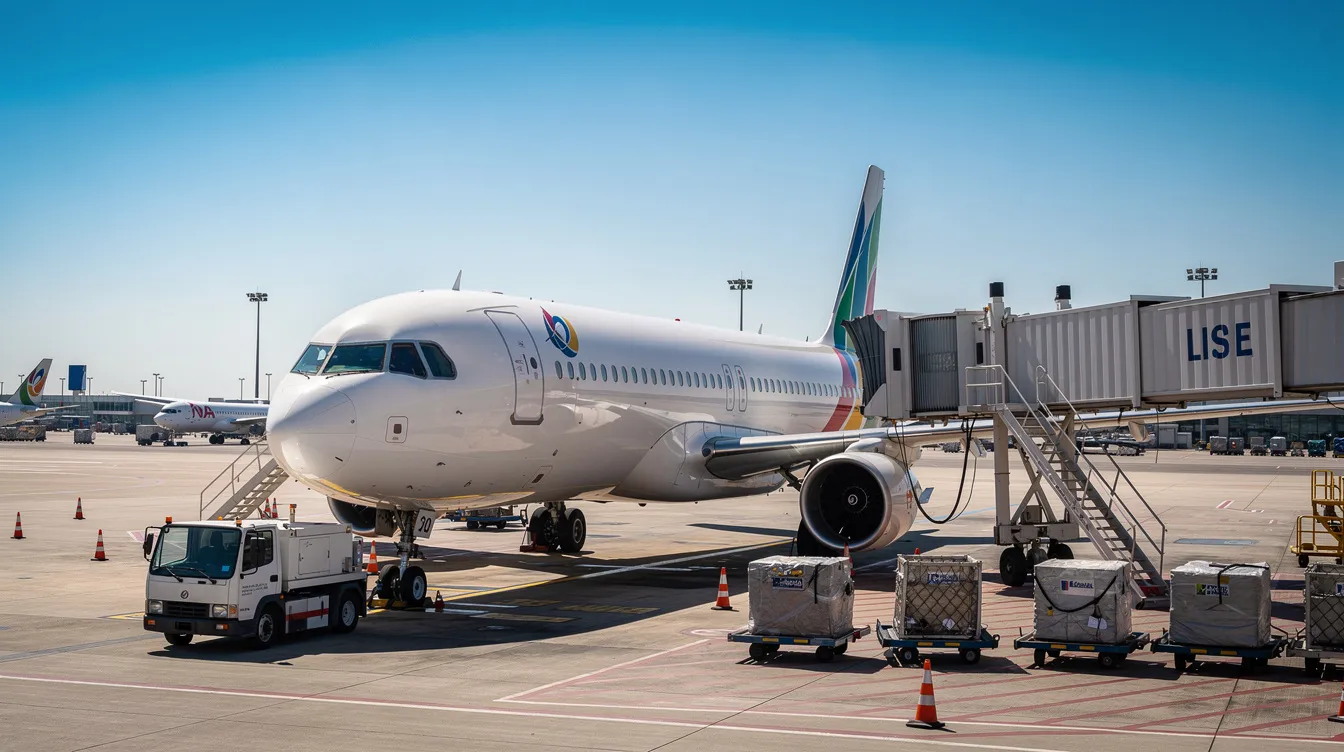
The word delta frequently pops up alongside aircraft maintenance topics in industry coverage. When outlets like the Wall Street Journal report on safety events at major carriers, private charter clients benefit from understanding how maintenance standards affect the reliability of every flight they board.
Recent talking points at Delta Air Lines: Headlines in 2024–2025 covered panel issues, cabin pressurization incidents, and occasional toxic-fume events. Industry discussions also noted how a software update can trigger major cybersecurity or IT disruptions when not properly tested and authorized. These remain rare on a per-flight basis, given the volume of daily operations, but they bring aircraft maintenance into public view. Separately, some flights were delayed or had to be canceled due to pilot staffing shortages - a sign that operational pressure can affect flight status even at the world's largest carriers.
What commercial aircraft maintenance involves:
Scheduled A, B, C, and D checks at defined intervals
Engine and auxiliary power unit overhauls
Avionics inspections and airworthiness directive compliance
Detailed record-keeping under FAA, EASA, or local civil aviation authority rules
For private charter, the standards are equally rigorous. Aircraft accessed through Jettly are operated by licensed air carriers holding FAR Part 135 certificates or equivalent. These Part 135 charter companies undergo regular third-party audits and carry appropriate insurance. Platforms like Jettly make safety ratings and certifications easier to review at booking - a feature that adds transparency customers don't typically get when purchasing a scheduled airline ticket.
Practical example: A corporate group chartering a flight from New York to São Paulo can check the operator's ARGUS or Wyvern rating, average fleet age, last audit date, and Part 135 certificate status before confirming. On a commercial airline, passengers see the plane type and maybe its age on a page like SeatGuru, but they cannot inspect maintenance records or select their crew.
What to look for when booking a private jet:
FAA or local authority operating certificate
Operator safety ratings (ARGUS Gold or Platinum, Wyvern Wingman)
Documented repair and maintenance programs
Current insurance coverage and audit history
Learn more about secure air charter standards on Jettly's site.
On Wall Street, delta most often refers to the Greek letter Δ used in options pricing. It describes the sensitivity of an option's price to a $1 change in the underlying stock - a concept investors encounter daily in equity research and portfolio management. In finance, delta measures how much an option's price is expected to change. Call options have a positive delta ranging from 0 to 1. Put options have a negative delta ranging from -1 to 0. Delta is often used as an approximation of the probability that an option will finish in the money at expiration.
Options delta defined:
Call options have a positive delta ranging from 0 to 1. A call on DAL shares with a delta of 0.6 gains roughly $0.60 for every $1 the stock rises.
Put options have a negative delta ranging from -1 to 0.
Delta is often used as an approximation of the probability that an option will finish in the money at expiration.
DAL stock snapshot (mid-2026):
|
Metric |
Value |
|---|---|
|
Share price (June 2026) |
~$85.79 |
|
Market cap |
|
|
Q1 FY26 revenue |
$15.85 billion |
|
FY26 net income |
$423 million |
|
Trailing P/E ratio |
13.23 |
|
1-year stock return |
85.10% |
|
Profit margin |
6.87% |
|
Term |
What It Means for Travelers and Charter Buyers |
|
Stock price delta (DAL) |
Changes in airline cost structure can lead to fare hikes or route cuts, affecting flight availability. |
|
Portfolio delta |
Investors with airline exposure may see wealth shift with market moves, influencing travel budgets. |
|
Fuel cost sensitivity |
Rising fuel prices increase both scheduled ticket prices and private charter costs. |
|
Currency exposure |
Exchange rate moves affect landing fees, crew costs, and maintenance parts for international charters. |
Institutional and high-net-worth investors - many of whom also fly privately - may hedge travel-exposed portfolios using options with specific deltas, particularly when they hold airline, oil, or travel-sector assets. Some of these travelers offset costs further by using Jettly's platform to crowdsource private jet flights and share empty seats, lowering per-passenger charter pricing.
Chartering through a platform like Jettly instead of owning an aircraft removes direct exposure to capital cost delta - fleet depreciation, lease obligations, and maintenance reserves. Travelers enjoy usage-based pricing rather than bearing the financial risk of aircraft ownership.
A geographic delta is a low, flat, usually triangular area of land formed by sediment at a river's mouth. A delta is a triangular area of land. Deltas form where rivers split before entering the sea. Deltaic refers to something related to a delta. Deltas form where rivers split before entering the sea. These regions matter for aviation because major cities, energy hubs, and agricultural centers cluster near them.
Key examples:
Mississippi Delta (U.S. Gulf Coast): A well-known example of a delta region, driving demand from energy, agriculture, shipping, and tourism. The Mississippi Delta is a well-known example of a delta. Cities like New Orleans and Houston sit in or near this deltaic area. The term deltaic refers to anything related to a delta.
Niger Delta (Nigeria): Spanning roughly 70,000 km², this oil-rich area generates heavy commercial and private aviation traffic. Port Harcourt International Airport handled approximately 1.19 million passengers in 2024.
Latin America: The Paraná River delta near Buenos Aires, the Amazon delta, and Colombia's Magdalena delta support business travel for energy, agriculture, and infrastructure projects - many in places that scheduled carriers don't efficiently serve.

Private jet charter platforms like Jettly support access to secondary and remote airports close to delta regions, and travelers can use its airport locator tool to identify convenient fields near their destinations. Examples of high-value charter routes include:
Houston to New Orleans (Mississippi Delta corridor)
Lagos to Port Harcourt (Niger Delta business travel)
Miami to Cartagena (Latin American coastal economy)
São Paulo to Buenos Aires (Paraná delta area)
Scheduled airlines like Delta Air Lines serve the main channels - large hubs with high traffic. On-demand private jets accessed via Jettly serve the smaller channels: regional airports and airstrips where time is critical and commercial links are limited.
Delta is the fourth letter of the Greek alphabet. The uppercase delta (Δ) represents a discrete change in a quantity. The lowercase delta (δ) denotes an infinitesimally small change in calculus. Delta is primarily used to signify a change in a variable in mathematics. The discriminant (Δ = b² - 4ac) in the quadratic formula determines the number of solutions. Time delta (Δ t) refers to a specific amount of time elapsed. Delta is used in navigation to refer to the difference between planned and actual performance.
The term delta is the fourth letter of the Greek alphabet. The uppercase delta (Δ) represents a discrete change in a quantity, while the lowercase delta (δ) denotes an infinitesimally small change in calculus. Delta is primarily used to signify a change in a variable in mathematics, including the discriminant (Δ = b² - 4ac) in the quadratic formula, which determines the number of solutions.
Common scientific uses:
Time delta (Δt) refers to a specific amount of time elapsed
Δv measures the change in velocity
Δp tracks the change in pressure
Delta is used in navigation to refer to the difference between planned and actual performance
Aircraft designers use delta-style measurements when evaluating wing modifications, engine upgrades, or winglet retrofits. For instance, adding blended winglets to a midsize business jet might yield a Δfuel burn reduction of 3–5% on cruise profiles - data that directly affects charter pricing.
For trip planning on Jettly, partner operators account for Δheadwind, Δpayload, and Δrunway length margins to determine which aircraft category - light jet, midsize, heavy jet, or turboprop - is safe and appropriate for a given mission, drawing from Jettly's broad inventory of private charter aircraft. Travelers don't see every formula, but the concept of delta underpins the performance, safety, and schedule reliability they experience on every flight.
Beyond airlines and science, delta shows up in daily language in ways that can create confusion without context. In aviation, delta can refer to both a phonetic alphabet word and a technical term. Delta represents the concept of change or variance across various disciplines. In aviation, delta can refer to both a phonetic alphabet word and a technical term. Delta represents the concept of change or variance across various disciplines. In the NATO phonetic alphabet, delta stands for the letter "D." Pilots and air traffic controllers use it routinely - stating a tail number like "November One Two Three Delta" to avoid mishearing over noisy radio frequencies. The word also appears in military unit designations and technology brand names, contributing to its global recognition in travel culture.
Worth a brief comment: the Delta variant of COVID-19 was first identified in India in late 2020. The Delta variant is approximately 60% more transmissible than the Alpha variant, and it led to a massive surge in infections during 2021. It was characterized by higher viral loads and increased disease severity. A single dose of the COVID-19 vaccine was less effective against Delta compared to Alpha, though two doses of the vaccine provide reduced but significant protection against symptomatic infection with Delta. While this public health meaning has faded from daily headlines, it remains another answer to the question "what does delta mean?" that travelers should understand.
English dictionaries list multiple senses - geographic feature, letter, symbol, region - with both American and British pronunciations. For travel documents and itineraries, writers should clarify which delta they mean to avoid confusing an airline brand with a technical symbol or a geographic area.
Travelers today encounter delta in airline brand names, Wall Street risk reports, YouTube aviation channels, and geographic discussions. Platforms like Jettly provide a flexible alternative form of air travel that complements these established concepts - not replacing scheduled service, but filling the gaps it leaves, much like the private operators profiled in the ultimate list of charter airlines.
Jettly offers a digital private jet charter marketplace with access to over 20,000 aircraft worldwide, instant pricing, and on-demand booking. Unlike the fixed schedules of a carrier like Delta Air Lines, Jettly lets clients book a private jet that departs on their plan, from airports they choose, in the aircraft class that fits their mission, with optional private jet memberships for frequent flyers.
Aircraft categories available through Jettly: Frequent business travelers may also pair these options with jet card programs offering fixed hourly rates to lock in predictable costs.
Light jets: Short regional hops, ideal for reaching delta regions or secondary airports within 1,000 miles
Midsize and super-midsize: Cross-country or Caribbean routes, with added range and cabin space
Heavy jets: Transcontinental and intercontinental trips, including flights to Tokyo, London, or across Latin America
Turboprops and helicopters: Access to remote airstrips, offshore platforms, or short transfers
For high-frequency flyers who also track DAL stock and read earnings updates, the advantages are clear: time savings from avoiding hubs, flexible departure day and time, access to secondary airports, and no aircraft ownership delta in capital or maintenance costs. Jettly features free instant quotes and transparent pricing, with no membership required to view options
Delta Air Lines is one of the largest U.S. carriers with a fleet of nearly 1,000 aircraft, extensive global routes, and a history dating back to 1925. It serves millions of passengers annually and operates major hubs like Atlanta and New York.
In finance, delta (Δ) measures how much an option's price is expected to change relative to a $1 move in the underlying asset. Call options have a positive delta (0 to 1), while put options have a negative delta (-1 to 0).
A geographic delta is a triangular land area formed where a river splits before entering the sea, like the Mississippi Delta. These regions often host major cities and industries, driving demand for both commercial and private aviation services.
Jettly offers on-demand access to over 20,000 aircraft with instant pricing and customizable flight options, providing greater flexibility, direct routes, and time savings compared to fixed schedules of commercial airlines.
Aircraft operators on Jettly hold FAR Part 135 certificates or equivalent, undergo regular safety audits, maintain insurance, and meet rigorous maintenance standards, ensuring safety comparable to commercial airlines.
Delta represents a multifaceted concept spanning commercial aviation, finance, geography, and science. Delta Air Lines continues to serve millions with fixed schedules and extensive networks, while private jet platforms like Jettly offer flexible, on-demand alternatives tailored to travelers’ unique needs. Understanding delta in its various forms—from airline operations and stock market metrics to river deltas shaping regional demand—equips travelers and investors alike to make informed decisions. Whether booking a private charter to a remote delta region or analyzing airline stock options, the concept of delta underscores change, flexibility, and adaptation in modern travel. Ready to experience private travel on your terms? Explore flight options or request a quote at https://jettly.com
Share this post:
Jay Franco Serevilla
Jun 25, 2026
|
5
min read
Discover tips and trends in the industry.
5
min read
Gulfstream G100 Guide: Charter Costs, Performance & Use Cases
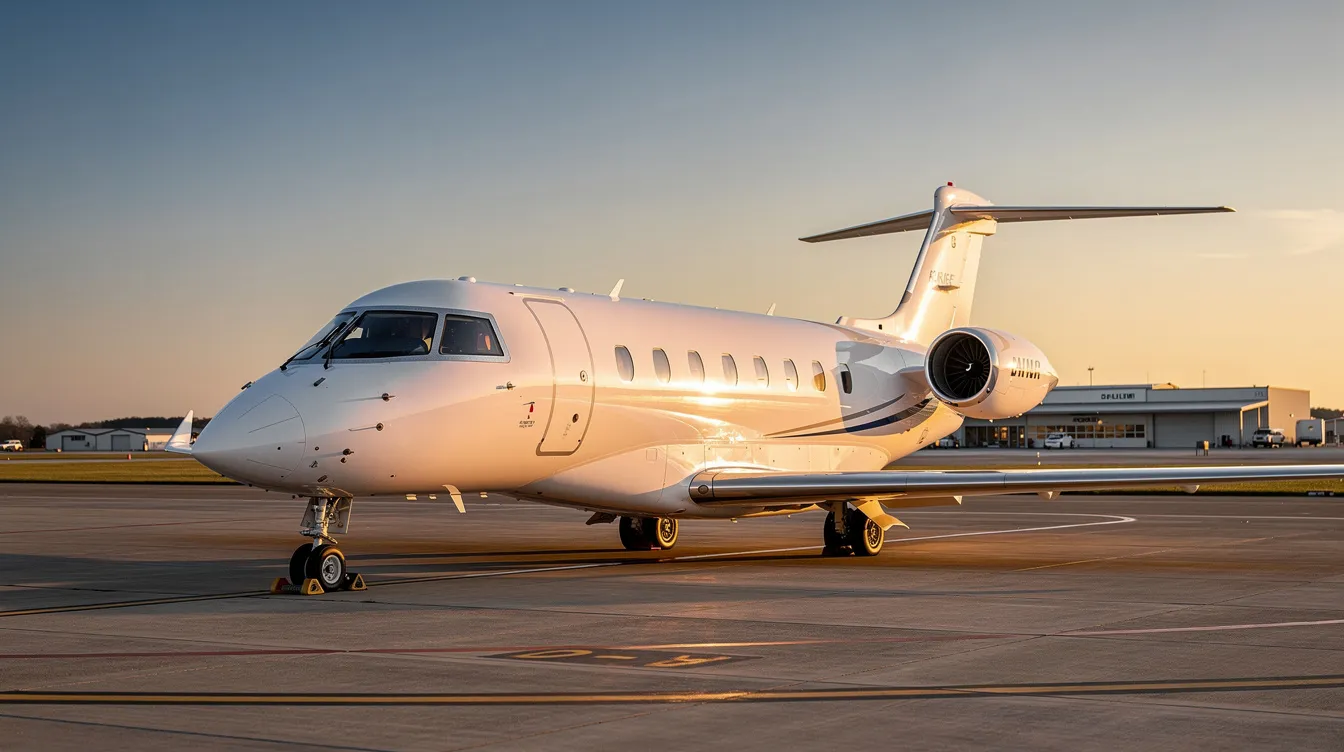
The Gulfstream G100 is a versatile midsize business jet known for its speed, range, and cost-effectiveness. With a maximum range of 2,790 nautical miles and seating for up to 8 passengers, it is ideal for both business and leisure travel. This guide provides insights into its performance, charter costs, and how to book through Jettly's platform.
Read More
5
min read
Gulfstream GV Range: Ultra Long Range Performance, Cabin Dimensions, and Charter Options
The Gulfstream GV is a pioneering ultra-long-range business jet, offering a maximum range of approximately 6,500 nautical miles. With its spacious cabin designed for comfort and productivity, it accommodates up to 18 passengers and is ideal for intercontinental flights. Charter options through Jettly provide flexible access without the costs of ownership.
Read MoreStay updated with our latest insights and tips to elevate your journey with us.
MEMBERSHIPS AND ASSOCIATIONS



Disclaimer: Jettly operates as a charter broker, offering access to a global digital jet charter marketplace. Jettly is not a direct air carrier and does not own or operate aircraft. All advertised flights are conducted by third-party air carriers that are fully licensed and hold the appropriate Part 135 or Part 121 certifications issued by the Federal Aviation Administration (FAA) or equivalent regulatory authorities under U.S. or foreign law. Jettly complies fully with the U.S. Department of Transportation's Part 295 and Part 298 Charter Broker regulations. Jettly does not carry additional liability insurance. Passengers are covered by aircraft operator insurance. TICO: 50023770


