



Login
Get Instant Pricing On 23,000+ Aircraft

>
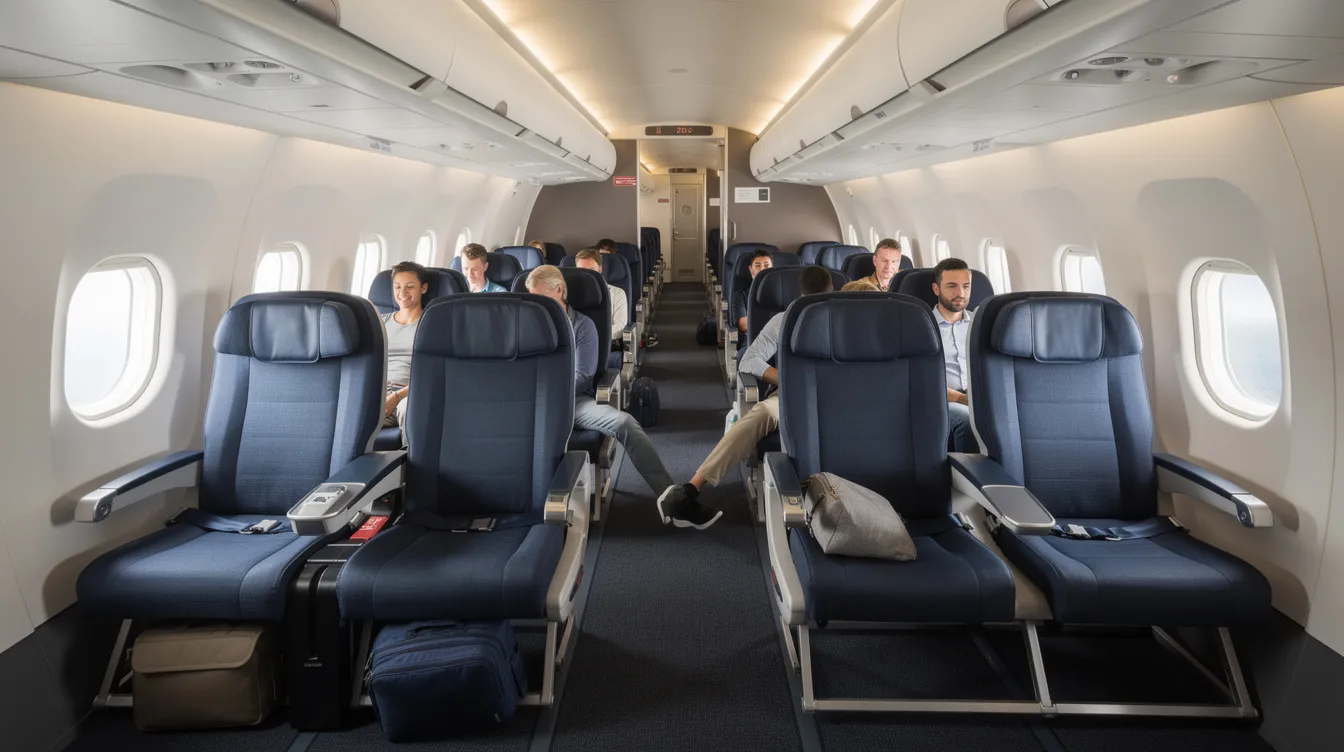
Figuring out the right seat on a Delta flight can mean the difference between arriving refreshed and arriving frustrated. This guide breaks down the Delta Comfort Plus seating chart in detail — covering extra legroom, amenities, aircraft-specific layouts, and how Comfort Plus stacks up against Delta Premium Select, First Class, and Delta One. For travelers who find even the best economy comfort seat too limiting, it also explores private jet charter through Jettly as a flexible alternative.
Delta Comfort seats typically add 2–4 extra inches of legroom over a standard main cabin seat, bringing seat pitch to about 34–35 inches. However, seat width stays mostly the same as regular economy at 17–18 inches.
Comfort Plus offers dedicated overhead bin space, priority boarding, and upgraded snacks on most flights over 250–350 miles, along with complimentary beer, wine, and spirits on flights exceeding 350 miles.
Understanding the seat map by aircraft type — whether you're on a 737, A321, A330, or A350 — helps travelers avoid poor seat choices near lavatories, galleys, or misaligned windows.
When Comfort Plus still feels restrictive, private jet charter through Jettly provides fully private cabins, spacious seating, and flexible routing that no airline seating chart can match.
Delta Comfort Plus is an upgraded economy section of the main cabin offered by Delta Air Lines. It sits above Delta Main (including basic economy fares) and below Delta Premium Select, first class, and Delta One. Think of it as the same economy seat with a few extra inches of legroom and some added perks—not a separate cabin class, but a noticeable difference in comfort for a modest upcharge.
Delta Comfort+ seating offers extra legroom compared to standard economy seating, making it a practical seat upgrade for travelers who want more space without jumping to a premium economy or business class fare. Faster deplaning is also available due to the Comfort+ seating location at the front of the economy section.
In the Delta Comfort+ seating chart, Comfort+ rows are grouped near the front of the main cabin, typically behind First or Delta One and ahead of standard main cabin seats.
The terms "Delta Comfort," "Comfort+," and "Comfort Plus" are used interchangeably by travelers and review sites, but they all refer to the same product on the seating chart.
Seat width in Delta Comfort seats generally matches Delta Main Cabin on the same aircraft. The primary differences are extra legroom, seat location, and amenities — not a wider seat.
Delta Premium Select is a separate premium economy cabin found on select long-haul international routes. It features larger seats, more recline, footrests, and a distinct cabin, which places it a tier above Comfort Plus on the seat map.
Reading the seating chart correctly can save you from ending up in a seat you'll regret. Here's how to navigate the map before clicking "purchase."
Start on Delta.com or the Delta app, select your route and dates, and click the seat icon (or "Seats") to open the seat map before checkout. The chart appears during the seat selection step.
Comfort Plus rows are usually highlighted in a distinct color — often red or pink — compared with Delta main seats (blue) and premium cabins (another shade), making them easy to spot visually.
Check the legend showing Delta One, Delta Premium Select, First, Delta Comfort, preferred seats, and main cabin icons. This legend helps you understand every cabin section at a glance.
Zoom in on the seat map to locate icons for lavatories, galleys, and exits around the Comfort Plus cabin. Proximity to these features directly affects noise and foot traffic at your seat location.
Hover or tap individual seats to see notes like "limited recline," "no window," "near lavatory," or "bassinet location." Delta's interactive seat maps surface these details on most flights.
For code-share Delta flights operated by partner airlines, you may be redirected to the operating airline's chart. Confirm whether an equivalent extra-legroom product exists before selecting your seat.
Cross-check Delta's seat maps with trusted third-party seat review sites for real-world feedback on specific Comfort Plus rows. Fellow travelers often report noise levels, window alignment, and seat cushion quality that the airline chart won't reveal.
The seating configuration for Comfort+ varies based on aircraft type, so knowing what plane you're flying matters as much as knowing the row number. Exact layouts depend on configuration and refurbishment year, but general patterns hold across Delta's fleet.
Boeing 737-800/900ER: Delta Comfort typically occupies several rows immediately behind first class in a 3–3 layout. Expect about 34 inches of seat pitch and roughly 17.2 inches of seat width. These are workhorses on many domestic flights.
Airbus A321/A321neo: Comfort Plus forms a small block of front-cabin economy seats, often the rows directly behind First, with a similar 3–3 layout and enhanced legroom. Newer refurbishments improve overhead lighting and bin size.
Airbus A330-300 / A330-900neo: On these wide-bodies, Comfort Plus usually spans a few forward economy rows in a 2–4–2 pattern. Seat pitch runs around 34–35 inches with seat width near 18 inches. Amenity kits and enhanced comfort items appear on long-haul international flights.
Boeing 767 and A350: Comfort Plus seats sit forward in the main cabin, sometimes near the wing area. Configurations vary between 2–3–2, 2–4–2, or 3–3–3 depending on the specific subtype, and seat width ranges from roughly 16.2 to 17.4 inches on some A350 rows.
Airbus A220-100/A220-300: These aircraft offer some of the widest Comfort Plus seats in Delta's narrow-body fleet — about 18.5–18.6 inches - thanks to the 2–3 layout and inherently wider cabin cross-section.
Check the specific aircraft code shown during booking (for example, "333" for A330-300 or "359" for A350-900) to anticipate whether Comfort Plus will have 2-seat pairs by the windows or standard 3-seat blocks.
The main reason most people fly Delta Comfort is the extra leg space. But the details matter — here's what changes and what stays the same.
Delta Comfort Plus offers 34–35 inches of seat pitch. Main cabin seats have a pitch of 30–32 inches. That's a real gain of about 3–4 extra inches, which translates to noticeably less knee contact with the seat ahead.
Seat width in Comfort Plus is essentially the same width as in standard main cabin on the same jet — typically 17–18 inches. Comfort+ shares the same seat specifications as standard main cabin, so hip and shoulder room do not significantly change.
Basic economy passengers may sit in Delta Comfort+ seats only if they pay to upgrade or receive an elite upgrade. Basic economy itself does not guarantee Comfort Plus placement and restricts early seat selection.
Delta Premium Select on long-haul international routes offers visibly larger seats. Premium Select seats are 18.5–19 inches wide with more recline and a footrest, sitting in a separate cabin — a different approach from the "extra legroom within economy" model of Comfort Plus.
Taller travelers (above 6'2") will find the extra legroom in Comfort Plus substantial on flights longer than 3–4 hours, especially on transcontinental and overnight routes where a few extra inches of pitch reduce fatigue.
Travelers who primarily need room side-to-side rather than more space in front may find more benefit in Premium Select, domestic first class, or Delta One instead of Comfort Plus.
The seat map shows you where to sit. It doesn't show what you'll receive once you're seated. Several amenities make Comfort Plus meaningfully better than a standard economy seat on most flights.
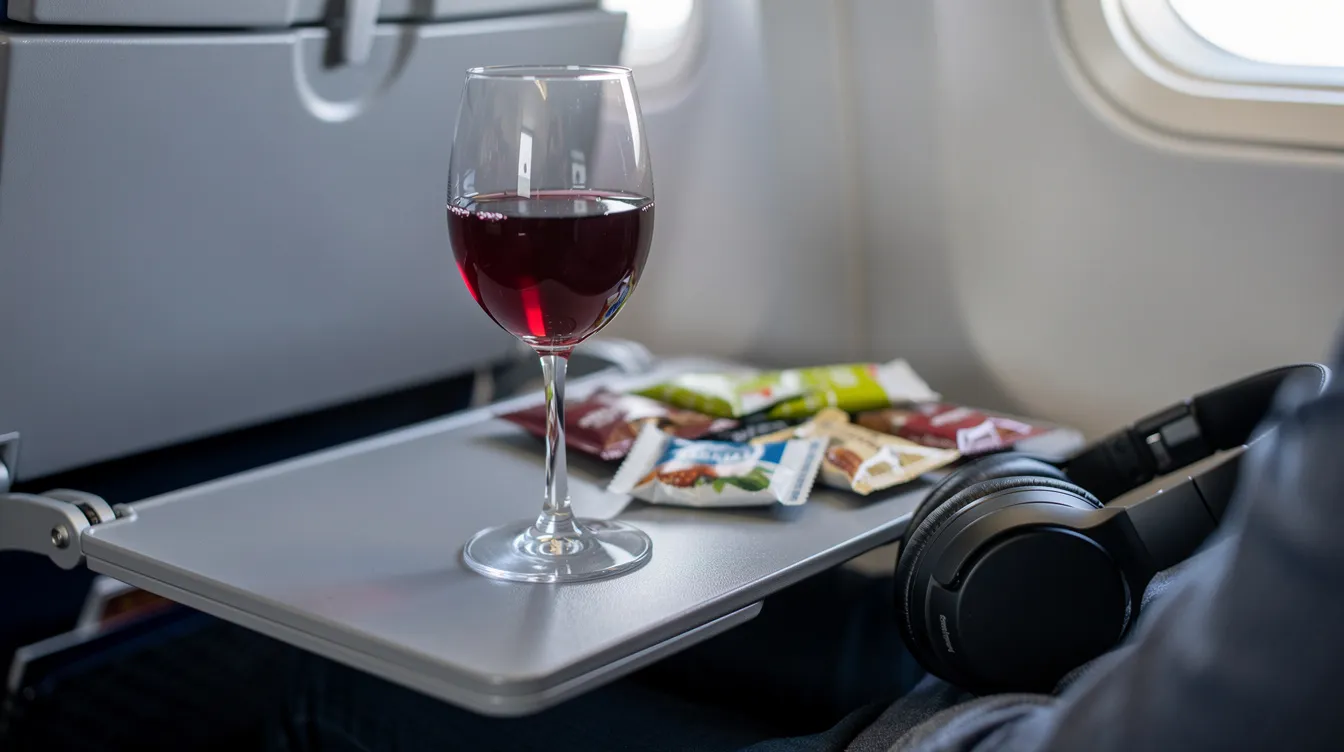
Comfort Plus includes dedicated overhead bin space above the Comfort+ rows. This dedicated overhead bin area reduces competition with main cabin passengers who board later.
Early boarding is available for Delta Comfort Plus passengers. This earlier boarding — typically Zone 3 — lets you settle in, claim your overhead bin space, and board early before the main cabin queue fills the aisle.
Passengers receive complimentary alcoholic drinks on flights over 350 miles, including free beer, wine, and spirits. On flights over roughly 900 miles, premium snacks — upgraded snacks like premium chips, cookies, or fruit — go beyond standard economy offerings. Free drinks and upgraded snacks alone can offset part of the upgrade cost on a long flight.
On many long-haul international flights, Comfort Plus passengers receive small amenity kits, pillows, and blankets not always provided in the basic main cabin seat.
In-flight entertainment options include free access to Delta Studio on long-haul flights. Many Delta Comfort seats also include USB ports, a power outlet, and personal screens, though availability depends on aircraft age. Free entertainment is standard on most equipped aircraft.
Check route details for Wi-Fi coverage and streaming in-flight entertainment. Newer aircraft are more likely to support consistent connectivity in the Comfort Plus cabin.
Not all Comfort Plus seats deliver the same experience. Even within this section, seat location and aircraft quirks create winners and losers.
Bulkhead seats: These offer clear legroom in front and are good for travelers who value open knee space. Trade-offs include losing under-seat storage space during takeoff and sometimes having fixed armrests. Your carry-on bag must go overhead for taxi and takeoff.
Exit rows: Where available in Comfort Plus, exit rows often provide the most extra legroom of any economy comfort seat on the plane. However, seat recline may be restricted, temperatures can be cooler near doors, and there's usually more foot traffic.
Seats near lavatories or galleys: Even though the seat map labels them as extra legroom, these seats can suffer constant foot traffic, queueing passengers, and noise from flight attendants preparing service carts. A few extra inches of pitch won't compensate for a restless overnight flight next to a lavatory.
Window misalignment: On certain aircraft — some A321 or 737 rows — Comfort Plus seats don't line up perfectly with windows, reducing outside views and perceived personal space.
Aisle seats: On a long flight, aisle access matters. Choose aisle seats in Comfort Plus if you prioritize quick access to lavatories and movement, especially on long-haul international routes.
2-seat sections on wide-bodies: Couples or business partners should look for 2-seat pairs on aircraft with 2–3–2 layouts (like A330 or 767), which offer more privacy than sitting in the middle of a 3-seat block.
Your fare class and medallion status directly affect which seats you can access — and when they appear on the chart.
Delta Main Basic (former basic economy) usually doesn't allow free advance seat selection into Comfort Plus. Upgrades, if offered, require extra payment and are limited. This is the most restrictive way to fly Delta Comfort.
Delta Main Classic and Extra fares allow more flexibility in paid upgrades to Comfort Plus at booking and later via "My Trips," with Comfort Plus seats clearly shown on the seat map as purchasable options. Delta Comfort+ costs an extra $30 to $100 for domestic flights, depending on route and demand. You can pay for Comfort+ with cash or Delta SkyMiles.
Delta SkyMiles Medallion members (Silver, Gold, Platinum, Diamond) can receive complimentary upgrades to Comfort+. Higher tiers typically clear earlier and see more seats open on the chart. This elite status perk makes Comfort Plus effectively free for frequent flyers who maintain medallion status.
Elite members often have access to Main Cabin Preferred seating at no extra charge, which is a separate product from Comfort Plus but also marked on the seating chart.
You can upgrade to Comfort+ after booking via Delta's website. Booking Comfort+ requires selecting it during the seat selection process, either at initial purchase or through "My Trips." Higher fare types and elite status increase the chance of being auto-assigned better Comfort Plus seats shortly after ticketing.
Check the seat map frequently in the days before departure. Comfort Plus inventory shifts due to aircraft swaps, schedule changes, and other passenger upgrades. Monitoring your next flight's chart can reveal better seats opening up as departure approaches. Some travelers who flew PDX to Atlanta, for example, reported finding front-row Comfort+ seats available just 48 hours before departure.
Comfort Plus is the entry point for more space on Delta, but it's not the ceiling. Here's how it stacks up against the cabins above it, and where each appears on the seat map.
|
Feature |
Comfort Plus |
Delta Premium Select |
First Class (Domestic) |
Delta One |
|---|---|---|---|---|
|
Seat pitch |
34–35" |
~38" |
35–39" |
Lie-flat beds |
|
Seat width |
17–18" (same as economy) |
18.5–19" |
20–21" |
21–23"+ |
|
Recline / extras |
Standard; no footrest |
Adjustable leg rest, footrest |
Larger recline |
Full lie-flat, suite doors |
|
Cabin |
Front of Main Cabin |
Separate cabin |
Separate cabin, front |
Frontmost premium cabin |
|
Service |
Free drinks, upgraded snacks |
Full meals, amenity kit, 2 checked bags |
Enhanced meal and beverage service |
Luxury bedding, full meals, highest service |
Delta Premium Select is a distinct cabin on long-haul international aircraft with a wider seat, more recline, and footrests. On the seat map, it sits between Comfort Plus and Delta One. For more on how commercial business class categories compare to private jet options, Jettly's guide offers a broader look.
Domestic first class uses a 2–2 recliner layout on narrow-bodies with a significantly wider seat and more personal space, shown at the very front of the seating chart.
Delta One offers lie-flat seats or suites with doors on many long-haul and premium transcontinental routes, occupying the front of wide-body aircraft with the most generous pitch and seat width.
Comfort improvements in Comfort Plus are incremental — extra legroom, overhead bin space, snacks. Upgrades to Premium Select, First, or Delta One change both the class seat design and the overall service level.
Compare the fare difference on your specific route. Sometimes a modest increase in price from Comfort Plus to the next cabin yields a much larger upgrade in seat quality. Bonus miles and travel benefits from higher fare classes can also make the math work better than expected, especially for travelers accumulating Delta SkyMiles on eligible purchases.
Storage anxiety is real. On heavily booked Delta flights, overhead bin space fills fast. Comfort Plus addresses this directly.
Delta Comfort passengers benefit from dedicated overhead bin space above their rows, reducing the risk of having to gate-check a carry-on bag on heavily booked flights.
Earlier boarding means Comfort Plus travelers can place luggage directly above or near their seat. This is particularly valuable to business travelers carrying laptops, documents, or samples who can't afford to have bags gate-checked.
Passengers with critical carry-on items — camera gear, medication, presentation materials — should prioritize Comfort Plus over main cabin to better protect access to storage space, both overhead and under-seat.
On regional jets and some older narrow-body aircraft, bin dimensions vary. Even Comfort Plus passengers should verify their luggage fits the aircraft's specific limits, especially on connecting flight segments using smaller equipment.
Use the seating chart to avoid rows where bins are partially occupied by emergency equipment, which can occasionally reduce available overhead space above certain seats.
Seat quality matters more on certain routes. Business and leisure corridors flown heavily by Delta often feature specific aircraft types worth researching.
Common domestic routes like New York (JFK/LGA) to Los Angeles (LAX), Atlanta (ATL) to Seattle (SEA), and Minneapolis (MSP) to San Francisco (SFO) often use A321s, 737s, or occasionally wide-bodies with well-defined Comfort Plus sections on many routes.
Key international routes — Atlanta to Paris, Detroit to Amsterdam, New York to London - frequently use A330s or A350s with both Comfort Plus and Delta Premium Select, giving travelers more choices on the seating chart.
On business-heavy routes, choose Comfort Plus seats in the first few rows of the cabin for faster deplaning and smoother connections. When you have a tight connecting flight window, even a few rows forward can shave minutes off your walk to the next gate.
Families should look for side 2-seat sections on wide-bodies in Comfort Plus when available. This creates a quasi-private feel for your next trip without upgrading to Premium Select.
Late-booking travelers should monitor the seating chart multiple times between booking and departure. Elite upgrades and schedule changes can free up better Comfort Plus seats closer to the flight, sometimes in preferred seats that were previously blocked.

Some travelers outgrow even the best Delta Comfort seats. When a few extra inches of legroom, a checked bag benefit, and free beer don't move the needle enough — especially for executives managing tight schedules or groups needing privacy — the conversation shifts from "which row" to "which aircraft," and many start exploring easy ways to get a seat on a private jet.
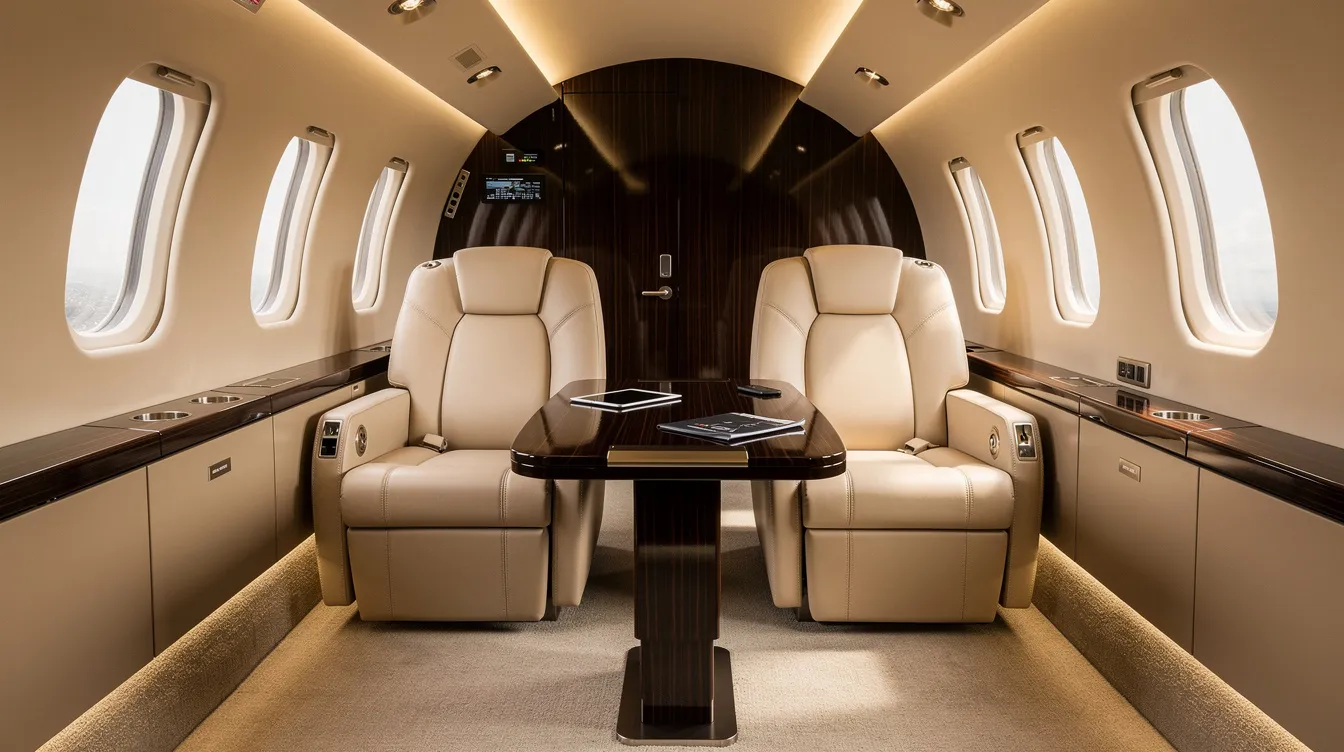
Private jets offer customizable cabin layouts for comfort. Instead of scanning a fixed seating chart for the least-bad economy seat, travelers can choose club-style armchairs, sofas, and conference layouts tailored to the trip, often by following guides on how to buy a seat on a private jet. Private jet travel allows for faster boarding and deplaning — no security lines, no boarding zones, no waiting for 180 fellow travelers to find their seats.
Private jet cabins eliminate the concept of a fixed seating chart. Travelers enjoy spacious seating rather than rows of 3–3 economy seats. Even light jets offer cabin widths starting around 5–5.5 feet, while heavy jets extend to 7 feet or more — vastly more shoulder room than any private charter aircraft configuration.
Private jet charters provide access to over 20,000 aircraft. Jettly operates a digital marketplace connecting travelers to this global network with tools like its airport locator platform, enabling on-demand charter for business trips, family vacations, or urgent travel without long-term ownership commitments.
Unlike the Delta Comfort Plus seating chart, where seat type is fixed, Jettly customers can select aircraft categories — turboprop, light jet, midsize, heavy jet — to match group size, budget, and comfort expectations while using Jettly's guidance on affordable private jet charter costs.
Private flights access smaller airports closer to final destinations, reducing total door-to-door travel time far more than an incremental seat upgrade from Delta Main to Comfort Plus, and flight-sharing platforms that crowdsource private jet flights and empty seats can further lower the cost per traveler.
When Comfort Plus no longer meets the need for more space, privacy, or schedule flexibility, here's how private charter through Jettly stacks up — and how even content creators and travel professionals can benefit through Jettly's high-ticket affiliate program.
Comfort Plus gives you dedicated overhead bin space and extra legroom within an economy cabin. Private jets eliminate competition for overhead bin space entirely — every surface is yours. On a private aircraft, "storage space" is a non-issue.
Jettly's platform provides instant pricing and aircraft options online, avoiding fare class complexity (basic economy, Delta Main, Delta Comfort, Premium Select) and seat map guesswork. Travelers can estimate charter costs with tools like the jet card flight cost estimator before committing.
Private jet charter through Jettly allows tailored itineraries — multi-city business trips, same-day returns, weekend getaways — without conforming to airline schedules or connection hubs, and travelers comparing options can review top private jet charter companies to see how they stack up against commercial extra-legroom products.
Private jets can accommodate meetings in-flight for business travelers. Custom catering through services like Jettly Eats, in-flight catering, ground transportation coordination, and quiet cabins for work go beyond what any Comfort Plus seat can provide, no matter how good the seat cushions.
Frequent flyers who consistently pay for Comfort Plus or higher cabins on Delta Air Lines should evaluate whether occasional private charters via Jettly provide better overall value in time savings and productivity, especially when combined with flexible private jet memberships. The real cost of flying private may surprise travelers who factor in hours saved on the ground.
Environmental responsibility matters regardless of how you fly. Both commercial and private aviation carry trade-offs worth understanding.
Large commercial aircraft like those used by Delta Air Lines are generally more fuel-efficient per passenger when flying full, especially in dense seating configurations including Delta Main and Comfort Plus.
Private jets, while less efficient per passenger on a purely emissions-per-seat basis, can sometimes reduce overall travel time, overnight stays, and connecting flights — indirectly affecting a traveler's total trip footprint. Fewer hotel nights and ground transfers mean fewer emissions outside the aircraft itself.
Platforms like Jettly help optimize aircraft selection so travelers charter appropriately sized aircraft instead of overpowered jets, improving efficiency for each trip. Choosing between a light jet and a heavy jet based on actual passenger count makes a measurable difference, especially when you understand the broader charter airline landscape.
Both commercial and private travelers can explore carbon offset programs and sustainable aviation fuel initiatives when available, aligning comfort decisions with environmental priorities, while also weighing flexible NetJets alternatives like Jettly against traditional fractional ownership.
Factor in both time savings and sustainability when choosing between flying standard economy seating, Comfort Plus, a premium cabin, or chartering a private jet. There's no single right answer — only the one that fits your trip, values, and budget. Some travelers avoid foreign transaction fees and maximize travel benefits by booking strategically across both commercial and private options.
These FAQs address common questions that go beyond the seat-by-seat details covered above.
On Delta.com and the Fly Delta Comfort section of the Delta app, fare options list Delta Comfort as a separate cabin. Clicking "Seats" during flight selection opens a seating chart where Comfort Plus rows are clearly labeled and color-coded. If the option doesn't appear, that particular flight may not offer Comfort Plus — this sometimes happens on regional jets or certain short-haul domestic flights.
Upgrades from Main Cabin to Comfort Plus are often available for purchase online before departure or at check-in. Basic Economy upgrades are more restricted and depend on availability. At the airport, gate agents can process last-minute upgrades when seats remain unsold. The cost typically falls within the $30 to $100 range for domestic flights.
Delta intends the dedicated overhead bin for Comfort Plus passengers in those rows, which greatly improves your chances. But extreme situations — very late boarding, equipment constraints, or aircraft swaps — can still require bags to be moved or gate-checked. Boarding early through priority boarding helps secure your spot.
Exit-row Comfort Plus seats typically provide maximum continuous extra legroom but may have colder drafts, stricter rules, and limited recline. Bulkhead seats offer open space in front yet lose under-seat storage during taxi, takeoff, and landing. Personal preference and flight length should guide the choice — exit rows tend to work better on shorter flights, while bulkheads suit those who prefer to keep bags overhead anyway.
Consider private jet charter through Jettly when you need to visit multiple cities in a short timeframe, carry sensitive equipment, travel with executives who must work in privacy, or consistently find yourself paying for premium cabins on your next flight. In these cases, direct routing, saved time on the ground, and a fully private cabin can outweigh the cost premium over Comfort Plus. Jettly's marketplace connects travelers to over 20,000 aircraft, making it straightforward to compare options for specific itineraries.
The Delta Comfort Plus seating chart is a practical tool for securing extra legroom, dedicated overhead bin space, and better placement than Delta Main — especially on longer or business-critical journeys. For most travelers on most flights, Comfort Plus delivers a noticeable difference over standard economy seating without a dramatic jump in price.
Comfort Plus improves comfort primarily through additional legroom and amenities, while Delta Premium Select, first class, and Delta One offer true seat upgrades with wider, more reclinable designs.
Frequent flyers who still feel constrained in Comfort Plus should consider private jet charter via Jettly for fully private cabins, flexible itineraries, and transparent, on-demand pricing.
Ready to experience private travel on your terms? Explore flight options or request a quote at https://www.jettly.com.
Share this post:
Jay Franco Serevilla
Oct 17, 2026
|
5
min read
Discover tips and trends in the industry.

5
min read
Contact Jet: How to Reach JetBlue Airways Customer Service Fast (and When to Consider Private Charter Instead)
This guide provides essential information on how to quickly contact JetBlue Airways customer service, including phone numbers and digital channels. It also explores the benefits of choosing private jet charter through Jettly for urgent travel needs, offering a faster alternative to waiting on hold.
Read More
5
min read
Private Plane Maintenance: A Practical Guide for Owners and Charter Flyers
Private plane maintenance is essential for ensuring safety, reliability, and the long-term value of aircraft. Owners and charter clients must understand maintenance costs and processes to make informed decisions. Platforms like Jettly provide access to well-maintained jets without the burdens of ownership.
Read MoreStay updated with our latest insights and tips to elevate your journey with us.
MEMBERSHIPS AND ASSOCIATIONS



Disclaimer: Jettly operates as a charter broker, offering access to a global digital jet charter marketplace. Jettly is not a direct air carrier and does not own or operate aircraft. All advertised flights are conducted by third-party air carriers that are fully licensed and hold the appropriate Part 135 or Part 121 certifications issued by the Federal Aviation Administration (FAA) or equivalent regulatory authorities under U.S. or foreign law. Jettly complies fully with the U.S. Department of Transportation's Part 295 and Part 298 Charter Broker regulations. Jettly does not carry additional liability insurance. Passengers are covered by aircraft operator insurance. TICO: 50023770


