



Login
Get Instant Pricing On 23,000+ Aircraft

>
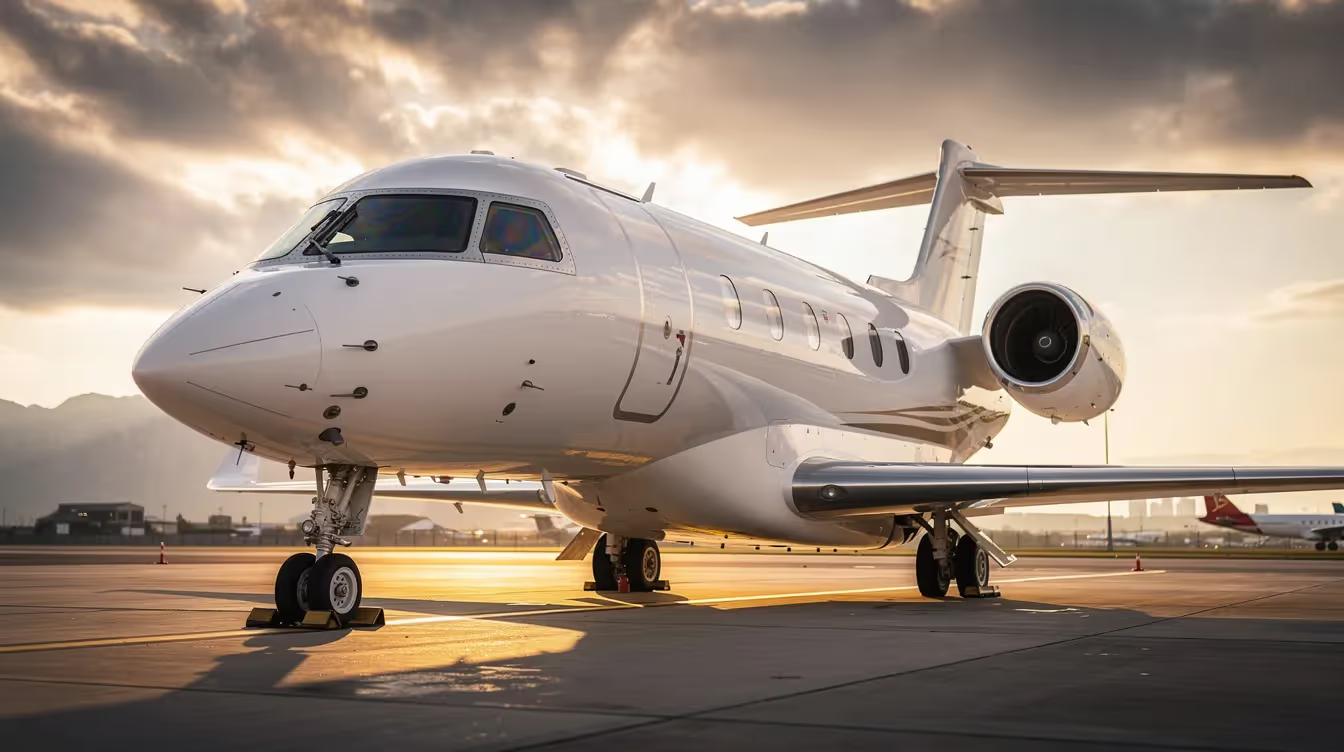
Delta Air Lines is one of the largest carriers in global commercial aviation, moving millions of passengers each year across an extensive network of routes spanning six continents. For travelers weighing their options between scheduled airline service and private aviation, understanding what Delta offers—and where it falls short—can shape better travel decisions.
This article breaks down Delta’s operations, from its Atlanta headquarters to its far-reaching hub system, while comparing the commercial airline experience with on-demand private jet charter through platforms like Jettly. Whether the priority is loyalty rewards, cabin comfort, or the flexibility to depart on a personal schedule, the comparison reveals which option fits different travel needs.
Delta Air Lines is a major U.S. carrier headquartered in Atlanta, operating thousands of daily flights to more than 300 destinations across six continents through nine domestic hubs and the SkyTeam alliance network.
This article compares Delta’s commercial model with private aviation options like Jettly, focusing on flexibility, time savings, and traveler control over schedules and aircraft type.
Delta offers multiple cabin classes, from Basic Economy to Delta One, supported by the SkyMiles loyalty program and consistently strong on-time performance in North America.
Major milestones include the 2008–2010 Northwest Airlines merger, which created the world’s largest airline, and recent operational challenges, including the 2024 CrowdStrike-related IT disruption that canceled over 7,000 flights.
Readers seeking alternatives when commercial schedules prove limiting can explore private charter options at https://www.jettly.com for direct routing, flexible departure times, and access to smaller airports.
Delta Air Lines, Inc. operates as one of the largest legacy carriers in the United States, with its headquarters positioned on a corporate campus on the northern boundary of Hartsfield–Jackson Atlanta International Airport in Atlanta, Georgia. Founded in 1925, it is the second-oldest operating commercial airline in the U.S., with a rich history spanning nearly a century.
The airline plays a significant role in global commercial aviation, connecting travelers across continents through an extensive route network built over nearly a century of operations. Delta operates over 5,400 flights daily, serving 325 destinations in 52 countries on six continents as of early 2026.
The carrier maintains nine domestic hubs, with Hartsfield–Jackson Atlanta International Airport serving as the primary hub and the largest in terms of total passengers and departures. Delta employs nearly 103,000 people as of December 2024, supporting its vast operations.
In terms of industry standing, Delta ranks among the top U.S. airlines by revenue, fleet size, and passengers carried. Its fleet consists of 987 mainline aircraft, making it the third-largest commercial airline fleet in the world. The airline reported record financial performance in 2025, including $5 billion in pre-tax profit, a double-digit operating margin, and $4.6 billion in free cash flow. These figures placed Delta at No. 10 on Forbes’ Most Trusted Companies list, reflecting both operational scale and brand value.
Delta's logo, often called the 'widget', was originally unveiled in 1959 and remains a recognizable symbol of the brand. The current livery, named 'Upward & Onward', was introduced in 2007 as part of a rebranding effort following the airline’s emergence from bankruptcy.
As a founding member of the SkyTeam global alliance, Delta extends its network through codeshare partnerships with carriers such as Air France-KLM, Korean Air, and Aeroméxico. This alliance model enables single-ticket itineraries across multiple airlines, with reciprocal elite benefits for frequent flyers.
The networked hub-and-spoke approach contrasts with the point-to-point flexibility offered by private jet charter platforms. While Delta excels at scheduled commercial travel along high-demand routes, platforms like Jettly serve travelers who need fully on-demand private flights, bespoke routing, or access to smaller airports not typically served by large airlines.
Delta’s evolution from a regional agricultural aviation company to a global network carrier spans nearly a century of adaptation, mergers, and strategic expansion.
The company traces its roots to 1925, when Huff Daland Dusters launched in Macon, Georgia, specializing in aerial crop dusting to combat boll weevil infestations. This operation would become the foundation for passenger service.
Key early developments include:
1929: First passenger flights initiated
1930: Incorporation as Delta Air Corporation
1934: Secured U.S. Mail Route 24, providing revenue stability
1941: Headquarters relocated to Atlanta, positioning the carrier near what would become the world’s busiest airport
The postwar period brought rapid growth through acquisitions and fleet modernization. Delta acquired Chicago and Southern Air Lines in 1953, gaining its first scheduled international routes into the Caribbean and Latin America.
The transition from propeller aircraft to jets through the late 1950s and 1960s culminated in an all-jet fleet by 1970. This technology shift improved speed, range, and passenger capacity across Delta’s route system.
The 1972 takeover of Northeast Airlines expanded service throughout the U.S. Northeast, while 1978 marked the launch of trans-Atlantic flights from gateways including Atlanta.
1981: Frequent-flyer program launched, marking early adoption of loyalty rewards
1987: Acquisition of Western Airlines, expanding Delta’s presence on the U.S. West Coast and launching trans-Pacific routes
1990s: Significant growth in Latin America fueled by deregulation and international route expansion
2003: Launch of the Song brand, Delta’s low-cost carrier experiment that operated until 2006
The 1987 acquisition of Western Airlines significantly strengthened Delta’s position on the U.S. West Coast and opened full trans-Pacific routes. Deregulation in the 1980s and 1990s enabled rapid expansion in Latin America.
The short-lived Song brand (2003–2006) represented industry experimentation with low-cost offerings, though it ultimately folded back into mainline Delta.
High fuel costs and competitive pressure led to a 2005 Chapter 11 bankruptcy filing. Delta emerged in 2007 as a reorganized carrier, successfully defending against a hostile takeover bid from US Airways.
The 2008–2010 merger with Northwest Airlines reshaped the industry:
April 2008: Merger announced
October 2008: Regulatory approval and deal closing
End of 2009: Operational integration with a single operating certificate
Early 2010: Full brand and system integration complete
This merger created what was then the world’s largest airline by traffic, establishing the scale that defines Delta today.
These milestones positioned Delta Air Lines Inc as a global network carrier. However, modern travelers increasingly blend commercial flights with private charters via platforms like Jettly when schedules, connections, or privacy requirements demand more flexibility than fixed airline timetables can provide.
Delta’s global footprint centers on a hub-and-spoke network within the United States, supplemented by alliance and codeshare partnerships that extend connectivity worldwide.
The carrier operates thousands of daily departures across Delta's mainline and Delta Connection regional affiliates. This network serves hundreds of destinations spanning North America, Europe, Asia-Pacific, Latin America, Africa, the Middle East, and the Caribbean, illustrating how both commercial carriers and private jets can support international travel across multiple continents.
Delta maintains nine primary hubs across the continental United States:
Atlanta (ATL): Largest hub by daily departures; serves as a domestic and international gateway
Detroit (DTW): Provides Midwest connectivity
Minneapolis–St. Paul (MSP): Covers the Northern plains and serves as a trans-Atlantic gateway
Salt Lake City (SLC): Focuses on the Western U.S. and the Rocky Mountain region
New York (JFK): Key hub for trans-Atlantic density and international long-haul flights
New York (LaGuardia - LGA): Primarily serves domestic business travel
Los Angeles (LAX): Major trans-Pacific gateway
Boston (BOS): Links East Coast to European destinations
Seattle-Tacoma (SEA): Gateway for Asia-Pacific routes
Trans-Atlantic operations concentrate at ATL, JFK, and BOS, while trans-Pacific flights route primarily through Seattle and LAX. Interior hubs like DTW and MSP handle strong domestic connectivity.
Recent route expansion includes 2026 additions:
Boston to Madrid and Nice (May start)
Seattle to Rome and Barcelona
JFK to Sardinia, Porto, and Malta
Atlanta to Riyadh (October 2026) and Marrakech
These additions expand Delta’s Africa service to six nonstop destinations, reflecting growth in long-haul international flights.
Delta’s membership as a founding member of SkyTeam enables coordinated schedules and reciprocal elite benefits across partner airlines. Codesharing with Air France, KLM, Korean Air, Aeroméxico, and other airlines broadens itinerary options for passengers booking international routes.
This alliance model allows multi-carrier itineraries under a single ticket, suiting travelers who prioritize price and loyalty accrual through SkyMiles. However, alliance arrangements still rely on fixed schedules and connecting flight requirements.
Private jet platforms like Jettly take a different approach, offering direct, non-stop routing tailored to individual travelers or groups, often supported by an airport locator tool that makes it easy to find convenient departure and arrival points and illustrates where private jets typically land, including major hubs and smaller regional airports. While Delta’s network strength covers major commercial airports, private charter solutions provide access to thousands of smaller airports that lack scheduled airline service.
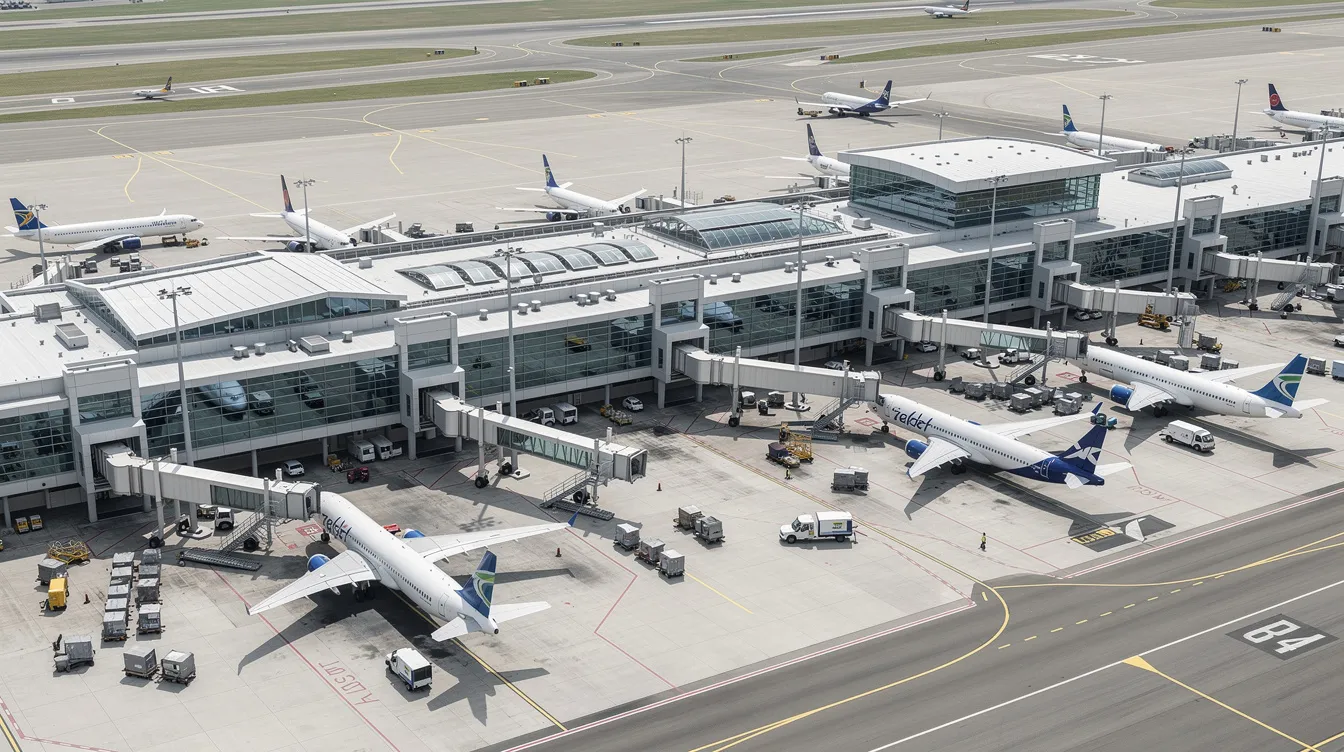
Delta’s fleet represents one of the largest commercial aircraft operations globally, with ongoing fleet renewal focused on fuel efficiency and reliability improvements.
As of early 2026, Delta operates 987 mainline aircraft, blending Airbus and Boeing types across narrow-body and wide-body categories. Regional jets through Delta Connection partners, including Endeavor Air and SkyWest Airlines, supplement mainline operations.
Notable subfleets include:
Airbus A220: Used primarily for short-haul and thinner domestic routes.
Boeing 757/767: Operates domestic transcontinental flights as well as trans-Atlantic service.
Airbus A330/A350: Deployed mainly for long-haul international flights.
Boeing 717: Serves high-frequency regional markets.
Incoming A350-1000: Scheduled for delivery in 2026 to serve premium long-haul routes.
Delta took delivery of 38 aircraft in 2025, including A321neo, A220-300, and A350-900 models. The carrier completed winglet upgrades on its Boeing 737-800 fleet to improve efficiency.
Delta’s average fleet age is 14.8 years as of December 2024, reflecting a balance of newer and older aircraft.
Over 1,100 aircraft now feature Wi-Fi equipment, with full fleet coverage expected by 2026. Delta offers fast, free Wi-Fi for SkyMiles members on most domestic flights, a significant upgrade introduced in 2025 to enhance passenger connectivity.
Delta TechOps, based in Atlanta, handles in-house maintenance, repair, and overhaul for Delta’s fleet while also servicing third-party airline customers, including support for widely used narrow-body types such as the Boeing 737-800, which offers high-density short-haul capabilities. This division contributes operational control and generates stable ancillary revenue.
Delta has reported on-time performance rates above the North American industry average, with completion factors among the highest for large carriers. In 2023, Delta flights arrived on time 84.72% of the time, compared to the industry average of 74.45%.
The airline has been named North America’s most on-time airline by Cirium for five consecutive years through 2025 and has received multiple Newsweek BrandSpark awards, including Best Airline for Customer Service and Best Airline Loyalty Program in 2026.
Delta was also voted 2024 Best Airline in North America and Best Airline Staff Service in North America by Skytrax, underscoring its reputation for operational excellence and customer care.
However, passenger reviews reveal mixed experiences, with some dissatisfaction expressed regarding customer service responsiveness, seat assignment issues during flight changes, variable in-flight entertainment quality, food service criticism, especially on long-haul flights, and inconsistent aircraft cleanliness.
Many travelers report frustration with seat assignments and availability when changing flights, often unable to select preferred seats. In-flight entertainment options can vary significantly between aircraft, impacting the overall flying experience. Additionally, Delta's food service has faced criticism, particularly on long-haul flights, with some passengers describing meals as unappetizing or poorly prepared.
Delta utilizes dynamic pricing strategies heavily influenced by flight capacity, adjusting fares in real time based on demand and availability, whereas private jet customers can use a private jet charter cost estimator to understand whole-aircraft pricing before booking, or explore chartering larger private aircraft, such as Boeing 737-800 jets, for high-capacity group travel.
Delta offers five distinct seat products catering to different traveler needs, ranging from economy tiers to premium cabins:
Delta One: The flagship business-class cabin, primarily found on long-haul international and select transcontinental flights. All seats are lie-flat, though their dimensions and configurations vary significantly across the fleet. Amenities include upgraded dining, enhanced bedding, amenity kits, and priority airport services.
First Class: Available on mainline domestic flights and select short- and medium-haul international routes, featuring wider recliner seats with additional legroom, complimentary meals, free snacks, alcoholic beverages, and priority boarding and baggage handling.
Premium Select: Positioned between economy and business class, Premium Select offers extra legroom, adjustable leg rests, upgraded meals, and enhanced service. This premium economy-style cabin is available on certain wide-body aircraft.
Comfort+ (Comfort Plus): An extra-legroom section within the Main Cabin, featuring a seat pitch of 34–36 inches. Passengers enjoy priority boarding, dedicated overhead bin space, complimentary snacks, and alcoholic beverages.
Main Cabin and Basic Economy: The Main Cabin offers standard economy-class seating, with seats ranging from 17 to 18.6 inches wide and 30 to 33 inches of pitch. Basic Economy is a more restrictive fare type within the Main Cabin, offering the same services but with fewer flexibility options and limited seat selection, typically assigned during check-in, and priced lower.
Passenger feedback highlights attentive flight attendants but notes variability in Wi-Fi reliability, in-flight entertainment options, food quality, and cabin cleanliness across different aircraft and routes.
Delta Studio provides 4K HDR displays and a vast content library, including popular platforms like YouTube and Crunchyroll. However, entertainment options can vary significantly between aircraft, impacting the overall flying experience.
Delta uses loyalty programs and airport lounges to retain frequent flyers, particularly corporate travelers and high-value customers who drive significant revenue.
SkyMiles is Delta’s primary frequent-flyer program with several distinctive features:
Miles do not expire, but accounts may be deactivated under certain conditions.
Members earn miles by flying, spending on Delta credit cards, or using travel partners.
General members earn 5 miles per dollar spent on flights, with Medallion status holders earning higher rates.
Delta offers four personal credit cards with American Express that allow users to earn SkyMiles for their spending, including a 15% discount on award bookings for Amex cardholders.
SkyMiles members can check their account balance and current Medallion status via the Fly Delta app.
Medallion status tiers, earned through collecting Medallion Qualifying Dollars (MQDs), unlock escalating benefits such as priority boarding, complimentary upgrades, waived fees, and lounge access.
While SkyMiles offers valuable rewards, redemption rates can be high, especially for business-class seats, requiring careful consideration when using miles.
Delta’s SkyMiles remuneration reached $8.2 billion in 2025, with a target of $10 billion, representing a significant portion of overall profitability.
Elite Medallion status tiers unlock escalating benefits:
Silver: Priority boarding and complimentary upgrades when space is available.
Gold: Enhanced upgrade priority and waived same-day change fees.
Platinum: Better upgrade priority and access to Choice Benefits selection.
Diamond: Highest upgrade priority, access to Delta Sky Club lounges, and Global Entry credit.
Medallion members receive priority treatment for free changes, complimentary upgrades to premium cabins when available, and waived baggage fees. Medallion status directly impacts rebooking priority during disruptions.
Delta Sky Club lounges provide airport refuges with typical amenities:
Quiet seating and workspaces
Complimentary Wi-Fi
Food and beverage options
Showers at select locations
Premium dining concepts in newer clubs
Access comes through annual membership, daily passes, certain credit cards, or elite status. Crowding at peak times remains a common complaint.
Premium Delta One Club lounges operate at JFK, LAX, and BOS and are designed specifically for long-haul business-class passengers. These facilities offer more exclusive pre-flight dining and service environments.
SkyBonus aggregates travel spend from small and medium-sized businesses into company-level rewards. Earned points convert to tickets, upgrades, lounge memberships, or status benefits.
Corporate travel managers often balance Delta’s network coverage, negotiated fares, and loyalty ecosystem against other options. For executive teams requiring direct, time-critical flights to airports not well served by scheduled airlines, private charters arranged through Jettly provide an alternative worth evaluating.
Delta invests significantly in digital infrastructure to manage bookings, check-in processes, and travel disruptions. The Fly Delta app serves as the primary interface for most customer interactions.
The Delta app centralizes core travel functions:
Mobile booking for domestic and international flights
Digital check-in and mobile boarding passes
Real-time flight status updates
Seat selection and upgrade options
Same-day change tools
Push notifications for gate changes or delays
Checked baggage tracking
SkyMiles account integration for earning and redemption
Trip extras and travel insurance options
Multiple language support, including English and Spanish
Delta’s app collects data for personalization, targeted offers, operational improvements, and advertising. Some information links to identifiable profiles, while other data gets aggregated or anonymized.
Users can adjust privacy and tracking preferences within device operating systems and app settings. Reviewing the airline’s privacy policies helps travelers understand how travel history, payment information, and status details are handled.
This centralized airline-app ecosystem contrasts with tech-driven private jet platforms like Jettly, which also rely on digital tools but emphasize transparent charter pricing, aircraft comparisons by category, and real-time availability for on-demand private flights, without the complexity of loyalty programs.
Large airlines operate under strict safety regulations while facing increasing scrutiny about environmental impact, operational resilience, and public communications during incidents.
Delta’s modern safety performance aligns with other major U.S. carriers operating under FAA oversight. While the airline experienced multiple fatal accidents and serious incidents in earlier decades, contemporary operations reflect industry-standard safety protocols.
Notable 2020s safety events include:
Emergency landings due to mechanical issues
Cabin incidents, including ceiling panel detachments and pressurization problems
Investigations prompting corrective maintenance actions
Delta publicly reaffirmed safety commitments following these events.
Delta pursues emissions reduction through multiple approaches:
Sustainable Aviation Fuel: Partnerships with Minnesota Hub, Shell, Montana, and Portland suppliers to promote eco-friendly fuel options.
PreKote: An aircraft surface preparation process that reduces water usage and hazardous waste.
fello’fly trials: Formation flying tests demonstrating a potential 5% reduction in fuel consumption.
Winglet upgrades: Completed fleet-wide enhancements to improve fuel efficiency.
Legal and reputational challenges have emerged around environmental claims. Class-action litigation over past “carbon-neutral” marketing prompted Delta to shift from offset-reliant messaging toward direct emissions reductions and more cautious public statements.
In January 2020, Delta Flight DL89 experienced an emergency return to LAX. The aircraft released jet fuel at low altitude over populated areas, including schools near San Diego and San Francisco suburbs. Health effects affected students and teachers in the impacted zones.
Delta reached a multi-million-dollar settlement without admission of liability.
The July 2024 operational meltdown, tied to a faulty software update from a third-party cybersecurity vendor, created Delta’s most significant disruption in years:
More than 7,000 flight cancellations
Hundreds of thousands of affected passengers
Regulatory scrutiny by the U.S. Department of Transportation
Ongoing litigation over alleged losses exceeding $100 million
Criticism of legacy IT systems and contingency planning
The incident sparked broader discussion about resilience in large airline operations and dependency on technology vendors.
Private charter platforms like Jettly typically manage smaller-scale operations but still depend on robust digital infrastructure and safety compliance from partner operators. The difference lies in scale: disruptions affecting a single operator impact far fewer passengers than systemwide airline failures.
Delta allows free changes for all tickets except Delta Main Basic. If your new flight is more expensive, you'll only pay the fare difference when changing your flight. If you cancel a Delta flight, you'll receive an eCredit valid for 1 year from your original ticket purchase date.
Understanding when commercial airline service makes sense versus when private jet charter delivers superior value requires comparing both options across key dimensions.
Delta operates fixed timetables along high-demand routes, relying on connections through hubs. This works well for predictable travel but creates dependencies on departure times, layovers, and the availability of connecting flights.
Jettly enables travelers to choose precise departure times, avoid layovers, and fly directly between city pairs without hub constraints by selecting from a broad range of private charter aircraft, including efficient light options such as the Cessna 340 with business-friendly range and operating costs. A new flight can often be arranged within hours rather than days.
Airport types: Delta primarily uses major commercial terminals, while Jettly can operate from both commercial airports and thousands of smaller general aviation (GA) airports.
Security screening: Delta passengers go through standard TSA lines, whereas Jettly offers simplified Fixed Base Operator (FBO) procedures.
Ground transfer time: Travelers using Delta often face significant ground transfer times, while Jettly can reduce this by using airports closer to city centers.
Gate access: Delta passengers typically board by walking through terminals to gates, while Jettly passengers board directly from the tarmac.
Delta primarily uses major commercial airports with large terminals. Jettly can route flights through general-aviation airports closer to city centers or remote destinations, significantly reducing ground-transfer time.
Delta cabins accommodate hundreds of passengers, divided into multiple classes with varying seat pitch and service levels. Privacy is limited, and amenities depend on fare class.
Jettly charters dedicate the entire aircraft to one customer group, offering consistent space, privacy, and the opportunity to tailor catering, seating layouts, and onboard amenities without sharing space with strangers, while still providing guidance on affordable private jet charter options for cost-conscious travelers.
Solo travelers or small groups on high-frequency routes
Routes like New York–Atlanta, Los Angeles–Seattle, or San Francisco to other major cities
Travelers prioritizing SkyMiles accrual and elite status benefits
Budget-conscious booking with advance planning
Long-haul international flights with daily service availability
Executive teams visiting multiple cities in one day
Family trips to destinations with limited airline service
Urgent flights requiring late-notice departure
Group travel where per-person commercial costs approach charter rates
Privacy-sensitive travel for business discussions or personal reasons
Delta fares are sold per seat with revenue-management pricing that fluctuates based on demand, advance booking, and fare class. Travelers pay individually and earn SkyMiles for future use.
Jettly pricing is based on whole-aircraft charter by the hour or by route, with structured private jet memberships available for frequent travelers. Travelers considering long-term commitments may also want to understand jet card costs and how different pricing structures work. For detailed information on aircraft categories, rate ranges, and membership options, visit https://www.jettly.com.
Sophisticated travelers and businesses often combine both approaches. Using major airlines like Delta for routine, predictable trips while deploying private jet platforms like Jettly as a flexible NetJets alternative and comparing them with established leaders such as NetJets and their private aviation model when time savings, control, or itinerary complexity justifies a charter creates an optimized travel strategy.

Delta plans to operate over 650 weekly flights to Europe in summer 2026, marking its largest-ever schedule to the continent. Additionally, the airline will begin nonstop service from Atlanta to Riyadh, Saudi Arabia, starting in October 2026, further expanding its international reach.
Ready to experience private travel on your terms? Explore flight options or request a quote at https://www.jettly.com.
This section addresses common questions about flying with Delta Air Lines and how commercial service compares with private jet charter options, including differences in onboard amenities such as traditional airline catering versus specialized in-flight catering for private jets through services like Jettly Eats.
Most non-Basic Economy Delta tickets issued in the U.S. and Canada now have no change fees, though travelers must still pay any fare difference when moving to a more expensive flight. Same-day changes follow specific rules based on fare class and route.
Basic Economy tickets remain more restrictive, often allowing only limited changes or partial credits with added fees, particularly on some international routes. Checking fare conditions before purchase prevents surprises.
Private charters booked via Jettly often allow adjustments to departure time and routing by coordinating directly with the operator, subject to aircraft availability and any contract terms. Travelers anticipating frequent last-minute shifts may want to compare flexible commercial fares with on-demand scheduling through private charter, or even consider jet card programs for corporate travelers and review comprehensive guides to jet card pricing and cost drivers if they require regular access to private aircraft.
Delta permits small dogs and cats in the cabin on many domestic and some international routes, provided they travel in an approved carrier fitting under the seat. A pet-in-cabin fee applies, with strict limits on the number of animals per flight.
Larger pets generally must travel in the cargo hold on certain routes and aircraft types, subject to temperature, breed, and destination restrictions. Documentation and advance reservations are required.
Private charters arranged through Jettly often accommodate pets more comfortably in the main cabin, allowing them to stay near owners without under-seat carriers. Operators may require health certificates and cleaning fees, and travelers can also explore options such as shared flights or discounted empty leg flights that repurpose repositioning aircraft for up to 75% off standard charter rates by learning how to buy a seat on a private jet, or partnering with Jettly through an ultra-high-ticket affiliate program that rewards referrals for private travel services. Comparing policies, costs, and stress levels for animals helps determine the better option, especially for older or anxious pets.
Delta typically offers more economical options for solo travelers or small groups flying between large cities with frequent service—routes like New York to Atlanta or San Francisco to Seattle—especially when booking in advance and using SkyMiles or promotional fares.
Delta’s strength lies in predictable schedules, alliance connections, and integrated loyalty benefits. These features suit routine business trips, family vacations on major routes, and long-haul international travel where daily departure options are plentiful.
Private charter via Jettly may work better for visiting multiple cities in a single day, flying to remote areas without airline service, transporting sensitive equipment, or coordinating complex schedules for executives or large families, and in some cases, supplementing fixed-wing flights with helicopter rentals whose costs vary by aircraft type, duration, and location. Evaluating total travel time, flexibility needs, and per-person cost clarifies the better choice.
During widespread disruptions from severe weather, air-traffic control issues, or IT outages, Delta generally offers rebooking on the next available flights, travel credits, or refunds in certain cases. Priority typically goes to elite-status members and higher-fare classes.
Large-scale events like the 2024 software-related meltdown can strain rebooking capacity and customer service resources, leading to long hold times, crowded airports, and multi-day delays for some passengers.
Private charter via Jettly can sometimes serve as a backup for critical trips when commercial capacity is heavily constrained, provided suitable aircraft and slots are available at nearby airports, including options such as private jet charter to Addis Ababa, Ethiopia. Corporate travel planners may benefit from contingency plans that include both commercial rebooking paths and access to on-demand charter solutions, drawing on resources that compare the best private jet charter companies and their respective strengths.
Delta tickets cover only commercial segments operated by Delta or its codeshare partners. Private jet legs cannot be issued on the same ticket or passenger record as Delta flights.
However, travelers can design door-to-door journeys by booking a Delta flight into a major hub and then chartering a private jet via Jettly to connect onward to a regional airport closer to their final destination, such as arranging a private jet charter in New Delhi after a long-haul commercial segment or booking tailored services like private jet charter to Abuja in Nigeria’s Federal Capital Territory, exclusive private jet charter into Chennai, Tamil Nadu, bespoke private jet services for Hyderabad in Telangana, luxury private jet charter options serving Mumbai, Maharashtra, or dedicated private jet charter into Islamabad and nearby airports in Pakistan. This hybrid approach is common among business and leisure travelers heading to remote resorts, secondary cities, or locations without regular airline service.
Allowing extra connection time between the scheduled Delta landing and private jet departure accounts for baggage collection, customs, and immigration when applicable, and transfers across terminals or airports.
Delta Air Lines has evolved from a 1920s crop-dusting operation into a global network carrier with extensive hubs, a diverse fleet exceeding 900 aircraft, multiple cabin classes from Basic Economy to Delta One, and a mature loyalty ecosystem through SkyMiles. The airline serves millions of passengers annually across routes spanning six continents.
Delta’s strengths center on scale, SkyTeam alliance connectivity, and broad route coverage, supported by strong operational metrics and industry recognition. These advantages come with complexity, including exposure to systemwide disruptions like the 2024 IT outage, aging aircraft concerns on some routes, and ongoing investment requirements in technology and sustainability.
For most scheduled commercial journeys, Delta offers structured flight options and loyalty benefits that suit frequent travelers on major routes. However, for travelers who need direct routing, flexible departure times, and private use of the aircraft, a private jet charter platform provides a faster, more controlled alternative.
Those considering private aviation alongside commercial airlines can explore Jettly’s on-demand charter options, aircraft categories, and pricing tools at https://www.jettly.com.
Share this post:
Jay Franco Serevilla
Mar 31, 2026
|
5
min read
Discover tips and trends in the industry.
5
min read
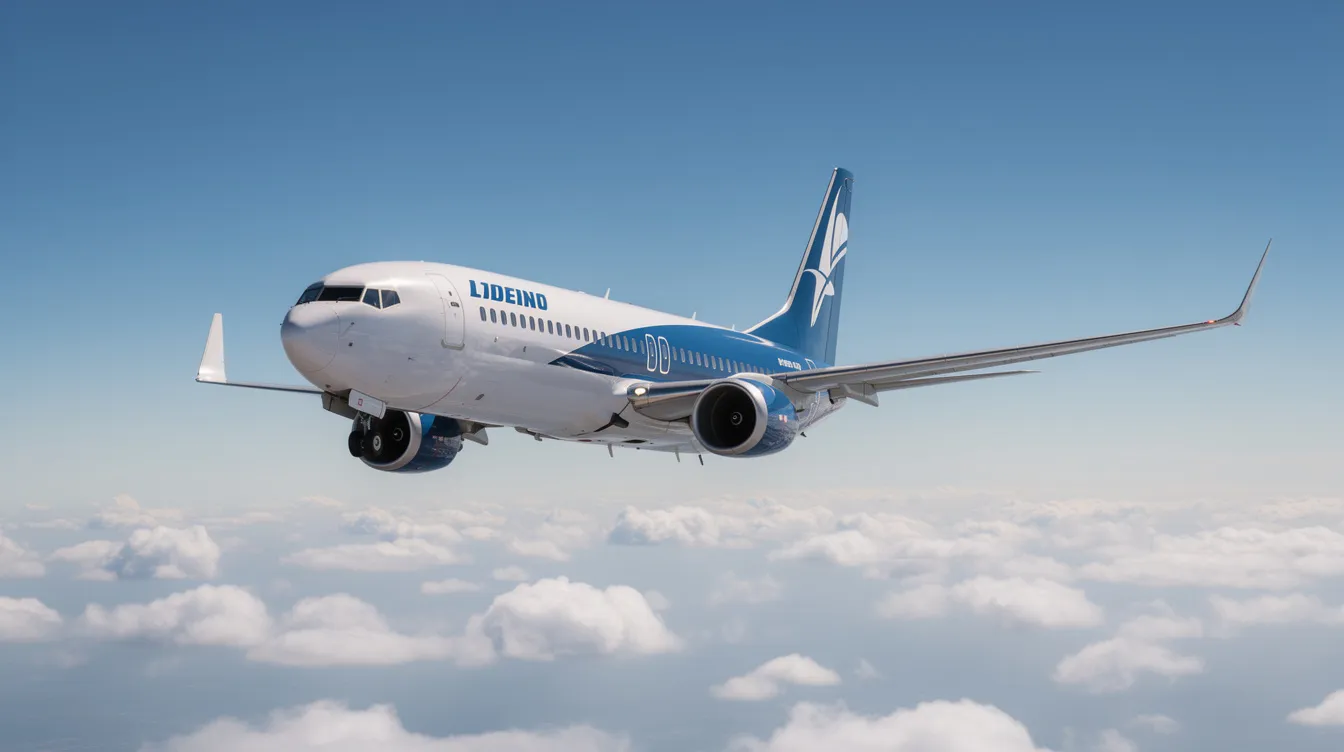
Boeing 737-800 Maximum Speed: Performance, Specifications, and Charter Use
The Boeing 737-800 is a leading narrowbody airliner known for its maximum speed of Mach 0.82, translating to approximately 620-630 mph. In practice, it typically cruises at Mach 0.78-0.79, balancing speed and fuel efficiency for airlines and charter operators. With a range of about 2,935 nautical miles and seating for up to 189 passengers, it serves both commercial and private charter needs effectively.
Read More
5
min read
Golden State Flying Club: Flight Training and Aircraft Rental in San Diego
Golden State Flying Club in San Diego offers accessible flight training and affordable aircraft rental at Gillespie Field. With a focus on community and cost-effective learning, the club supports aspiring pilots through structured programs and experienced instructors. Members enjoy flexible scheduling and the opportunity to fly a well-maintained fleet of aircraft for both training and personal trips.
Read MoreStay updated with our latest insights and tips to elevate your journey with us.
MEMBERSHIPS AND ASSOCIATIONS



Disclaimer: Jettly operates as a charter broker, offering access to a global digital jet charter marketplace. Jettly is not a direct air carrier and does not own or operate aircraft. All advertised flights are conducted by third-party air carriers that are fully licensed and hold the appropriate Part 135 or Part 121 certifications issued by the Federal Aviation Administration (FAA) or equivalent regulatory authorities under U.S. or foreign law. Jettly complies fully with the U.S. Department of Transportation's Part 295 and Part 298 Charter Broker regulations. Jettly does not carry additional liability insurance. Passengers are covered by aircraft operator insurance. TICO: 50023770


