



Login
Get Instant Pricing On 23,000+ Aircraft

>
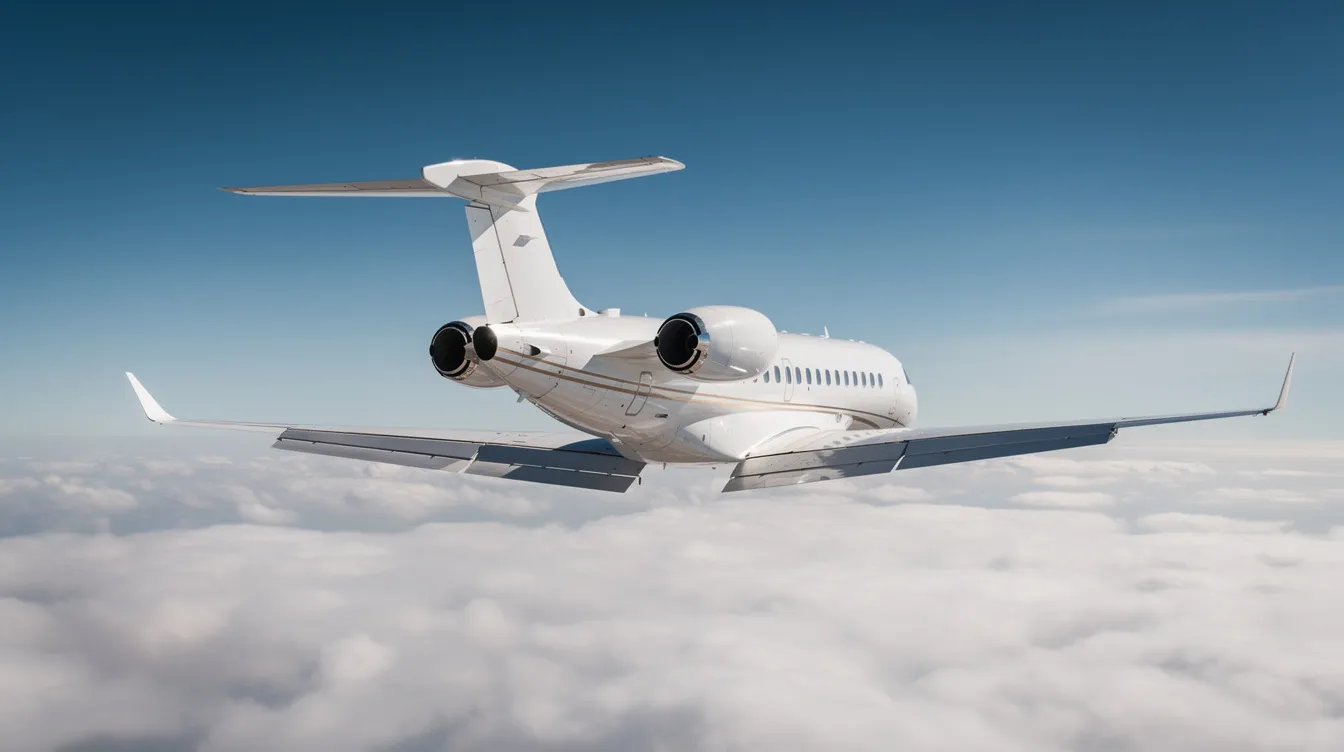
The Dassault Falcon 900B is a three-engine, long-range business jet that continues to earn its place in charter fleets around the world. Built by Dassault Aviation during the 1990s, this aircraft delivers transcontinental range, a roomy three-zone cabin, and the kind of short-field performance that opens up airports most large jets simply cannot reach. This guide is for travellers, charter clients, and aviation enthusiasts interested in the Dassault Falcon 900B. Its unique combination of range, comfort, and airport accessibility makes it a top choice for a variety of missions in today's charter market. The Falcon 900B features a tri-jet configuration—a three-engine setup for enhanced safety and performance—setting it apart from many other business jets. For travellers looking for a capable, cost-effective large-cabin charter, the Falcon 900B remains a strong option - and Jettly makes it easy to find and book one.
The Dassault Falcon 900B is a long-range, three-engine business jet produced by Dassault Aviation in the 1990s, offering a maximum range of 4,000 nautical miles and seating for up to 16 passengers.
Its tri-jet configuration delivers short runway performance and enhanced redundancy, making it popular for both business and government missions at demanding airports.
The 900B features a three-zone cabin layout with a full galley, enclosed lavatory, convertible divans, and dedicated workspaces - competitive in size and comfort with other Dassault Falcon models.
Jettly's digital platform gives travellers on-demand access to Falcon 900B charters worldwide, with instant pricing, transparent costs, and flexible trip planning.
Explore Falcon 900B charter options or request a quote at jettly.com.
The Falcon 900B entered service in 1991 as a development of earlier Falcon models, building on the original Falcon 900. Produced from 1991 to 1999, it brought more powerful engines and structural improvements to a design that was already respected for its range and versatility. The result was a tri-jet—a three-engine configuration for enhanced safety and performance—that could fly farther, carry more, and access airports that challenge most large-cabin competitors.
Dassault Aviation - the French aerospace company behind the Mirage and Rafale fighter jets - applied its military-grade approach to aerodynamics, avionics, and structural design when developing the Falcon 900 series. That heritage shows up in the 900B's supercritical wing, robust airframe, and cockpit systems that reflect the same engineering discipline found in front-line combat aircraft. The aircraft’s avionics suite includes a Honeywell SPZ 8000 flight director, enhancing pilot control and safety. The use of composite materials in key structural areas helped reduce weight while maintaining strength across the airframe.
Here are the headline numbers for the Falcon 900B:
|
Specification |
Value |
|---|---|
|
Maximum range |
4,000 nautical miles |
|
Cruising speed |
~500 knots |
|
Service ceiling |
51,000 feet |
|
Max takeoff weight |
45,500 lbs |
|
Engines |
3× Honeywell TFE731-5BR-1C |
|
Typical seating |
12 passengers (up to 16 max) |
Within the broader Dassault Falcon family, the 900B sits above the midsize Falcon 2000 series and below newer long range variants like the 7X, 8X, and 10X, while larger group missions may call for aircraft such as the Boeing 737-800 configured for charter. It occupies a practical middle ground: enough cabin and range for most transcontinental missions, without the higher charter rates that come with the latest-generation jets.
Approximately 150–160 Falcon 900 and 900B units were produced during the late 1980s and 1990s. Many remain active in private, corporate, and government fleets - a testament to their durability and continuing relevance in the market. The Falcon 900B is known for its reliability and often retains high residual value. Currently, about 11% of the Falcon 900B fleet is available for sale, with asking prices ranging from $3.25 million to $7.5 million, and pre-owned models costing around $9 million, while other Dassault options like the Falcon 7X N369CA for charter offer more recent long-range technology at higher price points.
The tri-jet layout - with one engine mounted at the base of the vertical tail and two on the rear fuselage - provides meaningful thrust advantages over twin-engine jets. It improves climb performance in hot or high-altitude conditions and adds a layer of redundancy that operators and charter clients value on oceanic crossings and routes through mountainous terrain. The Falcon 900B climbs to 39,000 feet three minutes faster than its predecessor, underscoring its enhanced performance. This three-engine design, while boosting safety and operational flexibility, does increase maintenance complexity compared to twin-engine jets.
For charter clients, what matters most is where the aircraft can go, how fast it gets there, and what airports it can use. The Falcon 900B delivers well on all three fronts.
The Falcon 900B flies at a cruising speed of approximately 500 knots and can reach a ceiling of 51,000 feet, placing it above most commercial traffic and weather systems. Typical cruise speeds are around 474 knots, balancing efficiency and speed. Its maximum range of 4,000 nautical miles means nonstop flights on routes like New York to Los Angeles, Toronto to Vancouver, or London to Dubai (with payload considerations) are well within reach.
That range - roughly 7,400 km - is enough to cover most transcontinental missions without a fuel stop, making the 900B a practical choice for multi-city business tours or long-haul family trips.
The 900B requires a takeoff distance of roughly 5,200 feet under standard conditions. Landing distance is shorter - around 2,200 feet. These figures mean the aircraft operates efficiently from shorter runways at regional and secondary airports that may sit closer to city centres or resort destinations. Its distinct tri-jet design allows access to remote or restricted airports that larger jets cannot use, making it favoured for challenging airfields.
This runway flexibility and safety redundancy are key reasons the Falcon 900B continues to appeal to operators serving clients needing access to smaller fields, mountain strips, or island airports, especially when paired with Jettly's broad private charter aircraft network.
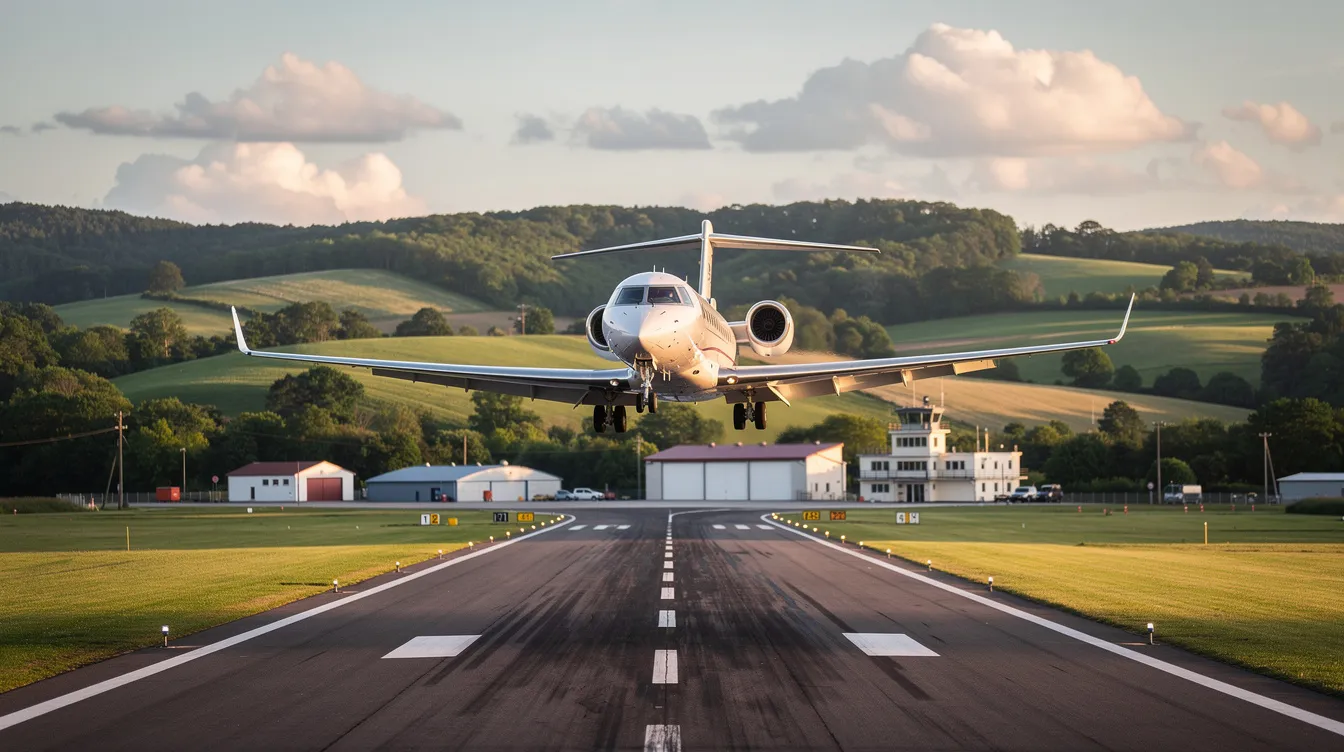
The three Honeywell TFE731-5BR-1C engines give the 900B improved climb performance and schedule reliability. On routes with one-engine-inoperative climb restrictions - common at high-altitude airports - the third engine provides margins that twin-engine jets may not match. This configuration also helps protect safety margins during oceanic and mountainous operations.
|
Aircraft Model |
Engine Configuration |
Max Range (nm) |
Typical Seating |
Notable Features |
|---|---|---|---|---|
|
Dassault Falcon 900B |
Tri-jet (3 engines) |
4,000 |
12–16 |
Enhanced safety, short runway, airport flexibility |
|
Gulfstream GIV |
Twin-jet (2 engines) |
4,220 |
12–16 |
High speed, long range, luxury cabin |
|
Bombardier Challenger 604 |
Twin-jet (2 engines) |
4,000 |
10–12 |
Wide cabin, reliability, cost-effective |
The Falcon 900B is often compared with other large-cabin jets such as the Gulfstream GIV and Bombardier Challenger 604, standing out for its unique tri-jet safety and operational flexibility; specific charter examples include aircraft like Jettly-listed Falcon 900B N610RL.
Fuel burn runs in the range of 300–350 gallons per hour depending on cruise altitude and speed. Variable hourly operating costs for owners typically fall in the high-four-figure USD band. For charter customers, these costs roll into an hourly charter rate that compares favourably to newer heavy jets with similar cabin size.
Typical charter use cases include executives flying a week-long roadshow across several cities, families heading on extended vacations with significant luggage, or urgent medical and relief missions that demand long range and flexible airport access. For travellers comparing aircraft types, guides to finding the best cross-country plane for your journey can help frame how the Falcon 900B stacks up against other options.
The Falcon 900B typically accommodates 12 passengers in a standard configuration. The cabin is divided into three sections—forward, mid-cabin, and aft—and measures approximately 33 ft 2 in long by 7 ft 8 in wide by 6 ft 2 in high. This layout provides ample space for work, relaxation, and comfort on long flights.
The standard arrangement breaks down as follows:
Forward club section: Four opposing armchairs with fold-out tables - ideal for meetings or focused work during flight.
Mid-cabin conference area: Another group of seats or a combination of club chairs and a conference table, suited for group discussions or dining.
Aft lounge: One or two divans that can convert to flat sleeping areas for rest on longer legs.
This configuration gives each zone a distinct purpose, and the total cabin length of approximately 39 feet (11.9 m) provides enough separation between areas to feel like genuinely different spaces.
|
Dimension |
Measurement |
|---|---|
|
Cabin length |
39 ft / 11.9 m |
|
Cabin width |
7 ft 8 in / 2.3 m |
|
Cabin height |
6 ft 2 in / 1.9 m |
|
Baggage volume |
~127 cu ft |
The cabin height of 6 ft 2 in allows most passengers to move through the cabin comfortably. The width accommodates four-across seating with a centre aisle - comparable to many large cabin private jets in the charter market today.

Chartered Falcon 900B aircraft typically include:
Full galley for hot and cold catering
Enclosed rear lavatory with vanity
Wardrobe or baggage closet accessible in flight
Multiple power outlets for laptops and devices
Entertainment screens
Inflight Wi-Fi on many upgraded aircraft
Dassault's focus on aerodynamic refinement and sound insulation keeps the cabin relatively quiet - a real advantage for anyone planning to work or sleep on board during longer flights.
Charter customers should acknowledge that cabin layouts vary from one aircraft to the next. Some Falcon 900B jets are optimised for corporate use with extra club seats and work surfaces. Others are configured for family or VIP travel with fewer seats, more open floor space, and additional divans. Two seats can be converted into a full-length bed, enhancing rest options on long flights. When browsing options on Jettly's platform, travellers can view specific cabin photos and seating plans during the quote process, making it easier to select an aircraft that matches their needs for workspace, rest areas, and total passenger capacity.
The Falcon 900B fits well within Jettly's global inventory of more than 20,000 aircraft. It is a strong step up for clients who need a large cabin and long-range capability without moving into ultra-long-range pricing. For many charter customers, the 900B hits a sweet spot of performance, comfort, and efficiency, and can even participate in Jettly's crowdsourced private jet flights and shared seats ecosystem to optimise costs.
Jettly's digital marketplace keeps the process straightforward. Travellers enter their route, dates, and passenger count, and can use tools like its airport locator platform to identify suitable departure and arrival fields. The platform searches its global network of certified operators, and available Falcon 900B options appear alongside similar models - complete with instant pricing, aircraft details, and cabin information. There is no need to send an email to multiple brokers or wait days for quotes.
Travellers can use Jettly's charter cost estimator or its dedicated jet card flight cost estimator to get a quick sense of pricing before committing to a full quote request.
Transparent pricing: Up-front costs with no hidden fees, so travellers understand the total before booking.
Side-by-side comparison: The platform lets users compare the 900B against similar jets, making it easy to find the right fit for each trip.
No long-term commitment: Book one-off flights without fractional ownership or jet card contracts, while frequent flyers can consider Jettly's flexible private jet memberships.
Empty leg opportunities: Long-range repositioning flights on large-cabin jets like the Falcon 900B can sometimes be booked at reduced rates when routing and schedule align.
Jettly connects travellers only with operators that meet relevant civil aviation authority standards, drawing from a wide ecosystem of charter airlines and private flight providers. Many Falcon 900B charter aircraft feature modernised avionics, upgraded safety systems, and recent interior refurbishments - continuing to deliver a reliable, modern flight experience despite the aircraft's production vintage. For travellers considering vertical-lift options to complement fixed-wing flights, understanding helicopter rental costs and pricing factors can also be useful.
The Falcon 900B flies well on itineraries like:
A week-long North American roadshow visiting New York, Chicago, Dallas, and Los Angeles with a team of eight.
A family of six flying from London to Dubai with golf bags, extra luggage, and flexible timing on the return leg.
Charter rates for the Falcon 900B vary by journey length, season, aircraft year, and region. As a general reference, hourly rates for large-cabin jets in this category typically range from $7,000 to $9,800 per flight hour, with jet card costs and pricing structures providing another benchmark for frequent flyers.
On the sale and pre-owned side, the Falcon 900B's asking price ranges from $3.25 million to $7.5 million depending on condition, total time, and avionics upgrades - with a typical purchase price around $5.375 million. A pre-owned Falcon 900B in top condition can cost about $9 million today, a figure that can be weighed against committing similar capital to structured solutions like private jet card programs. These figures matter less for charter customers, but they illustrate why the 900B remains active: its value proposition keeps it economically viable for operators to maintain and offer on the market.

Ready to experience private travel on your terms? Explore Falcon 900B availability or request a custom quote at jettly.com. The platform helps match each trip with the right aircraft, schedule, and budget - no contracts, no hassle- and offers multiple ways to get a seat on a private jet easily, even if you’re new to charter. Those interested in promoting these services can also join Jettly's ULTRA high-ticket affiliate program and earn commissions by referring new clients.
The Falcon 900B can fly approximately 8–9 hours nonstop depending on wind conditions, payload, and routing. With its maximum range of 4,000 nautical miles, it covers most transcontinental routes in a single leg. For specific route feasibility, travellers can contact Jettly's charter specialists, who can confirm timing and any fuel stop requirements.
Hourly charter rates generally fall between $7,000 and $9,800, though exact pricing on Jettly varies by region, aircraft year, trip details, and seasonal demand. For more context on what drives one-flight private jet costs, and to get route-specific figures, use Jettly's cost estimator page to get a quick estimate for your specific route and dates.
The Falcon 900B offers roughly 127 cubic feet of baggage space - enough for large suitcases, golf bags, ski equipment, and other bulky items. Some of that storage is accessible in flight. Confirm exact limits with Jettly's team during the booking process, as configuration differences between aircraft can affect available cargo space.
Many, but not all, Falcon 900B aircraft have been retrofitted with inflight Wi-Fi. If connectivity is important for your trip, request it specifically when comparing options on Jettly. The platform lets you filter and view aircraft details - including available amenities - so you can find a jet with the right information and communication setup for your needs. Travellers who want to lower costs can also explore buying a single seat on a private jet through options like shared and empty-leg flights. You don't need to be a bot or a Google search expert to find this data; it is displayed clearly on each aircraft's listing.
The Falcon 900B suits groups of 8–12 passengers on medium-to-long-haul routes where cabin comfort, range, and airport flexibility matter. It is a strong fit for multi-leg business trips, family vacations across continents, or any mission where the elegance of a large-cabin design and the right to choose your own schedule matter more than flying the newest jet on the market. If you need help deciding, Jettly's charter specialists can walk you through the options and recommend the best aircraft for your trip, especially if you're evaluating Jettly as a cost-effective alternative to NetJets and fractional ownership.
The Dassault Falcon 900B remains a compelling choice for private jet charter clients seeking a blend of range, performance, and cabin comfort. Its unique tri-jet design offers enhanced safety and the ability to access airports with shorter runways, making it versatile for a wide range of missions. With a spacious three-zone cabin and advanced avionics, the Falcon 900B delivers a comfortable and efficient travel experience for up to 16 passengers. Through Jettly’s digital platform, travellers gain transparent pricing, instant booking, and access to a global network of Falcon 900B aircraft, simplifying the charter process. Whether for business roadshows, family vacations, or urgent travel needs, the Falcon 900B takes private aviation to the next level of convenience and flexibility.
Ready to experience private travel on your terms? Explore Falcon 900B availability or request a custom quote at https://www.jettly.com.
Share this post:
Jay Franco Serevilla
Jul 20, 2026
|
5
min read
Discover tips and trends in the industry.
5
min read
Chesapeake Regional Airport (KCPK) Private Jet & Traveler Guide
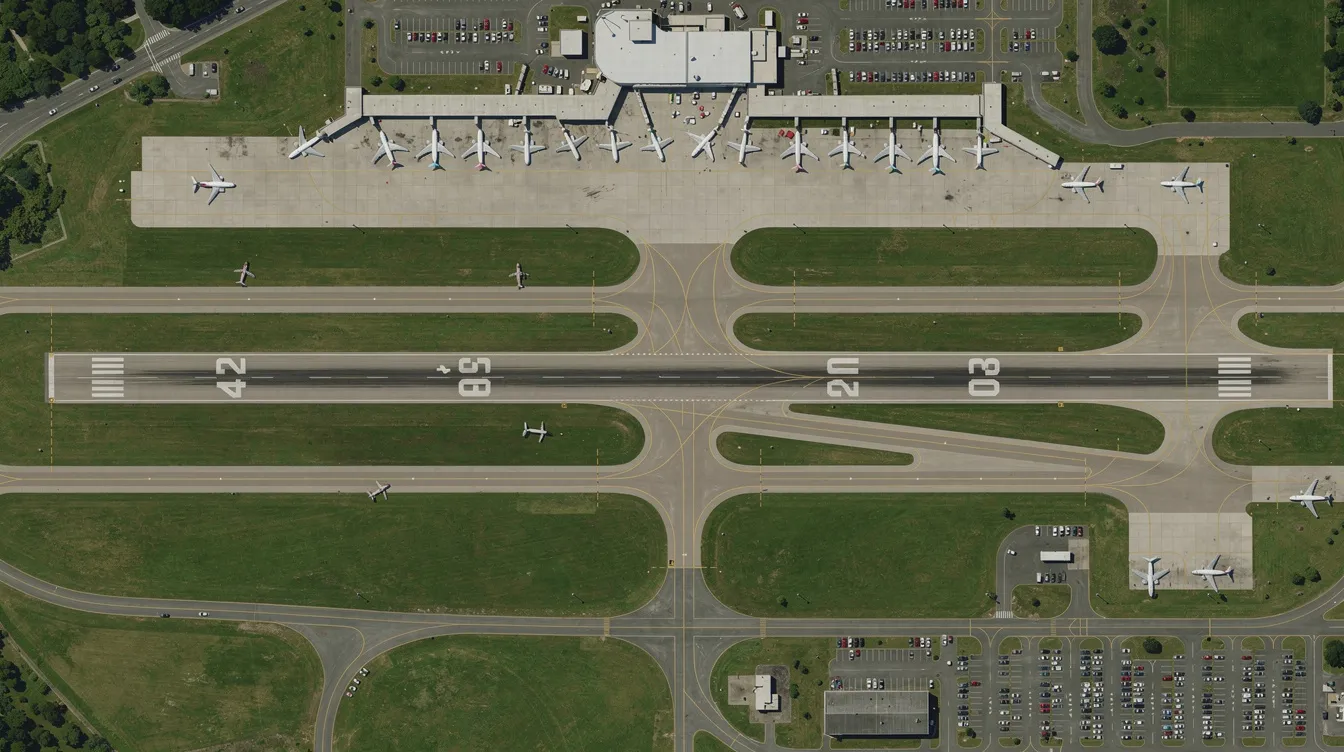
Chesapeake Regional Airport (KCPK) is a premier destination for private and charter aviation in coastal Virginia, offering a 5,500-foot runway and dedicated facilities. This guide provides essential information for pilots and travelers, including booking options through Jettly, making it an ideal choice for efficient and private travel.
Read More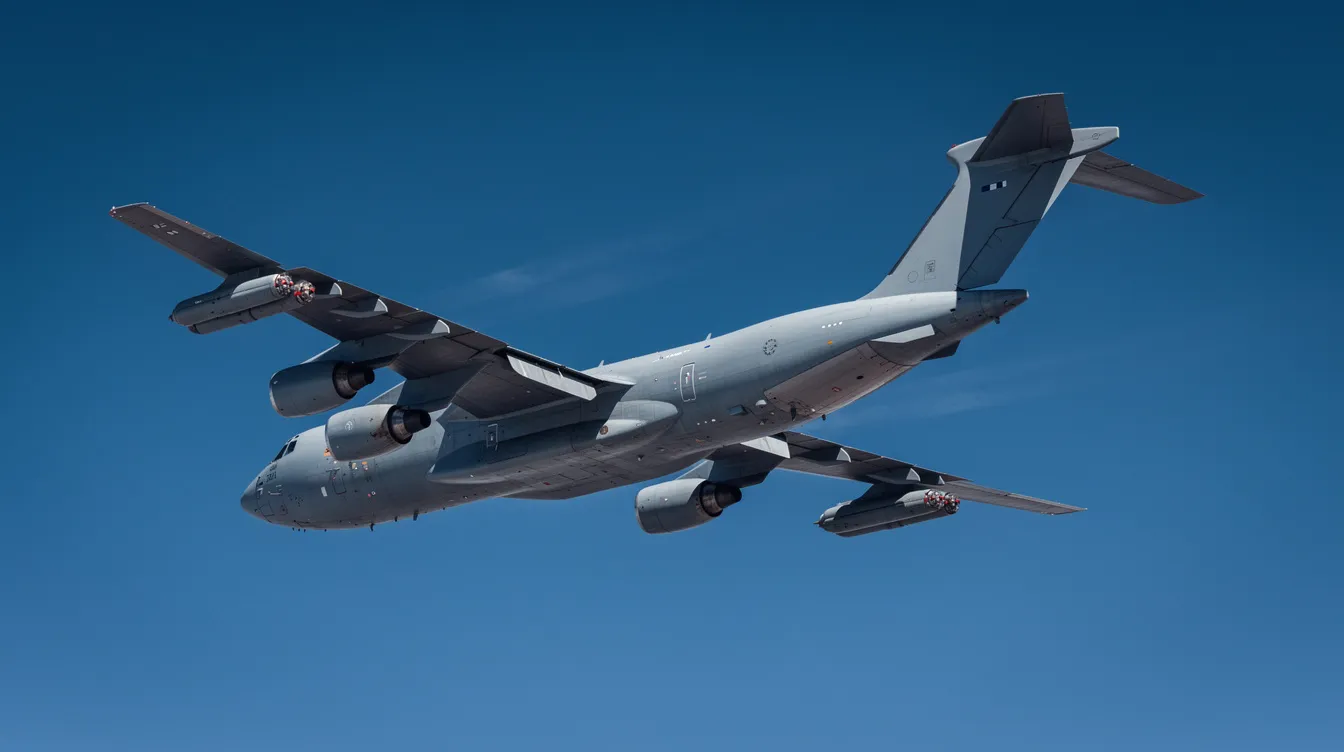
5
min read
KC-135 Accidents: History, Recent Crashes, and Safety Lessons
The KC-135 Stratotanker has a long history of accidents, with over 50 fatal crashes since its introduction in the 1950s. Recent incidents, including a crash in March 2026 that killed six crew members, highlight ongoing safety challenges in military aviation. Lessons learned from these accidents have led to significant improvements in training and operational procedures, benefiting both military and civilian aviation.
Read MoreStay updated with our latest insights and tips to elevate your journey with us.
MEMBERSHIPS AND ASSOCIATIONS



Disclaimer: Jettly operates as a charter broker, offering access to a global digital jet charter marketplace. Jettly is not a direct air carrier and does not own or operate aircraft. All advertised flights are conducted by third-party air carriers that are fully licensed and hold the appropriate Part 135 or Part 121 certifications issued by the Federal Aviation Administration (FAA) or equivalent regulatory authorities under U.S. or foreign law. Jettly complies fully with the U.S. Department of Transportation's Part 295 and Part 298 Charter Broker regulations. Jettly does not carry additional liability insurance. Passengers are covered by aircraft operator insurance. TICO: 50023770


