


Login
Get Instant Pricing On 23,000+ Aircraft

>
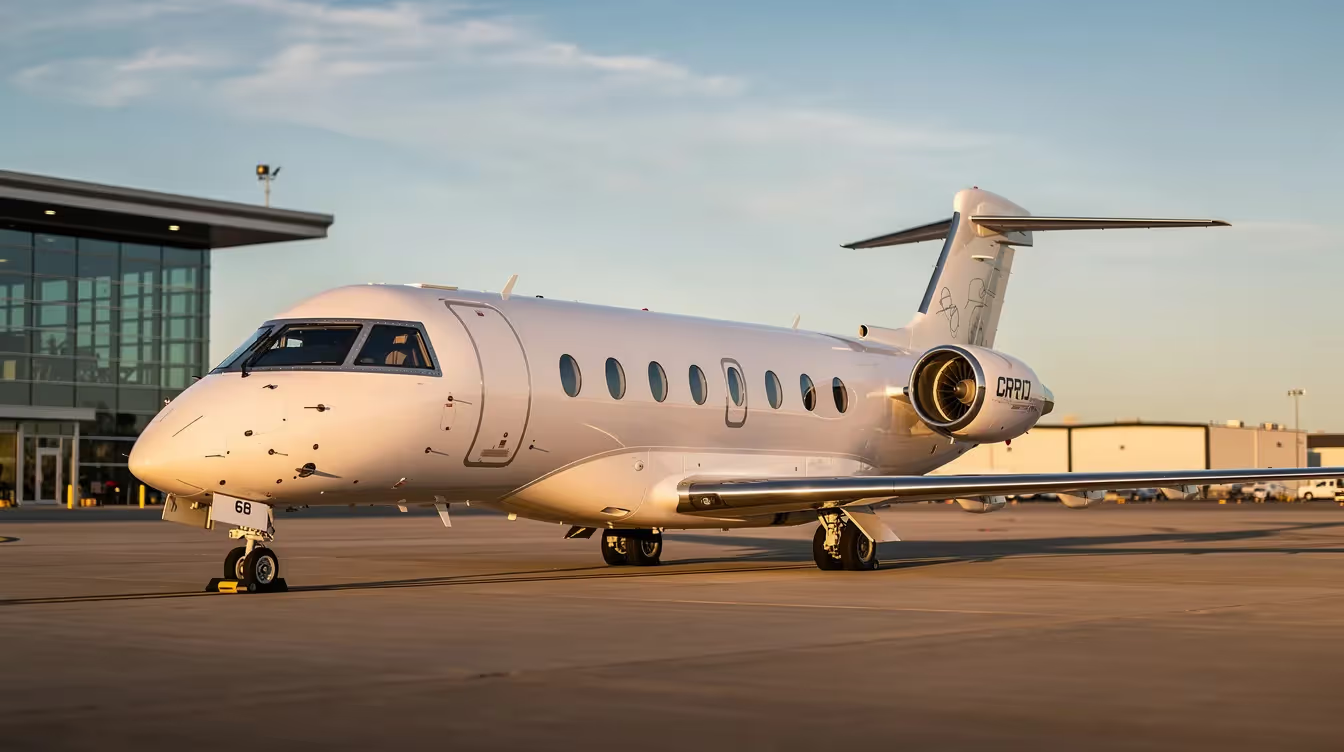
The Bombardier CRJ-200 began life as a 50-seat regional airliner, but today a growing number of these aircraft serve a different purpose. Converted into spacious VIP configurations, CRJ private jets offer groups of 14-30 passengers a cost-effective way to travel together in comfort, and Jettly can help source these aircraft on-demand. CRJ private jets are gaining popularity in the business jet industry for their unique blend of space, performance, and value.
The Bombardier CRJ 200 and broader Bombardier CRJ family can be converted from 50-seat regional airliners into spacious CRJ private jets for business and VIP travel. Jettly sources these aircraft on-demand through its global charter marketplace, serving clients around the world.
Converted CRJ 200 business jets typically carry 14–18 passengers in a large-cabin layout, making them ideal for corporate shuttles, sports teams, and group leisure trips where per-seat economics matter.
CRJ 200 conversions leverage airline-grade safety, proven General Electric CF34 engines, and range around 1,800–2,000 statute miles—suitable for routes like New York–Miami or London–Athens.
Acquisition and hourly charter costs are often lower than ultra-long-range business jets of similar cabin size, creating strong value for cost-conscious groups traveling medium-haul distances, particularly when compared with the cheapest private aircraft options across categories.
Travelers can compare CRJ private jet options against traditional business jets and request instant quotes through Jettly’s digital charter platform.
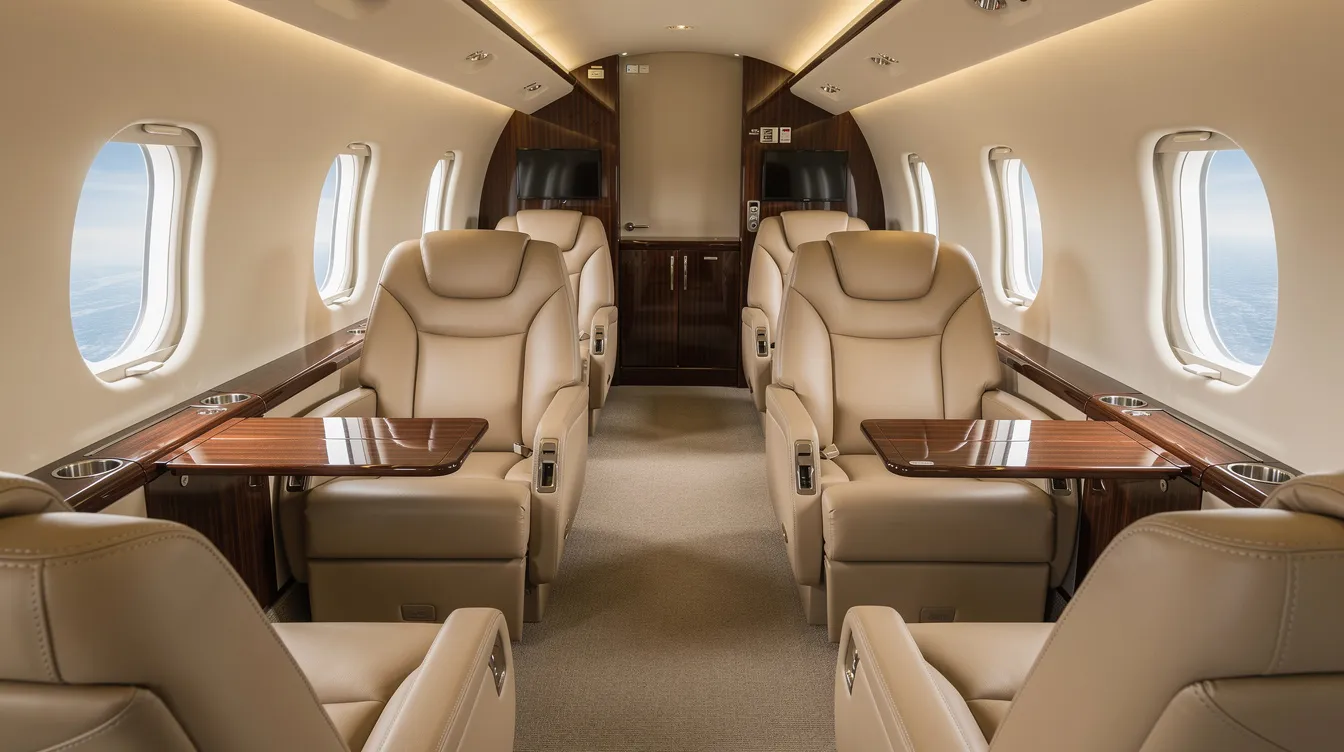
A CRJ private jet refers to a Bombardier CRJ regional airliner—especially the Bombardier CRJ 200—that has been converted from a 50-seat commercial configuration into a VIP or corporate layout. The original Canadair Regional Jet program launched in Canada in the early 1990s, with the CRJ 100’s first flight in 1992 and the upgraded Bombardier CRJ 200 following in 1996.
From the mid-2000s onward, rising fuel prices and fleet renewal programs led carriers like United, Delta, and Air Canada to recently retire their CRJ 200 fleets. Many parked CRJ-200s have been repurposed to serve as more comfortable and economical corporate jets, enhancing their suitability for private travel.
These conversions transform the interior into a large-cabin business jet with club seating, conference areas, and lie-flat divans while retaining the robust airline-certified airframe. The CRJ-200 typically accommodates up to 50 passengers in airline configuration and has a maximum payload capacity of 13,500 pounds.
In Jettly’s marketplace, CRJ private jets may appear as “CRJ 200 VIP,” “CRJ 200 ExecLiner,” “CRJ 200 Corporate Shuttle,” or type-derivatives like the Challenger 850, depending on operator branding.
The Bombardier CRJ 200 is the most common CRJ platform used for private and corporate conversions. Originally produced for airlines such as Jazz (Air Canada Express), SkyWest, and Comair, over 1,000 units entered service before production ended in 2006.
The development course of the CRJ series began with the CRJ-100, which was later upgraded to the CRJ-200 with more efficient engines and improved performance. The main differences between the CRJ-100 and CRJ-200 include engine enhancements and avionics updates, reflecting the evolution of Bombardier's regional jet lineup.
Engineers played a crucial role in designing and testing the CRJ 200, utilizing advanced techniques and collaborating across multiple companies to optimize the aircraft’s technical features and performance. Before entering full production, a prototype was built and used for initial flight testing and certification, validating the design and ensuring regulatory compliance, much as buyers today evaluate the best personal plane options when choosing the right aircraft.
Key specifications:
|
Specification |
Value |
|---|---|
|
Length |
87 ft 10 in |
|
Wingspan |
69 ft 7 in (optional winglets available) |
|
Engines |
Two General Electric CF-34-3A1 turbofans (each producing 8,729 lbf of thrust, contributing to strong takeoff performance and efficient cruise capabilities) |
|
Maximum Range |
1,956 statute miles (3,148 kilometers) |
|
Cruise Speed |
Approximately 487 mph (Mach 0.78) |
|
Top Speed |
~534 mph |
|
Maximum Altitude |
41,000 feet |
|
Cabin Width |
8 ft 3 in (fuselage cross section) |
|
Maximum Takeoff Weight (MTOW) |
53,000 lbs |
The Bombardier CRJ-200 is powered by two General Electric CF-34-3A1 turbofan engines, each delivering significant thrust for reliable takeoff and cruise performance, providing a maximum range of 1,956 statute miles (3,148 kilometers). VIP conversions may slightly alter the usable range depending on weight and interior fit-out.
Two main conversion paths exist: bespoke VIP “ExecLiner” style refits by firms such as Flying Colors Corp, creating 14–16 seat luxury cabins, and higher-density corporate shuttle configurations optimized for 20–30 business-class style seats. Bombardier’s own Canadair CRJ-200 Challenger 850 is derived from the CRJ 200 airframe, with a cabin closer to classic large-cabin private jets.
A CRJ private jet feels very different from a standard 50-seat regional cabin. Conversions of the CRJ-200 often include modifications to create larger cabin spaces and more luxurious interiors, moving away from the original high-density seating arrangements. The result is a complete range of features and amenities, ensuring a comprehensive and luxurious experience for every passenger.
Typical VIP layout elements:
Forward club-4 seating with fold-out tables
Mid-cabin conference or dining area seating 4–6
Aft lounge with divans capable of converting to lie-flat sleeping surfaces
Stand-up cabin height of 6 ft 1 in
The ExecLiner conversion of the CRJ-200 incorporates modern enhancements such as a forward lavatory, rear VIP lavatory, and an onboard shower, making it more appealing for private travelers.
Baggage space in a CRJ private jet configuration exceeds 238 cubic feet—far greater than most super-mid or large-cabin business jets. This makes it well-suited for groups carrying sample cases, sports equipment, or film production gear.
Onboard technology typically includes Ka-band Wi-Fi (up to 50 Mbps), HD screens, 110V/USB power at every seat, and custom cabin management systems controlling lighting, temperature, and entertainment from passenger touchscreens. Passengers can easily connect to Wi-Fi and stay connected throughout the flight, supporting both productivity and entertainment needs.
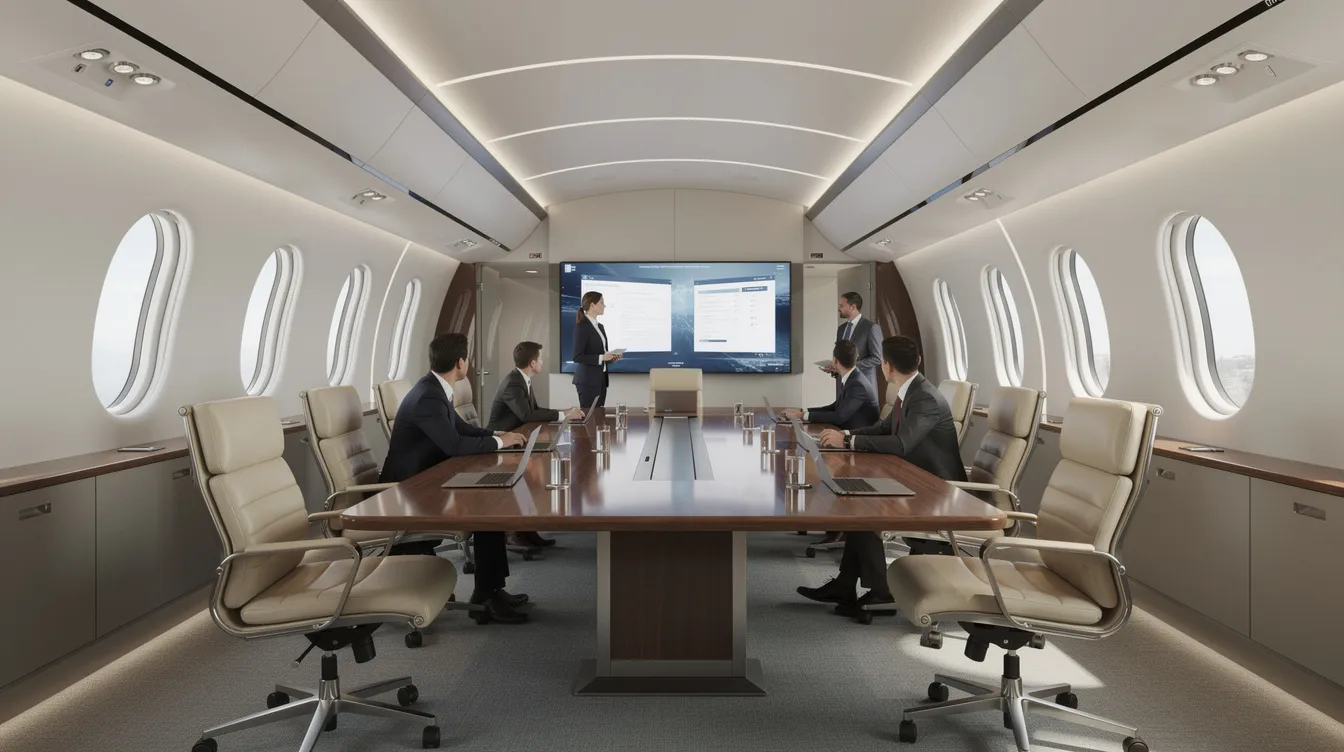
Passengers enjoy a smooth and comfortable ride, with the CRJ private jet’s design helping to dampen turbulence and enhance overall comfort during the journey.
CRJ private jets retain the CRJ 200’s airline-standard systems, benefiting from an exemplary safety record across millions of flight hours in commercial service worldwide.
The typical cockpit setup features Rockwell Collins Pro Line 4 avionics (4-tube EFIS, dual FMS). Some conversions upgrade to Pro Line Fusion or Honeywell Primus Epic, adding synthetic vision and RNP approaches—similar in philosophy to the Bombardier Vision flight deck used on later Global series business jets. Additionally, certain CRJ private jet conversions incorporate enhanced safety systems and advanced connectivity options, further improving situational awareness and passenger comfort.
The normal cruising speed of the Bombardier CRJ-200 is approximately 487 miles per hour (785 kilometers per hour), with a maximum altitude of 41,000 feet. Typical cruise altitude ranges between FL330 and FL390, providing smooth rides above weather and reducing turbulence on medium-length legs.
Operations are run by certified commercial operators under FAA Part 135 or EASA Part-CAT, with professional two-pilot crews (ATP minimums) and often one or two dedicated cabin attendants. While CRJ private jets are not ultra-long-range like Global 6000/6500 aircraft, they deliver efficient performance on segments under 2,000 miles: Los Angeles–Denver, Chicago–Dallas, or Paris–Moscow, whereas many of the top 10 best private jets in the world for luxury and performance are designed for intercontinental missions.
CRJ 200 private jets fill a niche between traditional 8–12-seat business jets and narrow-body airliner charters. For mid-size groups, they offer compelling value, especially when combined with crowdsourced charter flights and shared empty seats to further optimize per-passenger costs.
Corporate shuttles: Regular weekly flights between company hubs (Toronto–Montréal, Frankfurt–Milan) where 15–30 employees travel together, or busy business corridors such as private jet charter routes serving Chennai, Tamil Nadu. Per-seat costs drop to $400-600 on full loads versus $1,500+ on midsize jets.
Sports and entertainment: Professional teams, touring musicians, film crews moving 15–40 people with equipment. Direct access to secondary airports and generous baggage capacity make these charters practical, whether you’re hopping between North American cities or flying into culturally rich destinations like Jaipur on a private jet charter. Efficient baggage handling and streamlined boarding at the gate ensure large groups and their gear are managed smoothly, similar to NBA and MLB squads that have chartered comparable aircraft for regional hops.
Leisure groups: Multi-family vacations to Miami, Aspen, Nassau, or Cannes, where shared charter costs spread across 10–18 travelers compete with premium commercial cabins, making CRJ private jets an attractive complement to the best planes for a family of four seeking private trips.
For smaller groups (4–8 passengers) or ultra-long-range routes, traditional business jets like Global 5500/6500 or smaller midsize jets may be more efficient, especially for families evaluating the best private planes for family travel. Jettly’s private charter aircraft platform helps compare these options in real time.

Many travelers weigh CRJ 200 VIP conversions against the best private jet charter companies and their large-cabin fleets when choosing a private jet for group travel.
|
Factor |
CRJ Private Jet |
Traditional Large-Cabin Jet |
|---|---|---|
|
Typical Capacity |
14–30 passengers |
12–16 passengers |
|
Cabin Width |
8 ft 3 in |
7–8 ft |
|
Range |
~1,800–2,000 sm |
3,500–7,000+ sm |
|
Acquisition Cost |
Lower (repurposed airframes) |
Higher (new-build) |
|
Runway Requirements |
5,000–8,000 ft typical |
Often shorter |
CRJ conversions typically offer lower acquisition costs than new-build Global or Gulfstream aircraft, translating into competitive charter rates when fully occupied, which makes them especially appealing for travelers researching affordable planes and other budget-friendly aircraft choices. Traditional business jets may provide more refined noise insulation, newer-generation avionics, and better short-field performance at challenging airports.
The “best” choice depends on passenger count, trip distance, and budget, and understanding how much a private jet really costs over time, as well as how those factors compare with the best cross-country plane options for long-range journeys. Jettly’s advisors and instant pricing engine can recommend whether a CRJ private jet, super-mid, heavy jet, or airliner is most suitable for your flight.
CRJ 200 VIP and corporate shuttle aircraft form a niche segment in the global charter market, with availability concentrated in North America, Europe, and parts of the Middle East.
The average hourly rental rate of the Bombardier CRJ-200 is around 18,600 USD per hour, a figure you can compare against other aircraft types using Jettly’s private jet charter cost estimator. While this appears high, per-seat costs become competitive when 15–20 passengers share the charter, especially for travelers exploring how to buy a seat on a private jet through shared and empty-leg options. The average purchase price of a new Bombardier CRJ-200 is 21,000,000 USD, while the average purchase price of a pre-owned Bombardier CRJ-200 is 19,500,000 USD—numbers that explain why many operators prefer leasing or charter models and rely on services that offer affordable private jet charter instead of full ownership.
Jettly’s digital platform lets users search by departure, destination, and dates, then filter aircraft by type to identify CRJ private jet options alongside alternatives like Challenger 850, Embraer Legacy 600, or Boeing Business Jet for larger groups, functioning much like the curated options you’d find in an ultimate list of charter airlines and private flight providers.
The platform supports both on-demand charter and private jet membership models with transparent pricing and real-time cost comparison across more than 20,000 aircraft worldwide, helping travelers compare the best jet card programs available today and understand jet card costs and pricing structures in detail. Features include instant online quotes, integrated ground transportation coordination, in-flight catering arrangements powered by Jettly Eats, in-flight catering for private jets, and cabin layout preferences.
Regional jets like the CRJ 200 were originally optimized for frequent short-haul airline use, and efficiency matters for charter customers today.
Operators mitigate environmental impact through winglet retrofits (adding 3-5% range efficiency), optimized flight planning, and operation of comparable regional aircraft such as the Embraer ERJ 145, as well as participation in carbon offset or sustainable aviation fuel (SAF) programs. The CF34 engines burn 20-30% less fuel per seat than older regional jets.
Jettly encourages efficient aircraft selection by allowing travelers to compare fuel burn and seat capacity. A fully occupied CRJ private jet can be more emissions-efficient per passenger than multiple smaller private jets on the same route, especially compared with many cheapest single-pilot jets aimed at budget-conscious owners.
The CRJ family’s extensive airline history, global parts availability, and broad maintenance expertise reduce delays and enhance schedule dependability for time-critical business itineraries.
Selecting a CRJ private jet is one decision among many in Jettly’s marketplace of private charter aircraft from leading manufacturers. Clear criteria help narrow options quickly.
Start with these questions:
Passenger count and baggage volume – Need boardroom-like space for 15+? CRJ 200 VIP or Challenger 850. Intimate setting for 6? Consider a midsize jet.
Route length – Flights under 2,000 miles between major or regional airports favor CRJ private jets. Intercontinental missions suit Global Express family aircraft, and tools like Jettly’s airport locator make it easy to plan suitable departure and arrival points.
Budget planning – Compare the total charter price divided by passengers using resources like a jet card flight cost estimator. Sometimes a CRJ 200 corporate shuttle offers better value than two smaller jets, particularly for passengers using flight-sharing models and exploring how to get a seat on a private jet easily and affordably.
Ready to explore CRJ private jet availability and pricing? Learn more about Jettly’s charter options or explore Jettly’s jet card programs for frequent flyers who need predictable hourly rates, especially if you’re considering a NetJets alternative that offers more flexible private flying.
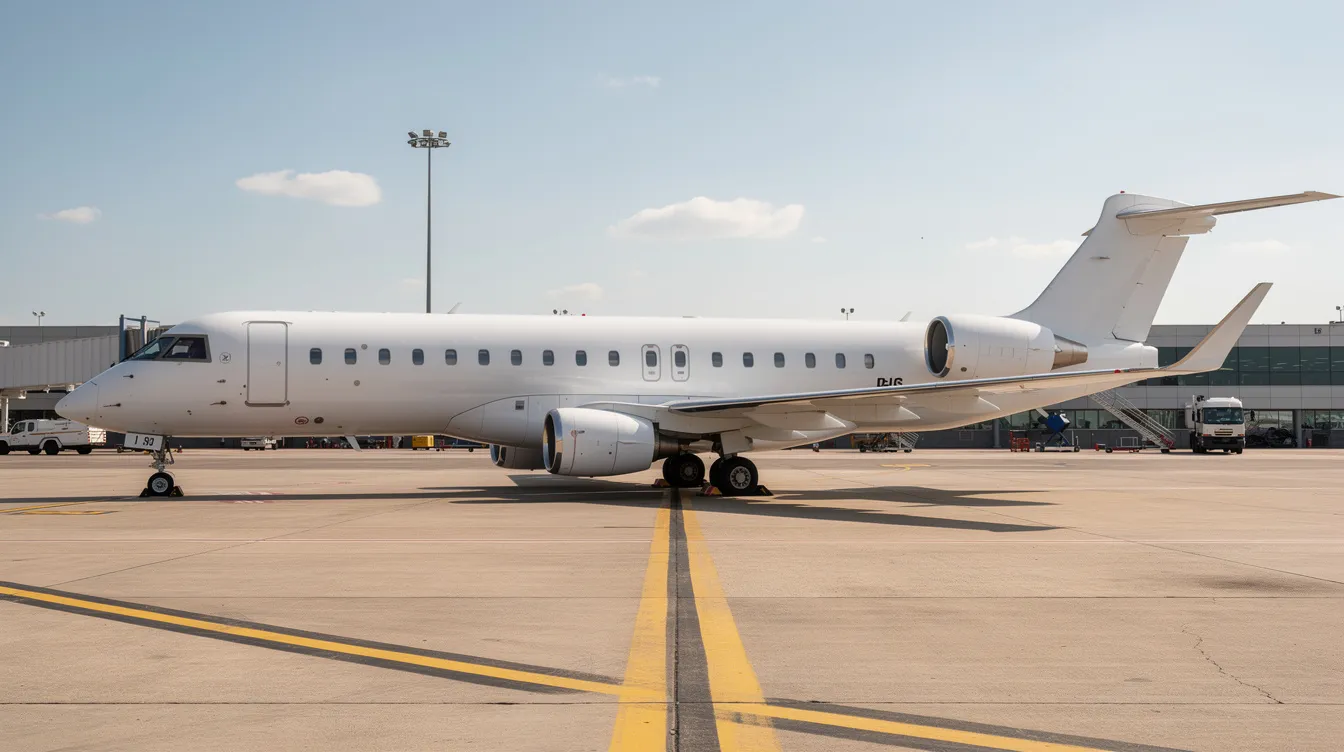
This FAQ addresses additional questions travelers often ask about CRJ 200 and Bombardier CRJ private jet charters.
While the Bombardier CRJ 200 was originally introduced as a 50-seat regional airliner, a limited but growing number of airframes have been converted into CRJ private jets or corporate shuttles, mainly in North America and Europe. These converted aircraft are niche compared with mainstream business jets, so availability depends heavily on region and season, making early booking through a marketplace like Jettly advisable.
Most Bombardier CRJ 200 VIP conversions carry between 14 and 18 passengers in spacious, large-cabin comfort. Some corporate shuttle layouts seat 20–30 in a business-class style arrangement. Exact capacity depends on specific interior design, and Jettly listings show detailed cabin layouts for each aircraft.
The CRJ 200’s range makes it ideal for regional and medium-haul sectors up to about 1,800–2,000 statute miles: New York–Miami, Dallas–Chicago, London–Moscow, or Dubai–Cairo. For longer nonstop intercontinental flights, customers are typically better served by long-range business jets like the Global 6000 or Global 6500, which Jettly can also arrange.
Although the airframe began life as a regional airliner, a CRJ private jet interior feels more like a dedicated business jet, with wide leather seats, extra legroom, and the ability to fly and move freely around the cabin. Passengers benefit from custom catering, private use of the entire plane, flexible departure times, and access to private terminals.
Travelers can enter their route and dates on Jettly’s website, then filter results to view Bombardier CRJ 200 VIP, Challenger 850, and comparable business jets side by side with instant pricing. Those who love the service can also join Jettly’s ULTRA high-ticket affiliate program to earn referral revenue by introducing new clients. Contact Jettly’s support team for help evaluating whether a CRJ private jet, traditional business jet, or different category, such as turboprop or airliner, best matches your group and budget.
CRJ private jets, particularly the Bombardier CRJ-200 conversions, offer a compelling option for groups seeking spacious, efficient, and cost-effective private air travel. With their large cabins, reliable performance, and competitive pricing, these aircraft bridge the gap between traditional business jets and regional airliners. Whether for corporate shuttles, sports teams, or leisure travel, CRJ private jets provide flexibility and comfort on medium-haul routes. Travelers interested in exploring CRJ private jet availability, pricing, and alternatives can easily compare options and book flights through Jettly’s digital charter platform. Ready to experience private travel on your terms? Explore flight options or request a quote at https://www.jettly.com.
Share this post:
Jay Franco Serevilla
May 11, 2026
|
5
min read
Discover tips and trends in the industry.

5
min read
DC9 Private Jet Charters: History, Cabin Experience, and Modern Alternatives
The Douglas DC-9 revolutionized regional air travel with its efficient design and quick turnaround capabilities, serving as a vital link for short-haul routes. Although most DC-9s are retired, their legacy continues in modern private jet charters, which offer enhanced comfort and flexibility for travelers. Jettly connects clients with a diverse fleet of aircraft that embody the DC-9's mission of fast, point-to-point flying.
Read More
5
min read
Where Summer Travelers Go After Labor Day: The Rise Of Shoulder Season Private Aviation
Private jet travel is extending well beyond the traditional summer peak as high-net-worth travelers increasingly shift trips into September, October, and November. Cooler temperatures, reduced airport congestion, better resort access, and greater scheduling flexibility are driving demand across destinations such as the French Riviera, Greek Islands, Southern Italy, and North American resort markets. For travelers who do not require the commitment of aircraft ownership, on-demand private charter offers a flexible way to capitalize on the growing shoulder-season travel trend.
Read MoreStay updated with our latest insights and tips to elevate your journey with us.
MEMBERSHIPS AND ASSOCIATIONS



Disclaimer: Jettly operates as a charter broker, offering access to a global digital jet charter marketplace. Jettly is not a direct air carrier and does not own or operate aircraft. All advertised flights are conducted by third-party air carriers that are fully licensed and hold the appropriate Part 135 or Part 121 certifications issued by the Federal Aviation Administration (FAA) or equivalent regulatory authorities under U.S. or foreign law. Jettly complies fully with the U.S. Department of Transportation's Part 295 and Part 298 Charter Broker regulations. Jettly does not carry additional liability insurance. Passengers are covered by aircraft operator insurance. TICO: 50023770


