


Login
Get Instant Pricing On 23,000+ Aircraft

>

Flying private across the Atlantic is one of the most common long-haul charter requests in business aviation. But the private jet cost for a one-way trip to Europe in 2026 varies widely, from around $60,000 to well over $350,000, depending on where you depart, which aircraft you choose, and when you fly.
This guide is for business travellers, high-net-worth individuals, and anyone considering private jet travel to Europe. Understanding these costs helps travellers budget effectively and avoid surprises.
This guide breaks down every cost component, compares aircraft categories, and explains how to get an accurate quote for your specific route.
A one-way private jet flight to Europe in 2026 typically costs between $60,000 and $350,000+. The range reflects differences in departure city, aircraft size, season, and airport fees. Chartering a private jet for a trip to Europe from North America runs $100,000 to $250,000+ total in most cases.
New York to London on a heavy jet: roughly $90,000 to $130,000 one-way, with a flight time of about 6.5 to 7 hours.
Los Angeles to Paris on an ultra-long-range jet: approximately $180,000 to $260,000 one-way, covering 10 to 11 hours nonstop.
Dubai to Geneva on an ultra-long-range jet: around $140,000 to $200,000+ one-way.
Private jet rental pricing is per aircraft, not per seat. The final price is driven by hourly rate, flight time, repositioning fees, crew overnight expenses, and additional services like catering and ground transportation.
Light jets cannot cross the Atlantic nonstop. Most transatlantic private jets are super midsize, heavy, or ultra-long-range aircraft, with hourly rates from roughly $9,000 to $20,000+ per hour.
For real-time pricing on your specific Europe itinerary, Jettly's instant quote tool is available at https://www.jettly.com.
The cost to charter a private jet to Europe in 2026 depends on your starting point and aircraft class. The total private jet cost for a one-way crossing from the U.S. East Coast to Western Europe falls between $60,000 and $120,000 on smaller long-range jets, while trips from the West Coast or with larger aircraft range from $120,000 to $250,000+.
Hourly charter rates for transatlantic-capable aircraft in 2026 break down as follows:
Super midsize jets: roughly $9,000 to $12,000 per hour
Heavy jets: roughly $11,000 to $16,000 per hour
Ultra-long-range jets: roughly $15,000 to $20,000+ per hour
Total price equals billable flight hours multiplied by the hourly rate, plus taxes, airport landing and handling fees, international surcharges, crew expenses, and any repositioning fees. A deeper breakdown of private jet charter costs is available on Jettly's platform.
Jettly's digital marketplace lets users check an estimated price in seconds by entering route and date online, without calling a broker using its private jet charter cost estimator.
These are ballpark private jet rental figures based on mid-2026 fuel prices, market conditions, and operator data. Actual quotes will vary by date, aircraft availability, and passenger load.
|
Origin → Destination |
Aircraft Category |
Approx. Flight Time (Nonstop) |
Estimated One-Way Cost (2026 USD) |
|---|---|---|---|
|
New York (TEB) → London (Farnborough) |
Heavy Jet |
6.5–7.0 hours |
$90,000–$130,000 |
|
New York (TEB) → Paris (Le Bourget) |
Heavy Jet |
~7 hours |
$110,000–$150,000 |
|
Los Angeles (VNY) → London (LHR) |
Ultra-Long-Range Jet |
10–11 hours |
$180,000–$260,000 |
|
Miami → Lisbon |
Heavy / Ultra-Long-Range |
8–9 hours |
$110,000–$160,000 |
|
Chicago → Frankfurt |
Heavy Jet |
8–9 hours |
$100,000–$150,000 |
|
Toronto → Geneva |
Super Midsize / Heavy |
7–8 hours |
$90,000–$140,000 |
|
Dubai → Nice |
Ultra-Long-Range |
6–7 hours |
$140,000–$200,000+ |
|
Riyadh → Paris |
Heavy / Ultra-Long-Range |
6–7 hours |
$130,000–$180,000+ |
Round trips with several days on the ground in Europe often price similarly to two one-way private jet charters, because crew hotel stays, aircraft parking fees, and handling charges accumulate while the plane waits.
A transatlantic private jet charter price is a sum of many moving parts, not just flight time multiplied by hourly rate. Understanding each factor helps explain why two quotes for the same route can differ by tens of thousands of dollars.
Aircraft type and category: Larger aircraft burn more fuel and carry higher hourly rates.
Total distance and block time: A straight line from New York to London is about 3,450 nautical miles; Los Angeles to Paris is over 5,600 nm. More distance means more billable hours.
Origin and departure airport: Smaller cities may require the jet to reposition from a hub, adding repositioning fees.
Arrival airport in Europe: Airport charges and handling costs at the destination differ sharply between, say, Farnborough and Heathrow.
Season and demand: Business aviation between North America and Europe peaks in June through September, around Christmas and New Year, and during events like Davos or the Monaco Grand Prix. During these windows, charter flights can cost 20% to 40% more than off-peak periods.
Fuel price fluctuations: Jet fuel remains a volatile input; spikes from geopolitical events ripple through charter price quotes within days.
Regulatory requirements: Oceanic crossings require ETOPS certification, contingency fuel reserves, and alternate airport planning, all of which influence scheduling and, by extension, cost.
Choosing secondary airports with lower airport landing and handling fees (London Luton or Farnborough instead of Heathrow, for example) is one of the simplest ways to trim the budget. More on transatlantic planes and their routing constraints is available on Jettly's blog.
The total distance and block time for your route directly impact the billable hours and, therefore, the total cost. Longer routes, such as Los Angeles to Paris, require more flight hours and higher fuel consumption compared to shorter routes like New York to London.
Airport charges and handling costs can vary significantly between major hubs and secondary airports. Selecting airports with lower fees can help reduce the overall cost of your private jet flight to Europe.
Peak travel seasons and major events can drive up demand and prices for private jet charters. Booking during off-peak periods or being flexible with your travel dates can help you secure better rates.
Before diving into the cost table, here are explicit definitions for each aircraft category:
Very Light Jets: Ideal for short regional hops, typically seating 4 to 6 passengers. They are not suitable for transatlantic flights.
Light Jets: Typically seat 6 to 8 passengers. Best for intra-Europe business aviation legs and short regional flights.
Midsize Jets: Can accommodate 8 to 10 passengers comfortably. Some can cross the Atlantic with a fuel stop.
Super Midsize Jets: Seat 8 to 12 passengers, offering stand-up cabins and suitable for nonstop East Coast–Western Europe flights.
Heavy Jets: Typically carry 10 to 16 passengers. These are the core transatlantic category, offering spacious cabins and advanced amenities.
Ultra-Long-Range Jets: Can fly nonstop from New York to London and other long-haul routes, accommodating 12 to 19 passengers with extended range and luxury features.
Most private flights to Europe use super midsize, heavy, or ultra-long-range jets because transatlantic flights require larger aircraft capable of nonstop flight over the ocean. Light jets and turboprops play a supporting role: feeder flights within Europe or short hops connecting travellers to their transatlantic gateway.
|
Aircraft Category |
Typical Seats |
Nonstop Range (nm) |
2026 Hourly Rate (USD) |
Europe Use Case |
|---|---|---|---|---|
|
Very Light Jets |
4–6 |
1,100–1,300 |
$3,400–$4,600 |
Short regional hops only |
|
Light Jets |
6–8 |
1,500–1,800 |
$4,000–$6,000 |
Intra-Europe business aviation legs |
|
Midsize Jets |
8–10 |
2,600–3,000 |
$6,000–$8,500 |
Atlantic crossing with fuel stops |
|
Super Midsize Jets |
8–12 |
3,200–4,000 |
$7,500–$11,000 |
East Coast–Western Europe nonstop |
|
Heavy Jets |
10–16 |
3,800–4,500 |
$9,000–$16,000 |
Core transatlantic category |
|
Ultra-Long-Range Jets |
12–19 |
6,000–7,700 |
$13,000–$22,000 |
West Coast–Europe and Middle East–Europe nonstop |
Very light jets are ideal for short regional hops but cannot cross the Atlantic. Hourly rates for heavy jets can exceed $18,000 on newer frames like the Global 6000 or Gulfstream G550. Private jet rental prices across all categories range from $2,000 to $14,000 per hour for non-transatlantic types, climbing higher for heavy and ultra-long-range jets where hourly charter rates range from $6,000 to $20,000+ per hour.
Heavy or ultra-long-range jets have the fuel capacity for direct transatlantic crossings. Ultra-long-range jets can fly nonstop from New York to London, while light jets typically cost $4,000 to $6,000 per hour and are better suited for the intra-Europe portion of a trip. For a deeper look at private jets that can fly to Europe, Jettly's guide covers range and cabin comparisons.
The trade-off is clear: a super midsize jet offers a lower hourly rate and a comfortable cabin for up to eight passengers, while a heavy jet accommodates up to seven passengers more comfortably with lie-flat beds and a full galley but at a higher total private jet cost.
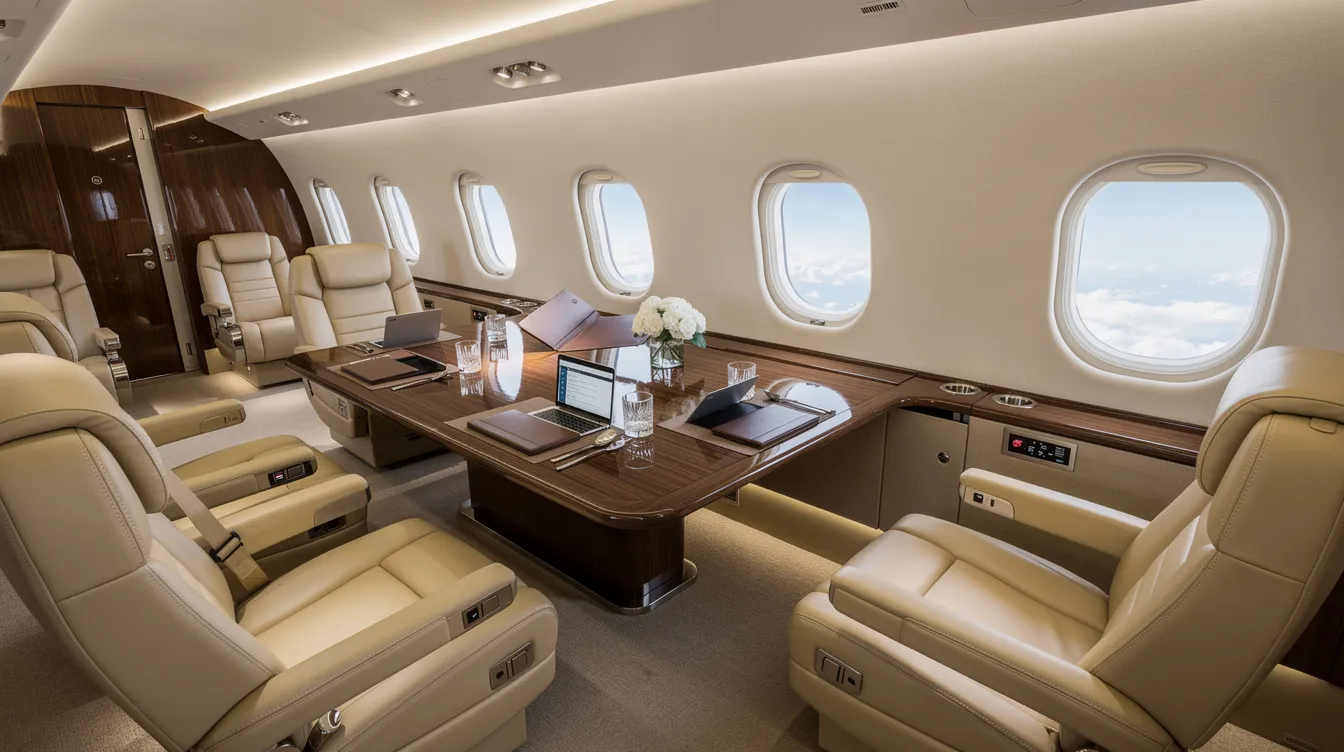
The hourly rate multiplied by flight time is the backbone of any private jet cost calculation. On longer flights to Europe, even a $1,000 difference in hourly rate compounds over 7 to 11 hours of block time.
Billable time runs from brake-release at takeoff to brake-set on landing. Most operators also apply minimum billable hours, typically around 2 hours per day, which becomes relevant on multi-day European itineraries where the aircraft flies short intra-Europe legs.
Ferry positioning legs are billed at the same hourly rate even when the private aircraft is empty, unless the operator covers the cost through an empty leg offer.
Jettly's platform displays both the hourly rate and estimated total trip cost up front, so travellers see exactly how each aircraft's rate affects their bottom line.
Worked example: A 7-hour New York to London leg on a heavy jet at $12,000 per hour yields $84,000 of pure flight time. Add taxes, landing fees, fuel surcharges, and crew overnight expenses, and the realistic invoice lands between $100,000 and $115,000.
Picking the right aircraft category is the single biggest lever in controlling private jet cost on Europe routes. A mismatch (too much aeroplane or too little range) costs money either way.
Turboprops: Best for short feeder flights under 600 nm. Rarely used transatlantically but useful for reaching remote European destinations from a hub.
Light jets: Seat 6 to 8 passengers. Suited for intra-Europe business aviation hops of 2 to 3 hours. Cannot cross the Atlantic nonstop but can connect smaller regional airports to major transatlantic gateways.
Midsize jets: Accommodate 8 to 10 passengers comfortably. Some can clear the Atlantic with a fuel stop in Iceland or the Azores, though the stop adds time and fees.
Super midsize jets: The cost-effective option for East Coast to Western Europe. Cabins seat up to eight passengers with stand-up headroom and reasonable luggage volume for a week-long trip.
Heavy jets: Carry 10 to 16 passengers. Offer conference rooms, lie-flat beds, and advanced features like satellite Wi-Fi. The workhorse for transatlantic private charter flights.
Ultra-long-range jets: Cover nonstop routes from the West Coast or Middle East to any European city. Full galley, crew rest area, and cabin space for up to seven passengers in a lay-flat configuration or more in high-density layouts.
Jettly's marketplace includes over 20,000 private charter aircraft globally, allowing travellers to compare these categories and filter by range, cabin size, and budget through the aircraft class guide.
Here is what typically appears on an invoice for a private jet flight to Europe, using a New York (TEB) to Paris (Le Bourget) one-way on a heavy jet as an example.
|
Line Item |
Estimated Amount (USD) |
|---|---|
|
Flight time (7 hrs × $11,500/hr) |
$80,500 |
|
Fuel surcharge |
$8,000 |
|
Landing and handling fees (origin + destination) |
$4,500 |
|
Overflight and airway permit fees |
$3,200 |
|
Crew salaries, per diem, and one-night hotel |
$4,000 |
|
In-flight catering (premium) |
$1,500 |
|
Ground handling, customs, security |
$2,000 |
|
Estimated total |
~$103,700 |
Taxes and government charges apply to international routes, including U.S. Federal Excise Tax on domestic positioning legs, European passenger taxes, and navigation fees. Luxury travel services like upgraded in-flight catering and ground transportation at the arrival airport add to charter costs beyond the base quote.
Quotes that show only the hourly rate and tack on extras later can produce unpleasant surprises. Jettly focuses on transparent, itemised offers from vetted operators, showing the estimated final price rather than just the base rate, and explains one private jet flight cost in detail on its blog.
The choice of airport can shift a Europe trip's cost by several thousand dollars. Major European airports charge higher fees based on aircraft weight and noise levels, and slot constraints at hubs like Heathrow add scheduling complexity.
Major hubs (London Heathrow, Paris CDG, Frankfurt): Landing fees for a heavy jet can exceed €5,000, and slots must be reserved in advance. Parking charges escalate with each overnight stay.
Secondary business aviation airports (London Luton, Paris Le Bourget, Nice Côte d'Azur): Lower landing fees, dedicated private aviation terminals, and faster turnaround. European airports charge landing fees ranging from $200 to $3,000+ per landing, depending on the field.
Fixed base operators (FBOs) at European airports handle marshalling, passenger lounge access, fueling coordination, baggage handling, and crew rest areas. FBO fees for heavy jet operations at major airports typically run $1,500 to $4,000.
Jettly's advisors help select cost-efficient airports close to the traveler's final destination using its airport locator tool, balancing convenience and total private jet cost.

Repositioning fees cover the cost of moving the private plane empty to or from the customer's departure or arrival airport. Positioning costs occur if the jet must reposition to your departure point from another base. On transatlantic routes, this is common: if a traveller books from a smaller U.S. city, the jet may need to ferry from New York or Boston before crossing to Europe.
Empty leg flights occur when jets return empty after a one-way trip. These empty leg flights can save up to 75% off standard prices, making them a cost-effective option for flexible travellers or those willing to crowdsource private jet flights and share empty seats. Discounts of 25% to 75% are typical on popular corridors like New York to London or Los Angeles to Nice.
The trade-offs:
Booking an empty leg flight offers less flexibility in scheduling; routes, dates, and times are set by the primary charter.
Empty leg flights are often in high demand and can sell out quickly once posted.
If the primary charter changes its schedule, the empty leg may be modified or cancelled.
Jettly aggregates empty leg offers from multiple operators, allowing customers to search and book a discounted flight online when routes align.
Long-haul flights to Europe involve at least two pilots and sometimes cabin crew. Crew salaries and ongoing expenses for international trips include accommodations and daily allowances, all of which are built into the private jet rental price.
Typical crew-related costs on a Europe charter:
Hotel accommodation: $250 to $450 per crew member per night in cities like London, Paris, or Geneva.
Per diem meals and ground transportation between the airport and hotel.
Extended duty or relief crew for ultra-long-range operations where legal duty limits require a second flight crew.
A three-night layover in Paris for a two-pilot, one-attendant crew at $350 per person per night adds roughly $3,150 to the invoice. Multi-stop European roadshows compound these costs across several cities.
Jettly's quotes indicate whether crew overnights and incidental expenses are fixed in advance or billed after the trip on actuals.
Europe-bound private jet costs fluctuate throughout the year. Peak periods tighten aircraft availability and push up charter price levels.
June through September: European summer holidays drive high demand. Brokers reported demand up 30% to 50% in high season 2025-2026 over the prior period.
Late December to early January: Holiday travel spikes, especially for ski destinations like Geneva, Zurich, and Chambéry.
Major events: Cannes Film Festival, Monaco Grand Prix, Paris Fashion Week, and trade fairs in Frankfurt or Milan can push up prices for private jet charters during high-demand periods by 20% to 40%.
Booking early through Jettly's marketplace helps secure better pricing and more aircraft options during busy Europe travel periods. Off-peak days (Tuesdays through Thursdays outside holidays) tend to offer better value on charter flights to Europe.
Three main models exist for flying private to Europe. The right one depends on how often a traveller crosses the Atlantic and how much schedule flexibility they need.
|
Model |
Annual Commitment |
Fixed Costs |
Flexibility |
Best For |
|---|---|---|---|---|
|
On-demand charter |
None |
None |
Full; pay per trip |
Occasional Europe travel, irregular schedules |
|
Jet card / membership |
Upfront deposit or hours |
Medium |
Fixed hourly rate, guaranteed availability |
Frequent flyers planning 50–200+ flight hours per year |
|
Fractional ownership |
Purchase share + monthly fees |
High (maintenance costs, hangar fees, crew salaries, insurance) |
Guaranteed; aircraft assigned |
200+ hours/year; Europe trips as part of heavy utilisation |
On-demand charter through Jettly gives travellers access to private jet charter services without long-term commitments. Travellers can book a private jet charter flight and pay only for the trip, with no ongoing expenses beyond the trip invoice. This is the most cost-effective option for those who fly to Europe a few times per year, and Jettly's blog offers a complete guide to private jet rental costs for additional context.
Jet cards suit frequent flyers who fly regularly and want a locked-in hourly rate and guaranteed availability for 50 or more hours annually, and Jettly's jet card programs package these benefits with fixed hourly pricing.
Fractional ownership bundles the number of passengers, aircraft type, and schedule predictability into a single program, but the fixed costs of acquisition, maintenance, crew, and hangar fees make it financially viable only at very high annual usage. For travellers evaluating this option, Jettly's blog breaks down fractional private jet ownership pros and cons. Jettly specializes in the on-demand and membership side, not selling aircraft.
Jettly operates as a digital private aviation platform and private jet charter marketplace, not an aircraft operator. The platform connects travelers with a network of licensed operators and access to over 20,000 unique aircraft globally.
The booking process:
Enter departure airport, European destination, dates, and passenger count.
View instant pricing from multiple operators.
Compare aircraft by category, range, passenger load, and budget.
Confirm and pay online.
You can book a private jet online in less than a minute, and private jet flights can be arranged in just hours for urgent trips. Booking a private jet through Jettly allows access to over 984 airports, and the platform shows estimated total cost rather than just the hourly rate.
Private jet membership options are available for frequent transatlantic travellers looking to reduce per-hour cost while keeping the flexibility of on-demand private jet rental.
Learn more about Jettly's charter options and get an instant quote for your Europe trip at https://www.jettly.com.
Door-to-door, a commercial long-haul flight from New York to London takes roughly 12 to 15 hours when factoring in check-in, security, boarding, taxiing, baggage claim, and ground transport. Private flying saves up to 3 hours with 15-minute boarding times, and passengers can arrive at the airport just 30 minutes before departure.
Key advantages of private jet travel to Europe:
Flexible scheduling: depart when you want, not when the airline schedules a flight.
Private jets can access over 5,000 airports worldwide, including small fields near final destinations that commercial flights never serve.
Privacy for business meetings or confidential discussions in flight, with no other passengers nearby.
Private jets allow for tailored in-flight services and catering matched to dietary needs and preferences.
Flying private minimises travel fatigue and jet lag effects through lie-flat seating, custom meal timing, and controlled cabin environments.
Cost comparison: a business-class round-trip ticket from New York to London runs $5,000 to $12,000 per person. A heavy jet at $110,000 one-way carrying 10 to 12 passengers brings the per-passenger cost to roughly $9,000 to $11,000 each way. For groups of 8 to 12 travellers, the per-person math approaches premium commercial fares while adding hours of productive time and avoiding connections.
Travellers weighing cost vs benefit can use Jettly's cost estimator and its in-depth guide on how much a private jet costs to quickly compare a private jet cost to the sum of multiple premium commercial tickets and lost time.
While flying private to Europe is a premium service, several levers can reduce the total private jet cost.
Be flexible on dates and times: Shifting departure by a day or two can move a trip from peak to off-peak pricing.
Choose secondary airports: London Luton instead of Heathrow, Le Bourget instead of CDG. Lower landing fees, faster handling.
Select the smallest suitable private aircraft: A super midsize jet for a group of six costs far less per hour than a heavy jet with empty seats.
Accept one fuel stop: On certain routes, choosing a midsize or super midsize jet with a tech stop in Iceland can be cheaper than booking an ultra-long-range aircraft at double the hourly rate.
Book empty leg flights: Empty leg flights can be up to 75% cheaper than standard rates and can be one of several ways to get a seat on a private jet easily. Jettly surfaces these dynamic offers through its marketplace when available.
Consolidate groups: One larger flight for 12 people is cheaper than two smaller flights for six.
Avoid peak travel days: Tuesdays through Thursdays outside holiday weeks tend to have better pricing.
For more strategies on finding cheaper private jet charter prices, Jettly's blog covers additional tactics and explains how Jettly offers affordable private jet charter on a variety of routes.
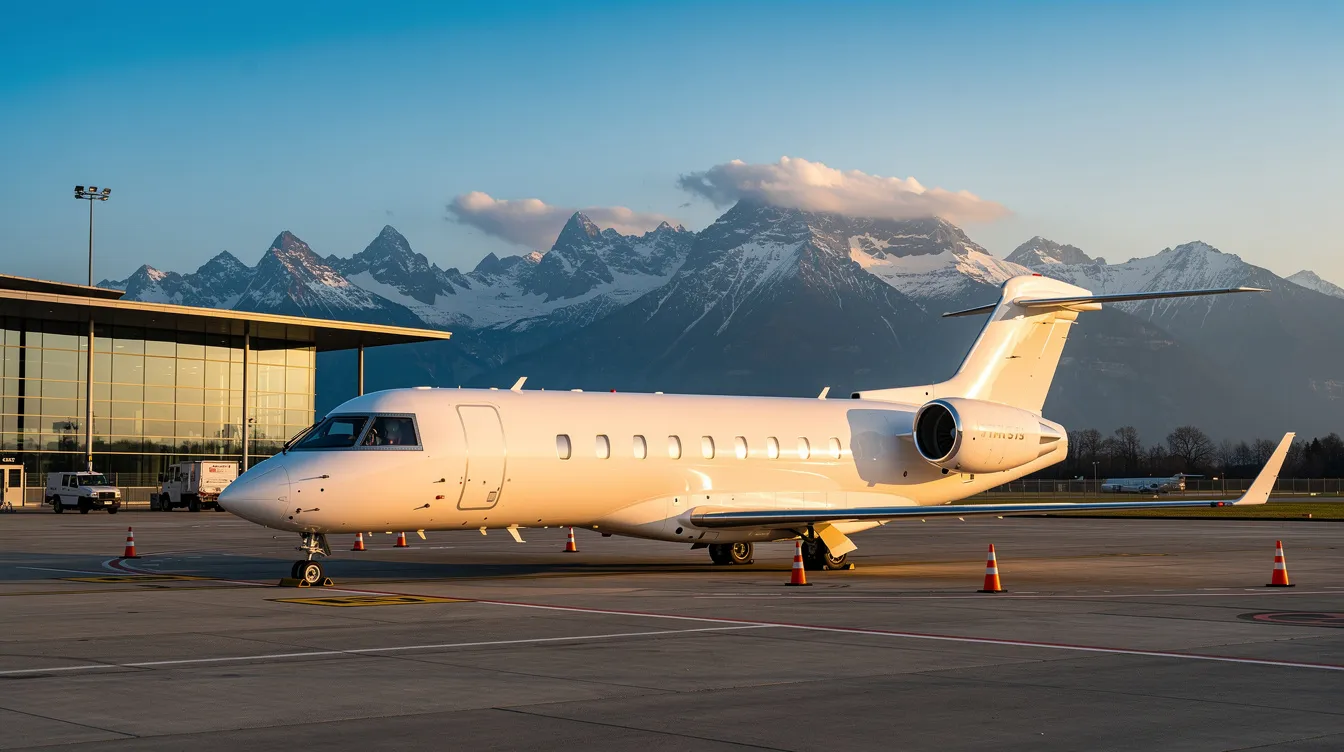
Long-haul private jet flights across the Atlantic produce more CO₂ per passenger than commercial flights on the same route, a fact that matters to corporate travellers with ESG reporting obligations.
Steps to reduce environmental impact:
Load optimisation: A full aircraft (10 to 14 passengers on a heavy jet) cuts per-passenger emissions compared to a half-empty cabin.
Newer aircraft: Current-generation jets like the Gulfstream G700 or Global 7500 burn 15% to 25% less fuel per nautical mile than models from 15 years ago.
Sustainable aviation fuel (SAF): Available at a growing number of North American and European airports. SAF blends reduce lifecycle carbon emissions by up to 80% compared to conventional jet fuel, though they carry a price premium.
Carbon offset programs: Many operators offer offset purchases tied to verified projects.
Travellers should ask in quotes whether carbon offsets or SAF are available and if they are included or offered as an add-on to their private jet rental. Jettly can connect travellers with operators working to reduce environmental impact, aligning Europe trips with corporate sustainability policies while serving as a flexible NetJets alternative for private flying.
Many travellers use a private jet flight to Europe as the first leg of a multi-city business or leisure tour. Trip design affects cost in several ways.
A circular routing (New York to London to Frankfurt to Milan to London to New York) keeps repositioning fees low because the aircraft stays with the traveller and departs from the same city it arrived in. A point-to-point structure (New York to Paris, then the aircraft returns empty) doubles the ocean-crossing cost unless another charter fills the return.
Example cost dynamics:
Week-long roadshow (New York to London to Frankfurt to Milan to London to New York) on a super midsize jet: the transatlantic legs dominate cost, while the intra-Europe legs add shorter flight hours plus crew overnights in each city.
Holiday trip (New York to Paris, then New York return after five days): the aircraft either waits (parking + crew hotels for five nights) or returns empty and a second aircraft is sourced for the return, whichever is cheaper.
Intra-Europe legs may use smaller light jets or turboprops for shorter distances. Jettly can coordinate mixed-fleet solutions, pairing a heavy jet for the ocean crossing with a light jet for the ground-level European hops, or help travellers buy a seat on a private jet when shared options are available.
Clear communication of schedule and passenger count changes up front helps avoid unnecessary repositioning fees and idle time costs.
Not all low prices are equal. Safety standards, regulatory compliance, and operator quality are essential for transatlantic private jet flights, which involve hours over open ocean with limited diversion options.
What to verify (and how Part 135 charter companies are regulated):
Operator certification: FAA Part 135 (U.S.) or EASA equivalents (Europe). These certifications mandate specific crew training, aircraft maintenance costs and schedules, and insurance minimums.
Third-party audits: ARGUS Platinum or Gold, Wyvern Wingman. These ratings reflect independent review of safety management systems, pilot experience, and operational history.
Crew experience: Transatlantic missions require pilots rated for oceanic crossings, familiar with North Atlantic track systems and ETOPS procedures.
Rigorous maintenance, training, insurance, and compliance contribute to the actual cost of chartering a private plane, even when not itemised separately on the invoice. Jettly works only with licensed, regulated operators and encourages customers to review safety ratings alongside price.
Safety should never be traded for marginal savings on a long, over-water flight.
Online ballpark figures are useful for planning, but an accurate quote requires specific flight details. The more precise the input, the tighter the estimate.
Key data points to provide:
Origin and destination airports (specific ICAO or city codes)
Preferred dates and times
Number of passengers and approximate weights
Luggage volume, including oversized items (golf bags, ski equipment, musical instruments)
Whether pets are travelling
One-way, same-day round trip, or multi-day / multi-city structure
Stating whether the trip is a round trip with days on the ground or a simple one-way shapes crew and parking cost estimates. You can book a private jet via phone, email, or online form through Jettly.
Request itemized quotes that separate hourly rate, taxes, repositioning, airport charges, catering, and optional extras to avoid surprises on the final price.
Request an instant or assisted quote through Jettly's cost calculator or its jet card flight cost estimator for your specific Europe itinerary.
These FAQs address common follow-up questions about chartering a private jet to Europe that are not fully covered in the sections above and complement Jettly's comparison of the best jet card programs available today.
Booking 2 to 4 weeks ahead usually offers a good balance of aircraft availability and competitive pricing. Last-minute Europe flights booked under 72 hours before departure often carry a premium because aircraft may need repositioning and crew scheduling becomes constrained. During peak seasons (June through September, Christmas, and major events), booking 4 to 6 weeks out is advisable to secure preferred aircraft types.
Fractional jet ownership companies and shared-flight solutions can be an alternative for frequent travellers, though standard on-demand charter through Jettly still prices the whole aircraft.
Standard charter through Jettly prices the whole aircraft. Passengers are free to split costs among their own group, bringing the per-person cost down as the passenger count rises. "Seat-only" options on long-haul flights to Europe are rare and typically organised as separate shared-charter products, not standard on-demand charters.
Two options exist. "Stay-with-you" pricing keeps the same aircraft parked in Europe with crew hotel costs and airport parking charges added to the invoice. Alternatively, travellers can book two separate one-way charters, which avoids parking and crew overnight charges but may mean a different aircraft on the return. Jettly can quote both structures so travellers can choose the more economical option.
Fuel stops add 45 to 90 minutes of ground time plus additional landing fees and handling charges at the tech stop airport (often Reykjavik, Keflavik, or the Azores). These costs are factored into the quote. In some cases, choosing a larger, longer-range aircraft with a higher hourly rate eliminates the stop and results in a lower total cost than a cheaper aircraft that needs to refuel.
Pets are commonly allowed on private jets subject to operator policies and European import regulations (health certificates, microchipping, rabies vaccination records). Additional cleaning fees or paperwork handling may apply. Mentioning pets when requesting a quote ensures the operator accounts for any extra requirements and cabin preparation.
The cost to fly a private jet to Europe in 2026 hinges on aircraft choice, itemised, airport selection, and timing. Most one-way trips run from tens of thousands of dollars for shorter East Coast crossings on super midsize jets to low hundreds of thousands for West Coast departures on ultra-long-range aircraft.
The main value proposition is straightforward: time saved, flexibility, privacy, and the ability to tailor a long-haul journey to the traveler's schedule rather than the other way around.
Understanding hourly rate structures, repositioning fees, crew salaries, and airport charges puts travellers in a stronger position to control total private jet cost. Comparing multiple aircraft options for the same route reveals where trade-offs between comfort, range, and price sit.
Jettly's digital marketplace and instant pricing tools allow travellers to compare options, avoid hidden fees, and find the right aircraft for their Europe mission.
Share this post:
Jay Franco Serevilla
Oct 4, 2026
|
5
min read
Discover tips and trends in the industry.
5
min read
Gulfstream G100 Guide: Charter Costs, Performance & Use Cases
The Gulfstream G100 is a versatile midsize business jet known for its speed, range, and cost-effectiveness. With a maximum range of 2,790 nautical miles and seating for up to 8 passengers, it is ideal for both business and leisure travel. This guide provides insights into its performance, charter costs, and how to book through Jettly's platform.
Read More
5
min read
Gulfstream GV Range: Ultra Long Range Performance, Cabin Dimensions, and Charter Options
The Gulfstream GV is a pioneering ultra-long-range business jet, offering a maximum range of approximately 6,500 nautical miles. With its spacious cabin designed for comfort and productivity, it accommodates up to 18 passengers and is ideal for intercontinental flights. Charter options through Jettly provide flexible access without the costs of ownership.
Read MoreStay updated with our latest insights and tips to elevate your journey with us.
MEMBERSHIPS AND ASSOCIATIONS



Disclaimer: Jettly operates as a charter broker, offering access to a global digital jet charter marketplace. Jettly is not a direct air carrier and does not own or operate aircraft. All advertised flights are conducted by third-party air carriers that are fully licensed and hold the appropriate Part 135 or Part 121 certifications issued by the Federal Aviation Administration (FAA) or equivalent regulatory authorities under U.S. or foreign law. Jettly complies fully with the U.S. Department of Transportation's Part 295 and Part 298 Charter Broker regulations. Jettly does not carry additional liability insurance. Passengers are covered by aircraft operator insurance. TICO: 50023770


