


Login
Get Instant Pricing On 23,000+ Aircraft

>
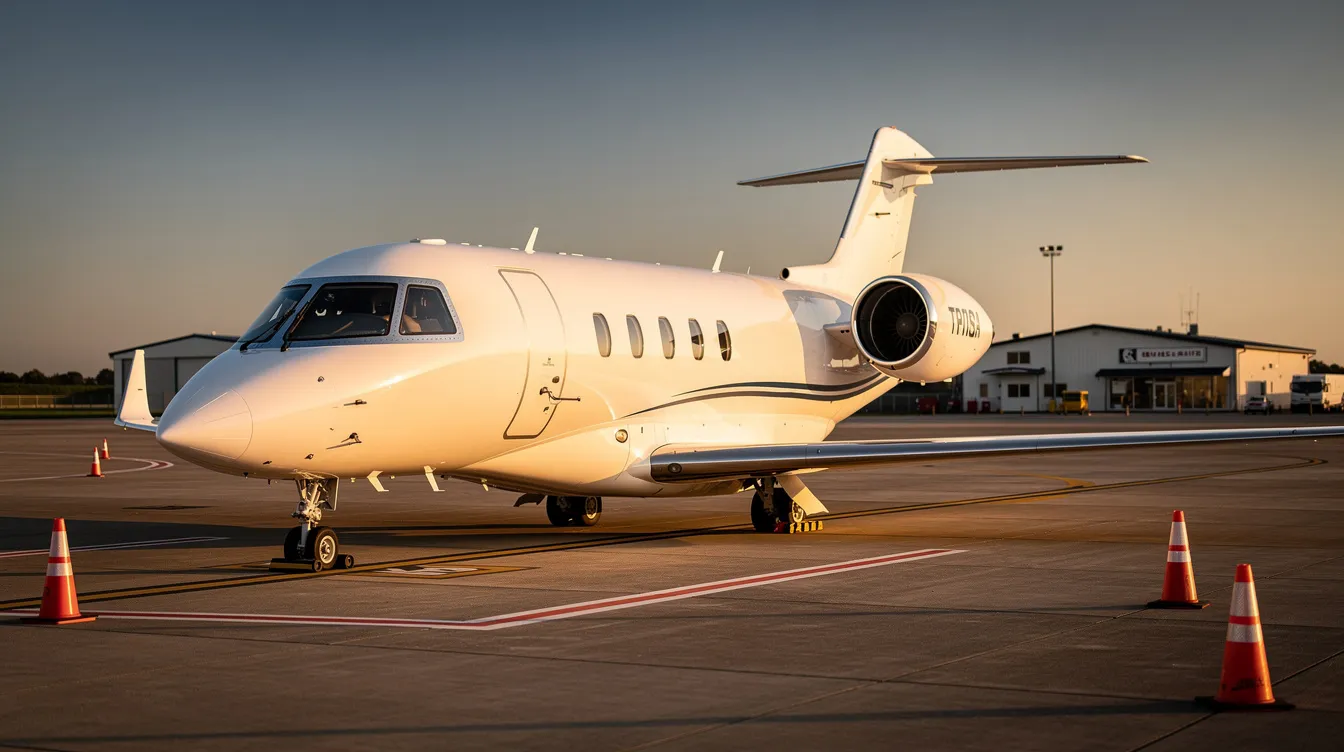
The cost of flying private is more transparent than most people expect - and more variable. In 2026, on-demand charters typically cost between $2,000 and $14,000 per flight hour depending on aircraft size, with chartering a turboprop starting around $2,300 per flight hour, light jets ranging from $3,750 to $4,600 per hour, and heavy jets often landing between $5,000 and $8,000 per hour. These numbers usually include the aircraft, flight crew, and fuel, but the final invoice can still change based on fees beyond the hourly rate.
Unlike commercial air travel, where you buy a single seat, charter pricing is based on renting the entire aircraft. That matters for frequent flyers, corporate executives, and families comparing private aviation with first class, jet cards, or fractional ownership - especially when a group of six splitting a light jet charter can sometimes pay less per person than buying last-minute premium commercial tickets. Knowing how private jet pricing works helps you judge when the convenience, schedule control, and airport access are worth the cost and where you can save.
This article breaks down how private jet charter pricing actually works, including positioning and minimum billing, realistic 2026 hourly rates by aircraft category, and example trip costs on routes like New York to Miami and Los Angeles to Las Vegas. It also compares on-demand charter with jet cards and fractional ownership, explains how empty leg flights can reduce the price, and outlines practical ways to fly more cost-effectively privately- including how Jettly's platform gives travelers flexible booking and transparent pricing without a long-term commitment.
Private jet charter quotes are built around a simple formula: hourly rate multiplied by flight time, plus taxes, fees, and any positioning costs. But a few details matter more than they seem.
Most charter operators enforce daily minimums - typically 1.0 to 2.0 hours for a light jet. If your short flight clocks in at 45 minutes, you will still be billed for the minimum. Block time (which includes taxi, takeoff, and landing) is the standard billing unit, not just time in the air.
Repositioning fees apply when an aircraft must fly empty to pick up passengers at a departure city that is not the jet's home base. That ferry leg is billed at the same hourly rate. For a round trip, the operator also factors in any wait time or crew overnight costs between legs.
Here is a simple example: a 2-hour each-way trip on a light jet at $3,800 per hour produces 4 flight hours at $15,200. Add the 7.5% Federal Excise Tax ($1,140), landing fees at both airports (~$1,200), and a 10% fuel surcharge (~$1,520). The total lands around $19,000–$20,000 for a round trip - before any positioning leg. For a deeper breakdown of how private airplane charter prices are structured, Jettly's pricing guide walks through each line item.
With Jettly, quotes are generated digitally with all mandatory costs included up front, so there are no surprise surcharges after booking.
Rates vary by aircraft class, age, and availability. Older aircraft in any category may be more cost-effective but can trade off on amenities like Wi-Fi, refreshed cabin space, or extended range. Here are realistic 2026 ranges:
|
Aircraft Category |
Typical Hourly Rate (USD) |
Passengers |
Popular Models |
|---|---|---|---|
|
Turboprop |
$1,500–$4,000 |
6–8 |
King Air 100 (from $2,300/hr), Pilatus PC-12 |
|
Very Light Jet |
$2,800–$3,500 |
4–6 |
Eclipse 500, Citation Mustang |
|
Light Jet |
$3,750–$4,600 |
6–8 |
Phenom 300, Beechjet 400 ($3,750/hr), Citation CJ3 |
|
Midsize Jet |
$2,800–$3,800 |
7–9 |
Citation XLS+, Learjet 60 |
|
Super-Mid / Heavy |
$5,000–$8,000+ |
10–16+ |
Challenger 350, Gulfstream G450 |
A King Air 100 turboprop starts at $2,300 per flight hour. Turboprops typically seat six to eight passengers and handle routes under 500 miles efficiently. The Beechjet 400 seats seven and charters for about $3,750 per hour, making it a solid light jet option for groups. Midsize jets can seat seven to nine passengers with a stand-up cabin, while heavy jets can carry 10 to 16 passengers or more on longer routes.
For a detailed look at midsize jet cost breakdowns, Jettly's guide covers pricing for this popular category.
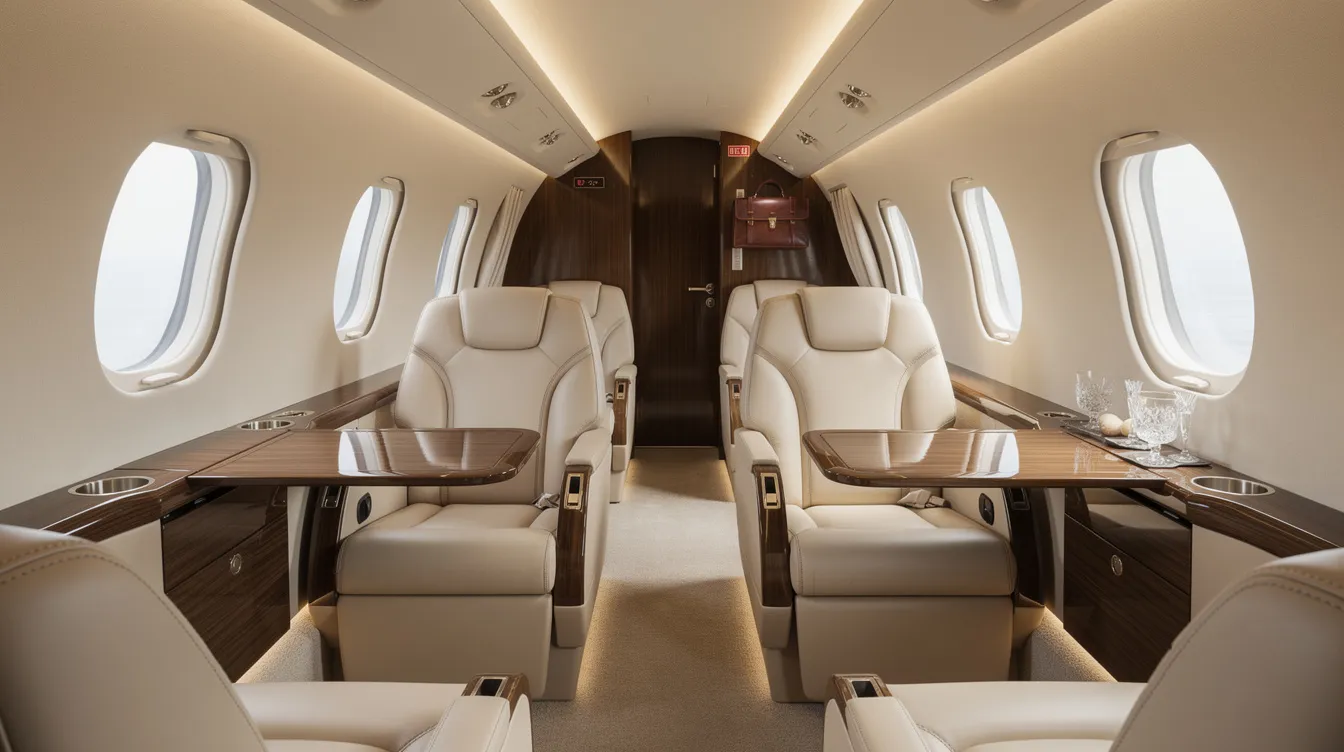
Concrete numbers help more than ranges. Here are estimated one-way charter costs on well-known routes, based on 2026 market data:
|
Route |
Aircraft Type |
Flight Time |
Estimated One-Way Cost |
|---|---|---|---|
|
New York (TEB) → Miami (OPF) |
Light Jet |
~2.5 hrs |
$13,300–$17,200 |
|
New York (TEB) → Miami (OPF) |
Midsize Jet |
~2.3 hrs |
$15,500–$21,100 |
|
Los Angeles → Las Vegas |
Turboprop |
~1.2 hrs |
$3,500–$5,000 |
|
Los Angeles → Las Vegas |
Light Jet |
~1.0 hrs |
$4,500–$6,500 |
|
Toronto → Vancouver |
Super-Midsize |
~4.5 hrs |
$27,000–$36,000 |
|
London → Nice |
Light/Midsize |
~2.0 hrs |
$9,000–$15,000 |
Flight times vary with winds and routing. On the New York to Miami specific route, filling a light jet with six to eight passengers brings the per-person cost to roughly $2,000–$2,900 - comparable to a last-minute business class fare on a commercial plane. For more private flight cost examples, Jettly's route pricing guide covers additional city pairs.
Several variables push charter costs up or down beyond the base per hour rate:
Distance and number of legs. More stops mean more landing fees, fuel burns, and crew duty hours. A multi-city day trip costs more per mile than a single nonstop.
Airport selection. Major airports charge higher fees than smaller executive airports. Using an airport locator tool to identify convenient smaller fields and flying into Van Nuys instead of LAX, or Teterboro instead of JFK, often saves on handling and reduces ground time.
Peak season and timing. Winter flights to Aspen or Vail and summer demand to the Mediterranean can carry surcharges of 25–50%. Seasonal demand and last-minute bookings can raise private flight prices significantly. Peak travel times increase charter prices due to demand.
Aircraft size and age. Private flight prices are influenced by aircraft size and age. A newer larger jet with a full galley and satellite Wi-Fi commands a premium over an older aircraft with fewer amenities.
Crew and weather. Multi-day trips may require pilot hotel stays and per diem costs. Winter operations can trigger de-icing fees ranging from $400 on a light jet to $5,000 on a heavy jet in freezing conditions.
Flying during off-peak times can lead to better pricing. Shifting a departure time by even one day - say, Tuesday instead of Sunday - can meaningfully change what charter operators quote.
Matching the right aircraft to the route is one of the biggest levers to control cost. Flying a heavy jet on a 300-mile hop wastes money. A turboprop or light jet handles that distance at a fraction of the price.
Turboprops are ideal for regional routes under 500 miles, short runways at smaller airports, and groups of six to eight. A family of four from Dallas to Aspen could fly a Pilatus PC-12 for roughly $2,300–$3,000 per hour instead of a light jet at nearly double.
Light jets suit trips of 500–1,200 miles, accommodate six to eight passengers comfortably, and offer cabin space with enclosed lavatories on most models.
Midsize jets carry seven to nine passengers with stand-up cabins, more baggage room, and range for coast-to-coast domestic flights, and they are a core category within Jettly's global private charter aircraft network.
Heavy jets are the choice for transatlantic routes or large groups of 10–16, with full galleys, sleeping configurations, and unparalleled convenience for long-haul travel.
A corporate roadshow hitting three cities in one day may justify a midsize or super-midsize jet for productivity and total control over the flight schedule. Jettly's platform lets travelers filter by aircraft type, passenger count, and amenities. For side-by-side comparisons, the private jets comparison guide is a useful starting point.
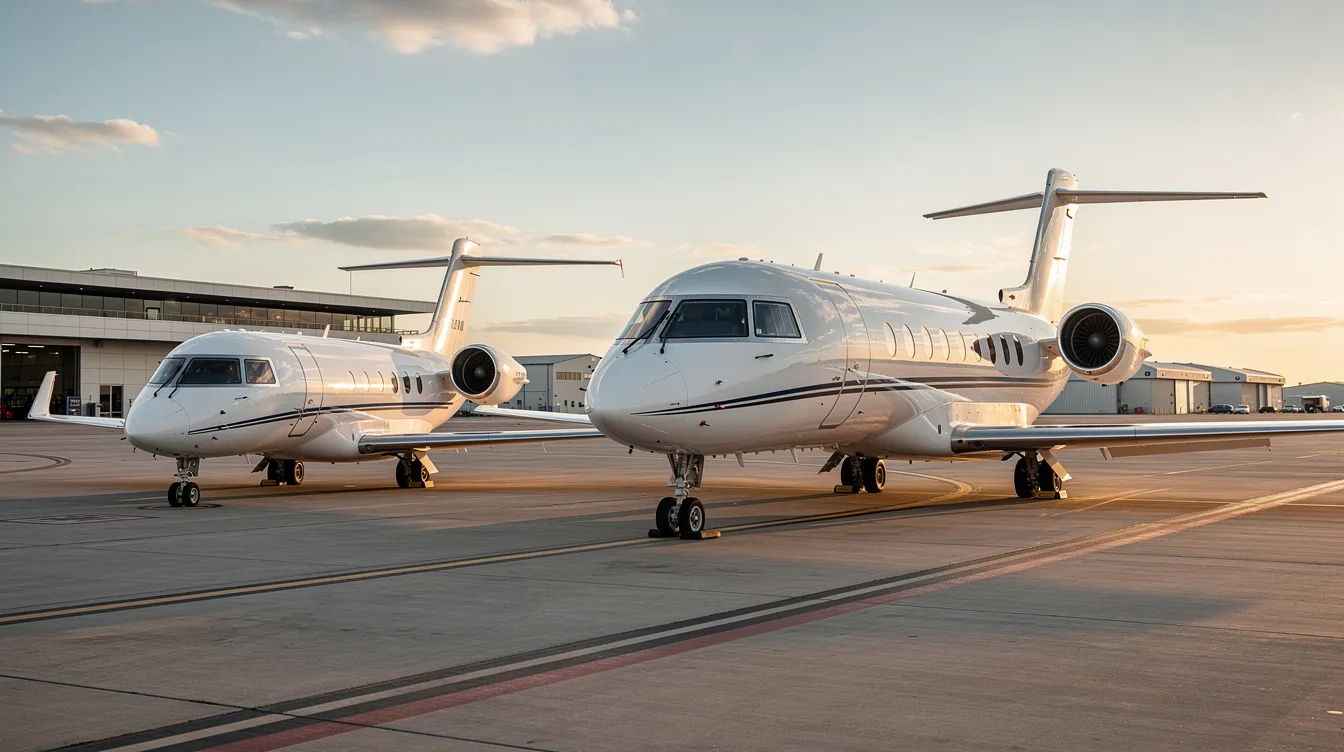
An empty leg is a repositioning flight where the aircraft must move without booked passengers - either returning to base or heading to pick up the next charter client. These leg flights are often sold at steep discounts.
Empty leg flights can save up to 75% off standard prices, though realistic everyday savings tend to fall in the 30–60% range depending on route demand and lead time.
Pros:
Deep cost savings on a full private jet experience
Ideal for flexible leisure trips or last-minute getaways
Cons:
Fixed route and departure time - limited flexibility
Higher risk of schedule changes or cancellation if the original booking shifts
Example: A midweek empty leg from New York to Chicago on a light jet might run roughly $7,000 instead of $18,000 at full charter rates. Platforms that crowdsource private jet flights and share empty seats can further reduce costs when travelers are open to sharing the aircraft.
Jettly lists real-time empty leg flights in its marketplace, allowing users to search by route and date. Travelers can check back frequently or set alerts for new listings on routes they fly frequently, and a broader guide to renting a private jet and its costs explains how empty legs fit into the overall pricing picture.
Private aviation pricing includes various models. Here is how they compare:
|
Access Model |
Upfront Cost |
Effective Hourly Cost |
Commitment |
Best For |
|---|---|---|---|---|
|
On-demand charter |
None |
$2,000–$14,000/hr |
Per trip |
25–40 hrs/year |
|
Jet card |
$150,000–$500,000+ |
$7,500–$19,000/hr |
Prepaid block |
40–100 hrs/year |
|
Fractional ownership |
$300,000–$850,000+ (share) |
Lower per hour at volume |
Multi-year |
50–150 hrs/year |
|
Full ownership |
$3M–$80M+ (purchase) |
Lowest at very high usage |
Ongoing |
200+ hrs/year |
Charter users pay only for the hours they fly, making on-demand charter the most cost-effective option for infrequent flyers. Jet card programs offer locked-in hourly rates for prepaid flights, and membership programs provide fixed rates for private jet access - useful for travelers who fly frequently and want rate certainty. For a detailed look at jet card pricing and rates, Jettly's jet card flight cost estimator helps approximate route-specific pricing, while the Jet Cards program overview and a deep dive into jet card costs and price structures break down the major options.
Co-ownership allows access to a jet for half the cost of full private jet ownership, but owners still take on substantial fixed costs regardless of how much they fly and must manage shared scheduling. Full ownership costs over $1 million annually for maintenance, crew salaries, hangar fees, insurance, and aircraft management; owning a jet is ideal for over 200 flight hours per year.
Jettly focuses on digital charter and membership solutions, giving travelers access to private aviation without long-term capital commitments or ownership costs, and its range of private jet memberships is designed for different personal and business usage levels.
Practical tactics that actually move the needle and align with broader strategies for booking the cheapest private jet flights and leveraging affordable private jet charter options:
Be flexible with dates. Avoid peak season windows and holiday weekends. Even shifting by a day can drop charter costs by 15–30%.
Choose smaller airports. Fly into or out of smaller airports closer to your destination. Less congestion means lower landing fees and faster turnarounds.
Right-size the aircraft. A turboprop at $2,300 per hour handles a 90-minute leg just as well as a midsize jet at $3,500 per hour - saving time and roughly $1,800 per hour.
Fill the plane. A light jet carrying six passengers instead of two cuts the per-person cost by two-thirds. Travelers can buy a single seat on a private jet or get a seat through shared and last-minute options to access private flights more affordably.
Compare options instantly. Jettly's charter cost estimator lets travelers compare multiple aircraft for the same route side by side.
Travelers concerned about carbon emissions can also ask about carbon offset options when booking private flights.
Before/after example: A business team of four flying a 90-minute leg on a midsize jet at $3,500 per hour pays roughly $5,250 in flight time alone. Switching to a turboprop at $2,300 per hour drops that to $3,450 - saving $1,800 on a single leg, or $3,600 round trip.
Even after locking in a base hourly rate, several line items can appear on the final invoice:
Federal Excise Tax. The Federal Excise Tax in the U.S. for domestic flights is 7.5%, applied to all domestic charter legs.
Fuel surcharges. Fuel surcharges can add $600 to $2,500+ per hour based on fuel prices. These adjust with jet fuel market volatility.
Landing and handling fees. Landing fees vary significantly between airports based on congestion. A busy hub FBO might charge $800–$1,200, while a regional field runs $75–$500. Additional fees may include landing, handling, and catering charges.
De-icing and hangar fees. Winter operations in Denver or the Northeast can add $400–$5,000 depending on aircraft size and weather severity.
Crew expenses. Charges for crew expenses may include hotel, meals, and transportation - typically $250–$600 per crew member per night on multi-day trips.
Catering and Wi-Fi. Catering and Wi-Fi services can incur additional charges beyond the base rate. Custom catering options may lead to additional costs on private flights, and services like Jettly Eats in-flight catering provide tailored menus that can influence the final bill.
International fees. Cross-border flights add overflight permits, customs handling, and navigation charges.
Ground transportation. Ground transportation can be arranged separately from the aircraft rental, adding to the overall one-flight cost you need to understand before renting.
For a full breakdown of private jet operating costs, Jettly's guide covers each category in detail. Jettly's quotes are structured to surface these costs clearly in advance.
The headline cost of a private plane is higher than a commercial ticket. But the total value equation shifts in several scenarios, especially when you understand the full picture of how much a private jet really costs, how different charter airlines and private aviation models operate, and when a flexible NetJets alternative like Jettly can deliver similar benefits at lower commitment.
Multi-stop business days. A team visiting three clients across the Midwest in one day - say Chicago, Indianapolis, and Detroit - can complete all meetings and return home by evening. On commercial options, that same itinerary takes two days with connections and overnight stays. The time savings alone can justify the charter.
Remote destinations. Private jets can access smaller airports closer to destinations, saving four to six hours of ground travel each way compared to flying commercial into a distant hub.
Group travel. When six to eight people need premium travel, the combined cost of first class or business class tickets on commercial airlines can approach or exceed a single light jet charter - especially on last-minute bookings.
Flying private eliminates long security lines and crowded terminals. Private jet travelers can arrive just 15 minutes before departure. Private jets allow you to dictate your own departure time, and private jet travel can reduce total travel time significantly. For important business meetings where saving time equals saving money, the math often makes sense.
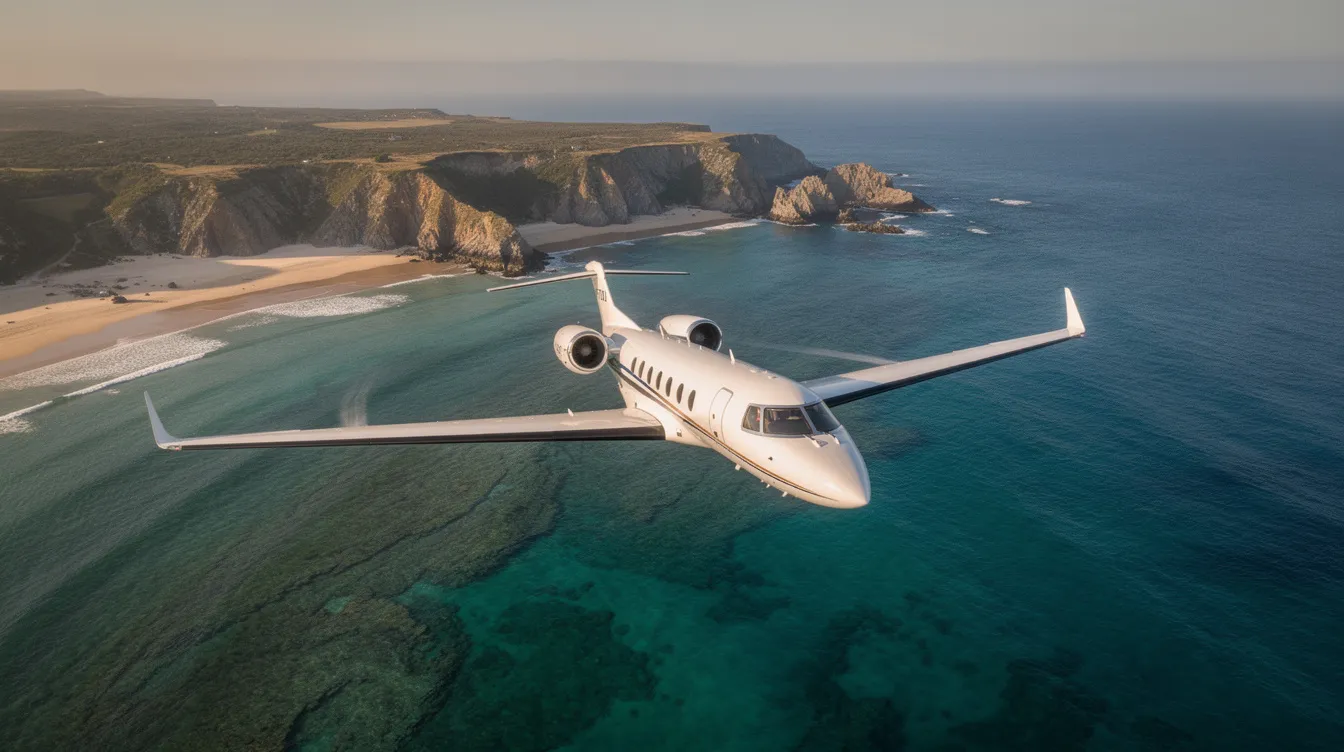
Jettly operates as a digital private aviation marketplace connecting travelers with over 20,000 aircraft worldwide for on-demand private jet charter. The platform is built around cost transparency and ease of access.
Instant pricing. Every quote includes a breakdown of the per-hour rate, taxes, and key fees - no hidden charges.
Aircraft comparison. Travelers can compare multiple aircraft categories and operators for the same specific route within the platform, helping them find the right aircraft at the right price while also weighing safety credentials such as ARGUS Gold.
Empty leg access. Jettly's marketplace surfaces live empty leg flights with dynamic pricing, offering significant cost savings for flexible travelers.
No capital commitment. The platform does not require jet card buy-ins or fractional ownership commitments, making it easier to control spend on a trip-by-trip basis.
The cost of flying private depends on aircraft choice, airport selection, timing, and how you book. Per-hour rates range from $2,300 for a turboprop to $8,000 or more for a heavy jet, with additional costs for taxes, fuel, and handling that can shift the total by thousands. But for the right trips - time-critical business travel, group journeys, or destinations poorly served by commercial airlines - private aviation can be both cost-effective and highly efficient compared with premium commercial tickets.
Platforms like Jettly make private travel costs more predictable through instant pricing, broad aircraft access, and real-time empty leg flights. The transparency removes much of the guesswork that has historically made private jet travel feel opaque.
Ready to experience private travel on your terms? Explore flight options or request a quote at https://www.jettly.com.
Share this post:
Jeff Ryan Serevilla
Oct 5, 2026
|
5
min read
Discover tips and trends in the industry.
5
min read
Arrow Jets: How Jettly Makes Private Jet Travel Simple, Fast, and Transparent
Jettly revolutionizes private jet travel by offering a digital platform that simplifies the booking process for over 20,000 aircraft worldwide. With instant pricing and transparent cost breakdowns, travelers can easily access fast, direct flights tailored to their needs. This on-demand model eliminates the complexities of traditional jet ownership, making private aviation more accessible and efficient.
Read More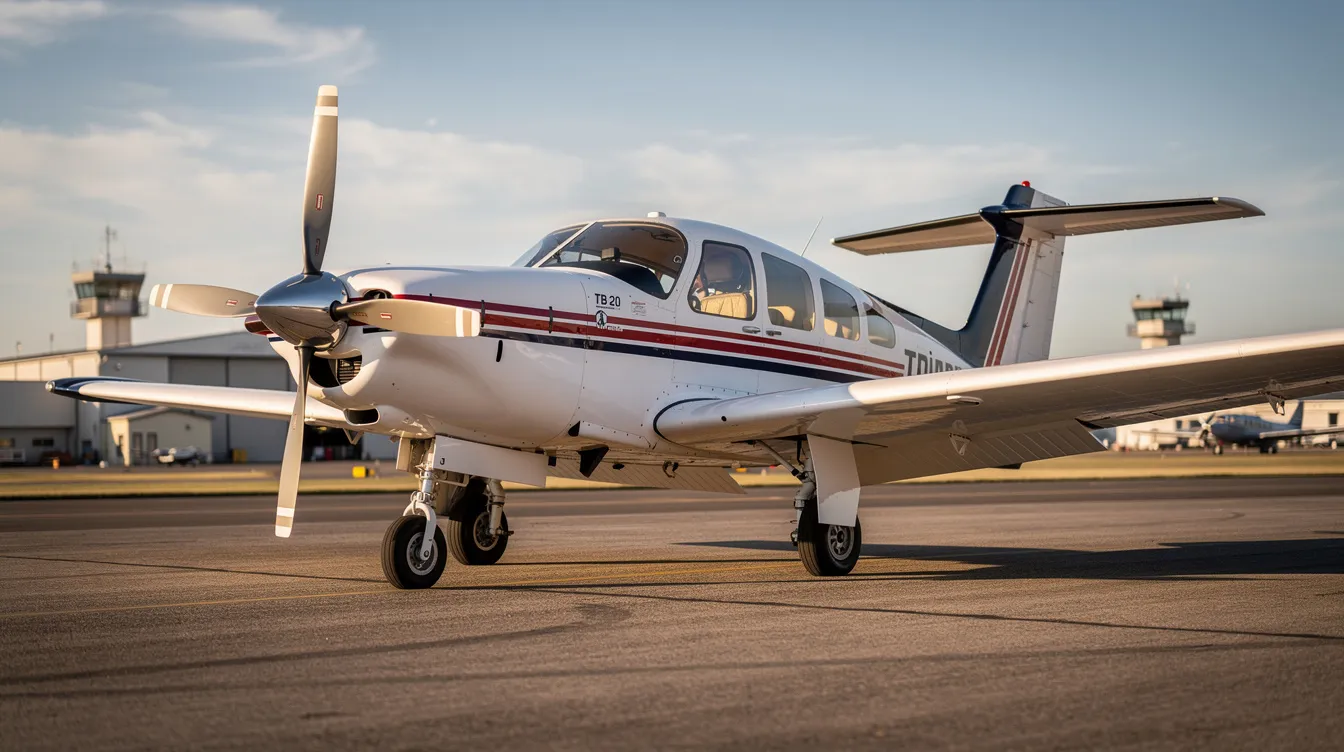
5
min read
Socata TB Series Guide: TB 20 Trinidad and Related Models
The Socata TB series, particularly the TB 20 Trinidad, is a renowned family of French single-engine aircraft designed for touring and training. With its spacious cabin and retractable landing gear, the TB 20 is favored by private pilots and flight schools for its performance and comfort. This guide explores the TB series' features, variants, and its relevance in modern private aviation.
Read MoreStay updated with our latest insights and tips to elevate your journey with us.
MEMBERSHIPS AND ASSOCIATIONS



Disclaimer: Jettly operates as a charter broker, offering access to a global digital jet charter marketplace. Jettly is not a direct air carrier and does not own or operate aircraft. All advertised flights are conducted by third-party air carriers that are fully licensed and hold the appropriate Part 135 or Part 121 certifications issued by the Federal Aviation Administration (FAA) or equivalent regulatory authorities under U.S. or foreign law. Jettly complies fully with the U.S. Department of Transportation's Part 295 and Part 298 Charter Broker regulations. Jettly does not carry additional liability insurance. Passengers are covered by aircraft operator insurance. TICO: 50023770


