


Login
Get Instant Pricing On 23,000+ Aircraft

>

Moving a large group by air on a tight schedule takes more than booking a block of economy seats. Commercial airline charter gives organizers the ability to hire an entire aircraft, set the departure time, and fly direct to the destination that matters most. Here is how it works, what it costs, and when it makes sense.
A commercial airline charter means hiring a full aircraft from a direct air carrier outside the airline's published schedule. Commercial jet charter can accommodate 20 to 480 passengers, depending on aircraft type.
Charter flights provide significant advantages in flexibility over traditional airlines-custom routing, airport choice, and schedules built around the group, not the carrier.
Common charter models include public charter flights, affinity charters, and single entity charters, each with distinct rules, pricing, and consumer protections.
Jettly connects clients to access to over 50,000 aircraft globally, from commercial airliners to light jets, through a digital on-demand platform with transparent pricing.
Chartering an aircraft can become cost-effective for larger groups when factoring total trip costs, including time savings, avoided overnights, and reduced missed-connection risk.
A commercial airline charter is the hiring of an entire aircraft from a direct air carrier, outside an airline's published schedule, for bespoke routing and timing. Charter tickets are generally not available for public purchase on airline websites. Instead, chartered flights are arranged through contracts with airlines or charter operators.
Commercial jet charter typically refers to larger airliners-Boeing 737s, Airbus A320s, or wide-body jets-serving groups of 20 to 400+ passengers. This stands opposed to a private jet, which usually seats 4 to 18. Charter flights can be one-time, seasonal, or infrequent, and they can be private, group, or public types.
Typical organizers include tour operators, professional sports teams, corporations, government agencies, event promoters, and universities. Jettly acts as an air charter broker and digital marketplace, matching these clients with certified carriers and a broad range of private charter aircraft across a global network.
Commercial airlines operate on fixed scheduled routes with shared cabins and serve approximately 500 major airports globally. Charter flights run on the customer's schedule and can operate to any allowed airport, which makes tools like Jettly's airport locator platform especially useful during trip planning. That distinction matters when a group needs to dictate the itinerary, reducing stress from major hubs.
Key differences at a glance:
|
Feature |
Commercial Scheduled Flights |
Commercial Airline Charter Flights |
|---|---|---|
|
Departure Time |
Fixed airline schedule |
Flexible, set by the client |
|
Airport Access |
Approx. 500 major airports |
Over 7,000 airports, including regional airfields |
|
Boarding Experience |
Shared terminals, long security lines |
Fixed-Base Operators (FBOs) for faster boarding |
|
Pricing Model |
Per-seat basis |
Per-aircraft basis |
|
Luggage Policies |
Standard airline restrictions |
More flexible luggage allowances |
|
Cabin Space |
Shared cabin, limited legroom |
More spacious cabins, configurable seating |
|
Itinerary Flexibility |
Limited, fixed routes |
Custom routing and multiple stops possible |
|
Consumer Protections |
Standard airline protections |
Varies by charter type (public, affinity, single entity) |
Scheduled commercial flights might be better for small groups on well-served routes where economy tickets can be as low as a few hundred dollars. Charter wins when the group is large, timing is tight, several locations must be visited on one trip, or the destination is limited by scheduled service. Private jets can access over 5,000 airports worldwide and save two to four hours door-to-door, making them ideal for smaller leadership teams, especially when you understand how private jet charter pricing works and where it becomes cost-effective.
Jettly's platform can display both private jet charter and commercial airline charter options for the same trip, helping organizers weigh cost against timing in much the same way as comparing jet rentals versus first-class tickets for corporate travel.
Not all charter flights are structured the same. Regulatory rules differ by charter type, and each form of air charter carries different obligations for the operator, the organizer, and the person purchasing a seat.
A public charter is when a charter operator contracts an airline, then sells individual seats to the general public. Public charters sell seats to the general public, often bundled with hotel or event packages. In the U.S., the Department of Transportation requires a filed prospectus and escrow protections before seats go on sale. Public charters can operate seasonally or infrequently-think summer leisure routes to the Caribbean or winter ski charters.
Affinity charters are organized for specific group members only-alumni associations, fan clubs, professional bodies. Each person pays their own way, but sales are restricted to members. Affinity charter prices must be the same for all adult members, but organizers such as clubs and associations can also monetize travel demand through Jettly's high-ticket affiliate program when referring members for additional private aviation services. These charters carry fewer consumer protections than public charters, so due diligence on the organizing company and broker matters.
Single-entity charters are booked for exclusive use by one party. A company, sports franchise, or government agency pays for the full aircraft. Single-entity charters do not allow selling individual seats. The contracting entity decides who boards.
Examples include an NHL team booking a Boeing 737-800 for away games, a film studio moving cast and crew between Los Angeles and Atlanta, or a mining firm rotating workers to a remote airfield. Jettly frequently arranges single-entity charters, combining commercial airliners and private jets for complex, multi-city trips.
Charter flights can be organized for special events or groups-the 2026 FIFA World Cup, music festivals, or corporate hospitality around a golf major. These may be structured as public, affinity, or single entity charters, but they are marketed around bundled experiences: event tickets, ground transfers, and catering. Coordination with airport slots, permits, and ground transportation is critical.
Charter flights can be used by sports teams, musicians, and government officials, along with corporations, universities, cruise lines, and tour operators. Dedicated charters reduce the chance of group members missing important events due to cancellations.
Key use cases:
Sports leagues needing tightly timed travel and secure handling for equipment
Corporations flying 50–250 staff to conferences or incentive trips, such as a regional meeting accessible via private jet charter in Atlanta
Government delegations and NGOs responding to emergencies
Music and entertainment tours on fixed show calendars that rely on frequent lift in key markets like private jet charter in Kolkata
When group size exceeds roughly 40 passengers, commercial jet charter typically becomes more efficient than purchasing dozens of scheduled tickets across multiple flights. Jettly can layer a private jet for executives on top of a commercial charter for staff-business travel solved with one platform, whether you need a full-aircraft solution or are considering shared charter flights versus full charters for different segments of your group.
The booking process moves through clear stages, and Jettly's digital platform helps assist at each one:
Requirements gathering. Jettly works with clients to decide on dates, routes, group size, aircraft preferences, and the departure schedule.
Aircraft sourcing. Jettly matches the trip to vetted carriers from its fleet of certified direct air carriers.
Pricing. Clients receive instant or rapid quotes with transparent cost breakdowns.
Contract and compliance. Review the charter contract, payment milestones, and regulatory documentation. Payment is typically staged: deposit on signing, balance before departure.
Manifest and logistics. Passenger lists, seat mapping, special requests, and the ability to schedule multiple stops in one day.
Operations and post-flight. On-the-day support, including 24/7 dedicated account management, and post-flight settlement.
Lead times vary: 3–6 months for public charters or peak-season programs, 4–8 weeks for standard single-entity charters, and sometimes just days for urgent needs booked in advance through Jettly's on-demand access, which many clients use as a flexible alternative to NetJets-style programs.
Groups can choose specific aircraft types for their chartered flights. Through platforms like Jettly, planners mix sizes based on the journey, drawing on insights from a broad guide to charter airlines and private aviation:
Regional jets (Embraer ERJ-135, CRJ-series, Embraer ERJ 145 regional aircraft): 30–90 passengers, short-haul routes.
Narrow-body airliners (Boeing 737, Airbus A321): 100–220 passengers, medium-haul.
Wide-body airliners (Boeing 767, Airbus A330): 250–350+ passengers, long-haul. Wide-body aircraft meet the latest safety standards.
Private jets, from light jets to ultra long range jets: small leadership teams or VIP shuttles. Private jet charter costs start around $3,000 per hour, and prospective flyers can use a jet card flight cost estimator to model different routings and aircraft sizes before committing.
Turboprops and helicopters: short hops and remote access.
Some charter flights can be configured with fewer seats for greater passenger comfort. Private jets can access over 5,000 airports worldwide, while commercial airliners reach thousands more regional fields. Jettly aggregates this full range, allowing side-by-side comparison within one platform.
Charter pricing is built around the whole plane, not individual seats. Key cost drivers include:
Flight time and block hours, including positioning legs
Aircraft type-a narrow-body A320 charter in Europe runs roughly €35,000–€60,000 for a two-hour sector (Avico, 2026)
Fuel, airport fees, crew overnights, and handling
Catering, branding, Wi-Fi, and special services
Chartering an aircraft can become cost-effective for larger groups when factoring total trip costs. A 180-seat A320 at €50,000 works out to roughly €278 per seat-comparable to business travel fares on many European routes. Public charter flights spread cost further across multiple departures, while platforms that crowdsource private jet flights and share empty seats help improve aircraft utilization and reduce per-passenger costs in the private segment. Economy tickets on scheduled commercial flights can be as low as a few hundred dollars, but they lack the flexibility, routing, and time savings that charter delivers.
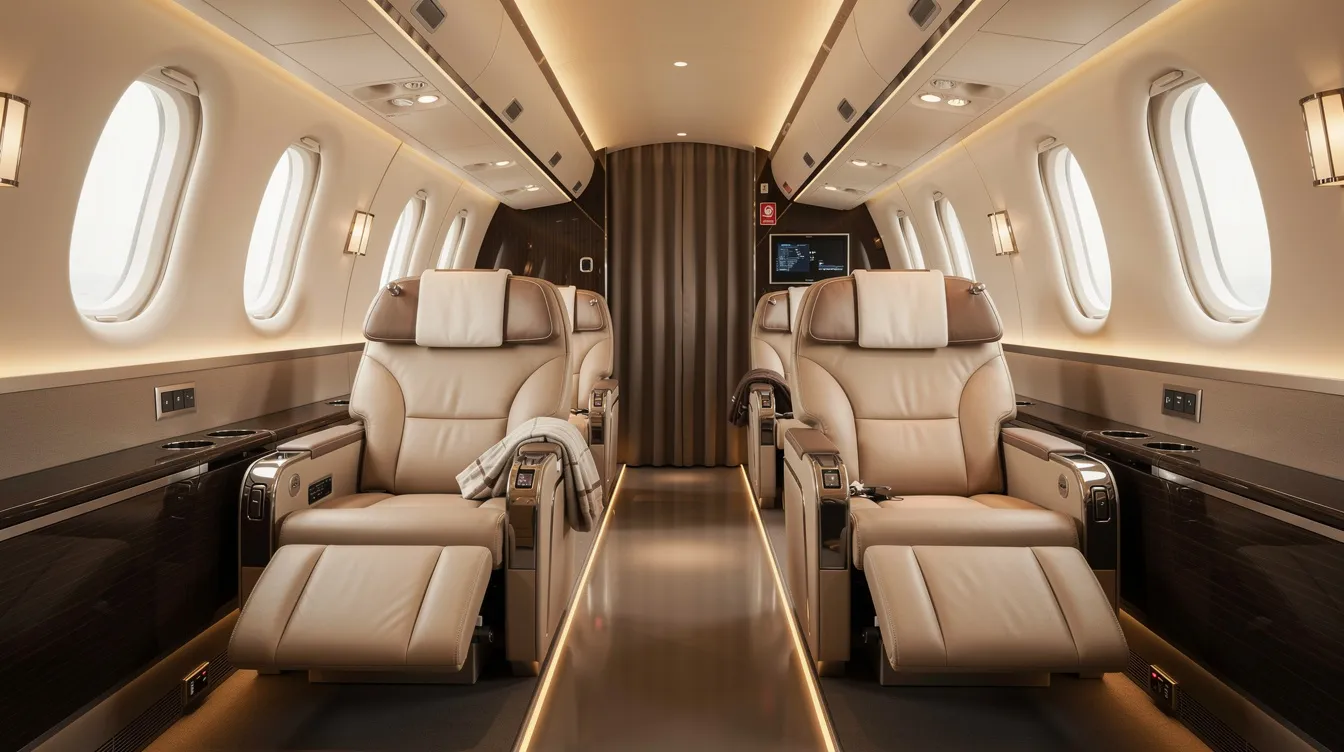
Commercial airline charter lets organizations treat the aircraft as a moving extension of their brand. Commercial jet charters offer personalized check-in and catering options, with services such as Jettly Eats providing in-flight catering for private jets, along with:
Custom check-in counters, branded signage, and dedicated ground staff
Cabin branding-logo headrest covers, napkins, tailored announcements
Customized onboard experiences including custom catering and preferred seating arrangements
Charter flights offer more spacious cabins and more legroom than standard commercial economy
Charter flights often provide a secure environment for confidential discussions, with fewer restrictions around privacy and shared spaces
Seating plans separating VIPs, team members, staff, and media
Charter flights must comply with aviation safety regulations in every jurisdiction. In the U.S., the FAA requires operators to hold Part 121 or Part 135 certificates depending on aircraft size and operation type. European carriers fall under EASA regulations, and Transport Canada governs Canadian operators.
Jettly screens every operator for safety records, insurance, crew qualifications, and fleet maintenance standards before listing them, criteria that also matter when comparing top private jet charter companies across the broader market. Environmental considerations-fuel-efficient aircraft, route optimization, and optional carbon offsetting-are increasingly part of the decision for clients who expect responsible operations.
Jettly is a digital private aviation and group charter marketplace that integrates commercial jet charter, private jet charter, and broader air charter services in one platform, supported by flexible private jet membership plans for frequent flyers. Clients gain access to a global network spanning North America, Europe, the Middle East, Asia-Pacific, and Latin America, with instant or rapid pricing and on-demand booking, plus structured jet card programs for corporate travelers who want predictable hourly rates.
Whether a company is flying 180 staff from New York to Cancún on a chartered A320 while executives fly by private jet, or a European football club needs a seasonal charter program across multiple away fixtures, Jettly's team coordinates aircraft, ground transportation, and schedules, working alongside operators such as Dexter Air Taxi private jet services where appropriate.
Ready to plan your next group flight? Explore options or request a tailored proposal at https://www.jettly.com.
Standard single-entity charters on common routes typically need 4–8 weeks of lead time. Public charter flights, peak holiday periods, or world-class events like the Olympics or World Cup often require 3–6 months or more to determine permitting, marketing, and airport slots. Jettly can sometimes arrange last-minute charters within days when aircraft availability and crew duty limits allow.
Zenflight instant-book private jet services and similar operators available through Jettly can be integrated into wider travel plans when you need to supplement a commercial charter with smaller aircraft.
Yes. Many organizers build hybrid itineraries: the main group travels on a chartered commercial jet, VIPs board a private jet on a similar schedule, and some travelers connect via scheduled flights through hubs. Jettly's team designs these blended solutions, coordinating timings, baggage handling, and ground transfers so the entire party arrives together.
Not necessarily. The total charter cost is typically higher than purchasing economy seats, but per-person cost can be comparable to or lower than business-class fares for large groups. For example, a 180-seat A320 on a European route at €50,000 total produces a per-seat cost under €280-competitive with many accepted business-class fares when you factor in time savings and avoided hotel nights.
Most operators require a signed charter contract with staged payment-deposit on signing, balance before departure. Accepted payment methods commonly include bank transfer and sometimes corporate cards. Jettly ensures funds flow securely to the direct air carrier and all service providers involved.
Visit https://www.jettly.com, enter your route, dates, and passenger numbers for an instant or rapid quote. Alternatively, contact Jettly's charter team directly with details about your event, sports schedule, or corporate travel plans. The platform will walk you through aircraft options, pricing, and the full booking process from first inquiry to touchdown.
Commercial airline charter offers a flexible, efficient solution for moving large groups on tailored schedules and routes. By hiring an entire aircraft, organizers gain control over timing, airport access, and onboard services that scheduled flights cannot match. Jettly’s digital platform simplifies access to a global network of certified carriers and aircraft, including commercial airliners and private jets, with transparent pricing and rapid booking. Whether for corporate events, sports teams, or special occasions, commercial jet charters provide benefits that extend beyond cost savings to include time efficiency, privacy, and customized travel experiences. Ready to experience the convenience and flexibility of commercial airline charter? Explore flight options or request a quote today at https://www.jettly.com.
Share this post:
Jay Franco Serevilla
Jul 7, 2026
|
5
min read
Discover tips and trends in the industry.
5
min read
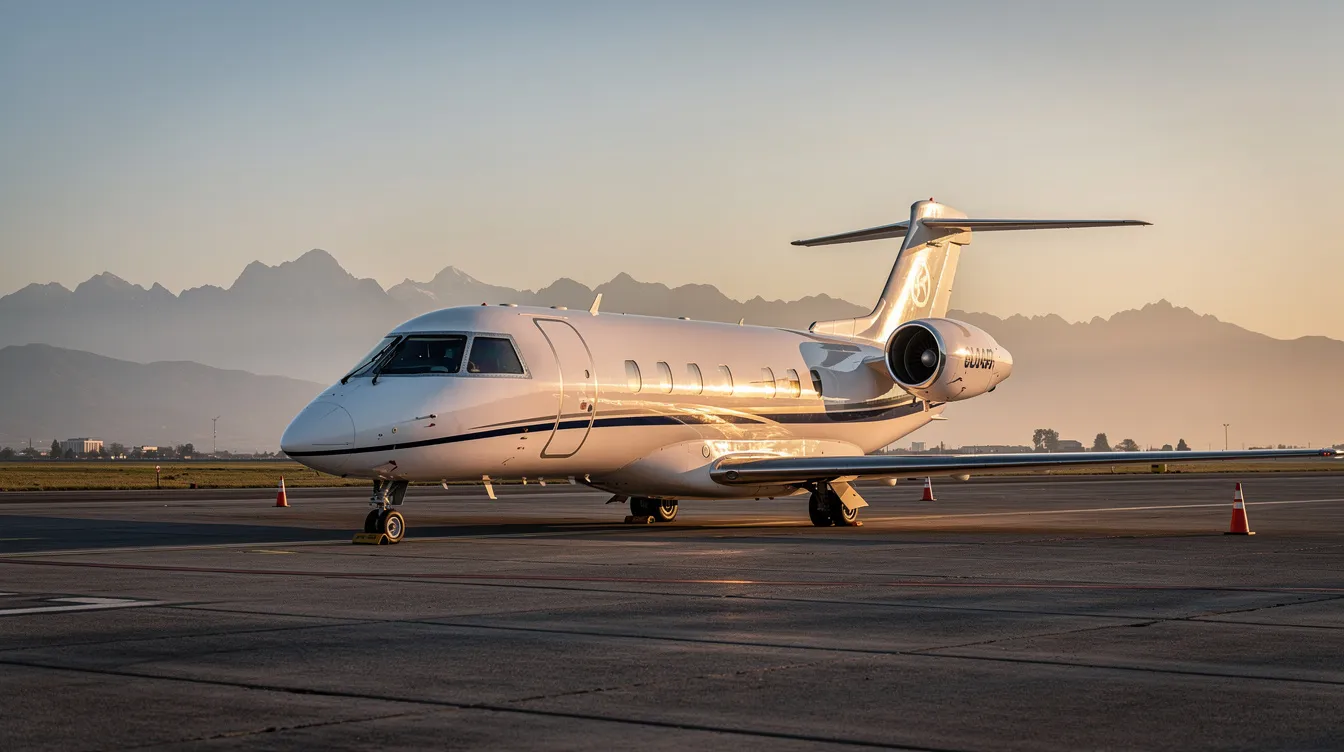
Dassault Falcon 20F: Legacy Midsize Jet and Modern Charter Alternatives
The Dassault Falcon 20F is a notable midsize business jet that played a crucial role in defining the charter category from the 1970s to the 1980s. While it offers a rich history and solid performance, modern jets surpass it in efficiency, comfort, and technology. Today, platforms like Jettly provide access to newer alternatives that better meet the needs of private travelers.
Read More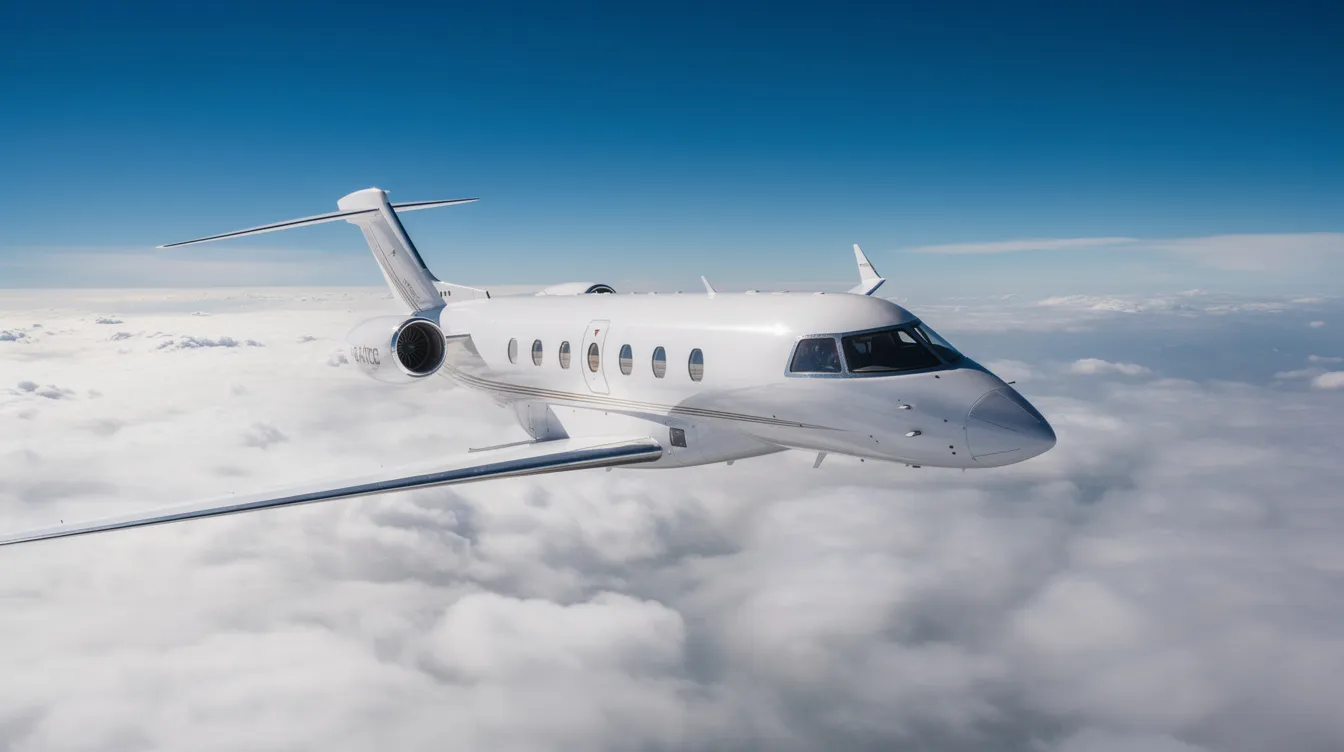
5
min read
Fastest Non-Military Jet: The Ultimate Guide to High-Speed Private Travel
Discover the fastest non-military jet, the Bombardier Global 8000, which reaches speeds of Mach 0.94 and offers an intercontinental range of 8,000 nautical miles. This guide explores the importance of speed in private aviation, comparing top contenders and highlighting how Jettly connects travelers with high-speed jets for efficient travel.
Read MoreStay updated with our latest insights and tips to elevate your journey with us.
MEMBERSHIPS AND ASSOCIATIONS



Disclaimer: Jettly operates as a charter broker, offering access to a global digital jet charter marketplace. Jettly is not a direct air carrier and does not own or operate aircraft. All advertised flights are conducted by third-party air carriers that are fully licensed and hold the appropriate Part 135 or Part 121 certifications issued by the Federal Aviation Administration (FAA) or equivalent regulatory authorities under U.S. or foreign law. Jettly complies fully with the U.S. Department of Transportation's Part 295 and Part 298 Charter Broker regulations. Jettly does not carry additional liability insurance. Passengers are covered by aircraft operator insurance. TICO: 50023770


